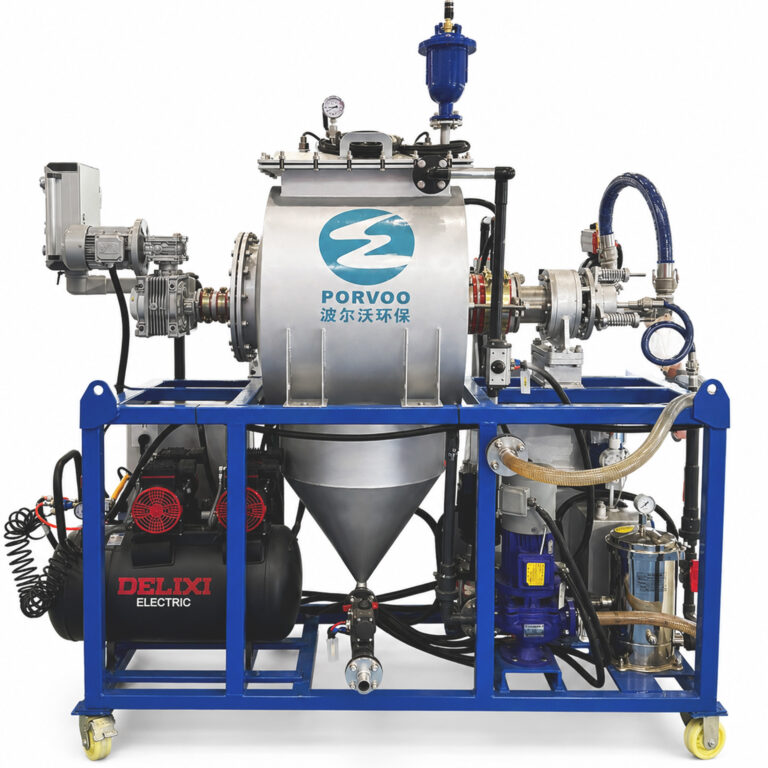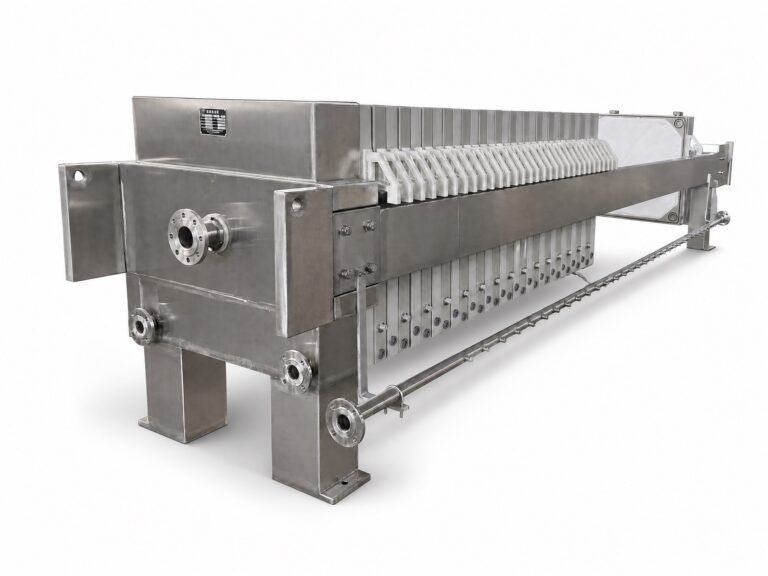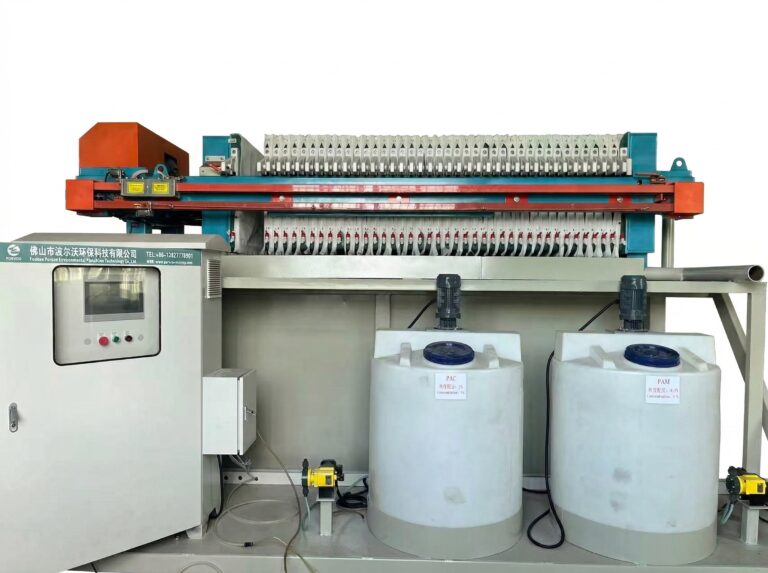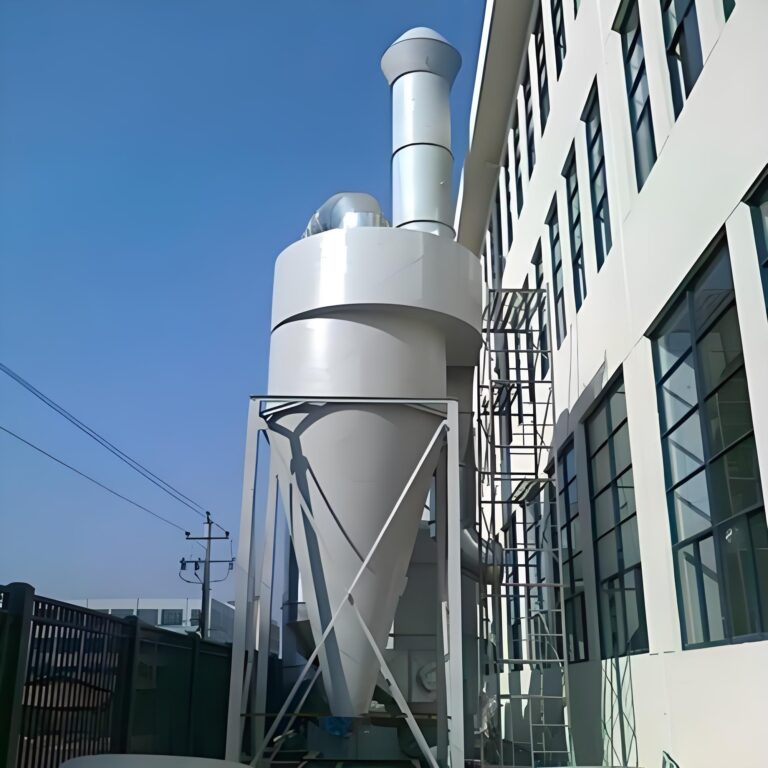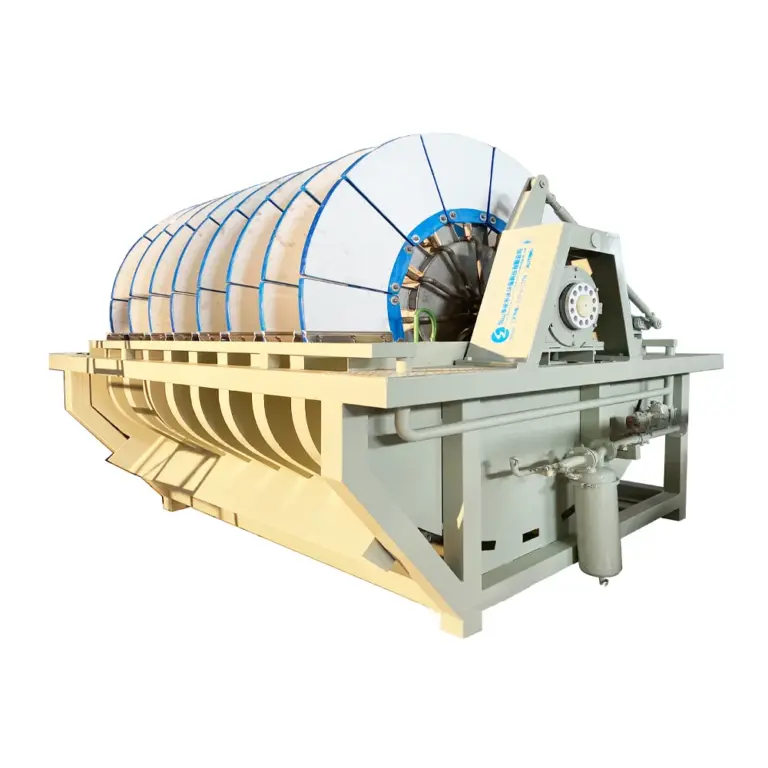
A vacuum ceramic disk filter is a continuous solid-liquid separation system built around rotating porous ceramic sectors. This page is for process-fit and equipment-selection work: it explains the information needed to judge whether the equipment suits a slurry and what must be confirmed before a configuration can be proposed.
If you need a plain-language explanation of the filtration cycle, start with how a vacuum ceramic disk filter works. For a balanced evaluation of potential value and limitations, see ceramic disc filter advantages and selection conditions.
What the equipment is designed to do
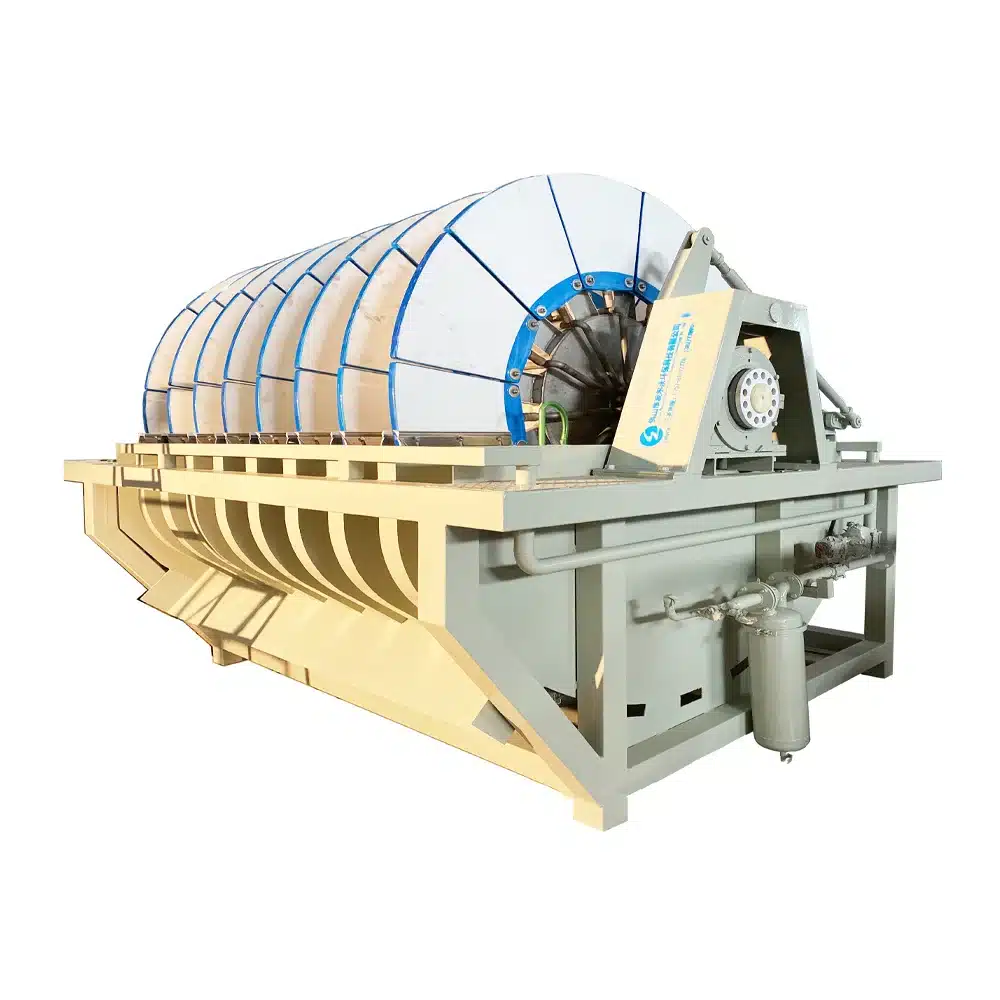
The filter separates suspended solids from liquid by rotating ceramic sectors through a slurry. Vacuum draws liquid through the porous ceramic medium while solids remain on the sector surface and form a cake. Continued rotation carries the cake through a dewatering zone, then to discharge. A cleaning or regeneration stage prepares the ceramic surface for the next cycle.
This operating pattern can support continuous dewatering, but it does not guarantee a particular cake moisture, filtrate clarity, capacity, or energy result. Those outcomes depend on the feed, the selected ceramic medium, the available filtration area, operating controls, cleaning effectiveness, and the rest of the process.
When a vacuum ceramic disk filter may be a fit
The fixed local source material identifies mineral concentrates, tailings, chemical precipitates, and some industrial sludge duties as candidate application areas. That list is a starting point, not a compatibility statement. A useful evaluation must confirm how the actual solids interact with the ceramic medium and whether the required cake and filtrate conditions are achievable.
A vacuum ceramic disk filter is most worth evaluating when the process calls for continuous filtration and the feed can form a stable, dischargeable cake on a ceramic surface. It may be a poor fit when the feed cannot form a coherent cake, rapidly blinds the medium, attacks wetted materials, changes outside a controllable range, or requires an outcome that has not been demonstrated with representative material.
Process information required for selection
Equipment selection should begin with a defined duty rather than a generic capacity claim. The following inputs establish the minimum review boundary:
| Input | Why it matters |
|---|---|
| Slurry source and process role | Defines whether the filter is recovering product, dewatering residue, or preparing material for another step. |
| Solids concentration and expected variation | Affects cake formation, cycle control, and the filtration area needed for the duty. |
| Particle-size distribution and solids character | Influences media selection, permeability, cake release, and blinding risk. |
| Slurry chemistry and temperature | Sets compatibility requirements for ceramic elements, tank linings, seals, piping, and cleaning practice. |
| Required cake and filtrate conditions | Turns broad goals such as “drier cake” or “clearer filtrate” into testable acceptance criteria. |
| Available utilities and site constraints | Defines the practical boundary for vacuum, filtrate handling, drive power, water, controls, access, and installation. |
Systems that must be reviewed together
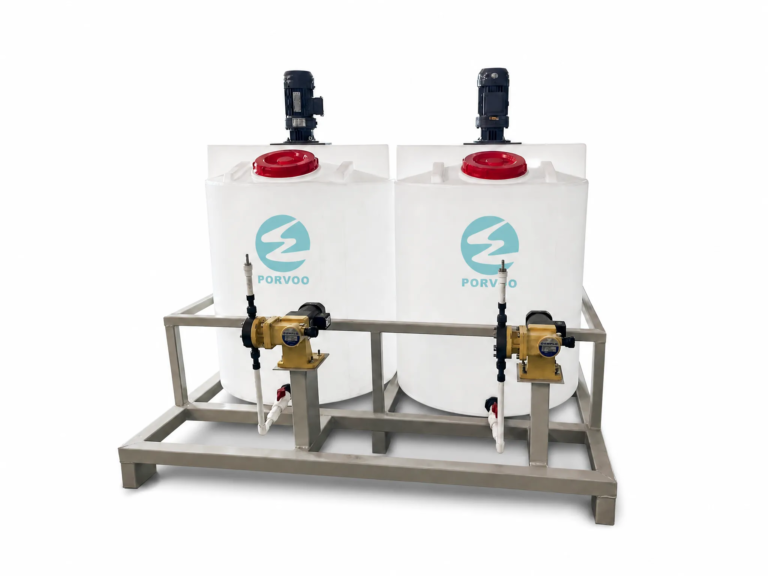
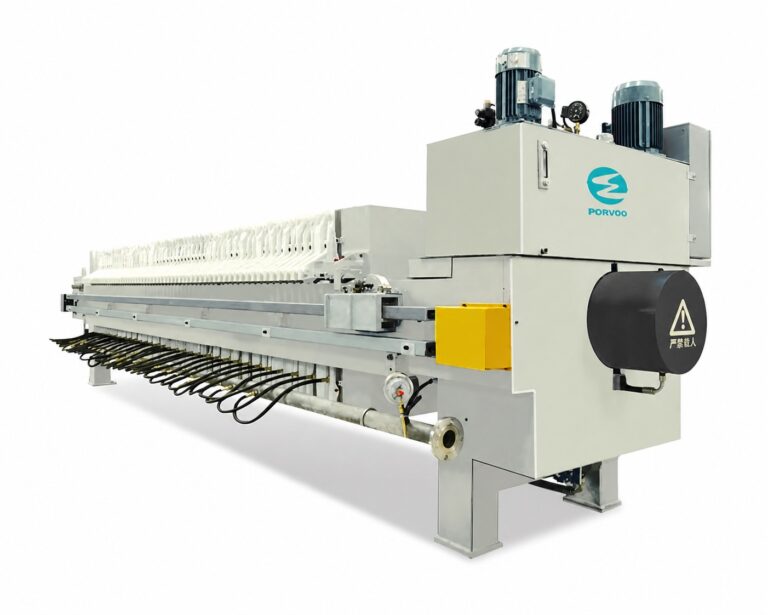
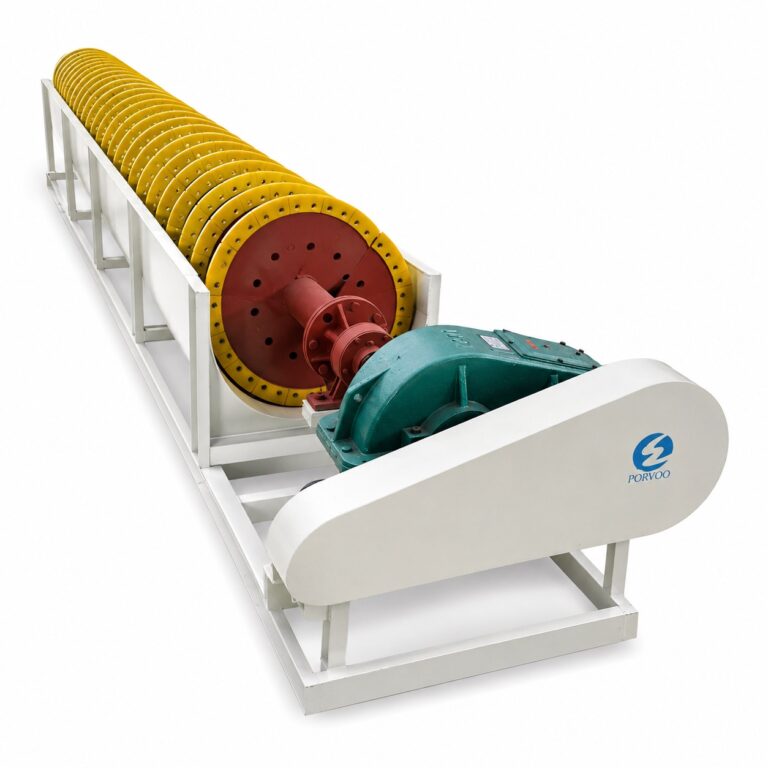
The ceramic sectors are only one part of the installation. A configuration review must also cover the slurry tank and agitation, rotating assembly, vacuum and filtrate systems, cake discharge, backwash or other regeneration provisions, drive and controls, guarding, access, and the downstream handling of cake and filtrate.
Component choices cannot be separated from the feed. Rotation speed affects the time available for cake formation, dewatering, and discharge. Vacuum stability affects liquid movement through the medium. Scraper condition affects cake release. Cleaning effectiveness affects permeability over time. These relationships are why a representative material review is more useful than a universal performance table.
Maintainability and operating access
A practical proposal should show how operators can inspect the ceramic sectors, scraper system, seals, vacuum path, filtrate receivers, drive, sensors, and cleaning equipment. It should also identify which conditions are monitored during operation and how abnormal filtrate, unstable cake, poor discharge, or rising vacuum-system load will be investigated.
The operating team should be able to distinguish a feed change from a mechanical or cleaning problem. The operator-focused guide on improving ceramic disc filter efficiency describes the variables and observations used for that work.
From process review to a configuration proposal
The next step is to bind the proposed equipment to representative slurry evidence and explicit acceptance criteria. Where existing evidence is insufficient, application-specific testing should establish cake formation, discharge behavior, filtrate condition, cleaning response, and operating stability before a final configuration is accepted.
For a PORVOO configuration review, provide the process duty, slurry data, required cake and filtrate conditions, operating schedule, utilities, site constraints, and any representative test material that is available. The resulting proposal should state its evidence boundary and any conditions that still require confirmation.