A portable dust collector can connect to a machine dust port or bring a capture hood to an open workstation. PORVOO offers two distinct layouts for these jobs. Choose the twin-bag collector for a compatible machine with a direct connection. Evaluate the HY1 mobile fume extractor when a flexible arm can position a hood close to the source.
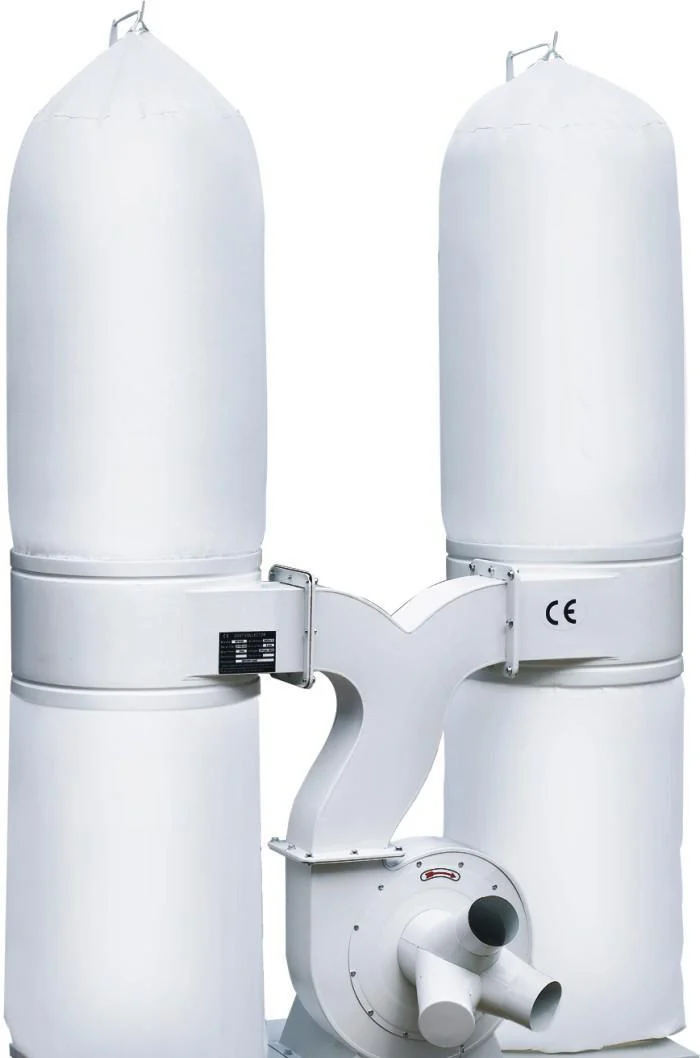
Twin-bag dust collector for a machine port
Shortlist this arrangement when a machine already has a hood or dust port and the collector can sit nearby. A shop that alternates between a saw and a planer is one example to discuss. The saw hood may need a different airflow and the planer may set the chip-handling duty. Send both duties if the same unit will move between them.
Check the port diameter, hose diameter and length, bends, adapters, and the space to empty the bags. Where more than one inlet will be connected, identify which ports run at the same time. Ask for the delivered airflow at the machine with the proposed hose and bags in normal service. The number of bags or ports alone cannot establish that airflow.
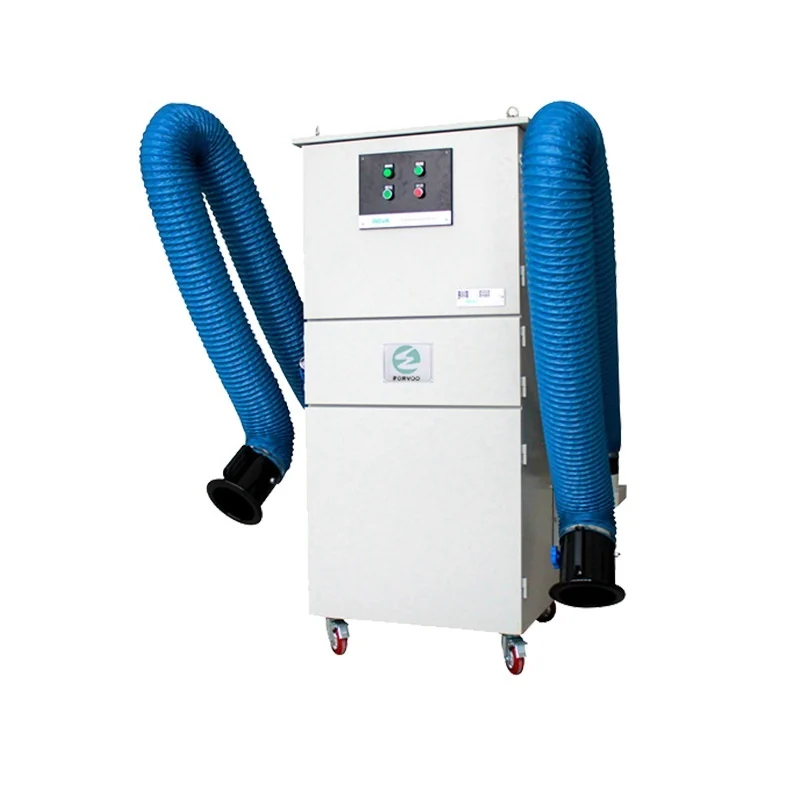
HY1 dual-arm mobile fume extractor for work at the source
Evaluate HY1 for localized fume-producing work such as welding where the operator can keep a hood close to the source and draw the fume away from the breathing zone. The flexible arms let the operator reposition the hoods as the work moves. The HY1 product sheet describes a cartridge collector with pulse cleaning and a pull-out dust drawer.
The dual-arm HY1 sheet lists an overall unit size of 850 × 680 × 1,000 mm and 2.2 kW motor power. Use the listed unit dimensions for an initial space check. Request the arm reach, working envelope, utility requirements, and filter service clearance for the quoted arrangement. For a single-arm HY arrangement, request the dimensions and electrical data for that configuration.
For two hoods, state whether they will run together and the working position of each. Ask for airflow at each hood at the proposed arm position and filter condition. Agree on a representative task to confirm capture and have the site team review the outlet or return-air arrangement.
When to change the capture method
| At the source | What to compare |
|---|---|
| Dust escapes from the machine or the bag loads quickly | Review the machine hood and hose duty. Compare a fixed cartridge collector for suitable fine dust. Assess pre-separation and discharge for heavy chip loading. |
| A hood cannot keep up with the tool or the plume | Compare source capture at the tool, a partial enclosure or a purpose-built hood. For grinding work held on a bench, review a downdraft table. |
| Several sources operate at once or stay connected all shift | Compare dedicated or fixed extraction. Use the actual simultaneous extraction duties and plan where each branch connects. |
Flag unknown or combustible dust, sparks, hot particles, and mixed materials before selection. Have the site team review the process, required controls, material compatibility, and permitted exhaust route for the proposed system.
Request a quote for the connection you have
- Twin-bag collector. Send photos or a layout of the machine ports, the material and type of dust or chips, hose sizes and runs, operating hours, how much waste is collected, and which ports run together.
- HY1 fume extractor. Send the process and material, a photo or sketch of the work and hood positions, required reach, one- or two-arm operation, hours per shift, and any workplace exposure or exhaust requirements.
For both options, share the installation location, floor space and power available. Ask for the airflow at the stated operating point, the proposed filter and cleaning arrangement, and what will be measured on the actual task at startup.