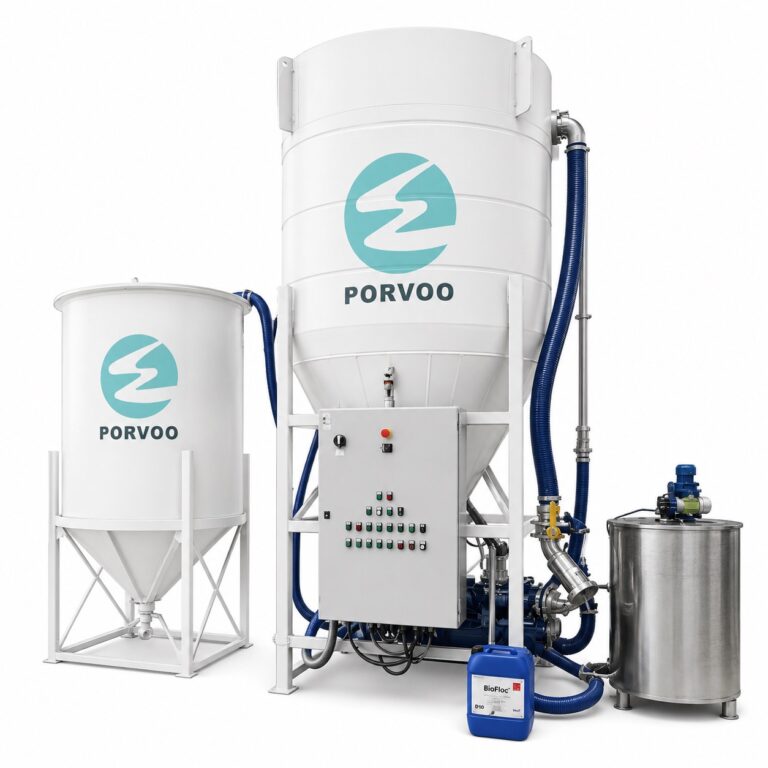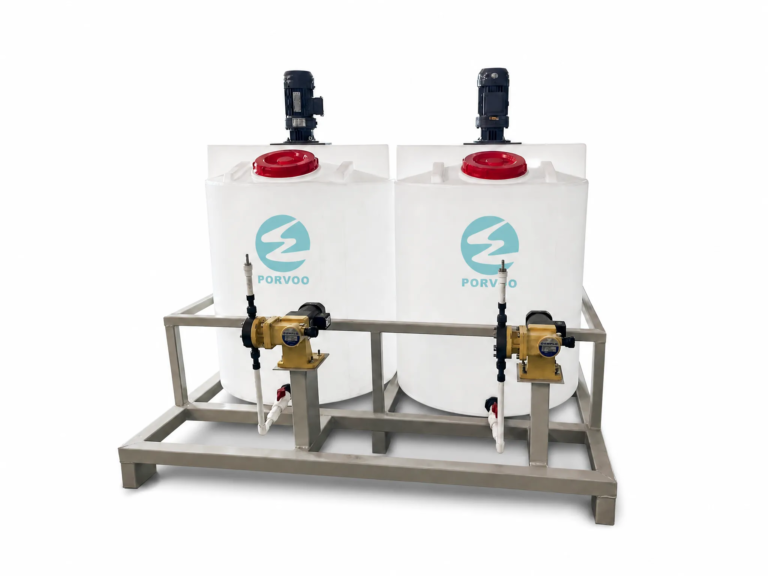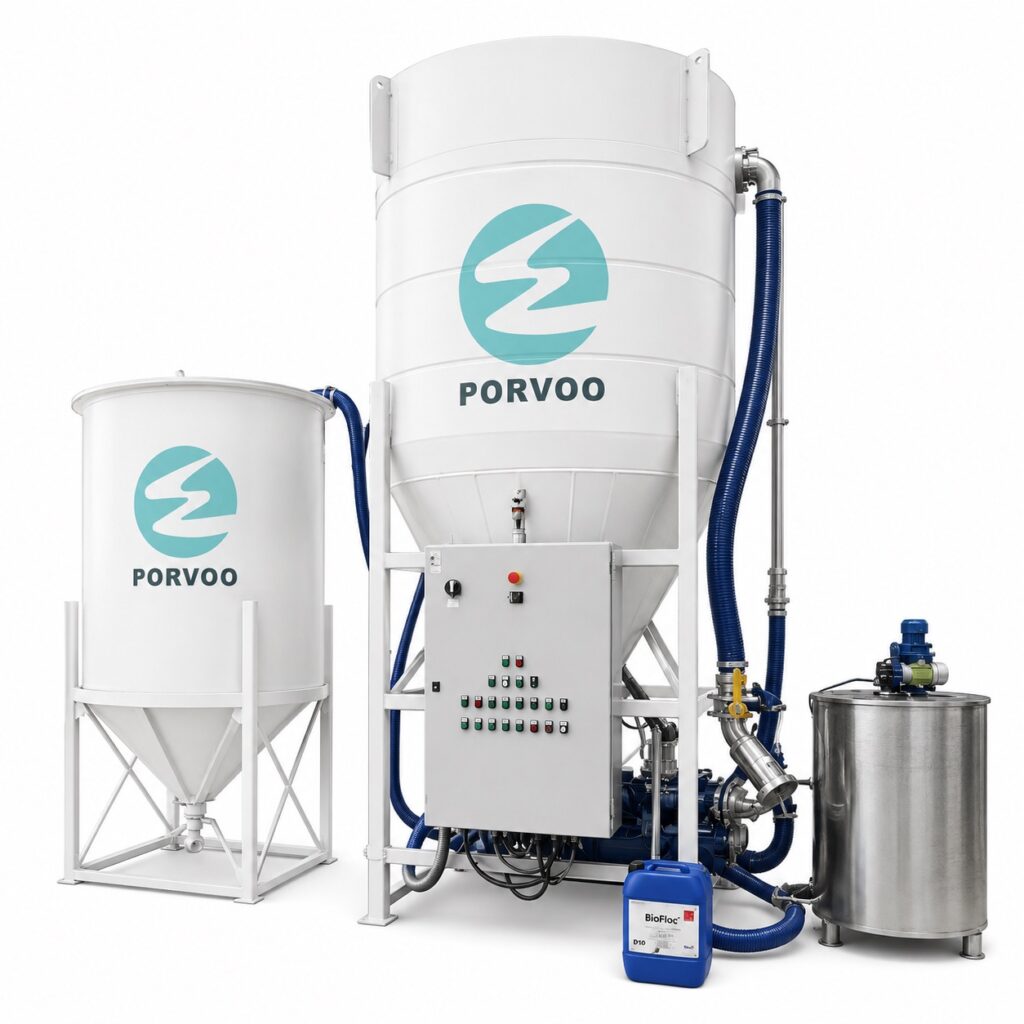
The PORVOO PWR is a compact, modular water recycling system developed for ceramic, tile, and stone plants where conventional settling systems require too much space or civil work.
Designed for continuous flow rates from 3 to 30 m³/h per unit, the PWR combines automatic PAC/PAM dosing, flocculation, vertical-flow clarification, water storage, sludge transfer, and PLC control in one above-ground system.
Clarified water can be returned to suitable cutting, grinding, edging, polishing, and washing processes. Settled mineral solids are collected and transferred for downstream dewatering.
For higher capacities, multiple PWR units can operate in parallel to provide a combined treatment capacity of approximately 100–200 m³/h.
A Complete Above-Ground Water Recycling System
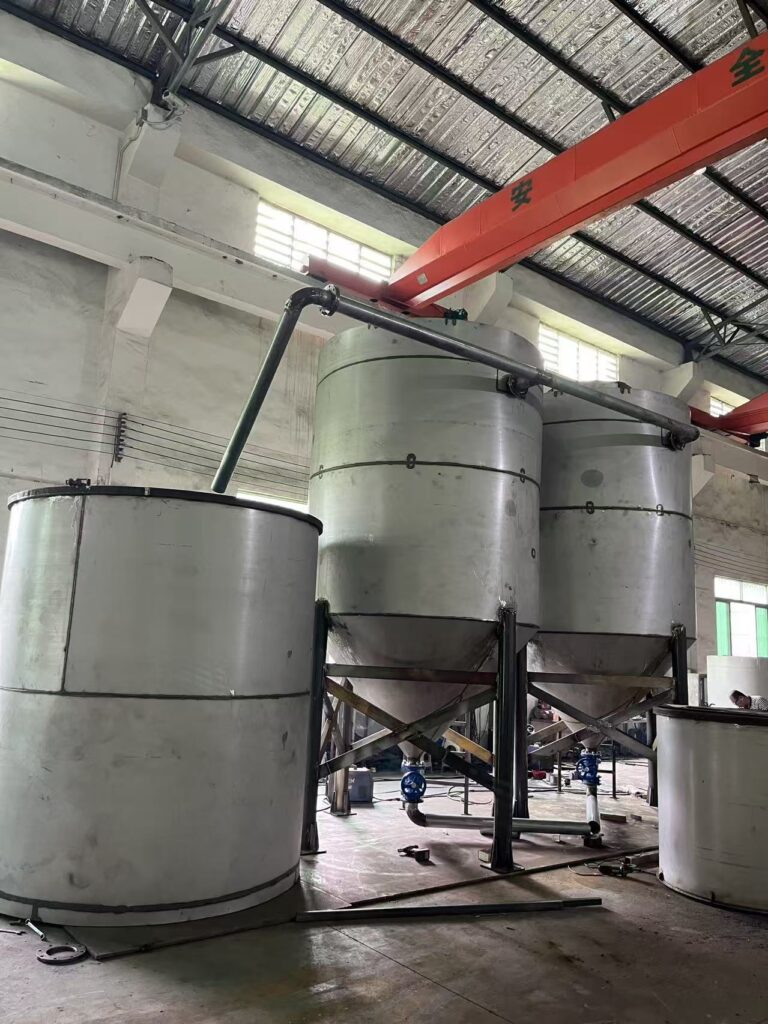
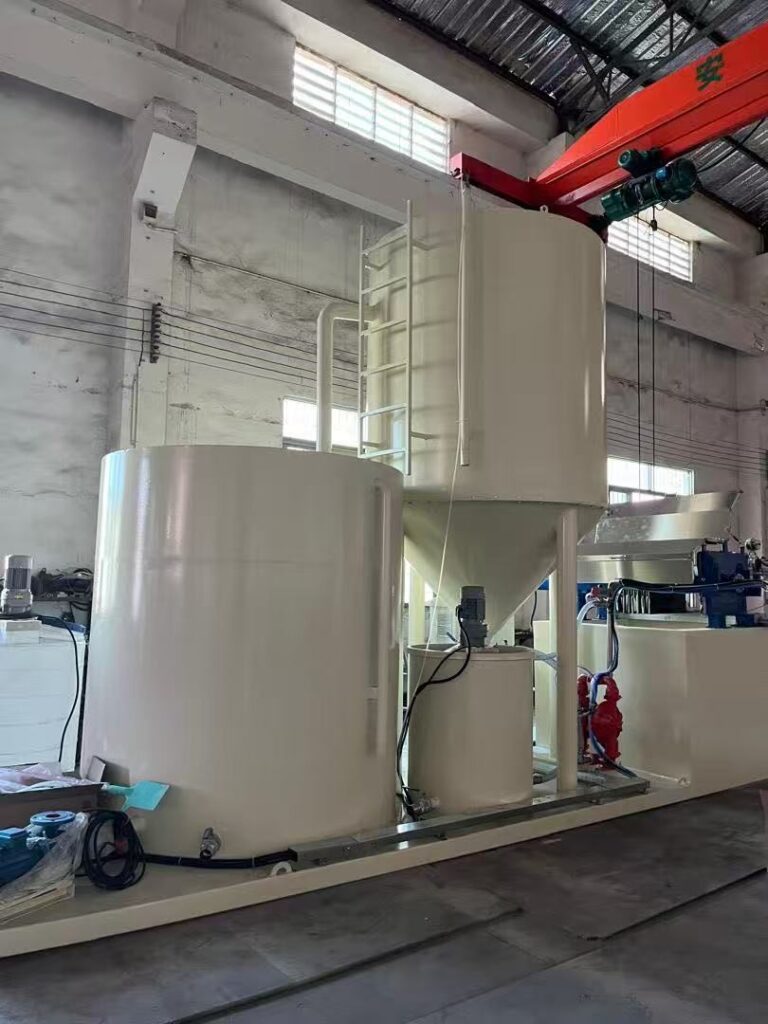
The PWR is supplied as an integrated treatment package rather than a standalone settling silo.
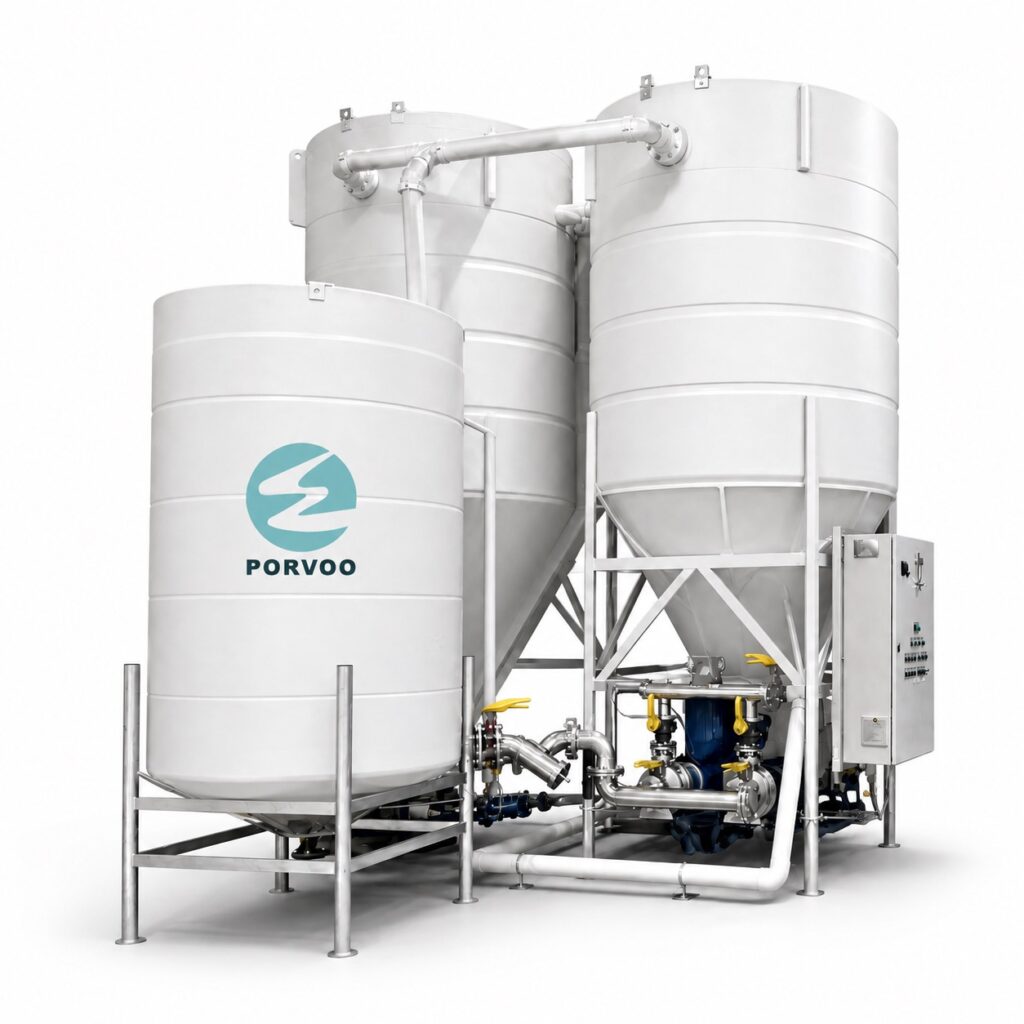
A typical system includes:
- Raw-water buffer and equalization tank
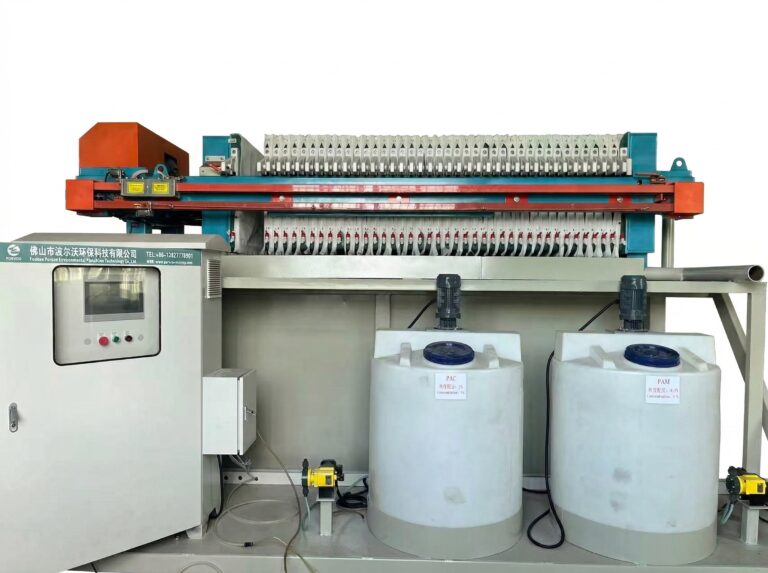
- PAC preparation and dosing unit
- PAM preparation and dosing unit
- Mixing and flocculation equipment
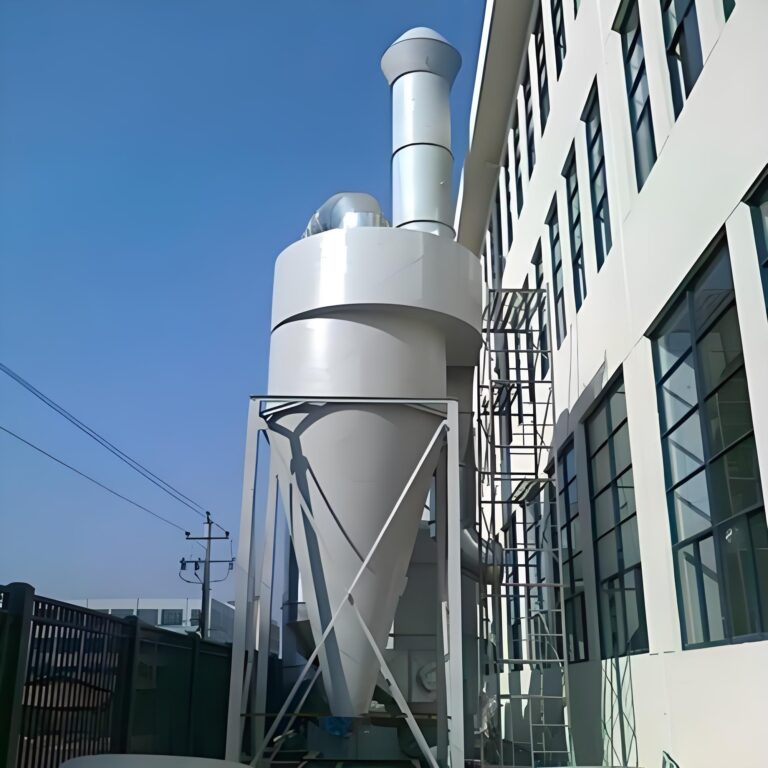
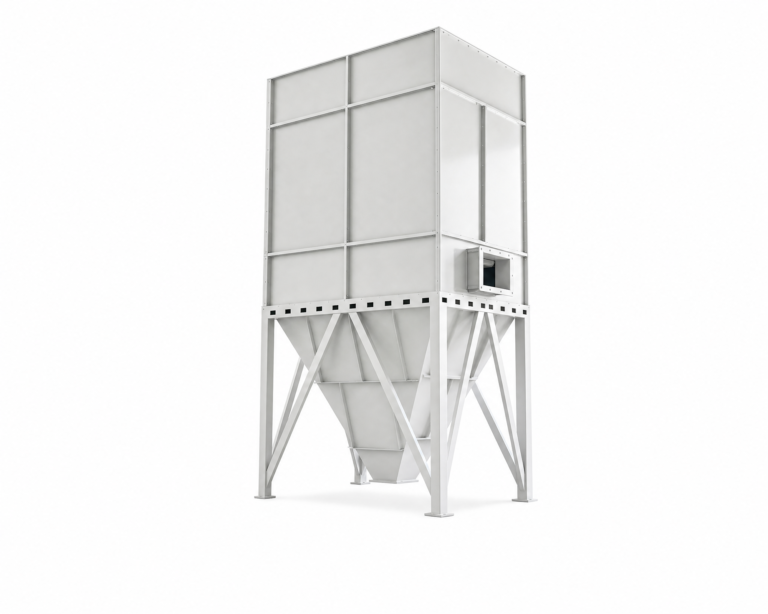
- Vertical-flow clarifier
- Clarified-water tank
- Sludge holding tank
- Sludge transfer pump
- Process pumps and mixers
- Flow and level instruments
- PLC control panel
- Interconnecting pipework between modules
Integrating these components into one system reduces the amount of equipment that must be sourced and coordinated separately.
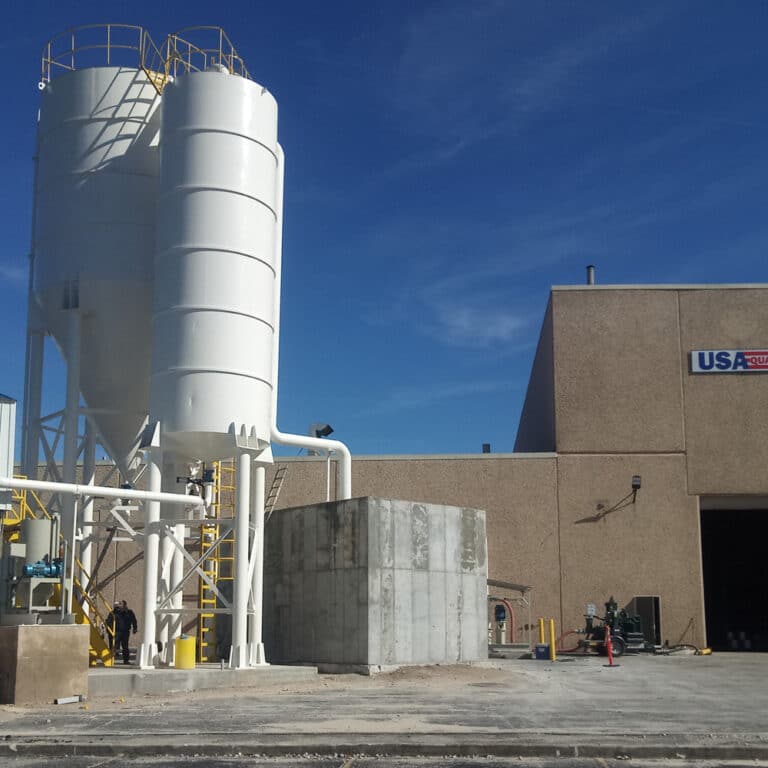
Because the raw-water, clarified-water, and sludge tanks are installed above ground, most projects can avoid the construction of a large underground collection pit.
How the PWR Water Recycling Process Works
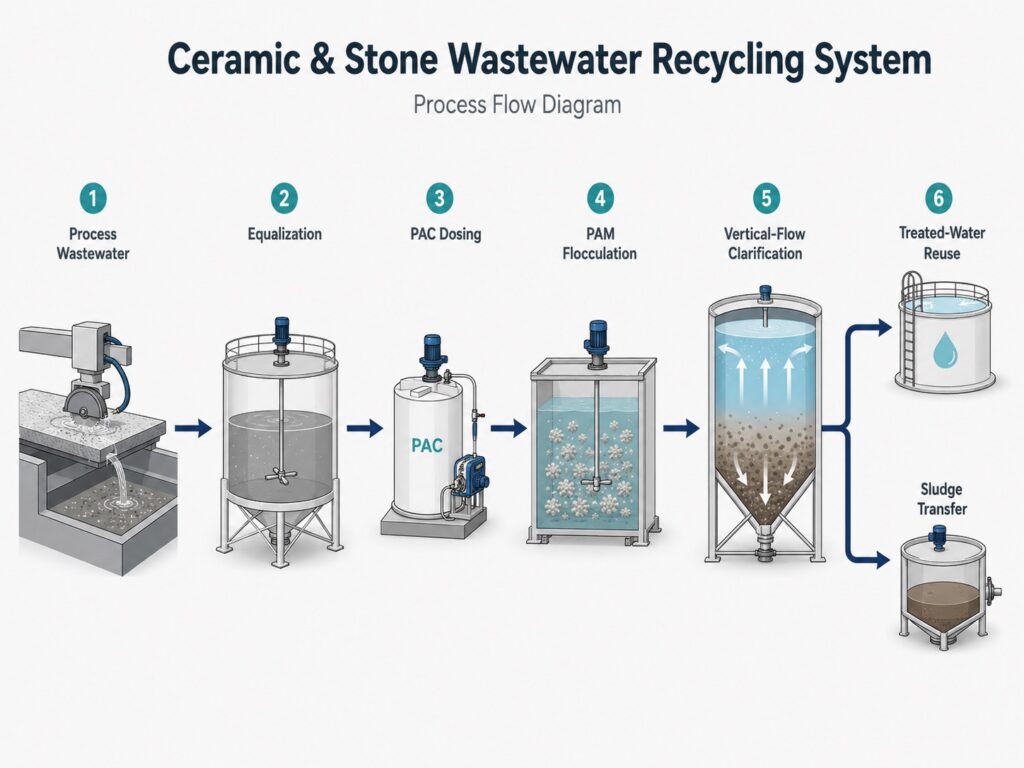
1. Buffer and Equalization
Process wastewater enters the raw-water buffer tank. The tank helps balance variations in flow and suspended-solids concentration, creating more stable conditions for chemical treatment and clarification.
2. Automatic Chemical Dosing
PAC and PAM are prepared and added automatically. Dosing is linked to the measured wastewater flow and coordinated by the PLC.
PAC destabilizes fine suspended and colloidal particles. PAM helps the particles form larger, heavier flocs that settle more efficiently.
Chemical selection and dosage are finalized according to the wastewater characteristics and settling tests.
3. Flocculation
The conditioned wastewater enters the flocculation section. Fine mineral particles, glaze particles, pigments, and other suspended matter combine into settleable flocs.
Controlled mixing supports floc formation without breaking the flocs before clarification.
4. Vertical-Flow Clarification
The flocculated wastewater enters the vertical-flow clarifier. As the water moves upward through the vessel, the heavier flocs settle by gravity.
Clarified water is collected from the upper section, while settled solids accumulate in the lower sludge zone.
5. Water Reuse
Clarified water flows into the treated-water tank and can be pumped back to a suitable production process.
The standard system is designed for direct reuse after chemical clarification and settling. If a specific production process requires tighter water quality, additional treatment can be evaluated during system design.
6. Sludge Transfer
Settled sludge is periodically discharged into the sludge holding tank. The included sludge pump then transfers it to the selected downstream dewatering equipment.
Suitable Wastewater and Applications
The PWR is primarily designed for industrial wastewater containing high levels of suspended mineral solids.
Typical applications include:
- Ceramic tile cutting and grinding
- Tile edging and polishing
- Natural stone cutting and polishing
- Engineered stone processing
- Small ceramic and stone workshops
- Intermittent production lines
- Factories with limited installation space
- Production lines that may be expanded or relocated
The process can also remove suspended and colloidal particles associated with glazes, pigments, and fine mineral materials.
Where COD is mainly carried by these suspended or colloidal particles, clarification can reduce the particle-associated COD as the solids are removed.
Particle-bound metals may also be removed with the settled sludge. Where dissolved COD or dissolved metals are a concern, PORVOO can evaluate the wastewater and determine whether additional treatment stages are required.
Treatment targets are established according to the actual wastewater and intended reuse point rather than a universal removal percentage.
PWR Standard Model Range
| Model | Rated Continuous Flow |
|---|---|
| PWR-3 | 3 m³/h |
| PWR-5 | 5 m³/h |
| PWR-10 | 10 m³/h |
| PWR-15 | 15 m³/h |
| PWR-20 | 20 m³/h |
| PWR-30 | 30 m³/h |
The model number indicates the nominal treatment flow. Each system is engineered according to the wastewater characteristics, daily operating time, solids loading, settling behavior, reuse requirement, and available installation space.
Tank volumes, clarifier dimensions, pump duties, chemical preparation capacity, and control logic are therefore confirmed for each project.
Multiple units can be installed in parallel for phased expansion, operational flexibility, or combined capacities of approximately 100–200 m³/h.
Modular Shipping and Site Assembly
Depending on its capacity, the PWR is divided into two or three transportable modules that can be loaded into shipping containers.
PORVOO completes the main steel fabrication, anticorrosion treatment, equipment installation, and system integration before shipment.
At the customer’s factory, the modules are positioned and connected with bolts, pipework, and electrical cables. Field welding is normally unnecessary.
The system can generally be installed on an existing level concrete floor, reducing excavation and civil-construction work. The floor must have suitable load-bearing capacity, levelness, drainage, and any anchoring required for the final equipment arrangement.
This modular design also makes future relocation or production-line expansion easier than with a permanently constructed settling system.
PLC-Controlled Operation
The PLC coordinates the main process equipment and instruments, including:
- Flow measurement
- Tank level monitoring
- Automatic start and stop
- Flow-linked PAC and PAM dosing
- Mixing and flocculation
- Sludge withdrawal
- Sludge transfer
- Pump interlocks
- Fault alarms
Automatic control reduces routine operator intervention and keeps the main treatment stages working together.
The control logic can be adapted to continuous or intermittent production schedules.
Water Reuse and Sludge Dewatering
Clarified water is stored in the included treated-water tank before being returned to an appropriate production process.
The intended reuse point is reviewed during system design because water-quality requirements can differ between cutting, grinding, polishing, and washing operations.
The system prepares settled solids for the following route:
Settled sludge → Sludge holding tank → Sludge transfer pump → Downstream dewatering
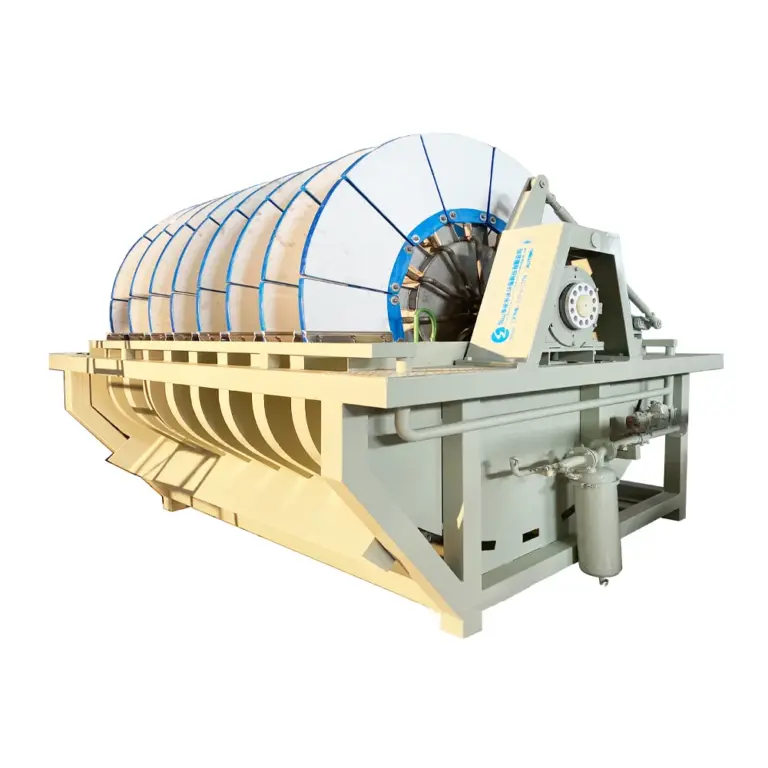
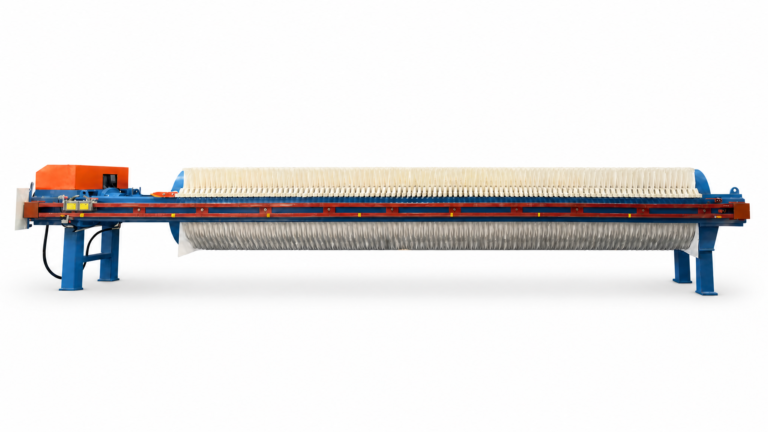
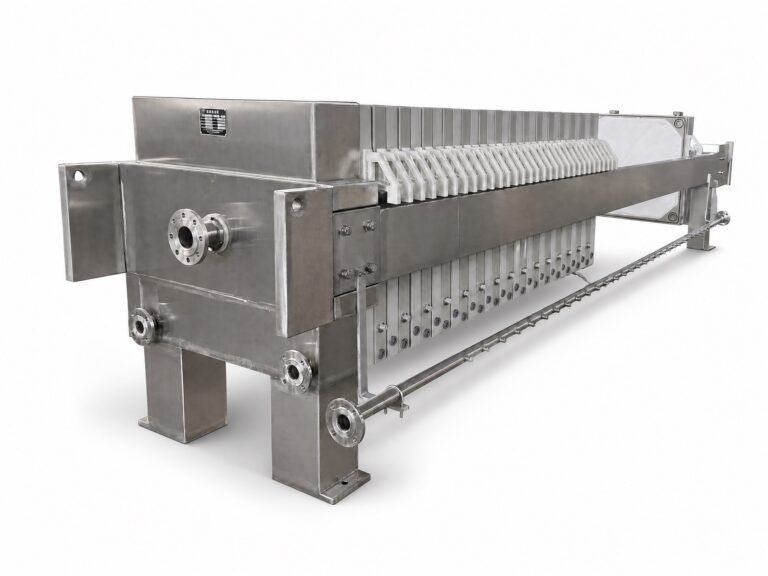
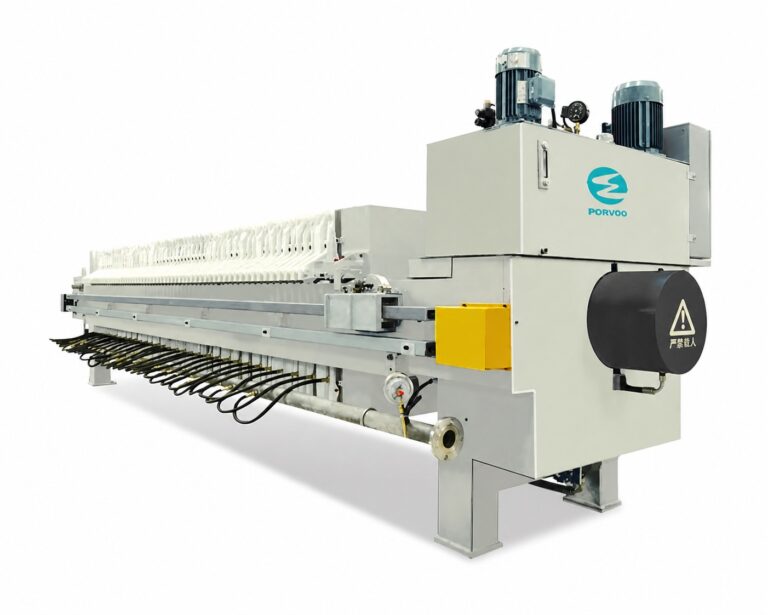
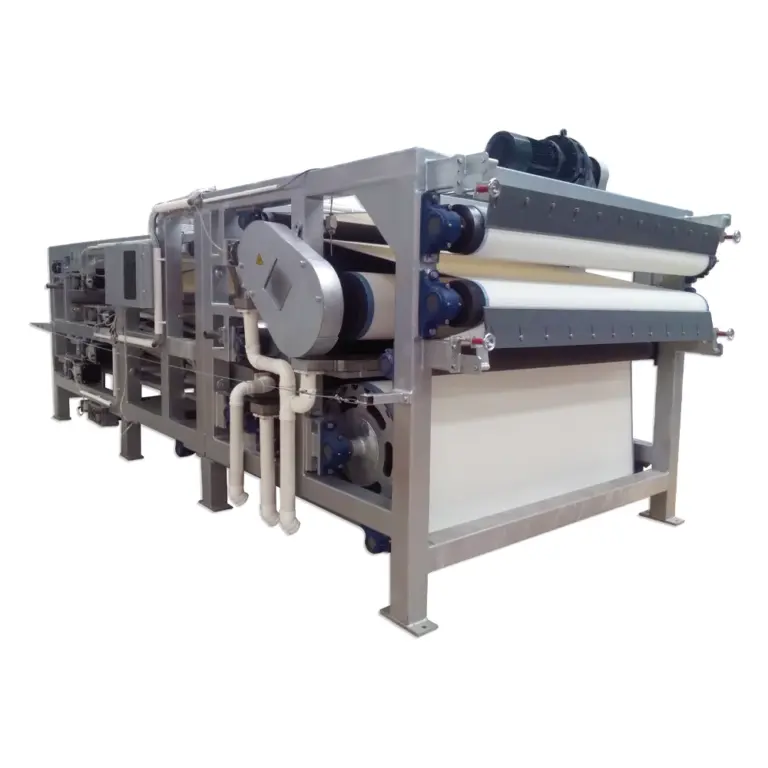
The PWR package includes the sludge holding tank and transfer pump. Dewatering equipment is selected separately because the appropriate solution depends on sludge concentration, daily sludge volume, operating schedule, and required cake condition.
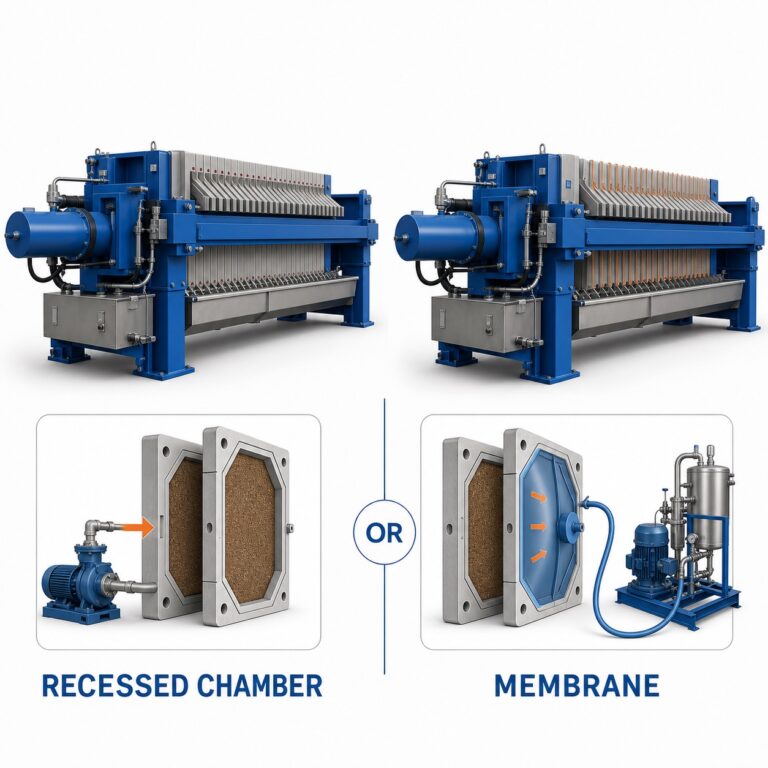
PORVOO can evaluate and supply suitable filtration or dewatering equipment as part of a wider project when required.
Project Engineering and Water Testing
PORVOO accepts customer wastewater samples and can conduct testing to evaluate chemical dosage, floc formation, settling behavior, clarified-water quality, and sludge characteristics.
Testing is particularly useful when the wastewater contains very fine particles, glaze or pigment contamination, variable solids loading, COD concerns, or a specific reuse-water requirement.
To prepare a system proposal, please provide:
- Wastewater source and production process
- Average and peak flow
- Daily operating hours
- Available water-analysis data
- Intended clarified-water reuse point
- Installation area and height
- Local power supply
- Preferred sludge-handling arrangement
Frequently Asked Questions
Does the PWR require an underground wastewater pit?
The configured system includes above-ground raw-water, clarified-water, and sludge holding tanks. It can normally be installed on a suitable existing concrete floor without constructing a large underground process pit.
Are the PWR models fixed standard products?
The models provide standard flow-selection points. Tank sizes, clarifier dimensions, pumps, dosing units, layout, and control logic are customized for the project.
Can the system operate with intermittent production?
Yes. Tank capacity and PLC logic can be configured for continuous or intermittent factory operation.
Can several PWR units operate in parallel?
Yes. Parallel units can provide phased expansion, operational flexibility, or a combined capacity of approximately 100–200 m³/h.
How long does manufacturing take?
Typical manufacturing time is 2–4 weeks after the technical solution is confirmed and the deposit is received.
Request a PWR System Proposal
The PWR offers ceramic and stone plants a compact alternative to a large permanent settling tower.
By combining chemical dosing, clarification, water storage, sludge transfer, and automatic control in a modular above-ground system, it helps factories recycle process water with less civil construction and a shorter site-installation schedule.
Send PORVOO your wastewater conditions, required flow, operating schedule, reuse objective, and available installation space to receive a project-specific PWR system proposal.