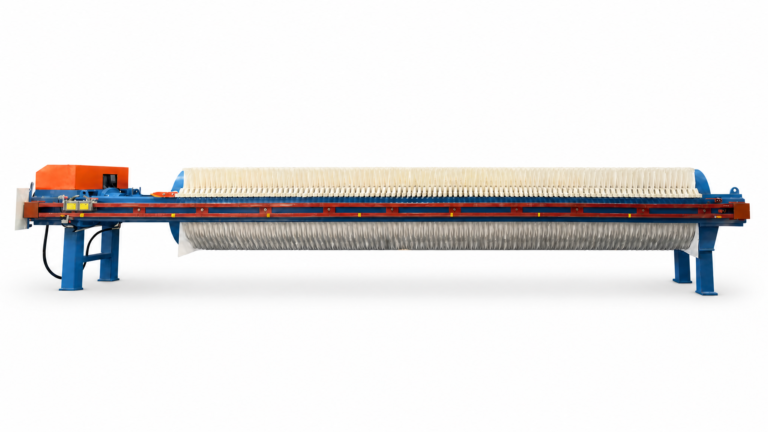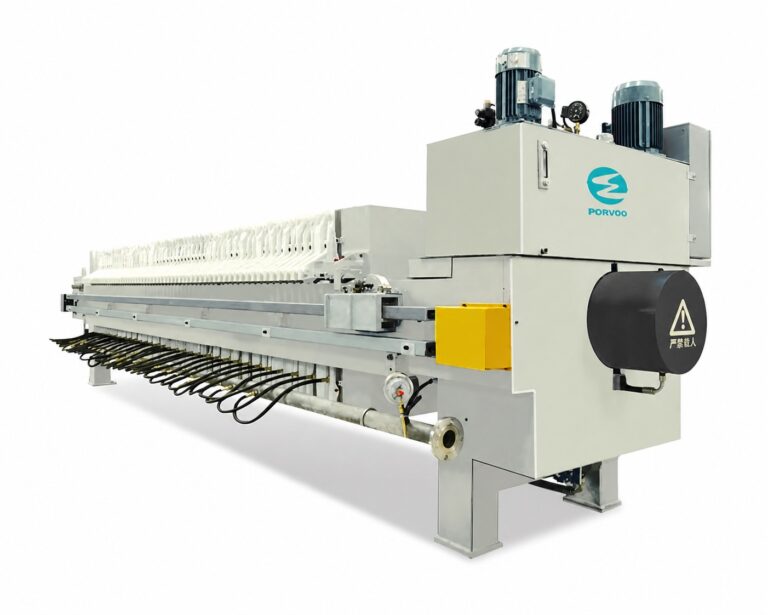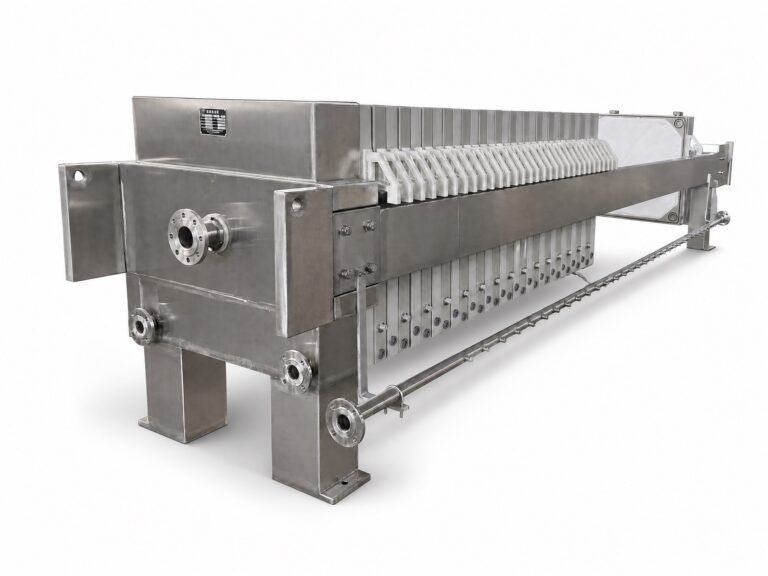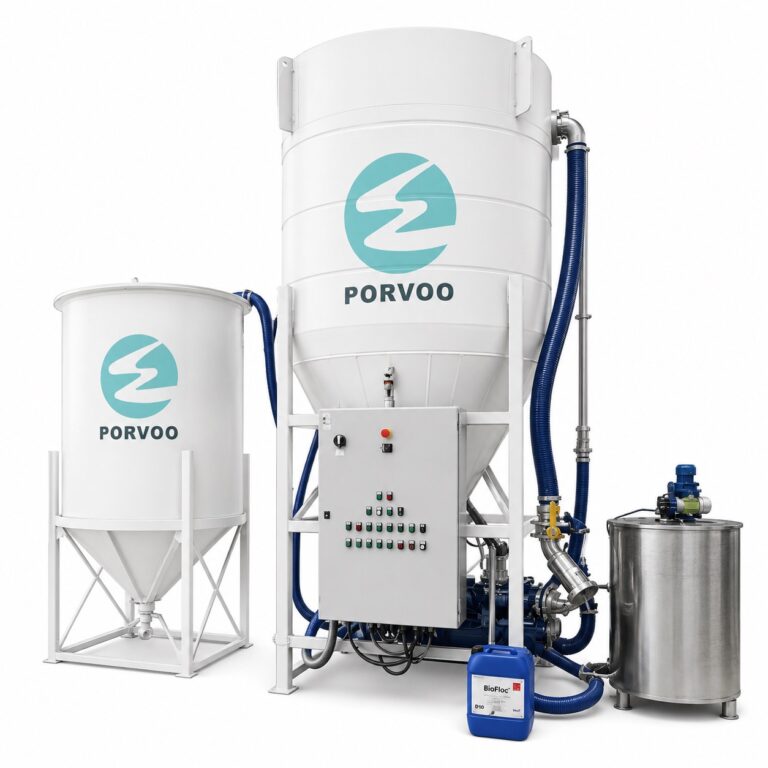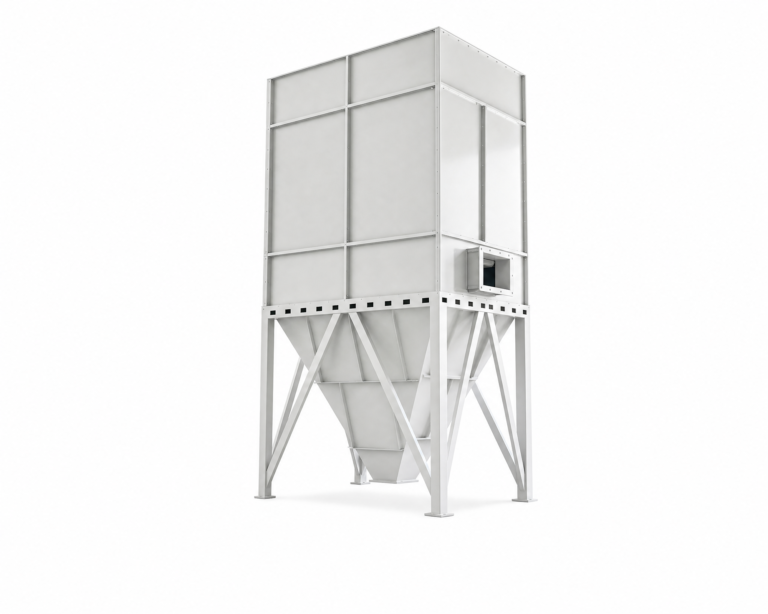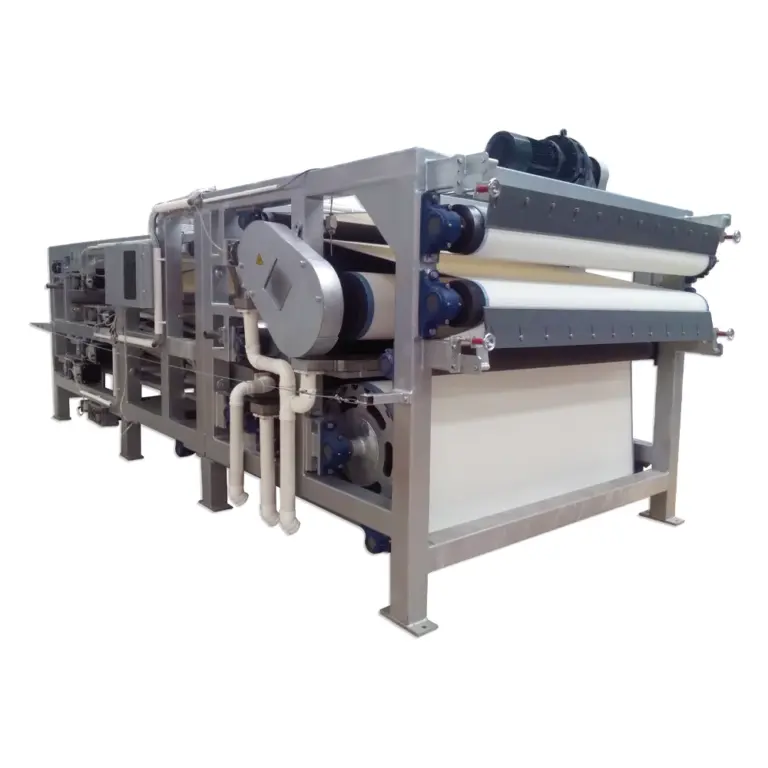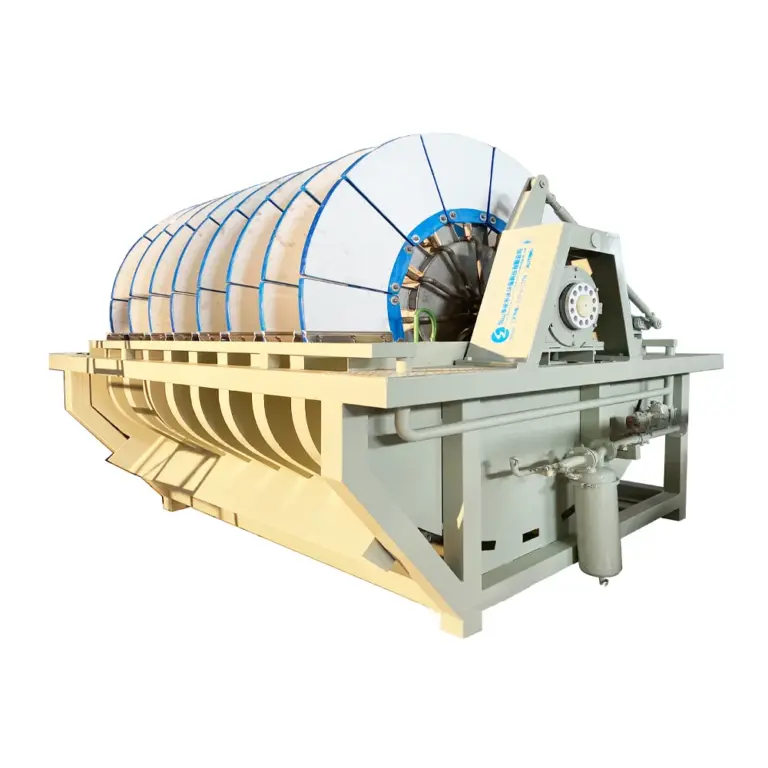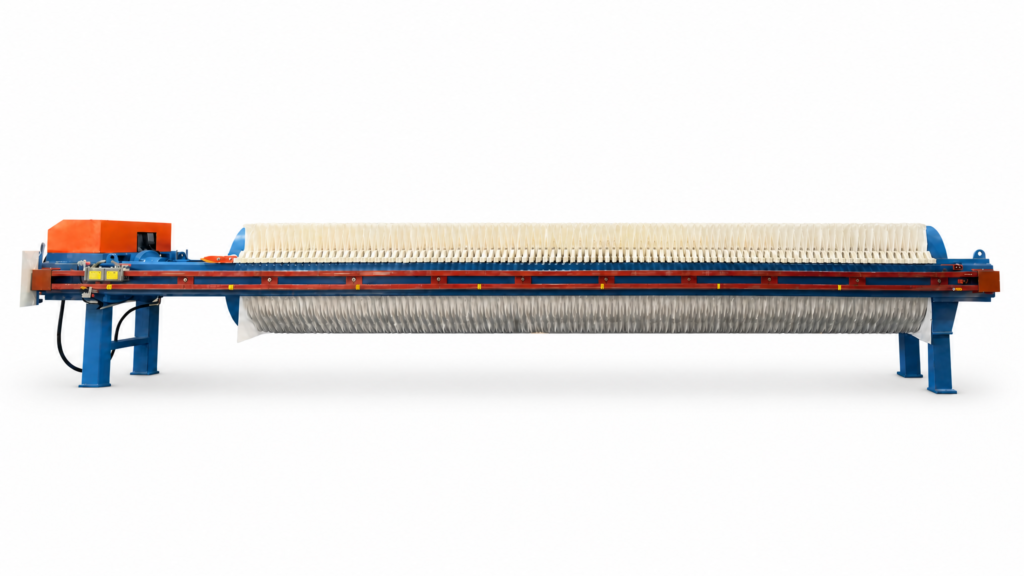
When a ceramic, stone-processing, clay, kaolin or similar mineral slurry is difficult to dewater, the filter press must be selected around the material rather than around a catalogue label. A PORVOO Round Plate Filter Press can be configured with round recessed-chamber plates or round membrane plates for projects that call for a higher-pressure filtration design.
Plate construction, filtration pressure, plate diameter, plate material and the level of automation are selected for the individual project. Send us your slurry data and required outcome, and we will review which configuration is suitable for your process.
Request a project-specific configuration. Share the material, known solids information, operating conditions, throughput target and desired cake or filtrate outcome with PORVOO. If some values are not yet available, identify them as unknown.
When Should You Consider a Round Plate Filter Press?
A round plate filter press is worth evaluating when all or most of the following conditions apply:
- The slurry is difficult to dewater with the current process.
- The project calls for a filtration-pressure design beyond the plant’s standard filter press arrangement.
- Cake release, cloth condition or filtrate quality must be assessed for a challenging mineral-based slurry.
- The customer needs a choice between a conventional chamber cycle and an additional membrane squeezing stage.
- The press must be configured around specific chemistry, temperature, operating hours, available space or cake-handling arrangements.
Round plates are commonly considered for ceramic slurry, stone-processing sludge, clay, kaolin and similar mineral slurries. Suitability for any material still depends on its actual filtration behavior and the complete press configuration. Round geometry alone does not guarantee lower cake moisture, higher capacity, a faster cycle or lower energy consumption.
What Does the Round Plate Geometry Change?
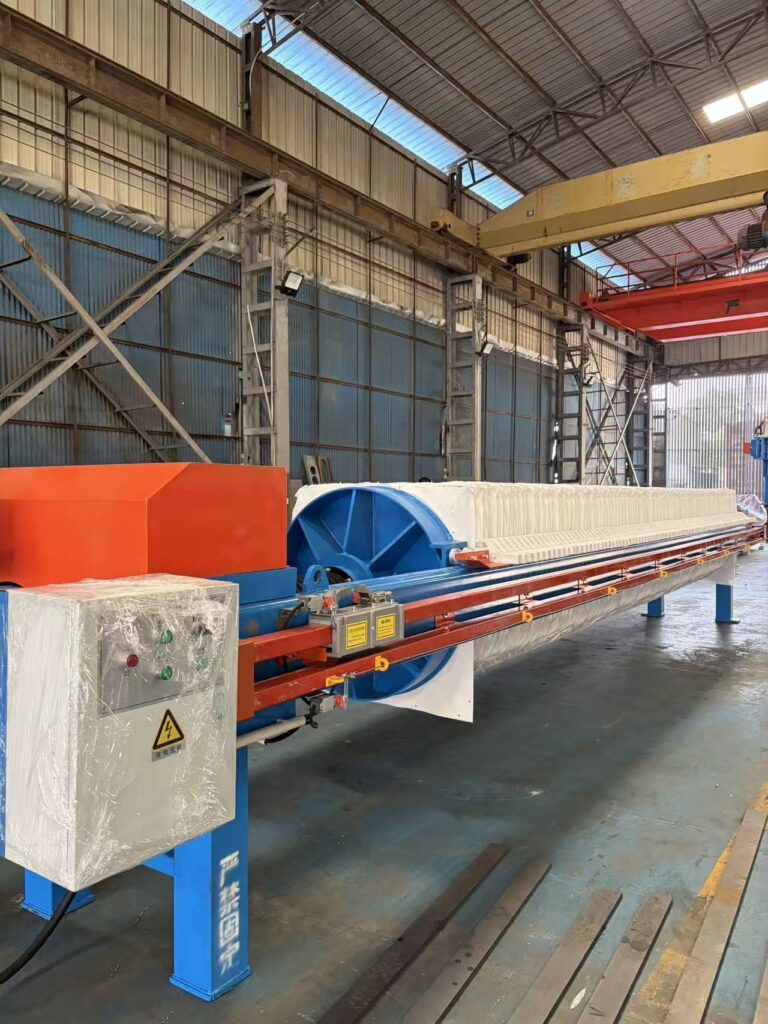
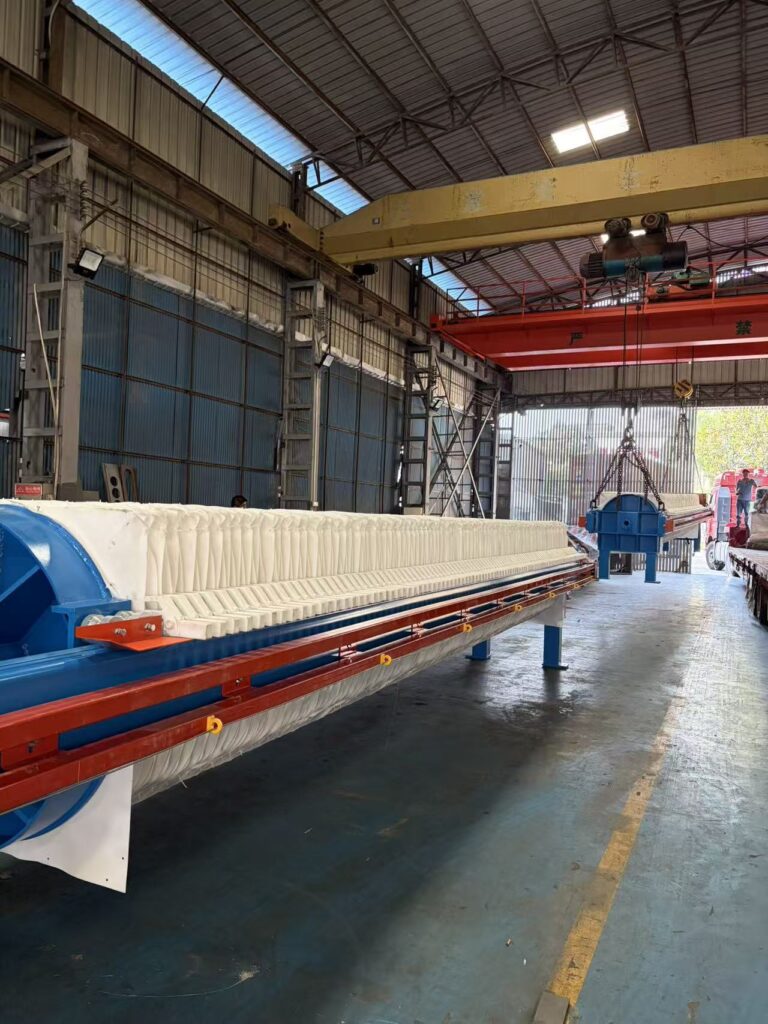
The word round describes the filter plate geometry; it does not describe a separate filtration principle. During operation, the plate pack is closed, slurry is fed into the formed chambers, liquid passes through the filter cloth, and solids accumulate as filter cake. Buyers who are still comparing equipment families can first review PORVOO’s filter press range.
Circular geometry can be incorporated into a press designed for higher filtration pressure because the load path can be managed around the plate shape. However, the allowable operating conditions are determined by the complete engineered system, including the plate construction and material, press frame, hydraulic closing system, feed arrangement, filter cloth and process controls. The plate shape must never be used as a stand-alone performance promise.
Three different pressures may be discussed in a filter press project, and they are not interchangeable:
- Filtration pressure is created by the feed system as slurry enters the chambers and liquid passes through the cloth and cake.
- Hydraulic closing pressure, where hydraulic closing is used, keeps the plate pack closed during the cycle.
- Membrane squeeze pressure applies only to a membrane configuration after the initial filtration stage, when the selected squeeze medium expands the membrane to compress the cake further.
PORVOO will confirm each applicable pressure separately for the selected design. A number for one of these functions must not be treated as the rating for another.
Choose the Right Plate Construction
| Configuration | How the cake space is formed | When to evaluate it | Important selection note |
|---|---|---|---|
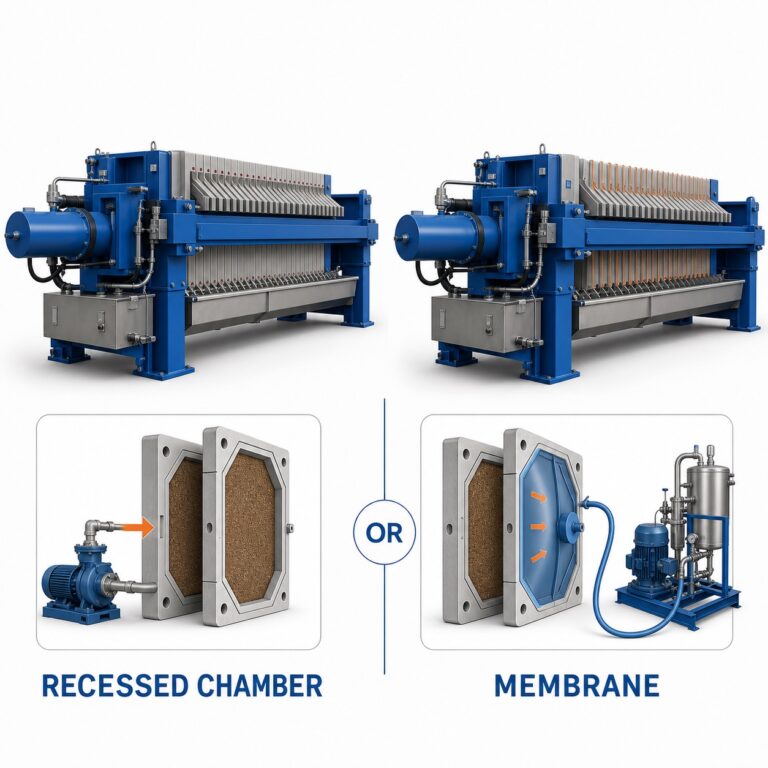
| Round recessed-chamber plates | Recesses in adjacent plates form the cake chamber when the plate pack is closed. | When the material can reach the required practical cake and filtrate outcome through the filtration stage without a separate membrane squeeze. | The result depends on slurry behavior, feed conditions, cloth selection and the complete cycle. |
| Round membrane plates | A membrane plate configuration first filters the slurry, then uses a separate squeeze stage to compress the formed cake. | When tests or process evidence show that secondary squeezing may improve the required cake or cycle outcome enough to justify the additional system requirements. | Squeeze medium, squeeze pressure, plate arrangement and safety controls require project-specific confirmation. A membrane stage does not guarantee a universal moisture result. See the general membrane filter press page for the broader technology family. |
| Standard square or rectangular recessed-chamber plates | Recesses in a conventional plate shape form the chambers. | For general chamber-filter-press duties where a round, higher-pressure configuration is not required by the material or project. | Compare the required filtration conditions, available plate format, footprint, cake discharge and lifecycle needs. See the standard recessed chamber filter press page. |
| Traditional plate-and-frame construction | Alternating solid filter plates and separate hollow frames form the cake spaces. | When the process specifically requires a verified plate-and-frame arrangement rather than a recessed chamber or membrane chamber. | Plate-and-frame is a construction type, not a generic English name for every filter press. Round shape must not be assumed to mean plate-and-frame construction. |
If the required cake condition can be reached with a recessed-chamber cycle, a membrane stage may not be necessary. If a membrane squeeze creates a meaningful process benefit for the tested slurry, the membrane option can be evaluated together with its utilities, controls and operating requirements.
Where the Selected Configuration Changes the Cycle
The basic batch-filtration cycle is explained on PORVOO’s filter press range page. For this product, the important decision is what happens after the round plate pack has formed the cake: a recessed-chamber configuration completes the selected filtration cycle without a membrane squeeze, while a membrane configuration can add a separately controlled secondary squeezing stage. Cake washing, air blowing, cloth washing and automatic plate handling are included only when the process requires them and the final design provides them. The actual sequence and end points must be established from the slurry, separation objective and confirmed equipment configuration.
Configurable Options for Your Project
PORVOO can develop the round plate filter press around the process rather than forcing every customer into one fixed model. The main configuration decisions include:
| Configuration item | Project decision |
|---|---|
| Plate construction | Round recessed-chamber or round membrane arrangement |
| Filtration conditions | Filtration pressure selected for the slurry and complete equipment design |
| Plate size | Round plate diameter selected around required filtration area, cycle plan, footprint and handling needs |
| Plate material | Selected according to slurry chemistry, temperature, mechanical duty and the intended operating conditions |
| Filter cloth | Cloth material, weave and permeability matched to particle retention, cake release, filtrate objective and cleaning method |
| Feed arrangement | Selected around slurry behavior, feed consistency and the required filtration sequence |
| Cake conditioning | Chamber filtration alone or an evaluated combination of membrane squeezing, washing or blowing where required |
| Plate handling | Manual or automatic operation according to plant workflow, labor plan and discharge requirements |
| Control level | Manual or automatic sequencing developed for the final process and installed options |
| Power supply | 220 V or 380 V, with phase, frequency and the applicable site electrical standard confirmed for the project |
| Cake and filtrate handling | Interface requirements defined around the customer’s downstream collection, recovery or disposal route |
Not every option is included in every configuration. The final proposal should define exactly which functions, utilities and interfaces are included.
Standard Model Range
For preliminary selection, PORVOO groups its standard round plate filter presses by filtration area and plate diameter. Use the table to shortlist a suitable model range; it is not a final sizing guarantee. The selected model must still be checked against the slurry characteristics, feed solids, required throughput, operating hours, desired cake and filtrate outcome, and the chosen recessed-chamber or membrane process.
| Model | Filtration Area | Plate Diameter | Typical Cake Thickness | Approx. Chamber Volume |
|---|---|---|---|---|
| RCFP-20-800 | 20 m² | Ø800 mm | 25 mm | ≈255 L |
| RCFP-30-800 | 30 m² | Ø800 mm | 25 mm | ≈377 L |
| RCFP-40-800 | 40 m² | Ø800 mm | 25 mm | ≈499 L |
| RCFP-50-800 | 50 m² | Ø800 mm | 25 mm | ≈621 L |
| RCFP-60-800 | 60 m² | Ø800 mm | 25 mm | ≈753 L |
| RCFP-70-800 | 70 m² | Ø800 mm | 25 mm | ≈875 L |
| RCFP-80-800 | 80 m² | Ø800 mm | 25 mm | ≈1000 L |
| RCFP-80-1000 | 80 m² | Ø1000 mm | 30 mm | ≈1210 L |
| RCFP-90-1000 | 90 m² | Ø1000 mm | 30 mm | ≈1350 L |
| RCFP-100-1000 | 100 m² | Ø1000 mm | 30 mm | ≈1500 L |
| RCFP-110-1000 | 110 m² | Ø1000 mm | 30 mm | ≈1650 L |
| RCFP-120-1000 | 120 m² | Ø1000 mm | 30 mm | ≈1800 L |
| RCFP-130-1000 | 130 m² | Ø1000 mm | 30 mm | ≈1950 L |
| RCFP-140-1000 | 140 m² | Ø1000 mm | 30 mm | ≈2100 L |
Larger Ø1250 and Ø1500 plate configurations, alternative filtration areas and non-standard chamber volumes can be engineered for higher-capacity or project-specific duties.
Available Configuration Choices
| Item | Available configuration |
|---|---|
| Plate construction | Round recessed-chamber or round membrane plates |
| Automation | Automatic operation is available. The final proposal identifies exactly which functions are automated. |
| Power supply | 220 V or 380 V can be selected. Final voltage, phase, frequency and the applicable site electrical standard are confirmed for the project. |
| Project-specific engineering | Plate quantity, final dimensions, installed power, applicable filtration, hydraulic-closing or membrane-squeeze pressures, and machine weight are confirmed during engineering. |
To use the table, first shortlist a model by the required filtration area or chamber volume. Then send PORVOO the slurry data and operating target so the plate diameter, recessed-chamber or membrane construction, automation scope and final machine configuration can be confirmed.
Applications to Evaluate First
Ceramic Slurry
Ceramic processes can produce fine-particle slurries whose filtration behavior changes with solids concentration, particle distribution and upstream conditioning. A round plate configuration may be evaluated when the project requires a higher-pressure filtration design or a choice between chamber filtration and membrane squeezing.
Stone-Processing Sludge
Cutting, grinding and polishing operations can generate mineral sludge with demanding cake-release, cloth-cleaning and discharge conditions. Selection should consider the actual particle behavior, operating schedule, available space and how the discharged cake and recovered water will be handled.
Clay, Kaolin and Similar Mineral Slurries
Fine mineral slurries may require careful matching of feed conditions, filter cloth, chamber construction and cycle end points. A representative sample or reliable process data helps determine whether recessed-chamber filtration is sufficient or a membrane squeeze should be considered.
Other Slurries
Other industrial slurries can be reviewed, but they are not automatically suitable. PORVOO must evaluate the material, process conditions, compatibility requirements and target result before recommending a configuration.
What Determines Cake Moisture, Capacity and Cycle Time?
There is no responsible universal value for cake moisture, throughput or cycle time. These outcomes can change with:
- feed solids concentration and consistency;
- particle size, shape, compressibility and settling behavior;
- slurry temperature, pH and corrosiveness;
- upstream chemical conditioning;
- filtration pressure and feed profile;
- plate construction, chamber volume and filtration area;
- filter-cloth material and permeability;
- the use and settings of membrane squeezing, cake washing or air blowing;
- the chosen end point for filtration and cake discharge; and
- operating hours, cleaning practice and downstream handling.
PORVOO will base any project value on the supplied process information, appropriate evaluation and the agreed equipment configuration. Preliminary discussions are not a guarantee of the final cake, capacity or cycle result.
Information Needed to Configure Your Filter Press
For a useful technical and commercial proposal, please provide as much of the following information as possible:
| Information to provide | Why it matters |
|---|---|
| Slurry name and process origin | Establishes the application and upstream process context |
| Existing test data, and whether a representative sample can be supplied if later requested | Establishes what filtration evidence is already available without assuming that testing or sample shipment has been agreed |
| Feed solids concentration and expected variation | Affects cake volume, cycle development and feed control |
| Particle behavior | Helps assess retention, cloth choice, compressibility, settling and cake release |
| Temperature and pH | Supports material and cloth compatibility review |
| Other corrosive or abrasive characteristics | Supports the selection of plates, wetted parts and operating conditions |
| Recovery objective | Clarifies whether the priority is cake recovery, liquid recovery, waste reduction or another process outcome |
| Desired cake and filtrate outcome | Defines what the separation stage must achieve, subject to evaluation and confirmation |
| Required throughput and operating hours | Supports press sizing, cycle planning and automation decisions |
| Existing or expected cycle requirements | Helps identify plant constraints without treating an unverified target as guaranteed |
| Need for cake washing, air blowing or cloth washing | Identifies optional process stages and utility requirements |
| Available utilities | Establishes the available electrical, hydraulic, pneumatic, water or squeeze-medium interfaces |
| Installation space and access | Affects frame arrangement, service clearance and plate-handling selection |
| Cake discharge and downstream handling | Connects the press to collection, conveying, storage or disposal arrangements |
| Preferred operating level | Distinguishes manual operation from the required automatic functions |
If some information is not yet available, tell us which values are known and which still need evaluation. We can use that boundary to define the next engineering step without presenting assumptions as confirmed specifications.
Why Configure the Press with PORVOO?
PORVOO offers the two principal round plate paths needed for project selection: recessed-chamber filtration and membrane filtration with a secondary cake-squeezing stage. The proposal can then be developed around the required filtration conditions, plate diameter and material, slurry behavior, plant workflow and manual or automatic operation.
The objective is not to add every available option. It is to define a press whose included functions match the material, separation target and site conditions, while clearly identifying the data and engineering decisions that remain open.
Frequently Asked Questions
Is a round plate filter press the same as a plate-and-frame filter press?
No. Round describes the plate shape. Plate-and-frame describes a construction using alternating plates and separate hollow frames. A round press may use recessed-chamber plates or membrane plates. It should be called plate-and-frame only when that specific construction has been verified.
When should I choose round plates instead of standard square or rectangular chamber plates?
Evaluate round plates when the material and project call for a higher-pressure filtration design and the complete system can be engineered for those conditions. The choice should also consider slurry behavior, footprint, cloth, cake discharge, maintenance access and the required operating sequence. Round shape alone is not evidence of a better result.
Should I choose recessed-chamber or membrane plates?
Choose according to the behavior of the slurry and the required process outcome. A recessed chamber may be sufficient when the target can be reached in the filtration stage. A membrane configuration adds a separate cake-squeezing stage and should be selected when evaluation shows a meaningful project benefit and the required utilities and controls are available.
Can PORVOO guarantee a cake-moisture value before reviewing the slurry?
No universal cake-moisture value should be promised without material and process evidence. Cake condition depends on the slurry, conditioning, filtration settings, cloth, plate configuration and cycle. PORVOO will review the available data before discussing a project-specific target.
Can the press handle ceramic, stone, clay and kaolin slurries?
These are the first applications to evaluate for this product. Final suitability and configuration still depend on the actual slurry, operating conditions, compatibility requirements and desired result.
Is automatic operation available?
Yes. Manual and automatic operation can be configured for different projects. The final proposal must identify the included automatic functions rather than implying that every press has the same automation package.
What should I send for a quotation?
Send the material and process origin, known solids information, temperature, pH and corrosive or abrasive characteristics, desired cake and filtrate outcome, throughput and operating schedule, available utilities, installation space, discharge method, and any need for washing or blowing. Include existing test data when available, and tell us whether a representative sample could be supplied if later requested.
Discuss Your Slurry with PORVOO
Tell us what material you need to separate, what result the current process achieves and what needs to improve. PORVOO will review whether a round plate filter press is appropriate, whether recessed-chamber or membrane construction should be evaluated, and what additional data is needed for a project-specific proposal.
Request a Round Plate Filter Press Configuration
Please include:
- slurry and process;
- solids information;
- temperature and pH;
- desired cake and filtrate outcome;
- required throughput and operating hours;
- washing or blowing needs;
- available utilities;
- installation space; and
- cake-discharge method.
The final performance, capacity and cycle depend on the material, process and confirmed equipment configuration.
If a filter press is not yet confirmed as the right equipment family, review PORVOO’s wider filtration equipment range before submitting the process data.