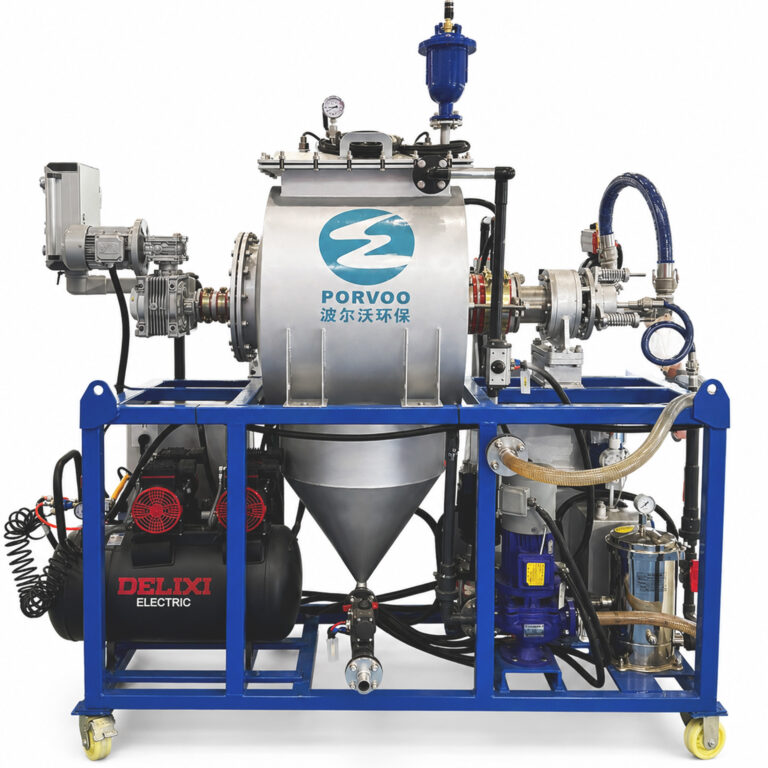
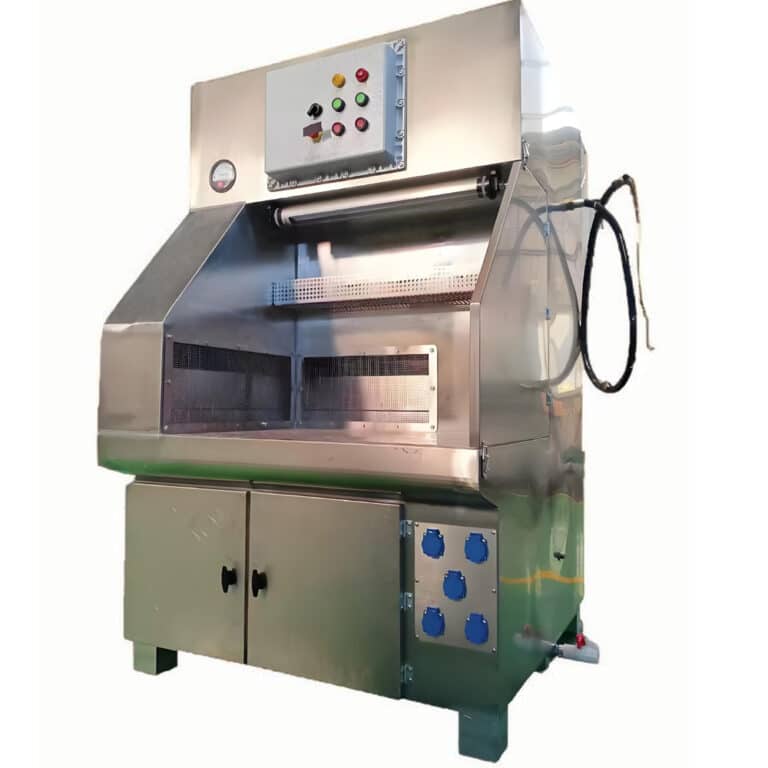
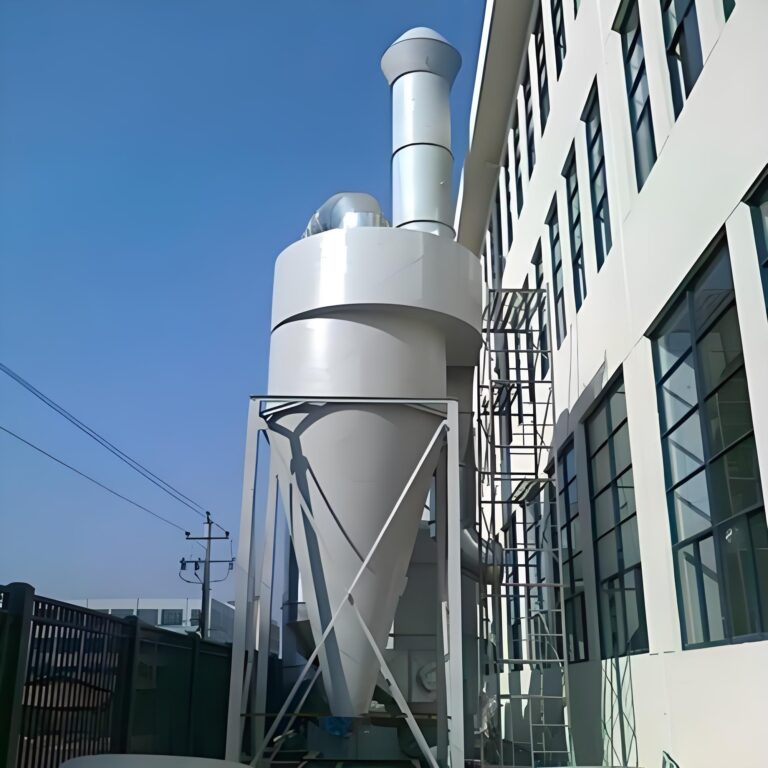
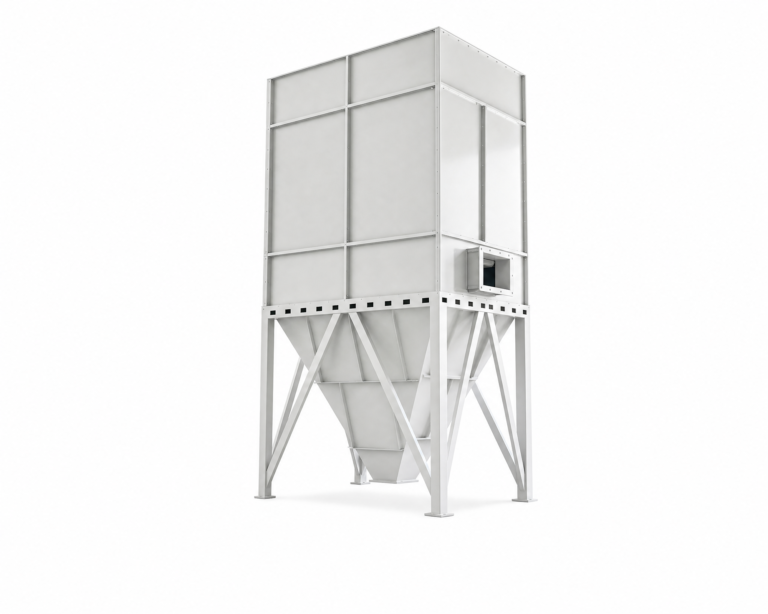
A dust collector handover package often includes a mix of paperwork, loose parts, and boxed consumables, and the buyer’s maintenance team has to decide which of those items actually belong to their unit before signing off. Getting this wrong at handover creates a gap that surfaces later, when someone needs a part and cannot confirm it was ever received, ordered, or matched to the installed equipment.
Define What the Startup List Must Cover
A startup spares and consumables list is not a generic accessory package; it is a record tied to one delivered order. Before checking quantities or storage, the buyer needs to separate the list into three distinct categories, because each category answers a different question during handover.
The first category covers items intended to support initial installation or commissioning. These exist to get the collector running and verified, and their relevance is tied to that startup window rather than to ongoing operation. The second category covers replacement spares retained for a known, identified component already installed on the unit. These are held in reserve against that specific component, not against the collector as a general category of equipment. The third category covers consumable items expected to be used or replaced during operation, where the item is understood to have a working life tied to how the equipment runs rather than to the startup event itself.
Where a project treats these three categories as one undifferentiated list, the buyer loses the ability to ask precise questions later. A missing installation item raises a different concern than a missing operational consumable: one affects whether commissioning can proceed as planned, the other affects whether a future replacement need can be met from stock already on site. Conflating them also makes it harder to tell whether an item’s absence is a startup issue to resolve immediately or a stocking decision that can wait.
This classification is not something the buyer can infer from the physical appearance of an item or from general familiarity with dust collector equipment. The project documents and the supplier must state, for the actual delivered collector, which category each item belongs to, why it is included, and what its intended use covers. Where that classification is missing or ambiguous in the handover paperwork, the buyer should treat the list as incomplete rather than fill the gap with an assumption based on how similar-looking items are typically supplied elsewhere. The distinction matters because the categories drive different downstream actions: installation items get consumed or held during commissioning, retained spares stay linked to a component’s identity for as long as that component remains installed, and consumables enter whatever tracking the maintenance team uses for operational stock.
Match Every Item to the Delivered Configuration
Once the list is classified, each item needs to be tied to something concrete on the actual delivered unit: the equipment model or identifier, the specific installed component the item supports, the manual or parts reference that documents it, and the project revision current at handover. An item without this linkage is not yet a usable record, regardless of how complete its description looks on paper.
This matters because spares and consumables are configuration-specific. A dust collector delivered under one project revision can differ from an earlier or later revision of what appears to be the same model line, and a component swapped during project execution changes which spare or consumable actually applies. The Donaldson installation and maintenance manual for its DFPRE cartridge collectors illustrates this directly: it requires model and serial information before a part can be ordered, because the manual’s own parts references are tied to that specific equipment identity. This shows a general principle that holds regardless of manufacturer: manuals and spare-parts lists are equipment-specific documents, not general reference material. The Donaldson manual’s part names, numbers, and procedures describe Donaldson equipment; they do not transfer to PORVOO equipment, and no compatibility should be assumed across manufacturers based on similar-looking item descriptions.
For the buyer, this means the confirmation step is not “does this item exist,” but “does this item’s identifier match this collector’s current configuration.” Where a project has gone through revisions between order and delivery, an item listed against an earlier revision may no longer correspond to what was actually installed. The applicable document reference is what resolves this uncertainty; a part number without a stated document source and revision cannot be treated as verified for the delivered unit.
| Register field | What to record | Why it matters |
|---|---|---|
| Equipment association | Delivered collector or component identifier | Prevents a generic item from being assumed compatible |
| Item description and supplier reference | The current identification supplied for the project | Supports accurate reconciliation and future requests |
| Intended role | Installation or commissioning item, retained spare, or consumable as confirmed for the project | Clarifies why the item is included |
| Applicable document | Current manual, parts list, or order reference | Keeps the item tied to a controlled source |
| Quantity status | Ordered, received, installed or consumed, and remaining quantity | Makes the handover position visible without prescribing stock levels |
| Storage or handover location | Project-confirmed location and any supplied condition | Helps the maintenance team find the item |
| Open discrepancy | Missing, damaged, unidentified, substituted, or unresolved status | Routes the item to project disposition |
The information a buyer supplies about the installed configuration is also what a project record like this depends on being accurate in the first place, since a parts or spares list only holds up if it reflects the same project inputs used to configure and quote the delivered collector.
Connect the List to Real Startup and Maintenance Work
Having a correctly classified, correctly matched list still leaves open the question of when each item is actually relevant. That question is answered by the commissioning plan and the applicable maintenance information for the project, not by the mere presence of an item on the list.
An item’s inclusion on a startup list indicates that someone judged it might be needed during a defined window or during later routine service; it does not by itself establish a failure mode, a required replacement, a service interval, or a stock quantity. Where a buyer sees an item on the list and no corresponding activity in the commissioning plan, the open question is whether the item supports a startup task not yet scheduled, a contingency held in reserve, or a later maintenance task outside the startup window entirely. Resolving that requires reading the commissioning plan and maintenance documentation together with the list, not treating the list as self-explanatory.
This becomes more consequential when a buyer or maintenance technician has referenced material from a different manufacturer’s manual to interpret what an item is for. A manual written for another collector may describe a maintenance action, an inspection point, or a consumable role that looks similar to something on the PORVOO project list, but the role, timing, and necessity of that action are specific to the equipment the manual describes. Importing that reasoning onto a different collector risks assigning a service interval or a failure expectation that was never established for the delivered unit. Where the commissioning plan and maintenance information for the actual project are silent on an item’s role, that silence should be resolved by asking the supplier, not by substituting logic drawn from unrelated documentation.
The practical effect is that the startup list and the commissioning plan function as a pair. The list identifies what exists; the plan and maintenance information identify when and why each item becomes relevant. A buyer reviewing the list in isolation can confirm receipt and identity, but cannot confirm operational relevance without cross-referencing the same project’s own commissioning and maintenance documents.
Confirm Quantity, Packaging, Storage, and Reorder Data
For each item that has been classified, matched to the configuration, and connected to a stage of work, the next confirmation is administrative rather than technical: how much was ordered, how it arrived, where it is being kept, and what information would be needed to request more.
Quantity confirmation means recording the ordered quantity and the received quantity separately, because a discrepancy between the two is a handover issue distinct from whether the item itself is correct. Packaging or preservation condition matters where an item’s usability depends on how it was stored in transit; a consumable received in compromised packaging raises a different concern than one received intact, even if both show the same item identity. Storage location matters because a maintenance team cannot act on a record that identifies an item without stating where it currently is on site.
None of these data points can be assumed from general knowledge of dust collector equipment. Quantities appropriate to a given collector, the shelf life of a given consumable, the storage conditions a given item requires, and the lead time for reordering it are all specific to the supplier and the project; they are not properties of a general equipment category. Where the handover package states a quantity, a storage condition, or a lead time, that stated information is what the buyer works from. Where the handover package is silent on any of these points, the correct response is to treat the value as an open question for the supplier rather than to estimate it from experience with different equipment or a different project.
Reorder information deserves particular attention because it is the data a maintenance team will need at a point in time separate from handover itself, often without the same project documentation immediately at hand. Recording the identification data needed for a future supplier request — the equipment identifier, the item’s supplier reference, and the applicable document revision — at the time of handover avoids a later situation where the team has a physical item on a shelf but no record of how it was originally specified or where the specification came from.
Reconcile Receipt Before Handover Closes
Reconciliation is the point where the confirmed list is checked against what physically arrived, and it is the step that determines whether the handover record can be closed or must carry open items forward.
The mechanism here is straightforward: the agreed list states what should exist for the project, and the packing and receiving records state what was actually delivered. Where the two match, the item’s status is settled. Where they diverge, the divergence needs to be documented in a form specific enough to support a decision, rather than noted generally as incomplete.
Divergence takes several forms, each with a different implication. An item consumed or installed during startup activity is no longer part of the stock on hand, and its handover record should reflect that consumption rather than treating its absence from the shelf as a discrepancy. An item that is missing or arrived damaged is a receiving issue that needs to be raised for disposition before the record can be treated as final. An item that arrived without clear identification, or that appears to have been substituted for what was ordered, presents a compatibility question that should not be resolved by assumption; the correct posture is to hold any compatibility assumption until the supplier confirms what was actually supplied.
The Donaldson manual supports the general mechanism of checking received parts against a packing list as a documented step in equipment handover, and that same mechanism applies here: comparing what a packing list states against what a receiving record confirms is how a discrepancy becomes visible in the first place. The manual’s role stops there — it describes a Donaldson-specific procedure and does not establish what PORVOO commits to, or what contractual remedy follows from a missing or damaged item on a PORVOO project. Those outcomes are matters for the project’s own commercial terms, not something a manufacturer’s maintenance manual can settle.
| Observed status | Evidence to retain | Project action |
|---|---|---|
| Matches agreed list | Item identity, received quantity, and receiving record | Record the accepted handover location |
| Installed or consumed during startup | Issue or usage record tied to the equipment | Update the remaining handover quantity |
| Missing or damaged | Packing and receiving evidence | Request project disposition |
| Unidentified or substituted | Item marking and applicable order reference | Hold compatibility assumptions pending supplier confirmation |
Where reconciliation surfaces an open item, the record should carry that status forward explicitly rather than letting it lapse once the equipment is running, because an unresolved discrepancy at handover becomes harder to trace and support once the original receiving documentation is no longer readily available.
Hand Maintenance Teams a Controlled Parts Record
The outcome of the preceding steps is a single accepted record, and the discipline required here is to freeze that record rather than let it continue to shift after handover.
A controlled parts record ties together the delivered equipment’s identity, the document revision that was current at the point of acceptance, each item’s description, the supplier reference needed to request it again, its quantity status, its physical location, and any discrepancy still open from reconciliation. Where every one of these fields is populated and accepted, the maintenance team has something they can act on without needing to reconstruct the handover history from separate documents each time a question arises.
The record’s purpose is narrow: it supports later communication between the maintenance team and the supplier by giving both sides a shared, traceable reference point. It does not extend into a promise about part availability at a future date, compatibility with a component that has not yet been confirmed, a response commitment for service requests, or an operating outcome for the equipment. Where a maintenance team later needs a part, the controlled record tells them what was delivered, in what quantity, and under what reference — it does not tell them that a replacement will be available on any particular timeline, because that depends on supplier stock and lead-time conditions outside the record itself.
Treating the record as frozen at handover also means that later changes — a component swap, a revised consumable, a different storage location — are new entries added to the record rather than edits that erase what was originally accepted. This keeps the reconciliation work already completed from being lost, and it keeps the connection to the delivered PORVOO Modular Pulse Jet Dust Collector configuration intact as the basis for any future parts request, even as the equipment moves from startup into routine operation and the maintenance guide governing that ongoing work becomes the more relevant reference than the handover documents themselves.
Frequently Asked Questions
Q: How do we decide which items belong in the startup kit rather than long-term maintenance stock?
A: Use the agreed commissioning plan and applicable maintenance information to identify the item’s intended work and timing. Have the project list distinguish installation or commissioning items, retained replacement spares, and operating consumables for the delivered configuration; another manufacturer’s list does not establish quantities or need.
Q: An item looks similar to the installed component. Can maintenance treat it as a compatible spare?
A: Compatibility needs confirmation against the delivered equipment identifier, installed component, current supplier reference, and applicable manual or parts list. Keep unidentified or substituted items unresolved until the supplier confirms their project association.
Q: What quantity should be handed over if some startup items have already been installed or consumed?
A: Record the ordered and received quantities separately from the installed or consumed quantities and remaining stock. Match usage and receipt records to the agreed list, then show the remaining quantity and handover location rather than reporting the original shipment quantity as available stock.
Q: What information will maintenance need to store and reorder the agreed items?
A: Provide the equipment identity, item description, current supplier reference, applicable document revision, quantity status, and location. Confirm any supplied preservation, storage, or shelf-life information and project-specific replenishment data instead of assuming universal conditions or availability.