Accurately sizing a belt filter press requires navigating two distinct capacity limits. Many engineers focus on flow rate alone, a critical error that guarantees underperformance when processing sludges above 1% solids. The real challenge lies in integrating hydraulic and solids loading calculations to create a resilient system specification that withstands real-world feed variability and process upsets.
This integration is not just theoretical. Misinterpreting manufacturer specifications or using average concentration data can lead to a costly technology mismatch. A reliable sizing framework must start with accurate sludge characterization and worst-case scenario planning, directly linking technical calculations to operational stability and total cost of ownership.
What Is Hydraulic Loading Rate and Why Is It Critical?
Defining the Parameter
The Hydraulic Loading Rate (HLR) measures the volumetric flow of sludge a belt filter press can accept per meter of belt width per hour, typically expressed as m³/hr/m. It quantifies the machine’s ability to handle the physical volume of material. For dilute sludges, this becomes the constraining design factor, determining if the press can physically accept the incoming flow without flooding the gravity drainage zone.
Its Operational Significance
HLR is a gatekeeper for process stability. An undersized HLR creates an immediate bottleneck, leading to sludge bypass, system overflows, and failure to meet throughput targets. Conversely, an oversized HLR often indicates an overcapitalized system with higher than necessary polymer and wash water consumption. The strategic value of accurate HLR calculation lies in designing for the lowest expected feed concentration, which builds in crucial hydraulic headroom to manage upstream process upsets without catastrophic failure.
The Dual-Limit Design Philosophy
A belt press has two non-negotiable capacity limits: dry solids throughput (kg DS/hr) and hydraulic loading (m³/hr). The final equipment specification must satisfy both. For feeds above approximately 1% solids, the dry solids throughput is typically the primary limiting factor. However, the HLR becomes the constraining limit for more dilute sludges. This dual-limit analysis is the cornerstone of reliable sizing, ensuring the selected unit can process the required solids mass even during periods of dilute feed.
Core Formula: Calculating Hydraulic Loading Rate Step-by-Step
Establishing the Inputs
The calculation begins not with a target flow, but with the mass of dry solids to be processed. Determine the daily dry solids production, often estimated at 50g per Equivalent Person per day for municipal applications. Define a realistic operating schedule—for instance, 7 hours per day, 5 days per week—to establish the peak hourly design duty. The most critical and often overlooked input is identifying the lowest expected feed sludge concentration, as this demands the highest volumetric flow.
Applying the Core Formula
The fundamental formula derives required flow from mass and concentration: Total HLR (m³/hr) = Dry Solids Loading Rate (kg DS/hr) / Feed Sludge Concentration (kg DS/m³). For example, a system must process 100 kg DS/hr. If the minimum feed concentration is 1.5% solids (15 kg DS/m³), the Total HLR is 6.67 m³/hr. This total flow is then divided by the selected belt width to obtain the HLR per meter for direct vendor specification comparison.
From Calculation to Specification
This step-by-step approach transforms operational data into a procurement-ready parameter. The following table outlines the key variables and their role in the HLR calculation, providing a clear reference for engineers.
| Parameter | Symbol / Unit | Typical Value / Calculation |
|---|---|---|
| Dry Solids Loading Rate | kg DS/hr | From daily production |
| Feed Sludge Concentration | kg DS/m³ | Use minimum expected value |
| Total HLR | m³/hr | DS Loading / Feed Concentration |
| HLR per meter | m³/hr/m | Total HLR / Belt Width |
| Design Schedule | hours/day | e.g., 7 hours/day, 5 days/week |
| Municipal Sludge Production | g/EP/day | ~50 g/Equivalent Person/day |
Source: Technical documentation and industry specifications.
Key Factors: How Sludge Type and Concentration Impact HLR
The Influence of Sludge Composition
Sludge type fundamentally dictates the achievable HLR on a given press. The volatile solids or ash content is the most useful characteristic for predicting dewatering behavior. A well-flocculated primary sludge, with higher ash content, typically allows a higher HLR than a sticky, gelatinous biological sludge with high volatile content. This difference stems from how readily water releases from the sludge matrix and how the conditioned floc withstands shear on the belts.
The Mathematical Impact of Concentration
Feed concentration is the direct variable in the HLR formula. A drop in concentration has a disproportionate impact on required flow. For instance, processing the same 100 kg DS/hr load at 1.5% solids instead of 3% solids doubles the volumetric flow from approximately 3.33 m³/hr to 6.67 m³/hr. This nonlinear relationship makes accurate, consistent testing of percent solids a strategic necessity, not just routine operational data.
Strategic Characterization for Reliable Sizing
Overlooking sludge characterization invites costly errors. The interplay between sludge type and concentration means that using generic HLR guidelines for a non-standard sludge guarantees a mismatch. The table below summarizes how these key factors influence the hydraulic loading design.
| Sludge Characteristic | Impact on HLR | Key Consideration |
|---|---|---|
| Primary Sludge (well-flocculated) | Higher achievable HLR | More favorable dewatering |
| Biological Sludge | Lower achievable HLR | Sticky, difficult to dewater |
| Feed Concentration Drop (3% to 1.5%) | Doubles volumetric flow | Critical sizing variable |
| Volatile/Ash Content | Dictates dewatering behavior | Primary predictor (Insight 5) |
| Consistent Testing | Strategic necessity | Avoids technology mismatch |
Source: Technical documentation and industry specifications.
Integrating Hydraulic and Solids Loading for Accurate Sizing
The Two-Dimensional Sizing Problem
Equipment selection is a two-dimensional problem solved on a graph of mass versus volume. You must plot your calculated design duty point—defined by your required kg DS/hr and your required m³/hr at minimum concentration—and ensure the selected press’s rated capacity envelope fully contains that point. Focusing solely on one axis is the most common and critical sizing error.
Satisfying Both Constraints
The final specification must explicitly state that the equipment’s rated capacities exceed your calculated values for both parameters. This integrated approach protects against two failure modes: inability to process the solids mass during normal operation, and inability to accept the hydraulic load during dilute feed events. It frames the entire technology selection, as alternatives like high-pressure centrifuges compete in specific application ranges.
A Framework for Dual-Limit Analysis
Adopting this mindset requires a structured comparison. The following table clarifies the dual constraints and the consequence of ignoring them, providing a checklist for the specification process.
| Design Duty | Parameter | Constraint |
|---|---|---|
| Primary Limit (Feed >~1% solids) | Dry Solids Throughput | kg DS/hr |
| Constraining Limit (Dilute feeds) | Hydraulic Loading Rate | m³/hr |
| Equipment Specification Must Exceed | Both Mass & Volume | Dual-limit analysis |
| Common Sizing Error | Focusing solely on flow rate | Guarantees underperformance |
| Technology Selection | Creates three-way comparison | Filter press vs. centrifuge |
Source: Technical documentation and industry specifications.
Operational Impacts: Polymer Use, Wash Water, and Upset Management
Conditioning at the Hydraulic Limit
Operating near the maximum HLR for a given solids load demands optimal polymer conditioning. Ineffective flocculation at high flow rates leads to poor cake formation, excessive solids loss in the filtrate, and potential blinding of the filter cloth. This underscores that sludge pre-conditioning is a central optimization lever; marginal gains in chemical or thermal treatment can often outweigh the capital cost of specifying a larger equipment footprint.
Ancillary Utility Demands
Higher sludge flow typically increases belt wash water demand. A greater volume of processed solids and finer particles can more rapidly blind the cloth, requiring more frequent or higher-pressure washing to maintain porosity and dewatering performance. This creates a direct operational cost link between HLR and water consumption. Furthermore, designing for a low feed concentration, while increasing upfront capital cost, provides the hydraulic headroom to absorb upstream upsets without immediate process failure.
Building System Resilience
The calculated HLR is not just a number for procurement; it’s a key variable in operational resilience. A system sized with adequate hydraulic capacity can tolerate fluctuations from upstream processes, such as clarifier blanket loss or stormwater inflow. This operational flexibility is a direct result of the conservative use of the minimum expected concentration in the initial HLR calculation. The table below connects these operational factors to the HLR design decision.
| Operational Factor | Impact of High HLR | Mitigation / Optimization |
|---|---|---|
| Polymer Conditioning | Demand for optimal flocculation | Central optimization lever |
| Belt Wash Water Demand | Typically increases | Maintains cloth porosity |
| Feed Concentration Design | Low value provides headroom | Manages upstream upsets |
| Sludge Pre-treatment | Marginal gains outweigh equipment cost | e.g., thermal to 60-65°C |
| Process Stability | Risk at hydraulic limit | Poor cake formation, solids loss |
Source: Technical documentation and industry specifications.
Beyond Calculation: Interpreting Manufacturer Specifications
Guidelines Versus Guarantees
Published manufacturer HLR ranges (e.g., 3-5 m³/hr/m) are performance guidelines based on testing with typical, well-conditioned municipal sludges. They are not guarantees for your specific sludge. Your calculated required rate must be compared against these specs with an appropriate safety factor, especially for difficult industrial sludges. This comparison is complicated by a lack of industry standardization for test parameters like specific cake resistance.
The Need for Comparative Testing
The strategic implication is clear: leading operators must develop internal standardized testing protocols to generate comparable performance data from different vendors. Bench-scale or pilot testing using your actual sludge is the only reliable method to translate a generic HLR rating into a predicted performance for your plant. This due diligence mitigates the inherent risk in vendor evaluation.
Technology Selection in Context
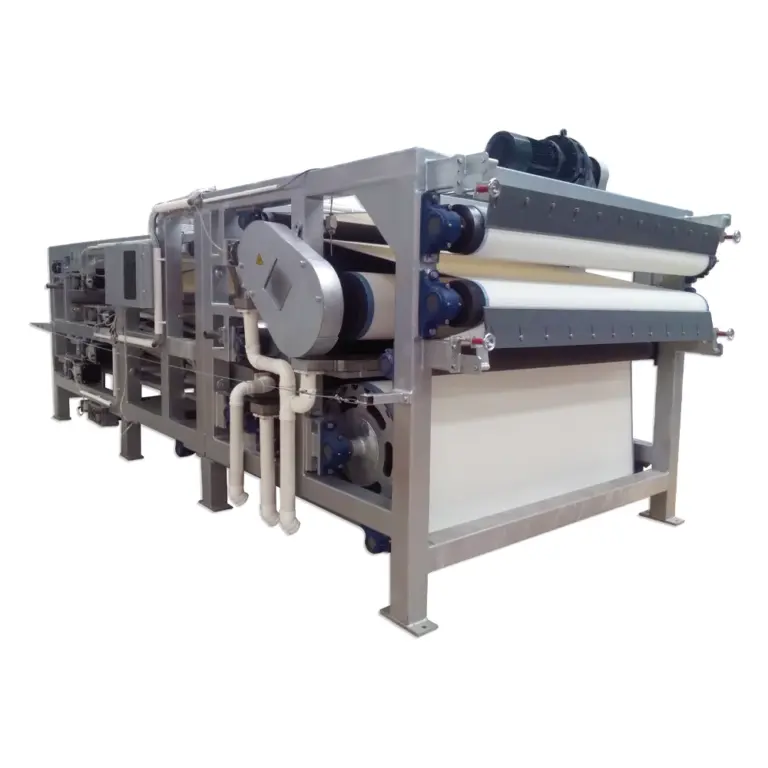
When interpreting specs, consider the broader technology landscape. For applications with high feed variability, the superior adaptability of pressure filters like belt presses to changing conditions can be a decisive robustness factor over other technologies. Evaluating a belt filter press for sludge dewatering requires understanding how its operational HLR range aligns with your projected feed characteristics and variability.
Common Calculation Mistakes and How to Avoid Them
Mistake 1: Sizing on Flow Alone
The most frequent and consequential error is sizing equipment based solely on average or peak flow rate, neglecting the dry solids throughput limit. This guarantees underperformance for most municipal and industrial sludges. The correct approach is to always calculate both limits and let the more stringent one govern the sizing.
Mistake 2: Using Inaccurate Concentration Data
Using the design or average feed concentration instead of the minimum expected value leaves the system critically vulnerable to upsets. This mistake artificially lowers the calculated HLR, resulting in an undersized press that cannot handle realistic dilute events. Data collection should focus on defining the lower bound of feed concentration.
Mistake 3: Overlooking Sludge Behavior
Failing to account for sludge type and its conditioning requirements leads to poor dewatering performance even if the HLR is theoretically correct. A centrifuge might offer different trade-offs for a given sludge. Always base calculations on worst-case scenario inputs for both mass and concentration, and validate the technology choice against sludge characteristics. The table below summarizes these pitfalls and their remedies.
| Common Mistake | Consequence | Correct Approach |
|---|---|---|
| Sizing on average flow only | Guaranteed underperformance | Use dry solids throughput limit |
| Using average feed concentration | Vulnerable to upsets | Use minimum expected concentration |
| Overlooking sludge type | Costly technology mismatch | Characterize volatile content |
| Ignoring conditioning needs | Poor dewatering performance | Factor in polymer/system design |
| Basis for calculations | Design failure risk | Worst-case scenario inputs |
Source: Technical documentation and industry specifications.
From Theory to Practice: A Framework for Reliable Sizing
Step 1: Forecast and Characterize
Begin with an accurate forecast of sludge production and a full characterization of its properties. Define the range of dry solids production and the full spectrum of feed concentrations, with particular attention to the minimum. Analyze the volatile content, as it is the primary predictor of dewatering behavior.
Step 2: Calculate Dual Design Duties
Execute the dual calculations without compromise. First, calculate the required solids loading rate in kg DS/hr based on your production forecast and operating schedule. Second, calculate the required hydraulic loading rate in m³/hr using the minimum feed concentration. These two numbers form your non-negotiable design duty point.
Step 3: Screen and Select Technology
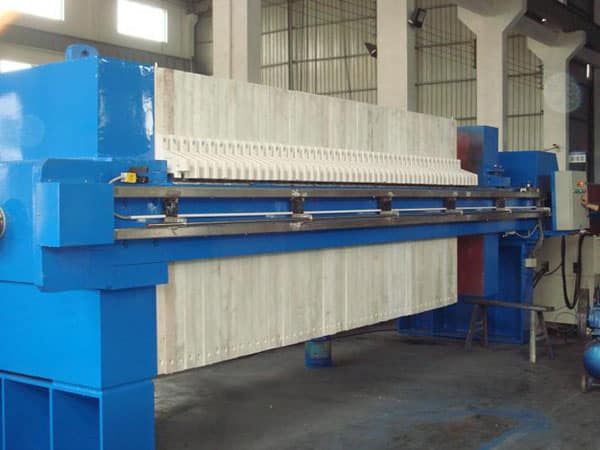
Use your dual design duty to screen available technologies. Recognize that this choice defines downstream economics—a drier cake from a well-sized filter press directly reduces hauling and disposal costs. During vendor evaluation, demand performance data based on your specific sludge characteristics, not generic tables.
Step 4: Specify for Control and Optimization
Finally, remember that sizing is the foundation for control. The industry shift is toward integrated process control systems that optimize polymer dose, belt speed, and pressure in real-time based on feed conditions. Specify equipment compatible with this level of control to secure operational advantages and cost savings over the asset’s lifecycle.
Reliable belt filter press sizing hinges on two parallel calculations: solids mass and hydraulic volume. Prioritize accurate sludge characterization, insist on worst-case concentration data, and select equipment whose rated capacity exceeds both your calculated limits. This disciplined approach transforms sizing from a theoretical exercise into a blueprint for operational resilience and cost-effective dewatering.
Need professional support in applying this framework to your specific sludge stream? The engineering team at PORVOO can help translate your data into a robust equipment specification and performance guarantee. Contact us to discuss your project requirements and sludge testing data.
Frequently Asked Questions
Q: How do you determine the correct hydraulic loading rate for sizing a belt filter press?
A: You calculate the total hydraulic loading rate (HLR) in m³/hr by dividing your required dry solids loading rate (kg DS/hr) by the lowest expected feed sludge concentration (kg DS/m³). This ensures the press can handle the highest volumetric flow during dilute conditions. For projects where feed concentration varies, plan for a design based on the minimum solids percentage to guarantee operational resilience against upsets.
Q: Why is sludge type more important than just flow rate when selecting a dewatering technology?
A: Sludge type, particularly its volatile or ash content, directly dictates dewatering behavior and the achievable hydraulic loading rate. A sticky biological sludge will constrain performance differently than a well-flocculated primary sludge, impacting both equipment suitability and polymer demand. This means facilities with high-volatility industrial sludges should prioritize detailed sludge characterization during procurement to avoid a costly technology mismatch.
Q: What is the most common mistake in belt press sizing and how can it be avoided?
A: The most frequent error is designing based solely on average volumetric flow, which neglects the dry solids throughput capacity limit. This guarantees underperformance. Always perform a dual-limit analysis, ensuring the selected equipment’s rated capacities exceed both your calculated solids mass (kg DS/hr) and volumetric flow (m³/hr) requirements. If your operation requires processing variable sludge, base all calculations on worst-case scenario inputs for both parameters.
Q: How do manufacturer hydraulic loading rate specifications relate to real-world design?
A: Published manufacturer HLRs (e.g., 3-5 m³/hr/m) are general guidelines for typical municipal sludges. Your calculated required rate must be compared against these specs with a safety factor, especially for difficult sludges. This comparison is complicated by a lack of industry standardization for parameters like cake resistance. For reliable vendor evaluation, you should develop internal standardized testing protocols to generate comparable performance data with your specific sludge.
Q: How does feed sludge concentration impact operational costs beyond equipment size?
A: Operating at a low feed concentration increases the hydraulic loading rate, which directly raises polymer consumption and typically increases belt wash water demand to maintain cloth porosity. Effective flocculation becomes critical at high flow to prevent poor cake formation and solids loss. This means facilities anticipating dilute feeds should budget for higher chemical and utility costs and consider sludge pre-conditioning as a key optimization lever.
Q: What framework should you follow to move from calculation to reliable equipment specification?
A: Use a structured four-step framework: first, accurately forecast sludge production and characterize its volatile content and concentration range. Second, calculate both the solids loading and hydraulic loading design duties. Third, use this dual requirement to screen technologies, recognizing the choice defines downstream disposal economics. Finally, during vendor evaluation, demand performance data based on your specific sludge, not standard tables.