Stone processing facilities that install a dewatering press based on cake moisture targets alone often discover the real problem only after commissioning: cloths blinding within the first production week, cycle times running well past throughput assumptions, or filtrate that cannot return to process because clarifier capacity was never specified. Each of those failures carries a concrete cost — unplanned downtime, accelerated cloth replacement, or a wastewater routing problem that requires retrofitting equipment into a layout that was already finalized. The decision that prevents most of this is not press selection itself, but the characterisation of feed solids concentration and slurry variability before any sizing conversation begins. Working through the sections below will help you define what the press actually needs to handle, how to match it to your throughput and disposal constraints, and where the loop is most likely to fail in operation.
Define feed solids and slurry variability before press selection
Three factors consistently drive press selection for stone slurry ahead of all other parameters: abrasion resistance of the feed, daily sludge volume, and the feed pump specification. Getting any one of these wrong creates a problem that cannot be fully corrected by operational adjustment after installation.
Slurry abrasion resistance is not uniform across stone types. Granite dust contains quartz and feldspar — both hard, angular minerals that accelerate wear on every wetted surface in the dewatering loop. Marble and limestone slurries are softer and more compressible, which affects not only pump and cloth selection but also how the cake forms and releases. Treating granite slurry as equivalent to a softer stone slurry when specifying cloths and feed pumps is a common sourcing shortcut that becomes apparent as premature cloth failure and pump seal wear within the first operating months.
Daily sludge volume should be quantified at peak production conditions, not average throughput. A press sized to average solids loading will either cycle inefficiently during peak production — requiring operator intervention — or delay cake discharge long enough to back up the upstream sludge buffer. If production runs multiple shifts or saw lines operate at different intensities across the day, that variability needs to be mapped before sizing.
Feed pump selection is tied directly to both abrasion resistance and slurry concentration. One practical feeding strategy that improves filterability in higher-concentration slurries is to start at lower feed pressure, allowing a soft particle layer to deposit and act as the primary filtering media before pressure is increased. This is an operational detail, not a universal requirement, but it does mean the feed pump must be capable of controlled, low-pressure delivery at the start of each cycle — which not all pump types handle well under abrasive slurry conditions. Confirming pump compatibility with this approach at the pre-selection stage avoids a control retrofit later.
Match chamber volume filtration area and cycle time
Chamber volume and filtration area determine how much cake the press can hold per cycle; cycle time determines how many cycles are possible per shift. Misaligning any of these with your daily throughput requirement means either running the press beyond its design load or commissioning additional capacity you cannot justify to procurement.
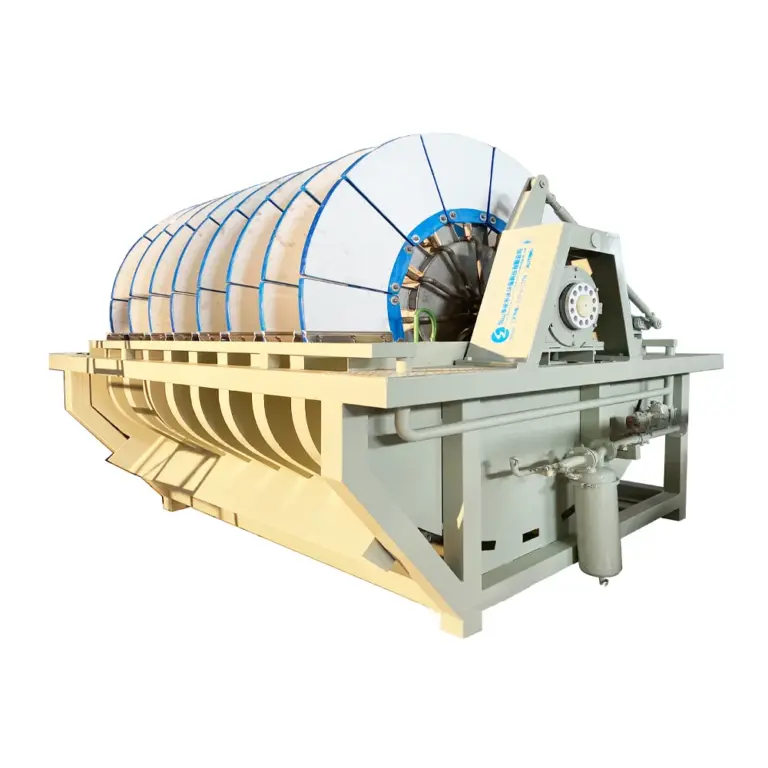
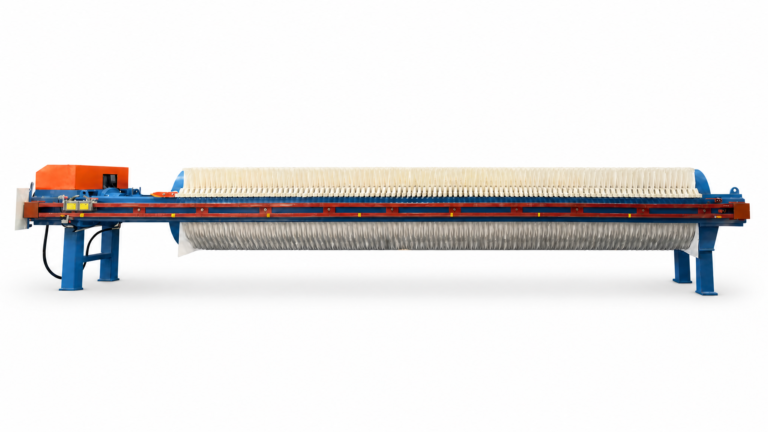
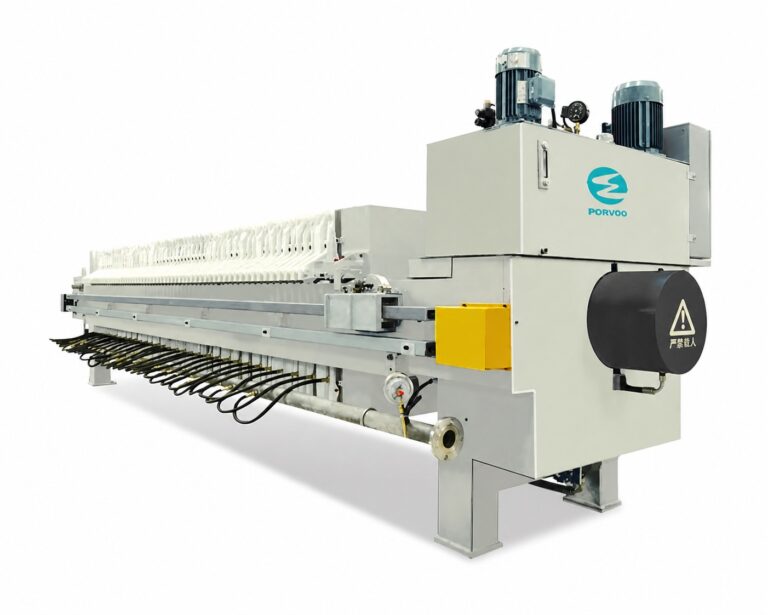
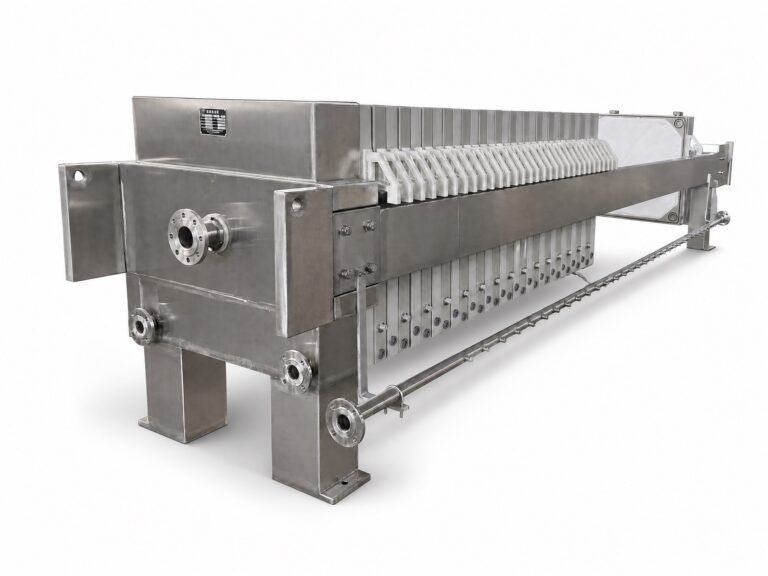
Press capacities in practice range from roughly 2 to 200 cubic feet, with plate sizes from 470 mm to 1500 mm. For stone operations generating large, continuous sludge volumes, a quick-open chamber plate filter press is generally the appropriate configuration — it minimises the time between discharge and the start of the next cycle. For operations with variable batch sizes, a backer plate allows the chamber holding capacity to be adjusted without replacing the press, which provides some flexibility when production mix changes.
Cycle time in stone slurry applications is shaped significantly by how feed pressure is ramped. A staged pressure ramp — commonly structured across four increments from low to full operating pressure — allows the initial cake layer to form at lower differential pressure, reducing the risk of cloth blinding before the cake establishes. A useful field indicator for filling completion is diaphragm pump behaviour: when thrust intervals extend to 30 to 60 seconds, the chamber is approaching capacity and pressure will begin building without further meaningful filtration.
| Aspect | Key Value/Option | Practical Significance |
|---|---|---|
| Chamber volume range | 2–200 cu ft (plates 470–1500 mm) | Sets capacity limits for daily sludge volume |
| Quick open chamber plate filter press | Suited for large-volume continuous treatment | Choose for high-throughput operations |
| Backer plate | Alters holding capacity | Adapts press to variable batch sizes without replacement |
| Diaphragm pump cycle indicator | 30–60 sec between thrusts signals press is full | Gives clear filling completion trigger |
| Staged pressure control | 25, 50, 75, 100 psi automatic ramp | Manages filling rate, cycle time, and initial cake formation |
The downstream consequence of underestimating cycle time is subtle but significant. If cycle time runs longer than assumed during sizing, the number of cycles per shift drops, and daily throughput falls short. Teams often respond by increasing feed pressure to speed filling — which is precisely the action that causes cloth blinding in abrasive slurries. Confirming realistic cycle time against your slurry’s filterability characteristics, not just press capacity, is what closes this gap before installation.
Decide where filtrate returns or gets retreated
Filtrate routing is a decision that should be defined before press selection, not after it. If it is deferred, the most common outcome is that filtrate is temporarily routed to a holding tank or drain during commissioning — and that temporary arrangement becomes permanent because the clarifier and dosing equipment needed for reuse were never included in the original scope.
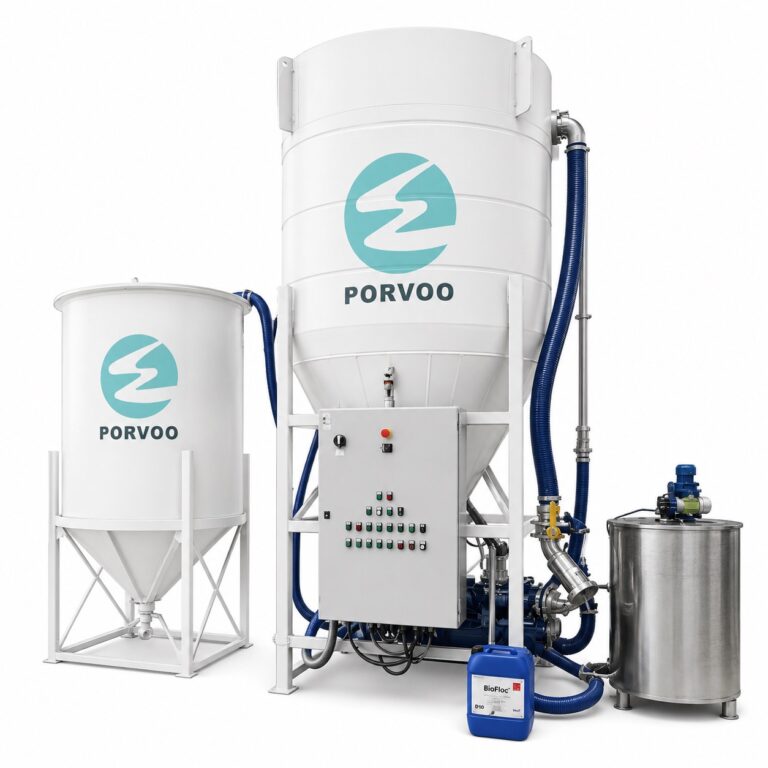
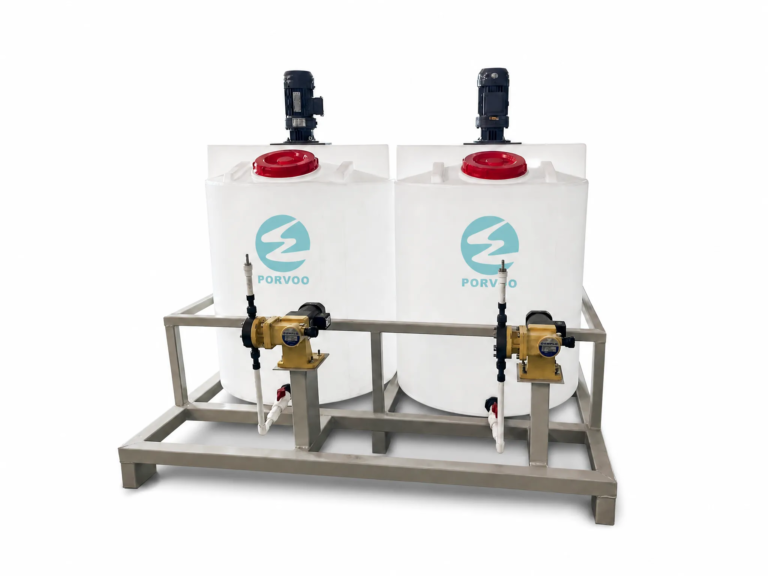
For stone slurry operations aiming at zero liquid discharge or closed-loop water reuse, filtrate from the press can return directly to production lines. But this outcome depends on a complete upstream process: flocculant dosing and clarifier capacity must be integrated before the filter press, and they need to be sized around peak slurry generation, not average flow. Sizing those elements to average conditions creates a condition where filtrate quality degrades during production surges, turbidity rises above what the process can tolerate, and reuse is interrupted — requiring the operator to divert filtrate and notify the water balance team. That is an operator-dependent workaround to a design gap.
Filtrate turbidity should be verified as part of commissioning acceptance. ISO 7027-1:2016 provides a testing framework for turbidity measurement that can be referenced to define the clarity threshold at which filtrate is eligible for return to process. This is a practical testing reference, not a regulatory compliance requirement — but using a defined measurement basis rather than a visual check gives the acceptance criterion defensible precision.
Where filtrate cannot return directly — because stone type or cutting additives affect chemistry — the alternative is a secondary treatment step before discharge or reuse. That step needs capacity and footprint allocated in the layout before the press is installed. Retrofitting it into a finished plant area is significantly more expensive than designing for it from the start.
For further context on integrating filtrate return and treatment routing into the full press operation, Filtrate Management in Filter Press Operations covers the broader loop design considerations.
Set cake moisture around disposal and handling method
The mistake in most dewatering briefs is setting a cake moisture target first and then asking which press can reach it. The more reliable sequence is to determine the disposal or handling method first, then derive the moisture ceiling that makes that method workable, then select the press and process steps that reach it under your actual slurry conditions.
A filter press operating at 100 psi can deliver up to approximately five times the dewatering improvement over a gravity drainage box under comparable conditions — but that figure is condition-dependent and should not be treated as a guaranteed specification for all stone slurry types. Slurry compressibility, particle size distribution, and solids concentration all affect achievable cake dryness. If a disposal contractor requires cake below a specific moisture threshold for transport classification or landfill acceptance, that threshold must be confirmed against a representative slurry sample, not assumed from general equipment data.
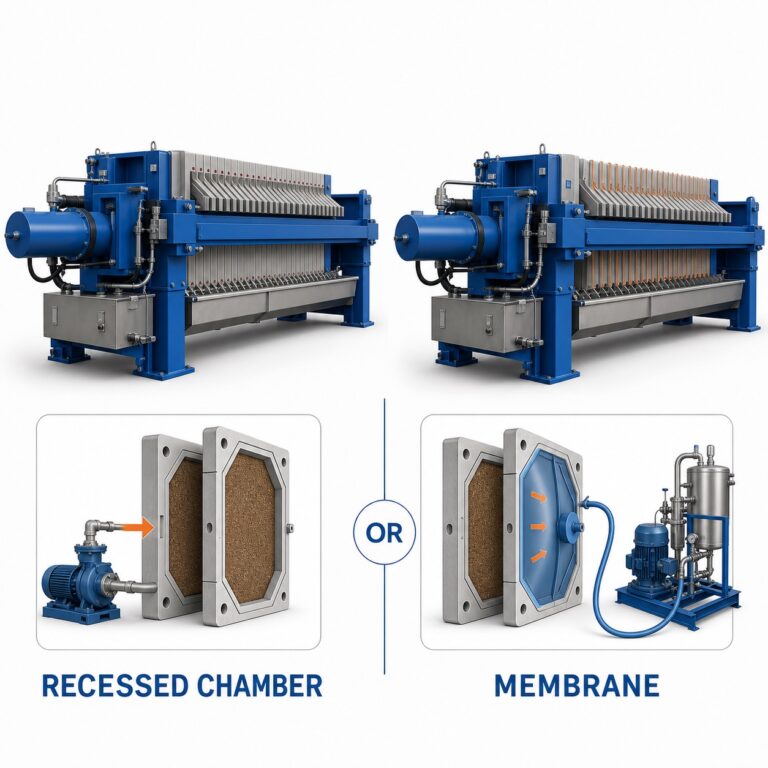
Two process steps can extend cake dryness beyond basic filtration. An air blowdown stage, run before chamber opening, purges free liquid remaining in the cake — reducing surface moisture and minimising dripping during discharge. A membrane filter press applies diaphragm extrusion after the initial filtration cycle, pressing interstitial water out of the cake at higher effective pressure. Both options add cycle time, so the benefit in cake dryness must be weighed against the throughput impact in your daily volume calculation.
| Method / Equipment | How It Affects Moisture | Disposal Implication |
|---|---|---|
| Filter press at 100 psi vs. gravity box | Up to 5× dewatering improvement | Drier cake lowers transport and disposal cost |
| Air blowdown stage | Purges free liquid before chamber opening | Further dryness reduces dripping; improves handling |
| High-pressure membrane press | Extrusion force drains interstitial water | Drastically low moisture for strict disposal requirements |
| Handling infrastructure (long legs, chute, dumpsters, catwalks) | Directs cake into drums, bags, roll-off containers | Determines required cake consistency and workflow |
Handling infrastructure is the part of this decision that most teams underspecify. A drier, denser cake discharged from a membrane press requires a receiving system — chute, dumpster, roll-off container, or conveyor — that can handle its weight and consistency without creating a discharge bottleneck. If the cake handling setup is designed for wetter, looser cake from a recessed plate press and the press is then upgraded to a membrane configuration, the downstream handling system often cannot keep pace. That mismatch backs up the entire dewatering loop, which is the opposite outcome from the upgrade that was intended.
Plan cloth cleaning and abrasive wear management
Each failure risk in stone slurry dewatering has a specific origin, and understanding what causes it — rather than simply specifying heavy-duty cloths as a general countermeasure — is what makes the difference between a press that holds availability targets and one that requires intervention every few days.
High initial feed pressure is the most common controllable source of cloth blinding. When pressure is too high at the start of filling, fine stone particles pack directly against the cloth face before a protective cake layer has formed. That dense initial layer restricts filtrate flow and forces more frequent cleaning cycles. The countermeasure is staged pressure control — confirmed before handover — not a heavier cloth specification alone. The cloth specification and the pressure ramp sequence must be matched together.
| Risk / Issue | Why It Matters | What to Clarify |
|---|---|---|
| High initial feed pressure blinding cloth | Packs dense cake layer, restricts flow, forces frequent cleaning | Confirm feed pressure ramp sequence and cloth specification for initial low pressure |
| Abrasive granite dust (quartz, feldspar) | Accelerates wear on pumps and filter cloths | Specify wear-resistant feed pumps and heavy-duty cloths |
| Corrosion of center feed pipe | Weak material corrodes under slurry chemistry | Verify pipe material strength against slurry corrosiveness |
| Need for automatic cleaning | Frequent dewatering requires continuous cloth washing | Check availability of automatic cloth washing system on selected press |
Granite slurry’s quartz and feldspar content adds a compounding abrasion load that affects both the feed pump wetted parts and the cloth structure over time. Heavy-duty filter cloths are appropriate, but the selection should account for particle angularity and concentration, not just overall solids loading. Wear-resistant feed pump specification and cloth material should be confirmed against the actual mineralogy of the stone being processed.
The center feed pipe assembly is a less visible but consequential wear point. If the pipe material is not matched to the slurry’s chemical aggressiveness — including any cutting fluid or additive chemistry — corrosion accelerates at the internal pipe surface, eventually causing leaks or structural failure within the press. This is particularly relevant for multi-stone operations where slurry chemistry varies by production run.
For operations running frequent or continuous dewatering cycles, an automatic cloth washing system becomes a maintenance management tool rather than a convenience feature. Without it, cloth cleaning frequency in abrasive slurry service creates a recurring labour burden and risks inconsistent cleaning quality depending on operator availability. If the selected recessed plate and frame filter press configuration does not include automatic cloth washing as standard, confirming its availability as an option — and the space requirements for the washing frame — should happen during specification, not during commissioning.
Include sludge storage for production peaks
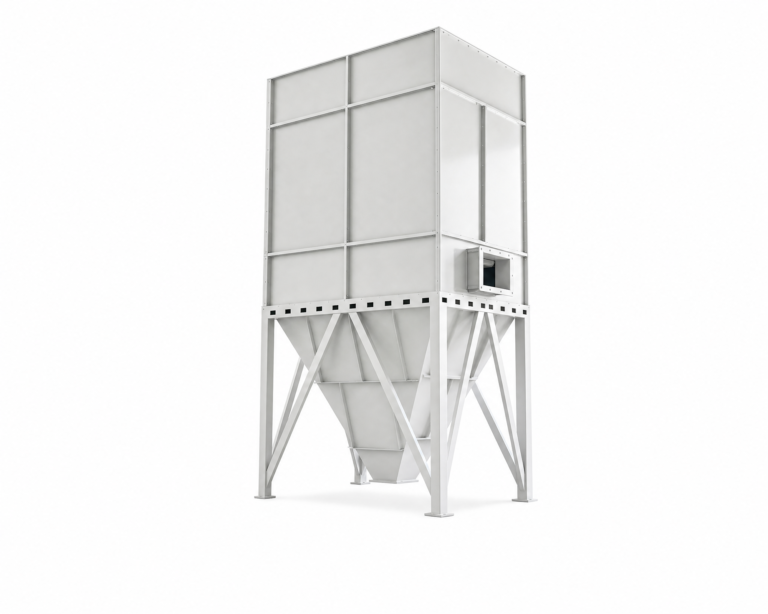
The filter press cannot run continuously during production if slurry generation is uneven — and in most stone processing facilities, it is. Saw line output, cooling water usage, and shift patterns all create periods of higher and lower slurry generation. Without a sludge buffer tank upstream of the press, the options during a peak generation period are either to overfeed the press or to bypass slurry to temporary storage that was not designed for the purpose.
Sludge storage sizing should be treated as a function of two variables: the difference between peak slurry generation rate and the press throughput capacity, and the duration of peak production windows. If the press can handle average daily volume but peak generation runs 40 to 50 percent above average for two to three hours per shift, the buffer tank needs enough capacity to absorb that excess without forcing an unplanned cycle extension or a second press that is only needed part of the time.
There is a secondary benefit to adequate buffer storage that is less often discussed at the design stage: it allows the press to operate at a consistent solids concentration rather than receiving highly variable feed. Slurry that sits in a well-mixed tank tends to reach a more uniform concentration than slurry fed directly from active saws. That consistency reduces cycle-to-cycle variability in cake formation, which in turn stabilises cloth performance and makes preventive maintenance intervals more predictable. Designing the buffer tank with a slow agitator and a bottom-mounted pump connection is a practical configuration detail that supports this outcome, though the specific equipment sizing should be confirmed against the facility’s actual generation profile.
Judge dewatering by total loop stability
A press that produces dry cake but runs with constant cloth changes, frequent pump seal replacements, and operator intervention at every cycle peak is not a stable dewatering system — it is a dewatering problem that is being managed reactively. Evaluating the press by cake moisture alone misses the cumulative system behaviour that determines whether the investment actually holds its performance over time.
Loop stability is a function of how several outputs hold together simultaneously: cake dryness, cloth service life, pump wear rate, operator time per cycle, and cycle reliability under variable feed conditions. A hydraulic pressure safety shutdown — which cuts the press if clamping pressure drops below the minimum needed to seal the chambers — is one example of a specific interlock that prevents a common failure mode (leakage from under-clamped plates) from causing unplanned downtime. It is a process detail, not a comprehensive safety guarantee, but its presence indicates a control architecture oriented toward preventing the kind of intermittent failures that undermine loop reliability.
| Feature / Benefit | Stability Impact |
|---|---|
| Low hydraulic pressure safety shut down | Prevents leaks if clamping pressure is insufficient, avoiding unplanned downtime |
| Dryer cake production | Reduces disposal cost and simplifies handling |
| Reduced operator time | Lowers labour dependency and human error |
| Increased cloth life | Fewer replacements cut downtime and consumable costs |
| Increased pump life | Protects feed pump from abrasive wear, extending service intervals |
The practical implication for procurement and commissioning teams is that acceptance criteria should address more than filtrate clarity and cake moisture at a single test point. Cloth condition after a defined number of cycles, pump seal inspection intervals, and cycle-time consistency across a representative range of slurry concentrations are all indicators of whether the loop will hold. These are operational outcomes reported from equipment practice, not certified performance guarantees — but including them in acceptance documentation gives the team a basis for holding the supplier accountable beyond the initial handover.
For a broader view of how press selection integrates into the sludge management loop, Sludge Treatment with Filter Presses: Best Practices covers maintenance and operational logic across different sludge types.
The most consequential pre-procurement action for a stone slurry dewatering system is not selecting a press model — it is defining feed solids characterisation, peak sludge generation rate, and cake disposal requirements in enough detail that press sizing, buffer storage, filtrate routing, and cloth specification can all be confirmed before the order is placed. A press selected on cake moisture targets without those inputs is likely to be either undersized for peak loads or over-specified in ways that create handling bottlenecks downstream.
Before issuing an RFQ, the following should be confirmed: representative slurry solids concentration and particle mineralogy, daily and peak-hour sludge volume, the moisture ceiling imposed by your disposal or transport contractor, filtrate quality requirements for reuse eligibility, and the cloth washing configuration available on the proposed press. Each of these shapes a different part of the system — and a gap in any one of them typically surfaces as a commissioning problem rather than a design review comment.
Frequently Asked Questions
Q: What happens if our stone operation processes multiple stone types with different mineralogies — does a single press configuration still hold?
A: A single press can accommodate mixed stone types, but the configuration must be specified against the most demanding slurry in the mix, not an average. Granite’s quartz and feldspar content sets the abrasion floor for pump wetted parts, cloth selection, and center feed pipe material. If softer stones like marble or limestone are also processed, cycle times and cake formation behavior will differ by run — which means the control system and cloth wash frequency need to be set for variability, not a fixed slurry profile. Treating the press as a single-condition installation when feed chemistry changes by production run is the design assumption most likely to surface as premature wear or inconsistent cake quality.
Q: If the disposal contractor changes their moisture threshold after the press is already installed, is there a realistic upgrade path?
A: Yes, but the feasibility depends on what was specified at installation. A recessed plate press can often be supplemented with a membrane squeeze stage if the frame and hydraulic system were designed with that upgrade in mind — but if the press was sized without that headroom, retrofitting diaphragm plates into an existing frame is constrained by chamber geometry and hydraulic capacity. The more limiting factor is usually downstream handling: a membrane press produces a denser, heavier cake that requires a discharge and containment system capable of handling that consistency. If the receiving chute, dumpster, or roll-off configuration was sized for wetter cake, the handling bottleneck will negate the moisture improvement. Confirming upgrade compatibility with the supplier before initial procurement is significantly less expensive than discovering the constraint after the contractor revises their acceptance criteria.
Q: At what point does adding a membrane press stage stop being worth the cycle time penalty?
A: The crossover point is specific to your daily volume and disposal economics, but the general condition where membrane squeeze loses its case is when the moisture reduction it delivers does not change the disposal classification or transport cost tier. If your cake already qualifies for the lowest-cost disposal category at the moisture level a recessed plate press achieves, the additional cycle time from diaphragm extrusion reduces daily throughput without recovering a corresponding cost saving. The calculation changes if your disposal contractor charges by weight — in which case drier cake directly reduces per-cycle disposal cost — or if filtrate quality improves enough from the squeeze stage to increase reuse eligibility. Running the cycle time impact against your actual disposal rate and filtrate reuse value, using representative slurry samples rather than general equipment data, is what produces a defensible answer for your specific operation.
Q: How should acceptance criteria be structured if the supplier cannot guarantee cake moisture across the full range of slurry concentrations we generate?
A: Acceptance criteria should be built around operational indicators rather than a single-point moisture measurement. Define a concentration range — covering at least your average and peak slurry conditions — and require cycle time, cloth condition, and cake moisture to be recorded across that range during commissioning. If the press performs within specification at average concentration but cycle time or moisture degrades significantly at peak feed solids, that deviation should trigger a defined remediation path, not just a notation. Including cloth condition after a set number of cycles and pump seal inspection intervals in the acceptance document gives the team a basis for assessing whether loop stability holds beyond the initial handover, rather than discovering degradation only when maintenance costs begin rising.
Q: Our facility layout is already finalized — what is the minimum upstream equipment we cannot omit without compromising the dewatering loop?
A: Two elements are non-negotiable for loop integrity regardless of layout constraints: a sludge buffer tank upstream of the press, and a defined filtrate routing path with specified capacity. Without buffer storage, peak slurry generation forces either overfeeding the press or bypassing slurry to uncontrolled holding — both of which introduce the feed variability that destabilizes cloth performance and cycle consistency. Without a pre-confirmed filtrate route — whether direct process return or secondary treatment before discharge — filtrate will default to temporary diversion during commissioning and that arrangement typically becomes permanent. Flocculant dosing and clarifier capacity must be included in the filtrate path if reuse is the target; sizing them to average flow rather than peak generation creates the same surge-driven quality failure that a buffer tank is meant to prevent on the solids side. If the layout cannot accommodate both, clarify which constraint is fixed and redesign around it before procurement, not during installation.