Before commissioning a plate-and-frame filter press, the buyer and supplier need to agree on which checks happen where—because a test performed in the wrong location proves the wrong thing. Confirming an automation sequence on a factory floor does not confirm it will interface correctly with site utilities, and confirming that utilities are connected does not confirm the press will produce the cake quality the project requires. The sequencing of factory acceptance testing (FAT), site acceptance testing (SAT), and performance testing determines whether the project captures real evidence or simply repeats paperwork across three different events.
Separate factory checks from site checks by system boundary
| Check area | Test route | Decision boundary |
|---|---|---|
| Build, documentation and automation functions | Factory acceptance testing (FAT) | Include only what can be demonstrated under the available factory conditions and within the frozen supplied system boundary and approved configuration. |
| Installed interfaces, utilities and controls integration | Site acceptance testing (SAT) | Confirm after installation when the check depends on the real site. |
| Representative-feed dewatering results | Separate performance protocol | Use agreed sampling, measurements and acceptance values; do not treat these results as a generic FAT or SAT guarantee. |
The first decision a project team must make is not which tests to run, but where the boundary of the supplied system sits before any test is assigned. A filter press package can be defined narrowly, as the press and its immediate automation, or broadly, to include ancillary dosing, feed pumping, or downstream conveying. Until that supplied system boundary and its approved configuration are frozen, any test plan risks checking the wrong scope — either testing functions that belong to another supplier’s equipment, or omitting interfaces that the buyer assumed were included.
This boundary decision also determines what “factory conditions” and “site conditions” mean for this specific project. Where the approved configuration includes functions that can be built and powered up at the manufacturing facility, those functions become FAT candidates. Where the configuration depends on connection to site-specific ductwork, piping, structural supports, or control networks that do not exist until installation, those functions can only be confirmed once the equipment reaches the site. Conflating these two categories is where test plans fail: a buyer who expects “full automation testing” at FAT may be assuming that site-dependent control loops can be exercised before the press is even installed, when in fact those loops require the actual site I/O and actual installed sensors to behave as they will in service.
A further distinction belongs at this stage: dewatering performance — cake dryness, filtrate clarity, cycle time — is neither a factory check nor a site check in the ordinary sense. It depends on the feed material supplied, and no factory conditions or site installation checks by themselves establish how the press will perform against that feed. Treating performance as a third category, separate from FAT and SAT, prevents the project from assuming that a successful automation demonstration or a successful installation check also proves dewatering performance.
Once the boundary is frozen, each check in the project scope can be routed to the stage where it can actually be demonstrated, rather than defaulting to “test everything at FAT” or “defer everything to SAT.” That routing decision, made early, avoids later disputes about why a test was skipped or repeated.
Automation functions and records suitable for FAT
Factory acceptance testing exists to confirm what the available factory conditions allow the supplier to demonstrate honestly. For a plate-and-frame filter press, this generally centers on the build itself — plate assembly, frame alignment, hydraulic or mechanical closing mechanism — together with the automation functions and documentation that do not require the installed site environment to be meaningful.
IEC 62381:2024 defines the scope of FAT, along with factory integration testing (FIT), SAT, and site integration testing (SIT), within process-industry automation test planning. Its relevance here is in supporting how a project team agrees on which automation-system functions and responsibilities belong at each test stage, rather than in prescribing filter-press-specific values. Within that framework, automation functions that can be exercised using factory power, factory-supplied signals, or simulated inputs are reasonable FAT candidates: sequencing logic, interlocks that do not depend on site-specific field devices, alarm configuration, and the completeness of control documentation.
The governing question for any function a buyer wants included in FAT is whether the factory can honestly recreate the condition that triggers it. Where a control function depends only on logic internal to the press control system, factory conditions can usually demonstrate it. Where a function depends on a signal that will only exist once the press is wired into the site’s distributed control system, or once a specific field instrument is installed and calibrated at its final location, factory demonstration becomes a simulation of that signal rather than a true test of the interface — useful as a logic check, but not a substitute for confirming the interface once installed.
Documentation review belongs naturally at FAT because it does not depend on location: as-built drawings, component certificates, control narratives, and the automation configuration itself can all be checked against the approved configuration before the equipment ships. Recording this review at FAT, rather than deferring it to site, reduces the number of open items the site team must resolve once installation begins, since any documentation discrepancy found at the factory can be corrected before transport rather than discovered during commissioning.
Installed interfaces and utilities to confirm during SAT
Site acceptance testing exists for the opposite reason FAT does: it confirms what only becomes real once the press is installed and connected. A function that was simulated or logically verified at the factory needs a separate confirmation once it operates against the actual installed interface, because the behavior of a connection cannot be fully known until the connection exists.
Utilities are the clearest example. Compressed air supply, electrical power quality, hydraulic supply where the press uses hydraulic closing, and any site water or drainage connections all depend on what the site actually provides, not on what the project specification assumed it would provide. A press automation sequence that performed correctly at FAT using factory-supplied air pressure can behave differently if the site’s actual supply pressure, flow, or quality differs from what was assumed during design. Confirming utility performance at the installed connection, rather than assuming the factory result still applies, is a site-specific check that cannot be satisfied by referring back to FAT records.
Controls integration follows the same logic. Where the press control system must communicate with a plant-wide control or SCADA platform, that communication can only be confirmed once both systems are physically connected at the site — the network, the protocol mapping, the actual field instrument signals, and any site-specific safety interlocks that were not part of the factory-supplied system. A buyer who treats a successful FAT automation demonstration as proof that site integration will succeed is extending a factory result beyond the conditions under which it was generated.
Mechanical interfaces also belong at SAT: alignment with supporting structure, connection to upstream feed piping and downstream cake handling or conveying equipment, and anything dependent on the as-built dimensions of the installation rather than the nominal dimensions used during design. Where the supplied system boundary stops short of these connections, SAT for the press itself may still need to confirm that its connection points match what the adjoining equipment expects, even if the adjoining equipment belongs to a different scope of supply.
Representative-feed performance tests kept outside generic FAT and SAT
| Protocol element | Agreement to freeze | Decision it supports |
|---|---|---|
| Supplied system boundary and approved configuration | Identify the exact boundary and configuration under test before assigning the test. | Defines which supplied package the result covers. |
| Representative feed | Agree the feed used for the dewatering test. | Defines which feed the result represents. |
| Sampling | Agree the sampling approach for the test. | Defines how the performance evidence will be sampled. |
| Measurements | Agree the measurements to be recorded. | Defines which dewatering results will be evaluated. |
| Acceptance values | Agree the project-specific values before testing. | Defines how the recorded results will be accepted or rejected without creating a generic process guarantee. |
Neither FAT nor SAT, on their own, establishes whether the press will dewater the material the project needs it to dewater. FAT confirms the equipment was built and automated as specified; SAT confirms it was installed and connected correctly. Dewatering performance — the cake moisture achieved, the filtrate clarity produced, the cycle time required to reach a usable cake — depends on the feed material’s own characteristics, which can vary by solids concentration, particle behavior, chemical conditioning, and temperature. A press that passes both FAT and SAT with no deficiencies gives no guarantee, by itself, about what cake condition it will produce against a specific feed, because neither test was designed to evaluate that relationship.
This is why representative-feed performance needs its own protocol, agreed before testing begins rather than assumed as an extension of FAT or SAT sign-off. That protocol starts from the same frozen system boundary and approved configuration already established, so there is no ambiguity about which supplied package the performance result is meant to represent. From there, the protocol needs the feed itself defined — what material, at what condition, will be used to generate the result — since a performance figure generated against one feed does not transfer to a different feed without separate confirmation.
Sampling and measurement agreements follow from the feed definition: how samples will be taken, from where in the cycle, how cake moisture and filtrate quality will be measured, and how throughput or cycle time will be recorded. GB/T 30176-2013 establishes measurement methods relevant to liquid-filtration performance, throughput, and separation verification at the level of source identity and general relevance; the exact procedures and the acceptance values a specific project will use still require the standard’s full text and a project-specific test plan built from it, not a generic reference to its existence.
The final element — acceptance values — is where project-specific judgment and the project-specific test plan referenced in the broader planning work meet. Without values agreed before the test, a measured result has no basis for being called a pass or a fail; the same cake moisture figure could be entirely acceptable on one project and unacceptable on another, depending on downstream handling requirements the test protocol itself does not generate. Setting these values in advance is what prevents the performance test from becoming a dispute about interpretation after the fact.
Responsibility matrix, witnesses and closure records
| Responsibility point | Buyer role | Supplier role | Record or closure point |
|---|---|---|---|
| Test preparation | Project-specific named role | Project-specific named role | Preparation tied to the frozen system boundary and approved configuration. |
| Test media | Project-specific named role | Project-specific named role | Test media identified for the applicable factory, site or performance test. |
| Witnessing | Project-specific named role | Project-specific named role | Witnesses recorded for the applicable test. |
| Test records | Project-specific named role | Project-specific named role | Factory, site or performance-test record completed. |
| Punch-list closure | Project-specific named role | Project-specific named role | Punch-list closure recorded. |
| Approval | Project-specific named role | Project-specific named role | Approval recorded for the applicable test stage. |
Even a well-routed test plan fails if no one has agreed who prepares, who witnesses, who records, and who closes out each test. These responsibilities do not default to either party automatically; they need to be assigned by name or role for each test stage, because FAT, SAT, and the representative-feed performance protocol each depend on different parties having access to different conditions.
Preparation responsibility ties directly back to the frozen system boundary: whoever prepares a test needs to know exactly which configuration is under test, so preparation for a press with ancillary dosing included looks different from preparation for a press tested without it. Test media — the actual fluids, feed samples, or simulated signals used to exercise the equipment — need identification specific to whichever test is being run, since factory conditions, site utilities, and representative feed are three different sources of test media with three different implications for how a result should be interpreted.
Witnessing matters because a test without an agreed witness produces a record that either party can later contest. Naming who witnesses each test — and confirming that the named witness has the standing to accept or reject the result on behalf of their organization — avoids a situation where a test is completed but its outcome remains disputed. The same logic applies to records: a factory record, a site record, and a performance-test record each need to exist as distinct documents tied to their respective test, rather than a single combined document that blurs which conditions produced which result.
Punch-list closure is where open items from any test stage get tracked to resolution. An item identified at FAT that depends on site conditions to fully resolve needs to be carried forward and closed at SAT, not dropped because FAT has concluded. Likewise, an item identified during SAT that affects the representative-feed performance test needs resolution before that performance test can be considered valid.
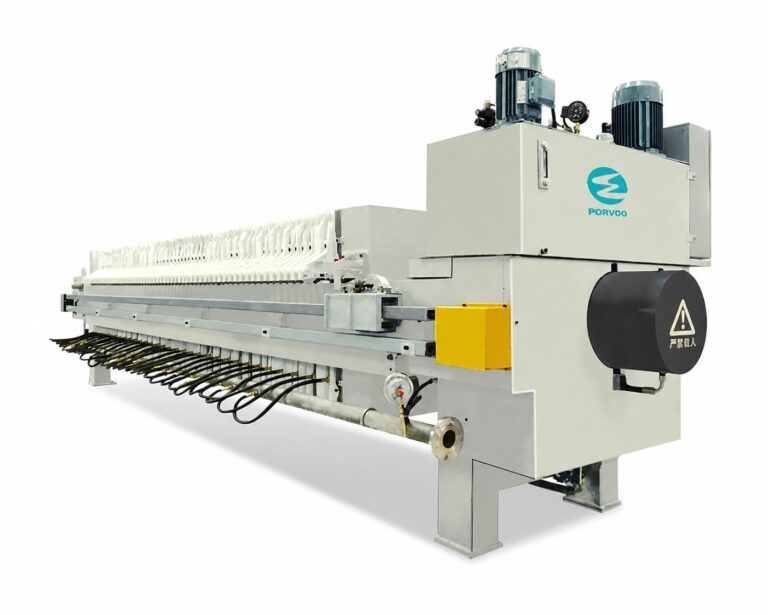
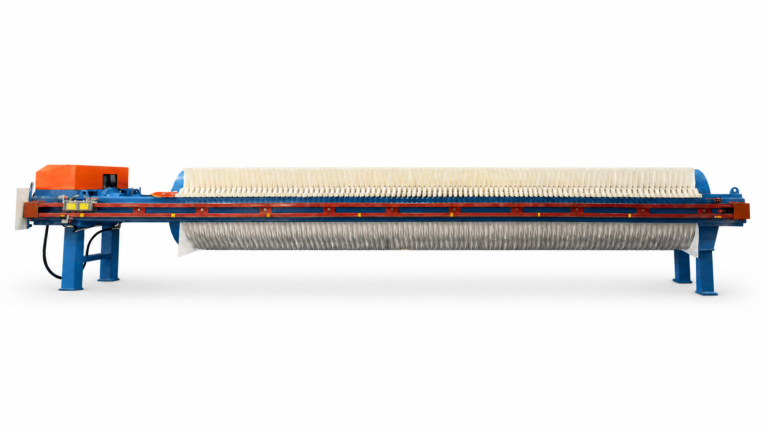
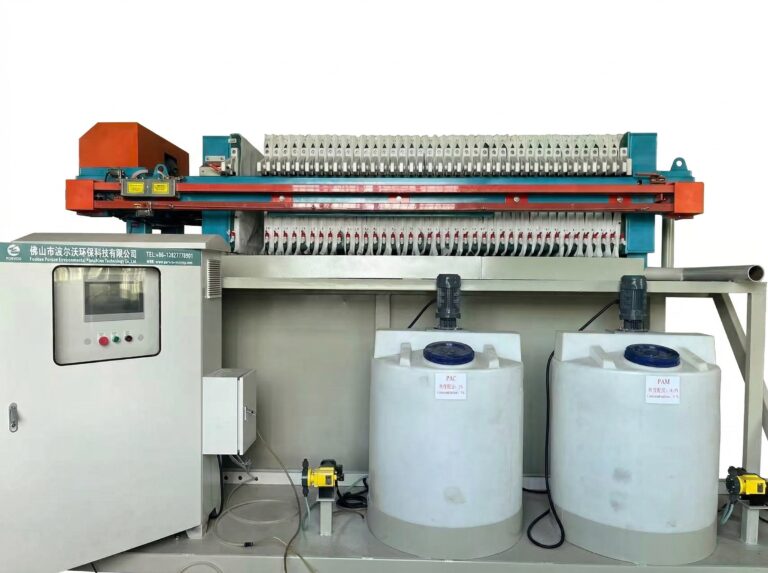
Approval is the final record at each stage, confirming that the named buyer and supplier roles have accepted the result for that stage specifically — not a blanket approval that is assumed to cover stages not yet tested. Where a project’s planning work, such as that connecting process data through to performance acceptance, has already defined these roles, the acceptance test plan should reference the same named roles rather than reintroducing new ones. Equipment such as the Plate and Frame Filter Press or the Fully Automatic Filter Press enters this responsibility structure through its supplied configuration and automation scope, which is why the boundary agreed at the start of the project determines who is responsible for which test throughout.
Frequently Asked Questions
Q: What should be agreed before the FAT procedure is issued?
A: Freeze the supplied system boundary and approved configuration first. For each planned check, identify the available factory conditions, the responsible buyer and supplier roles, the required witness, and the record that will show completion.
Q: Can a factory test medium establish representative-feed dewatering performance?
A: Only if it is the agreed representative feed and the test follows the separate performance protocol. Otherwise, use the factory medium only for the functions it was selected to demonstrate, and judge dewatering results through the agreed sampling, measurements, and acceptance values.
Q: How should a control check be handled when it depends on site equipment or utilities?
A: Record the portion demonstrated at the factory, then assign the site-dependent portion to SAT. Name the required installed interface, utility, or controls connection, its responsible role, and the evidence needed to close the check at site.
Q: What should the buyer have ready before SAT begins?
A: Confirm that the interfaces, utilities, and controls connections needed by the SAT scope are installed and available. Also name the roles responsible for preparation, witnessing, test records, punch-list closure, and approval so an unavailable dependency does not leave the test without an owner.
Q: How can the team prevent a passed FAT from being treated as final process acceptance?
A: Use separate scopes and approval records. FAT approval should close only the checks demonstrated within the frozen factory boundary, while representative-feed performance remains open until its project-specific protocol and acceptance values have been applied.
Q: What should be recorded for a punch-list item that remains open after a test?
A: Record the affected test stage and system boundary, the named buyer or supplier owner, the evidence required for closure, and the approval point it affects. This makes it clear whether the item must close before SAT, performance testing, or final approval.