Two tailings filtration bids can quote the same cake moisture and still leave a plant with completely different throughput, footprint, and downstream handling costs. When cake moisture becomes the single number decision-makers compare, the bid that looks cheapest or “best performing” on paper may rest on a feed assumption, a test condition, or a scope exclusion that never gets surfaced until commissioning. Comparing filtration bids well means comparing the full duty behind the number, not the number alone.
Common Duty Basis Every Bid Must Use
| Duty-basis item | Each bid should state | Comparison use |
|---|---|---|
| Feed envelope | The feed envelope behind the proposed duty | Confirms that bids use the same feed basis |
| Test basis | The test basis supporting the proposed duty | Shows whether performance claims rest on a comparable basis |
| Operating schedule | The operating schedule assumed for the duty | Aligns the operating basis used for throughput and performance |
| Exclusions | Any exclusions attached to the proposed duty | Reveals conditions left outside the quoted duty |
A proposed cake moisture, throughput, or cycle time only means something in relation to the duty it was calculated against. Before any numbers are placed side by side, the reader needs confirmation that every bidder sized their equipment against the same feed, the same test method, and the same operating assumptions. Where one bidder tests against a narrower feed envelope than another, or assumes a different operating schedule, the resulting performance figures are not describing the same duty even if they are expressed in the same units.
This matters because filtration performance is not a fixed property of a machine; it is the outcome of a specific slurry, under specific conditions, run through a specific equipment configuration. A filter press or vacuum disk filter sized against a narrow solids-concentration range will report different achievable moisture and cycle behavior than the same equipment type sized against a wider range that includes harder-to-dewater conditions. If the feed envelope stated by one bidder excludes conditions the plant actually expects to encounter, that bid’s proposed duty does not describe the plant’s real operating case, regardless of how favorable its headline numbers appear.
The operating schedule assumption carries similar weight. A duty calculated for continuous operation across a full schedule produces different equipment sizing and consumable implications than a duty calculated around intermittent batches with downtime built in. Where a bidder’s schedule assumption differs from how the plant actually intends to run the equipment, the proposed throughput and cycle figures will not hold once real scheduling is applied.
Exclusions deserve equal attention because they define what the quoted duty does not cover. A bid that excludes certain feed conditions, certain throughput ranges, or specific operating scenarios may appear to meet a target more easily than a bid that includes those conditions in its stated basis. The reader’s task at this stage is not yet to judge which bid performs best, but to confirm that the comparison is even valid: that every bidder is answering the same question about the same feed, under the same schedule, tested the same way, with the same exclusions disclosed rather than buried in a footnote.
Feed Envelope, Testwork, and Scale-Up Assumptions
Once the duty basis is confirmed as comparable, the next judgment concerns how each bidder got from a test result to a full-scale performance claim. Tailings slurries vary in particle size distribution, mineralogy, and solids concentration, and these properties can shift across a deposit, a processing campaign, or a seasonal change in ore blend. A testwork program run against a single sample represents one point within that variability, not the full range the plant may need to handle over the life of the equipment.
The question for the reader is how each bidder’s test basis relates to the feed envelope it claims to support. Where a bidder ran testwork across a representative range of the expected feed variability, its scale-up assumptions carry a different weight than a bidder whose testwork covered a narrow band and was then extrapolated outward. Extrapolation beyond tested conditions introduces uncertainty that does not disappear because a number appears confidently in a proposal; it shifts the risk of underperformance toward whichever party did not account for it in the contract.
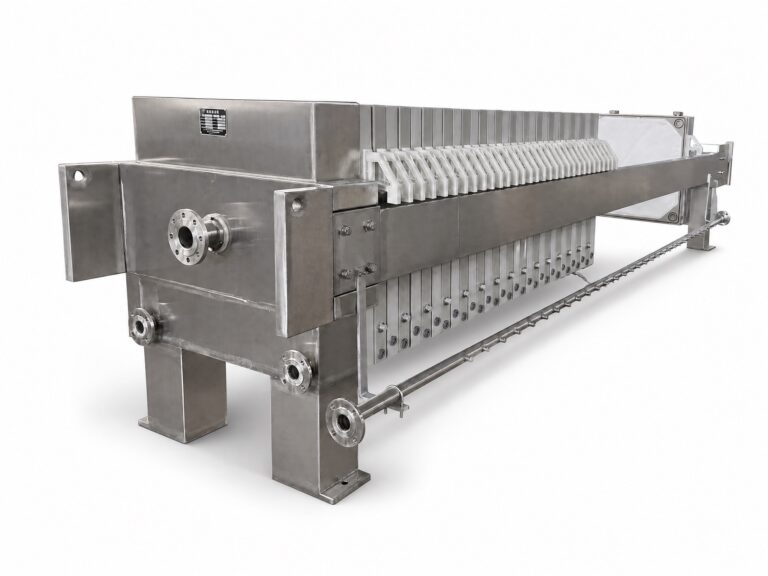
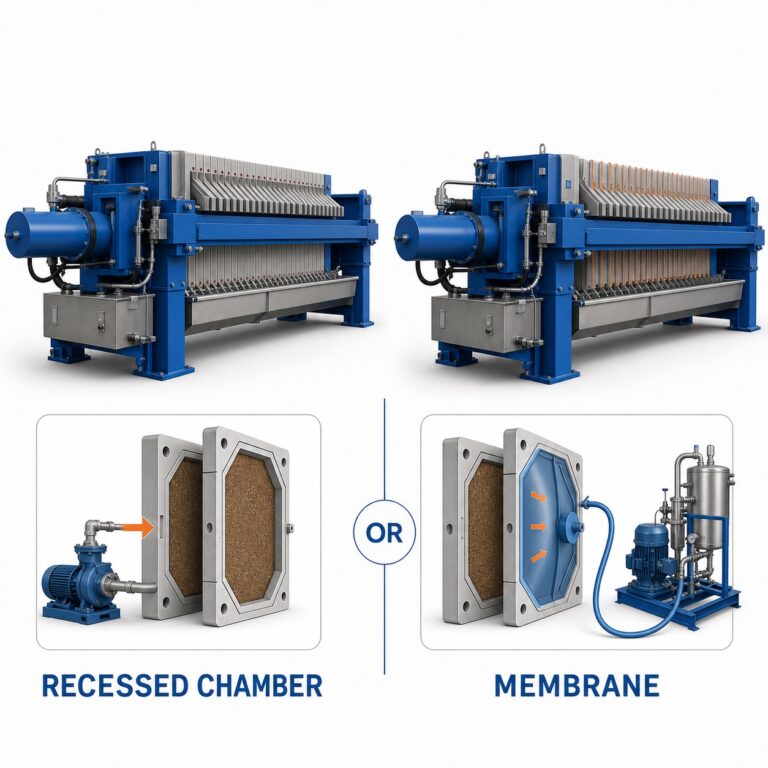
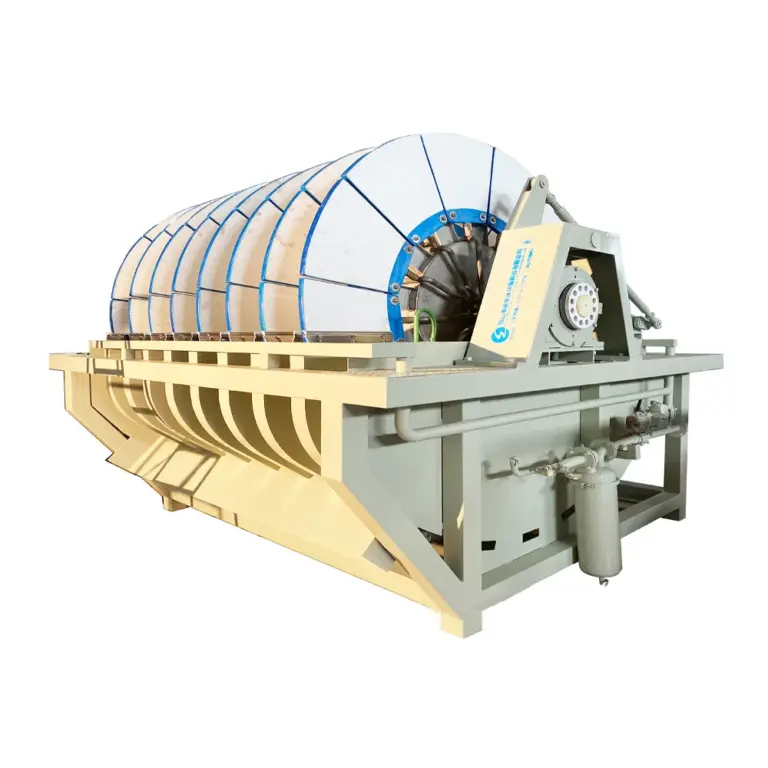
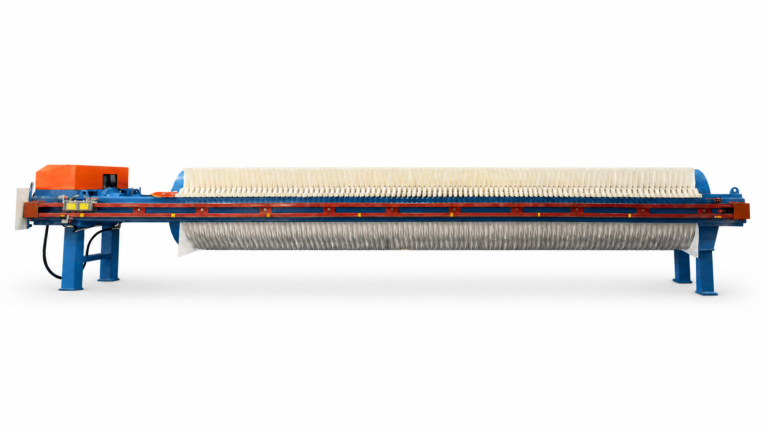
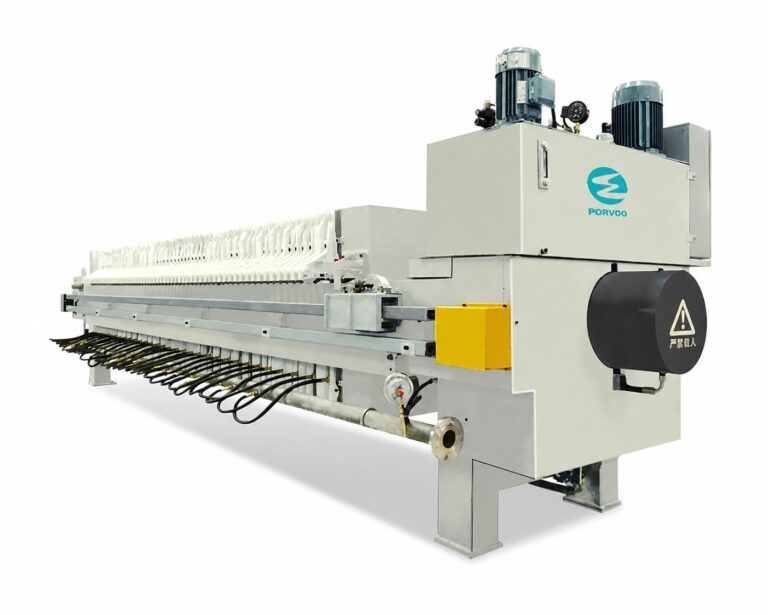
Scale-up from laboratory or pilot testwork to full-scale equipment also depends on assumptions about how filtration mechanisms behave as equipment size changes. A filter press and a vacuum ceramic disk filter rely on different separation mechanisms and respond differently to changes in filtration area, cycle time, and media characteristics. Where a bidder scales a laboratory result up to a production-scale filter press, the assumptions behind that scale-up (which media, which operating pressure or vacuum regime, which cycle structure) need to be visible, because the same lab result can support very different full-scale duty claims depending on which scale-up path was chosen.
The practical judgment here is not to demand a single “correct” testwork method, since appropriate programs vary with the feed and the equipment type under consideration. It is to confirm that the test basis, the feed envelope it was drawn from, and the scale-up logic connecting them are stated clearly enough that the reader can judge whether the proposed duty is a reasonable representation of the plant’s actual operating case or a confident extrapolation from a narrower basis.
Performance Comparison Beyond Cake Moisture
| Comparison dimension | Bid value or condition to compare | Decision boundary |
|---|---|---|
| Cake moisture | Proposed cake moisture at the agreed duty basis | Assess beside throughput and downstream handling, not in isolation |
| Throughput | Proposed throughput at the same duty basis | Distinguishes the production duty behind the moisture result |
| Filtrate destination | Stated destination for the filtrate | Keeps filtrate handling within the performance comparison |
| Operating mode | Cycle or continuous operation | Separates different operating modes before bids are ranked |
| Utilities | Utilities required for the proposed duty | Keeps utility scope visible during comparison |
| Downstream handling | Handling included or assumed after filtration | Shows whether the moisture result is paired with the same handling boundary |
Cake moisture is one output of a filtration system, not a complete description of its performance. Ranking bids by moisture alone discards information the reader needs to judge whether a lower moisture figure was achieved at the cost of throughput, or whether a higher moisture figure comes with handling or filtrate advantages elsewhere in the system.
Throughput and cake moisture interact because filtration equipment generally allows a trade between cycle time and cake dryness: extending the cycle or applying additional pressure or vacuum time can reduce cake moisture, but it also reduces the volume of material the equipment can process in a given period. A bid proposing the lowest cake moisture may be describing a duty with correspondingly lower throughput, which changes the number of filtration units needed to handle the plant’s actual production rate. Comparing moisture without comparing the throughput it was achieved at means comparing two different points on that trade-off curve as though they were the same thing.
Filtrate destination and quality matter because filtrate is not a waste stream to be discarded without consequence; where it returns to the process or discharges to a downstream water system, its clarity and composition affect what happens next in the plant. A bid that achieves favorable cake moisture but produces a filtrate requiring further treatment before reuse carries a different downstream scope than a bid whose filtrate meets the destination’s requirements directly.
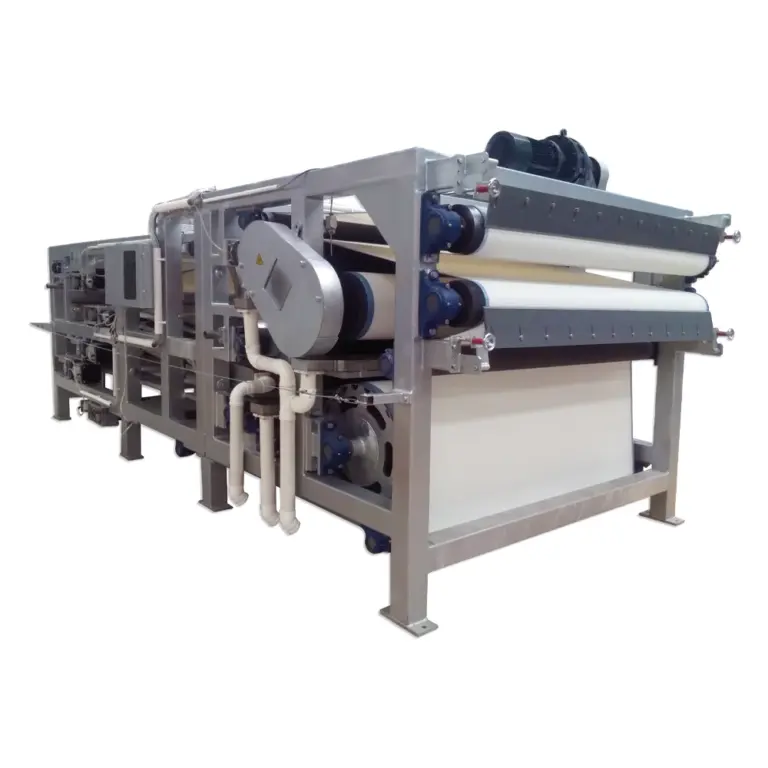
Operating mode — cycle or continuous — changes how the other performance figures should be read. A batch-cycle filter press reports performance per cycle, while continuous equipment such as a vacuum ceramic disk filter reports performance as a steady-state rate; comparing a per-cycle figure against a continuous rate without normalizing for the operating mode produces a misleading comparison. Utilities required to achieve the proposed performance — compressed air, vacuum capacity, electrical load — also belong in this comparison, since a bid achieving its performance through higher utility consumption carries different operating implications than one achieving similar performance with a lighter utility draw.
Downstream handling closes the comparison loop: a cake moisture figure paired with an assumption about conveying, stacking, or further processing the cake is only meaningful if the downstream handling assumption matches what the plant will actually do with that cake. Where downstream handling capacity or method differs across bids, two bids with the same stated moisture may deliver very different practical outcomes at the point where the cake leaves the filtration equipment.
Scope Matrix for Equipment, Utilities, Controls, and Services
| Scope area | Coverage to compare | Gap to resolve before award |
|---|---|---|
| Pumps and tanks | Equipment inclusion and exclusions | Any unassigned transfer or storage scope |
| Conveyors | Downstream handling inclusion and exclusions | Any unassigned cake-handling scope |
| Controls | Control inclusion and exclusions | Any control interface left outside the quoted scope |
| Installation and commissioning | Site-service inclusion and exclusions | Bids priced with different delivery-service boundaries |
| Spares and operator training | Readiness items included or excluded | A lower price created by omitted spares or training |
| Utilities | Utility scope included or excluded | Different utility boundaries hidden inside the total price |
Performance figures describe what the core filtration equipment is expected to achieve; scope defines what is actually included in the price attached to that performance. These are separate questions, and a bid can offer strong performance figures while leaving significant scope gaps that only surface after award.
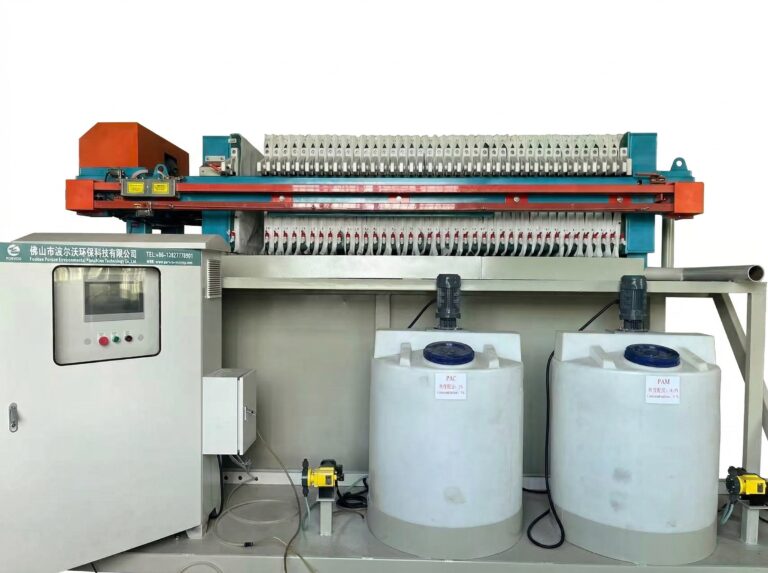
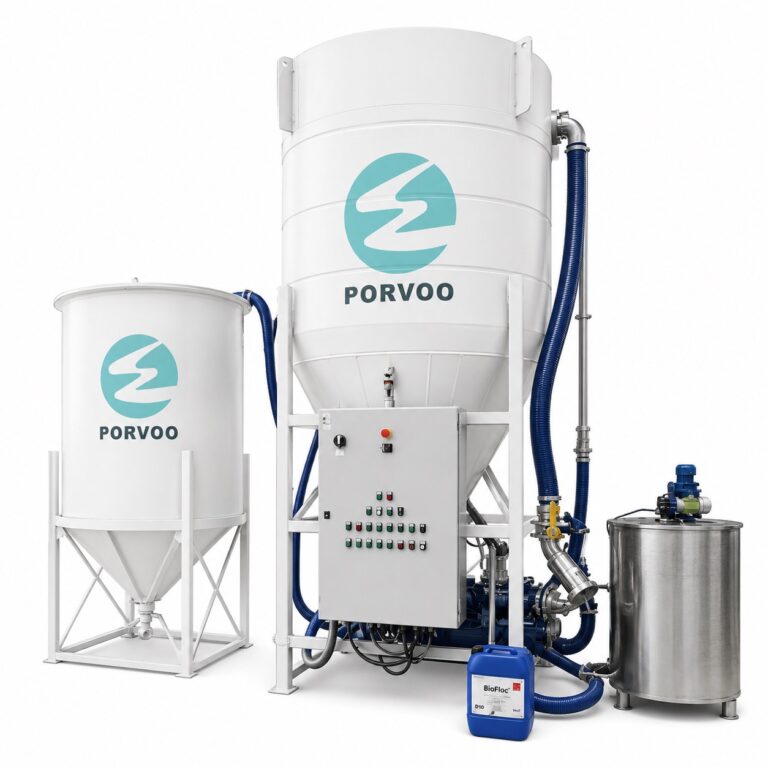
Equipment scope beyond the filter itself — pumps for feed transfer, tanks for surge or conditioning, conveyors for cake removal — is where comparison gaps most commonly hide, because these items are necessary for the filtration duty to function but are not always included by default in every bidder’s base price. Where one bid includes feed pumps and conditioning tanks and another excludes them as “by others,” the excluded bid may appear less expensive while actually requiring the buyer to source, specify, and coordinate that equipment separately, with the associated interface risk that implies.
Controls scope raises a related question: whether the filtration equipment’s control system is self-contained, or whether it needs to integrate with a broader plant control system, and which party is responsible for that integration. A control interface left unassigned between bidder and buyer is a gap that does not show up in a performance comparison but materially affects commissioning and startup.
Installation, commissioning, and the services wrapped around delivery differ across bidders in ways that change what the quoted price actually buys. One bid may be priced ex-works with installation and commissioning excluded, while another includes full site services; comparing these prices directly without normalizing for the service boundary compares two different offerings as though they were the same commercial scope.
Spares and operator training belong in the same comparison because their omission is a common way a bid appears less expensive without actually offering a comparable base scope. Equipment supplied without an initial spares allowance or without operator training places that cost and that readiness gap onto the buyer after award. When the reader assembles a project’s operating conditions and feed information for review — the kind of detail that determines how a filter press or vacuum ceramic disk filter is specified against the stated duty — the same level of completeness needs to extend to this scope matrix, so that the configuration being quoted and the scope being compared describe the same project.
Lifecycle Comparison Across Media, Labor, Maintenance, and Spares
The purchase price and the performance figures describe the equipment at the point of award; the lifecycle cost describes what owning and operating that equipment involves afterward, and these can diverge significantly even between bids with similar upfront figures. Filtration media — cloth on a filter press, membranes on a membrane filter press, or disk media on a vacuum ceramic disk filter — wears and requires replacement on a schedule tied to the feed characteristics and operating regime, not to a fixed calendar. A bid’s media life assumption is only as reliable as the feed and operating conditions it was calculated against, which connects directly back to the feed envelope question: media proposed for a narrow feed envelope may wear differently if the plant’s actual feed proves more variable or more abrasive than the bidder assumed.
Labor requirements differ by equipment type and by the degree of automation included in the control scope. A manually intensive cloth-change or cake-discharge process places ongoing labor demand on the plant’s operating team in a way that an automated discharge sequence does not, and this labor demand needs to be weighed against the equipment’s purchase price rather than treated as a separate, unrelated cost.
Maintenance scope depends on the mechanical complexity of the chosen configuration and on how accessible wear components are within the equipment’s design. Where a bidder’s maintenance plan assumes a certain frequency of intervention, that assumption connects to the same feed and operating conditions discussed earlier: equipment running outside its tested feed envelope may require different maintenance attention than the bid’s lifecycle estimate assumed.
Spares extend beyond the initial allowance mentioned in the scope matrix to the ongoing cost of replacement parts over the equipment’s operating life. A bid with a lower initial spares allowance but higher recurring part costs, or vice versa, needs to be evaluated across a comparable time horizon rather than compared only at the point of initial purchase.
The reader’s task across media, labor, maintenance, and spares is to record each bidder’s stated assumptions against a common time horizon and operating case, then confirm which assumptions rest on tested conditions and which rest on extrapolation, since the lifecycle comparison is only as reliable as the duty basis and testwork questions already raised.
Acceptance Plan to Attach Before Contract Award
| Acceptance-plan item | Agreement to attach before award | Decision boundary |
|---|---|---|
| Test scope and activities | The promised duty and the activities used to test it | Acceptance applies only to the agreed scope |
| Test conditions | The feed envelope, operating schedule, and other agreed test conditions | Results outside those conditions do not establish the agreed duty |
| Responsibilities | The project-specific responsibility for each acceptance activity | No acceptance activity is left without an agreed owner |
| Measurement methods | The agreed method for measuring each promised performance value | A value is not accepted through an unstated measurement basis |
| Project checklist | The project-specific checks required for the equipment and controls in scope | A generic test does not replace the agreed project checklist |
| Remedies | The agreed response when promised performance is not achieved under the test plan | Commercial consequences are defined before award |
Every performance figure compared up to this point remains a proposal until it is tied to an agreed method for testing it after the equipment is installed. An acceptance plan converts the promised duty into a defined, measurable, and enforceable commitment, and its absence from a bid package means the buyer has compared promises without a mechanism to confirm them.
The test scope and activities need to describe exactly what duty is being tested and how — which feed, which operating mode, over what duration — so that the acceptance test exercises the same case the bid was compared against, rather than a more favorable or less representative condition. Test conditions carry forward the feed envelope and operating schedule questions raised earlier: a result obtained outside the agreed conditions does not establish that the equipment achieves the proposed duty under the plant’s actual operating case.
Responsibility for each acceptance activity needs a named party, because an activity without an assigned owner tends to remain undone or disputed at the point when it matters. The framework described in IEC 62381, covering factory acceptance, site acceptance, and site integration testing, illustrates how acceptance scope, activities, and responsibilities can be structured and agreed in advance, though that framework addresses automation-system testing broadly and the dewatering duty and cake or filtrate performance measures specific to a tailings filtration project require their own separately agreed test, built around the project’s own checklist rather than a generic template.
Measurement methods matter because a performance value is only meaningful if both parties agree on how it was measured. Cake moisture measured by different methods, or filtrate quality assessed against different parameters, can produce different readings from the same physical outcome; agreeing the measurement method before the test removes that ambiguity from the result.
Remedies close the plan by defining what happens if the agreed test shows the equipment does not achieve the promised duty under the agreed conditions. Where remedies are defined before award, a shortfall becomes a contractual question with a known resolution path; where they are left undefined, a shortfall becomes a dispute without an agreed starting point. Reference frameworks such as the UNIDO Procurement Manual describe how technical and commercial evaluation and supplier selection are structured at a planning level, though they do not substitute for the project-specific test conditions, responsibilities, and remedies this plan needs to define, and a plant’s own project team — potentially coordinating with the equipment supplier during final configuration review — is the party positioned to confirm that the acceptance plan matches the specific filter press or vacuum ceramic disk filter configuration being proposed, not a generic equivalent.
Frequently Asked Questions
Q: Should I rank tailings filtration bids by the lowest proposed cake moisture?
A: No. Compare cake moisture with throughput, operating mode, filtrate destination, utility requirements, and downstream handling under the same duty basis. Then decide whether each proposal supports the complete operating and handling route your project needs.
Q: What if bidders used different feed samples or test bases?
A: Treat the proposals as not yet directly comparable. Ask each bidder to identify the feed envelope, test basis, scale-up assumptions, operating schedule, and exclusions behind the proposed duty, then resolve material differences before ranking performance or price.
Q: How can I tell whether a lower bid has a narrower scope?
A: Place every proposal on one interface matrix covering pumps, tanks, conveyors, controls, utilities, installation, commissioning, spares, and operator training. Assign each included, excluded, or unassigned item so that price differences can be read against the same delivery boundary.
Q: How should lifecycle considerations be compared when assumptions differ?
A: Compare media, labor, maintenance, and spares only after recording the operating basis and scope behind each estimate. If the basis is unclear, request the missing assumption rather than treating unlike lifecycle figures as equivalent.
Q: What must be agreed before a performance promise becomes an acceptance requirement?
A: Define it in a pre-award acceptance plan. State the test scope, feed and operating conditions, responsibilities, measurement methods, project-specific checks, and the agreed response if promised performance is not achieved under those conditions.