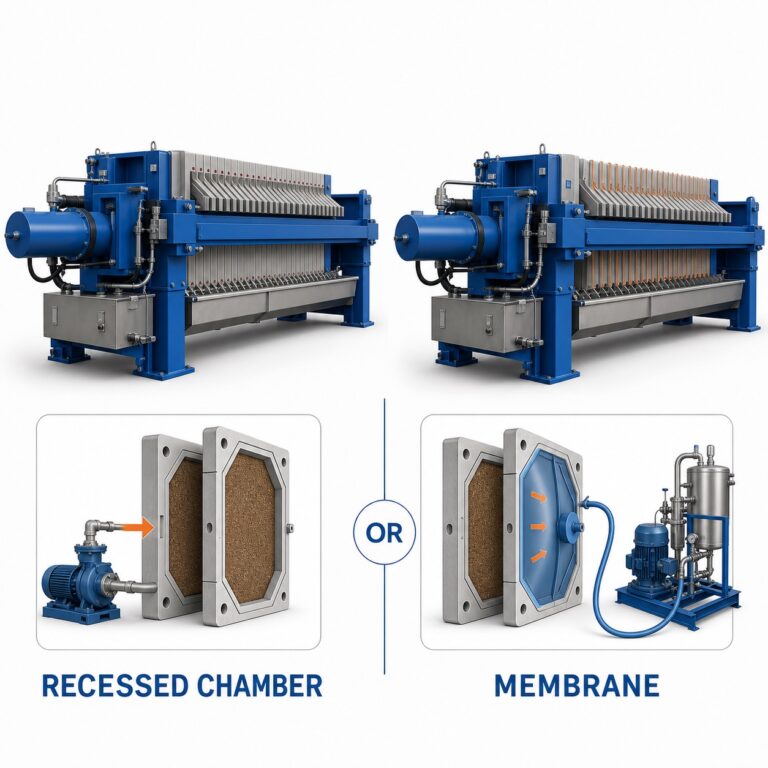
Ceramic and stone plants generate wastewater that varies by process area, pit configuration, and production schedule, which means a modular recycling package cannot be sized from a single flow number or a general description of “process water.” Before comparing supplier proposals, a buyer needs to establish what the plant’s wastewater actually looks like across its operating range and what the recovered water is meant to do once it returns to the process. That mapping work determines which modules belong in scope and which comparisons between suppliers are even valid.
Map the Plant Wastewater Stream and Intended Reuse Point
| Planning dimension | Project-specific value or evidence | Decision supported |
|---|---|---|
| Wastewater stream | Identify the wastewater stream or streams within the proposed PWR boundary | Establish the source-water basis and package boundary |
| Flow variation | Document the actual operating range and variation | Compare proposed arrangements against changing flow conditions |
| Solids and grit loading | Record project-specific loading evidence | Check whether the proposed module scope addresses incoming solids conditions |
| Wastewater chemistry | Record the relevant chemistry evidence | Set the basis for treatment-train selection and project-specific checks |
| Production interruptions | State the expected interruption conditions | Test the proposed arrangement against actual production conditions |
| Intended reuse point | Identify the reuse application and its site interface | Link the treatment train to the intended use; criteria remain site-specific |
A modular water recycling package is only as good as the wastewater characterization behind it. Ceramic and stone production generates wastewater from multiple points — glazing lines, cutting and polishing operations, mold cleaning, floor washdown — and these streams can differ in solids content, chemistry, and flow pattern even within the same plant. Treating them as a single undifferentiated “wastewater stream” risks a module selection that fits the average condition but fails the peak condition, or that addresses one stream’s characteristics while leaving another stream’s grit or chemistry unaddressed.
The first judgment a buyer must make is the boundary of the package: which streams are entering this particular PWR system, and which are excluded or handled separately. This boundary decision affects every downstream sizing choice, because a package scoped for a single polishing line behaves differently than one scoped for a combined plant-wide stream with mixed solids loading.
Flow variation matters independently of average flow. A plant that runs near-constant output places different demands on a treatment train than one with batch operations, shift changes, or seasonal production shifts. Where flow swings significantly within a day or week, the proposed arrangement needs to handle the variation itself, not just the midpoint — undersized buffering or clarification capacity shows up first during the peaks, not during steady operation.
Solids and grit loading is a separate planning dimension from flow. Stone-cutting wastewater can carry heavier, more abrasive grit than glaze-line wastewater, and the composition changes which pretreatment or settling arrangement makes sense. Wastewater chemistry — pH swings, dissolved mineral content, residual process chemicals — is its own variable again, independent of both flow and solids, and it shapes dosing and clarification choices in ways that solids loading alone does not predict.
Production interruptions deserve explicit documentation because intermittent operation changes how a treatment train is tested and operated. A system designed around continuous feed assumptions may need different startup and idle-period handling than one designed around intermittent batches.
Finally, the intended reuse point closes the loop on all of the above. Water returning to glaze mixing has a different fitness requirement than water returning to floor washdown or cooling, and the reuse point is what ultimately justifies the treatment train’s design — not an abstract removal target. The Ceramic Water Recycling System RFQ Checklist outlines the kind of data buyers should prepare before this mapping conversation starts with a supplier, since the quality of the proposal depends directly on the quality of this upfront characterization.
Translate Feed Variation Into a PWR Module Scope
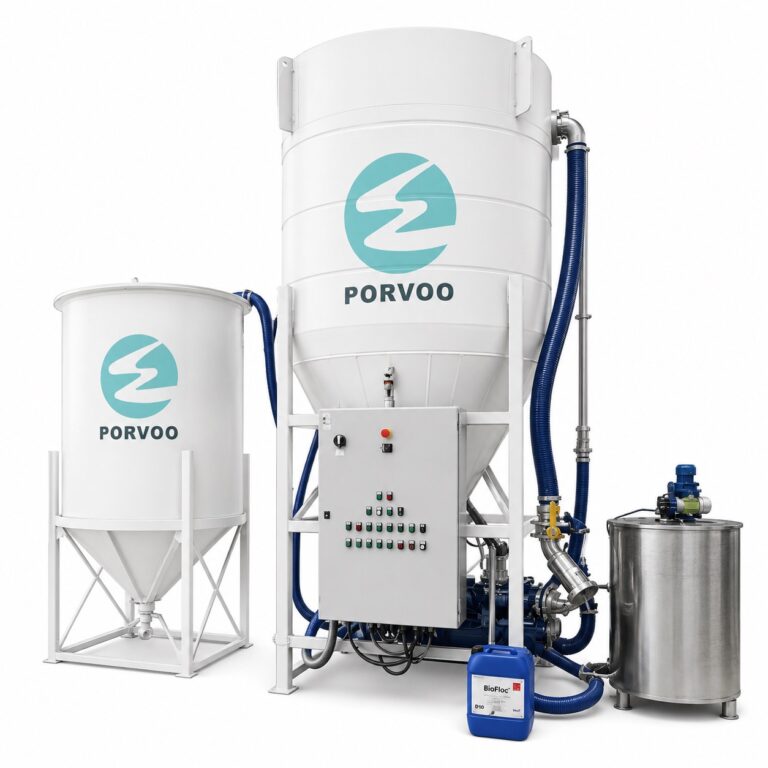
Once the wastewater stream and reuse point are documented, the next judgment is how that variation translates into which modules a PWR configuration actually needs — and in what arrangement. A modular system is not a fixed bundle; it is a configurable treatment train where each module addresses a specific function, and the combination depends on what the feed requires.
Where incoming solids loading is heavy and variable, the configuration needs adequate buffering and primary separation capacity ahead of finer clarification steps, because undersized upstream capacity pushes load downstream where it is harder and more expensive to manage. Where solids loading is lighter but chemistry is more variable — for example, shifting pH or dissolved content — the module emphasis shifts toward dosing and chemical conditioning rather than mechanical separation capacity.
Flow variation changes the module scope in a different way than solids loading does. A system that must absorb short-term peaks without flow-averaging buffer capacity ahead of it will pass that variability directly into the clarification and dosing stages, which can affect how consistently those stages perform. Conversely, where buffering capacity is included in the scope, downstream modules can be sized closer to an average condition rather than a peak condition, which is a different design trade-off with its own footprint and cost implications that the buyer should understand even without specific numbers attached.
Production interruptions also affect module scope, particularly around restart behavior. A treatment train configured for continuous feed may require different startup sequencing or module activation when feed resumes after a stoppage, compared with one explicitly configured for intermittent operation from the outset.
The practical consequence for the buyer is that two plants with similar average flow can require materially different module scopes if their variation profiles, solids character, and chemistry differ. A proposal that quotes only a flow number without referencing the variation, solids, and chemistry basis has not yet demonstrated that its module scope matches the project. The buyer’s task at this stage is to confirm that the supplier’s proposed module list is traceable back to the specific feed conditions documented in the mapping step — not simply to a plant size or production volume.
Match Clarification, Dosing, and Sludge-Handling Interfaces
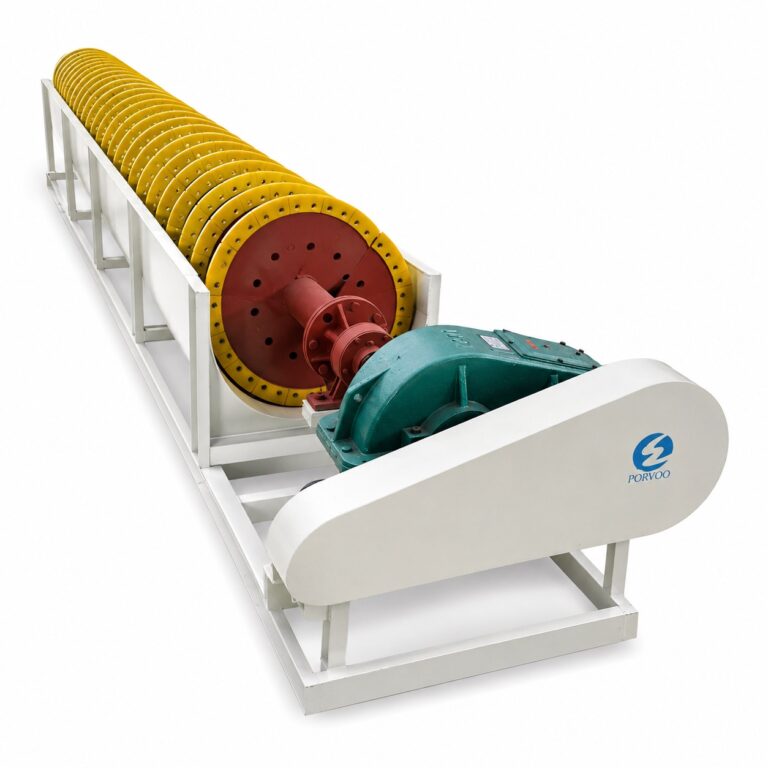
Clarification, dosing, and sludge handling are distinct functions that must work together, and the interfaces between them are where configuration mismatches most often surface. Clarification removes suspended solids and fine particles from the stream; dosing conditions the chemistry so that clarification and settling perform as intended; sludge handling manages what clarification and settling remove. Each step depends on the one before it, and a weakness in one step changes the burden on the next.
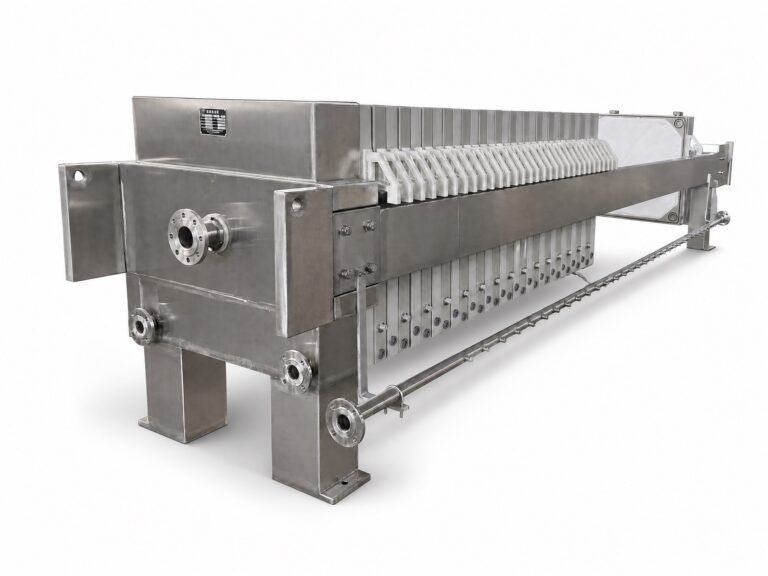
Where dosing is undersized or poorly matched to the wastewater chemistry, clarification equipment downstream receives flocs or particles that settle less predictably, which in turn increases the solids load reaching sludge handling and can change the sludge’s handling characteristics. Where clarification capacity is undersized relative to the actual solids and flow conditions, the interface with sludge handling shifts — sludge transfer frequency and concentration both change, and downstream dewatering or cake-handling equipment needs to be matched to that altered condition rather than to a generic assumption.
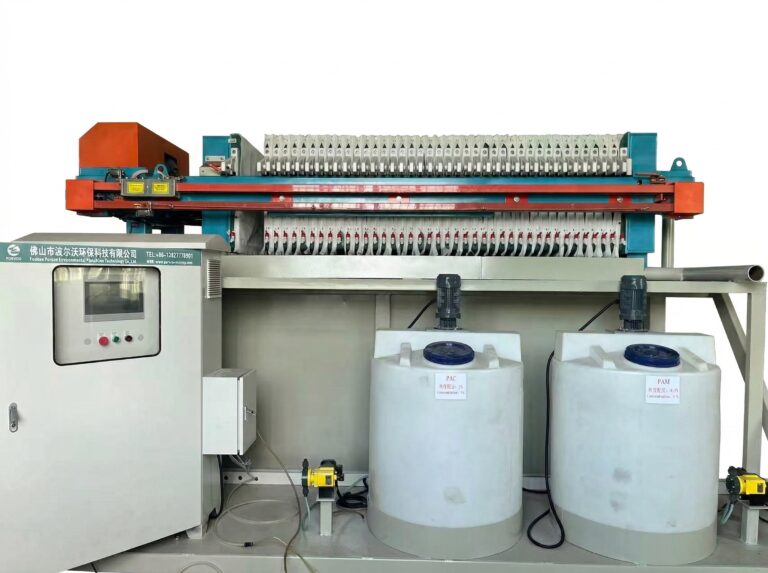
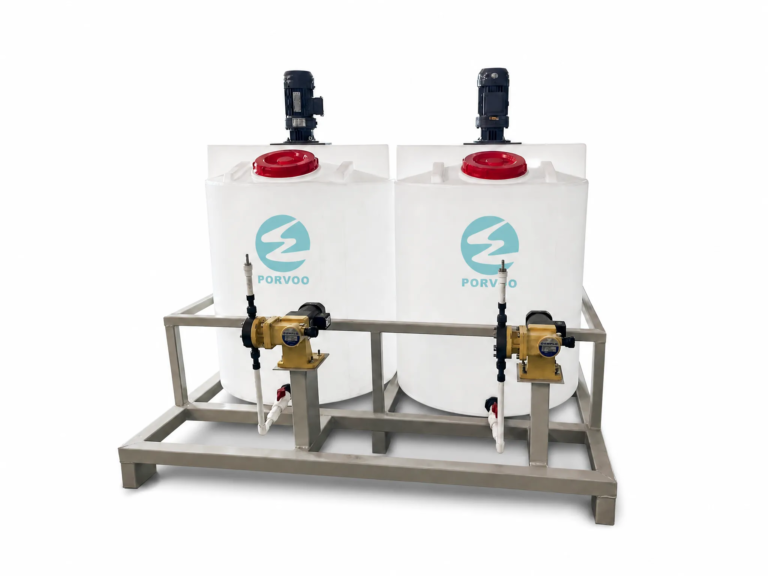
The dosing interface deserves particular attention because dosing is often where intelligent control adds the most value: chemistry in ceramic and stone wastewater does not stay constant across a shift or across production runs, and a dosing system that adjusts to actual incoming conditions behaves differently than one set to a fixed rate. A PAM/PAC intelligent chemical dosing configuration is one way this interface is addressed, but its suitability still depends on the chemistry variation documented earlier in the planning process — the dosing module’s role only makes sense in reference to that variation, not as a standalone selection.
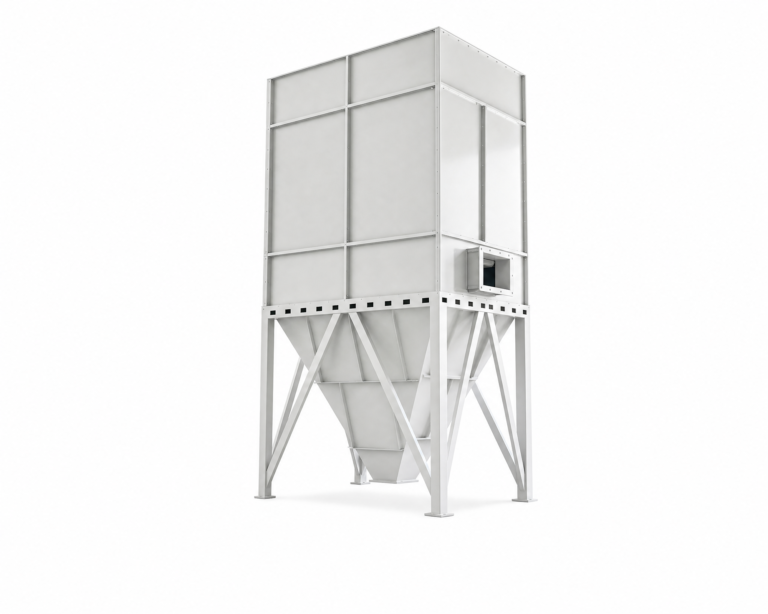
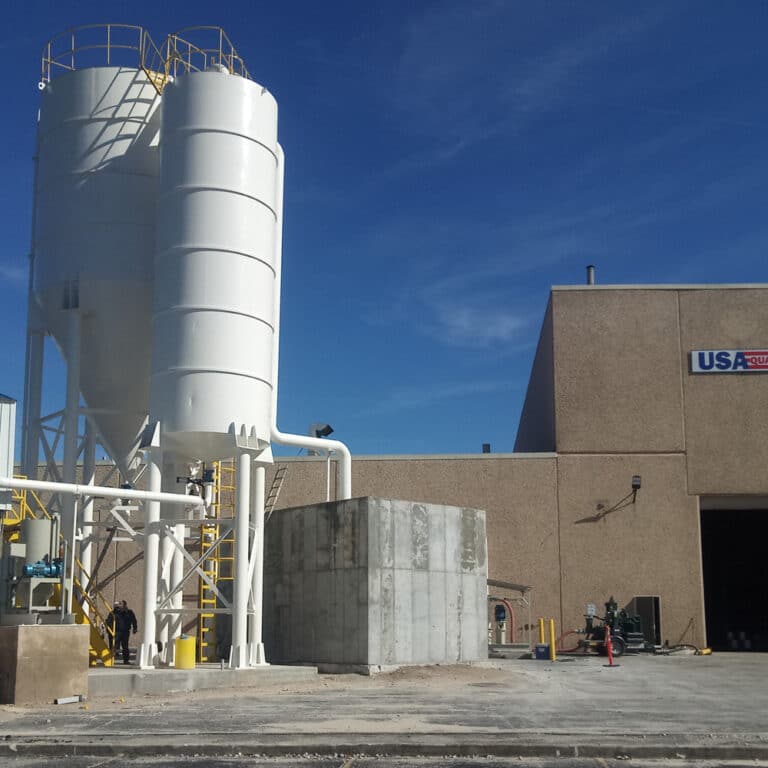
Clarification equipment itself may take different physical forms depending on the site’s settling requirements and footprint; a disposición de la torre de sedimentación vertical, for instance, addresses settling within a smaller footprint than a horizontal basin, which matters where available space constrains the clarification module choice. The buyer’s task is to confirm that each interface — dosing-to-clarification and clarification-to-sludge-handling — has been sized against the same feed data established earlier, rather than each module being specified independently against a generic assumption that may not match the others.
Size Footprint, Utilities, and Redundancy Around Production Conditions
| Planning item | Buyer-defined project condition | Quotation check |
|---|---|---|
| Huella | Available installation footprint and site constraints | Confirm that the proposed arrangement fits the stated project space |
| Servicios públicos | Utility availability at the system boundary | Identify required interfaces and the project-specific supply split |
| Controla | Control requirements and the site integration boundary | Confirm the supplied control scope and required site integration |
| Production conditions | Actual flow variation and expected production interruptions | Check that the proposed arrangement is based on the stated operating conditions |
| Redundancia | Project-specific continuity need and proposed redundancy basis | Compare the proposed redundancy with the required operating continuity |
Even a correctly scoped module list can fail at the site level if footprint, utilities, controls, and redundancy are not checked against actual production conditions. These are site-specific constraints that exist independently of the treatment chemistry and solids questions addressed earlier, and they require their own verification step before a proposed arrangement can be considered complete.
Footprint constraints shape which physical configuration is viable. A site with limited floor space may favor a more vertically arranged clarification module over a horizontal one, and this choice has downstream consequences for how utilities and piping are routed and how maintenance access is planned. A buyer who has not confirmed the available footprint against the proposed arrangement’s physical dimensions risks discovering a mismatch only after the quotation stage.
Utility availability at the system boundary is a separate check. Power, water, compressed air, or other utility needs must be identified at the point where the supplied package begins, and the buyer needs to know which utilities the supplier’s scope assumes are already present at that boundary versus which remain the site’s responsibility to provide. Where this split is unclear in a proposal, the comparison between competing quotations becomes unreliable because apparent cost differences may simply reflect different utility assumptions rather than different equipment scope.
Controls present a similar boundary question: how much of the control system is supplied as part of the package, and how much integration with existing plant control systems falls to the site. This distinction affects both the initial project and how maintenance and operational changes are handled later.
Redundancy is where production continuity requirements enter the sizing conversation directly. A plant that cannot tolerate water-recycling downtime without affecting production has a different redundancy requirement than one with buffer capacity or alternate water sources available during maintenance. The proposed arrangement should be evaluated against this stated continuity need, not against a generic redundancy assumption — a configuration adequate for a plant with tolerance for interruption may be inadequate for one without it, even if the base treatment modules are identical. The buyer’s task is to state the actual continuity requirement explicitly, because it is not something a supplier can infer correctly from flow and chemistry data alone.
Define Supplier Responsibilities and Site-Supplied Work
| Scope item | Supplier quotation should identify | Decisión sobre el proyecto |
|---|---|---|
| System boundaries | Package entry and exit boundaries and included scope | Compare where each proposed package begins and ends |
| Servicios públicos | Required utility interfaces and the party supplying each one | Separate supplier scope from site-supplied work |
| Controla | Supplied control scope and site integration boundary | Confirm the responsibility split for control integration |
| Trasvase de lodos | Transfer boundary and included sludge-transfer scope | Assign downstream connection and site work |
| Startup support | Included startup-support scope | Compare the support included in each quotation |
| Acceptance work | Proposed test scope, activities, and responsibilities | Establish a project-specific acceptance plan |
A quotation that lists equipment and capacity without defining where supplier responsibility ends and site-supplied work begins leaves the buyer unable to compare proposals on equal terms or plan the project around a reliable scope. This is where the information the buyer has assembled in earlier mapping steps feeds directly into how PORVOO or any equipment supplier structures a configuration and quotation review — the supplier’s proposed module scope and responsibility split should be traceable back to the wastewater, reuse, footprint, and continuity conditions the buyer has already documented.
System boundaries need explicit definition: where does the supplied package begin and end, physically and functionally. Two proposals that appear to cover similar scope can differ substantially once the entry and exit boundaries are compared line by line — one supplier’s “complete system” may exclude elements the other includes.
Utilities responsibility follows the same logic established in the footprint and utilities discussion: the quotation should state which utility interfaces are included in supplier scope and which are left for the site to provide at the boundary. Controls responsibility needs the same clarity — what control scope is supplied, and where the site integration boundary falls.
Sludge transfer is its own boundary question, separate from the sludge-handling module itself. A quotation may include sludge-handling equipment but exclude the transfer connection to downstream disposal or further processing, and this gap is easy to overlook if the buyer is focused primarily on the treatment modules.
Startup support scope varies between quotations and affects how the project transitions from installation to operation. Acceptance work — what tests, activities, and responsibilities are proposed for verifying the system before final acceptance — should also be stated at the quotation stage rather than negotiated afterward, since acceptance planning benefits from agreement before equipment selection is finalized, not after.
The buyer’s task across all of these items is the same: confirm that each boundary is stated explicitly enough to compare against a competing proposal, and that nothing material has been left to assumption on either side.
Prepare Quotation and Acceptance Evidence Before Purchase
| Decision area | Evidence to agree before purchase | Límite de las pruebas |
|---|---|---|
| Wastewater basis | A wastewater sampling program for the actual project conditions | Site, preservation, frequency, permit, and laboratory requirements remain project-specific |
| Reuse quality | Separate agreed measures for pH, suspended solids, and turbidity tied to the intended reuse point | No single reading establishes whether water is fit for a process use; criteria remain site-specific |
| Automation acceptance | Agreed factory acceptance, site acceptance, and site integration test activities and responsibilities | Automation-system evidence does not establish equipment performance |
| Rendimiento del equipo | Separate project-specific performance tests and acceptance values | Performance values require agreed project tests |
| Quotation scope | Identified system boundaries, utilities, controls, sludge transfer, startup support, and acceptance work | Scope completeness supports quotation comparison; acceptance outcomes remain project-specific |
The final step before purchase is separating the different kinds of evidence a project needs and confirming that each one is addressed by an agreed plan rather than left implicit in the quotation. Wastewater basis, reuse quality, automation acceptance, and equipment performance are four distinct evidence categories, and conflating them leads buyers to assume a single test or document answers more than it actually does.
The wastewater basis itself benefits from a defined sampling program rather than a one-time grab sample, since a single sample point in time may not represent the flow and chemistry variation documented earlier. ISO 5667-10, the water quality standard covering wastewater sampling-program design, addresses how such a program should be structured — though the specific site, preservation, frequency, permit, and laboratory requirements for any given plant remain project-specific and need to be agreed separately.
Reuse quality is a second, distinct evidence category. pH, suspended solids, and turbidity each measure a different property of the water, and no single one of these readings establishes whether the water is fit for the intended reuse point identified earlier — a water stream can read acceptable on turbidity while still being unsuitable on chemistry, or vice versa. These measures need to be agreed as separate, project-specific acceptance criteria tied explicitly to the reuse application, not treated as a single pass/fail test.
Automation acceptance is a third category, and it answers a different question than equipment performance does. Comisión Electrotécnica Internacional 62381, the standard covering factory acceptance, site acceptance, and site integration testing, addresses how acceptance-test scope, activities, and responsibilities for automation systems should be agreed — but passing an automation acceptance test does not by itself establish that the treatment equipment achieves its performance objectives. Those require their own separate, project-specific performance tests and acceptance values, agreed in advance rather than assumed from the automation test results.
Finally, the quotation itself should be checked for completeness against everything established in the preceding sections: system boundaries, utilities, controls, sludge transfer, startup support, and acceptance work. The Acceptance Testing for Ceramic Wastewater Recycling Systems article addresses how reuse quality and sludge output specifically are evaluated once this quotation and evidence groundwork is in place. Where a quotation is silent on any of these evidence categories, that silence is itself information the buyer needs to resolve before comparing price between suppliers, since an incomplete quotation cannot be reliably compared against a complete one.
Preguntas frecuentes
Q: Can two PWR quotations be compared by package name and price alone?
A: No. First align the package entry and exit boundaries, utilities, controls, sludge-transfer scope, startup support, and acceptance work so that differences in responsibility are not mistaken for equipment or price differences.
Q: How should a buyer decide which treatment modules belong in the proposed PWR package?
A: Start with the actual wastewater streams, flow variation, solids and grit loading, chemistry, production interruptions, and intended reuse point. Then require each proposal to explain how its clarification, dosing, and sludge-handling scope addresses that project basis and where the site interfaces begin.
Q: How should production variability affect the proposed arrangement?
A: Treat the actual operating range, expected interruptions, and required continuity as design inputs. Compare each proposal against those conditions, including its footprint, utility needs, controls, and project-specific redundancy basis.
Q: Does one water-quality reading show that treated water is suitable for reuse?
A: No. Agree separate measures for pH, suspended solids, and turbidity, then tie the sampling plan and acceptance values to the intended reuse point and the applicable site requirements.
Q: What acceptance evidence should be agreed before purchase?
A: Define the wastewater sampling program, reuse-quality measures, automation test activities and responsibilities, and separate equipment-performance tests with project-specific acceptance values. This keeps automation acceptance from being treated as proof of treatment performance.