Un informe de cumplimiento en el que se muestre una muestra limpia puede permitir que una planta supere un ciclo de revisión sin revelar lo que realmente ocurre en el proceso durante la descarga de un lote, el cambio de turno o una operación de limpieza. El coste de esa laguna se hace evidente más adelante: durante la puesta en marcha bajo carga de producción real, en la primera auditoría reglamentaria que se realiza en condiciones de pleno rendimiento, o cuando una mejora del sistema de tratamiento se dimensiona en función de los datos más optimistas y llega a la planta con un margen de capacidad inadecuado. Lo que distingue una revisión defendible de un mero trámite burocrático es si el conjunto de pruebas abarca todo el ámbito operativo o solo el periodo de inactividad que casualmente coincidió con la visita de muestreo. Lo que sigue ofrece a los ingenieros de planta y a los equipos medioambientales una base más clara para decidir si sus datos de revisión son lo suficientemente sólidos como para actuar en consecuencia, o si se necesitan más pruebas operativas antes de comprometerse con una mejora.
Por qué una sola muestra que cumple los requisitos no demuestra la estabilidad del proceso
Una muestra puntual está estructuralmente sesgada hacia las condiciones de los periodos de calma. En los procesos por lotes, las cargas más elevadas de contaminantes suelen producirse en momentos específicos y predecibles: cuando finaliza una tanda de producción y se vacían los depósitos, cuando un cambio de turno da lugar a la limpieza de los equipos, o cuando un ciclo de lavado envía un pico concentrado al punto de recogida. Una muestra recogida fuera de esos intervalos produce un resultado que es técnicamente preciso para ese momento, pero que resulta realmente engañoso como caracterización del proceso.
El riesgo de fallo no radica en que una muestra se sitúe siempre por debajo del pico real, sino en que no hay forma de saber, a partir de un único resultado, cuál es la amplitud del pico ni con qué frecuencia se produce. Cuando ese resultado se utiliza como referencia de diseño para una mejora del sistema de tratamiento, la hipótesis de dimensionamiento se basa en la carga en periodo de calma en lugar de en la carga máxima creíble. Esa discrepancia no se pone de manifiesto durante los cálculos teóricos. Se pone de manifiesto cuando el sistema mejorado recibe su primera descarga a plena producción y la respuesta del tratamiento resulta insuficiente.
Las consecuencias posteriores son también más difíciles de corregir de lo que parece. Un sistema de tratamiento dimensionado para una carga inferior a la real no puede ajustarse fácilmente tras su puesta en marcha: la capacidad de dosificación de coagulante, la superficie de sedimentación y el tiempo de residencia quedan fijados en el momento de la fabricación. Modificar cualquiera de esos parámetros tras la instalación conlleva un coste y un retraso considerables. Lo más prudente es considerar una muestra puntual como punto de partida para la caracterización, en lugar de como confirmación de la estabilidad del proceso, y exigir un muestreo adicional antes de tomar cualquier decisión sobre la capacidad.
¿Qué tipos de variaciones en los procesos deben tenerse en cuenta en la revisión?
El reto práctico de cualquier análisis consiste en distinguir qué fluctuaciones se deben a variaciones normales del funcionamiento y cuáles suponen un riesgo real para el cumplimiento normativo. Esa línea divisoria varía considerablemente según el sector, y los márgenes en entornos de producción reales suelen ser más amplios que las cifras que aparecen en los cálculos de viabilidad.
En lo que respecta a la producción de cemento, cerámica y hormigón, las diferencias en cuanto a las características de los contaminantes —y las razones por las que una sola muestra puede llevar a conclusiones erróneas— se manifiestan de formas distintas en cada uno de estos tres sectores.
| Industria | Características típicas de los efluentes | Cómo se producen las oscilaciones en los procesos | Por qué una sola muestra puede llevar a conclusiones erróneas |
|---|---|---|---|
| Cemento | DBO ~5 mg/l, DQO ~60 mg/l, además de materia en suspensión total, sólidos disueltos y metales pesados | Los turnos de producción provocan picos de corta duración en los niveles de sólidos y metales | Es posible que la muestra capturada no recoja los volcados de inicio de turno que superen temporalmente los límites |
| Cerámica | TSS: 2 000-10 000 mg/l, DQO: 500-1 200 mg/l, bajo contenido en metales pesados | Rangos naturalmente amplios; los cambios por lotes empujan los valores hacia los extremos superiores | Una sola muestra no puede representar todo el rango de funcionamiento |
| Hormigón | pH elevado y alto contenido de sólidos disueltos procedentes del lavado de hormigoneras | Los procesos de lavado generan fuertes picos de pH y pulsos de sólidos | Una muestra tomada durante un periodo de producción en seco oculta los picos reales de pH |
En la práctica, esto significa que el programa de muestreo de control debe diseñarse en función del calendario de producción, y no de la facilidad de acceso. En el caso de los procesos por lotes, las muestras deben recogerse al inicio del turno, a mitad de la producción e inmediatamente después de una operación de limpieza o lavado. En el caso de procesos con rangos naturalmente amplios, como la fabricación de cerámica, se necesita un mínimo de varias muestras repartidas entre diferentes lotes de producción antes de que el rango superior pueda considerarse caracterizado. En las plantas de hormigón, donde el lavado de las hormigoneras es la principal fuente de efluentes, una sola muestra puntual tomada en un periodo seco puede arrojar un valor de pH que no guarda relación alguna con el pico de pH generado por un ciclo de lavado activo. Diseñar un tratamiento sin capturar esos picos crea un margen insuficiente que la muestra de la autorización no revelará necesariamente, hasta que las condiciones que generaron el pico coincidan con una inspección programada.
Cómo la ubicación y el momento del muestreo distorsionan las conclusiones sobre el tratamiento
La ubicación añade una distorsión acumulativa que el factor temporal por sí solo no puede explicar. Muchas instalaciones industriales generan más de una corriente de efluentes distinta: el agua de refrigeración, el agua de lavado de procesos, el drenaje superficial y la purga de calderas pueden llegar al mismo punto de recogida, pero sus perfiles de contaminantes son lo suficientemente diferentes como para que, al mezclarlos antes del muestreo, se obtenga un resultado compuesto que no representa con precisión a ninguna de las corrientes individuales. Una conclusión sobre el tratamiento extraída de ese compuesto puede ser técnicamente adecuada para la muestra mezclada, pero estructuralmente inadecuada para la corriente que realmente transporta la carga problemática.
La toma de muestras únicamente en el punto de descarga final puede dar una imagen distorsionada de las características totales de los efluentes en cualquier instalación en la que converjan aguas de origen diferente en la parte superior del sistema. Una corriente de proceso cerámica con alto contenido en sólidos, diluida por el agua de refrigeración, puede dar lugar a un valor de TSS en el punto de muestreo final que se encuentre dentro de los límites, mientras que la corriente de proceso sin tratar por sí sola los superaría significativamente. La línea de tratamiento que gestiona este flujo combinado puede parecer adecuada en una muestra de descarga única, pero puede resultar insuficiente para el flujo de proceso si varían las tasas de producción y cambia la relación de dilución.
Por lo tanto, el muestreo interno en múltiples puntos de drenaje es un criterio de planificación más que una mera formalidad procedimental. Es la única forma de rastrear el origen de los contaminantes con la suficiente fiabilidad como para especificar una mejora del tratamiento que se centre en el flujo adecuado y con la capacidad adecuada. Sin esa trazabilidad, una mejora del tratamiento podría aplicarse en un punto erróneo de la secuencia del proceso, o dimensionarse en función de una muestra compuesta diluida que subestime la concentración real del flujo. La distinción entre la monitorización de fuentes puntuales y el muestreo interno multipunto es más importante precisamente cuando se toma la decisión sobre el diseño del tratamiento, y menos importante una vez que ya se ha instalado un sistema inadecuado.
Cuando la dosificación manual y las desviaciones del operario reducen el margen de cumplimiento
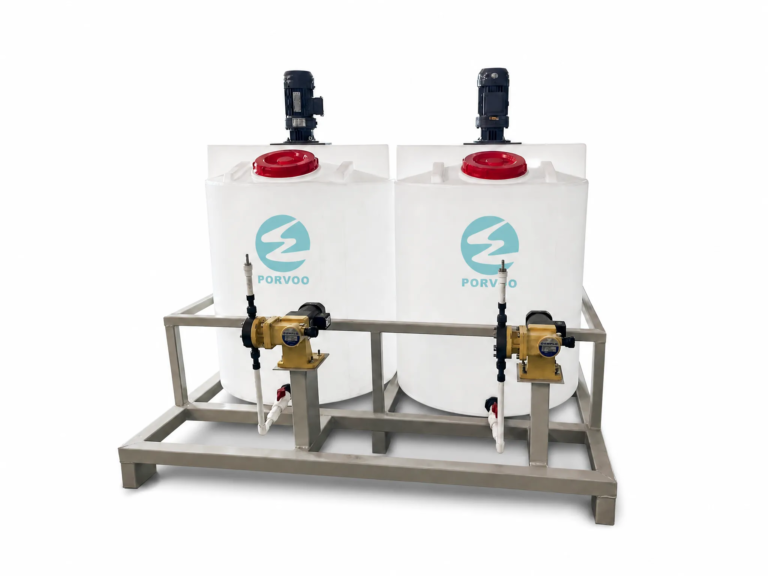
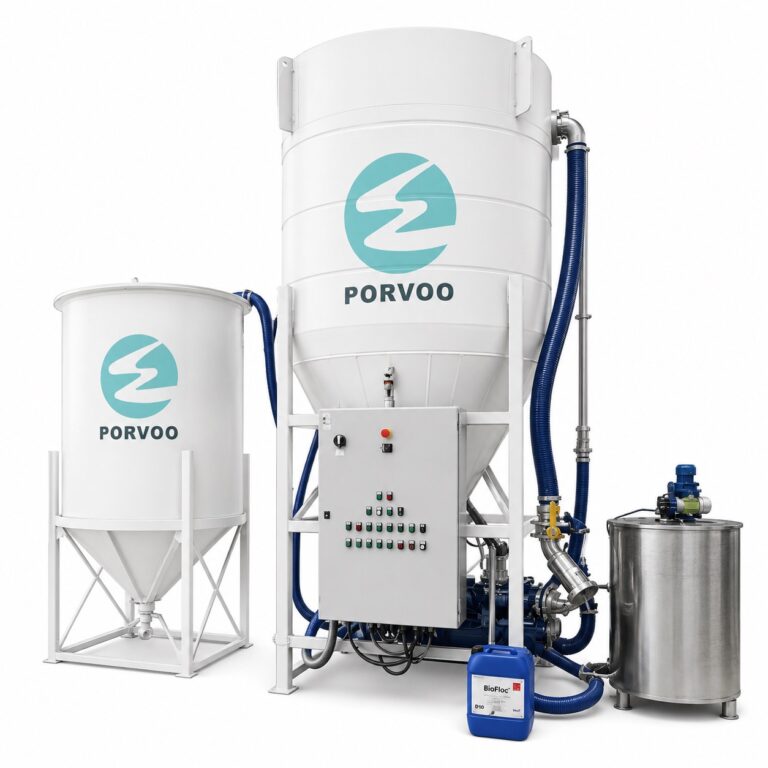
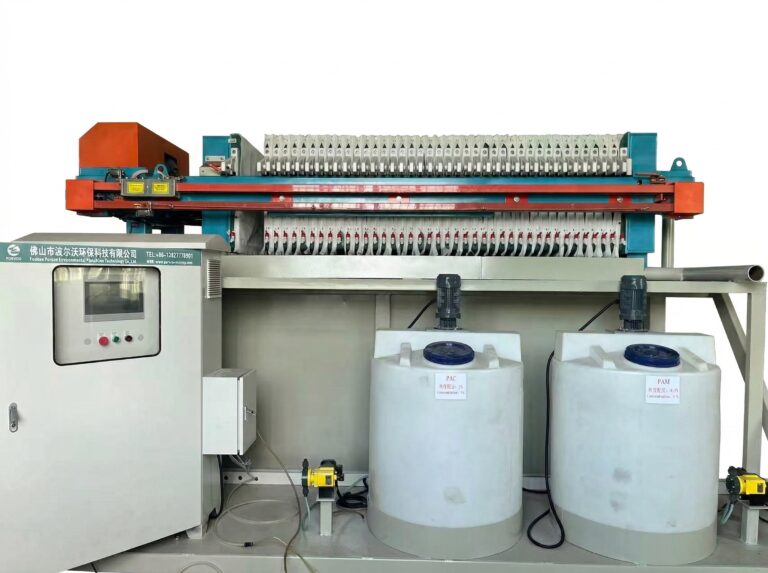
Los sistemas de dosificación de productos químicos que dependen del criterio del operador para establecer las tasas de dosificación, ajustar los tiempos y responder a las variaciones de la carga plantean un riesgo de incumplimiento que no aparece reflejado en la documentación del diseño del tratamiento. El diseño puede especificar la dosis correcta de coagulante para un rango determinado de TSS, pero si el operador que aplica esa dosis trabaja por costumbre en lugar de basarse en mediciones actuales, o sigue un procedimiento que se revisó por última vez hace dos años, la dosis real administrada puede desviarse de la intención del diseño sin que se active ninguna alarma ni se genere ningún registro. En el caso de las plantas que dependen de la dosificación de PAC o PAM para gestionar la sedimentación, esa diferencia entre la dosis especificada y la administrada crea la condición exacta en la que un sistema de tratamiento que funciona correctamente en condiciones de muestreo supervisadas produce resultados fuera de especificación durante el funcionamiento normal. Un sistema inteligente de dosificación de productos químicos esto cierra el ciclo de retroalimentación entre la medición en tiempo real y el ajuste de la dosis, lo que elimina la intervención subjetiva del operador en la decisión de dosificación en cada momento, lo que resuelve directamente este patrón de fallo.
Hay dos formas distintas de desviación operativa que generan riesgos de incumplimiento que suelen pasar desapercibidos en una revisión puntual.
| Tipo de deriva | Cómo se produce | Consecuencias del incumplimiento |
|---|---|---|
| Desviación de la calificación | Si no se planifica la renovación de la licencia de operador, el personal sin licencia o sin la formación adecuada acaba tomando decisiones sobre la dosificación | Los ajustes críticos en la dosificación y el proceso se realizan sin la competencia necesaria, lo que afecta a la uniformidad de los efluentes |
| Desvío en la comunicación | Notificaciones omitidas por parte del operador a las autoridades reguladoras sobre cambios en las operaciones, los equipos o el flujo | Los cambios operativos que afectan a la calidad de los efluentes no se comunican, lo que abre la puerta al incumplimiento de la normativa, incluso si las muestras se encuentran dentro de los límites permitidos |
La deriva de la calificación y la deriva de la comunicación comparten una característica estructural: ambas se deterioran con el tiempo y ninguna de ellas deja una señal clara en los datos de los efluentes hasta que se produce un incidente de incumplimiento. Una revisión que se limite a examinar los datos de rendimiento del tratamiento no detectará a un operador cuya licencia haya caducado hace seis meses ni un cambio en el equipo que debería haberse comunicado al organismo regulador pero que no se ha hecho. El margen de cumplimiento que se tuvo en cuenta en el diseño original se ve silenciosamente consumido por estos patrones operativos, y el proceso que parecía adecuado sobre el papel llega a un punto en el que la variación normal de la producción es suficiente para que los resultados se salgan de los límites. Detectar esto antes de que se produzca un incidente regulatorio requiere una revisión que incluya registros operativos, registros de calificación e historiales de notificaciones, y no solo los resultados de las muestras de efluentes.
Cómo elaborar un conjunto de datos que respalde una mejora real
La diferencia entre un conjunto de datos que respalda una decisión de mejora defendible y otro que simplemente cumple con una lista de verificación de revisión radica en si los datos abarcan la variación o solo la tendencia central. Un conjunto de muestras periódicas de conformidad y una única prueba de laboratorio sobre la composición química ajustada al agua del grifo aportan muy poca información al diseñador sobre cómo se comportará el sistema de tratamiento cuando el efluente real sea variable, el calendario de producción esté comprimido y las interacciones químicas estén determinadas por mezclas de contaminantes reales en lugar de soluciones estándar.
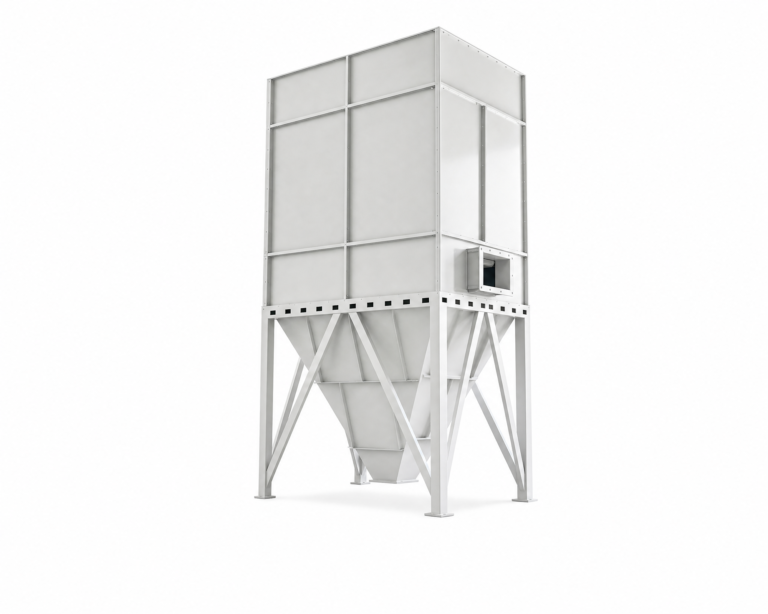
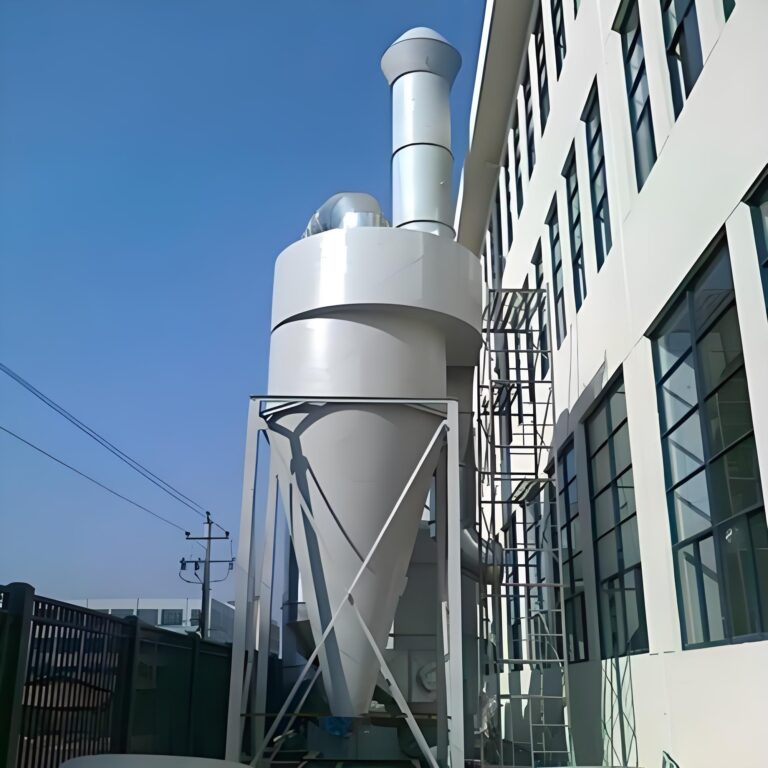
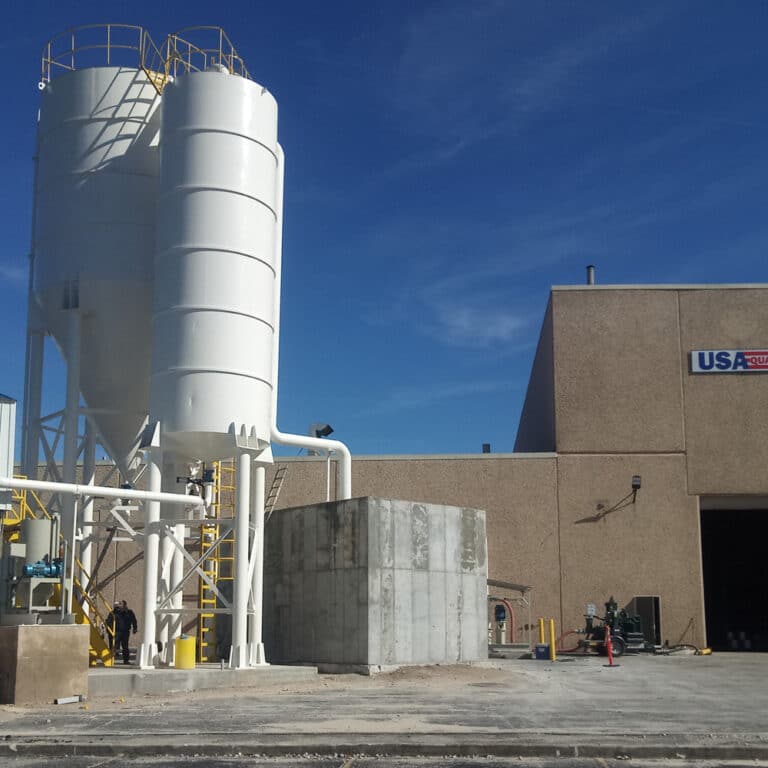
Los datos basados en tendencias tienen más peso que los datos puntuales, no porque proporcionen más puntos de datos, sino porque revelan el rango de funcionamiento para el que debe diseñarse la mejora. Una línea de tendencia construida a partir de registros diarios de pH y caudal, muestras de conformidad tomadas a lo largo de múltiples ciclos de producción y un estudio de tratabilidad en laboratorio realizado con aguas residuales reales recogidas proporciona al diseñador la información de calidad necesaria para dimensionar el equipo con confianza, especificar rangos de dosificación de productos químicos que mantengan los límites dentro de la variación real e identificar interacciones o subproductos que se pasarían por alto en una revisión teórica. En aplicaciones con gran sedimentación, es fundamental combinar esta evidencia con un dimensionamiento hidráulico correcto —un torre de sedimentación vertical Un sistema dimensionado a partir de datos precisos sobre el caudal y la carga de sólidos funcionará de manera diferente a uno dimensionado a partir de un promedio de un período de aguas tranquilas.
Cada actividad de verificación en una revisión de actualización bien estructurada cumple una función distinta a la hora de reducir la brecha entre las condiciones operativas previstas y las reales.
| Actividad de recopilación de pruebas | Lo que revela | Por qué es importante a la hora de tomar decisiones sobre actualizaciones |
|---|---|---|
| Estudio de tratabilidad a escala reducida (ensayo de laboratorio) | Problemas prácticos, interacciones químicas y subproductos inesperados en las aguas residuales reales | Confirma que el proceso químico de mejora funciona con aguas residuales reales, y no con muestras idealizadas |
| Muestras periódicas de control de cumplimiento y registros diarios de pH y caudal | Líneas de tendencia que ponen de manifiesto la variabilidad entre turnos, semanas y ciclos de producción | Sustituye una instantánea puntual por una prueba operativa de que los límites se respetan de forma sistemática |
| Verificación de la medición del caudal (entrada frente a salida) | Infiltración, exfiltración o desequilibrios de caudal inexplicables | Garantiza que los cálculos de la capacidad de tratamiento se basen en datos hidráulicos precisos, evitando un dimensionamiento incorrecto |
La verificación de la medición del caudal merece una atención especial, ya que se trata de un control de revisión que a menudo se omite por considerarse una tarea administrativa más que técnica. Las discrepancias entre los caudales totales de entrada y salida —más allá de lo que puedan explicar la evaporación o el almacenamiento del sistema— indican infiltraciones o exfiltraciones que afectarán tanto al rendimiento del tratamiento como a los cálculos de los permisos. Una mejora dimensionada a partir de datos de caudal inexactos puede llegar a la planta con un tiempo de residencia hidráulico incorrecto, una capacidad de bombeo inadecuada o un rango de dosificación de productos químicos erróneo. Verificar el equilibrio de caudales antes de finalizar las especificaciones de diseño es un control de defendibilidad, no un trámite burocrático. Para las plantas que desean comprender el contexto completo del proceso antes de seleccionar una vía de mejora, una revisión detallada del proceso es un punto de partida útil.
¿Cuándo está listo el proceso para su aprobación o si es necesario realizar más pruebas?
La preparación para la aprobación no viene determinada por la existencia de un resultado de muestra conforme, sino por si el conjunto de pruebas es lo suficientemente sólido como para respaldar la afirmación de que el proceso respeta los límites en condiciones reales de funcionamiento, y no solo en las condiciones que se dieron casualmente en la fecha del muestreo. Un proceso que ha dado un resultado satisfactorio tras una mejora del tratamiento ha demostrado que puede funcionar en ese conjunto específico de condiciones. No ha demostrado que mantendrá los límites cuando aumente la intensidad de la producción, cuando cambie el operador o cuando se active un flujo de residuos que permaneció inactivo durante el periodo de revisión.
El patrón más habitual de aprobación prematura consiste en considerar la concesión del permiso como el final del proceso de recopilación de pruebas, en lugar de como el inicio del historial operativo documentado. Un permiso confirma que el método de tratamiento propuesto es susceptible de aprobación, pero no garantiza que el proceso sea estable en todo su rango operativo. Los registros documentados y los resultados de muestras consistentes a lo largo de múltiples ciclos de producción, revisados tras la expedición del permiso y antes de cualquier fijación definitiva de la configuración, constituyen el estándar práctico para determinar la preparación para la aprobación.
| Condición | En qué fijarse | Por qué garantiza el cumplimiento normativo |
|---|---|---|
| Aislamiento de flujos de problemas | Los flujos de residuos que podrían incumplir la normativa se han desviado y se han analizado por separado | Impide dar por concluido un proceso que no haya demostrado su eficacia con los efluentes más difíciles de tratar |
| Datos basados en tendencias, no en una instantánea | Los registros y los informes documentados demuestran un funcionamiento constante en condiciones reales | Confirma que la línea de tratamiento cumple los límites todos los días, no solo durante los periodos de muestreo óptimos |
Conviene dejar clara la disyuntiva que plantea el aislamiento de los flujos problemáticos. Desviar y analizar por separado un flujo de residuos de alta variabilidad o potencialmente no conforme antes de dar el visto bueno al proceso completo añade tiempo y costes al ciclo de revisión. Sin embargo, dar el visto bueno sin ese aislamiento implica comprometer toda la configuración del tratamiento a un proceso que incluye un flujo problemático no analizado. Si ese flujo provoca posteriormente un incumplimiento normativo, es probable que la solución implique una modificación del proceso o una mejora del tratamiento bajo presión de tiempo y escrutinio regulatorio, lo cual resulta más costoso que lo que habría supuesto un periodo de pruebas prolongado. La protección que ofrece la prueba de flujos separados no es solo la confianza en el cumplimiento normativo, sino la capacidad de ajustar adecuadamente la respuesta del tratamiento antes de que el diseño sea definitivo.
La implicación práctica de este análisis es que el margen de cumplimiento no queda fijado en el momento del diseño del sistema de tratamiento, sino que se ve continuamente mermado o mantenido en función de las decisiones operativas que se toman entre las visitas de los consultores. Una planta que pueda mostrar pruebas documentadas de las tendencias a lo largo de los turnos y los ciclos de producción, con un muestreo que abarque distintas corrientes de efluentes e incluya los periodos de máxima carga, se encuentra en una posición fundamentalmente más sólida que aquella que solo puede producir una única muestra limpia que cumpla con los requisitos. Antes de comprometerse con una mejora, la prioridad es confirmar que el conjunto de datos refleja el rango operativo real, en lugar de las mejores condiciones que el proceso puede producir bajo supervisión.
Para las plantas que se enfrentan a la decisión de mejorar su sistema de tratamiento, el siguiente paso más concreto es revisar los datos disponibles: identificar qué procesos de producción nunca se han reflejado en los datos de muestreo, comprobar si la medición del caudal se ha verificado tanto en la entrada como en la salida, y determinar si se ha excluido de la caracterización algún flujo de residuos por ser intermitente o por la dificultad de muestrearlo. Esas lagunas en el conjunto de datos definen el riesgo residual en la decisión de mejora, y subsanarlas antes de finalizar las especificaciones de diseño resulta significativamente más económico que descubrirlas tras la puesta en marcha.
Preguntas frecuentes
P: ¿Qué medidas debe tomar una planta inmediatamente después de detectar lagunas en sus datos de muestreo actuales?
R: Es prioritario subsanar las deficiencias específicas en el muestreo antes de ultimar cualquier especificación de actualización, y no después de la puesta en marcha. Identifique qué eventos de producción nunca se han registrado (purga de lotes, lavados de cambio de turno, ciclos de carga máxima), verifique que la medición del caudal esté equilibrada con respecto a los totales de entrada y salida, y confirme que todas las corrientes de efluentes distintas se hayan caracterizado individualmente. Cada laguna sin resolver afecta directamente a que el equipo de mejora tenga el tamaño adecuado, por lo que subsanarlas antes de que se fije el diseño resulta sustancialmente más económico que corregir un sistema mal dimensionado tras su instalación.
P: ¿Sigue siendo aplicable el enfoque de revisión basado en tendencias si la instalación solo genera un único flujo de efluentes relativamente homogéneo?
R: Sí, pero el umbral mínimo de pruebas es más bajo. En el caso de los procesos de flujo único con una variación limitada entre lotes, suelen ser suficientes los registros diarios de pH y caudal, combinados con muestras de conformidad tomadas en diferentes intensidades de producción. El enfoque cambia cuando el flujo es realmente uniforme y se genera de forma continua; en ese caso, la atención se centra en verificar que la dosificación se ajusta a las especificaciones bajo la rotación de los operadores, en lugar de establecer una amplia dispersión de muestreo. Sin embargo, la mayoría de las instalaciones que creen tener un flujo uniforme descubren, mediante muestreos internos multipunto, que el agua de refrigeración, el lavado y los vertidos de proceso llegan al mismo punto de recogida con perfiles de contaminantes significativamente diferentes.
P: ¿En qué se diferencia un sistema de dosificación inteligente de la aplicación de un procedimiento de dosificación manual más estricto como método para controlar la deriva del operario?
R: Un procedimiento manual más estricto solo reduce la deriva siempre y cuando todos los operarios lo sigan de forma coherente y precisa bajo la presión real de la producción; no cierra el circuito de retroalimentación entre las condiciones reales de los efluentes y la dosis que se administra. Un sistema inteligente de dosificación de productos químicos elimina la dependencia de la apreciación subjetiva en la decisión de dosificación en cada momento, al vincular el ajuste de la dosis a la medición en tiempo real, lo que significa que las variaciones de carga y los traspasos entre turnos ya no dependen de la calibración individual del operador. En las plantas en las que se ha identificado el error de dosificación como el principal mecanismo de deterioro del cumplimiento, una solución procedimental aborda el síntoma; un sistema de bucle cerrado aborda la causa estructural.
P: ¿En qué momento la prolongación del periodo de recopilación de pruebas deja de ser rentable en comparación con la decisión de realizar una mejora?
R: El periodo de recopilación de datos se considera suficiente cuando el conjunto de datos abarca el calendario de producción completo a lo largo de varios ciclos, incluye muestras de todas las corrientes de efluentes distintas durante los picos de carga y muestra una tendencia constante, en lugar de solo resultados limpios aislados. Más allá de ese punto, los muestreos adicionales tienden a confirmar, más que a modificar, los datos de diseño. La decisión de ampliar aún más el periodo solo se justifica si aún no se ha capturado una corriente específica de alta variabilidad durante su periodo activo, o si la verificación de la medición del caudal ha revelado una discrepancia en el balance que aún no se ha explicado. Ampliar el ciclo de revisión sin una laguna definida que subsanar añade costes sin mejorar la justificación de la decisión de actualización.
P: Si se desvía un flujo problemático y se somete a pruebas por separado, pero los resultados son variables, ¿cómo se debe abordar esa variabilidad en el diseño de la mejora?
R: El diseño de la respuesta del tratamiento debe basarse en el límite superior del rango caracterizado, no en la media. Los resultados variables de un flujo analizado por separado definen el margen de capacidad dentro del cual el sistema de tratamiento debe mantener los límites; utilizar la carga media como base de diseño reproduce el mismo error de subestimación que produce una muestra puntual. Cuando el límite superior es realmente incierto porque el flujo solo se ha captado en un número limitado de eventos, esa incertidumbre debe reflejarse en las especificaciones del equipo como un margen de capacidad explícito, en lugar de absorberse silenciosamente en una cifra de diseño nominal. Fijar un diseño en función de un rango variable sin resolver es la condición que da lugar a sistemas de tratamiento que funcionan correctamente bajo muestreo supervisado y de forma inadecuada en plena producción.