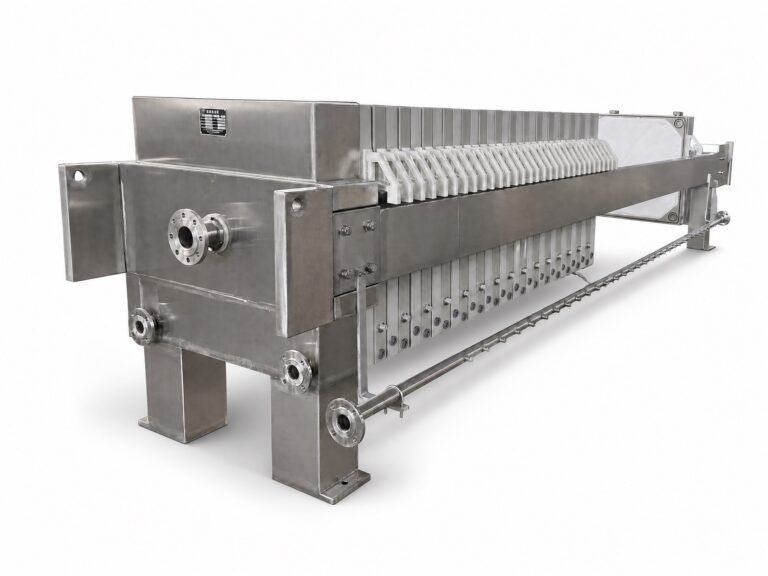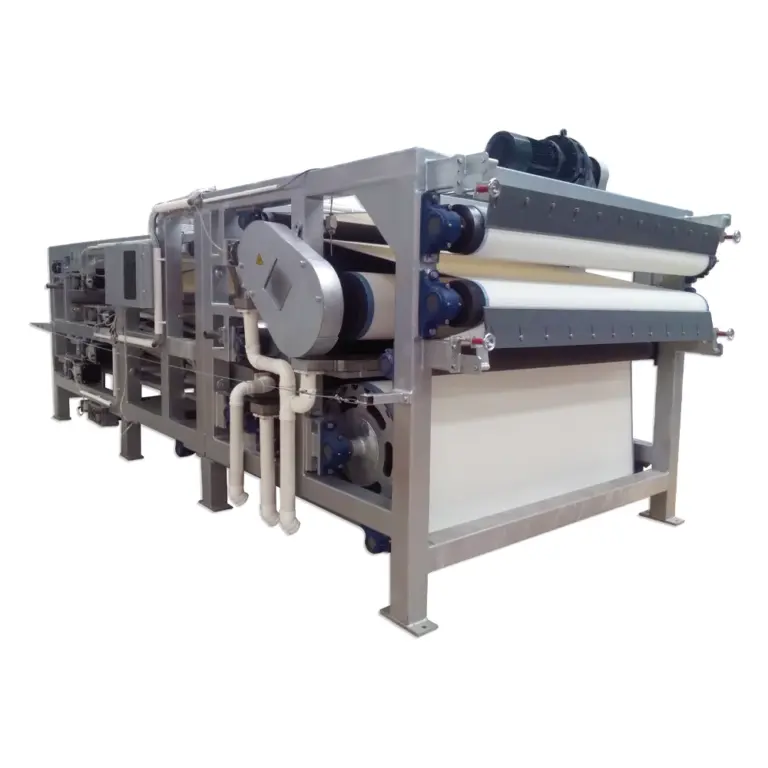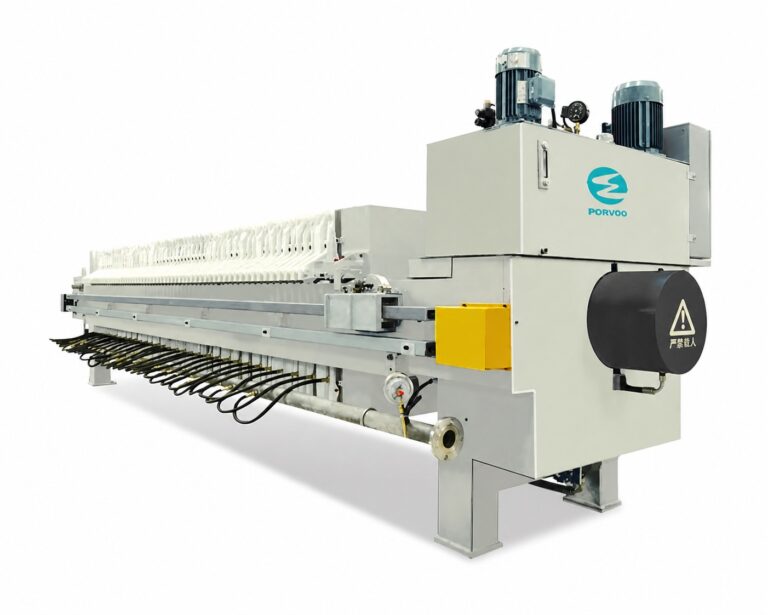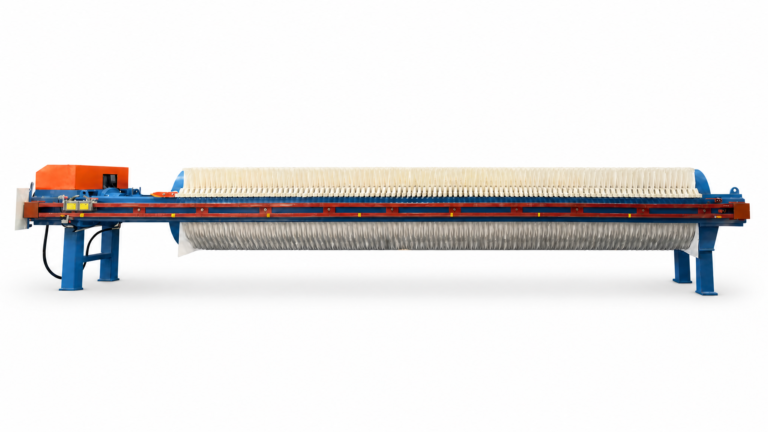
Una prensa de filtro separa un lodo bombeable o una suspensión de proceso en filtrado y torta de filtro. La configuración adecuada depende del material, del estado deseado de la torta, del objetivo del filtrado, del tiempo de funcionamiento disponible y del nivel de automatización de la manipulación necesario en la planta.
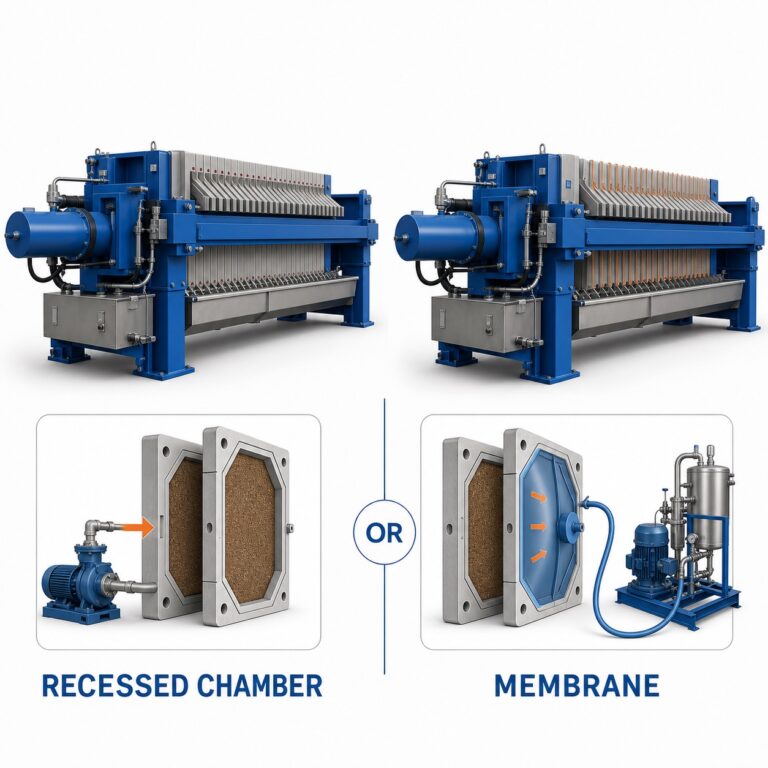
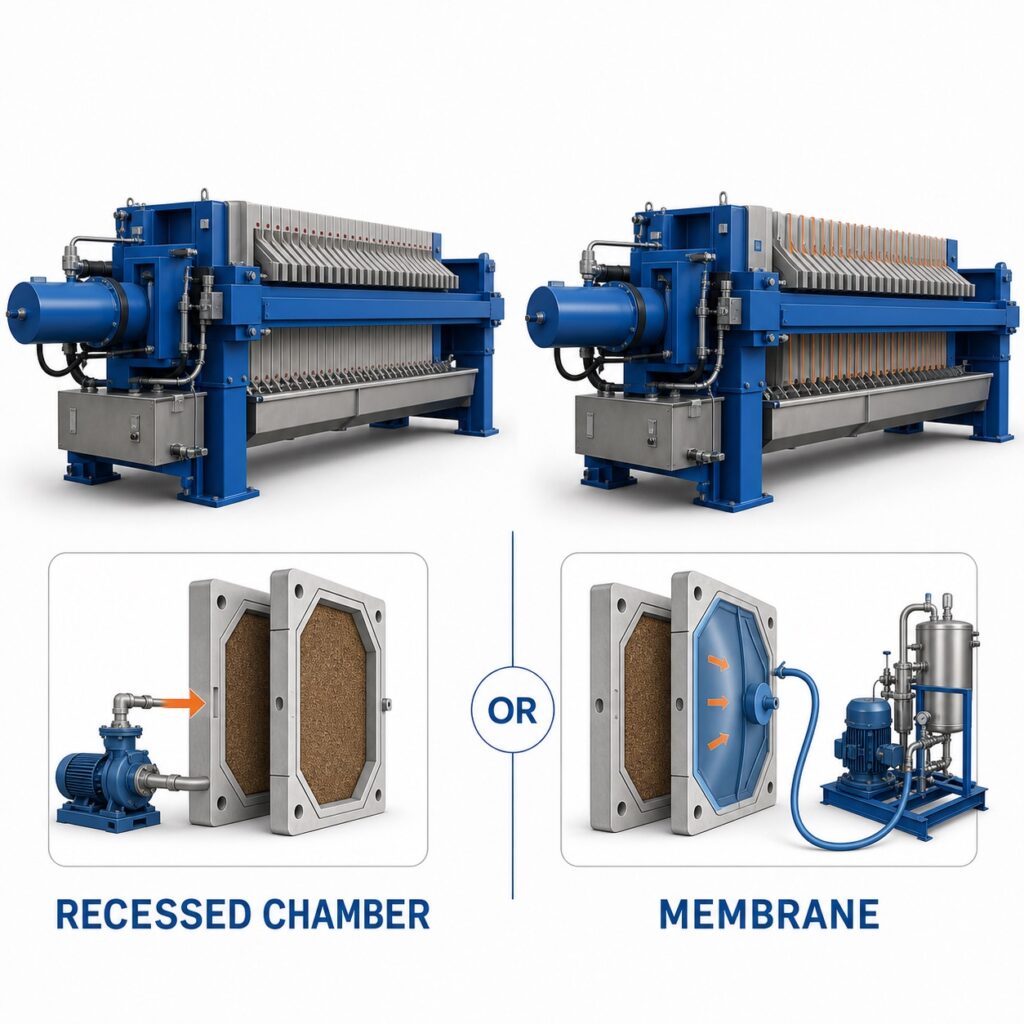
Empieza por la tecnología de placas: elige una prensa de cámara empotrada para la filtración a presión convencional, o bien valora la posibilidad de utilizar una prensa de membrana cuando una etapa secundaria de compresión pueda aportar valor añadido al proceso. A continuación, especifica los controles y las funciones de manipulación de materiales adecuados.
Descubre las prensas de filtro de cámara empotrada Descubre las prensas de filtro de membrana
¿Qué es un filtro prensa?
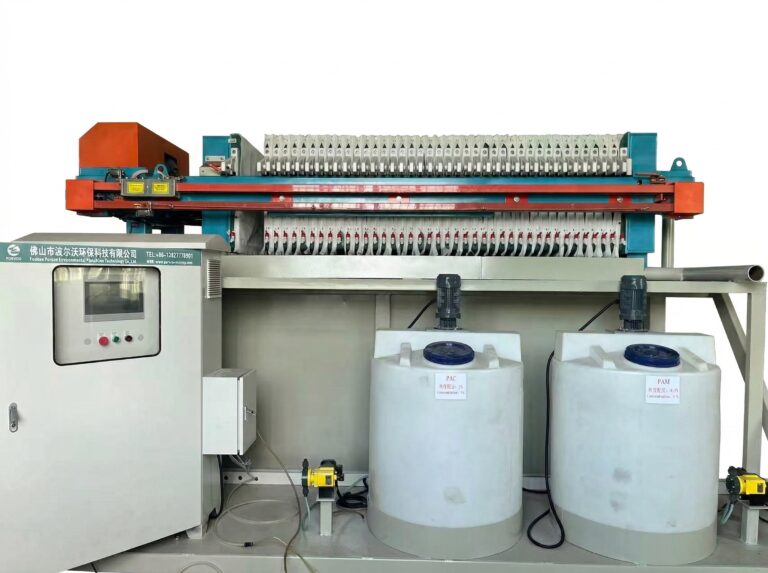
Una prensa de filtro industrial es un sistema de filtración a presión por lotes. Una bomba de alimentación introduce lodos acondicionados o lechada en un conjunto cerrado de placas filtrantes recubiertas de tela. El líquido pasa a través de la tela y los conductos de drenaje de las placas en forma de filtrado, mientras que los sólidos retenidos se acumulan en las cámaras formando una torta de filtración. Cuando se alcanza el punto final de la filtración, se detiene la alimentación, se despresuriza y se abre la prensa, y se descargan las tortas.
La prensa es solo una parte de un proceso más amplio. El almacenamiento de la materia prima, su acondicionamiento, el bombeo, el encaminamiento del filtrado y la gestión de la torta influyen en el rendimiento de la instalación. Por lo tanto, una selección fiable debe partir de las características de la suspensión y del objetivo operativo, y no basarse únicamente en el caudal nominal.
Cómo funciona una prensa de filtro
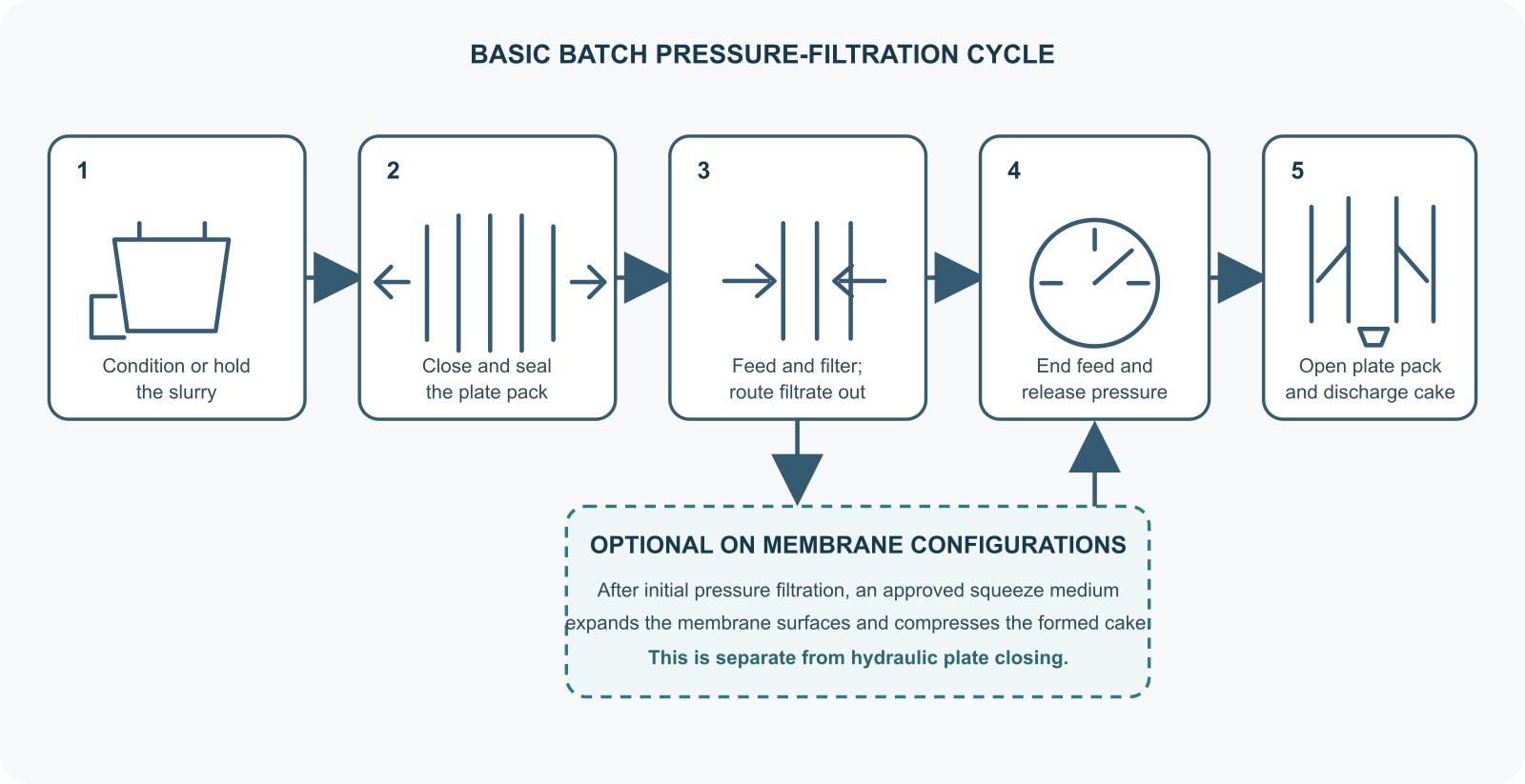
1. Preparar y verter la lechada
La materia prima se retiene o se acondiciona según sea necesario y, a continuación, se suministra mediante la bomba de alimentación seleccionada. Los sólidos de la materia prima, el comportamiento de las partículas, la viscosidad y el tratamiento químico influyen en el llenado de la cámara y en la formación de la torta.
2. Cerrar y sellar el paquete de placas
El sistema de cierre une las placas y mantiene la fuerza de sellado necesaria para resistir la presión de filtración. El cierre hidráulico de las placas mantiene el paquete cerrado; no extrae el agua de la torta.
3. Filtro bajo la presión de la bomba de alimentación
La presión de la bomba impulsa el líquido a través de la tela filtrante, mientras que los sólidos se acumulan en el interior de las cámaras. El filtrado se recoge a través de salidas abiertas o de un colector cerrado, según el diseño seleccionado.
4. Aplica una dosis adicional únicamente cuando así se indique
En una prensa de filtro de membrana, un medio de compresión controlado expande las superficies flexibles de la membrana tras la fase inicial de filtración y comprime la torta formada. Una prensa de cámara empotrada no cuenta con la fase de inflado de la membrana.
5. Abre la prensa y retira la torta
Una vez que se han aislado la alimentación y cualquier etapa opcional del proceso, y se ha liberado la presión de forma segura, se abre el conjunto de placas. Las tortas caen o se retiran con ayuda de las telas, y la prensa se prepara para el siguiente lote.
Elige la configuración adecuada para la prensa de filtro
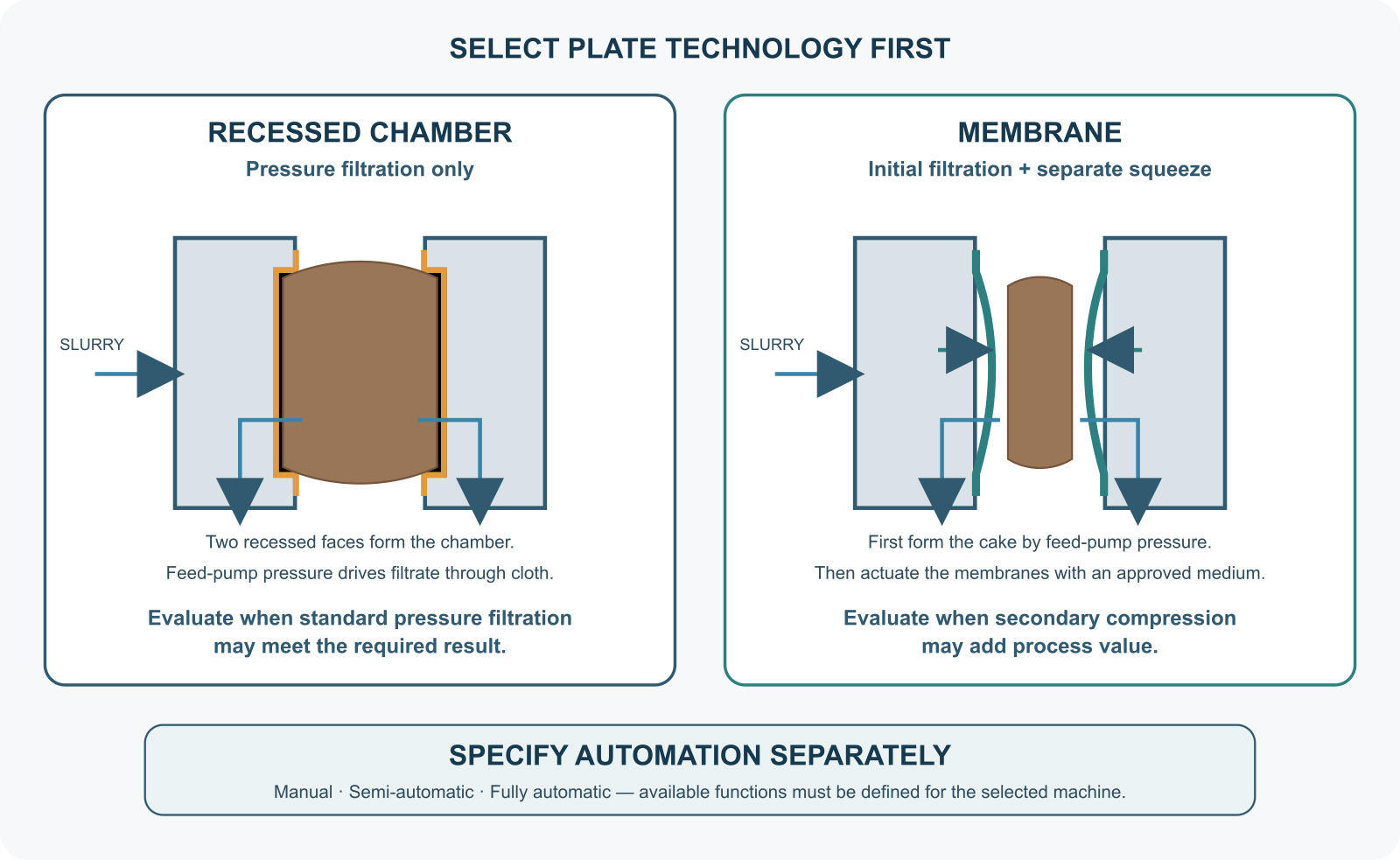
Filtro prensa de cámara empotrada
Cada cámara de filtración está formada por dos placas empotradas a juego. La bomba de alimentación proporciona la presión necesaria para la separación de líquidos y sólidos. Esta configuración es la opción más directa cuando la filtración a presión convencional permite cumplir los requisitos relativos al estado de la torta, la duración del lote y el objetivo del filtrado.
Descubre cómo se evalúa una prensa de filtro de cámara empotrada.
Prensa de filtro de membrana
La formación inicial de la torta sigue produciéndose gracias a la presión de la bomba de alimentación. Tras esa fase, unas superficies de membrana flexibles ejercen una presión independiente y controlada sobre la torta formada. Merece la pena evaluar esta configuración cuando una mayor consolidación de la torta, la recuperación de líquido, el rendimiento del lavado o el control del ciclo puedan justificar los servicios, controles y mantenimiento adicionales que conlleva.
Descubre en qué casos el prensado de membranas puede ser adecuado para el proceso.
Prensa de filtro de cámara empotrada frente a prensa de filtro de membrana
| Punto de selección | Cámara empotrada | Membrana |
|---|---|---|
| Mecanismo principal | Filtración a presión impulsada por la bomba de alimentación | Filtración inicial mediante presión de la bomba de alimentación, seguida de una compresión por membrana |
| Apretón secundario | No incluido | Incluido cuando las membranas se accionan mediante el sistema de compresión homologado |
| Objetivo típico de selección | Cumple los requisitos relativos a la torta y al filtrado con una disposición más sencilla de las placas y los sistemas auxiliares | Comprobar si una mayor compresión del pastel genera suficiente valor operativo como para justificar la etapa adicional |
| Comportamiento de las suspensiones y las tortas | Se evalúa mejor a partir del comportamiento de formación de grumos durante la filtración a presión | Es mejor evaluarlo tras comprobar que el bloque formado responde adecuadamente a la compresión secundaria. |
| Repercusiones en el ciclo | El ciclo depende del llenado, la filtración, el lavado opcional o el soplado de aire, la apertura y la descarga. | Incluye las fases de compresión, liberación de presión y control; el efecto global del ciclo depende de la aplicación |
| Servicios públicos | Bombeo de alimentación, potencia de cierre y sistemas auxiliares configurados | Las mismas necesidades básicas, además de un sistema de suministro y control de medio de compresión diseñado específicamente. |
| Mantenimiento | Juntas, superficies de estanqueidad, placas, sistema hidráulico, bomba y equipo de descarga | Los mismos elementos básicos, además de membranas y componentes del sistema de compresión |
| Inversión relativa | Normalmente, la configuración inicial más sencilla | Suele ser más elevado debido a las placas de membrana, los sistemas auxiliares y los controles; el valor debe comprobarse en condiciones reales de proceso. |
Ninguna tecnología de placas garantiza una humedad, un rendimiento o un tiempo de ciclo universales para los pasteles. Esos resultados dependen de la materia prima y de cómo se configure y se gestione el proceso en su conjunto.
Opciones de automatización
“La expresión ”totalmente automático» se refiere a cómo se controlan y gestionan las funciones de la prensa; no se trata de un tercer mecanismo de filtración. Tanto las prensas de cámara como las de membrana pueden configurarse con distintos niveles de automatización. El nivel requerido debe definirse función por función, en lugar de basarse en una única etiqueta.
| Nivel | Concepto operativo | Aspectos que hay que definir |
|---|---|---|
| Manual | Los operarios realizan las tareas de desplazamiento de placas, desmoldeo y limpieza según lo especificado. | Acceso, mano de obra, vigilancia, aislamiento seguro y frecuencia de los lotes |
| Semiautomático | Las funciones seleccionadas se activan o se ejecutan de forma secuencial, mientras que los operarios siguen los pasos de manipulación definidos. | ¿Qué pasos son automáticos, cuáles requieren confirmación y cómo se gestionan los errores? |
| Totalmente automático | Una secuencia definida funciona mediante la intervención de un supervisor, en lugar de mediante una gestión manual rutinaria. | Control de la alimentación y las válvulas, desplazamiento de placas, asistencia para la liberación de la torta, lavado de telas, gestión de la descarga, instrumentación, enclavamientos y alcance del PLC/HMI |
Entre las funciones que pueden requerir una definición específica para cada proyecto se incluyen el cierre hidráulico, el desplazamiento automático de placas, la asistencia para la liberación de la torta, el lavado de la tela filtrante, la gestión del goteo, las cintas transportadoras, las bombas, las válvulas, los instrumentos, las protecciones, los enclavamientos y la integración de PLC/HMI. Se debe confirmar la disponibilidad y el alcance definitivo para la máquina seleccionada.
Componentes principales y opciones disponibles
- Estructura y sistema de cierre: sujetar el conjunto de placas, alinear las piezas móviles y mantener la fuerza de sellado durante la filtración.
- Paquete de placas filtrantes: forma las cámaras y los conductos de drenaje. La estructura de las placas debe determinarse a partir de datos verificados sobre las mismas, y no a partir de una fotografía de la máquina completa.
- Tela filtrante: Retiene los sólidos y permite el paso del filtrado. El material, el tejido, la permeabilidad y el método de fijación se seleccionan en función de la suspensión y del método de limpieza.
- Conexiones de alimentación y de filtrado: distribuir la suspensión a las cámaras y conducir el filtrado al punto de recogida correspondiente.
- Equipos de manipulación de placas: puede mover las bandejas y facilitar la extracción de la tarta una vez que el envase se haya abierto de forma segura.
- Dispositivos de seguridad y control: supervisar el proceso y restringir el acceso a zonas en las que existan movimientos o presiones peligrosas.
La construcción de las placas, los detalles de las membranas, la disposición del filtrado y las opciones auxiliares deben incluirse en la propuesta técnica para el proyecto seleccionado cámara empotrada o membrana configuración.
Cómo seleccionamos y dimensionamos un filtro prensa
Para ofrecer una recomendación responsable es necesario disponer de un conjunto de datos del proceso. Cuando la suspensión es variable o se desconoce el comportamiento de la filtración, puede ser necesario realizar ensayos con muestras antes de determinar definitivamente la superficie de las placas, el volumen de la cámara, el rendimiento de la bomba y los parámetros del ciclo.
Datos sobre lodos
- Origen de los lodos o de la suspensión de proceso y etapas de tratamiento previas
- Volumen medio y máximo de la suspensión, concentración de sólidos y densidad, cuando se conocían
- Distribución granulométrica, comportamiento de sedimentación, abrasividad y comportamiento de formación de torta
- pH, temperatura y composición química relevantes para la compatibilidad con los materiales en contacto con el líquido
- Productos químicos de acondicionamiento actuales y prácticas de dosificación, si las hubiera
Resultado exigido
- Condición de manipulación del pastel a la que se aspira y motivo de dicha meta
- Objetivo relativo a la claridad del filtrado, la recuperación, el vertido o la reutilización
- Cualquier requisito relativo al lavado de pasteles, al soplado de aire o al secado posterior
- Resultado actual y mejora prevista con una nueva prensa
Ubicación y condiciones de funcionamiento
- Horario de funcionamiento, lotes por turno y nivel de supervisión aceptable
- Suministro de energía eléctrica, aire comprimido, agua de servicio y desagüe
- Espacio necesario para la instalación, acceso, espacio libre para la caída de la torta y espacio para el mantenimiento
- Manipulación de materiales, controles, interfaces y normas de seguridad obligatorios
Contextos típicos de procesos que deben evaluarse
Las prensas de filtro se suelen utilizar en aquellos casos en los que una etapa de filtración a presión por lotes permite convertir una corriente bombeable que contiene sólidos en un filtrado separado y una torta manejable. Entre los contextos relevantes se pueden incluir:
- lodos de aguas residuales industriales y sólidos precipitados;
- lodos procedentes del tratamiento de minerales, de la elaboración de piedra o de áridos;
- hidróxidos metálicos y otros residuos inorgánicos de proceso; y
- suspensiones de productos o subproductos en las que son importantes tanto la calidad del filtrado como la recuperación de la torta.
La idoneidad no viene determinada únicamente por el nombre del sector. El material debe formar una capa permeable en las condiciones propuestas, y el tejido, la bomba, el conjunto de placas y el ciclo seleccionados deben ser compatibles con el proceso.
Integración completa del sistema de deshidratación de lodos
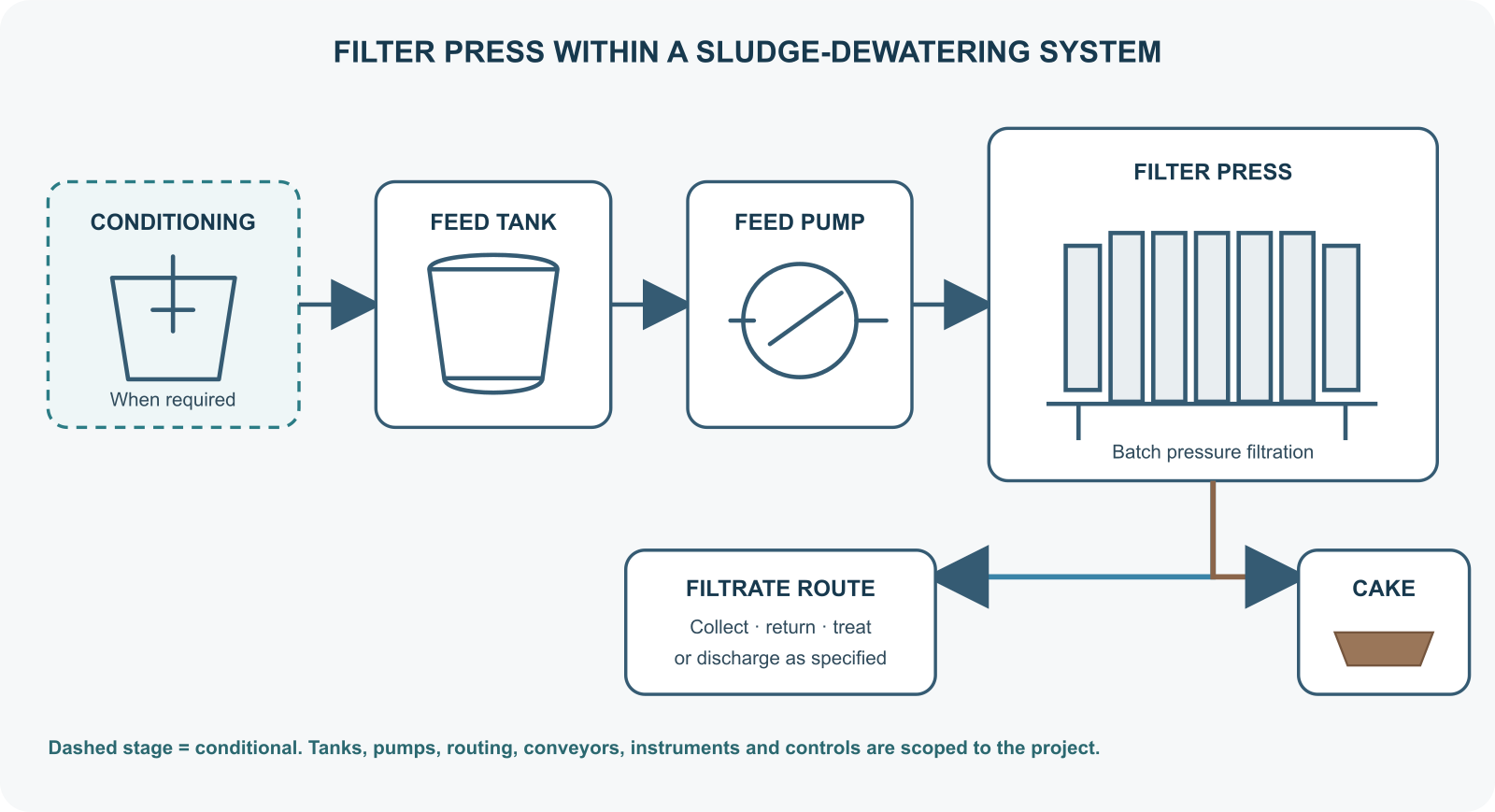
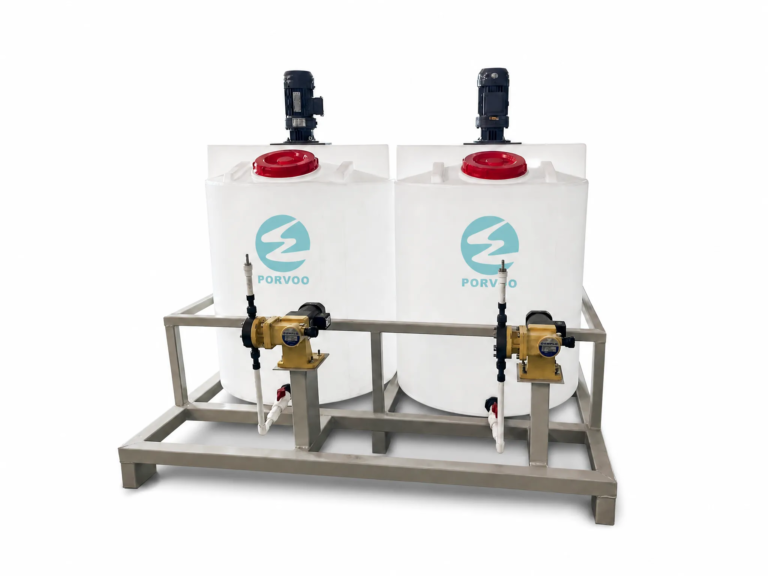
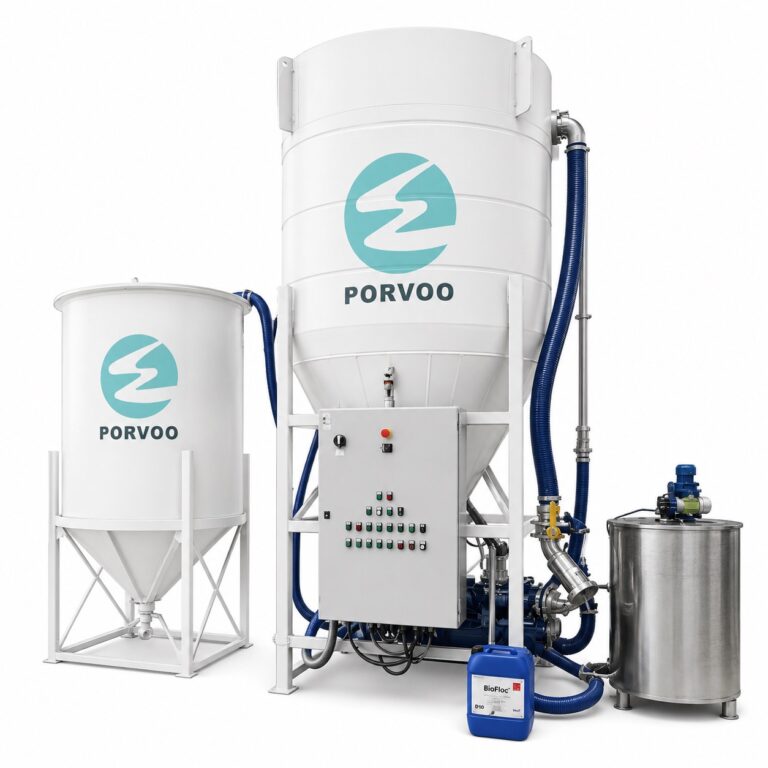
La prensa de filtro debe integrarse con los procesos anteriores y posteriores. Un proyecto puede incluir el acondicionamiento o la dosificación de lodos, un depósito de alimentación o de compensación, una bomba de alimentación adecuada, la recogida o el retorno del filtrado, y una cinta transportadora de torta o un recipiente de recogida. La instrumentación y los controles deben coordinar el funcionamiento por lotes de la prensa con cualquier flujo continuo en las fases previas.
Si la primera decisión es determinar si la prensa de filtro es, en absoluto, la familia tecnológica adecuada, vuelve a la Descripción general de los equipos de filtración. Esta página se centra exclusivamente en la selección dentro de la familia de las prensas de filtro.
Preguntas frecuentes
¿Es lo mismo una prensa de filtro de placas y bastidor que una prensa de filtro de cámara empotrada?
No. En una prensa de placas y bastidores tradicional, las placas se alternan con bastidores huecos independientes que crean los espacios para los pasteles de filtrado. En una prensa de cámaras empotradas, se utilizan caras de placas empotradas a juego para formar cada cámara sin necesidad de bastidores independientes. El término “prensa de filtro de placas y bastidores” se utiliza a menudo de forma imprecisa en el mercado, por lo que siempre conviene confirmar la estructura real de las placas.
¿Cuál es la diferencia entre las prensas de filtro de cámara y las de membrana?
Ambos procesos comienzan con una filtración a presión impulsada por la bomba de alimentación de la suspensión. Una prensa de membrana incorpora superficies de membrana flexibles y una etapa de compresión independiente una vez que se ha formado la torta inicial. Una prensa de cámara empotrada se basa en la presión de la bomba de alimentación y no cuenta con una etapa de inflado de la membrana.
¿Es la prensa de filtro totalmente automática un tipo distinto?
No. El término «totalmente automático» se refiere al ámbito de control y manejo. Tanto las prensas de cámara como las de membrana pueden configurarse con funciones manuales, semiautomáticas o totalmente automáticas, en función del diseño del equipo y del alcance del proyecto.
¿Qué factores determinan la humedad de la torta de filtración?
Entre los factores importantes se incluyen el contenido de sólidos de la materia prima, la distribución granulométrica, la permeabilidad de la torta, el acondicionamiento, el perfil de presión de la materia prima, la selección del tejido, la profundidad de la cámara, el control del punto final, el lavado o el soplado de aire opcionales, y si se utiliza una presión de compresión de la membrana previamente probada. No existe un valor universal de humedad de la torta para todas las suspensiones.
¿El filtro prensa funciona de forma continua o por lotes?
Una prensa de filtro de placas funciona por lotes: el conjunto de placas se cierra, se llena y filtra, y luego se abre para la descarga de la torta. Los depósitos y los sistemas de control pueden actuar como amortiguadores de un proceso continuo en la fase previa, pero el ciclo de la prensa en sí sigue siendo por lotes.
¿Qué datos se necesitan para determinar la talla?
Indique el origen de la suspensión, el volumen, la concentración de sólidos, el comportamiento de las partículas, las propiedades químicas, la temperatura, el programa de funcionamiento, las condiciones deseadas para la torta y el filtrado, los servicios disponibles, el espacio disponible en las instalaciones y el grado de automatización deseado. Es posible que sea necesario realizar ensayos con muestras cuando no se conozca el comportamiento de la filtración.
Solicitar una recomendación sobre una prensa de filtro
Envíe las condiciones de proceso indicadas anteriormente, junto con cualquier informe de ensayo vigente, la información sobre las muestras de lodos, el plano de la planta y el alcance de suministro requerido. De este modo, PORVOO podrá evaluar la tecnología de placas adecuada, la superficie de filtración, el volumen de la cámara, el sistema de alimentación y el paquete de automatización para su análisis técnico.
Envíanos información sobre tus lodos y las condiciones del proceso