A plant team wants to add a module to an existing dust collector because the source, dust load, or process has changed since the system was installed. Before that request becomes a purchase order, the real question is whether the approved design basis, the equipment as it stands today, and the current operating duty actually support the change — or whether the request first requires a documented review.
Treat the Added Module as a Controlled Project Change
A request to “add a module” is really a request to change an installed system without disturbing what already works. Treating it that way, rather than as a bolt-on accessory purchase, changes what information gets collected before any design work starts. The first task is to state the change precisely: what new source or dust stream is involved, what operating condition is shifting, what outcome the added module is meant to achieve, and which existing equipment boundary the change touches. Without this framing, a module request can drift into an assumption that any modular product line accepts any addition.
Camfil APC’s material on modular dust collection system design supports that some modular collector product families are built so that modules, inlets, outlets, and ducting can be changed as operating needs evolve. That is a statement about product architecture in general, not a statement about a specific installed system. Where a collector was originally selected, sized, and arranged for a defined duty, the fact that modularity exists as a design feature says nothing about whether the installed unit has the physical, airflow, or utility margin to accept an addition. Compatibility and capacity are project-specific questions, not product-family questions.
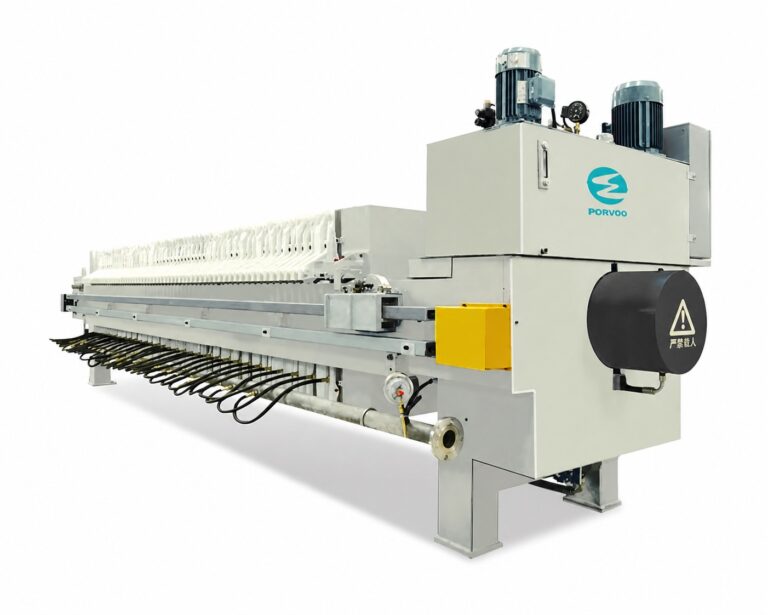
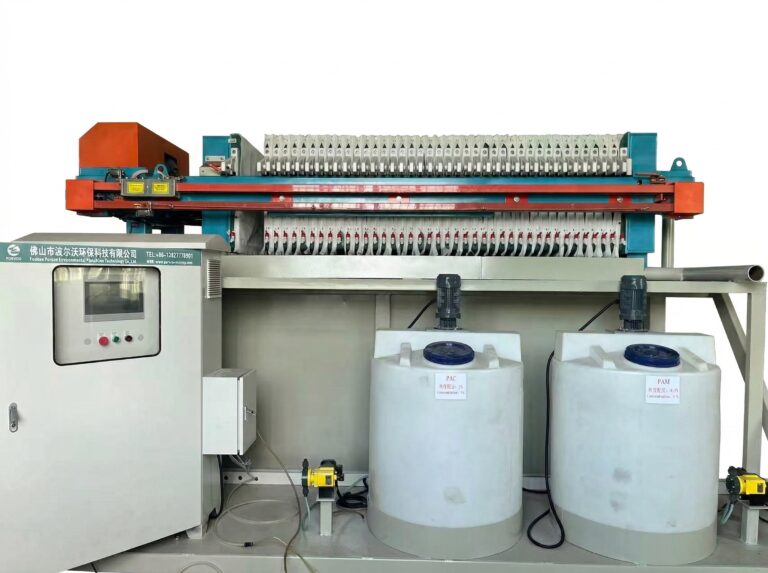
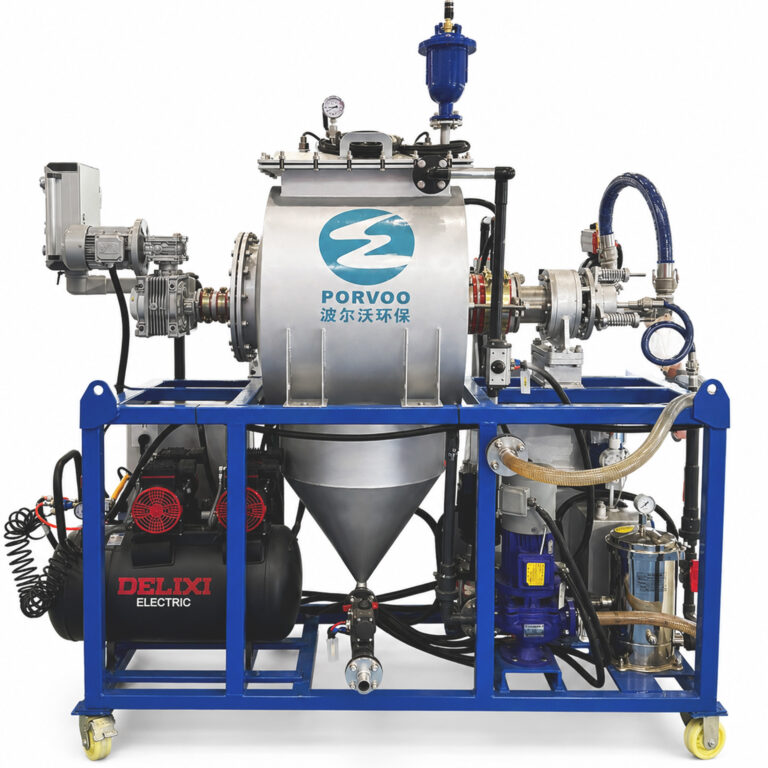
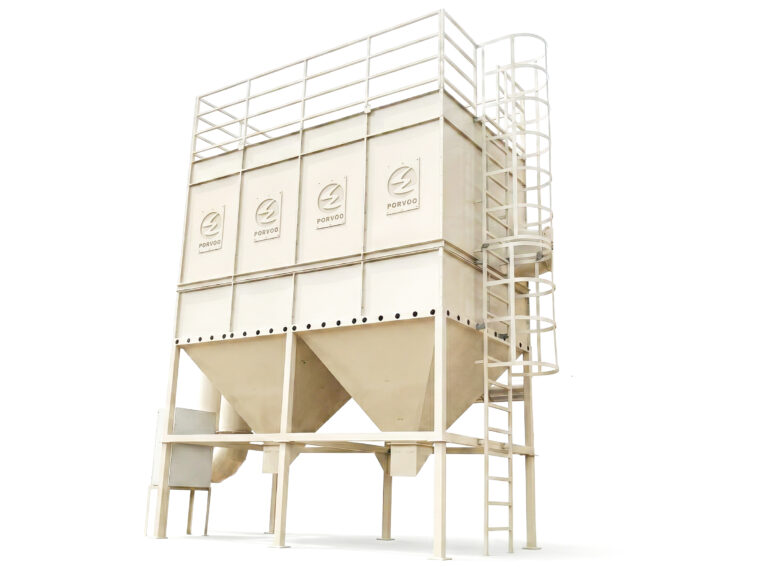
This distinction matters because it sets the scope of the decision correctly. The decision in front of the plant team is not “can this brand of collector be extended” — it is “can this installed collector, in its current as-built condition, absorb this specific change, and if so, under what redesign and validation steps.” Framing it this way keeps the review from skipping past the steps that establish whether a project redesign and validation can proceed at all. It also clarifies who owns which part of the answer: the plant team owns the description of the change and the operating history; the supplier’s engineering review owns the compatibility and capacity determination once that information is in hand. Where PORVOO’s modular pulse jet dust collector platform is the installed equipment, the change request still needs to move through this same sequence before configuration or capacity is discussed, because the platform’s modularity describes what the product line can be configured to do, not what a particular installed unit is currently equipped or sized to accept.
Reconstruct the Approved and As-Built Baseline
Before anyone can judge whether a module addition fits, the project needs a reliable picture of what was approved and what is actually installed — and these are not always the same thing. Over the life of an operating system, duct runs get rerouted, control panels get swapped, access points get modified for maintenance convenience, and none of it necessarily makes it back into the original design documentation. ISO 10007, la norma sobre gestión de la configuración, supports the general principle that identified configuration information needs to be controlled and rechecked across a product’s lifecycle — which is exactly the discipline this baseline reconstruction applies, without that standard prescribing how a dust collector’s configuration should be documented or changed.
| Baseline element | Approved record to locate | As-built check | If different or unknown |
|---|---|---|---|
| Collector arrangement | Current approved general arrangement | Installed module and connection layout | Record the change or survey need |
| Equipment and controls | Approved equipment and control identification | Installed identifiers and revisions | Request supplier confirmation |
| Duct and process interfaces | Approved inlet, outlet, and tie-in information | Current routing, sources, and connection condition | Mark affected interfaces for review |
| Utilities and site interfaces | Approved connection boundaries | Current available connection and site condition | Do not assume spare capacity |
| Test and change records | Approved test basis and recorded modifications | Traceable evidence for the current state | Hold unsupported conclusions |
The practical effect of this reconciliation is that it separates two very different categories of information: what is documented and traceable, and what is currently assumed. Where the approved general arrangement, equipment identification, and interface drawings match the installed condition, that documentation becomes usable input for the module review. Where they diverge — a duct rerouted around an obstruction, a control panel replaced without a revision note, a support structure modified during a previous repair — that divergence is not something to resolve by inference. It is a gap that needs a site survey, a supplier confirmation, or both, before the module review can rely on it.
This step matters more as a system ages or as it accumulates undocumented site modifications, because the distance between “approved” and “as-built” tends to widen with each unrecorded change. A newly commissioned system with no field modifications presents a much shorter reconciliation task than one that has been through several years of site-driven adjustments. Either way, the review cannot proceed on the assumption that the original design documents still describe the equipment sitting on the floor. Where documentation is complete and consistent with the installed condition, the team can move forward with confidence in that baseline; where it is not, the module conversation has to pause for confirmation before capacity or interface questions are even asked.
Measure the Current Duty Under Stated Conditions
A collector’s original design duty and its current operating duty are not automatically the same thing, and the gap between them is exactly what a module-addition decision needs to expose. Dust sources get added or removed from a line, production hours change, process equipment gets modified, and duct condition changes with wear, damage, or prior repairs — all of which shift the actual duty a collector is handling relative to what its nameplate or original design label describes. A module addition decision that relies only on the nameplate is really relying on a design assumption from whenever the system was first specified, not on what the system is doing today.
Establishing current duty means recording which dust sources are active now, in what combinations, over what operating hours, and what has changed in the dust characteristics or the process generating it. It also means examining current duct condition and any observations or measurements already available that bear on the proposed change. ISO 10780 supports treating duct gas-stream velocity and volume flowrate as measured data, gathered under stated method and applicability conditions — meaning the measurement approach and the conditions under which it is valid have to be specified for the project, not borrowed from a generic reference. That standard does not select which points on a system should be measured, what instruments to use, what target airflow value applies, or what capacity a collector should have; those are project engineering decisions, not conclusions the measurement standard itself supplies.
This is where the difference between design-stage assumption and field-measured evidence becomes consequential for the module decision. Where current duty is measured and documented under stated conditions, the project has a defensible starting point for evaluating whether an addition is compatible with what the system is actually handling. Where current duty is only inferred from the original design basis or a nameplate rating, the project is proceeding on an assumption that may or may not still hold — and a module addition evaluated against that assumption carries the same uncertainty forward into the new configuration. The measurement step is not a formality; it is what makes every downstream interface and capacity question answerable with something other than an old design label.
Recheck Every Affected Interface
A dust collector does not operate in isolation — it sits inside a set of interfaces with the building, the process, the duct and fan system, the utilities, the controls, and the maintenance routine that keeps it running. Adding a module changes the collector’s footprint, its flow requirements, its discharge path, and potentially its utility demand, and every one of those changes propagates outward into an interface that was sized or arranged for the system as it existed before the change. Rechecking those interfaces one at a time, rather than assuming the system as a whole has room to absorb an addition, is what turns “we want to add a module” into an answerable engineering question.
| Interfaz | Current evidence to review | Change question | Límite |
|---|---|---|---|
| Physical support and space | As-built layout and project support information | What new load, footprint, assembly, or access issue must be evaluated? | No adequacy is assumed |
| Inlet, outlet, duct, and fan system | Current routing and measured duty under stated conditions | How would the proposed module change flow paths or required duty? | Supplier engineering is required |
| Dust discharge | Current discharge arrangement and operating observations | Can the proposed configuration be integrated without an unresolved interface? | No discharge capacity is asserted |
| Electrical and compressed air | Current project connection data | What additional demand or connection change requires confirmation? | No spare utility capacity is asserted |
| Controla | Current hardware, software, and interface revision | What logic, input, output, or integration change is proposed? | No control feature is assumed |
| Maintenance access | Current service and dust-removal routes | Would the changed arrangement block required access? | Clearances remain configuration-specific |
The value of going interface by interface is that it prevents a favorable answer on one interface from being read as a favorable answer overall. A duct and fan system that has some observed margin in airflow says nothing about whether the physical structure has room for a new module’s footprint, or whether the existing dust-discharge arrangement can handle output from an added module without a new conveyance or storage interface. Electrical and compressed-air connections, similarly, may show available points without any confirmation that the underlying supply has spare demand capacity behind those points. Each interface has to be evaluated on its own evidence.
Where an interface is unchanged by the proposed module — for example, where the added module ties into flow paths, discharge routing, and controls without altering their configuration — that interface may not need new engineering, only confirmation that the assumption holds. Where an interface is directly affected — where the module changes duct routing, adds discharge volume, or introduces new control points — that interface needs project-specific evaluation before the addition proceeds. And where the effect on an interface is genuinely unknown from current records, that uncertainty has to be resolved through survey or supplier input rather than left as an open assumption carried into installation. No interface in this review should be treated as having spare capacity by default; each one is either confirmed as sufficient through evidence, flagged as needing new engineering, or marked as unresolved.
Test the Proposed Configuration Against Current Conditions
Once the baseline is reconciled, the current duty is measured, and the affected interfaces are identified, the proposed module configuration can be tested against that information — but this testing is an engineering evaluation step, not a design conclusion the plant team reaches on its own. The purpose of this step is to hand the supplier a complete and current picture: the as-built configuration as confirmed in the baseline review, the measured current duty and dust data, and the specific module arrangement being proposed, so that the supplier’s evaluation is working from project-specific evidence rather than the original design assumptions.
This is the point where PORVOO’s role as an equipment and solution supplier enters the process directly: the project information the plant team has assembled — the reconciled baseline, the measured duty, the interface findings — becomes the input the supplier’s configuration and quotation review works from, rather than a generic product-family capability being applied to an unverified installation. What the supplier can usefully do with that input is separate what the existing records already support from what still needs new work: some interfaces may be confirmed as adequate from the evidence already gathered, others may require recalculation, reconfiguration, physical inspection, or field testing before the module addition can be finalized.
This separation matters because it keeps the evaluation honest about where certainty currently exists. A finding that existing duct sizing supports the proposed addition is different in kind from a finding that duct sizing needs recalculation once the new module’s flow contribution is known; treating the two as equivalent would understate what remains open. Similarly, a control interface that already has spare inputs is different from one that needs new logic or a hardware change to accommodate the module. The output of this step is not a go or no-go answer by itself — it is a clear map of what is settled and what requires further engineering, inspection, or testing before a change package can be assembled.
Update the Baseline Only After Project Confirmation
The review converges on one of three outcomes, and none of them is a technical approval on its own — each is a record of where the project evidence currently stands, with the final decision resting with the project authority responsible for the system.
A proceed path applies where the baseline is reconciled, current duty is measured, and every affected interface has been evaluated with either confirmed capacity or a defined scope of new engineering. That path is documented as an approved change package: the revised configuration, the interfaces that will change, the installation work required, a test plan for verifying the result, the document updates needed to keep the baseline current, and any conditions that remain open at the time the package is approved. A redesign path applies where one or more interfaces are found to need new engineering before the module can be added — the duct and fan system needs recalculation, the structure needs assessment, the discharge path needs reconfiguration — and that path records exactly which interfaces require that work rather than treating the whole system as unresolved. A hold path applies where the baseline itself is not reconciled or the current duty is not adequately evidenced; in that case, the missing information is recorded and addressed before any configuration work proceeds, because building a module addition on an unconfirmed baseline or an inferred duty carries that same uncertainty into the new installation.
Where the project evidence is complete and consistent, the proceed path lets the baseline documentation be updated once the change package is approved, so that the as-built record stays aligned with what is actually installed for the next time a change is considered. Where it is not, updating the baseline before the missing evidence exists would only recreate the same reconciliation problem the next reviewer has to solve. Connecting the confirmed interfaces to the delivery and installation work — coordinating the physical installation, integration, and any maintenance-access changes with the supplier once the change package is approved — is what carries this decision from a paper review into the equipment and site work it authorizes.
Preguntas frecuentes
Q: Can we order an extra module using only the existing collector’s nameplate information?
A: The nameplate helps identify equipment, but it does not establish current duty, compatibility, or available interface capacity. Gather the approved and as-built arrangement, equipment and control revisions, changes, test records, and proposed new source or operating change for supplier evaluation.
Q: Our production has changed since installation. Which operating information matters for the addition review?
A: Record the active dust sources and combinations, operating hours, dust and process changes, duct condition, and relevant current observations or measurements under stated conditions. Compare that evidence with the proposed change rather than relying on the old design label as the current duty.
Q: What if the installed ductwork or controls no longer match the approved drawings?
A: Identify the difference and obtain a survey or supplier confirmation before assuming the old baseline applies. Mark each affected physical, air-system, discharge, utility, control, and maintenance interface as unchanged, affected, or unknown, with the evidence needed to resolve it.
Q: How do we distinguish a proposal ready for approval from one that still needs redesign or more evidence?
A: A proposal ready for project approval identifies the revised configuration, interfaces, installation work, test plan, document updates, and open conditions. Interfaces needing new engineering indicate redesign work; missing baseline or current-duty evidence calls for a hold until that evidence is supplied.