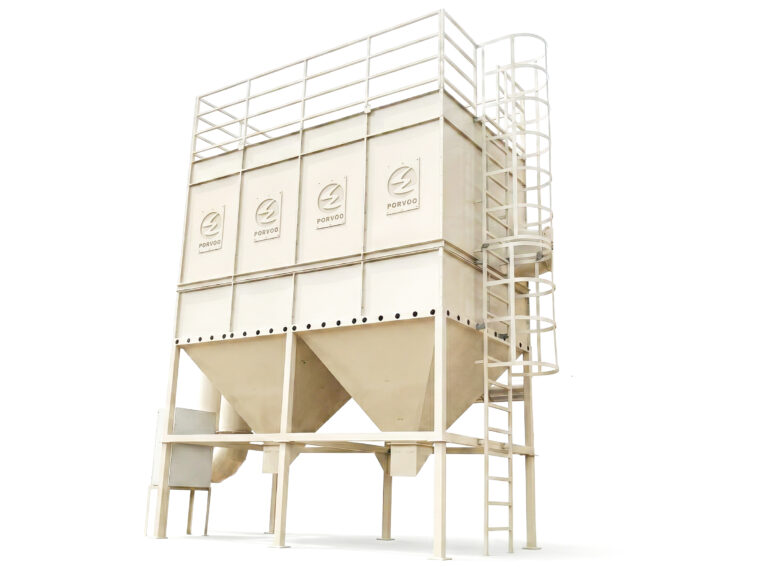
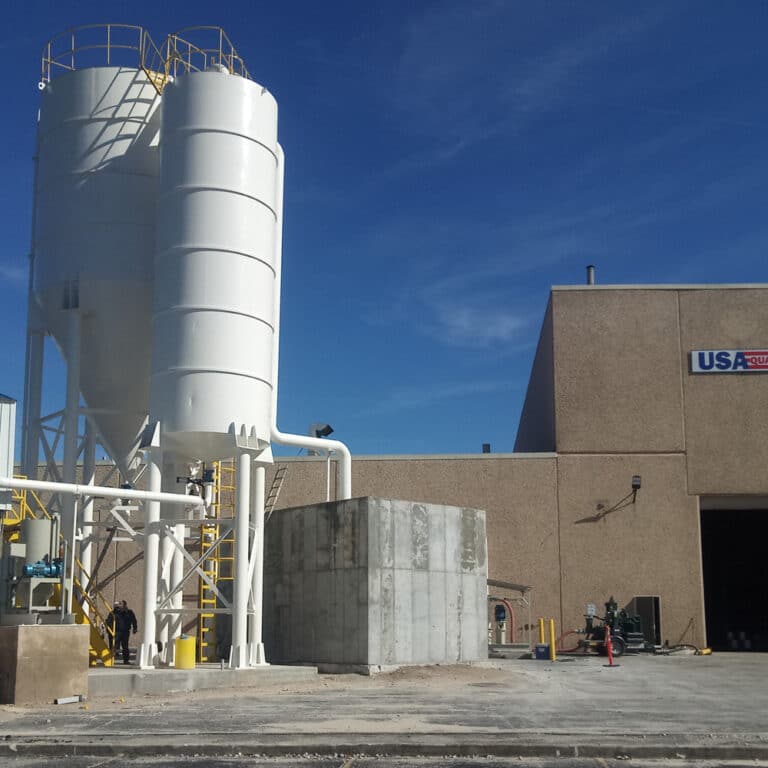
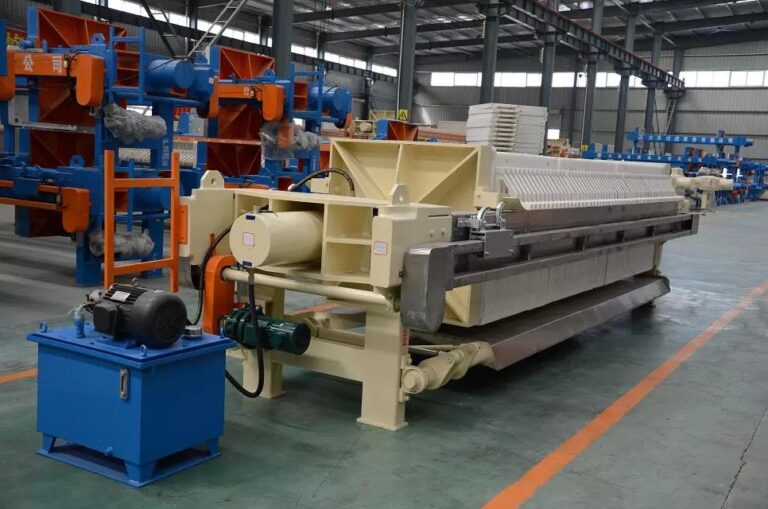
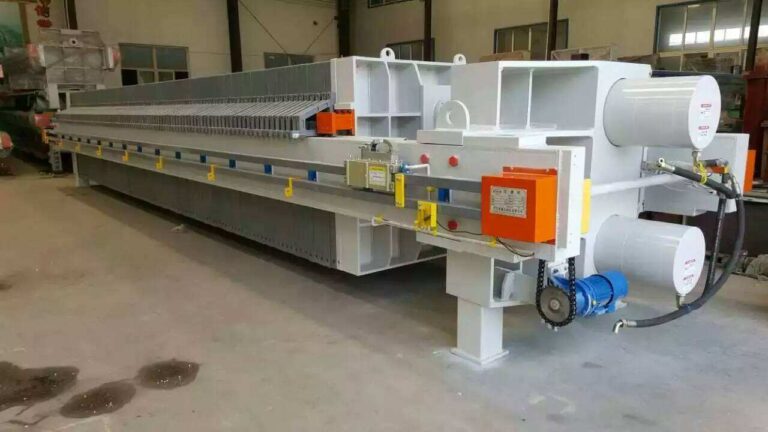
Selecting a dust collection method for grinding workstations often stalls at the wrong question. Plant teams compare filtration efficiency numbers, airflow ratings, and equipment footprints — then choose a system without fully accounting for the waste streams, infrastructure, and daily maintenance disciplines that follow the decision. The result is a technically correct specification that underperforms within six months because the plant isn’t staffed or equipped to sustain what the system actually requires. Wet collection generates wastewater, sludge, and corrosion exposure; dry collection generates filter consumable costs, explosive dust handling duties, and housekeeping risk. Understanding which of those burdens your facility can absorb — consistently, not just at commissioning — is what determines whether the system stays functional.
Compare dust suppression with wastewater and sludge duties
Both wet and dry systems capture airborne dust at the grinding workstation. Where they diverge is in what happens to that dust after capture, and that divergence creates parallel workloads that run for the life of the equipment.
Wet collection traps dust in a water circuit. The liquid phase does the suppression work, but it also becomes the waste carrier. Sludge accumulates continuously, and its storage isn’t passive: NFPA 484 recommends storing metallic sludge under a water layer specifically to prevent hydrogen gas buildup from oxidation reactions. That requirement isn’t a formality — it is a storage protocol that requires physical infrastructure, checking, and replenishment. Before the sludge reaches disposal, it typically needs drying and mixing with other materials to reduce reactivity and make handling safer. None of those steps exist in a dry system, and they are not small in labor terms.
Dry collection delivers dust to a collection drum as a dry particulate. There is no wastewater and no sludge chemistry to manage. The trade-off is that the collected dust is often more mobile during discharge, which introduces its own handling risks — covered in a later section. The structural point here is that a wet system’s downstream duties are not a minor add-on to the capture function; they are a separate operational workload that must be staffed and resourced independently of grinding production.
| Factor | Recogida en húmedo | Recogida en seco |
|---|---|---|
| Captación primaria de polvo | Water scrubbing traps dust in liquid | Filter media capture dust as dry particulate |
| Waste streams | Wastewater and sludge that require treatment; sludge must be stored under a water layer to prevent hydrogen buildup per NFPA 484 | Dry dust collected in drums for manual disposal; no wastewater |
| Sludge disposal steps | Sludge must be dried and mixed with other materials for safer handling and disposal | No aplicable |
| Key maintenance attention | Sludge removal, water chemistry, corrosion control | Filter replacement, pressure-drop monitoring, housekeeping |
The practical implication for procurement is that a wet system’s total cost of ownership includes not just the collector unit but the water circuit, sludge containment, chemical additions, and disposal logistics. Treating these as post-installation details is one of the more common reasons wet system selection later requires unplanned capital expenditure.
Check whether wet capture fits the material and facility
The dust material — not the desired capture efficiency — is the first filter in this decision. Getting that sequence wrong creates safety risk, not just operational inconvenience.
For combustible metal dusts, including aluminum, magnesium, and titanium, wet collection is generally recommended because water suppresses sparks and removes the conditions for explosive dust cloud ignition that exist in dry filter systems. This is a safety-critical planning criterion, not simply a performance preference. Dry systems handling these materials require additional engineering controls — explosion venting, spark traps, fire-retardant filter media — that add capital cost and ongoing inspection requirements. The consequence of underestimating what dry collection requires for combustible dusts is a system that meets the capture specification on paper but carries unacknowledged ignition risk in practice.
Hygroscopic or sticky dusts point toward wet collection for a different reason: dry filter media will blind and cake, degrading pressure drop and throughput until the filter is changed prematurely or the system loses effective capture. Wet collection avoids that failure mode by keeping the material in suspension rather than trying to separate it through porous media.
Facility constraints can close off one option regardless of dust type. Cold indoor environments may make wet systems preferable because they can be installed and operated indoors without freeze risk to ductwork or sumps. Dry systems with cartridge or pulse-jet filter banks often require more floor area for the filter housing, which becomes a real constraint in tight fabrication bays. For ductwork serving wet systems on combustible dusts, NFPA 484 identifies a minimum transport velocity — approximately 4,500 ft/min — to prevent settled dust from accumulating in ducts. That velocity figure applies specifically to combustible dust transport and should not be extrapolated as a universal wet system airflow rule.
| Material / Facility Factor | Wet Capture Guidance | Dry Capture Consideration |
|---|---|---|
| Hygroscopic or sticky dust | Preferred; avoids filter clogging | Dry filters may clog, leading to operational failure |
| Combustible metal dusts (Al, Mg, Ti) | Recommended to suppress sparks and eliminate explosion risk | Requires explosion venting, spark traps, and other safety devices |
| Indoor installation in cold climates | Suitable indoors to avoid freezing | Dry systems often need more space for filter banks |
| Airflow for combustible dust transport | Ductwork must reach at least 4,500 ft/min per NFPA 484 | Different duct design requirements apply |
The failure pattern here is selecting wet or dry based on facility familiarity rather than dust reactivity. A plant that habitually uses wet tables for steel grinding may apply the same default to aluminum finishing work, where the consequences of an undersized or mismatched system are categorically more severe.
Check dry filter loading and discharge requirements
Dry filter systems are often described as lower-maintenance than wet systems, and in terms of water chemistry and sludge handling, that is true. But dry systems carry a set of recurring operational duties that compound if they are treated as infrequent events rather than continuous management.
Filter loading is the central variable. As dust accumulates on filter media, pressure drop across the filter increases and airflow through the capture zone decreases. A well-specified dry system — pulse-jet or cartridge type — can achieve collection efficiencies approaching 99.9% for fine particles when filter condition is maintained. That figure represents performance under proper operating conditions, not a guaranteed baseline across all loading states. Pressure drop monitoring is what keeps the system in that range; without it, the system can continue drawing power while delivering meaningfully lower capture efficiency. The maintenance implication is that pressure drop readings need to be logged at a defined interval, not checked only when operators notice a change in visible dust.
Filter replacement and drum emptying are the other two recurring duties. Cartridge and pulse-jet filters have finite service lives that depend on dust type, loading rate, and cleaning cycle frequency. Planning for filter replacement means having procurement lead time, installation labor, and a disposal pathway for spent media — all of which require coordination that is not inherent to the equipment itself. Drum emptying creates a brief but real dust cloud exposure at the point of discharge. Proper grounding of the collection drum and absence of ignition sources during discharge are not optional precautions for combustible dusts; they are the primary barrier between routine maintenance and an ignition event. Pulse-jet dust collectors with automated cleaning cycles reduce manual intervention frequency but do not eliminate the drum emptying and filter inspection duties.
For facilities that have not previously managed dry dust collection at this scale, the recurring nature of these tasks — not their individual complexity — is the planning gap most likely to cause operational degradation within the first year.
Include corrosion cleaning and sludge removal in wet systems
Wet system maintenance is cross-disciplinary in a way that dry system maintenance is not. Keeping a wet dust collector functional requires sustained attention to chemistry, mechanical integrity, and safety protocols simultaneously. When any one of those disciplines lapses, it accelerates problems in the others.
Sludge removal is the highest-frequency task. Sludge that is allowed to accumulate reduces the effective water volume, changes the fluid dynamics of particle capture, and — for metallic dusts — creates hydrogen accumulation risk if the water layer over stored sludge is not maintained. The correction interval depends on grinding throughput and dust generation rate, but treating sludge removal as a monthly housekeeping task rather than a continuous operational duty is a consistent pattern in facilities that develop wet system reliability problems.
Water chemistry management requires a different skill set than mechanical maintenance. pH drift, scaling, and chemical additive depletion all affect particle capture efficiency and the rate of internal corrosion. Acidic or alkaline dust types accelerate corrosion on wetted surfaces, pump housings, tanks, and ductwork. Corrosion inspection needs to be built into the maintenance schedule as a distinct task — not folded into visual checks done during sludge removal — because pitting or wall thinning in a pump casing or sump is not always visible without closer inspection of specific surfaces.
Nozzle inspection and cleaning are specific to wet scrubber designs and are a common neglected maintenance point. Clogged spray nozzles reduce liquid coverage and create dead zones in the scrubbing zone, degrading collection efficiency without triggering any obvious alarm. A wet system that appears to be running normally but has partially blocked nozzles may not be capturing fine particles at the rate the original specification assumed.
| Tarea de mantenimiento | Risk if Neglected | What to Monitor |
|---|---|---|
| Eliminación de lodos | Accumulation reduces efficiency; hydrogen gas buildup risk if sludge is stored without water layer | Sludge level; water cover compliance per NFPA 484 |
| Water chemistry management | Corrosion, scaling, or reduced particle capture | pH, chemical additive levels for the specific dust type |
| Corrosion inspection | Equipment failure from acidic/alkaline dust | Wetted surfaces, tanks, and piping for pitting or thinning |
| Nozzle inspection and cleaning | Clogging reduces collection efficiency | Spray pattern, pressure drop across nozzles |
The compounding risk in wet systems is not that any single maintenance lapse causes immediate failure — it is that deferred sludge removal changes water chemistry, which accelerates corrosion, which eventually causes a mechanical failure that takes the system offline during production. That sequence is predictable and preventable with the right maintenance structure, but it requires allocating staff with the right competencies, not just sufficient headcount.
Include filter replacement and housekeeping in dry systems
The explosion risk in dry dust collection is commonly associated with the collected dust itself — and that is accurate. What is less commonly anticipated is that the maintenance activities required to keep a dry system functional can also generate that risk if procedures are not followed correctly.
Filter cleaning cycles, whether manual or pulse-jet automated, dislodge accumulated dust from the filter surface. If that dust is combustible and the cleaning event creates a transient cloud inside the collector housing, an ignition source — electrostatic discharge from improper grounding, a residual spark from the workstation, or even friction — can produce an explosion within the collector body. GB/T 17919-2008 provides relevant guidance on dust explosion protection principles for dry collectors; its applicability to a specific installation depends on whether the article’s scope includes Chinese regulatory compliance, but its underlying principles — bonding continuity, housing integrity, and controlled cleaning procedures — represent sound engineering practice regardless of jurisdiction. The practical check is whether bonding and grounding continuity are verified after maintenance, not just at commissioning. A system that was correctly grounded at installation can lose that continuity if a ground strap is disconnected during filter access and not reconnected before restart.
Housekeeping extends this risk beyond the collector housing. Dry dust that escapes at the workstation capture zone, during drum emptying, or through minor ductwork leaks accumulates on surfaces. Secondary dust accumulation creates a secondary explosion fuel source that is independent of whether the primary collector is well-maintained. Facilities handling combustible dusts under dry collection need defined surface cleanliness standards and cleaning intervals — not just for the collector, but for the surrounding area.
| Tarea de mantenimiento | Hazard if Inadequate | Qué hay que comprobar |
|---|---|---|
| Sustitución del filtro | Increased pressure drop, loss of up to 99.9% capture efficiency | Monitor pressure drop; replace per loading condition |
| Manual dust drum emptying | Dust cloud during transfer can become explosible | Proper grounding, no ignition sources during discharge |
| Housekeeping (dust accumulation) | Secondary explosion risk, equipment damage | Routine cleaning; maintain dust-layer limits |
| Grounding and equipment integrity | Improper grounding can cause dust collector explosion; filter cleaning can create explosible dust clouds | Bonding continuity, grounding checks after maintenance |
The practical procurement implication is that a dry system’s total maintenance cost includes filter consumables, disposal costs for spent filters and collected dust, and the labor and procedure overhead for safe drum emptying and housekeeping. A cartridge dust collector or pulse-jet collector that appears lower-cost at purchase may carry ongoing costs that close the gap with wet system alternatives once these recurring duties are fully costed.
Avoid choosing wet or dry by dust control alone
Capture efficiency is a starting specification, not a final criterion. A facility that selects between wet and dry collection based primarily on rated filtration efficiency is solving for the wrong variable — because the variable that determines whether the system remains effective over time is whether the plant can sustain the complete maintenance and waste management regime the system requires.
Lifecycle cost comparison between the two methods is frequently distorted by how costs are categorized in the evaluation. Wet systems carry higher initial capital — water circuit, sump, chemical dosing, sludge handling infrastructure — and ongoing water treatment and disposal costs. Dry systems have lower upfront equipment cost but carry recurring filter procurement expenses, disposal costs for collected dust, and potentially higher fire insurance premiums if the dust is combustible and the safety device package is substantial. Neither cost structure is inherently lower without plant-specific throughput, dust type, and disposal rate inputs.
The catastrophic failure risk profile is asymmetric in a way that lifecycle cost tables do not fully capture. Water-reactive metal dusts introduced into a wet collection system — either by misidentification of the dust stream or by a process change that wasn’t flagged to the maintenance team — can produce violent reactions. A 2020 Fire Protection Research Foundation report documented a case involving water-reactive metal dust that resulted in 185 fatalities. That incident is not presented here as a frequency statistic; it illustrates the consequence category that becomes relevant when system selection and dust characterization are not kept in alignment over the equipment’s operating life. On the dry system side, documented fires and explosions involving dry dust collectors confirm that inadequate maintenance and missing safety devices are not theoretical risks — they have operational consequences.
| Lifecycle / Safety Factor | Sistema húmedo | Sistema seco |
|---|---|---|
| Initial capital | Mayor inversión inicial | Lower initial capital |
| Water and wastewater disposal costs | Ongoing costs for water treatment, sludge handling, and disposal | No water-related disposal costs |
| Consumibles | Mainly chemicals for water treatment | Regular filter replacement purchases |
| Fire insurance implications | Typically lower except with water-reactive dusts | Potentially higher premiums due to combustible dust risk |
| Additional safety devices | Fewer add-ons; inherent spark suppression | Fire-retardant filters, spark traps, explosion venting required for combustible dust |
| Catastrophic failure potential | Risk of violent reaction with water-reactive metal dusts (e.g., 185-fatality incident from mismatched dust) | Documented dust collector explosions if maintenance or safety devices are lacking |
The decision implication is that system selection should include a review of what safety devices are required, what their inspection and replacement intervals are, and what happens if those intervals slip. A dry system specified with explosion venting and spark traps that are never tested or maintained does not carry the safety profile it was designed to provide.
For facilities comparing both options, the wet vs dry downdraft grinding table comparison covers specific performance differences relevant to metal fabrication that extend beyond capture efficiency ratings.
Select the method the plant can maintain daily
The most technically appropriate system for a given dust type and throughput is not necessarily the right system for a given plant. Maintenance capability is not a soft constraint — it is a primary selection criterion that belongs at the same level as dust capture efficiency and safety classification.
Wet systems require water treatment expertise that is distinct from general mechanical maintenance skill. Managing pH, chemical additions, and scaling behavior in a recirculating water circuit is a chemistry-adjacent competency. Facilities that don’t have that in-house, or can’t access it reliably through a service contract, will drift toward water chemistry conditions that degrade capture efficiency and accelerate corrosion without obvious early warning. Sludge infrastructure — containment, handling equipment, disposal logistics — is a capital and operational commitment that must be in place before the collector starts running, not developed in response to accumulation problems after startup.
Dry systems require filter procurement continuity, installation labor for replacement cycles, and clearly defined procedures for dust drum emptying and area housekeeping. These are more familiar operational categories for many fabrication facilities, but familiarity can produce complacency. The grounding and spark prevention requirements during drum discharge, and the surface cleanliness standards for combustible dust areas, are not self-executing — they require procedures, training, and periodic verification. A facility that relies on operator awareness rather than defined procedures for these steps is operating with a maintenance gap that may not show up as a problem until a near-miss or incident occurs.
| Operational Duty | Wet System Requirement | Dry System Requirement | What the Plant Must Have |
|---|---|---|---|
| Water quality management | Daily monitoring and chemical adjustment | No es necesario | Water treatment expertise and chemical handling capability |
| Sludge removal and storage | Regular removal; water layer for hydrogen safety; compliant disposal | No aplicable | Sludge infrastructure; knowledge of NFPA 484 storage protocols |
| Corrosion inspection | Routine checks for acidic/alkaline dust attack | Mínimo | Inspection skills; awareness of corrosive dust behavior |
| Sustitución del filtro | No aplicable | Periodic replacement triggered by pressure drop | Filter procurement, installation, and disposal logistics |
| Dust discharge and housekeeping | Minimal dry dust release; sludge stays wet | Manual drum emptying; control of dust clouds and accumulation | Safe dust handling procedures, grounding, explosion prevention |
| Disposal logistics | Sludge drying/mixing steps before disposal | Dry dust disposal directly | Transportation and compliant disposal pathways for each waste |
The selection logic that follows from this is straightforward in principle but requires honest internal assessment: map each system’s daily and weekly operational requirements against actual plant staffing, competencies, and infrastructure, before the equipment decision is finalized. A dry downdraft table that fits the available maintenance structure will outperform a wet system that exceeds the plant’s sustained capacity to manage water quality and sludge disposal — even if the wet system’s rated collection efficiency is higher on the specification sheet.
For facilities evaluating dry filter media options in more detail, the comparison of HEPA vs cartridge filter efficiency for non-combustible materials provides relevant guidance on filter selection and its pressure drop implications.
The concrete next step after reading this is not to finalize wet or dry, but to define the full operational duty list for each option and map it against what the plant actually has: water treatment competency or filter procurement infrastructure, sludge containment capacity or dust discharge procedures, corrosion inspection schedules or housekeeping protocols. If that mapping reveals a gap on one side, that gap is the decision. The system that fits your available maintenance capacity — including safety device inspection, consumable logistics, and waste disposal pathways — will deliver more consistent dust control over a three-to-five year operating period than a higher-rated system that the plant gradually stops maintaining to full specification. Before issuing an RFQ, confirm which waste streams each option generates, what compliance or handling requirements attach to those streams under your local conditions, and which of those your facility is genuinely equipped to manage without additional infrastructure investment.
Preguntas frecuentes
Q: Our plant already has a water treatment system for another process — does that make wet dust collection the obvious choice for our grinding workstations?
A: Not automatically. Shared water treatment infrastructure reduces one barrier to wet collection, but the relevant question is whether that system can handle the specific chemistry, sludge volume, and pH demands generated by your grinding dust stream — which may differ significantly from your existing process waste. Acidic or alkaline grinding dusts require corrosion-resistant wetted surfaces and targeted chemical management. If the existing water circuit wasn’t designed with those inputs, connecting your dust collector to it can introduce scaling, corrosion acceleration, or cross-contamination problems into both systems simultaneously.
Q: At what point does a dry system’s ongoing filter and disposal cost actually exceed the lifecycle cost of a wet system?
A: There is no universal crossover point — it depends on dust generation rate, filter service life, local disposal pricing for spent media and collected dust, and whether the dry system requires a full combustible-dust safety device package. A dry system handling high-volume combustible metal dust with explosion venting, spark traps, and fire-retardant cartridges carries significantly higher capital and inspection costs than a basic cartridge collector on inert dust. Wet systems become comparatively cheaper when disposal costs for dry-collected combustible dust are regulated as hazardous waste in your jurisdiction, or when filter replacement intervals are short due to high loading rates. The comparison only becomes meaningful with actual throughput and disposal rate inputs for your specific installation.
Q: What should be confirmed about the dust stream before finalizing equipment selection?
A: The immediate next step is a formal dust characterization that identifies whether the material is combustible, hygroscopic, water-reactive, or mixed across different grinding operations. Combustibility classification determines whether a dry system requires explosion mitigation devices, which changes both capital cost and ongoing inspection obligations. Water reactivity — relevant to certain aluminum alloys, magnesium, and titanium — determines whether wet collection is permissible at all, since introducing those dusts to a water circuit can produce violent reactions regardless of collector efficiency ratings. Without this characterization completed before the RFQ is issued, the specification may be technically valid for the equipment but incompatible with the actual dust being generated.
Q: If the plant switches grinding materials in the future — say, from steel to aluminum alloys — does the existing dust collection system need to be re-evaluated?
A: Yes, and this is a failure mode the article’s body sets up but does not resolve directly. A wet system correctly specified for steel grinding may become hazardous if the dust stream shifts to water-reactive aluminum alloys without a corresponding system review. The collection hardware, sludge storage protocol, and water circuit all carry assumptions about the dust’s reactivity that may no longer hold. The same applies to dry systems: a collector specified without explosion protection for steel dust cannot simply be redirected to a combustible metal dust stream. Any process change that alters the material being ground should trigger a formal re-evaluation of the dust collection system’s compatibility — not just a visual inspection of the equipment.
Q: Is dry collection genuinely safer for non-combustible dusts, or does the housekeeping and discharge risk offset the advantage of avoiding sludge?
A: For non-combustible dusts, dry collection avoids the hydrogen accumulation, water-reactive storage, and sludge disposal hazards that wet systems carry — so the residual risk profile is lower in absolute terms. The qualification is that the housekeeping and drum discharge disciplines must actually be in place. Escaped dust accumulating on surfaces and improper drum discharge procedures are operational risks that can cause equipment damage and worker exposure even without combustion risk. For non-combustible dusts, those risks are manageable through defined procedures and don’t approach the consequence category of combustible dust ignition events — but they still require deliberate management, not passive assumption that dry collection is inherently self-safe once installed.