When automatic filter cloth washing stops working, the first job is to decide whether the wash sequence itself failed or whether the wash ran correctly and simply did not remove the deposit. Those two conditions look identical from the discharge end — cloths still stained, cakes still sticking, filtrate still slow — but they lead to opposite actions. A failed sequence points to the mechanical and utility side of the washing arrangement: how the plates are presented, where the wash device travels, whether nozzles are open, whether wash supply is available and where the washwater drains. A wash that runs correctly yet leaves fouling points to the deposit itself and to whether the cleaning medium suits that deposit, the cloth, the plates and the gaskets.
Separate wash-sequence failure from poor cleaning
Start the diagnosis by observing the wash in action rather than by changing a setting. A moving wash device can still miss cloth areas, present the spray at the wrong attitude or distribute a wash that is unsuitable for the foulant, and a wash mechanism that works exactly as designed still cannot remove every type of deposit by the same method. Watching plate presentation, spray coverage, wash supply and drainage during a cycle, then looking at how filtration behaves afterward, separates those two situations faster than any adjustment.
The post-wash filtration trend is the deciding evidence. If coverage looked complete, drainage was clear and the next cycle shows no improvement in initial pressure, cycle time or cake condition, the mechanical function is doing its part and the deposit is the problem. If coverage was patchy or washwater pooled where it should have drained, there is no point assessing cleaning chemistry until the mechanism is corrected, because the cloth never received a uniform wash.
All of this observation has to stay inside the machine’s guarded and authorized viewing arrangements. Automatic presses move plates and wash devices under power, and a diagnosis gathered by leaning into an unguarded area is not worth the exposure. If the washing arrangement cannot be observed safely from an authorized position, treat that as a limit on the available evidence and plan an inspection with the machine properly shut down and isolated instead.
Prepare safe inspection and cleaning work
Any inspection that requires contact with the washing equipment or with opened plates is servicing work, and it needs machine-specific energy isolation, stored-energy control and verification before anyone reaches in. Filter presses with automatic washing combine several energy sources in one frame: electrical supply to drives and controls, mechanical movement of plates and the wash carriage, hydraulic closure pressure, pneumatic actuation and the chemical energy of the wash medium and residual slurry. Each of these has to be addressed by the procedure written for that machine, not by a general habit carried over from another press.
A stop command at the HMI is not isolation. Under OSHA 29 CFR 1910.147, the US general-industry standard for the control of hazardous energy during servicing and maintenance, control-circuit devices are not energy-isolating devices; the standard’s framework is built on physical isolation, control of stored energy and verification that the isolation worked. Hydraulic pressure held in a closure cylinder and compressed air trapped downstream of a valve are the kinds of stored energy that survive a control stop. For a plant outside that jurisdiction, check the requirements that apply at your site and use the press manufacturer’s instructions when developing the site-specific procedure.
Chemical exposure is handled the same way — through the approved cleaning procedure for the site and the task. That procedure governs what cleaning medium is permitted, what protective equipment and containment are required, and where spent wash goes. The exact legal duties and the protective methods that satisfy them are determined for the site’s jurisdiction and the specific task, and the decision to return the press to service after the work belongs to the project’s approved procedure and its designated approver.
Investigate the cause of suspected cloth blinding
Rising initial filtration pressure, lengthening cycles and wetter cakes are the observations Met-Chem identifies as possible indicators that cloths need cleaning. Blinding means the cloth’s open area has been reduced by particles lodged in or on the weave, so the same feed pressure drives less filtrate through and the chamber takes longer to fill and dewater. The pattern is real, but the three observations are symptoms of reduced permeability in general, not proof that the cloth is the cause.
Treat them as a prompt to investigate rather than as a verdict. Feed solids concentration, particle size distribution, pH, flocculant or coagulant dosing, pump performance and feed pressure all shift the same indicators, and so do mechanical faults such as a partially blocked feed port or a worn pump. A documented feed change or another confirmed defect can explain the whole trend without any change to cloth cleaning, which is why it is worth checking the dosing log and the feed record before touching the wash settings.
The action to avoid is reaching straight for higher wash pressure or stronger chemistry. Both carry risk to the cloth, the plate faces and the sealing surfaces, and the cloth’s permitted treatment depends on the actual application — the fabric, the finish, the deposit and the manufacturer’s limits. Met-Chem treats cloth selection as application-specific for exactly this reason, so a cleaning escalation chosen before the cause is known can shorten cloth life without improving filtration. Identify what changed first, then decide whether the cloth is the thing that needs attention.
Check presentation, spray coverage and drainage
| Comprobar | Observable evidence or reference | Troubleshooting value |
|---|---|---|
| Plate presentation and wash-device travel | Observe plate presentation and wash-device movement against the quoted machine’s manual. | Poor presentation or travel can leave cloth areas unwashed. |
| Nozzle condition and spray coverage | Review nozzle condition and whether the presented cloth receives even spray coverage. | Uneven coverage points to a washing-arrangement check before changing cleaning strength. |
| Wash supply | Check wash-supply availability against the machine documentation. | Supply inadequacy can leave washing ineffective even when the device moves. |
| Drenaje | Check the washwater route against the machine’s documented drainage arrangement. | A working wash mechanism alone does not establish adequate drainage. |
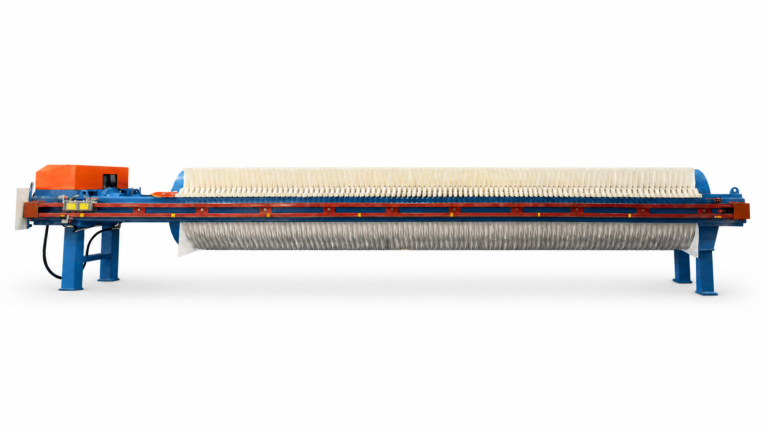
Mechanical washing is only as good as what the spray can reach and where the washwater goes afterward. Met-Chem’s automatic washing example moves chamber by chamber and routes the washwater into drainage troughs, which shows that plate presentation and drainage are part of the washing function rather than incidental details of the installation. A press where plates are not presented squarely, or where the trough path is partly blocked, can run a technically complete wash cycle and still return dirty, wet cloths to service.
Each element in the washing arrangement fails in a different way, which is why they are worth checking separately. A travel fault leaves whole areas unwashed while the cycle reports complete. A blocked, worn or misaligned nozzle narrows or deflects the spray pattern so coverage is uneven across a cloth that was presented correctly. Inadequate wash supply — low pressure, low flow or an interrupted source — starves a device that is moving perfectly. Poor drainage lets washwater and dislodged solids sit against the cloth or redeposit on plate faces, so the cloth looks washed and performs as though it was not.
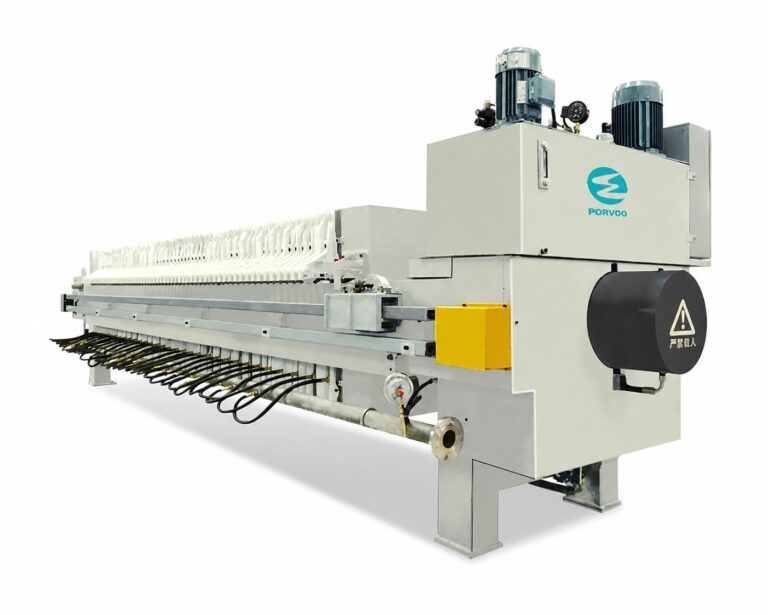
Check all of this against the manual for the machine actually quoted or installed. Washing arrangements differ between presses in travel pattern, nozzle layout, supply requirement and drainage design, and the configuration offered on a particular filtro prensa totalmente automático has to be read from its own documentation. Importing a wash pressure, a traverse speed or a nozzle spacing from another press is a common mistake, because a setting that suits one plate pack and one drainage layout can starve coverage or flood a trough on another.
Select a compatible cleaning route for the deposit
When the mechanical wash is confirmed to run correctly and fouling persists, the next step is to identify the deposit, not to escalate the wash. Fouling in ceramic, stone and mineral slurries has distinct forms: fine particles physically wedged in the weave, scale or precipitated salts bonded to the fiber, organic polymer from flocculant dosing, or glaze and binder residues that set in place. Each responds to a different mechanism — mechanical dislodgement by spray, dissolution by an acid, or attack on organics by an alkaline or oxidizing medium — and the deposit determines which of those can work at all.
Met-Chem describes both spray cleaning and chemical cleaning as approaches, and treats the cloth choice behind them as application-specific. That combination is the practical rule: the cleaning medium has to be matched to the deposit and then confirmed as compatible with everything it will touch. Cloth fiber and finish, plate material, gasket elastomer and the wash system’s own wetted parts all have chemical limits, and the confirmation comes from the cloth supplier, the press manufacturer and the chemical supplier, not from a general-purpose recipe.
A stronger treatment chosen without that confirmation substitutes one problem for another. An acid that lifts scale may attack a gasket; an oxidizer that clears organics may embrittle a synthetic fiber; a higher spray pressure may drive fines deeper into the weave or damage the cloth at the caulking. Containment of the spent medium is part of the same decision, because the washwater joins the plant’s drainage and whatever treatment or reuse path follows it. No generic chemistry, pressure or exposure time should replace the cleaning limits supplied with the cloth and the machine, and where the deposit is unidentified, the single missing variable is its composition — which the process engineer or a sample analysis holds, not the wash procedure.
Verify cleaning against comparable filtration behavior
Verification means running the press on a comparable feed case and comparing the same evidence used in the diagnosis: spray coverage across the presented cloth, drainage of washwater along its intended path, absence of leakage at the plate faces, and then the filtration behavior of the following cycles. A cloth that looks visibly cleaner has proved only that surface staining moved. The cleaning change earns its place when initial filtration pressure, cycle time and cake condition respond in the direction that the original problem defined.
Comparability is what makes the before-and-after meaningful. Feed solids, particle size, dosing and pump condition should be as close as practical to the case that produced the complaint, because any of those shifting at the same time can produce an improvement that the cleaning did not cause, or mask one that it did. Where feed variation cannot be controlled, state it plainly as a limitation on the comparison rather than recording the cycle as a cleaning success — an unverified attribution leads to the same wash being repeated on a problem it never solved.
Record the method with the result: the cleaning medium or spray condition used, its exposure, the materials confirmed compatible and by whom, the drainage and leakage observations, and the filtration figures from the comparison cycles. That record is also what the receiving side needs, because the spent wash carries dislodged solids and any chemical used into the plant’s clarification or discharge system, and its volume and character affect dosing and sludge handling downstream. The decision to accept the cleaning change and return the press to normal production rests with the project’s approved procedure and its designated approver.
For a useful discussion with the press supplier about a recurring washing fault, have the machine model and its washing arrangement, the manual’s wash supply and drainage specification, the cloth type and its stated cleaning limits, a description or analysis of the deposit, and the filtration trend data — initial pressure, cycle time and cake moisture — from before and after the last cleaning attempt.
Preguntas frecuentes
Q: Should I replace the filter cloths if cakes remain wet after automatic washing?
A: Wet cakes alone do not establish that the cloths need replacement. Check whether the wash reached the cloth evenly, drained properly and was followed by filtration under comparable feed conditions. If washing operates correctly but deposits persist, identify the deposit and check the cloth’s permitted cleaning options before deciding on replacement.
Q: What information should I collect before requesting help with a recurring washing problem?
A: Collect enough information to distinguish a washing fault from a filtration change: the press and washing arrangement, cloth material, cleaning method, observed spray coverage, drainage and leakage. Include initial filtration pressure, cycle duration and cake wetness before and after washing, together with any feed or operating changes. This makes the comparison more useful than reporting that the cloth still looks dirty.
Q: Can I use a cleaning recipe that worked on another filter press?
A: Do not transfer it unchanged without checking compatibility. Compare the deposit, cloth, plates and gaskets, then verify the proposed cleaning medium, pressure and duration against the receiving machine’s permitted treatment. A recipe used elsewhere does not establish that it is suitable for this combination of materials and equipment.