A filter press dewatering test produces one of two things: a representative preview of plant performance, or a measurement of the wrong material. The difference often comes down to a decision made before the test begins — whether the slurry will be conditioned with a chemical additive before it reaches the filter plates. Skipping that decision, rather than deciding it deliberately, is what causes test results to mislead the buyer who relies on them.
Signals That Untreated Testing Will Not Represent the Process
A filter press test is only useful to the degree that it reproduces the feed the plant will actually see at the press inlet. Where the intended process route places a conditioning step ahead of the filter press — to flocculate fine solids, adjust particle structure, or change the feed’s filterability — testing the raw, untreated slurry answers a different question than the one the buyer needs answered. The untreated result describes how an unconditioned stream dewaters; it does not describe how the proposed process route performs, because the proposed route was never defined as unconditioned in the first place.
The test protocol has to follow the process design, not the other way around. If the process route specifies a conditioner as a required step — because the feed’s particle size, surface chemistry, or solids concentration make unconditioned dewatering impractical for that material — then a test run without that conditioner is not a smaller-scale version of the plant process. It is a test of a different process. Any cake dryness, cycle time, or throughput figure produced under those conditions describes the untreated material, not the system the buyer intends to build or operate.
This matters most where the slurry’s dewatering behavior depends heavily on particle-level changes that only the conditioner produces. Fine, slow-draining solids can behave very differently once flocculated; their filtration rate, cake structure, and release characteristics change because the particles themselves have been altered, not because the filter press hardware has changed. Testing such a material without its intended conditioner does not tell the buyer how the press will perform with conditioned feed — it tells them how the press performs with a feed the plant was never designed to deliver.
The practical signal to watch for is whether the process design already assumes conditioning as a fixed input. If it does, an untreated test run is not a conservative baseline; it is a test of the wrong feed. The buyer’s task before ordering any test is to confirm whether the proposed route treats conditioning as integral to the process or as an open question still being evaluated. That answer determines everything about how the test should be structured, and it is the dividing line explored next.
Process-Required Conditioning Versus an Optional Test Variable
| Conditioning role | When it applies | Test approach | Decision the result can support |
|---|---|---|---|
| Part of the intended process | The proposed process route includes the plant’s intended conditioner, so untreated feed would not represent that route | Include the intended conditioner and define the conditioned protocol | Evaluate performance under the chosen process-representative protocol |
| Optional test variable | The buyer needs to determine whether chemical addition creates enough improvement to justify its handling and operating burden | Compare a clearly defined untreated reference with a clearly defined conditioned run | Judge the added value of conditioning within the compared protocols |
Once the buyer knows whether conditioning is fixed or still under evaluation, the test can be built around one of two distinct purposes, and conflating them produces a result that answers neither question well.
Where the proposed process route already includes the plant’s intended conditioner as a defined element, the test exists to evaluate performance under that process-representative protocol. In this case, the test’s job is not to ask whether conditioning helps — that decision has already been made at the process-design stage. The test’s job is to characterize how the filter press performs once the conditioner is part of the feed stream, using the dose, mixing sequence, and contact time the plant intends to use. Running an untreated reference alongside this kind of test may still have value for diagnostic purposes, but it does not change the base protocol, which must include the conditioner to remain representative of the intended route.
Where conditioning has not yet been decided, the test serves a different function: establishing whether chemical addition creates enough improvement in dewatering performance to justify the added handling, dosing equipment, and operating complexity it introduces. This is fundamentally a comparative question, and it requires a protocol built for comparison — a defined untreated run set against a defined conditioned run, with every other variable held as constant as the equipment allows. The result of this kind of test supports a judgment about value, not a confirmation of an already-chosen process.
Treating these as the same test produces ambiguous results. A single conditioned run with no untreated comparison cannot tell the buyer whether the conditioner is earning its cost. A single untreated run on a feed that the process design already requires to be conditioned cannot tell the buyer how the real process will behave. The protocol has to be chosen based on which question is being asked, and that choice should be made explicit before any sample reaches the filter press, since it determines how many runs are needed, what varies between them, and what conclusion the comparison can support.
Untreated Reference Runs for Measuring Added Value
When the test’s purpose is to measure the value conditioning adds, the untreated reference run carries more weight than a simple baseline; it is one half of the comparison the entire test exists to produce. For that comparison to mean anything, the untreated run has to be defined with the same rigor as the conditioned run — same feed source, same feed condition, same press cycle parameters, same operator procedure for loading and discharge. An untreated run performed loosely, as an afterthought before the “real” conditioned test, weakens the comparison it is meant to anchor.
The value of chemical addition is not a fixed property of the slurry; it depends on what baseline it is measured against. A conditioner that produces a modest improvement over a well-prepared, properly dewatered untreated feed may look far more valuable when compared against an untreated run that was mishandled or inconsistently fed. This is why the untreated reference needs the same documentation discipline as any conditioned run — not because the untreated run is complex, but because it is the fixed point the entire comparison depends on.
The condition that changes this judgment is how the buyer intends to use the result. If the question is simply whether conditioning helps this particular material at all, a single untreated-versus-conditioned pair may be sufficient to establish direction. If the question is whether the improvement justifies specific operating costs — the added equipment for chemical preparation and dosing, the labor for conditioner handling, the ongoing consumable expense — then the comparison needs to be precise enough to support that judgment, which generally means tighter control over every variable other than the conditioner itself.
Where a buyer is also evaluating how dose level interacts with cake dryness, the untreated run still serves as the reference point against which any dose-response pattern is measured — a relationship addressed in more depth in the discussion of polymer consumption against cake dryness. But the core requirement here is narrower: the untreated run must be defined clearly enough, and held constant carefully enough, that any difference observed in the conditioned run can be attributed to the conditioner rather than to inconsistency in how the reference was run.
Chemical Preparation, Mixing, and Dose Records to Preserve
| Record area | Details to preserve | What the record establishes |
|---|---|---|
| Conditioner definition | Product identity and preparation | Which prepared conditioner was used in the run |
| Addition and mixing | Addition point and mixing sequence | How the conditioner was introduced into the test protocol |
| Dose | Dose basis and the dose used | How the chemical quantity for the run was defined |
| Contact | Contact time | The contact-time condition used in the run |
| Feed | Feed condition | The feed basis to which the conditioned result applies |
A conditioned test run is only as useful as the record kept of how it was conditioned. Without that record, a result showing improved cake dryness or faster cycle time cannot be reproduced, compared against a later run, or scaled toward a plant decision, because no one can say with confidence what produced the result.
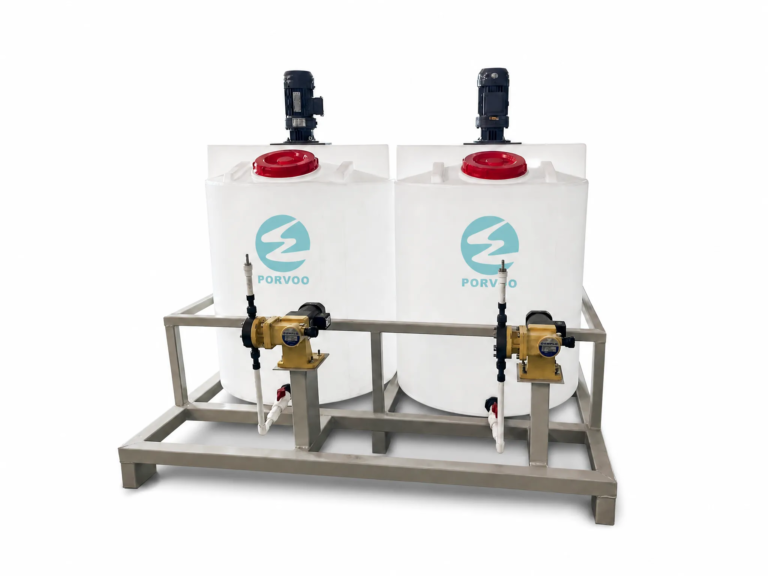
The product identity and preparation method need to be recorded because different conditioners, and different preparation procedures for the same conditioner, can produce different performance even at nominally the same dose. A conditioner prepared at one concentration or aged for a different period before use is not the same input as one prepared differently, even if the product label is identical. Where this detail is missing, a later attempt to repeat or scale the test has no way to confirm it is using an equivalent chemical input.
The addition point and mixing sequence matter because conditioning performance depends heavily on how and where the chemical contacts the slurry, not only on how much is added. A conditioner introduced at one point in the flow path, under one mixing intensity, can produce different floc structure than the same chemical introduced elsewhere or mixed differently — and floc structure is often what determines how the material behaves once it reaches the filter press.
Dose basis needs to be recorded in a form that can be translated to a different scale or flow rate; a dose recorded only as an absolute quantity added to a specific test volume is difficult to apply to a different batch size or a continuous plant stream. Contact time matters because conditioning reactions are not instantaneous — a conditioner given too little or too much time to react before reaching the press can under- or over-condition the feed, changing the result independent of dose. Feed condition needs to be recorded because the slurry’s own characteristics at the time of the run — concentration, temperature, any prior treatment — set the baseline the conditioner is acting on, and a conditioner dose correct for one feed condition is not necessarily correct for another.
Keeping this record for every conditioned run, not only for the run that produced the preferred result, lets the buyer compare runs against each other with confidence and lets a supplier reviewing the data distinguish a genuine process effect from a difference in how a particular run was conducted.
Quotation Boundary for Conditioning Results and Plant Performance
| Proposed conclusion | Evidence boundary | Quotation treatment |
|---|---|---|
| Comparison of the tested protocols | The result applies to the recorded conditioner, preparation, addition, mixing, dose basis, contact time, and feed condition | Present as a conditional comparison of those protocols |
| Universal chemical dose | The test does not establish a universal dose | Do not state a universal dose from the result |
| Guaranteed plant performance | The test does not guarantee plant performance | Keep plant-performance language conditional and subject to project-specific confirmation |
A conditioned filter press test, run and recorded carefully, produces a comparison between the specific protocols tested — not a transferable constant and not a guarantee. That distinction sets the boundary for how the result should be used once the testing phase ends.
What the result can support is a conditional comparison: within the recorded conditioner identity, preparation, addition point, mixing sequence, dose basis, contact time, and feed condition, one protocol performed differently than another. That comparison is valid for the material and conditions actually tested. It is not automatically valid for a different batch of feed material, a different conditioner preparation, or a different point in a plant’s operating range, because any of those changes can alter the relationship between dose and dewatering outcome that the test observed.
What the result cannot support is a universal chemical dose. A dose that performed well in testing reflects the interaction between that specific conditioner, that preparation, and that feed sample — not a fixed number that applies regardless of future feed variability. Industrial slurries vary in composition, concentration, and particle characteristics over time and across sources in ways a single test cannot anticipate, and a dose recommendation taken from one test run carries that limitation forward until confirmed against the actual feed the plant will process.
This boundary has documented precedent in regulatory guidance on filter press testing: the EPA’s Biosolids Technology Fact Sheet on recessed-plate filter presses describes representative bench or vendor pilot testing as the basis for evaluating this dewatering route, within the scope of municipal biosolids. That scope boundary matters directly here — conditioning approaches and the specific numeric results documented for biosolids testing do not transfer to an industrial slurry without project-specific evidence, because industrial feed characteristics differ from the municipal biosolids context the fact sheet addresses.
The same reasoning applies to guaranteed plant performance. A test result, however carefully conducted, describes behavior at test scale under test conditions; it does not by itself establish how a full-scale filter press will perform once installed, operated continuously, and exposed to the feed variability a plant experiences over time. When a buyer submits test data and intended operating conditions for quotation review, that information supports configuration and sizing discussion — informing decisions on filter press sizing, cycle design, and whether a chemical dosing system is warranted alongside the press — but the quotation process itself depends on the project’s actual feed and operating requirements being confirmed, not on the test result alone standing in for guaranteed outcomes.
Frequently Asked Questions
Q: If the planned process already uses a conditioner, should untreated feed be the main test basis?
A: No. Use the plant’s intended conditioner in the process-representative protocol; add a clearly defined untreated reference only when the buyer also needs to measure the value gained from chemical addition.
Q: What makes an untreated-versus-conditioned comparison useful for a purchasing decision?
A: Define both protocols clearly and preserve the feed condition, conditioner identity and preparation, addition point, mixing sequence, dose basis, and contact time. The comparison can then show the added value of conditioning under those recorded conditions, which the buyer can weigh against its handling and operating burden.
Q: Can a successful conditioned run establish the chemical dose for every feed condition?
A: No. It supports only the tested dose basis and recorded feed and conditioning protocol; any dose decision for different feed conditions requires project-specific confirmation.
Q: How should conditioning results be used in a filter press quotation?
A: State the tested protocol and present the result as a conditional comparison. Do not turn it into a universal dose or guaranteed plant-performance claim, and identify the feed and conditioning details that still require confirmation for the proposed project.