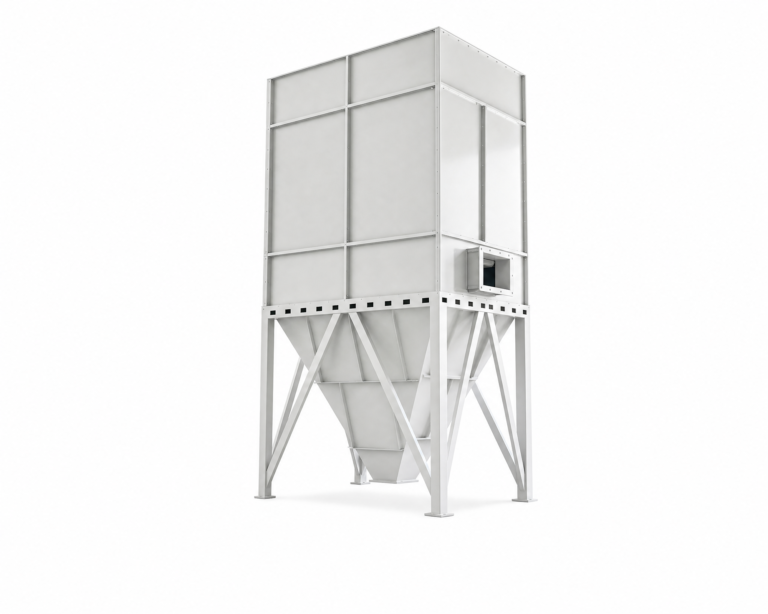
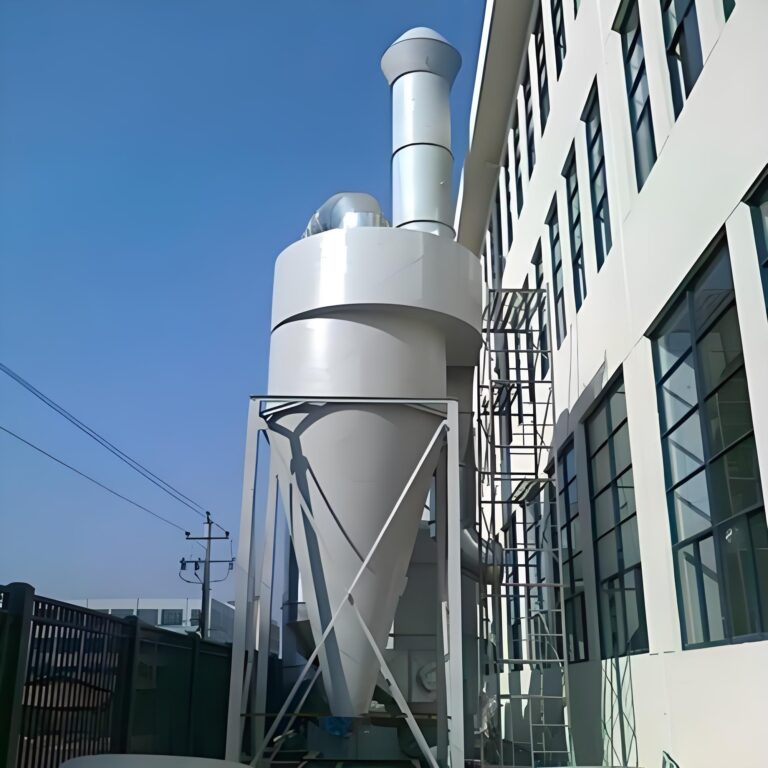
A drawing stamped “approved” describes a project configuration at a point in time. It does not certify that the site will remain unchanged, that duct routing will follow the assumed path, or that discharge and utility connections will still land where the design assumed. When one of those facts moves after approval, the question is not whether the drawing was wrong when issued — it is whether the drawing is still a safe reference for the fabrication, procurement, and site work that continues to run against it.
Why an Approved Drawing Can Become an Unreliable Project Baseline
An approval records agreement on a specific set of inputs — site dimensions, duct route, utility supply, discharge interface, and schedule assumptions among them. Once any of those inputs changes on site, the approved drawing still exists as a document, but it no longer reflects the conditions the collector configuration was built against. Work that continues to reference it without an explicit check is proceeding on an assumption that may no longer hold. This is a configuration control question rather than a matter of updating a markup: the change needs to be identified as a distinct event, traced to what it actually touches, and resolved into a new agreed baseline before it is treated as settled. ISO 10007:2017 addresses this kind of situation as a matter of configuration identification and change control — establishing what the current agreed baseline is, tracking a change against it, and recording the outcome as a new baseline once accepted (ISO 10007:2017). It does not define what a dust collector drawing package must contain or what counts as an acceptable engineering resolution for a specific project — that judgment sits with the supplier and project parties.
Trace the Changed Site Input Across Collector Interfaces
A single changed input rarely stays isolated. A site dimension change can affect module layout and service clearances; a duct route change can affect inlet position and the pressure and flow assumptions built into the design; a utility or discharge change can affect equipment that was never touched by the original site issue. Before deciding what to do about a change, the practical step is tracing it across every interface it could plausibly reach, rather than assuming it only affects the area where the change was first noticed.
| Changed input | Interfaces to review | Records to identify | Confirmation needed |
|---|---|---|---|
| Site dimensions or access | Module layout, service clearances, lifting and staging | General arrangement and site layout revisions | Whether the planned arrangement remains feasible |
| Duct route or connection | Inlet position, supports, pressure and flow assumptions | Duct and interface drawings | Revised connection data and responsible scope |
| Electrical supply or signals | Supply point, panel, cable, control interface | Electrical and control documents | Project voltage, loads, signals, and boundary |
| Compressed air or discharge | Pneumatic inlet, hopper outlet, downstream equipment | Utility and discharge interface records | Available conditions and mating details |
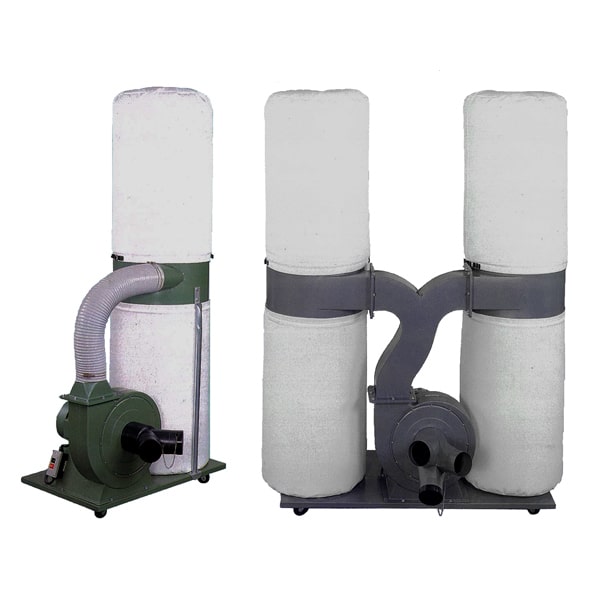
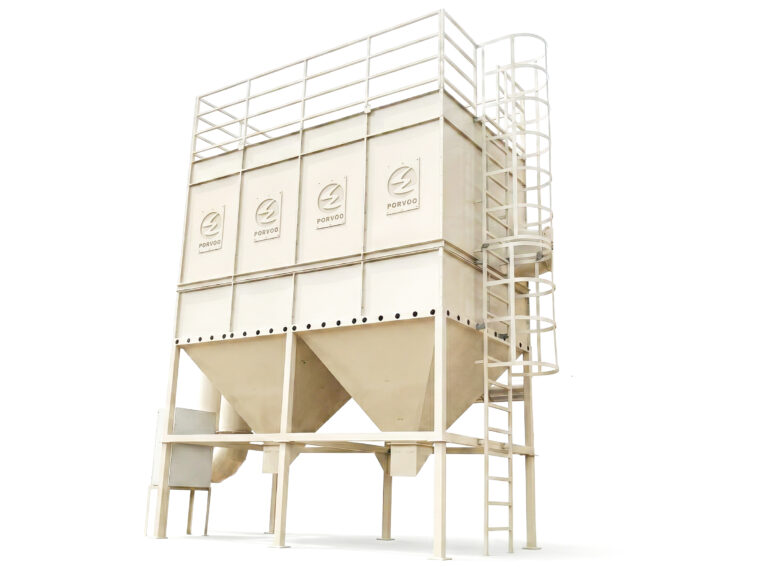
Coordinating this kind of cross-interface tracing is consistent with the project-management view in ISO 10006:2017, which addresses how changed inputs, interfaces, and responsibilities are worked through across a project — without prescribing which party owns which task or what the engineering resolution should be for a given collector configuration (ISO 10006:2017). For a project-configured modular pulse jet dust collector, this trace is the basis for asking the supplier to review the changed input against the specific module arrangement and interfaces already committed to fabrication.
Decide What Can Continue and What Needs Review
Not every changed input stops every activity. Some fabrication or purchasing may have no dependency on the part of the site that changed, and there may be a reasonable basis to let it continue. Other work is directly downstream of the changed geometry or interface and carries real risk if it proceeds before the impact is confirmed. The distinction is not a fixed rule about which document category always continues and which always stops — it is a judgment the project parties need to make and record for the actual change.
| Work item | Known impact | Decision | Required evidence before release |
|---|---|---|---|
| Unaffected purchasing or fabrication | No interface dependency identified | Continue only if recorded by the project parties | Approved impact assessment |
| Affected fabrication | Geometry or interface may change | Hold for project decision | Revised drawing and acceptance of consequences |
| Site preparation | Baseline information changed | Recheck before execution | Coordinated site and supplier revision |
| Shipment planning | Module or schedule effect possible | Confirm after configuration review | Final packing and dispatch baseline |
A “continue” decision without a recorded impact assessment is functionally the same as an unreviewed change.
Issue a Controlled Revision and Complete the Supplier Handoff
Once the affected interfaces and the continue/hold decisions are clear, the outstanding step is turning that into a controlled revision rather than an informal understanding between site and supplier. That means identifying the revision itself — what changed, from which baseline, under whose decision — and listing the downstream documents it touches, whether that is the general arrangement, duct interface drawings, electrical documents, or site and access records referenced in the installation and maintenance guide. Any commercial or schedule consequence tied to the change should be captured alongside the technical revision, not left to be reconciled later. The handoff is complete when the newly accepted baseline is recorded as such — a defined set of documents both parties treat as current — rather than left as a pending item that different parties may interpret differently. What qualifies as sufficient evidence to close that handoff, and who signs off on it, depends on how the project has structured its own change-control process; there is no single approval hierarchy that applies uniformly across configurations or contracts.
Prepare the Changed-Input Package for Project Review
Before requesting a review, assemble the currently approved drawing revision, a clear description of the changed site data, the interfaces that may be affected, and the current status of related fabrication or site work.
This package gives the responsible project parties a common basis for identifying what requires confirmation next. The response should remain specific to the actual project configuration; a site-data change does not automatically mean that every drawing or work package must be revised.