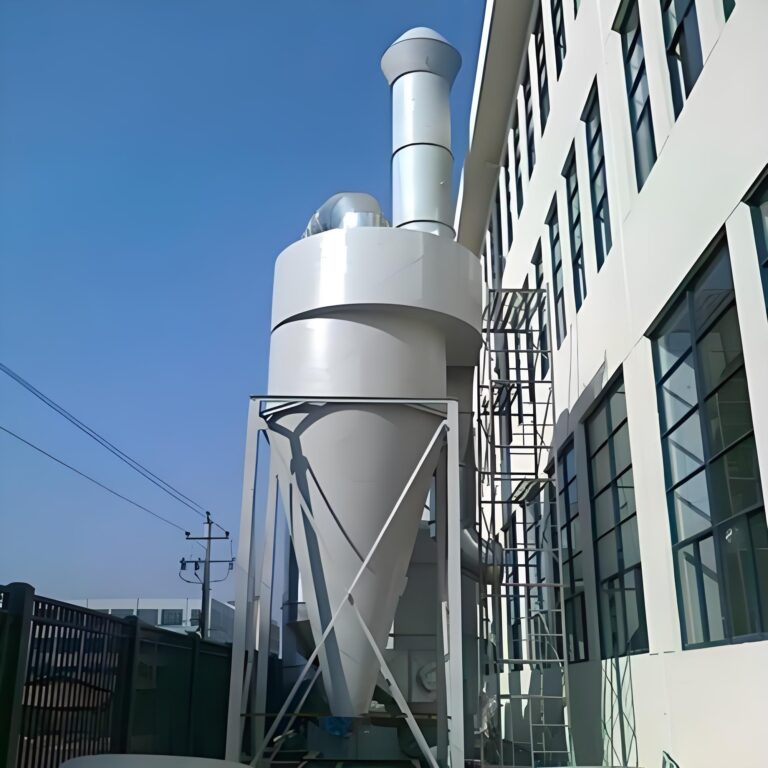
Before a cyclone is sized for a dust stream suspected of being combustible, the buyer faces a prior question: what evidence actually establishes that the material behaves as an explosible dust under the conditions the collector will see, and what evidence merely resembles it? A cyclone that performs well as a mechanical separator carries no inherent finding about explosibility, and the specification process cannot proceed safely until that finding is made on its own terms.
Dust Evidence Required Before Treating the Material as Explosible
An industry category, a material’s trade name, or a plant’s operating history without an incident are not evidence that a dust is or is not explosible. Combustibility and explosibility are physical properties of a specific particulate under specific conditions, not attributes that transfer from one facility’s experience to another’s, or from a general description of a material to the actual sample generated in a given process. Two streams described by the same commercial name can differ in particle size distribution, moisture content, surface chemistry, or contamination in ways that change their explosibility behavior entirely.
This matters at the earliest point in a cyclone project because the collector’s mechanical design, its discharge arrangement, and its placement in the air-handling system all depend on whether the dust is treated as explosible. Deciding this on inference — because “this industry doesn’t usually have issues” or “we’ve run this line for years without a problem” — removes the basis for every downstream safety decision that follows. Where a material has never been tested, the only sound starting position is that its explosibility status is unknown, not that it is presumed safe.
The correct sequence reverses the instinct to specify equipment first and confirm hazard status later. A cyclone proposed for a stream that later proves explosible may need a different discharge configuration, different interfaces with downstream ductwork, or additional protective measures — all of which are far easier to build into an initial specification than to retrofit. Establishing material evidence before design conversations begin protects the buyer from redesign driven by a hazard finding that arrives after equipment has already been ordered or fabricated.
Representative sampling is the mechanism that connects a real process stream to a defensible hazard conclusion. A sample is representative when it reflects the particle size range, moisture condition, and composition of the dust as it actually exists at the point the collector will handle it — not a bulk material sample taken before size reduction, not a sample from a different production condition, and not a sample assumed to match a similar-looking material elsewhere. Where the sampling point, handling, and storage of the test sample do not match the in-service condition, the resulting characterization does not describe the hazard the cyclone will actually face. This is the foundation the next section builds on, because even a well-drawn sample only becomes useful once it passes through qualified interpretation of the specific test concepts that describe explosibility behavior.
Representative Samples and the Relevance of Kst, Pmax, MEC, and MIE
Kst, Pmax, MEC, and MIE are outputs of specific laboratory test methods, not general properties that can be looked up for a material category or copied from a value reported at another facility. Each describes a distinct aspect of how a dust cloud behaves once ignited or how readily it ignites, and each requires its own representative sample tested under its own method.
Kst and Pmax describe the rate of pressure rise and the maximum pressure a dust cloud can generate in an explosion, as characterized under ASTM E1226-19(2025), Explosibility of Dust Clouds. These values inform decisions about explosion protection design, but they do not by themselves constitute a site-specific engineering conclusion — the standard establishes a test method and reporting basis, and translating a result into a design decision for a particular cyclone installation requires interpretation by someone qualified to apply it to that installation’s geometry, material handling, and process conditions.
MEC, the minimum explosible concentration, is characterized under ASTM E1515-14(2022), Minimum Explosible Concentration of Combustible Dusts. A common misreading treats MEC as an operating threshold below which the process is automatically safe. MEC is a laboratory-derived concentration value for the tested sample under the test method’s conditions; a process that runs below a reported MEC value has not thereby completed its risk assessment, because local concentration within a duct, a hopper, or a collector housing can differ substantially from an averaged or assumed process concentration, and because MEC alone says nothing about ignition sources or consequence severity.
MIE, the minimum ignition energy, is characterized under ASTM E2019-03(2025), Minimum Ignition Energy of a Dust Cloud in Air. This value informs how readily a dust cloud can be ignited by an available energy source, which matters directly when a cyclone’s interfaces include potential ignition sources such as mechanical friction points or upstream process equipment. Like Kst, Pmax, and MEC, an MIE result requires specialist interpretation to translate into a specific ignition-control design; the number itself is not a design specification.
Where a project has no test data at all, the buyer’s task is to arrange representative sampling and qualified testing before design proceeds. Where test data exists but originated from a different material lot, a different process condition, or a different facility, the buyer’s task is to confirm whether that data still represents the actual stream the cyclone will handle, rather than assuming it transfers.
| Test concept | Reference standard | What it informs | Decision boundary |
|---|---|---|---|
| Kst and Pmax | ASTM E1226-19(2025), Explosibility of Dust Clouds | Dust explosibility testing | Representative samples and qualified specialist interpretation are needed; these values do not establish a site-specific conclusion by themselves. |
| MEC | ASTM E1515-14(2022), Minimum Explosible Concentration of Combustible Dusts | Minimum explosible concentration testing | MEC is not an absolute operating limit or a final site risk assessment. |
| MIE | ASTM E2019-03(2025), Minimum Ignition Energy of a Dust Cloud in Air | Minimum ignition energy testing | MIE does not establish a site-specific ignition-control design without specialist review. |
Process Conditions and Upset Cases the Hazard Review Must Cover
A hazard review scoped only to normal, steady-state operation misses the conditions under which explosibility risk most often changes. Particle size, moisture, temperature, and concentration or loading are not fixed properties of a dust stream; they vary with upstream process behavior, and the review needs to account for that range rather than a single averaged condition.
Particle size affects both how readily a cloud disperses and how it behaves once ignited; a process that generates a range of particle sizes, including a finer fraction produced during upset conditions such as a mechanical failure upstream, needs its hazard evidence to reflect that finer fraction rather than only the coarser, more typical output. Moisture content changes explosibility behavior because moisture can suppress ignition or alter dispersion, but a process that runs with variable moisture — due to seasonal conditions, changes in upstream drying, or intermittent water contact — cannot rely on a single moisture value measured on one occasion.
Temperature matters both because elevated process temperature can reduce the ignition energy needed and because equipment operating near or above a material’s relevant thresholds changes the consequence of a given ignition source. Concentration or loading range matters because a process that normally runs well below a concentration of concern can still pass through a higher-concentration condition during startup, shutdown, or a process disturbance, and the review needs to treat that transient condition as part of the operating envelope rather than an exception to it.
Process upsets deserve explicit attention because a hazard review built only around designed, steady operation leaves the collector without a basis for handling the conditions that most change risk: a blockage that causes material to back up and reach unusual concentrations, a control failure that allows temperature to rise beyond the intended range, or an upstream equipment failure that introduces a different particle size distribution than the process normally produces. Where the review has not asked what upset conditions the process can produce and how those conditions change particle size, moisture, temperature, or concentration, the resulting hazard conclusion describes only the normal case and leaves the collector without design input for the abnormal one.
The buyer’s task at this stage is to supply the process team and any specialist reviewer with the full operating range — not just typical values — including how upsets are expected to shift particle size, moisture, temperature, and concentration away from normal operation.
Collector Location, Interfaces, and Ignition Sources to Document
Where a cyclone sits in the broader air-handling system changes what the hazard review needs to examine, because the collector does not operate in isolation from the ductwork, fans, and upstream process equipment it connects to. A cyclone positioned close to a process step that itself generates heat, sparks, or mechanical friction faces a different ignition-source profile than one positioned downstream of several stages of air transport where such sources have had distance and dilution to attenuate.
Documenting the proposed collector location means identifying what precedes it in the airflow path, what follows it, and what physical interfaces exist at each connection point. An interface between ductwork and the collector inlet, or between the collector discharge and downstream handling, is a point where material concentration can locally increase, where mechanical wear can generate friction, or where an external ignition source could enter the system. Each such interface is a location the hazard review needs to examine specifically, rather than assuming that a general assessment of the collector itself covers the connected equipment.
Potential ignition sources are not limited to obvious external flames or hot work; they include mechanical friction from moving parts, static discharge from material flow through ductwork, and heat generated by upstream process equipment that shares an air path with the collector. Where the proposed location places the cyclone near any of these, that proximity is itself a design input the specialist review needs, because the same collector might be acceptable in one location and require additional controls in another, depending entirely on what surrounds it.
Applicable Jurisdiction and Specialist Responsibilities to Confirm
Once material evidence, process conditions, and location and ignition documentation point toward confirmed hazardous conditions, the buyer’s task shifts to identifying which jurisdiction’s requirements apply to the installation and who holds responsibility for interpreting and applying them. Jurisdiction is not a formality to note after design; it determines what documentation, controls, and acceptance procedures the project needs to satisfy, and different jurisdictions can set different expectations for the same physical hazard.
This confirmation step also identifies the specialist roles the project needs — the parties qualified to interpret test results such as Kst, Pmax, MEC, and MIE for the specific installation, and the parties responsible for accepting the final hazard assessment before design proceeds. Where a project has not identified which jurisdiction governs the installation or which specialist role holds acceptance responsibility, the hazard evidence gathered earlier has nowhere authoritative to land, and design decisions made in that gap create rework risk if the eventual jurisdictional review disagrees with assumptions made earlier.
Design Release Conditions After the Hazard Evidence Is Reviewed
Collector specification can proceed once the evidence areas established earlier have been assembled and reviewed together, rather than in isolation. Material evidence establishes whether the dust is explosible at all, using representative characterization rather than inference from industry or trade name. Process evidence establishes the operating envelope the collector must handle, including the upset conditions that shift particle size, moisture, temperature, and concentration away from normal operation. Installation and interface evidence establishes what surrounds the collector and where ignition sources or concentration changes could occur at each connection point. Ignition evidence identifies the specific sources the design needs to address. Specialist review provides the qualified interpretation that turns raw test concepts into a design-relevant conclusion. Where hazardous conditions are confirmed, jurisdictional and acceptance documentation establishes who signs off on the assessment and what controls and inspection needs follow from it.
| Evidence area | What must be available before specification |
|---|---|
| Material evidence | Representative dust characterization; explosibility cannot be inferred from an industry, a material trade name, or uneventful prior operation. |
| Process evidence | Particle size, moisture, temperature, concentration or loading range, and process upsets. |
| Installation and interface evidence | The proposed collector location and equipment interfaces. |
| Ignition evidence | Potential ignition sources. |
| Specialist review | Qualified specialist review and interpretation of test concepts using representative samples. |
| Confirmed-hazard documentation | If hazardous conditions are confirmed, document the applicable jurisdiction, controls, inspection needs, and acceptance responsibilities. |
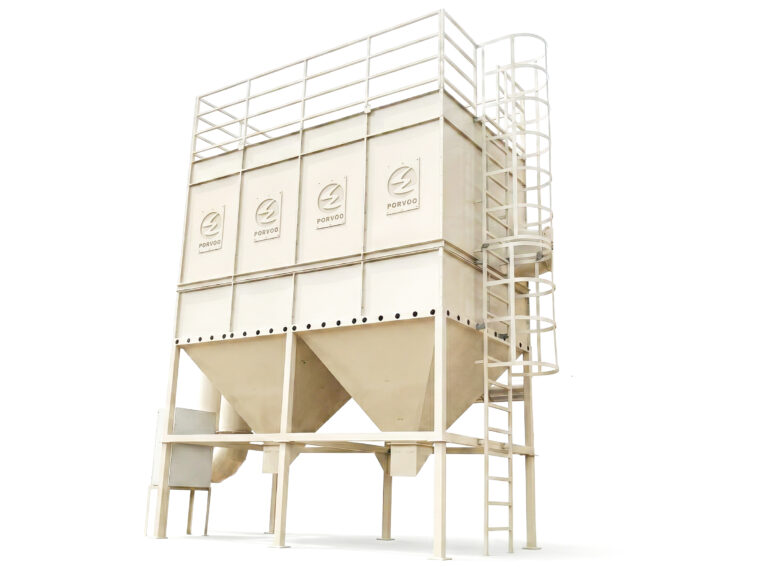
This is the point at which project-specific information — the representative sample results, the documented process range, the collector’s proposed location and interfaces, and the specialist’s findings — becomes usable input for configuring an industrial cyclone dust collector to the confirmed conditions rather than to an assumed or inferred hazard status. A supplier reviewing a quotation request for this equipment can only match configuration to the confirmed hazard status if that status, along with its supporting process and interface detail, has already been established through the review described above; supplying an assumed or incomplete hazard status at the quotation stage shifts risk into a design that later needs revision. Where the review finds no confirmed hazard, the specification can proceed on that basis, provided the material and process evidence supporting that conclusion remains available for reference if conditions change. Where the review confirms hazardous conditions, the collector specification, its discharge and interface design, and its relationship to protective measures all follow from the documented jurisdiction, controls, and acceptance responsibilities established in that review — not from a generic hazardous-dust configuration applied without reference to the specific findings.
Frequently Asked Questions
Q: Can previous incident-free operation show that the dust is not explosible?
A: No. Do not use uneventful operation, the industry, or a material trade name as a substitute for representative dust characterization and qualified specialist review. Keep the cyclone and any explosion-protection decision open until that evidence is interpreted for the project.
Q: What information should be ready before requesting a cyclone design?
A: Provide representative dust characterization plus particle size, moisture, temperature, concentration or loading range, expected process upsets, potential ignition sources, the proposed collector location, and equipment interfaces. Identify which items are measured, expected, or still unresolved so the design basis does not hide assumptions.
Q: Can Kst, Pmax, MEC, or MIE values from another facility be used for this project?
A: They should not be copied as project values. Use representative samples and qualified specialist interpretation. In particular, do not treat MEC as an absolute operating limit or MIE as a ready-made site ignition-control design.
Q: How should variable or upset conditions affect the evidence plan?
A: Define which particle size, moisture, temperature, and loading conditions the sample represents, and include relevant process upsets in the review. If one sample does not represent the conditions under consideration, leave that gap open for the qualified specialist to resolve instead of extending the result by assumption.
Q: How can a buyer compare competing cyclone proposals before the hazard review is closed?
A: Compare the assumptions each proposal makes about the dust data, process range, collector location, interfaces, and ignition sources. Ask each proposer to identify unresolved inputs and keep the applicable jurisdiction, controls, inspection needs, and acceptance responsibilities conditional until hazardous conditions are confirmed and reviewed.