Before a filter press purchase moves forward, someone has to decide how much testing the decision actually requires. A bench test and a pilot press trial do not answer the same questions, and running the wrong one wastes time without closing the purchasing question. The choice depends on what is still uncertain about the slurry, the equipment interaction, and the operating sequence.
Questions a Bench Test Can Close Efficiently
A bench-scale test uses a small filtration cell or a reduced chamber arrangement to observe how the slurry responds to pressure and to a candidate filter medium. This scale is suited to screening questions: does the slurry form a cake that separates from the filtrate in a usable way, and how does that behavior change when the feed is conditioned differently or presented to a different cloth. Where the project question is comparative — this cloth against that one, this conditioning dose against another — a bench test can produce a side-by-side result without the cost or lead time of a larger rig.
The value of bench testing lies in its ability to filter down the number of variables worth carrying into a larger trial. If a slurry fails to form a separable cake under several conditioning approaches at bench scale, that result narrows the field before committing to equipment sized for a full cycle. If two cloth options show a meaningfully different cake structure or filtrate clarity at bench scale, that comparison is a legitimate basis for selecting which option deserves further evaluation.
What a bench test cannot do is establish how the slurry will behave once it must pass through a pump, fill a full-size chamber, and move through an automated or operator-managed cycle. The scale is small enough that feed delivery, pressure buildup, and cake behavior over a full fill-and-release sequence are not represented. A bench result answers whether separation is possible and which conditioning or cloth option looks more promising; it does not answer whether the full press will fill evenly, release cake cleanly, or complete a cycle within the controls the plant intends to use.
Where the purchasing question is narrow — is this slurry separable at all, or which of two cloths performs better on this feed — a bench test is the least complex test that closes it. Moving directly to a pilot trial for a question bench testing can answer adds cost and schedule without adding decision-relevant information.
Pilot Triggers Created by Pump, Control, and Discharge Risk
A pilot press trial becomes necessary when the open question depends on behavior that only appears at a scale closer to the full installation. Pump response is one such behavior: how the feed pump interacts with rising chamber pressure, and whether that interaction changes as the chamber fills, is not visible in a bench cell that has no comparable pumped feed path. Where the project’s feed system, pump type, or feed pressure profile is part of what the buyer is still deciding, a pilot trial that includes a representative pump is the test that generates relevant evidence.
Full-cycle controls present a similar case. A production filter press cycles through feed, pressure buildup, possible washing, and plate separation under a control sequence. If the purchasing decision depends on confirming that a candidate control approach manages that sequence appropriately for this slurry, a bench test offers nothing to evaluate, because no equivalent sequence exists at that scale.
Chamber filling behavior, cake release, washing, and discharge sit in the same category. Cake that forms acceptably in a bench cell under static or near-static pressure may behave differently once it has filled a larger chamber and must release cleanly from the plates during opening. Where cake release or discharge reliability is the open question — rather than whether a cake forms at all — the test needs to include an actual fill-and-release sequence to produce a usable answer.
The trigger condition in each case is the same: if the behavior in question only exists at a scale where a pump, a control sequence, or a full chamber is present, no bench result can substitute for observing it. The buyer’s task is to identify, before testing begins, which of these behaviors is actually in question for this project, since that determines whether a pilot trial is justified or whether the purchasing question can still be closed at bench scale.
Scale Differences That Can Distort a Headline Result
A single reported result from either test scale can be read as more conclusive than the test supports, if the conditions behind that result are not kept visible alongside it. Geometry and cloth area are the first scale factor: a bench cell’s small filtration area does not reproduce the flow distribution, cake thickness profile, or pressure path of a full-size chamber, so a favorable bench result does not confirm that the same cloth or conditioning approach will perform identically at full scale.
Feed preparation is a second factor. If a bench sample is prepared differently from how feed will be conditioned and delivered in production — mixed, dosed, or aged differently — the bench result reflects that specific preparation rather than the feed condition the full plant will actually present to the press. A pilot trial using feed prepared closer to production conditions narrows this gap, but only if the preparation method is recorded alongside the result.
The pressure-flow path is a third factor that changes interpretation. A bench cell may apply pressure in a way that does not represent how a production pump and chamber build pressure together over a cycle. Where the purchasing question involves cycle time or feed behavior under rising chamber resistance, a result generated under a different pressure-flow path does not transfer directly, regardless of test scale.
Operator interventions are the factor most often left unrecorded. If a test result depended on manual adjustment, timing, or intervention during the run, that intervention is part of what produced the result. A result reported without noting what the operator did during the test cannot be judged for whether the same outcome would occur under the control approach the full plant intends to use.
Where a bench and a pilot result appear to disagree, the disagreement is not automatically evidence that one test is wrong. If the geometry, feed preparation, pressure-flow path, or operator role differed between the two tests, the difference in headline result may simply reflect those differences rather than a change in the slurry’s underlying separability. Reading either result in isolation, without the conditions that produced it, risks treating a scale-dependent artifact as if it were a property of the slurry itself.
Evidence to Capture at Either Test Scale
| Evidence category | What to capture | What the record keeps visible |
|---|---|---|
| Test configuration | Geometry and cloth area | The scale and configuration behind the result |
| Feed basis | Feed preparation and any conditioning option tested | The feed condition associated with the observation |
| Hydraulic path | Pressure-flow path and pump response where observed | The relationship between feed behavior and the reported result |
| Test execution | Operator interventions during the test | How the observed behavior depended on operator input |
| Cycle and controls | Control behavior and whether a full cycle was observed | The control evidence actually covered by the test |
| Separation and handling | Cake formation, cake release, washing, discharge, and filtrate evidence where tested | Which separation and handling behaviors were observed and which remain untested |
Interpreting a test result correctly depends on recording what produced it, not only what the result was. The geometry and cloth area used in the test establish the scale the result belongs to, and carrying that detail forward prevents a bench-scale number from being read as if it came from a production-scale chamber. Feed preparation and any conditioning option tested need the same treatment, since a result is only comparable to another result if the feed each one received is known.
The pressure-flow path and any observed pump response matter where the purchasing question involves how the slurry behaves as chamber pressure builds. If this was not observed because the test setup did not include a representative pump or pressure path, that absence is itself information the buyer needs when deciding whether the test closed the question or left it open.
Operator interventions during the test, control behavior, and whether a full cycle was actually observed determine how much of the production sequence the test addressed. A test that stopped short of a full cycle, or that relied on manual intervention the production control scheme would not include, has not demonstrated that the full sequence works as intended.
Cake formation, cake release, washing, discharge, and filtrate evidence — where any of these were actually tested — complete the picture of what the test covered and what it did not. A buyer reviewing a test report should be able to tell, from this record, exactly which behaviors were observed and which remain unconfirmed. This is also the information that supports a configuration or quotation review, since the project details a buyer supplies — slurry characteristics, feed conditions, and what has already been tested — are what a supplier uses to match a press configuration to the application rather than to a generic specification.
Decision Record for Choosing the Next Test Step
| Next test step | Use it when the decision depends on | Evidence focus | Boundary to keep in the decision record |
|---|---|---|---|
| Bench test | Screening cake separability or comparing cloth and conditioning options | Cake formation and comparative results that identify what deserves a larger trial | Pump response, full-cycle controls, chamber filling, cake release, washing, or discharge remain untested unless they were observed |
| Pilot press | Pump response, full-cycle controls, chamber filling, cake release, washing, or discharge behavior | The operational behavior that materially affects the purchasing decision | Geometry, cloth area, feed preparation, pressure-flow path, and operator interventions must remain visible when interpreting scale-up |
Choosing between a bench test and a pilot press trial comes down to matching the test to the specific question still open, and recording what the chosen test leaves unresolved. A bench test is the appropriate next step where the open question is whether the slurry separates at all, or which of several cloth or conditioning options performs better on a comparative basis. It is not the appropriate step where the open question concerns pump response, full-cycle control behavior, chamber filling, cake release, washing, or discharge, because a bench cell does not reproduce the conditions those behaviors depend on.
A pilot press trial is the appropriate next step once the purchasing decision turns on one or more of those operational behaviors. The pilot’s value comes specifically from including the pump, the control sequence, and a full fill-and-release cycle; where none of these is in question, a pilot trial adds scope without adding decision-relevant evidence over a bench test.
Whichever test is chosen, the decision record should state plainly what was tested and what was not. A bench test that confirms separability does not confirm pump compatibility or discharge reliability, and a pilot trial run under one feed preparation or control configuration does not confirm behavior under a materially different one. Where geometry, cloth area, feed preparation, pressure-flow path, and operator interventions differed between the test and the intended production configuration, that difference belongs in the record as a boundary on what the test result supports — not as a defect in the test itself.
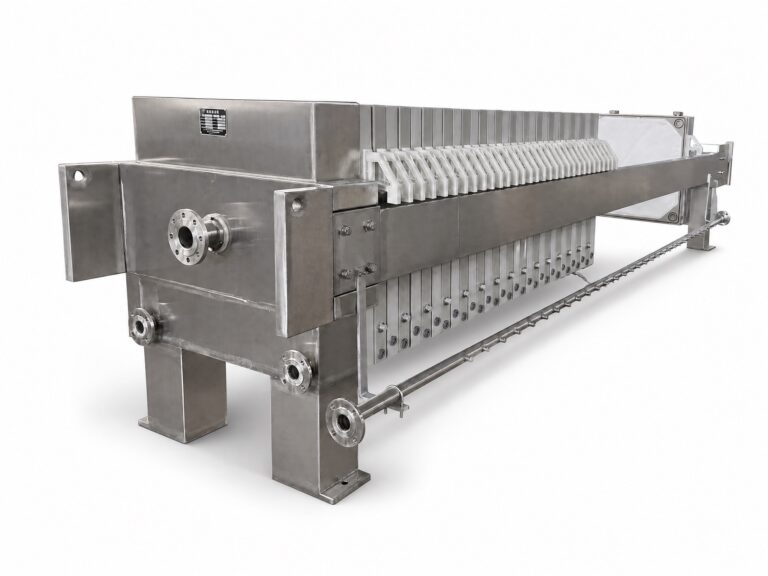
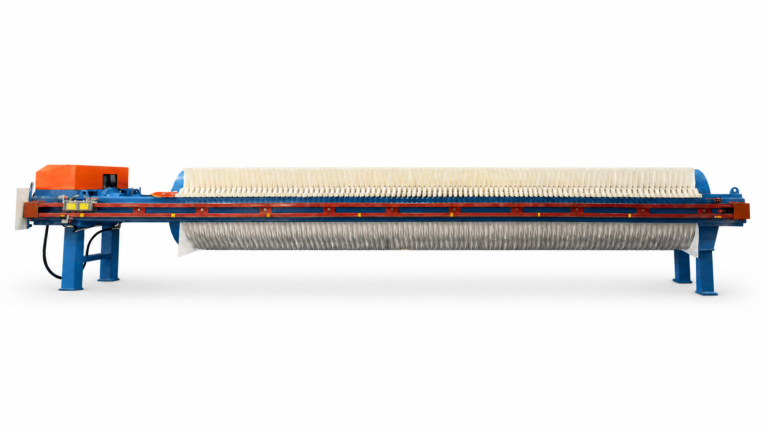
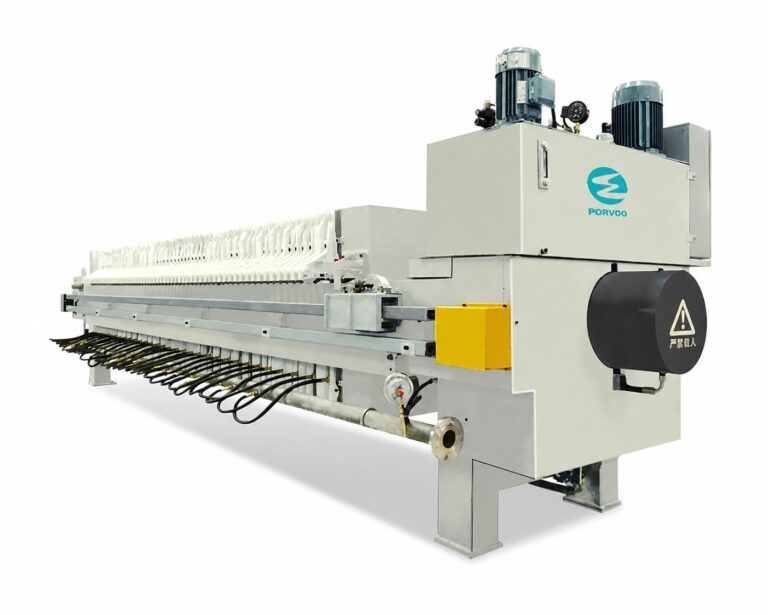
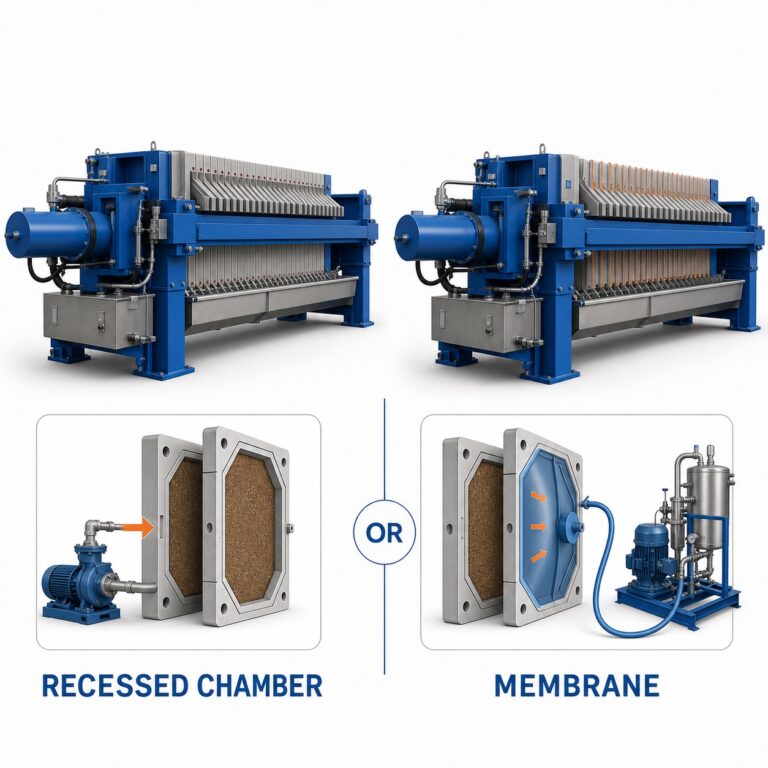
This is also the point at which the specific equipment under consideration, such as a recessed chamber filter press, enters the discussion directly: the configuration questions a pilot trial raises — chamber arrangement, cloth selection, and cycle control — are the same parameters a buyer and supplier need aligned before moving toward final sizing and quotation. Selecting the least complex test that closes the open purchasing question, and stating clearly which plant risks the chosen test did not address, keeps the next step in the process grounded in what has actually been demonstrated rather than what a single headline result appears to show.
Frequently Asked Questions
Q: When is a bench test enough to support a filter press purchasing decision?
A: A bench test may be enough when the decision is limited to screening cake separability or comparing cloth and conditioning options. Record any purchasing risks it does not cover, and move to a pilot press if pump response, controls, chamber filling, cake release, washing, or discharge behavior could change the equipment decision.
Q: Can two filter press tests be compared using one headline result?
A: Not reliably unless the basis of each result is also visible. Compare the geometry, cloth area, feed preparation, pressure-flow path, and operator interventions so a difference caused by test scale or configuration is not mistaken for a material-performance difference.
Q: What should be defined before requesting bench or pilot testing?
A: Define the purchasing question, the feed preparation and conditioning options to be tested, and the plant behaviors that could affect acceptance. This lets the test focus on the evidence that can close the decision while clearly identifying the risks that will remain untested.
Q: Does a successful pilot press test eliminate scale-up risk?
A: No. A pilot can provide useful evidence on the operational behaviors actually observed, but its result still depends on the tested configuration, feed basis, hydraulic path, and operator input. The decision record should separate observed behavior from plant conditions that were not reproduced.
Q: How should operator intervention during a test affect the conclusion?
A: Treat it as part of the result rather than an incidental detail. Record what the operator changed and when, then decide whether the intended plant setup and operating practice can support the same intervention or whether another trial is needed.