Glaze production teams often set up ball mill washwater recovery as a material-saving measure, then discover months later that intermittent quality problems trace back to untested rinse returns shifting solids loading or oxide ratios in the receiving batch. The cost shows up not in the washwater line but in rework, colour drift, and glaze formulation corrections that consume lab time and production capacity. The underlying problem is rarely equipment — it is that no one defined which rinse streams are actually compatible with which receiving glazes, or under what conditions return is acceptable at all. The practical judgment is whether a given rinse can re-enter production safely, and that depends on batch identity, verified composition, and a documented release gate, not on the assumption that washwater from the same mill is automatically usable.
Identify ball mill wash batches and receiving glaze route
Recovery starts with knowing which mill was washed, what it last ran, and where the rinse can go. Without that linkage, the rinse stream becomes an unidentified fluid of uncertain composition, and any downstream return decision is made on assumption rather than evidence.
The failure risk is not theoretical. When a ball mill switches between glaze types across shifts, the rinse from a post-run washout carries residual material from the preceding batch. If that rinse is pooled with washwater from a different batch and directed to a receiving glaze that does not match either, the contamination is invisible until a defect appears in fired product. By that point, tracing the source requires reconstructing shift logs retroactively, which is slow and often inconclusive.
Batch identification at the collection point — recording the originating mill, the batch identity of the last run, and the designated receiving glaze route — is what makes the rest of the recovery workflow defensible. This is not an industry mandate; it is a planning criterion shaped by each plant’s production flow. Mills running a single glaze type across a full campaign have a much simpler routing problem than mills that switch formulations within a shift. The identification procedure should reflect that reality: more frequent switching demands more rigorous logging, not a uniform procedure applied regardless of batch frequency.
Routing without batch identity turns washwater recovery into contamination risk by assumption.
Test solids and chemistry before return
Even when batch identity is established, a rinse stream is not automatically acceptable. The washwater composition depends on how thoroughly the mill was run down before washing, how much water was used in the rinse sequence, and whether any cleaning agents were introduced. Those variables produce a stream whose solids concentration and chemical profile may differ meaningfully from the target glaze.
The test results gate the return decision, but a passed test alone is not sufficient if the sampling was not representative. Washwater tends to stratify or vary across the rinse sequence — early rinse fractions carry higher solids than later fractions, and the ratio shifts depending on wash volume and agitation. Consistent sampling practice, such as composite sampling across the rinse cycle, matters as much as the analytical threshold. ISO 5667-10:2020 provides a useful framework for sampling consistency in wastewater and process streams, though it is not a glaze-specific acceptance standard.
The three areas that need verification before return are summarised below.
| Parameter Area | What to Verify | Risk if Unclear |
|---|---|---|
| Solids loading | Concentration of suspended solids in washwater matches target glaze solids range | Unintended dilution or over-concentration leads to glaze property shifts and production rework |
| Chemical composition | Key oxide ratios or binder/additive levels remain within acceptable tolerance for the receiving glaze | Chemistry drift may cause colour, viscosity, or adhesion defects, requiring corrective batch adjustments |
| Contamination indicators | Presence of foreign materials, cross-contamination from previous batch, or cleaning agents | Contaminated return stream compromises glaze purity, increasing rejection risk and cleaning rework |
Where results are unclear or borderline — for example, solids concentration is within range but oxide ratios show marginal drift — the risk is that small deviations compound across multiple returns. A single borderline batch returned to production may not cause a visible defect. A pattern of borderline returns, accumulated across several cycles, can shift glaze viscosity or adhesion behaviour enough to require corrective batch adjustment. The test should be treated as a review check that reflects current rinse quality, not a standing clearance based on past acceptable results.
Prevent contaminated rinses from entering recovery tanks
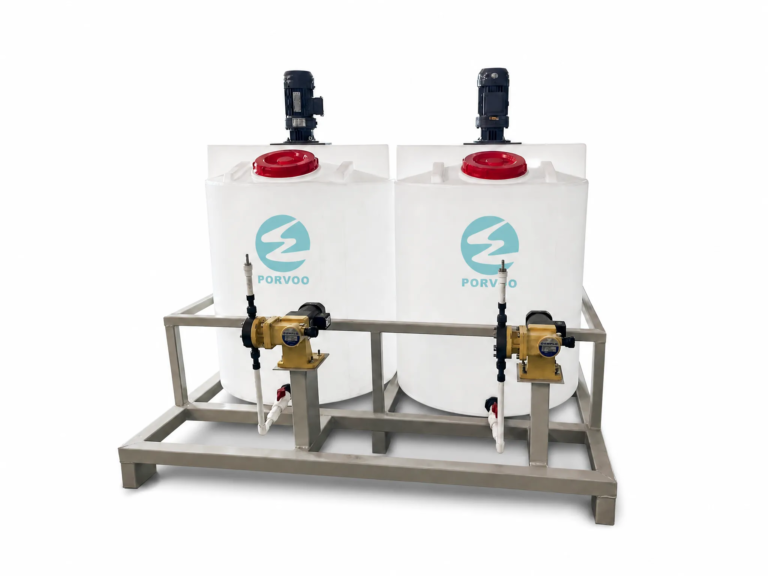
The recovery tank should only receive streams that have been pre-screened for inclusion. If the collection system is configured so that all washwater flows to a common tank by default — regardless of batch identity or rinse phase — contamination exclusion becomes reactive rather than preventive, and the tank content is effectively uncontrolled.
The specific contamination risks worth designing against are cleaning-agent carryover and cross-batch material ingress. Some mills use alkaline or acid wash agents for periodic deep cleaning; those rinses have no place in a glaze recovery stream, and if the piping or tank connection does not discriminate between a standard post-run rinse and a chemical cleaning flush, the tank will eventually receive both. Similarly, if a mill washes out between batches of incompatible glaze types and both rinses are routed to the same tank, the resulting blend may not be usable for either glaze route.
Dedicated collection logic is the only reliable way to separate compatible rinses from contaminating ones — valve discipline alone is not sufficient if the piping paths are shared.
The practical design criterion is that recovery tank feeds should have dedicated collection logic: separate collection points or valved collection paths that require a deliberate operator action to direct a rinse into recovery rather than to drain. This is a planning criterion, not a universal design standard. Its necessity depends on how many mill cleaning cycles occur per shift, how many glaze types run through the same mill, and whether the plant already has a disciplined batch logging system. Where cleaning schedules are predictable and glaze transitions are infrequent, a simpler collection arrangement may be workable. Where transitions are frequent and chemical cleaning is done on-demand, more structural separation of the collection routing is warranted.
Compare direct return with controlled concentration
The choice between returning washwater directly to production and concentrating it before return is fundamentally a question of how much compositional certainty the recovery stream offers and how much variation the receiving glaze can tolerate.
Direct return is the lower-capital path. It avoids tankage, concentration equipment, and the additional testing workload that comes with managing a concentrated intermediate stream. But it is only appropriate when the rinse composition closely matches the target glaze and that match is consistent enough across wash cycles that the return adds a known, small volume of material rather than an uncertain chemical adjustment. When batch identity and test results are well-controlled and the mill runs a narrow range of related glaze types, direct return is a reasonable option.
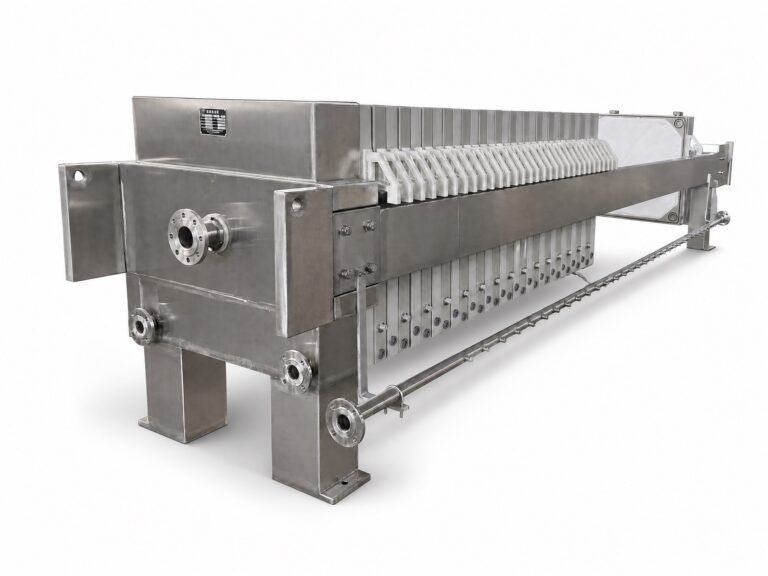
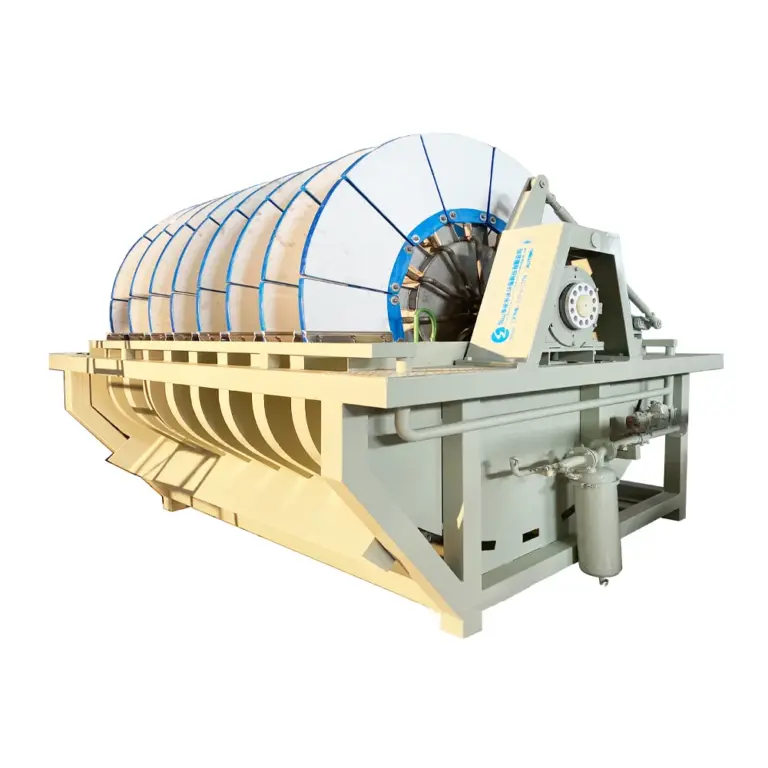
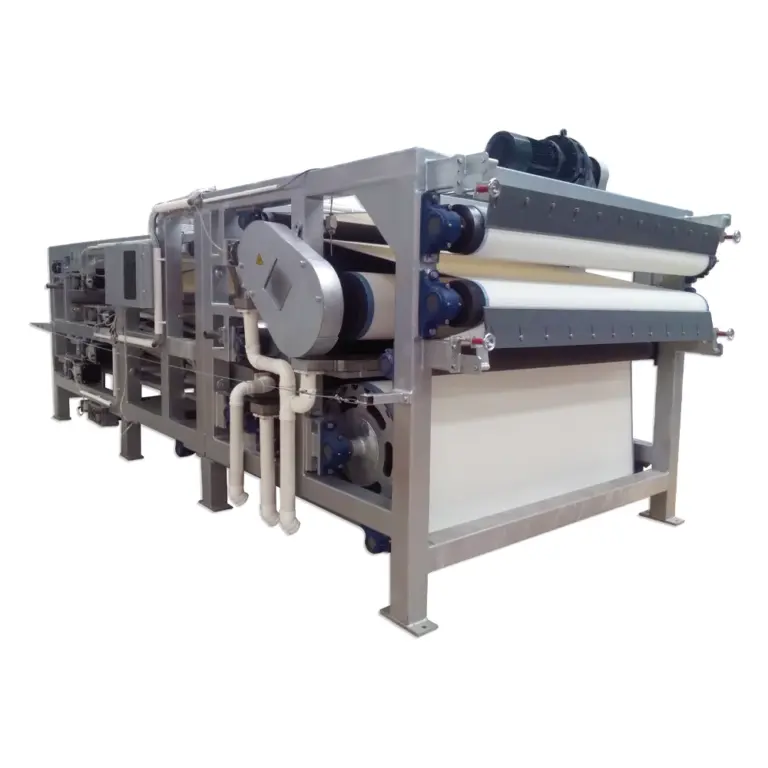
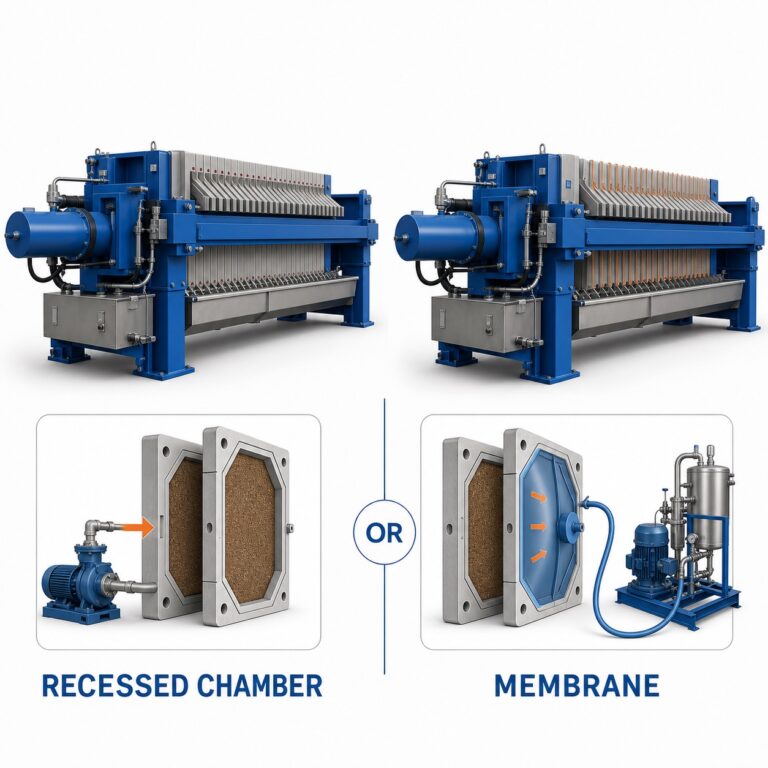
Controlled concentration — using filtration, settling, or membrane-based processes to increase solids content and reduce free-water volume before return — gives process engineers more adjustment latitude. It is suitable when the rinse composition is variable across cycles, when different rinse fractions need to be blended and adjusted before return, or when the plant needs to accumulate small rinse volumes over time before introducing a return batch of meaningful size. Ceramic membrane filtration has been applied to concentration of ceramic process streams as one technical pathway; research from Fraunhofer on ceramic nanofiltration for ceramic industry water streams documents this as a viable approach for fine-particle concentration, though it is one method among several and is not the only basis for a controlled concentration route.
| Option | Suitable When | Trade-Off |
|---|---|---|
| Direct return to production | Rinse composition closely matches target glaze and immediate reuse is feasible | Low material loss but limited control; risk of composition drift if batch identity is uncertain |
| Controlled concentration before return | Composition is variable, requires adjustment, or storage separation is needed | Greater process control but adds tankage, filtration, and testing effort, increasing operational complexity |
The trade-off is not just capital cost versus simplicity. Controlled concentration adds a new process step that requires its own operational controls, maintenance attention, and testing overhead. A plant that underestimates that overhead tends to commission a concentration system and then operate it inconsistently, which produces a variable intermediate rather than the controlled stream the approach was intended to deliver. The concentration route is only more controlled in practice if the testing and operational discipline around it are resourced appropriately.
Coordinate cleaning schedule with storage capacity
The storage tank is the buffer between the cleaning schedule and the production schedule, and mismatches between the two are a primary cause of washwater losses in otherwise well-designed recovery systems.
The failure mode is straightforward: if ball mill cleaning cycles generate washwater faster than the recovery tank can absorb or process it, the tank fills before the lab can clear previous batches for return. The operator is then left choosing between holding production to wait for lab results, discarding washwater that might have been recoverable, or bypassing the test gate — none of which is acceptable as a routine outcome. The same problem occurs in reverse: if cleaning is deferred because storage is assumed to be available and then the shift runs longer than planned, a backlog of untested washwater can accumulate and require batch-by-batch clearing under time pressure.
Tank capacity should be sized against the worst-case cleaning frequency, not the average — the mismatch happens during peak production periods, not normal operation.
Coordinating the cleaning schedule with available storage volume means defining, per shift or per production period, how many cleaning cycles can occur before recovery tank capacity is reached, and staging additional cleaning only when capacity exists to receive the washwater. This is a practical operational recommendation that needs to be calibrated to the plant’s actual shift schedule, tank volume, and lab turnaround time. A plant with a 24-hour lab cycle and frequent mill cleaning has a structurally different constraint than one with on-site testing and a predictable weekly cleaning pattern. The relevant planning check is whether the current tank volume, staged across expected lab hold time, can absorb the washwater generated by the cleaning frequency without forcing a discard decision.
Release washwater only under a documented acceptance rule
The entire upstream effort — batch identification, testing, contamination control, and scheduling — only creates value if the release decision is gated by a documented rule rather than left to operator judgment in the moment.
The risk of undocumented release is not that it always causes a defect. It is that the absence of a defined gate makes it impossible to reconstruct what was returned, when, and on what basis, when a quality problem does appear. That traceability gap is what turns an occasional washwater recovery into a recurring source of unexplained glaze drift, because the investigation cannot isolate which return batches were within specification and which were not.
| Acceptance Rule Component | Evidence Needed | Decision Owner |
|---|---|---|
| Batch identity confirmation | Wash batch log linking rinse to originating ball mill and receiving glaze route | Production supervisor |
| Contamination risk assessment | Analytical results showing no foreign materials or cross-contamination | Laboratory / QA |
| Receiving glaze tolerance check | Documentation that washwater solids and chemistry fall within the target glaze’s acceptance window | Process engineer or glaze formulation owner |
The acceptance rule works as a review gate that links three decision owners: the production supervisor confirming batch identity, the lab or QA function confirming contamination risk, and the process engineer or glaze formulation owner confirming that the washwater parameters fall within the receiving glaze’s tolerance window. All three conditions need to be satisfied and recorded before release, not assumed from the batch log alone. The rule does not need to be complex — a sign-off sheet tied to the batch log and test result is sufficient — but it does need to exist as a standing procedure rather than an informal checkpoint that varies by shift.
Ball mill washwater recovery works reliably when the boundary conditions for return are defined before the system is put into operation, not adjusted reactively after quality problems appear. The critical design decisions — which rinse streams are compatible with which glazes, whether direct return or controlled concentration suits the plant’s compositional variability, and how cleaning frequency maps against storage and lab capacity — need to be answered at the layout and workflow stage. Leaving those decisions open and treating the recovery system as commissioned once the tankage is installed is where the recurring drift and rework pattern originates.
Before commissioning or expanding a washwater recovery loop, the practical pre-decision checks are: whether batch identity logging is built into the cleaning procedure, whether the test parameters and acceptance thresholds for each receiving glaze are documented, whether the collection routing physically prevents contaminating rinses from entering the recovery tank, and whether the release gate has clear decision ownership across production, QA, and process engineering. A system that satisfies those four conditions is defensible when quality questions arise; one that does not tends to generate answers that cannot be reconstructed after the fact.
Frequently Asked Questions
Q: We don’t have a dedicated recovery tank or collection system. Can we still return washwater to production?
A: Yes, but only by manually collecting rinse in a clean, dedicated container at the mill outlet, testing it, and then dosing it into a compatible glaze batch. This works as a low-investment trial, but it demands the same batch-identity and testing discipline as a tanked system. Without dedicated collection routing, the risk of accidental contamination and volume handling errors increases, so limit this approach to a single glaze route with small, predictable rinse volumes.
Q: What’s the first practical step to test washwater recovery before committing to full equipment?
A: Start with a rinse characterization study on one mill that runs a consistent glaze type. Take composite samples across the rinse cycle, analyze solids content and key oxide ratios, and compare them against the receiving glaze’s documented tolerance window. If results are consistently within spec, run a small, controlled addition into a test batch and evaluate fired results. That data answers whether direct return is viable without any permanent installation.
Q: At what point does the color or rheology sensitivity of a glaze make direct return too risky?
A: Direct return becomes too risky when the receiving glaze’s tolerance for solids and oxide variation is narrower than the rinse’s typical cycle-to-cycle fluctuation. White, clear, and high-coverage glazes are particularly unforgiving — even minor oxide drift causes visible color shifts — whereas dark-bodied slips or engobes can often absorb a small direct addition if solids are within range. If your rinse composition varies outside the glaze’s control limits more than occasionally, controlled concentration with blending is the safer path.
Q: How do I choose between settling, filtration, and membrane concentration for washwater processing?
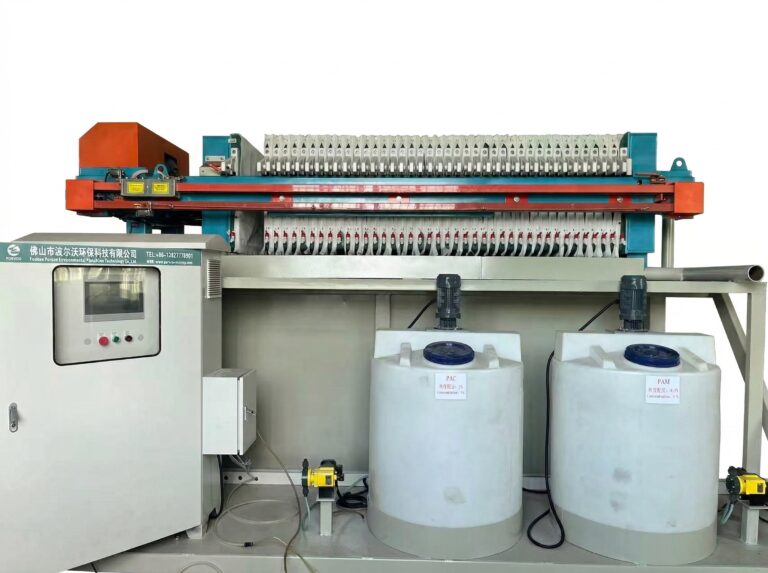
A: Settling is the lowest-cost option and works if glaze particles settle reliably, but the concentrate quality can vary. Filtration, such as with a membrane filter press, delivers a consistent high-solids cake suited to batch additions, though it requires batch handling and cake management. Ceramic membrane concentration provides continuous, tight-quality concentrate but demands higher capital and maintenance. The deciding factor is rinse consistency: if composition varies a lot, membrane’s control often justifies the cost; if it’s stable, simpler methods may be sufficient.
Q: When is it more cost-effective to discard washwater rather than recover it?
A: Recovery becomes a net cost when the quality risk — rework, lab investigations, and lost production time — outweighs the raw material savings. This typically occurs if your plant lacks the batch logging and testing discipline described in the article, if glaze raw materials are very inexpensive, or if daily washwater volume is too small to offset the overhead. As a rough guide, if the annual glaze material savings are less than the cost of one significant rework event, discarding is the financially safer choice.