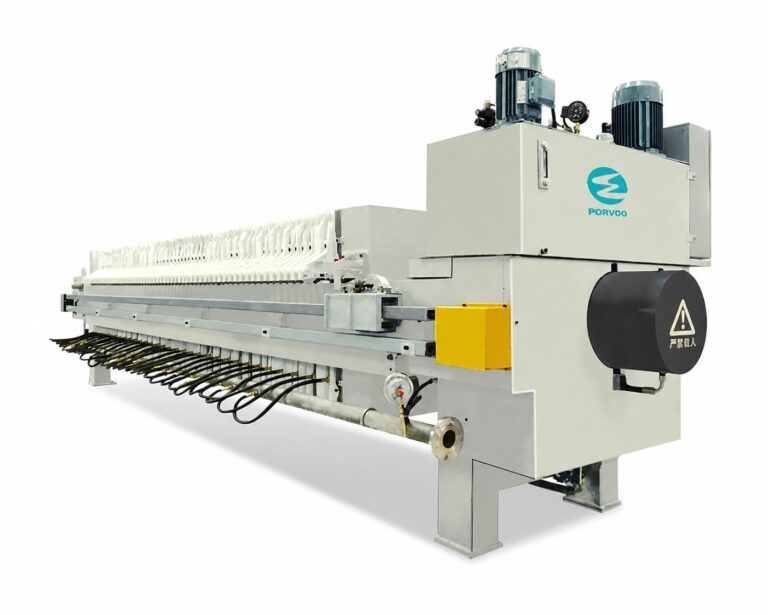
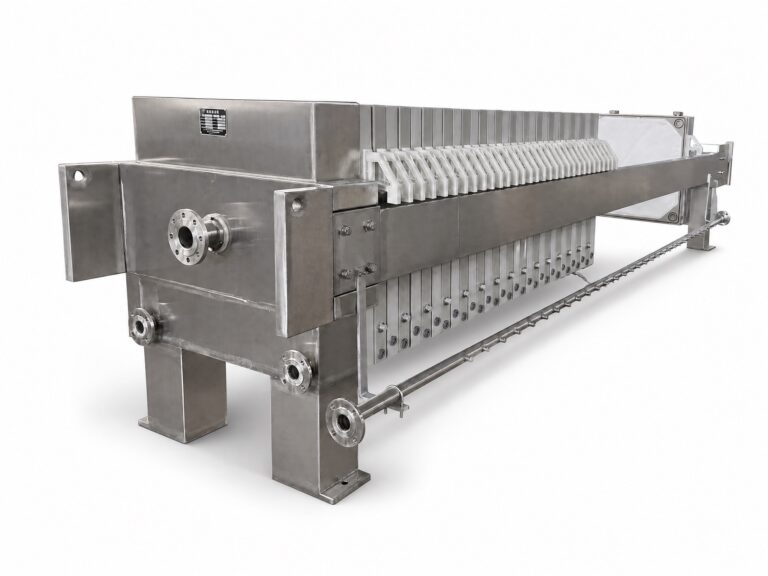
When does a membrane filter press actually move from compressing a cake to safely opening its plates? Operators who treat “squeeze” and “release” as a single step risk missing the transition evidence their control system needs before the press can open. The sequence between filtration and discharge is where that judgment gets made, and it depends on how the press is configured rather than on any single published cycle.
Where membrane squeezing sits between filtration and cake discharge
| Cycle state | Position in the generic sequence | Project-specific boundary |
|---|---|---|
| Closing | Before filling and filtration | Confirm completion evidence and the next-state transition in the offered manual and control narrative. |
| Filling and filtration | After closing and before membrane squeezing | Confirm the offered transition into squeezing; another machine’s settings do not establish this transition. |
| Estrujamiento de la membrana | After filtration and before pressure release and deflation | Confirm the squeeze medium, delivery arrangement, permissives, and end signal for the offered configuration. |
| Optional air blow | A separate function whose inclusion and position must be confirmed | Keep it distinct from membrane squeezing and verify its place in the offered sequence. |
| Pressure release and membrane deflation | Before opening and discharge | Require the specified release evidence and confirmation signals before opening. |
| Opening and discharge | After release and deflation in the generic sequence | Confirm the opening permissive for the offered press. |
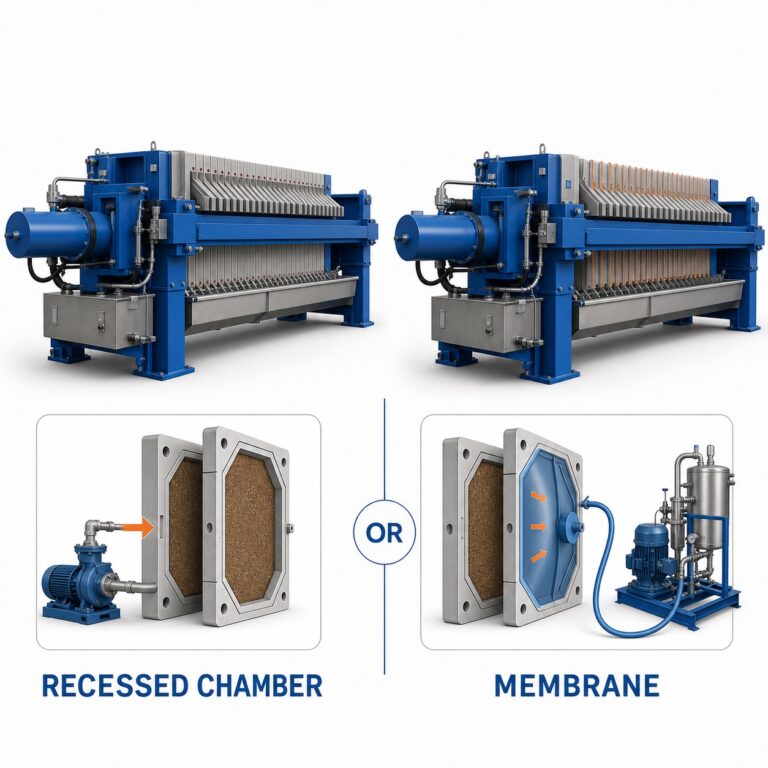
A filtro prensa de membrana cycle moves through a defined set of states, and membrane squeezing occupies a specific position within that order rather than standing alone as an isolated action. Closing and filling establish the chamber and begin filtration; filtration builds the cake; membrane squeezing then applies additional compression to that cake; pressure release and membrane deflation follow; and opening and discharge complete the cycle. Treating membrane squeezing as its own event, separate from filtration and separate from release, is necessary because each of these states has different inputs, different completion evidence, and different consequences if skipped or shortened.
Where a project treats squeezing as simply “more pressure after filtration,” the control logic can blur the boundary between the filtration state and the squeeze state, which makes it harder to confirm when squeezing has actually started or finished. Where the sequence instead defines discrete states with their own entry and exit conditions, the control narrative can require specific evidence before advancing, which supports repeatable operation across cycles and across operators.
The practical reason this matters to a buyer is that the position of membrane squeezing in the sequence determines what must be confirmed before and after it. If squeezing is placed immediately after filtration without a defined transition point, the system may begin compressing a cake that has not reached the filtration state’s own completion condition, which affects cake formation and, downstream, how the cake behaves during release and opening. If release and deflation are placed immediately before opening without their own confirmation step, the opening permissive may activate before the membrane has actually returned to a state that allows safe plate separation.
This positional logic is generic to membrane press operation and is illustrated, for example, by the Diemme Filtration technical guide, which describes the general phase order from closing and filling through membrane squeezing, an optional separate air blow, pressure release, membrane deflation, opening, and discharge. That generic description establishes the state order itself; it does not establish the specific transition evidence, timing, or control logic for any particular press, which remains a matter for the offered manual and control narrative.
Closing, filling, and filtration states that precede compression
Closing establishes the sealed chamber condition that filtration depends on, and filling introduces the slurry that filtration will act on. These two states precede membrane squeezing because squeezing has no function until a cake has begun to form under filtration pressure. The filtration state itself is where cake thickness and structure develop prior to any additional membrane-applied compression.
The condition that changes the buyer’s judgment here is how the press confirms that closing has actually completed before filling begins, and how it confirms that filtration has reached a state suitable for the next function. Where the offered control narrative requires a specific completion signal before advancing from closing to filling, the operator has a defined basis for trusting that the chamber is sealed. Where that signal is implicit or combined with another step, the transition into filling and then into filtration may rely on assumptions rather than confirmed evidence.
Filtration’s duration and endpoint are themselves configured conditions rather than fixed values; what ends the filtration state and permits the transition into membrane squeezing is something the offered manual and control narrative define for the specific press and application, not something a generic cycle description can supply. A buyer evaluating an offered press should identify exactly what evidence closes the filtration state, because that evidence is what the control system will use to decide the cake has reached the point where membrane squeezing is appropriate to begin.
Configured squeeze-medium delivery and transition logic
| Punto del orden del día | Evidence to confirm | Límite de decisión |
|---|---|---|
| Squeeze medium and delivery arrangement | Offered press and plate documentation | Identify the configured medium and interface; a water-squeeze example from another machine does not establish the project configuration. |
| Transition into membrane squeezing | Offered manual and control narrative | Identify the applicable permissive, transition evidence, and confirmation signal for the offered press. |
| End of membrane squeezing | Offered manual and control narrative | Identify the evidence that closes the squeeze state before the next configured function. |
| Placement of optional air blow | Offered sequence and control narrative | Confirm whether air blow is included and where it occurs as a function separate from membrane squeezing. |
Membrane squeezing is not a single defined action; it depends on a configured squeeze medium and a delivery arrangement that must be established for the specific offered press. Different squeeze-medium arrangements have different implications for how pressure is applied to the membrane, how the delivery system interfaces with the press’s control logic, and what evidence is available to confirm the medium has been delivered as intended.
The transition into membrane squeezing is a distinct decision point separate from the medium itself. Where the offered manual defines a specific permissive — for example, confirmation that filtration has reached its configured endpoint — the control system can enter the squeeze state only when that condition is met. Where no such permissive is clearly defined, the transition may depend on a timer or an operator action instead, which changes what the buyer needs to verify during commissioning.
The end of membrane squeezing is equally a configured condition rather than a universal value. What closes the squeeze state and permits the next function to begin is defined by the offered manual and control narrative, and this evidence is what distinguishes a completed squeeze from an interrupted one. A buyer comparing offered presses should ask specifically what signal ends the squeeze state, because that signal determines whether the subsequent release step begins from a known condition or an uncertain one.
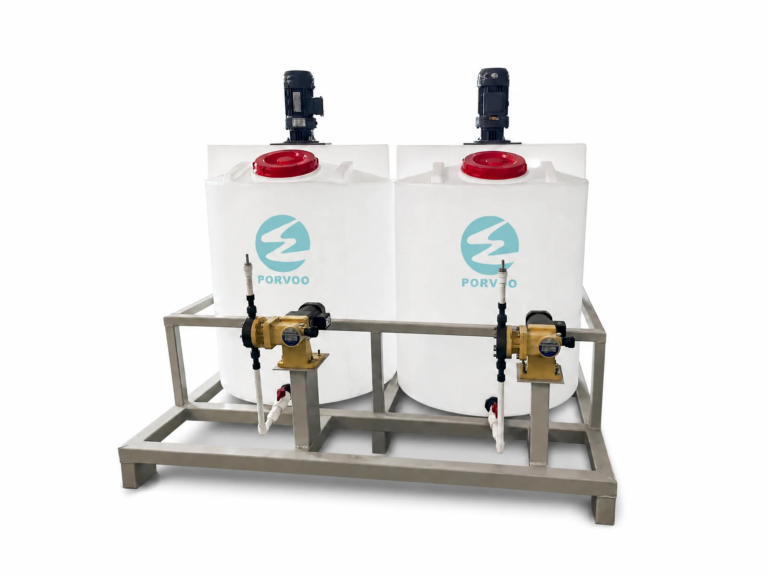
How the project’s own material and process information enters this configuration matters here: the squeeze medium, delivery arrangement, and transition logic that Porvoo configures for an offered membrane filter press depend on the operating and site information the buyer supplies for that specific application, not on a generic cycle description.
Optional air blow as a separate function from membrane squeezing
An air blow step, where included, serves a different function from membrane squeezing and should be evaluated as a separate decision rather than folded into the squeeze step’s logic. Membrane squeezing compresses the cake through the configured medium; an air blow, where present, performs a distinct action within the sequence and has its own entry and exit conditions.
Whether an air blow is included at all, and where it falls relative to membrane squeezing, is a configuration choice rather than a fixed feature of every membrane press cycle. The Putsch PKF 100 NG-2 operating instructions illustrate one model-specific sequence in which a water squeeze step and a separate air clearing step are kept distinct before pressure release occurs, but this is an example from that specific machine’s documentation and does not establish that an offered press includes an air blow, nor where it would be positioned if included. A buyer should confirm, for the offered sequence, whether an air blow function exists and, if so, where it sits relative to membrane squeezing and relative to pressure release — this is a configuration detail that the offered control narrative defines.
Pressure release, membrane deflation, and evidence required before opening
| Before-opening check | Qué hay que comprobar | Lo que demuestran las pruebas |
|---|---|---|
| Membrane-pressure release | The offered manual and control narrative identify the release step and its completion evidence. | The configured release state can be confirmed without transferring another machine’s pressure value or timing. |
| Membrane deflation or retraction | The offered documents identify the applicable state and confirmation signal before opening. | The offered control can confirm the specified membrane state before the sequence advances. |
| Opening permissive | The control narrative links permission to open with the required release and deflation evidence. | The logic path is defined for the offered press and remains subject to commissioning confirmation. |
Pressure release and membrane deflation are the states that must complete before an opening permissive can be valid, and the evidence confirming their completion is central to safe plate separation. Pressure release addresses the squeeze medium’s pressure within the membrane system; membrane deflation or retraction addresses the physical state of the membrane itself. These are related but distinct conditions, and a control system that confirms one without confirming the other may allow opening to proceed on incomplete evidence.
The condition that changes this judgment is what the offered manual and control narrative specify as the completion evidence for each state. Where release is confirmed by a defined signal rather than inferred from elapsed time, the operator has direct evidence that the squeeze medium’s pressure has been addressed. Where deflation is similarly confirmed by its own signal rather than assumed to follow automatically from release, the control system has a basis for linking the opening permissive to an actual membrane condition rather than a presumed one.
This is the point in the cycle where the Diemme Filtration guide’s generic description and the Putsch PKF 100 NG-2 manual’s model-specific sequence both place pressure release and membrane deflation before opening, but neither establishes the specific release value, timing, or confirmation signal appropriate to an offered press — that remains dependent on the offered manual, the control narrative, and commissioning confirmation specific to that configuration.
Offered-control permissives and commissioning checks to verify
Bringing the sequence together, what a buyer needs from the offered documentation is a control narrative that links each transition — closing to filling, filtration to squeezing, squeezing to release, release and deflation to opening — to a specific, confirmable permissive rather than an assumed or time-based progression. This is where the project’s offered manual, rather than a generic cycle description or another machine’s example, becomes the governing reference.
Commissioning is the stage where these permissives are checked against actual press behavior rather than against documentation alone. Confirming that each transition signal performs as the control narrative describes, under the conditions the offered press will actually operate in, is what establishes that the sequence functions as configured rather than as assumed. Where a permissive exists on paper but has not been confirmed during commissioning, the control logic remains unverified for that specific press.
For a buyer coordinating this work, the relevant equipment interface extends beyond the press itself into the control system that manages these transitions; Porvoo’s role in delivering a membrane filter press includes the control narrative and permissive logic that the buyer’s commissioning team will need to verify against the installed configuration. Confirming which transitions require operator action, which require automatic permissives, and which require physical verification during commissioning is the information a buyer should request before accepting that the offered sequence meets the project’s operating requirements.
Preguntas frecuentes
Q: Can a sequence from another membrane filter press be used as the operating sequence for the offered press?
A: No. Use the generic order only as a review map, then define each transition from the offered press and plate documentation, operating manual, and control narrative. A model-specific water-squeeze or air-clearing example does not establish the applicable medium, settings, signals, or permissives for a different configuration.
Q: What project details should be settled before the control narrative is approved?
A: Identify the configured squeeze medium and delivery interface, whether a separate air blow is included and where it occurs, the evidence for entering and ending each state, and the required release, deflation, and opening signals. Recording these items against the offered configuration exposes unresolved interfaces before commissioning.
Q: How should buyers compare two proposed membrane-press control sequences?
A: Compare them state by state using the same decision points: entry permissive, completion evidence, confirmation signal, optional functions, and the path from pressure release and membrane deflation to opening. This makes documented differences visible without treating one supplier’s timing or pressure values as universal settings.
Q: What should commissioning confirm before the opening state is accepted?
A: Confirm that the offered control demonstrates the specified membrane-pressure release and deflation or retraction evidence, and that the opening permissive depends on those required signals. The acceptance check should follow the offered manual and control narrative rather than an assumed delay or a value copied from another machine.