Fine and clay-rich tailings rarely behave the way a feed data sheet suggests they will on a dewatering line. The question facing a plant engineer or project buyer is not simply which filter press or vacuum filter has worked elsewhere, but whether the specific feed in front of them has been tested enough to predict how it will filter, release cake, and respond to conditioning at scale. Getting that sequence wrong shows up later as a machine that is correctly sized on paper but unstable in operation.
Why Fine and Clay-Rich Tailings Need Their Own Test Envelope
Fine and clay-rich tailings do not filter the way coarser, more granular tailings do, and treating them as a routine dewatering feed skips the step that actually determines equipment fit. Mineralogy, particle-size distribution, the chemistry of the slurry, and how the feed responds to conditioning all influence how a cake forms, how fast filtrate passes through it, and whether the cake releases cleanly from the media. Where clay content is high, these variables interact rather than act independently: a change in chemistry can alter how particles pack during filtration, and that packing behavior then governs both the filtration rate and how the cake behaves once formed. This is the reasoning behind establishing a defined test envelope for the feed rather than assuming that a filtration result from a different ore body, process step, or reagent regime will carry over.
A test envelope means more than confirming that a sample will filter. It means establishing the specific combination of feed condition, conditioning approach, and media response that produced a given filtration result, so that the result can be interpreted and scaled rather than merely observed once. If the feed chemistry shifts upstream, or if the particle-size distribution changes because of a different comminution or flotation condition, the prior test result no longer describes the feed being dewatered. Buyers evaluating equipment often look first at throughput or cake dryness figures from a trial, but those figures only mean something within the envelope that produced them. Where the envelope is not documented, a supplier’s proposal and a plant’s operating expectations can diverge even when both sides are using the same headline numbers.
This also affects how scale-up risk is read. A bench or pilot result on fine or clay-rich feed describes behavior at that scale and under those conditions; moving to full production scale changes residence time, pressure distribution, and media area, any of which can change filtration response in feeds that are sensitive to packing and conditioning. The practical implication for selection is that the test envelope, not the single best result inside it, is what a buyer should be asking a supplier to show.
Feed Properties That Change the Selection Question
Several feed properties change what the selection question actually is, rather than simply changing the numbers that answer a fixed question. Particle-size distribution affects how readily a cake forms and how much resistance that cake presents to flow; where fines dominate, filtration resistance tends to behave differently than in a feed with a broader size range, which is why a selection process built around a coarser reference feed does not transfer directly. Mineralogy, particularly clay mineral content and type, affects particle shape and surface behavior, which in turn affects how particles arrange themselves under pressure or vacuum and how much they resist release from filter media once a cake has formed.
Slurry chemistry — including the ionic environment and any residual reagents from upstream processing — affects whether particles flocculate, disperse, or remain in an intermediate state, and that state governs both filtration rate and cake structure. This is why conditioning is treated as part of the feed property set rather than as a separate, optional step: the same mineral feed can filter very differently depending on how it has been conditioned before it reaches the filtration equipment. Where a project has not yet defined its conditioning approach, feed property testing is incomplete even if particle-size and mineralogy data exist.
These properties do not act in isolation when selecting equipment. A fine particle-size distribution combined with a clay mineralogy that resists dewatering raises a different selection question than fine particles alone, because the combination affects both achievable filtration rate and the cake’s suitability for the plant’s intended handling method. A buyer needs to know not just what the feed is made of, but how that feed, under the conditioning and chemistry the plant actually intends to use, behaves during filtration. Supplying a feed sample without the associated process chemistry and conditioning plan leaves the selection question open regardless of how much mineralogical detail accompanies it.
Pressure Filtration Routes for Difficult-to-Dewater Feed
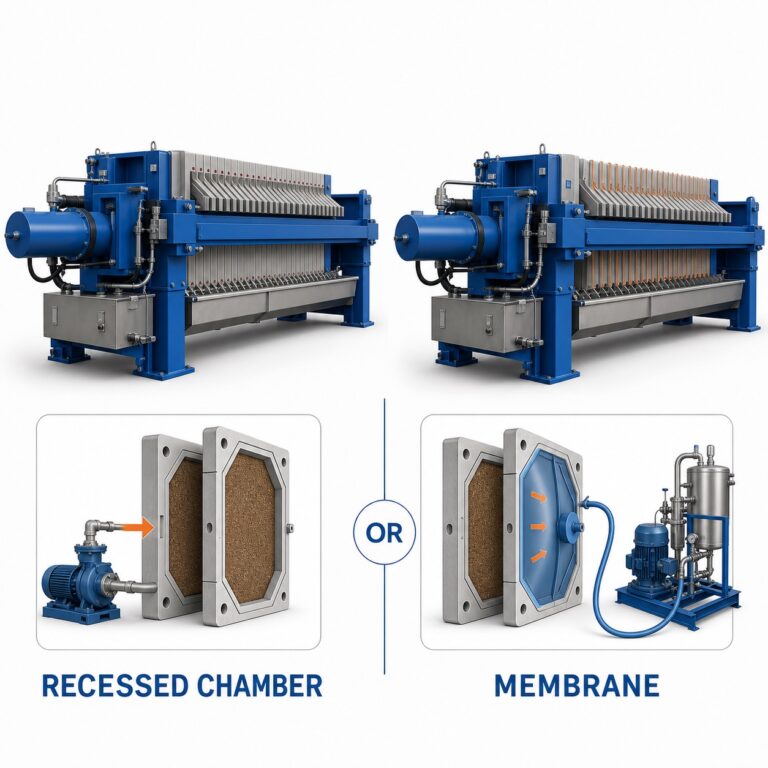
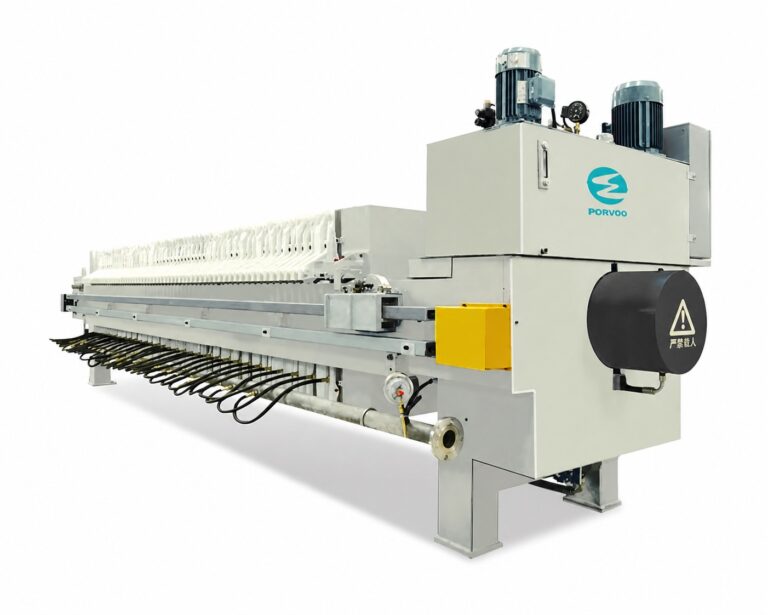
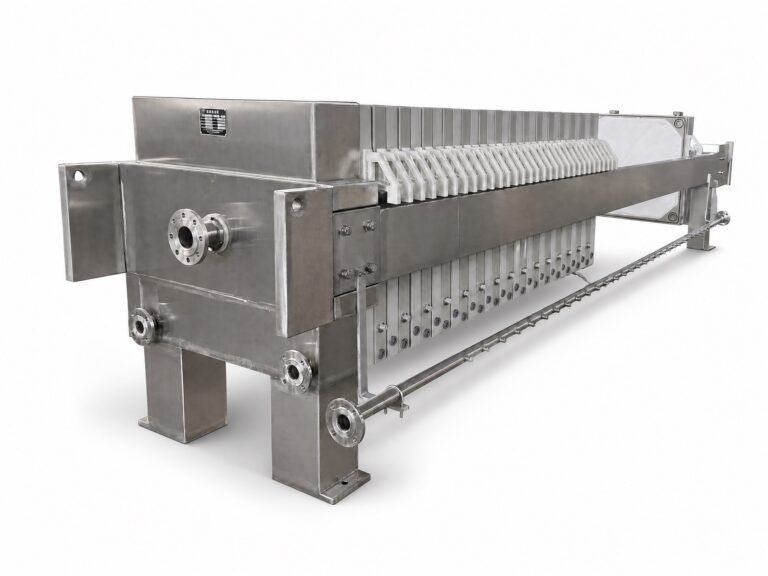
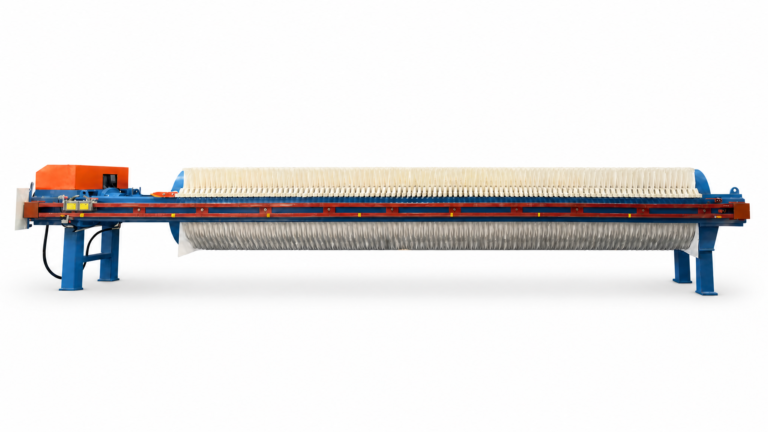
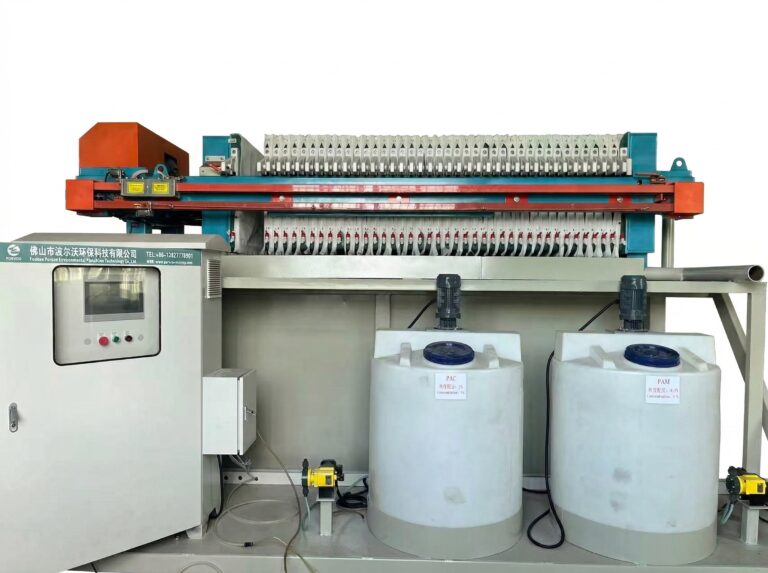
Pressure filtration, including membrane filter presses and round plate filter presses built for difficult-to-dewater slurries, applies mechanical pressure to force liquid through a filter medium and compact the retained solids into a cake. For fine or clay-rich tailings, this mechanism matters because pressure filtration can continue to drive filtration even where particle packing creates high resistance to flow — a condition under which lower-pressure methods may stall before an adequate cake has formed. The Ficha informativa de la EPA sobre tecnología de biosólidos: prensas de filtro de placas empotradas describes this general pressure-filtration mechanism, the installed interfaces involved, cloth-related considerations, and cake handling, though that guidance addresses municipal biosolids and does not transfer numeric performance or chemical-conditioning claims to tailings feeds.
Where a filtro prensa de membrana is used, a flexible membrane behind the filter cloth can apply additional squeeze pressure after initial cake formation, which addresses feeds where the cake remains compressible and where further moisture reduction is achievable through that secondary pressure step. A round plate filter press configured for difficult-to-dewater slurries addresses a related but distinct condition: feeds where achieving adequate filtration rate or cake formation under standard plate geometry is itself the limiting factor, independent of whether additional membrane squeeze would help further. The choice between these pressure-filtration configurations depends on which limitation the tested feed actually shows — a feed that forms a cake readily but retains excess moisture points toward membrane assistance, while a feed that struggles to form a stable cake at all points toward addressing plate configuration and cycle parameters first.
Micronics’ onsite pilot testing and slurry testing services, as a manufacturer reference, establish that pilot-scale trials are used in this industry to evaluate cloth optimization, sizing, and scale-up for pressure filtration; this is metadata about the existence and scope of such testing rather than independent proof of performance for any specific tailings feed. What a buyer needs from a pilot trial on their own feed is evidence of how the tested envelope behaves under the pressure-filtration mechanism being considered, not a general assurance that pressure filtration suits difficult feeds. Where the trial has not varied conditioning or media alongside pressure and cycle time, the pressure-filtration result describes only one path through a larger set of variables that affects final selection.
Vacuum Filtration Routes and Continuous-Duty Fit
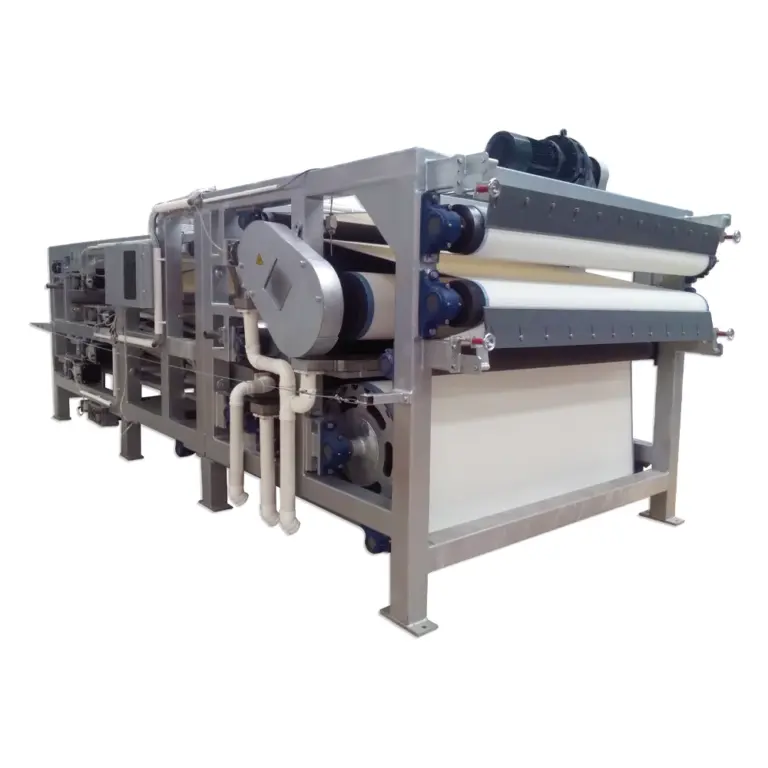
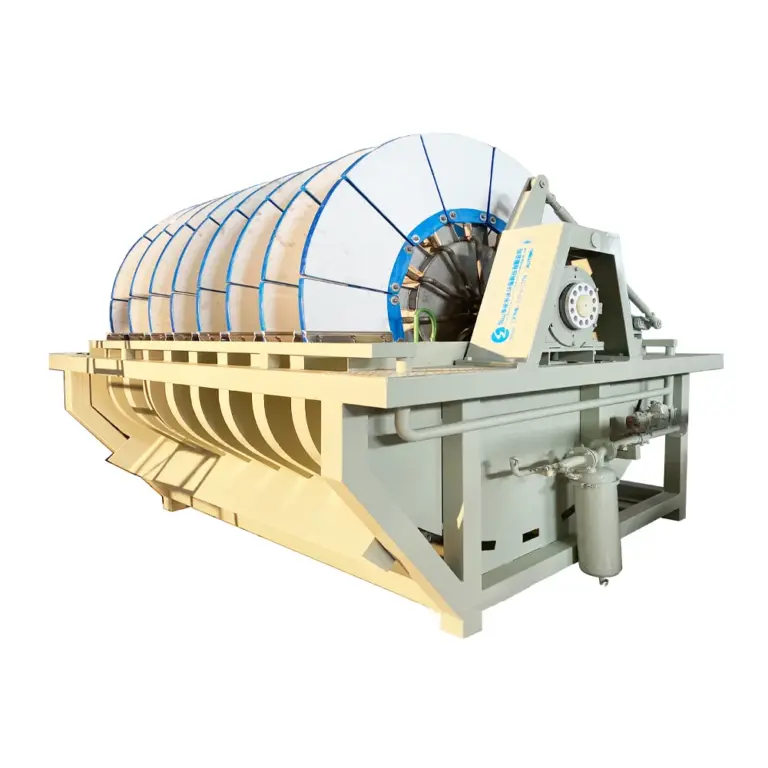
Vacuum filtration, including vacuum ceramic disk filters, draws liquid through a filter medium using a pressure differential created by vacuum rather than by mechanically compressing the cake. This mechanism changes which feed conditions matter most: because the driving force is more limited than in pressure filtration, vacuum routes are more sensitive to how readily a feed forms a permeable cake and sustains filtration rate across a continuous cycle. Where a feed’s fine or clay-rich character raises resistance to flow, the achievable rate under vacuum can differ materially from what the same feed shows under pressure, which is why a route decision cannot rest on particle size or clay content alone without a vacuum-specific trial.
Continuous-duty operation is where vacuum filtration’s distinguishing advantage is usually evaluated, since rotating disk or drum configurations enable ongoing cake formation, washing, and discharge in a single continuous cycle rather than the batch sequence that pressure filtration requires. This matters for plants where the throughput pattern calls for steady, uninterrupted processing rather than cyclical batches with intervening cake discharge and cloth or plate reset. Where a plant’s downstream handling or filtrate destination requires a continuous feed of filtrate or cake, that requirement favors evaluating vacuum routes alongside pressure routes rather than assuming pressure filtration’s generally higher achievable cake dryness settles the choice on its own.
GB/T 30177.2-2024, the Chinese standard for performance testing of vacuum filters, establishes that a defined testing method exists for evaluating vacuum-filter performance; it should be read directly before any specific requirement or value from it is cited in a project context, since this article treats it only as confirmation that such standardized testing methods exist for vacuum filtration equipment. For a buyer, the standard’s existence underscores that vacuum-filter performance on a given feed is something to be measured through defined testing rather than inferred from the mechanism description alone. A ceramic disk filter trial on the actual tailings feed, run under the plant’s intended conditioning, is what establishes whether continuous-duty vacuum filtration achieves a workable filtration rate and cake condition for that specific clay-rich material, since ceramic media and vacuum driving force behave differently across feeds with different clay mineralogy and particle packing tendencies.
Media, Conditioning, Cleaning, and Cake-Release Tests
| Trial variable | Project-specific input to test | Selection use |
|---|---|---|
| Media choice | Candidate media under the tested feed envelope | Check whether the selected medium supports a stable filtration response rather than relying on the machine label |
| Conditioning | Conditioning approach and observed response | Show whether the filtration response changes with conditioning |
| Limpieza | Cleaning approach included in the trial matrix | Keep cleaning within the evidence for stable operation |
| Lanzamiento de la tarta | Cake-release response under the tested conditions | Check fit with the plant’s intended cake-handling method |
Selecting a filter medium is not a separate decision from selecting the equipment family; it is part of the same evidence set, because the same pressure or vacuum filter can perform very differently depending on which medium is paired with a given feed. A medium’s pore structure and surface characteristics interact with the feed’s particle-size distribution and clay content to determine both the filtration rate achieved and whether the cake releases cleanly at the end of a cycle. Where the medium is chosen based on a general product rating rather than a trial against the actual tested feed, the equipment can be correctly specified and still fail to deliver stable operation, because the mismatch shows up at the media interface rather than in the machine’s mechanical capability.
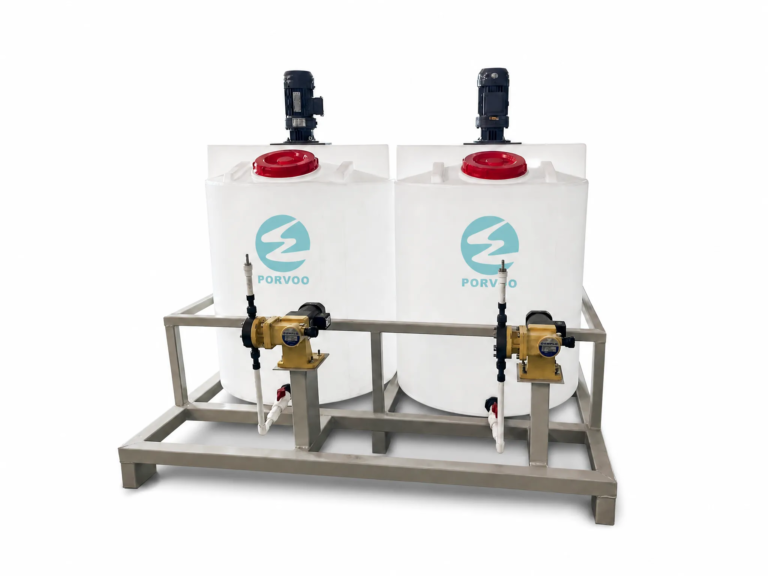
Conditioning sits alongside media choice as a variable that must be tested together with it rather than fixed in advance. The same slurry can filter at meaningfully different rates and form different cake structures depending on how it has been conditioned before reaching the filter, and a medium selected under one conditioning approach may not perform the same way if the plant later adjusts its conditioning. This is why a trial matrix that holds conditioning constant while only varying media, or vice versa, gives an incomplete picture: the combination, not either variable alone, determines the filtration response relevant to selection.
Cleaning and cake release close the loop between a single good filtration cycle and sustained operation. A filter medium that performs well in an initial cycle but resists cleaning, or retains residual solids that progressively restrict flow in later cycles, does not support stable operation even where its first-cycle filtration numbers look favorable. Cake release behavior — whether the formed cake separates cleanly from the medium — also determines whether the plant’s intended cake-handling method, including downstream conveying or further processing, functions as planned. The Telas para filtros prensa de membrana article in Porvoo’s own content addresses how cloth selection interacts with these conditions, reflecting the same principle that media choice is an evidence question rather than a specification choice made independently of the tested feed.
Selection Matrix for Throughput, Filtrate, Handling, and Utilities
| Selection input | What the comparison must make visible | Límite de decisión |
|---|---|---|
| Tested feed envelope | Mineralogy, particle-size distribution, chemistry, and conditioning response | Select an equipment family only after the tested envelope and scale-up limits are visible |
| Throughput pattern | The plant’s required throughput pattern | Screen pressure-filter and vacuum-filter routes against the required pattern |
| Filtrate destination | The plant’s intended filtrate destination | Keep route selection tied to where the filtrate must go |
| Cake-handling method | The plant’s intended cake-handling method and the tested cake-release response | Check route fit against the downstream handling method |
| Servicios públicos | Project-specific utility availability and limits | Leave route selection open until utility fit is confirmed for the project |
| Media and cleaning | Media choice, conditioning, and cleaning evidence from the trial matrix | A machine label alone does not establish stable operation |
Once the feed has been tested and a media, conditioning, and cleaning combination has shown stable results, the remaining decision is how that tested performance maps onto the plant’s actual operating requirements. Throughput pattern matters because pressure filtration’s batch cycle and vacuum filtration’s continuous cycle serve different operating rhythms; a plant requiring steady, uninterrupted processing evaluates routes differently than one that can accommodate scheduled batch cycles with intervening downtime for cake discharge. Where the trial data shows strong filtration performance but the plant’s throughput pattern does not match the route’s duty cycle, that mismatch — not the filtration rate itself — becomes the limiting factor in selection.
Filtrate destination changes what quality and consistency of filtrate the selected route must deliver, since a filtrate returned to a tailings pond places different demands on the equipment than one destined for reuse or discharge requiring stable clarity across the full cycle. Cake-handling method follows directly from the cake-release testing already performed: a plant planning conveyor-based cake handling needs cake release behavior to match that method’s tolerance for cake consistency, while a different handling method may tolerate more variable release. Utilities — power for vacuum systems, hydraulic or pneumatic pressure for membrane squeeze, compressed air for cloth cleaning — are project-specific constraints that can rule out an otherwise well-performing route if the plant cannot supply what that route’s mechanism requires at the scale being considered.
This is the stage where project information supplied by the buyer, including the tested feed envelope, throughput requirements, filtrate destination, cake-handling plan, and utility availability, enters a supplier’s configuration and quotation review, since none of the preceding filtration evidence translates into a specific equipment recommendation without those project-specific inputs attached. A tested feed envelope that supports strong performance under one combination of media and conditioning does not by itself indicate which equipment family fits a given plant; it indicates what is achievable under that combination, and the plant’s own throughput, filtrate, handling, and utility conditions determine which achievable outcome is the right one to pursue. Where utility availability is not yet confirmed, or where the cake-handling method has not been finalized, the equipment-family decision should remain open rather than being settled on filtration performance evidence alone, since a route that filters well but does not fit the plant’s utilities or downstream handling does not resolve the selection question the plant actually faces.
Preguntas frecuentes
Q: What project information should be prepared before a fine-tailings dewatering trial?
A: Define the feed condition to be tested, including its mineralogy, particle-size distribution, chemistry, and current conditioning approach. Also record the required throughput pattern, filtrate destination, cake-handling method, and available utilities so the trial can support an equipment decision.
Q: Can one test result be applied to every fine or clay-rich tailings stream at the plant?
A: Only within the feed envelope and conditions actually tested. If mineralogy, particle-size distribution, chemistry, or conditioning changes materially, treat the new feed as a separate condition until its filtration response is confirmed.
Q: How can a trial separate conditioning effects from media and equipment effects?
A: Use a trial matrix that keeps the tested combinations identifiable across conditioning, candidate media, cleaning approach, and cake release. This shows which combination produced the observed response instead of attributing it to the machine type alone.
Q: When is there enough evidence to choose between pressure and vacuum filtration?
A: Choose only after both routes have been screened against the tested feed envelope, required throughput pattern, filtrate destination, cake-handling method, and project utility limits. The comparison should also make the relevant scale-up limits visible before the equipment family is fixed.
Q: How should the intended cake-handling method influence the trial?
A: Include cake-release behavior under the tested conditions and compare it with the plant’s downstream handling method. A route that produces an unsuitable release response may create a handling mismatch even if filtration occurs.