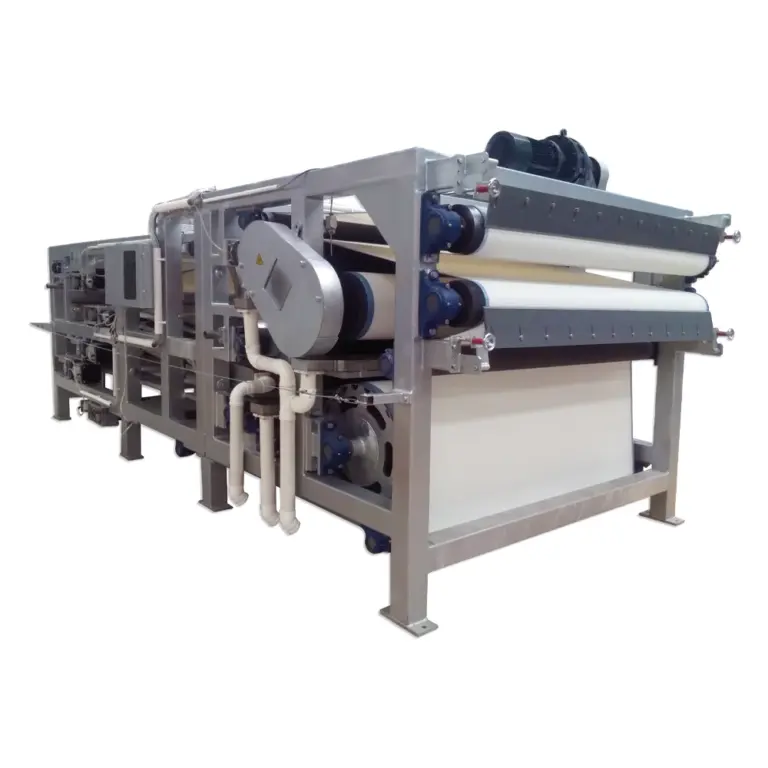
Recovered water from a filter press or thickener looks like an easy win for a flotation circuit under water-balance pressure, but the question that actually matters is whether that water fits the chemistry and particle environment the flotation process needs. A return loop that is plumbed before that question is answered creates a new variable in the circuit, one that can shift reagent behavior or pulp conditions in ways that are hard to trace back to their source.
Trace Every Filtrate Source to Its Proposed Flotation Destination
A filtrate stream does not carry one fixed quality; it carries whatever the upstream separation step left in it, and that composition only becomes meaningful once it is matched to where it will be reused. Two streams that look equally clear can carry different dissolved ion loads, different residual reagent carryover, or different fines content, depending on the feed material and the separation equipment that produced them. Visual clarity tells the reader almost nothing about whether a stream will support or disrupt the specific flotation stage it is proposed to feed.
The destination, not the source equipment, sets the water-quality envelope that matters. A stream proposed for return to a rougher stage faces a different tolerance than one proposed for a cleaner stage or for gland service water, because each destination has its own sensitivity to the variables the return water might carry. This means the mapping exercise has to start from the flotation circuit backward: what does this specific destination need, and does the available filtrate source meet that need, rather than starting from the available water and looking for somewhere to put it.
Where a site has multiple filtrate sources feeding a single proposed destination, each source needs to be traced individually before any combination is assumed safe. A dewatering step serving one ore type or one reagent scheme produces filtrate with a different profile than a dewatering step serving another part of the same site, even where the equipment type is identical. Gestión del filtrado en las operaciones de filtro prensa addresses how filtrate composition is shaped by the separation step that generates it, which is the upstream half of this mapping exercise; the downstream half is confirming that composition against the receiving flotation stage’s requirements rather than assuming equivalence across sources.
This tracing step also defines what the project needs to document before any configuration discussion can proceed. The buyer should be able to state, for each filtrate source under consideration, which flotation stage it is proposed to feed, what that stage’s known sensitivities are, and what is currently unknown about the match between the two. Where that mapping is incomplete, any water-quality characterization that follows risks measuring the wrong variables or applying the wrong tolerance, because the test plan itself depends on knowing which destination’s envelope is being tested against.
Characterize pH, Eh, Fines, Turbidity, Ions, and Residual Reagents
Once a filtrate source is mapped to its proposed destination, the next judgment is which variables in that water actually matter to that destination and how they should be tracked. pH and Eh influence the electrochemical conditions under which flotation reagents act on mineral surfaces, so a return stream that shifts either of these away from the receiving circuit’s operating range can change collector or depressant behavior even where the nominal reagent dosage stays the same. Fines and turbidity affect pulp rheology and can alter froth stability or entrainment behavior, independent of any chemical effect. Dissolved ions can compete with or interfere with reagent mechanisms, particularly where the receiving circuit was designed and reagentized around a narrower ionic background. Residual reagents carried over from the originating process can accumulate in a closed loop, producing an effect that only becomes visible after repeated cycling rather than on first return.
Metso’s guidance on water quality and recycled reagents in flotation performance frames these variables as interacting rather than independent: a change in one, such as a shift in pH, can alter how residual reagents or dissolved ions behave in the circuit, so testing a single variable in isolation does not establish whether a return stream is compatible with its destination. This is also why a single grab sample characterized once at commissioning does not answer the water-quality question for the life of the loop; feed material, upstream process conditions, and reagent schemes can all shift the filtrate’s composition over time, which means the monitoring plan has to track the variables the destination circuit is sensitive to, not just confirm an initial baseline.
Where suspended-solids content is part of the characterization work, a measurement method such as the one described in ISO 11923 for suspended solids by glass-fibre filtration establishes how the measurement itself is taken, but the standard does not set a reuse limit; any limit has to come from what the receiving flotation stage can tolerate, which is a project-specific determination rather than something the measurement method itself supplies.
The practical task for the project team is to build a variable list specific to the mapped destination from the earlier step, rather than applying one generic list to every return stream. A stream returning to a stage sensitive to ionic strength needs ion tracking prioritized in its monitoring plan; a stream returning to a stage where froth behavior is the main concern needs fines and turbidity tracked more closely. The variables worth monitoring are the ones the destination circuit is sensitive to, which only becomes clear once the mapping work from the first section is complete.
Separate Return Streams Where Blending Could Mask Process Effects
| Return option | Cuándo evaluarlo | Límite de decisión |
|---|---|---|
| Stream segregation | When combining recovered streams could mask stream-specific process effects | Keep the stream separate until its proposed flotation destination and project-specific water-quality envelope have been evaluated |
| Controlled blending | When project-specific testing supports combining defined streams for a defined flotation destination | Use blending only within the receiving circuit’s tested water-quality envelope and monitoring plan |
Combining filtrate from multiple sources into a single return header simplifies piping and reduces the number of monitoring points, but it also removes the ability to attribute a water-quality effect to its source once the blended stream reaches the flotation circuit. Where two streams with different reagent carryover or different ionic backgrounds are combined before any destination-specific testing has established that the combination is safe, an adverse effect observed downstream cannot be traced back to the contributing stream without re-isolating them, which may not be practical once the loop is operating.
Segregation keeps each stream’s identity intact until its proposed destination and the water-quality envelope that destination requires have been evaluated against that stream specifically. This is the more conservative default, particularly where filtrate sources differ in the upstream process or ore type they come from, because it preserves the ability to isolate a problem stream without shutting down the entire return loop.
Controlled blending becomes a reasonable option once project-specific testing has shown that combining defined streams, for a defined destination, falls within that destination’s tested water-quality envelope and is covered by the monitoring plan established for it. Blending without that prior testing substitutes an assumption of compatibility for actual evidence, and the fact that two streams individually passed characterization does not establish that their combination behaves the same way, since interactions between residual reagents or ionic species from different sources can differ from either stream’s behavior alone.
The decision between segregation and controlled blending is not a one-time choice made at design stage; it depends on whether the supporting testing exists for the specific streams and the specific destination under consideration. Where a new filtrate source is added to an existing return loop, or where an existing source’s upstream process changes, the blending decision needs to be revisited rather than assumed to still hold.
Place Sampling, Monitoring, Storage, and Diversion Controls
| Controlar | Function in the return loop | Decisión que respalda |
|---|---|---|
| Punto de muestreo | Obtain a sample from the relevant recovered stream before reuse | Investigate whether the stream is within the receiving circuit’s project-specific water-quality envelope |
| Punto de control | Track the project-selected flotation-sensitive water variables | Identify an out-of-envelope condition for investigation |
| Almacenamiento | Hold recovered water while its condition and proposed route are assessed | Delay return until the reuse, blending, segregation, or cleaning decision is made |
| Diversion point | Redirect out-of-envelope water away from the proposed flotation destination | Keep the water from reaching the flotation circuit while it is investigated |
A return loop that can only report a water-quality problem after it has reached the flotation circuit offers no opportunity to act on that information. The functions of sampling, monitoring, storage, and diversion exist to create a decision window between the moment a stream’s condition becomes known and the moment it would otherwise enter the circuit.
Sampling and monitoring are related but distinct functions. Sampling confirms a stream’s condition at a point in time against the water-quality envelope established for its destination; monitoring tracks the variables identified in the characterization work on an ongoing basis so that a drift away from that envelope can be identified before it becomes a sustained condition. A loop with sampling but no ongoing monitoring can confirm that a stream was acceptable at the time of the last sample, but it cannot show whether the stream has since changed, which matters where upstream process conditions are not constant.
Storage and diversion give the project a way to act on what sampling and monitoring reveal. Storage holds recovered water while its condition or its proposed route is still being assessed, which keeps the water available for reuse once a decision is made rather than requiring it to be returned immediately or discharged. Diversion redirects water that has been found or suspected to be out of its destination’s envelope away from the flotation circuit, which protects the circuit while the cause of the deviation is investigated.
Where these control points are placed matters as much as whether they exist. A sampling point placed after streams have already been blended cannot distinguish which contributing stream caused an out-of-envelope result, which connects this decision back to the segregation question. A diversion point placed too close to the flotation circuit may not leave enough residence time in storage for a decision to be made before the water would otherwise have entered the process. These placement decisions depend on the loop’s layout and the response time the project needs, which is project-specific information the buyer’s engineering team is positioned to define once the destinations and variables of concern are established.
Evaluate Conditional Cleaning or Polishing Before Reuse
Not every filtrate stream that falls outside its destination’s water-quality envelope needs to be discarded or permanently diverted; in some cases, a cleaning or polishing step can bring the stream within the envelope before it is returned. Whether this is worth evaluating depends on what is out of range and why, since different variables respond to different treatment approaches and not every out-of-envelope condition is addressable by the same method.
Where the issue is particulate or fines content, equipment designed to separate fine solids from a liquid stream may bring the stream’s turbidity or suspended-solids level within the destination’s tolerance without addressing dissolved-phase variables such as ionic strength. Where the issue is a dissolved or chemical variable, such as residual reagent concentration or ionic composition, a particulate-removal step alone does not address it, and the project needs to evaluate a different approach suited to the variable actually causing the deviation. This is why identifying the specific variable responsible for an out-of-envelope result, rather than treating “water quality” as one general condition, determines which conditional cleaning approach is worth evaluating.
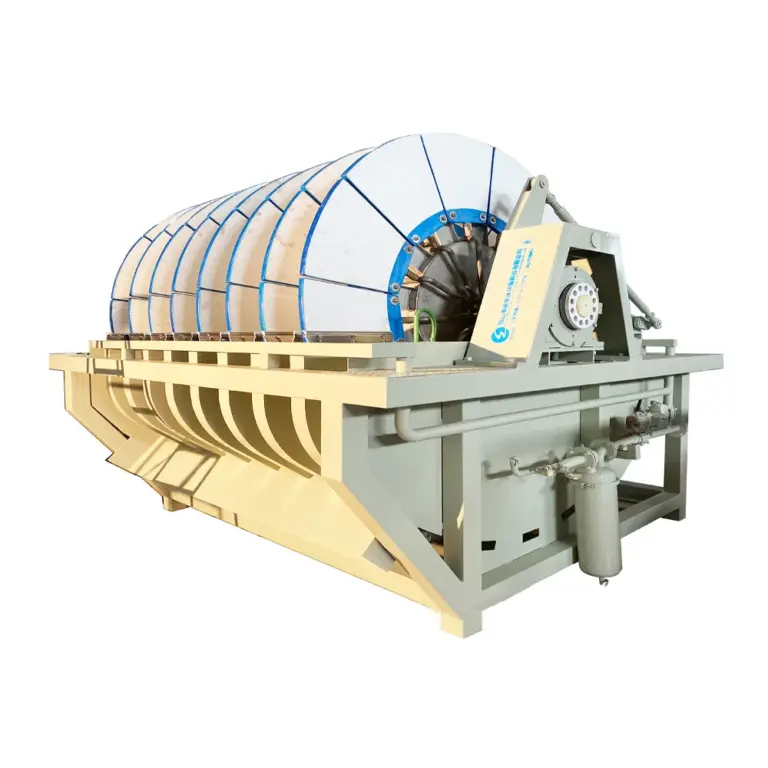
A filtro de disco cerámico al vacío is one type of equipment that can separate fine solids from a liquid stream, which is relevant where fines or turbidity are the variable keeping a filtrate stream outside its destination’s envelope; its relevance depends on the out-of-envelope variable actually being a particulate one, which the characterization and monitoring work from earlier sections would need to establish before specifying this or any other polishing step.
The decision to add a cleaning or polishing step also carries an ongoing cost in the form of the step’s own operation and maintenance, which has to be weighed against the alternative of diverting or discarding the out-of-envelope stream. Where the volume or frequency of out-of-envelope conditions is low, diversion without a dedicated polishing step may be the more practical response; where a stream consistently requires correction before it fits its destination’s envelope, a permanent polishing step addresses the condition at its source rather than requiring ongoing diversion decisions. This is a project-specific trade-off that depends on the diversion and monitoring data the loop’s control points generate over time, not a general rule about which option is preferable.
Commission the Loop With a Reversible Trial and Agreed Hold Points
The decisions made in tracing sources, characterizing variables, choosing segregation or blending, placing controls, and evaluating cleaning options all rest on assumptions that have not yet been tested against the actual operating flotation circuit. Commissioning the return loop as a reversible trial, rather than switching it into permanent operation at the outset, gives the project a way to confirm those assumptions against real circuit behavior while retaining the ability to step back if the evidence does not support continuing.
A reversible trial depends on the loop being built, from the start, with the ability to return to the prior water source without disruption. This is where the storage and diversion controls placed earlier in the design do double duty: the same diversion point that protects the circuit from an out-of-envelope stream during normal operation also provides the mechanism for reverting the circuit to its previous water source if the trial reveals an adverse effect that was not anticipated during characterization.
Agreed hold points give the trial structure. A hold point is a point at which the project team reviews the evidence gathered so far, measured against the water-quality envelope and monitoring plan established for the destination, before allowing the trial to proceed to the next stage of return volume or duration. Where the evidence at a hold point shows the stream behaving within its destination’s envelope, the trial can proceed; where it does not, the hold point is the moment to divert, investigate, and revise the configuration rather than continuing on the assumption that the issue will resolve itself.
This structure matters because some effects of filtrate return on a flotation circuit do not appear immediately. A reagent interaction or an ionic accumulation effect in a closed loop can take several cycles to become measurable, which means a single pass through the loop without an adverse result does not confirm long-term compatibility. The hold points need to be spaced to allow for this, with the specific interval and duration depending on the circuit’s cycle time and the variables being tracked, which is information the project team defines based on its own process rather than a fixed general schedule.
Where this trial and hold-point structure is built into the loop from commissioning, the project retains the evidence needed to support a permanent configuration decision, and retains the ability to adjust segregation, cleaning, or control-point placement based on what the trial actually shows, rather than committing to a configuration before the destination circuit’s response to the returned water is known.
Preguntas frecuentes
Q: Can visually clear filtrate be returned directly to flotation?
A: Visual clarity alone is not enough to establish suitability. Map the filtrate source to its proposed flotation destination, then assess the project-selected water variables against that receiving circuit’s tested water-quality envelope before choosing reuse, blending, segregation, or cleaning.
Q: Is a suspended-solids result enough to approve filtrate reuse?
A: No. Suspended-solids measurement can inform the assessment, but the reuse decision may also require project-specific checks of pH, Eh, fines, turbidity, ions, organic matter, and residual reagents where they can affect the receiving circuit.
Q: What information should be prepared before a filtrate return-loop design review?
A: Prepare a list of recovered streams and proposed destinations, the variables to test or monitor for each route, and the planned sampling, storage, and diversion points. The review should also identify which streams will remain separate while suitability is unresolved and what evidence would support any controlled blend.
Q: How should a new return route be commissioned when its effect on flotation is uncertain?
A: Use a reversible trial with agreed hold points, monitoring, and a diversion route. Define in advance which project-specific observations will allow the trial to continue and which condition will pause return for investigation, segregation, or evaluation of cleaning or polishing.