Most plants that commission a water recycling system for ceramic or stone processing treat dewatering as the finish line — once the filter press produces a dry cake, the assumption is that the loop is working. The failure mode that follows is quieter: clarified water or press filtrate returns to polishing or cutting lines carrying enough residual solids to deposit in return pipework and machine nozzles, and production quality drops before anyone traces it back to loop contamination. By then, the retrofit cost — adding a polishing step, repiping return lines, or separating clay streams that were combined at the design stage — exceeds what a more deliberate layout decision would have cost upfront. The judgment this article is designed to support is not which equipment to buy, but how to plan the reuse loop so that water quality, return routing, and solids handling are defined before procurement locks in the system.
Define the reuse-water application and quality risk
The first decision is not how large to size the system — it is which production process the recycled water actually returns to. Polishing lines, cutting saws, glazing wash stations, and tile body preparation each carry different tolerances for suspended solids, pH variation, and residual fine particles. A system sized to handle total plant flow without distinguishing return destinations will technically recycle water while still exposing sensitive processes to quality that the equipment was never designed to protect against.
Flow sizing is a useful starting point once process destinations are identified. One practical method is to calculate daily water demand by multiplying each machine’s rated flow by its daily run hours, then average across the operating shift. For example, a bridge saw rated at 30 GPM running three hours a day generates roughly 20,100 gallons per day — averaged over an eight-hour shift, that represents around 42 GPM of sustained recycling demand. This approach is not a regulatory formula; it is a way to ensure that recycling capacity matches production demand without oversizing equipment that then operates at partial load and loses sedimentation stability.
The quality risk is more consequential than the capacity risk. Cutting applications are sensitive to fine mineral particles that survive sedimentation but accumulate in narrow nozzles and blade cooling channels. Polishing lines may tolerate slightly higher suspended solids but are more sensitive to pH variation that affects abrasive performance and surface finish. Defining the reuse application before selecting sedimentation and dosing equipment determines whether the loop is actually fit for its intended return point — or simply moves water in a circle while creating a slow attrition problem in production machinery.
Trace where clarified water filtrate and overflow return
Return path selection carries operational consequences that are easy to underestimate during layout planning. The two common configurations — lamella separator overflow flowing by slope into a storage tank and then pumped back to machines via a pressure booster, versus filter press filtrate gravity-feeding directly into a reuse tank — differ not just in energy use but in how reliably each maintains consistent water quality at the machine.
| Return Path | Flow Mechanism | Main Equipment | Energy & Complexity | Key Benefit |
|---|---|---|---|---|
| Lamella separator → storage tank → machines | Slope gravity flow into tank, then pumped via pressure booster | Storage tank, pressure booster pump | Pumping energy required | Maintains stable reuse loop without manual intervention |
| Filter press → reuse tank → machines | Gravity feed from filter press to reuse tank | Reuse tank, gravity piping | No pumping energy, simpler mechanical setup | Reduces energy use and mechanical complexity |
The lamella-to-storage-tank path requires pumping energy but provides a buffer volume that can absorb flow variation between production shifts and sedimentation cycles. The gravity path from a filter press is mechanically simpler and avoids pump maintenance, but filtrate quality and volume depend on press cycle timing — meaning that if the press is between cycles, return flow stops. For continuous processes, this intermittency may require additional holding volume or a blended feed arrangement. Path selection should be confirmed against the production process’s sensitivity to flow interruption, not just against energy or capital cost.
A practical layout check before finalizing either path: verify that the storage or reuse tank is sized to buffer at least one full production shift’s demand, and that the return pump — where used — can deliver the pressure required by the highest-pressure machine on the circuit. Undersized return pressure is a commissioning problem that surfaces only when production runs at capacity.
Match sedimentation dosing and pressing to water stability
Sedimentation and chemical dosing are not interchangeable steps in the treatment train — they serve different stability functions, and the decision to include, adjust, or skip one of them has downstream consequences for the entire reuse loop.
| Design Factor | Value / Range | Implication for Stability |
|---|---|---|
| Lamella clarifier flocculant use | Can operate with or without flocculants | Allows adjusting chemical dosing to match varying wastewater characteristics |
| Sedimentation step requirement | Skip sedimentation if wastewater volume ≤10 m³/h | Simplifies treatment train, reduces capital and footprint for small flows |
| Clarifying area load (lamella separator) | 0.08–0.25 m³/m²·h | Design benchmark to size lamella clarifier for stable sedimentation performance |
The option to skip the sedimentation step for flows at or below 10 m³/h is a legitimate capital-cost reduction for small facilities, but it removes the primary control point where flocculant dosing can stabilize variable influent. When clay composition or particle size distribution shifts — as it does in plants processing multiple material types — sedimentation with adjustable PAC or PAM dosing provides a correction mechanism that direct filtration cannot replicate. A plant that skips sedimentation to reduce upfront cost and then changes its raw material mix is looking at a retrofit that costs more than the original saving.
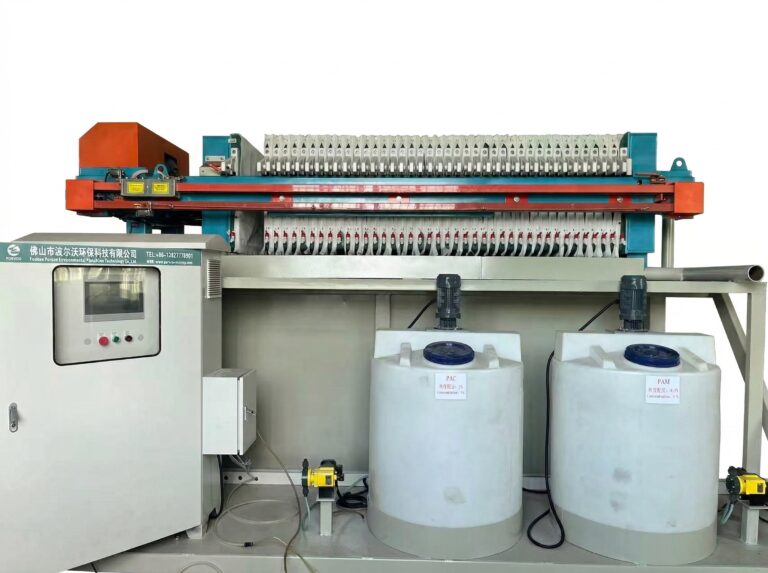
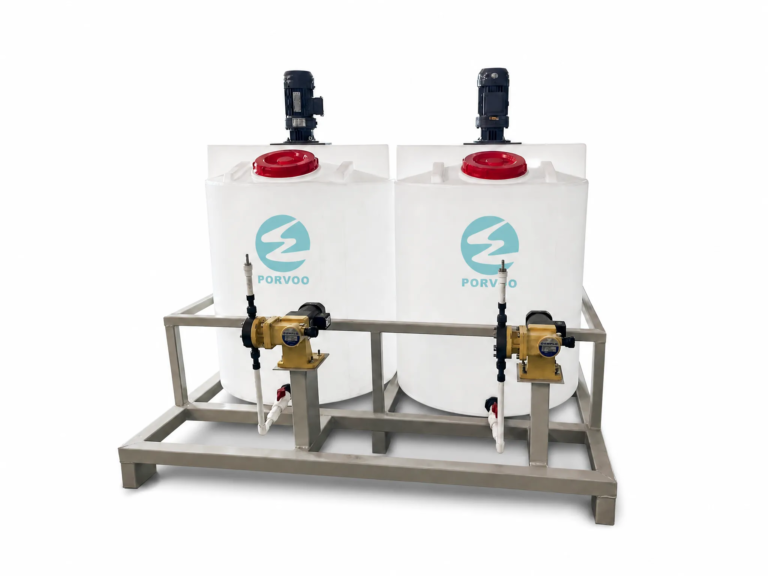
The clarifying area load range of 0.08–0.25 m³/m²·h for lamella separators is a design benchmark, not a regulatory limit. It reflects the range within which stable sedimentation is achievable under typical wastewater characteristics — undersizing the lamella clarifier beyond this range reduces detention time and allows fine particles to carry over into the clarified water stream, directly degrading reuse water quality. Flocculant flexibility — lamella systems can be operated with or without chemical addition — allows dosing to be adjusted as influent characteristics change, which matters in plants where process water chemistry varies by product line or raw material batch. The PAM/PAC Intelligent Chemical Dosing System supports proportional dosing adjustments that respond to influent load, which is more relevant than fixed-rate dosing for plants with variable feed quality.
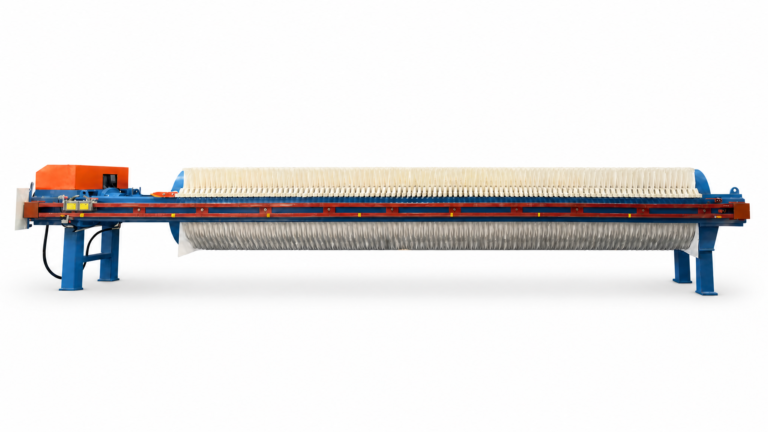
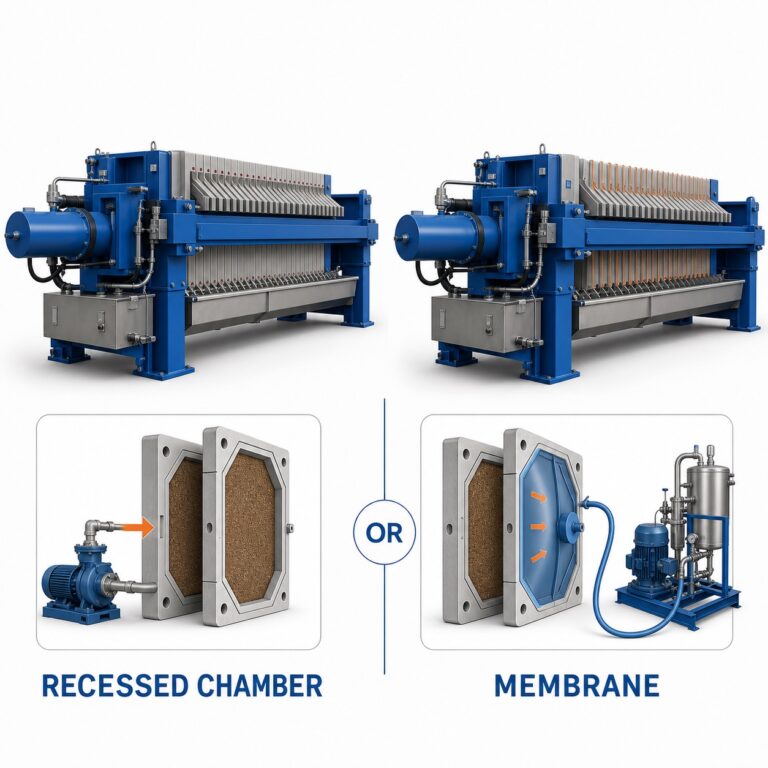
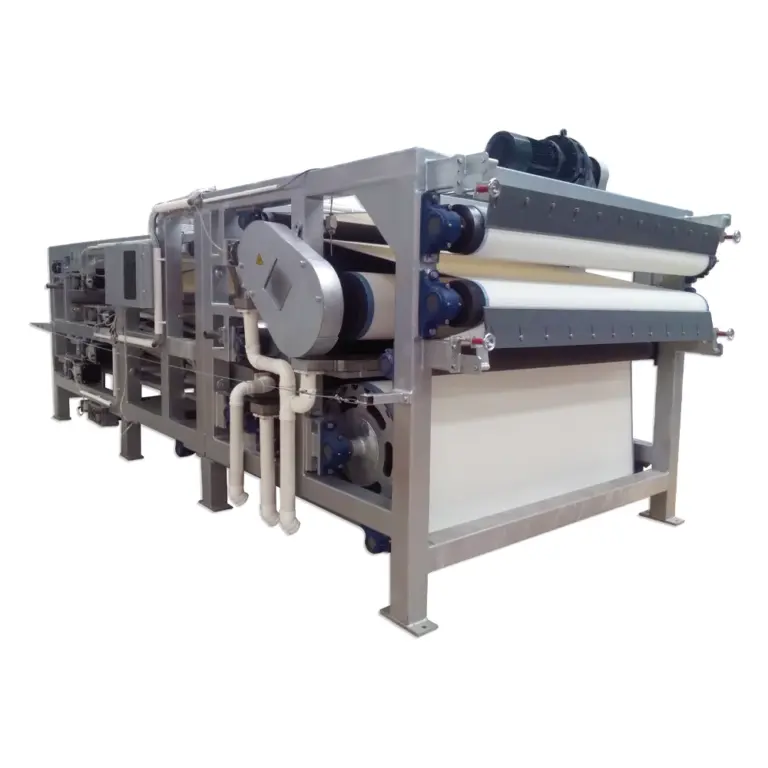
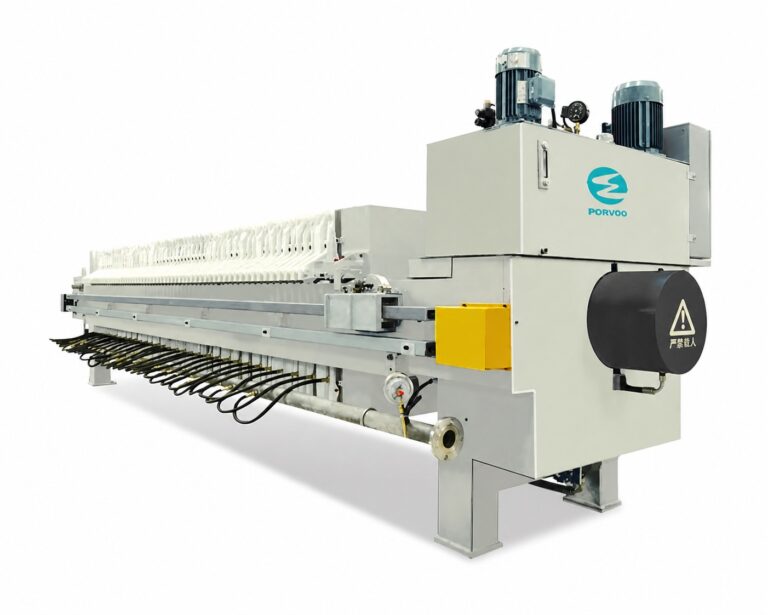
Pressing follows sedimentation in the treatment train and primarily manages cake dryness and filtrate quality rather than loop stability — but filter press performance still affects the reuse loop indirectly. A press that produces high-moisture cake returns more water to the sludge stream, which can back up if sludge storage is undersized, forcing sludge to recirculate and reloading the sedimentation stage. Press performance and sludge capacity should be matched at design rather than addressed as separate equipment decisions.
Use turbidity suspended solids and pH as operating checks
Turbidity, suspended solids, and pH are the three parameters most directly tied to whether clarified water is stable enough to return to production. They are monitoring parameters, not pass/fail thresholds with universal limits — acceptable values depend on what the return water is being used for.
For turbidity measurement, ISO 7027-1:2016 provides a recognized test method framework for nephelometric measurement in water. This is useful for standardizing how turbidity is measured across a plant’s monitoring points, but the standard does not set acceptable turbidity limits for industrial reuse applications. The relevant limits are process-specific: a cooling water circuit tolerates more turbidity than a blade-cooling circuit on a cutting saw, and a glaze wash application may tolerate even less. Plants that define turbidity monitoring without first specifying the return application end up with data that does not inform a usable decision.
Suspended solids monitoring at the reuse tank outlet — before water reaches the machine — catches carry-over that turbidity measurement alone may miss if particle size distribution shifts. Fine clay particles that have been partially flocculated can pass through a turbidity check but still accumulate in nozzles over time. A practical operating check is to measure turbidity at the sedimentation overflow and suspended solids at the machine inlet on a consistent schedule, and to treat a widening gap between the two as an early indicator of floc degradation or sedimentation underperformance rather than waiting for nozzle fouling to surface the problem.
pH monitoring is most critical for processes where surface finish or abrasive chemistry is sensitive to water acidity or alkalinity. An unstable pH in the return loop typically reflects either an influent change — different clay chemistry or a new process waste stream — or a breakdown in chemical dosing consistency. Because pH shift is often a leading indicator of loop instability before visible solids problems develop, it should be tracked alongside turbidity rather than separately. The EPA’s Guidelines for Water Reuse provides useful framing for how monitoring parameter combinations support reuse decision-making in industrial contexts, even where the specific limits differ from any plant’s operational targets.
Plan sludge storage and cake handling outside the reuse loop
Sludge and cake handling decisions affect reuse loop stability in ways that are not obvious until the system runs at full production load. If sludge accumulates in the sedimentation vessel faster than it is extracted, the underflow concentration increases, sedimentation performance degrades, and the clarified water quality at the overflow deteriorates. The cake handling method is therefore not just a disposal logistics question — it determines whether the reuse loop remains stable under sustained operation.
| Method | Dryness Characteristic | Handling Improvement |
|---|---|---|
| Conveyor screw | Produces drier solids than eccentric screw pump | Reduces leakage and odour risks during handling |
| Eccentric screw pump | Less dry solids | May increase handling issues such as leakage or odour |
| Air blown manifold piping | Air dries filter cakes further | Increases cake dryness before disposal |
Cake dryness has a direct impact on downstream handling burden. Conveyor screw discharge produces drier solids than eccentric screw pump discharge, which reduces the risk of leakage and odour during bagging, container filling, or interim storage. Air-blown manifold drying as an additional step can increase dryness further before disposal, which matters where cake is transported to off-site disposal and weight or moisture content affects disposal cost or logistics. These are available options, not required process steps — the relevant question at design is whether the planned disposal route has a moisture tolerance that the chosen dewatering method can reliably meet.
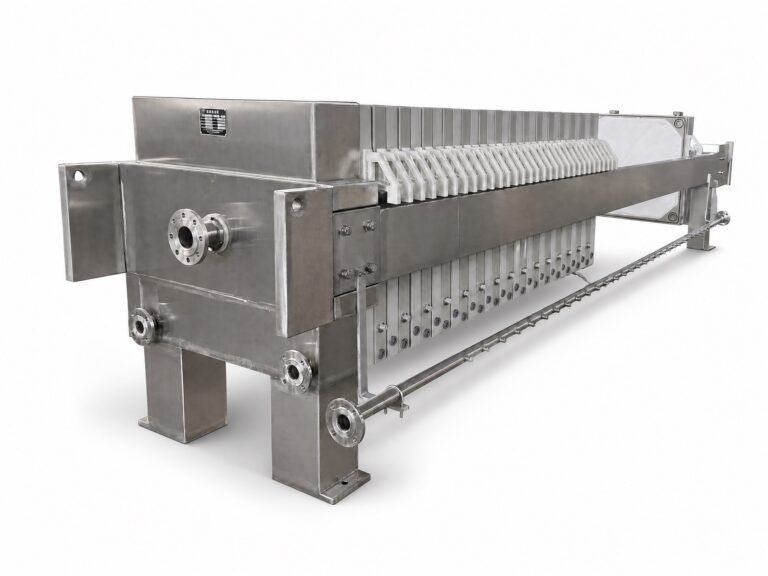
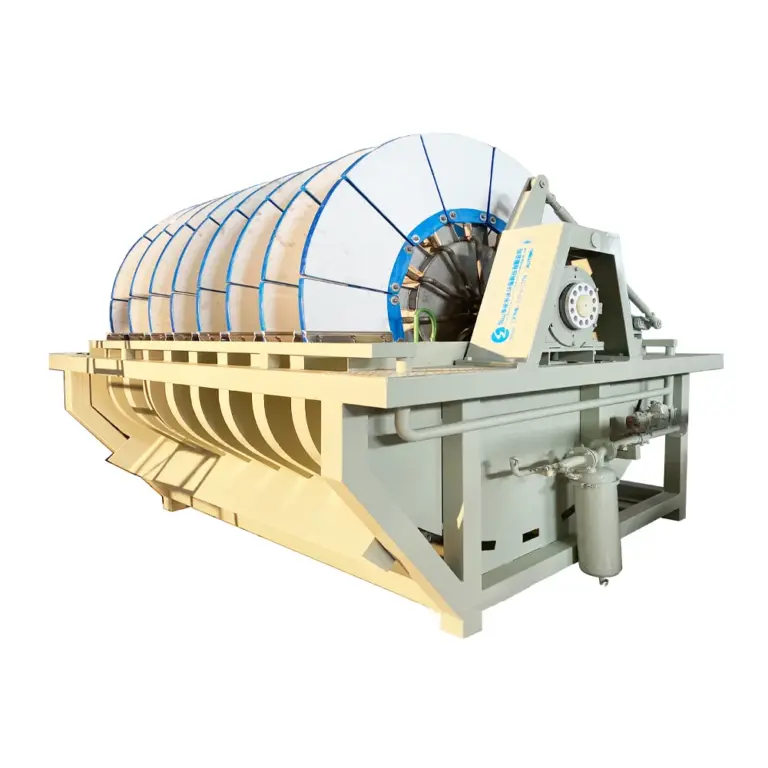
Big bags, drainage containers, and vacuum belt filters each carry different space and maintenance requirements for sludge removal from the sedimentation vessel. The selection should be made in the context of shift pattern, operator availability, and storage space adjacent to the sedimentation equipment — not only on dewatering performance. A plant running two shifts that uses big bag disposal but has no room for bag staging near the sedimentation unit will interrupt sludge extraction during production, which reloads the sedimentation stage and degrades clarified water quality in the same way as equipment underperformance. The Membrane Filter Press supports the pressing stage of this chain and is worth specifying alongside sludge extraction method so that both steps are matched to the same cycle time and sludge volume target.
Avoid sending unstable filtrate back to sensitive processes
The most common loop contamination failure in ceramic and stone water recycling is not a sudden system fault — it is gradual solids accumulation in return pipework and machine nozzles that builds over weeks until cutting or polishing performance drops and maintenance is called in to clear blockages.
| Risk Condition | Consequence | What to Clarify |
|---|---|---|
| Solids carry-over in recycled water | Deposits in pipes and nozzles, clogging equipment and disrupting cutting | Adequate solids removal level and monitoring before water returns to production |
| Mixed clay types in wastewater | Incompatible water quality for reuse; unstable loop | Whether source separation is possible, or if process redesign is needed when clay mixing cannot be avoided |
Solids carry-over from inadequate sedimentation or a degraded dosing regime is the most frequent cause. The practical check before returning clarified water to any cutting or polishing application is to verify that solids removal is consistently meeting the quality target for that application, not just at commissioning but through the first weeks of production at full load. Commissioning often runs at reduced throughput with a stable influent; the carry-over problem typically surfaces when production ramps up and influent variability increases.
Mixed clay types create a different class of problem. If a facility processes ceramic bodies from different clay sources, the wastewater streams may carry particle size distributions, mineralogy, and surface chemistry that behave differently under the same flocculant regime. Combining these streams into a single reuse loop assumes that a common dosing setting can stabilize water quality across all influent conditions — an assumption that frequently fails in practice when the clay mix shifts. Flocculant adjustment can help, but where clay incompatibility is structural to the process, source separation or partial process redesign is typically the more durable solution. Identifying whether clay mixing is a fixed condition or an occasional event should be part of the influent characterization before system design is finalized. See also the related discussion in Industrial Wastewater Treatment Equipment: Which Modules Actually Change Water Reuse Stability in Ceramic and Stone Plants for how module selection interacts with influent variability at the loop level.
Decide when reuse targets require process redesign
Some loop instability problems can be resolved by adjusting dosing, improving sludge extraction timing, or adding a polishing step. Others cannot be resolved without changing the treatment sequence or separating streams that were combined at the design stage. Distinguishing between these two categories before procurement prevents the more expensive outcome — installing a system, commissioning it, and then discovering that the loop cannot meet the return-water quality target for the intended application.
| Situation | Option | Why It Matters |
|---|---|---|
| Uncertainty whether the treatment system will meet reuse water quality for specific production | Rent pilot plant for on-site testing | Validates water quality and system performance before full investment, reducing risk of improper design |
| Facility lacks an in-ground surge pit | Install above-ground holding tank | Handles flow fluctuations without compromising the reuse loop, adapting to site layout |
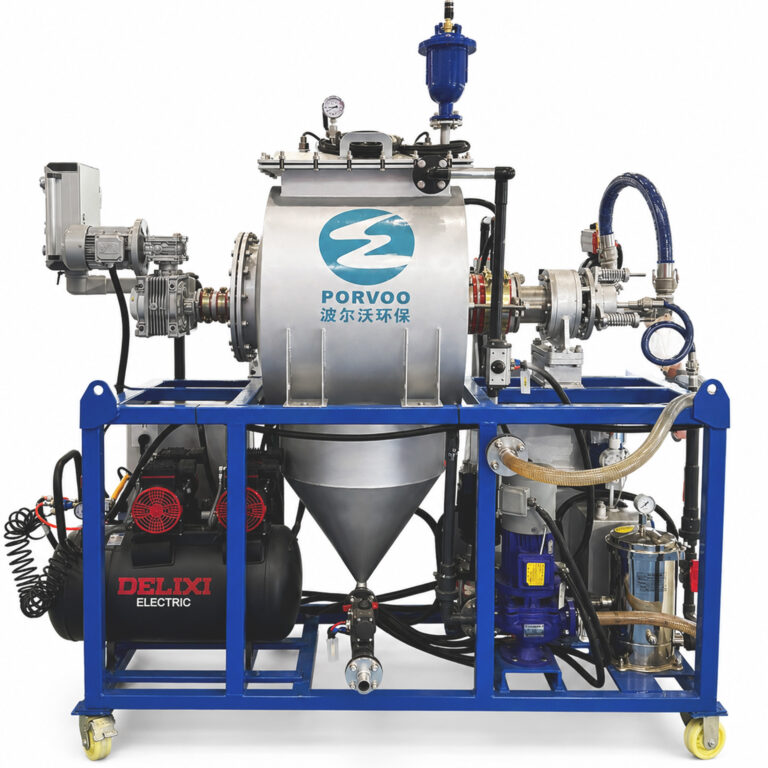
Where uncertainty about treatment performance is significant — particularly for facilities processing unusual clay types, high-variability influent, or applications with tight return-water specifications — piloting the treatment system on-site before full installation reduces investment risk. Pilot plants available for rental provide a way to validate whether the proposed sedimentation, dosing, and pressing configuration actually produces filtrate and clarified water at the quality needed for the specific reuse application. This is a risk-reduction option rather than a required step, but it is more defensible than relying on generic performance claims when the influent chemistry or application sensitivity creates meaningful uncertainty.
Site layout constraints introduce a different class of redesign trigger. Facilities without an in-ground surge pit — common in older buildings or where floor slab modification is not feasible — lose the flow buffering that prevents peak production flows from overloading the sedimentation stage. Adding an above-ground holding tank addresses this, but it introduces height constraints that affect gravity-flow return paths and may require a pump where gravity return was planned. The implication is not that above-ground tanks are inferior — they are a legitimate adaptation — but that the decision to use one should be made before return routing is designed, not after the layout is fixed. Flow buffering is necessary regardless of tank configuration; the question is only where it sits in the layout and what that position does to the return path design.
Before fixing the layout and issuing an RFQ, the most important clarification is not which equipment to specify — it is which production process each water stream actually returns to, and what quality that process requires at the machine inlet. The ceramic and stone wastewater treatment decisions that create the most expensive retrofits are the ones made at the loop level before those questions were answered: combined clay streams that cannot be stabilized with a single dosing regime, return paths that were never verified for the pressure or flow continuity that the machine requires, and sedimentation steps that were skipped to reduce capital cost without accounting for what happens when influent quality shifts.
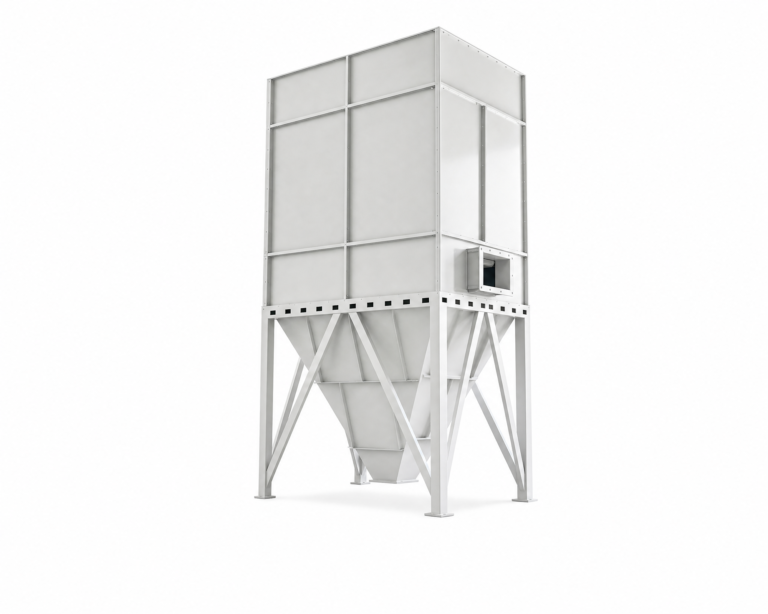
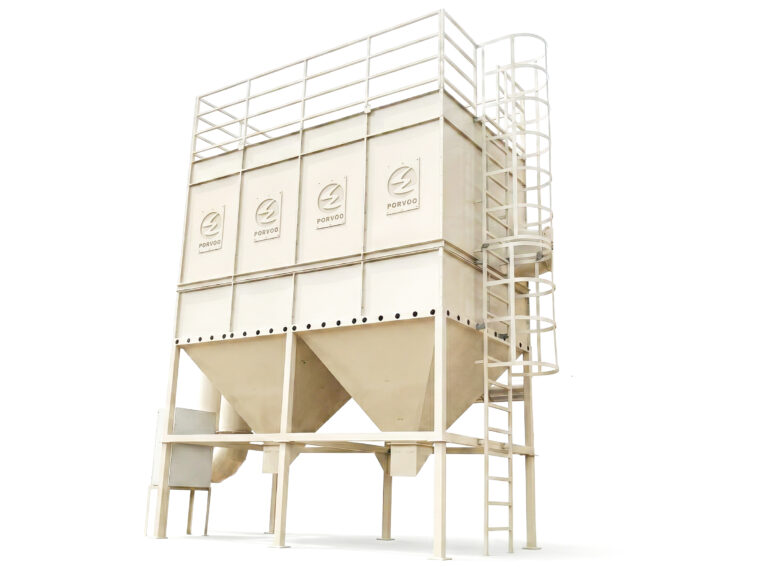
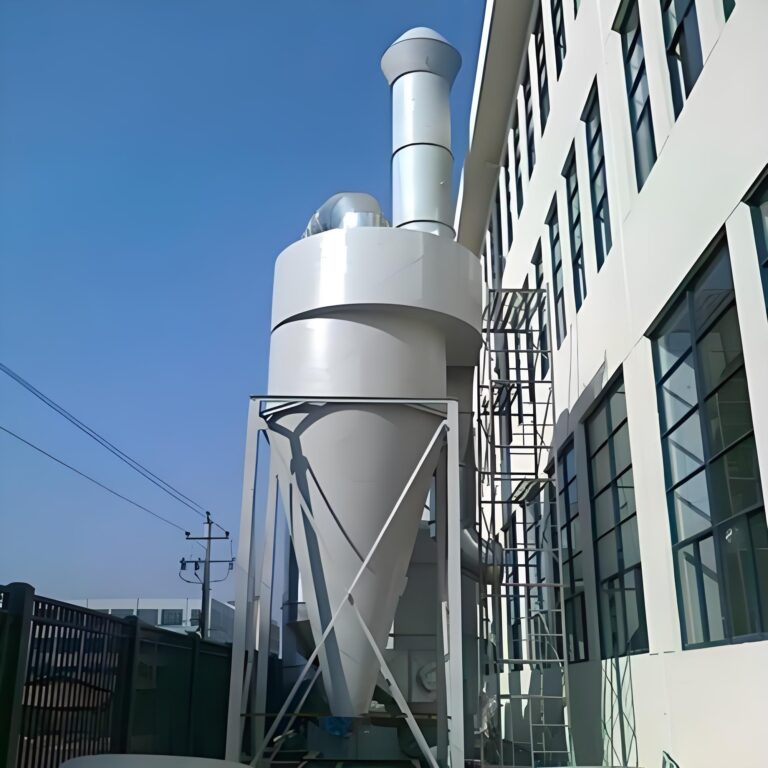
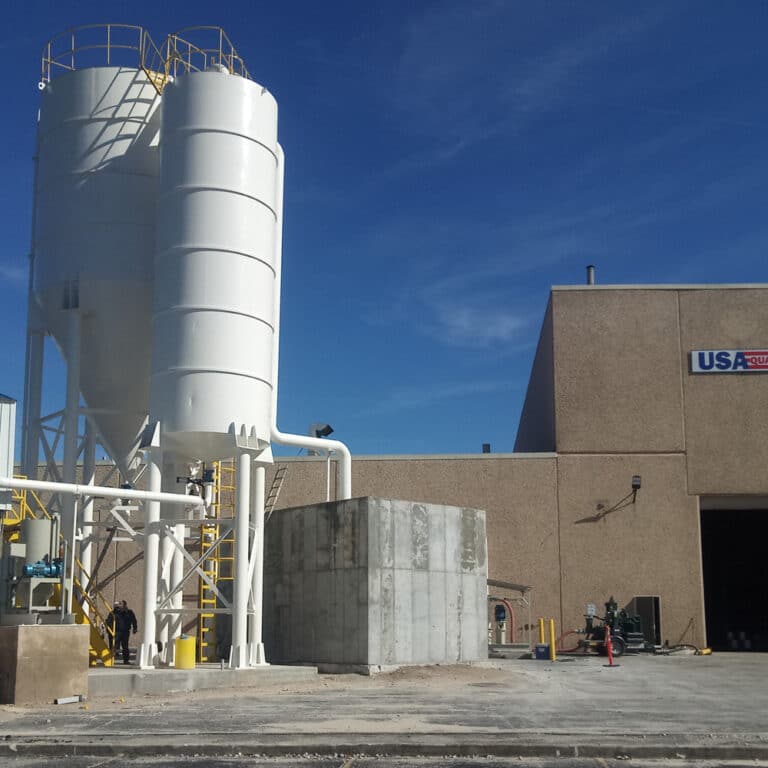
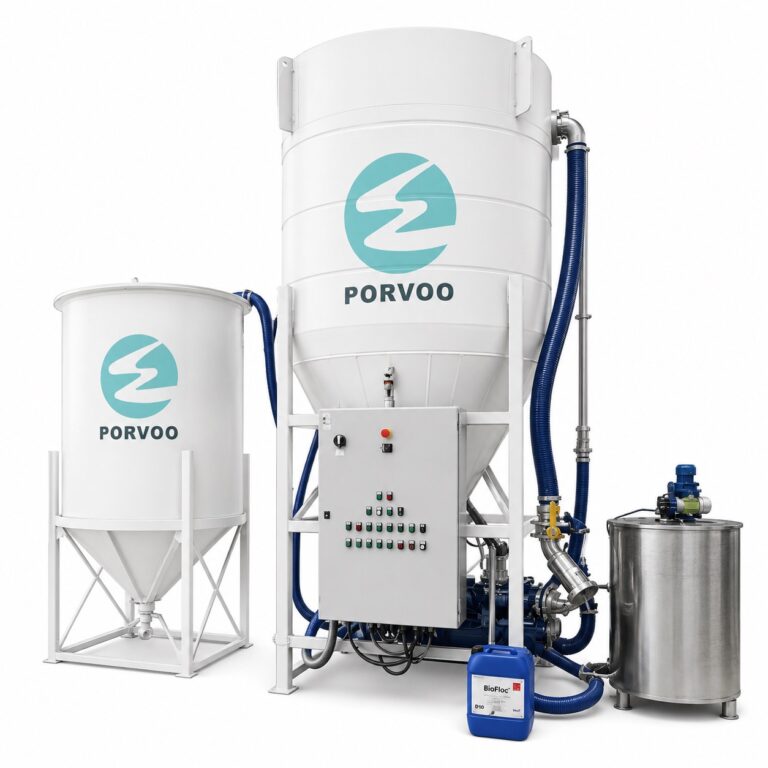
The practical pre-procurement check is to define the reuse applications, characterize the influent by clay type and production schedule, confirm whether the site can buffer peak flows, and verify that the proposed return path — gravity or pumped — matches both the machine pressure requirement and the available tank volume. A vertical sedimentation tower that suits one plant’s throughput and influent profile may be oversized, undersized, or missing the dosing flexibility that another plant’s clay mix requires. Those distinctions are worth resolving in the planning stage, where the cost is a conversation rather than a system change.
Frequently Asked Questions
Q: Our plant processes only one clay type with consistent influent — do we still need a sedimentation stage, or can we feed directly to the filter press?
A: Skipping sedimentation is a defensible option only if your flow is at or below 10 m³/h and your influent stays genuinely consistent. Beyond that threshold, or if raw material batches vary even occasionally, sedimentation with adjustable dosing provides the only correction mechanism available when particle size distribution shifts. A plant that removes sedimentation to cut upfront cost and then changes its material mix faces a retrofit that typically costs more than the original saving — because by then the return piping, tank sizing, and dosing provision are all fixed around a treatment train that no longer fits the influent.
Q: After commissioning, how do we know whether loop instability is a dosing problem or a sedimentation sizing problem?
A: Measure turbidity at the sedimentation overflow and suspended solids at the machine inlet on the same schedule, and treat a widening gap between the two readings as the diagnostic signal. If turbidity at the overflow is within range but solids at the machine inlet are climbing, the sedimentation stage is performing adequately and the problem is downstream — carry-over through the return path, inadequate holding volume, or a filtrate quality issue from the press. If turbidity at the overflow is already elevated, the problem is in the sedimentation or dosing stage itself. These two checks together identify which part of the loop to address without waiting for nozzle fouling to make the failure visible.
Q: Is a rented pilot plant worth the cost and delay for a facility that already has reasonably well-characterized influent?
A: Only if the reuse application has tight return-water specifications or the clay chemistry is unusual enough that generic performance data cannot be trusted. For a facility with a well-documented influent, a single clay type, and a return application that tolerates moderate suspended solids — such as a general wash station — the risk that the proposed treatment train underperforms is low enough that piloting adds more time than it removes risk. The case for piloting strengthens when the return application is a cutting or polishing line with narrow quality tolerance, or when the influent mixes clay types whose flocculation behavior under a common dosing regime has not been tested.
Q: We have no in-ground pit and are planning an above-ground holding tank — does that change which return path we should use?
A: Yes, and it should be resolved before return routing is designed rather than after. An above-ground tank introduces height constraints that can eliminate gravity return as a viable option, requiring a pump where one was not originally planned. That pump needs to be sized for the pressure demanded by the highest-pressure machine on the circuit — an undersized pump is a commissioning problem that only surfaces at full production load. The holding tank itself must still be sized to buffer at least one full shift’s demand; the above-ground configuration does not change that requirement, it only changes where the tank sits in the layout and what that position does to the return path hydraulics.
Q: If mixed clay streams are causing loop instability, is flocculant adjustment enough to stabilize the system or does the loop need to be redesigned?
A: Flocculant adjustment can compensate for moderate influent variability, but it cannot reliably stabilize a loop where clay types with fundamentally different particle chemistry are combined into a single stream. When the clay mix shifts, the dosing regime optimized for one composition will under- or over-treat the other, and the resulting carry-over reaches the machine before any monitoring response catches it. Where clay mixing is a fixed condition of the process rather than an occasional event, source separation or partial process redesign is the more durable solution — and identifying which situation applies should be part of influent characterization before system design is finalized, not after instability has already appeared in production.