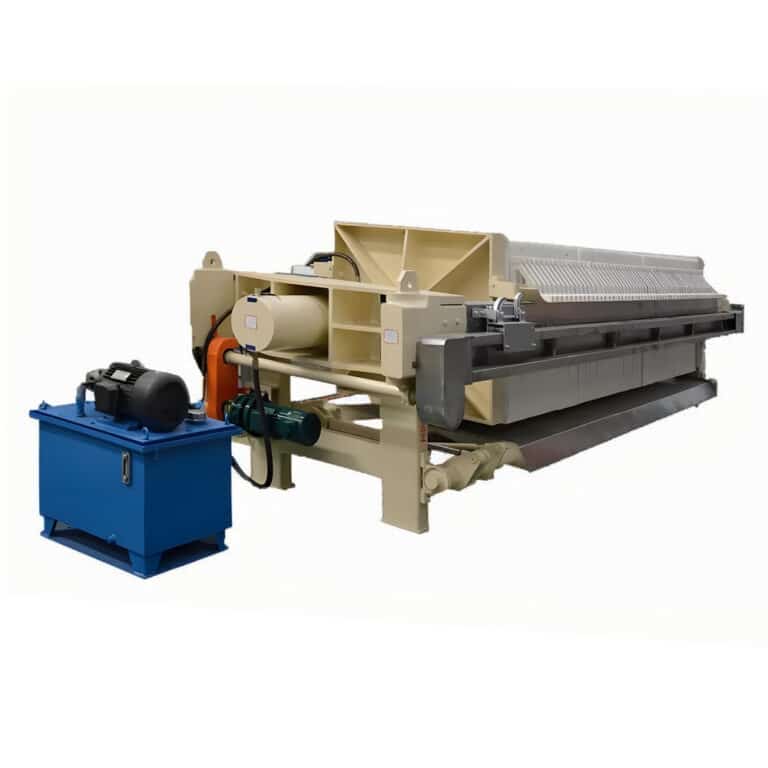
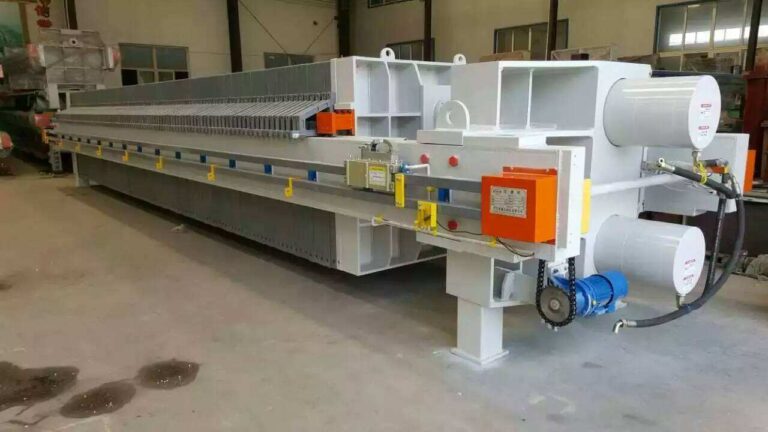
A filter press separates a pumpable sludge or process slurry into filtrate and a filter cake. The right configuration depends on the material, the required cake condition, the filtrate objective, the available operating time and the level of handling automation needed at the site.
Start with the plate technology: choose a recessed chamber press for conventional pressure filtration, or evaluate a membrane press when a secondary squeeze stage may add process value. Then specify the appropriate controls and material-handling functions.
Explore recessed chamber filter presses Explore membrane filter presses
What Is a Filter Press?
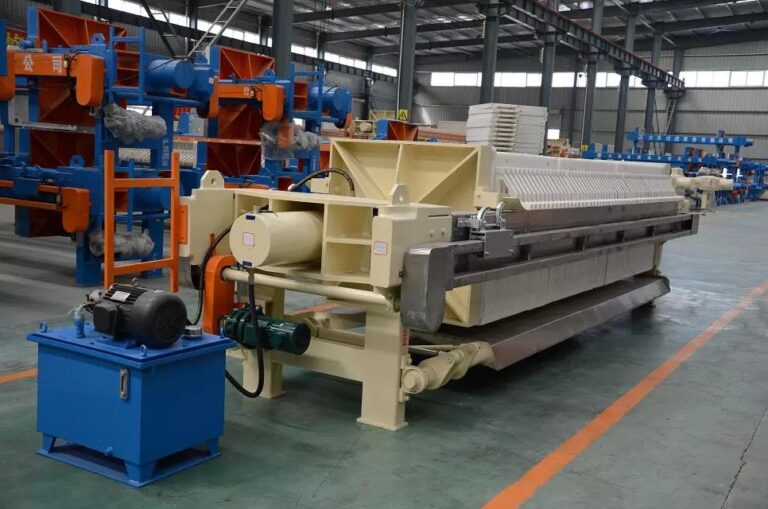
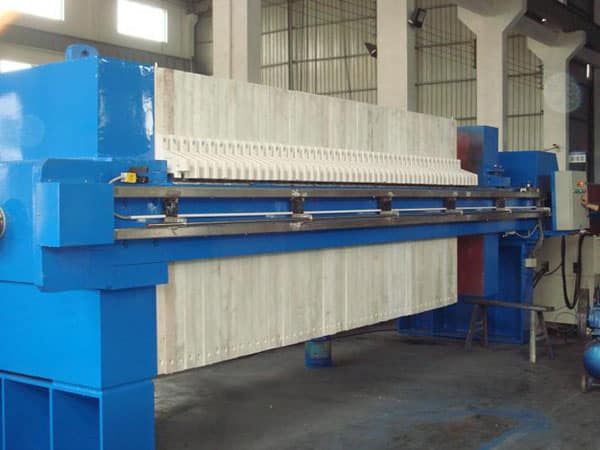
An industrial filter press is a batch pressure-filtration system. A feed pump delivers conditioned sludge or slurry into a closed pack of cloth-covered filter plates. Liquid passes through the cloth and plate drainage paths as filtrate, while retained solids accumulate in the chambers as filter cake. When the filtration endpoint is reached, the feed stops, the press is depressurized and opened, and the cakes are discharged.
The press is one part of a wider process. Feed storage, conditioning, pumping, filtrate routing and cake handling all affect how the installation performs. A reliable selection therefore begins with the slurry and operating objective rather than a nominal flow rate alone.
How a Filter Press Works
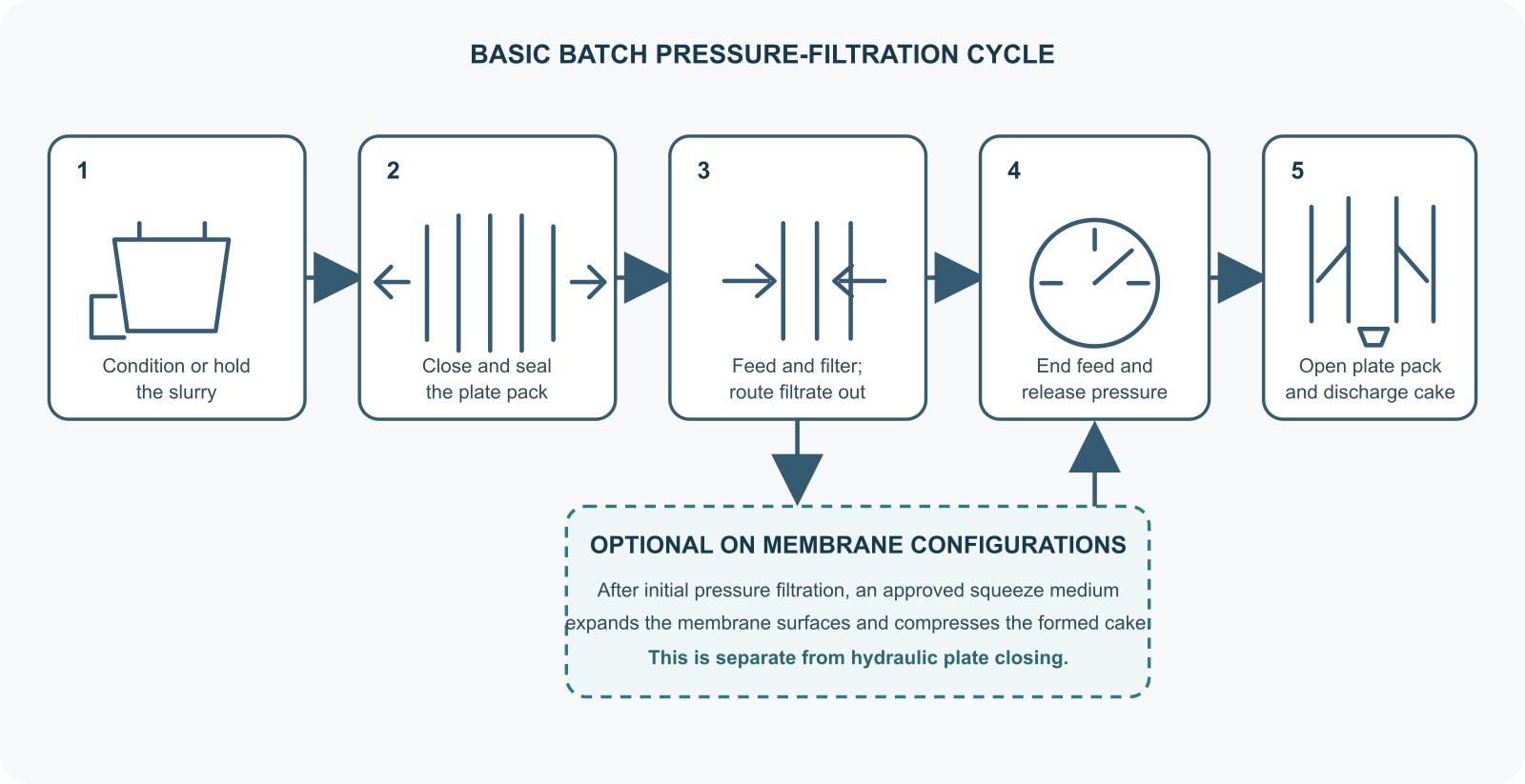
1. Prepare and feed the slurry
The feed is held or conditioned as required, then delivered by the selected feed pump. Feed solids, particle behavior, viscosity and chemical treatment influence chamber filling and cake formation.
2. Close and seal the plate pack
The closure system brings the plates together and maintains the sealing force needed to resist filtration pressure. Hydraulic plate closing holds the pack shut; it does not squeeze water from the cake.
3. Filter under feed-pump pressure
Pump pressure drives liquid through the filter cloth while solids build inside the chambers. Filtrate is collected through open outlets or a closed manifold, depending on the selected design.
4. Apply an additional squeeze only when specified
On a membrane filter press, a controlled squeeze medium expands flexible membrane surfaces after the initial filtration stage and compresses the formed cake. A recessed chamber press has no membrane-inflation step.
5. Open the press and discharge the cake
After feed and any optional process steps are isolated and pressure is safely released, the plate pack opens. Cakes fall or are assisted from the cloths, and the press is prepared for the next batch.
Choose the Right Filter Press Configuration
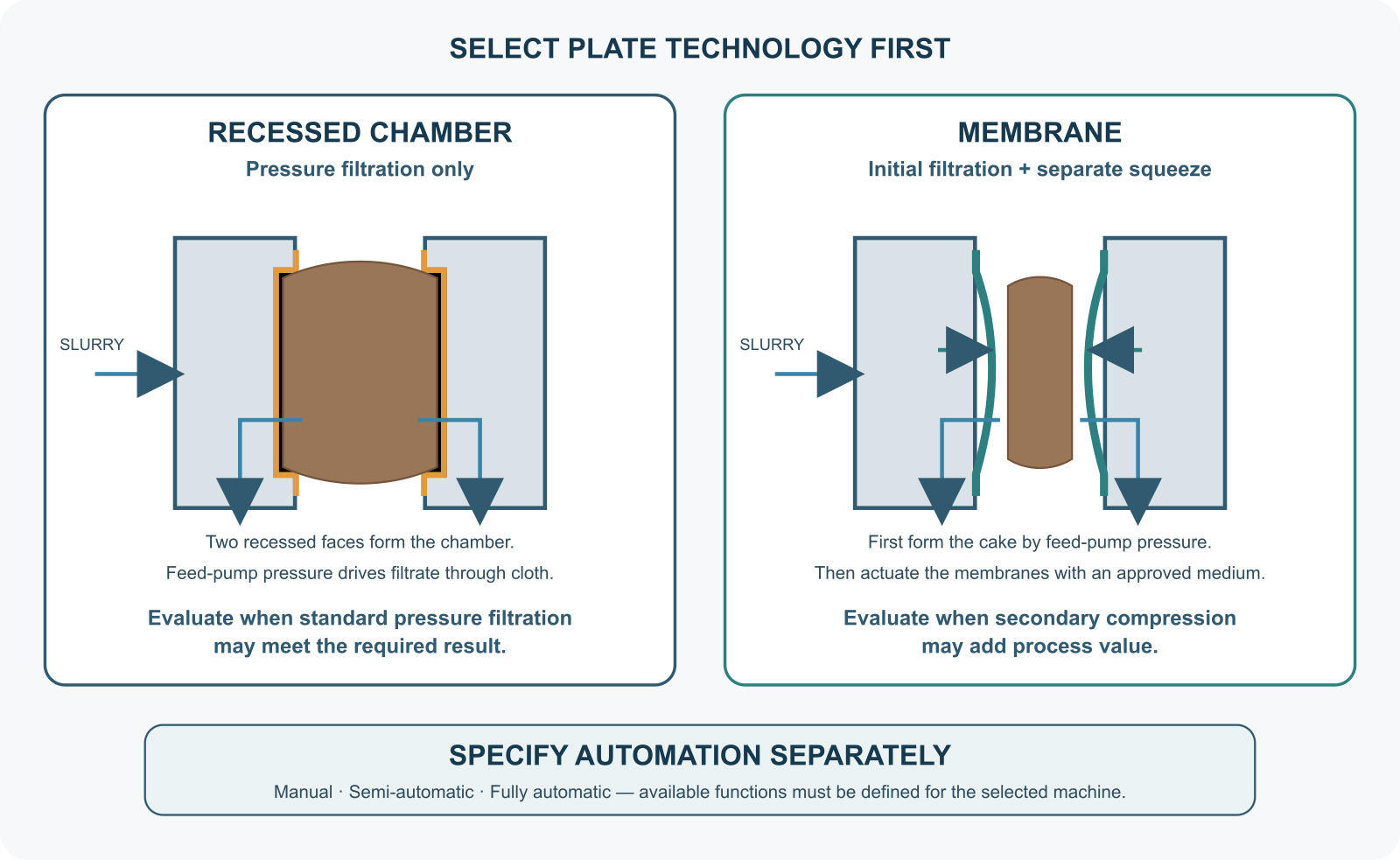
Фильтр-пресс со встроенной камерой
Two matching recessed plate faces form each filtration chamber. The feed pump provides the pressure for liquid-solid separation. This configuration is the more direct choice when conventional pressure filtration can meet the required cake condition, batch duration and filtrate objective.
See how a recessed chamber filter press is evaluated.
Membrane filter press
Initial cake formation still occurs by feed-pump pressure. After that stage, flexible membrane surfaces apply a separate, controlled squeeze to the formed cake. This configuration is worth evaluating when additional cake consolidation, liquid recovery, washing performance or cycle control could justify the added utilities, controls and maintenance.
Recessed Chamber vs. Membrane Filter Press
| Selection point | Recessed chamber | Мембрана |
|---|---|---|
| Primary mechanism | Pressure filtration driven by the feed pump | Initial feed-pump pressure filtration followed by a membrane squeeze |
| Secondary squeeze | Not included | Included when the membranes are actuated by the approved squeeze system |
| Typical selection objective | Meet the cake and filtrate requirement with simpler plate and utility arrangements | Test whether additional cake compression creates enough operating value to justify the added stage |
| Slurry and cake behavior | Best judged from cake-forming behavior under pressure filtration | Best judged after confirming that the formed cake responds usefully to secondary compression |
| Cycle implications | Cycle depends on filling, filtration, optional washing or air blow, opening and discharge | Adds squeeze, pressure-release and control steps; total cycle effect is application-dependent |
| Utilities | Feed pumping, closure power and configured auxiliaries | The same base needs plus an engineered squeeze-medium supply and controls |
| Техническое обслуживание | Cloths, sealing surfaces, plates, hydraulics, pump and discharge equipment | The same base items plus membranes and squeeze-system components |
| Relative investment | Usually the simpler starting configuration | Usually higher because of membrane plates, utilities and controls; value must be process-tested |
No plate technology guarantees a universal cake moisture, throughput or cycle time. Those results depend on the feed and on how the complete process is configured and operated.
Варианты автоматизации
“Fully automatic” describes how press functions are controlled and handled; it is not a third filtration mechanism. Either a chamber or membrane press may be configured with different levels of automation. The required level should be defined function by function instead of relying on a single label.
| Уровень | Operating concept | Points to define |
|---|---|---|
| Руководство | Operators perform plate movement, cake-release and cleaning tasks as specified. | Access, labor, guarding, safe isolation and batch frequency |
| Полуавтоматический | Selected functions are powered or sequenced while operators retain defined handling steps. | Which steps are automatic, which require confirmation and how faults are handled |
| Полностью автоматический | A defined sequence operates with supervisory intervention rather than routine manual handling. | Feed and valve control, plate shifting, cake-release assistance, cloth washing, discharge handling, instrumentation, interlocks and PLC/HMI scope |
Functions that may need project-specific definition include hydraulic closure, automatic plate shifting, cake-release assistance, filter-cloth washing, drip management, conveyors, pumps, valves, instruments, guards, interlocks and PLC/HMI integration. Availability and final scope must be confirmed for the selected machine.
Main Components and Available Options
- Frame and closure system: support the plate pack, align the moving parts and maintain the sealing force during filtration.
- Filter plate pack: forms the chambers and drainage paths. Plate construction must be identified from verified plate data, not from a whole-machine photograph.
- Filter cloth: retains solids while allowing filtrate to pass. Material, weave, permeability and attachment method are selected for the slurry and cleaning method.
- Feed and filtrate connections: distribute slurry to the chambers and route filtrate to the required collection point.
- Plate-handling equipment: may move plates and support cake discharge after the pack is safely opened.
- Safety and control devices: monitor the process and restrict access to hazardous movement or pressure conditions.
Plate construction, membrane details, filtrate arrangement and auxiliary options belong in the technical proposal for the selected recessed chamber или membrane configuration.
How We Select and Size a Filter Press
A responsible recommendation requires a process-data package. Where the slurry is variable or the filtration behavior is unknown, sample testing may be needed before plate area, chamber volume, pump duty and cycle assumptions are finalized.
Slurry data
- Source of the sludge or process slurry and upstream treatment steps
- Average and peak slurry volume, solids concentration and density where known
- Particle-size distribution, settling behavior, abrasiveness and cake-forming behavior
- pH, temperature and chemical composition relevant to wetted-material compatibility
- Current conditioning chemicals and dosing practice, if any
Required outcome
- Target cake handling condition and the reason for that target
- Filtrate clarity, recovery, discharge or reuse objective
- Any cake-washing, air-blow or downstream drying requirement
- Current result and the improvement expected from a new press
Site and operating conditions
- Operating hours, batches per shift and acceptable supervision level
- Available electrical power, compressed air, service water and drainage
- Installation envelope, access, cake-drop clearance and maintenance space
- Required material handling, controls, interfaces and safety standards
Typical Process Contexts to Evaluate
Filter presses are commonly evaluated where a batch pressure-filtration step can convert a pumpable, solids-bearing stream into separated filtrate and a manageable cake. Relevant contexts may include:
- industrial wastewater sludge and precipitated solids;
- mineral-processing, stone-processing or aggregate slurries;
- metal-hydroxide and other inorganic process residuals; and
- product or by-product slurries where filtrate quality and cake recovery both matter.
Suitability is not established by the industry name alone. The material must form a permeable cake under the proposed conditions, and the selected cloth, pump, plate pack and cycle must be compatible with the process.
Complete Sludge Dewatering System Integration
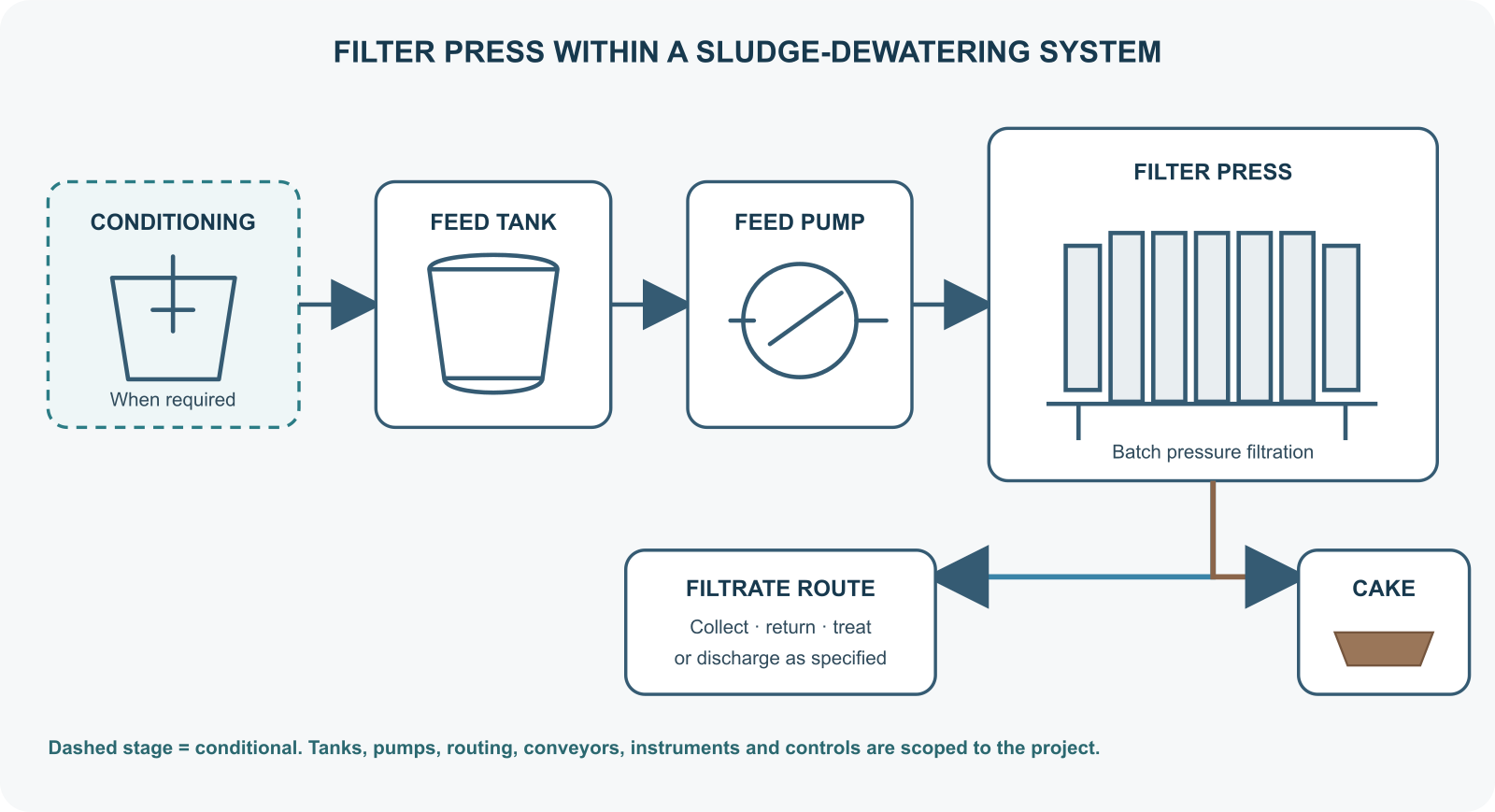
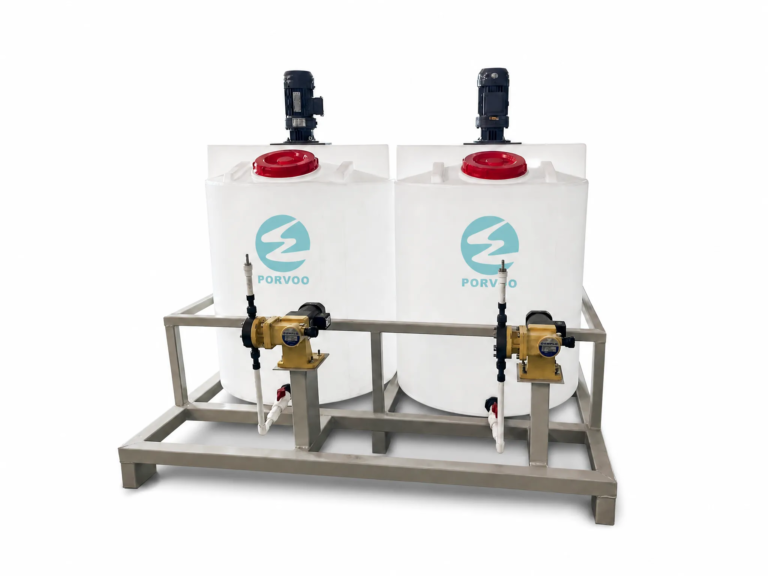
The filter press must interface with the upstream and downstream process. A project may include sludge conditioning or dosing, a feed or buffer tank, a matched feed pump, filtrate collection or return, and a cake conveyor or collection container. Instrumentation and controls should coordinate the batch press with any continuous upstream flow.
If the first decision is whether a filter press is the right technology family at all, return to the filtration equipment overview. This page focuses only on selection within the filter-press family.
Часто задаваемые вопросы
Is a plate-and-frame filter press the same as a recessed chamber filter press?
No. A traditional plate-and-frame press alternates plates with separate hollow frames that create the cake spaces. A recessed chamber press uses matching recessed plate faces to form each chamber without separate frames. “Plate-and-frame filter press” is often used loosely in the market, so the actual plate construction should always be confirmed.
What is the difference between chamber and membrane filter presses?
Both begin with pressure filtration driven by the slurry feed pump. A membrane press adds flexible membrane surfaces and a separate squeeze stage after the initial cake has formed. A recessed chamber press relies on feed-pump pressure and has no membrane-inflation stage.
Is a fully automatic filter press a separate type?
No. Fully automatic describes the control and handling scope. Chamber and membrane presses can each be configured with manual, semi-automatic or fully automatic functions, subject to the equipment design and project scope.
What determines filter cake moisture?
Important factors include feed solids, particle-size distribution, cake permeability, conditioning, feed pressure profile, cloth selection, chamber depth, endpoint control, optional washing or air blow, and whether a tested membrane squeeze is used. There is no universal cake-moisture result for all slurries.
Is a filter press continuous or batch-operated?
A plate filter press operates in batches: the plate pack closes, fills and filters, then opens for cake discharge. Tanks and controls can buffer a continuous upstream process, but the press cycle itself remains batch-based.
What information is required for sizing?
Provide the slurry source, volume, solids concentration, particle behavior, chemistry, temperature, operating schedule, target cake and filtrate conditions, available utilities, site space and desired automation. Sample testing may be required when filtration behavior is not established.
Request a Filter Press Recommendation
Send the process conditions listed above, together with any current test report, slurry sample information, plant layout and required delivery scope. PORVOO can then evaluate the appropriate plate technology, filtration area, chamber volume, feed system and automation package for technical discussion.