Результаты отбора проб в зоне дыхания, которые по-прежнему превышают предельно допустимую концентрацию — несмотря на то, что шлифовальная машина оснащена защитным кожухом, а пылесос с фильтром HEPA используется ежедневно, — являются одним из самых сбивающих с толку результатов, которые специалист по промышленной гигиене может предоставить производственной команде. Оборудование было подобрано, установлено и, как предполагалось, работало исправно. Однако в каталожных характеристиках не было учтено, как крупные частицы стружки отскакивают от твердых поверхностей и уносят вдыхаемый кремнезем обратно к лицу оператора, а также как небольшие пробелы в рабочих процедурах незаметно нарушают геометрию воздушных потоков, на основе которой была спроектирована система. Разрыв между указанными в документации инженерными мерами контроля и обоснованной программой контроля воздействия является реальным, измеримым и зачастую обнаруживается слишком поздно — после того, как рабочие места уже построены в полном масштабе, а устранение проблемы означает остановку производства. Приведенные ниже разделы призваны помочь специалистам по охране труда, инженерам-технологам и производственным командам оценить, что их текущая или планируемая конфигурация действительно позволяет проверить, и где непроверенные допущения могут обернуться проблемами.
Используйте ссылки на «Silica» для построения иерархии управления
Вдыхаемый кристаллический кремнезем не относится к категории «обычной» пыли, с которой справляется общая вентиляция. Действующий стандарт OSHA устанавливает предельно допустимую концентрацию (PEL) на уровне 50 мкг/м³ в виде средневзвешенного показателя за 8 часов — этот уровень был снижен по сравнению с прежним пределом в 250 мкг/м³, который, в свою очередь, был установлен на основании накопленных за десятилетия данных, связывающих вдыхание кремнезема с силикозом, раком легких и заболеваниями почек. Превышение допустимого предела воздействия (PEL) — это не просто незначительная формальность; оно влечет за собой обязательства по медицинскому наблюдению, требования к составлению письменного плана контроля воздействия и потенциальные меры принудительного исполнения. Практическое значение для рабочих мест, связанных с измельчением, заключается в том, что PEL является обязательным к соблюдению пределом, а не расчетным показателем, достижение которого оборудованием локального улавливания можно считать обеспеченным без проверки.
Иерархия мер контроля в данном случае применяется особым образом. Замена или устранение материалов, содержащих кремнезем, редко представляется возможной в условиях литейного производства, обработки камня или тяжелой промышленности. Эта реальность выдвигает инженерные меры контроля на первый план в иерархии мер как первую практическую линию защиты. Таблица 1 стандарта OSHA конкретизирует это в отношении ручной шлифовальной работы: стандарт определяет вид работ и указывает, что для их выполнения требуются либо методы с использованием воды/смачивания, либо пылесос с фильтром HEPA и автоматическим реверсивным потоком. Это минимальное требование, а не факультативное предпочтение. Любое отклонение от этих предписанных мер контроля требует предоставления объективных данных о воздействии, демонстрирующих, что альтернативная мера позволяет удерживать уровень воздействия на работников ниже порогового значения во время выполнения соответствующих работ.
| Требование OSHA | Ключевая деталь | Что это означает для шлифовальных станций |
|---|---|---|
| Предельно допустимая концентрация (PEL) | 50 мкг/м³ вдыхаемого кристаллического кремнезема в средневзвешенном значении за 8 часов | Устанавливает максимально допустимый уровень воздействия; обусловливает необходимость принятия строгих мер по контролю за запыленностью в месте шлифования |
| Таблица 1 — Ручная шлифовка | Для выполнения этих задач требуются инженерные меры защиты: использование воды/увлажнения или пылесоса с фильтром HEPA и автоматической системой обратного потока | Требуется применение методов улавливания у источника или «мокрых» методов; использование только средств индивидуальной защиты не является приемлемым основным средством контроля |
Изменение предельно допустимой концентрации (PEL) также влияет на то, как реализуются решения по проектированию рабочих мест. Шлифовальная станция, спроектированная в соответствии со старым стандартом 250 мкг/м³ и никогда не подвергавшаяся повторной оценке, может выполнять те задачи, для которых она изначально была создана, но при этом подвергать работников воздействию концентраций, недопустимых по действующему стандарту. Это проблема модернизации, которая выявляется в ходе аудитов программ, а не при вводе оборудования в эксплуатацию — и её нельзя решить просто с помощью респиратора.
Удаляйте пыль у источника, прежде чем полагаться на средства индивидуальной защиты
Принцип действия системы улавливания у источника прост: удаление вдыхаемых частиц из воздуха в месте их образования или рядом с ним, до того как они достигнут зоны дыхания. При ручной шлифовке широко используется кожух, частично охватывающий шлифовальный круг, в сочетании с вакуумной системой, всасывающей воздух и пыль через этот кожух. Механизм работает за счет того, что вакуум создает зону пониженного давления внутри кожуха, притягивая частицы, находящиеся в воздухе, к пути улавливания, а не наружу, в сторону оператора.
Однако этот принцип не гарантирует эффективности. Геометрия кожуха, расход воздуха в пылесосе, эффективность фильтра и специфика движения при шлифовании — все эти факторы взаимодействуют между собой. Кожух, который хорошо подходит для одного диаметра шлифовального круга, может оставлять значительные зазоры на другом. Вакуумная система, работающая с пониженным расходом воздуха из-за загрязнённого фильтра, теряет скорость улавливания именно в тот момент, когда интенсивность образования пыли может быть максимальной. Из этого следует, что оборудование для улавливания пыли у источника следует рассматривать как проектную концепцию, требующую проверки с учётом фактического уровня воздействия на работников, а не как средство обеспечения соответствия нормам, которое можно просто установить и забыть.
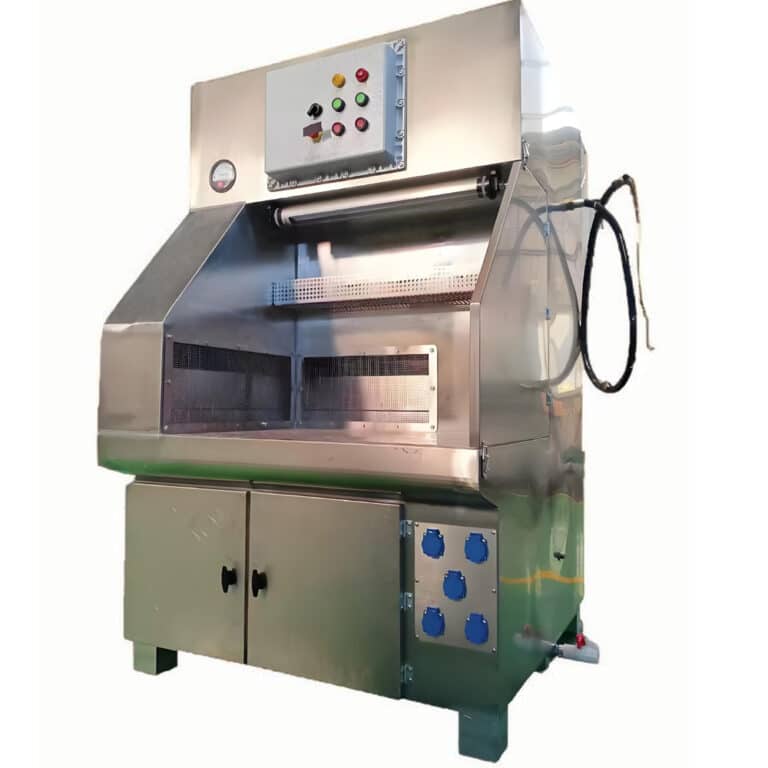
Для стационарных шлифовальных рабочих мест, шлифовальные столы встроить систему локального отвода в саму рабочую поверхность, обеспечивая отвод воздуха вниз через стол в сборную камеру. Такой подход позволяет поддерживать постоянную зону отвода независимо от того, как оператор располагает заготовку, что снижает зависимость от техники работы оператора — однако для поддержания таких характеристик по-прежнему требуется обеспечить достаточную скорость обдува по всей рабочей поверхности и проводить регулярное обслуживание фильтров. Рекомендации ACGIH по скорости обдува лица при шлифовальных операциях служат ориентиром для расчета размеров таких систем, и перед определением требований к воздушному потоку стоит ознакомиться с практическими последствиями этих рекомендаций для столов с нисходящим потоком воздуха.
По мере необходимости сочетайте влажные методы вентиляции с уборкой помещений
Системы улавливания на основе вентиляции и мокрые методы решают проблему образования пыли с разных сторон. Мокрые методы — подача воды, распыление или мокрое измельчение (если это допускает технологический процесс) — изначально снижают количество вдыхаемых частиц, попадающих в воздух. Вентиляция улавливает те частицы, которые всё же оказались в воздухе. Совместное использование обоих методов, где это возможно, снижает нагрузку на каждую из систем и обеспечивает запас прочности на случай выхода из строя любой из них.
Поддержание чистоты на рабочем месте является нормативным требованием, а не дополнительной рекомендацией. Стандарт OSHA для строительной отрасли требует, чтобы письменный план контроля воздействия включал описание методов поддержания чистоты, применяемых для ограничения воздействия на работников. Сухое подметание или сдувание осевшей кремнеземной пыли сжатым воздухом запрещены в рамках данной системы, поскольку они приводят к повторной взвешиванию в воздухе вдыхаемых частиц. В качестве обязательных альтернатив предусмотрены влажные методы или уборка пылесосом с HEPA-фильтром. Практическим следствием неформального подхода к поддержанию порядка является то, что осевшая пыль — которая может в значительной степени накапливаться в течение смены при шлифовальных работах — становится источником повторного взвешивания частиц, когда приходит следующий работник, проводится уборка или меняется направление воздушных потоков.
Пример, связанный с шлифованием отливок из песка в условиях литейного цеха, иллюстрирует взаимосвязь между проектированием вентиляции и динамикой отскока. Инженерное решение, реализованное на этом объекте, предусматривало установку энергопоглощающей подвесной завесы в задней части шлифовальной камеры. Завеса предотвращала отскок крупных частиц стружки от твердых стен — тем самым не позволяя им уносить вдыхаемый кремнезем обратно к оператору — при этом позволяя мелкой пыли направляться в вытяжные камеры, расположенные выше и ниже зоны удара. Урок, извлечённый из этого случая, заключается не в том, что завесы требуются повсеместно, а в том, что механизм отскока крупных частиц действительно существует и что при проектировании системы вентиляции необходимо учитывать, что происходит, когда в процессе шлифования наряду с мелкой вдыхаемой пылью образуются обломки размером с снаряд. Проектирование системы уборки должно следовать той же логике: геометрия камеры, обеспечивающая улавливание пыли, также определяет, где она скапливается и как её можно безопасно удалить.
Включите средства защиты органов дыхания в комплексную программу контроля воздействия вредных факторов
Респираторы не заменяют инженерно-технические меры защиты на рабочих местах, связанных с шлифованием, и их использование в качестве такой замены создает особую нормативную нагрузку, которая часто упускается из виду при разработке программ. Согласно строительному стандарту OSHA, работникам, использующим респираторы для защиты от воздействия кремнезема в течение 30 или более дней в году, должны предлагаться медицинские осмотры — включая тесты функции легких и рентгенографию грудной клетки — каждые три года. Данное требование обусловлено не наличием кремнезема, а продолжительностью использования респираторов. Таким образом, программа, в которой респираторная защита выступает в качестве основного средства контроля, влечет за собой постоянные обязательства по медицинскому наблюдению, расходы и требования к ведению документации, которых не возникло бы при использовании инженерных мер защиты, если бы они были эффективными.
Последовательность действий имеет важное значение с оперативной точки зрения. К респираторам предъявляются требования по подбору размера, герметичности, обучению, хранению, проверке и замене. Эти требования усугубляются, когда работники выполняют физически тяжелые задачи, работают в условиях повышенной температуры или когда степень прилегания респиратора к лицу у сотрудников различается. Респиратор, который правильно подобран, прошел проверку на плотность прилегания и носится надлежащим образом, обеспечивает ощутимую защиту; респиратор, который носится неправильно или нерегулярно, может обеспечивать гораздо меньшую защиту, чем показывают данные мониторинга воздействия. Использование респираторов в рамках иерархии средств защиты — в качестве дополнения к проверенным инженерным мерам контроля, а не в качестве основного средства защиты — позволяет обосновать программу, если впоследствии данные о воздействии потребуют объяснений.
Проверьте методы работы сотрудников, которые препятствуют фиксации данных
Рабочее место для шлифования может быть хорошо спроектировано и правильно смонтировано, но на практике все равно работать неэффективно из-за того, как на самом деле выполняется работа на этапе шлифования. В ходе оценок постоянно выявляются две типичные причины неэффективности, которые стоит учитывать при анализе любого рабочего места.
Во-первых, это нарушение положения. Столы с нисходящим потоком воздуха и вытяжные системы кабин создают направленный воздушный поток, который эффективно работает только в том случае, если оператор и обрабатываемый предмет находятся в пределах предусмотренной зоны улавливания. Работники, меняющие положение тела для улучшения обзора, размещения крупной заготовки или предотвращения усталости, могут сместить точку шлифования — и свою зону дыхания — за пределы эффективного радиуса улавливания, не осознавая последствий этого. Это не нарушение дисциплины; это пробел в обратной связи при проектировании. Планировку рабочего места следует пересмотреть с учетом диапазона фактических положений тела при шлифовании, прежде чем предполагать, что геометрия воздушного потока будет работать.
Второй фактор — отскок стружки. В ходе оценки NIOSH, посвященной шлифованию песчаных отливок, был выявлен конкретный механизм: крупные частицы шлифовальной стружки, отскакивающие от твердых стенок камеры, переносят вдыхаемую кремнеземную пыль обратно в зону дыхания оператора в зоне пониженного давления, создаваемой траекторией движения частиц. Инженерная мера контроля в данном случае — энергопоглощающая завеса — непосредственно устраняла механизм отскока, однако для выявления этого механизма необходимо было изучить взаимодействие воздушных потоков и динамики частиц во время реального шлифования, а не только при номинальной вытяжной мощности системы. Анализ производственных практик должен включать оценку того, создает ли геометрия шлифования траектории отскока, направленные в сторону оператора, и действительно ли давление всасывания вентиляционной системы обеспечивает отвод воздуха из правильного направления относительно места возникновения отскока.
Третьим, более практическим типом неисправности является загрязнение фильтров. Переносные пылесборники и системы с нисходящим потоком, работающие с частично загрязнёнными или повреждёнными фильтрами, постепенно теряют скорость улавливания. Если состояние фильтров не входит в протоколируемый перечень проверок в рамках технического обслуживания — с чёткими критериями замены — система может казаться исправной, хотя её эффективность при этом значительно снижена. Такое снижение эффективности незаметно без измерения расхода воздуха и, как правило, накапливается в промежутках между техническими обслуживаниями, а не проявляется в виде единичного сбоя.
Не следует утверждать, что наличие оборудования само по себе является доказательством соответствия требованиям
Одной из наиболее наглядных иллюстраций разрыва между установленными средствами контроля и подтвержденным соблюдением требований является оценка работы защитного кожуха Vacu-Guard в сочетании с пылесосом Dustcontrol 2700c — хорошо согласованной комбинации средств улавливания у источника — при ручной шлифовке поверхностей. Система обеспечила значительное снижение уровня воздействия на работников по сравнению с шлифованием без средств защиты. Однако средневзвешенное за 8 часов (TWA) воздействие кварца по-прежнему колебалось в диапазоне от 0,036 до 0,13 мг/м³, что в 1,4–5,2 раза превышает пороговое предельное значение ACGIH, равное 0,025 мг/м³.
| Контрольная мера | Уровень воздействия кварца (средневзвешенное значение за 8 часов, мг/м³) | Предельно допустимая концентрация по ACGIH (0,025 мг/м³) |
|---|---|---|
| Защитный кожух Vacu-Guard + пылесос Dustcontrol 2700c | 0.036 – 0.13 | 1.4 – 5.2 |
Этот результат не свидетельствует о неисправности оборудования. Он свидетельствует о том, что эффективность улавливания у источника представляет собой непрерывный диапазон, что даже максимальные значения в этом диапазоне могут превышать пороговые значения воздействия, и что один лишь выбор оборудования не может сократить разрыв между заявленной в каталоге эффективностью и уровнем воздействия в зоне дыхания, соответствующим нормативным требованиям. Отсюда вытекает конкретное следствие для закупочной деятельности: выбор системы с кожухом и вакуумным отводом на основе рекомендаций по инженерным средствам защиты обеспечивает соблюдение минимальных нормативных требований, но не гарантирует подтвержденного результата. Мониторинг личного облучения во время типичных операций по шлифованию — это механизм, который позволяет определить, в какой точке этого континуума находятся фактические показатели эффективности, а также установить, требуются ли дополнительные меры контроля, изменение методов работы или дополнительные средства респираторной защиты.
Это особенно важно в тех случаях, когда в процессе задействованы материалы с высоким содержанием кремнезема, предусмотрены длительные циклы помола или операторы работают в закрытых помещениях или в условиях слабого проветривания, где даже исправно функционирующая система улавливания пыли с трудом справляется с высокой пылевой нагрузкой. Технические характеристики оборудования должны способствовать мониторингу уровня воздействия, а не заменять его.
Опишите, что система может проверять
Разница между письменным планом контроля воздействия и проверенной программой контроля воздействия заключается в наличии подтверждающих данных. План является нормативным требованием — его наличие предписывается строительным стандартом OSHA, и он должен включать положения об инженерных средствах защиты, методах работы, поддержании порядка на рабочем месте и средствах защиты органов дыхания. Программа — это то, что предусмотрено планом, проверенное на соответствие тому, что фактически происходит на рабочем месте в производственных условиях.
Пример литейного цеха компании «Kennedy Valve» служит наглядной иллюстрацией важности систематической проверки перед переходом к полномасштабному внедрению. Перед строительством 15 полномасштабных производственных шлифовальных кабин была реализована программа испытаний прототипа. Конструкция была протестирована, оценена и признана эффективной для контроля уровня воздействия кремнезема при шлифовании песчаных отливок — в том числе деталей шириной до трёх футов — ещё до того, как были выделены капиталовложения на полномасштабное строительство. Результат: камеры, работающие с производительностью вытяжки до 3 000 кубических футов в минуту и подачей воздуха 1 500 кубических футов в минуту, стабильно поддерживали уровень воздействия кремнезема ниже предельно допустимой концентрации (PEL) по стандартам OSHA на всех 15 производственных установках.
| Аспект верификации | Подробности | Подтвержденный результат |
|---|---|---|
| Программа испытаний прототипа | Завершено до начала полномасштабного монтажа стенда | Эффективность проекта подтверждена до начала инвестирования |
| Работа производственных кабинок (15 кабинок) | Производительность вытяжки ≥ 3 000 куб. футов в минуту; расход приточного воздуха — 1 500 куб. футов в минуту | Уровень воздействия на работников при шлифовании стабильно остается ниже предельно допустимой концентрации (PEL), установленной OSHA |
При использовании данного примера в качестве ориентира для проектирования следует учитывать ряд важных ограничений. Производительность вытяжки в 3 000 кубических футов в минуту (CFM) является проектным значением, определяемым конкретными условиями для данных камер, геометрии заготовки и процесса шлифования. Это не является универсальным пороговым значением. Непосредственное использование этого значения расхода воздуха без учета условий шлифования, размера заготовки, содержания кремнезема и геометрии камеры было бы спекулятивным подходом к проектированию. Что этот пример действительно подтверждает, так это сам метод: испытание прототипа перед полномасштабными инвестициями — это разумная стратегия проверки, позволяющая получить обоснованные доказательства работоспособности, и её стоит учитывать во всех случаях, когда на предприятии создаются несколько идентичных рабочих мест или расширяется существующий проект.
В документации должны быть отражены те параметры, которые система действительно способна проверить: расход воздуха, при котором проводились испытания; условия, при которых собирались данные о воздействии; интервалы технического обслуживания фильтров, действовавшие во время отбора проб; а также спектр операций по измельчению, которые были охвачены испытаниями. Именно эта доказательная база превращает письменный план в программу, которую можно объяснить — и отстоять — во время проверки или после случая неблагоприятного воздействия.
A grinding workstation’s engineering controls are a starting condition, not a final answer. Even well-designed source capture requires validation against actual breathing-zone exposures, because catalog performance and real-world performance diverge under production conditions—and the divergence can leave workers above the exposure limit despite equipment being in use. The rebound behavior of large swarf particles, variable worker positioning, and filter loading are failure mechanisms that monitoring alone will not prevent unless workstation design and operating discipline address them first.
Before scaling a workstation design or accepting that an existing setup is compliant, the concrete questions worth asking are: what exposure data exists for the specific grinding tasks and materials involved, under what maintenance and operating conditions was that data collected, and what would change if production intensity, workpiece size, or worker positioning shifted outside those conditions. Those questions do not replace the written exposure control plan, but they determine whether the plan reflects a system that has been verified or one that has only been installed.
Часто задаваемые вопросы
Q: Our grinding operations use stationary bench or pedestal grinders, not handheld tools. Does the same engineering control approach apply?
A: Yes, the hierarchy remains the same—source capture is the first line of defense—but the implementation shifts from tool-mounted shrouds to a ventilated enclosure or booth designed to enclose the wheel and workpiece. Bench and pedestal grinders typically require a local exhaust hood that draws air from the grinding zone and a dust collection system matched to the airflow needed to maintain capture velocity at the opening. Because OSHA Table 1 is specific to handheld tasks, you will need personal exposure monitoring to demonstrate that worker exposures stay below the PEL.
Q: After installing a downdraft grinding table and HEPA vacuum, what immediate step should I take to confirm the system actually protects my workers?
A: Commission personal breathing-zone exposure monitoring under representative production conditions. A qualified industrial hygienist can place sampling pumps on operators during actual grinding tasks across a full shift to measure respirable crystalline silica concentrations. This data provides the objective evidence needed to decide whether the engineering controls are sufficient or whether additional measures—such as higher airflow, wet suppression, or supplemental respiratory protection—are required before the workstation can be considered compliant.
Q: Is there a workpiece size or dust-load threshold at which a standard downdraft table becomes insufficient for silica control?
A: No single published threshold exists, but performance generally becomes unreliable when a large workpiece blocks significant portions of the table surface, creating dead zones where dust is not captured. Similarly, continuous grinding of very high-silica-content materials such as engineered stone can overload the table’s capture capacity even at recommended face velocities. In these situations, exposure monitoring should guide the decision, and supplemental controls like wet grinding, booth enclosure, or additional local exhaust are typically needed.
Q: How do I choose between a downdraft grinding table and a portable dust collector with a shroud for my workstation?
A: Choose a downdraft table when the workpiece is small enough to be handled on a flat surface and the operator’s grinding posture keeps dust inside the table’s capture zone. Choose a portable collector with a tool-mounted shroud when grinding large, irregular, or immovable parts—such as castings still in a rigging system or stone slabs on a production line—because the shroud moves with the tool and captures dust at the point of generation regardless of workpiece position. Many facilities use both solutions side by side for different tasks.
Q: Is it worth running a prototype test program for a facility that only has one or two grinding workstations?
A: For a single workstation, a formal prototype test program may be overbuilt, but the principle of verifying performance before relying on the equipment remains essential. Treat the first installation as a pilot: conduct thorough exposure monitoring during the initial weeks of operation, document airflow rates and filter condition, and adjust the setup before locking in standard operating procedures. The cost of that focused verification is small compared to the liability and health risks of assuming an unverified control system meets the silica PEL.