Remove coarse mineral solids before ceramic or stone process water reaches pumps, dosing equipment, and clarification. Start by finding where the material causes trouble. Oversize carried in the water needs a screen. Dense grit accumulating in a pit or trough needs a way to collect and discharge it. A plant can need both.
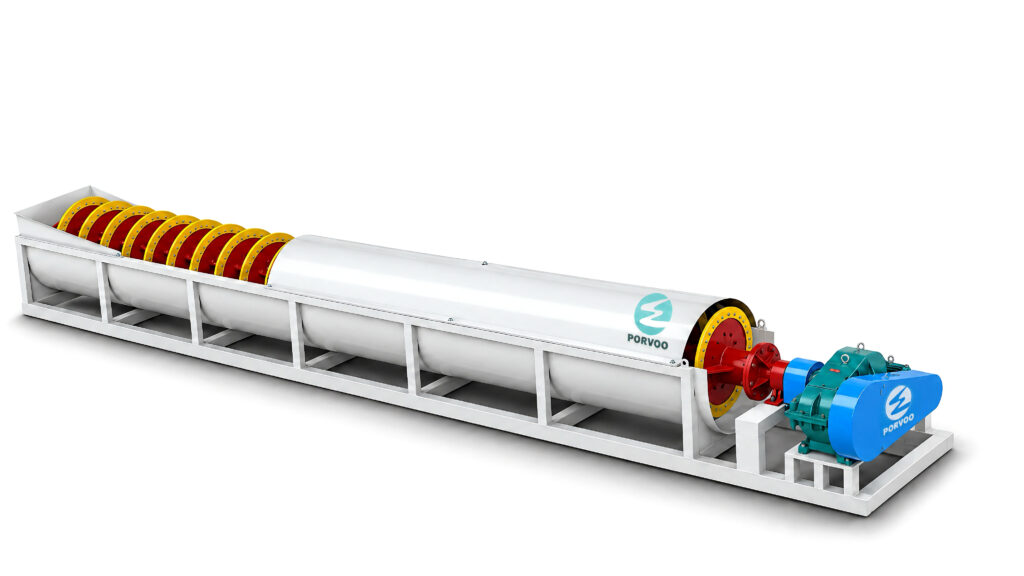
PORVOO offers rectangular and circular vibrating screens and a screw-type sand extractor for this pretreatment stage. Select the screen on the wastewater and retained solids it must handle. Select the extractor on the collected grit it must move to the discharge point.
Choose the device by where the grit is
| Equipement | When to shortlist it | What to check |
|---|---|---|
| Rectangular vibrating screen | A continuous wash-water stream carries chips or other oversize that must be intercepted before it reaches the next unit. An elongated deck provides a route for retained material to move toward a chute. | Peak flow, particle size, screen opening, wet screen area, feed distribution, and how much room the deck and discharge chute need. |
| Circular vibrating screen | A compact screening point needs a defined opening and a separate solids outlet. Compare it where the layout suits a round deck and the slurry can pass the proposed screen without persistent blinding. | Opening size, effective area, solids loading, clearance to change the screen, and where both discharge streams will go. |
| Screw-type sand extractor | Dense grit has collected in an existing basin or trough. A screw can convey that material to a bin or another stage where access and the collected solids suit mechanical removal. | Wet grit load, maximum lump size, abrasive wear, feed arrangement, lift and discharge elevation, and how drainage will be collected. |
When oversize and settled grit are both present, a screen can intercept the oversize while a settling stage collects dense particles that pass through the screen. The screw then handles the collected material. Confirm what passes at each point and where rejects and drainage will go.
Use the catalog to plan the screening layout
For a rectangular screen, compare deck area at the expected wet loading and screen opening. The table gives the reference ranges listed in the PORVOO catalog for an initial layout review. Confirm usable capacity with the chosen opening, solids load, feed distribution, and cleaning arrangement.
| Modèle | Screen area (m²) | Listed capacity (m³/h) |
|---|---|---|
| 820 | 1.5 | 5–10 |
| 920 | 1.8 | 10–20 |
| 1020 | 2.0 | 20–30 |
| 1225 | 3.0 | 50–80 |
| 1530 | 4.5 | 100–120 |
A measured peak of 65 m³/h points to model 1225 for an initial review. Send the largest particles and desired screen opening before using that shortlist. If another duty falls between listed bands or the slurry repeatedly blinds the deck, review peak-flow buffering, screen opening and effective area before releasing the order.
The circular screen catalog covers models 600 to 2500 with listed screen areas from 0.23 to 4.34 m². Check the proposed screen opening in millimeters or micrometers and agree how it will be measured. For the extractor, the catalog lists models 12 to 28 with screw outer diameters from 121 to 273 mm. Obtain a separate conveying duty for the actual wet grit and layout.
Give the separated solids somewhere to go
Show the chute, bin or trough on the layout. Leave access to clear the opening, replace screens and remove a loaded bin. Agree where water draining from the grit returns and what happens when the screen is out of service. Those interfaces help prevent collected grit from returning to the pump sump.
Check what still reaches the next stage
If the outlet still carries fine suspended mineral solids, compare settling and coagulation or flocculation based on the actual water. A coarser screen setting may protect pumps and keep the deck usable while a tour de sédimentation handles the finer solids. Check grit buildup at the takeoff and make sure the sludge route and the coarse reject route both have enough capacity.
Request a grit removal layout and quote
Send normal and peak wastewater flow, the peak duration, a representative sample or particle-size data, the largest particles present, and the amount of wet grit collected per shift if known. Show upstream and downstream elevations, the available footprint, existing pumps and screens, the required screen opening, and the planned location of the solids bin.
Ask for the proposed equipment sequence, screen and conveying duties stated separately, connection points, cleaning access, and a check of the outlet when the plant runs at its representative peak.