Shops that treat the wet-versus-dry question as a single facility-level decision typically discover the consequences at commissioning, not during planning. A common retrofit scenario: wet saws are installed without floor drains routed to a settling system, and within weeks the sanitary connection is cited for slurry discharge. The harder version of that problem surfaces later — dried slurry migrates from the wet cutting area into dry finishing zones, increases the dust load on collection filters that were never sized for that input, and quietly defeats both control methods at once without triggering any obvious alarm. The practical judgment required here is per-process-step, not per-facility: each operation — cutting, grinding, edge polishing — carries its own hazard profile, waste form, and infrastructure requirement that must be matched before the control method is confirmed.
Compare dust risk in dry cutting grinding and polishing
Dry cutting of stone is not a marginal compliance risk — it is a near-immediate one. Airborne respirable silica concentrations during uncontrolled dry cutting can reach 10 to 100 times the OSHA permissible exposure limit within minutes of starting a cut. That range is not a guaranteed measured outcome at every site, but it establishes the magnitude of control urgency: the gap between doing nothing and doing something adequate is not incremental, it is structural. Any decision framework that treats dry cutting as the default and wet suppression as optional gets the risk direction wrong from the start.
OSHA Table 1 for stone fabrication functions as a planning trigger, not just a measured compliance threshold. It identifies integrated water delivery at the tool and HEPA vacuum systems as the default compliant controls for stone work. A shop running dry cuts without either can receive citations based on process observation alone, before any air sampling is conducted. That shifts the compliance burden: the question is not whether exposure has been measured, but whether the listed engineering control is in place. For planning purposes, this means the control method must be confirmed before operations begin, not validated afterward.
One failure risk that the wet-versus-dry framing tends to obscure is the secondary dust source created by wet processing itself. Water applied at the tool captures particles effectively during the cut, but the residual surface water left on stone — and on machine tables and floors — contains concentrated stone fines. When that water evaporates, those fines become airborne respirable dust. Wet cutting does not eliminate dust liability; it shifts the timing and location of the exposure risk unless secondary capture and housekeeping are built into the same control plan.
| Aspect | Dry Cutting/Grinding/Polishing | Wet Processing (with water suppression) |
|---|---|---|
| Primary respirable silica level | 10–100× OSHA PEL within minutes; extreme immediate health risk | Airborne dust largely suppressed at source; residual water captures particles at the tool |
| OSHA Table 1 compliance trigger | Dry cutting without integrated water delivery or HEPA vacuum prompts citation even without measured exposure | Water delivery to the tool meets the default compliant control; evaporating fines still require secondary capture |
| Tool degradation | Silica dust abrasive to diamond segments accelerates wear and raises blade operating temperature | Reduced abrasive dust and water cooling extend tool life |
| Secondary dust risk (post‑process) | Minimal; no slurry, but settled dust can re‑entrain if not promptly collected | Residual surface water contains concentrated stone fines; when water evaporates, fines become an airborne respirable dust source |
Tool degradation adds a non-health dimension to the dry processing risk. Silica dust is abrasive to diamond tooling; running dry increases blade wear rate and operating temperature simultaneously. Over time, that cost is real and measurable — but it tends to be invisible in the initial procurement decision because it accumulates gradually rather than appearing as a single line item. Shops that frame the wet-versus-dry choice purely as a capital cost comparison often undercount the tool replacement cost embedded in the dry option.
Compare wastewater and sludge load from wet processing
Wet cutting does not generate a wastewater stream in the way a process tank does — it generates slurry, and slurry behaves differently from liquid waste. The mixture of water and stone fines produced at the saw accumulates on machine tables, across floor surfaces, and in drain channels. Left unmanaged, it does not stay contained; it spreads with foot traffic, tool movement, and water flow, coating surfaces that were never intended to be part of the waste stream. That accumulation is the mechanism that links the wet processing decision to a downstream housekeeping and containment requirement — the slurry must be actively collected, not allowed to drain freely or evaporate.
The failure risk embedded in slurry accumulation is predictable: dried stone fines are a secondary airborne dust source. When slurry dries on a floor — even a floor in a wet cutting area — it creates a fine-particle reservoir that resuspends into the breathing zone with every footstep or air current that passes over it. This is not a rare outcome; it is what happens in any shop where slurry management is treated as a cleanup task rather than an active process control. The consequence is that wet suppression at the tool can be working exactly as intended while the overall shop exposure remains elevated because of dried waste on surfaces two meters away from the machine.
For water sedimentation tank planning and recycle water targets in ceramic and stone facilities, detention time calculations and solids loading rates are covered in more depth in the plant-level context. What matters at the process level is that slurry load is a continuous output from wet cutting — not a batch event — and the collection, transport, and settling infrastructure must be sized for continuous input, not peak cleaning cycles. Planning that detention time correctly depends on understanding how much solids load each wet cutting station generates per shift, which is a figure that varies by stone type, blade specification, and cut volume. That figure should be estimated during process design, not discovered during the first months of operation.
Decide when wet suppression creates a treatment duty
Selecting wet suppression at the tool does not close the design problem — it opens a treatment duty that must be confirmed before the control method is finalized. That duty has three distinct triggers depending on where and how water is used, and each one requires different infrastructure.
| Processing Scenario | Treatment Duty Triggered | What Must Be Confirmed |
|---|---|---|
| Any wet dust extraction using water as the capture medium | Collected liquid solution must be disposed or dewatered according to local environmental regulations | Approved disposal path, dewatering capacity, and discharge permit status |
| Floor drains receiving slurry from wet cutting | Slurry settling system required; direct discharge to sanitary sewer prohibited to avoid clogging | Settling system installed and maintained; no direct connection to sanitary sewer |
| Wet dust collectors that recirculate scrubbing water | Water quality must be managed to maintain collection efficiency and prevent corrosion | Monitoring program for pH and solids buildup; materials compatibility with slurry |
The most commonly omitted confirmation is the floor drain routing. In shops where wet cutting tables drain to the floor, the default assumption is often that the drain connects to the building’s sanitary sewer. It frequently does, until a sewer authority inspection reveals that slurry discharge has been causing downstream blockages or that the connection violates pretreatment requirements. Retrofitting a settling system after the floor is poured and the drain is installed is significantly more expensive than including it in the original layout — and it typically requires stopping production during installation. The settlement should be confirmed as part of the floor and drain design, not added as a utility afterthought.
Where wet dust collectors recirculate scrubbing water, the water quality monitoring requirement adds an ongoing operational duty that is separate from equipment maintenance. Suspended solids buildup reduces collection efficiency and, depending on stone type and water chemistry, can accelerate corrosion in the collection vessel. ISO 11923:1997 provides methodology for measuring suspended solids in water, which is a relevant reference for monitoring protocols in recirculating systems — not a compliance requirement specific to stone shops, but a useful methodological anchor for anyone designing a water quality monitoring program. The practical obligation is to define the monitoring interval, the solids threshold that triggers a water change or blowdown, and the disposal path for the spent liquid — all of which should be written into the operating procedure before the system is commissioned, not developed reactively when efficiency starts to decline.
Match dry collection to filter loading and airflow loss
Dry collection for stone operations is not technically complex, but it is precision-sensitive at three design parameters, and the consequences of getting any one of them wrong are not immediately visible.
| Design Parameter | Critical Requirement | Consequence of Mismatch |
|---|---|---|
| Filter efficiency standard | HEPA filtration (99.97% removal at 0.3 µm) to capture respirable silica particles (0.5–10 µm) | Sub‑HEPA bag or cartridge filters allow fine respirable silica to pass, undermining breathing‑zone protection |
| System airflow sizing | Capture velocity must be maintained at all workstations, including those furthest from the collector | Undersizing reduces velocity at distant stations; uncontrolled dust even if rated CFM appears sufficient |
| Airflow temperature management | Operating temperature kept within range to avoid bag sticking (too hot) and dust hardening/blockages (too cold) | Overheating causes filter sticking; cold air leads to hardened dust blockages and rapid airflow loss |
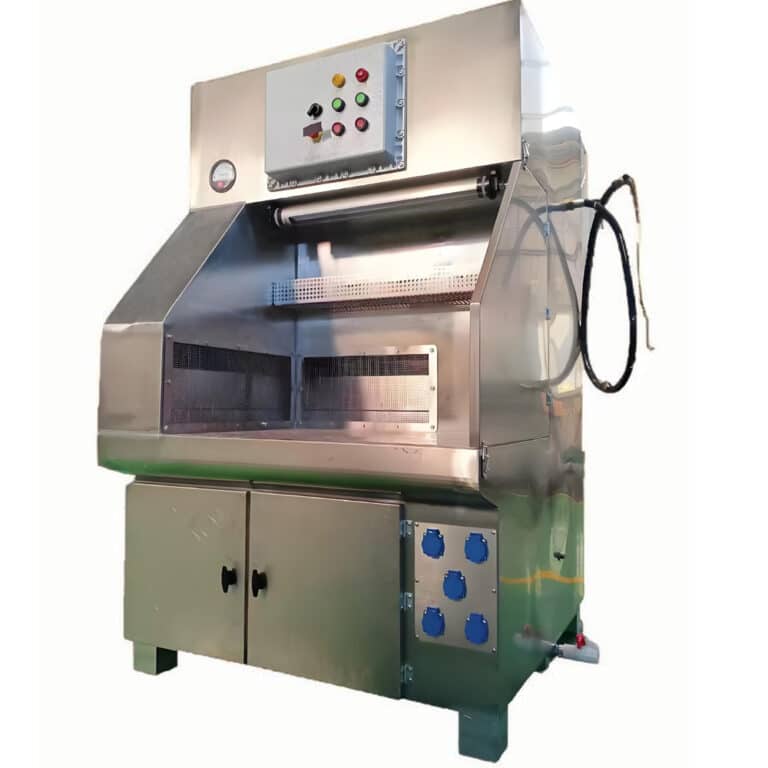
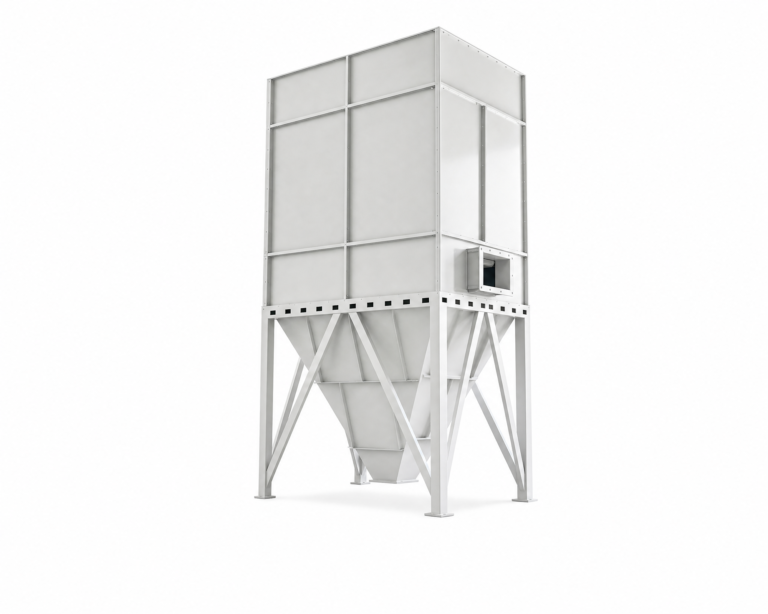
Filter specification is the most consequential of the three, and the one most often substituted for cost reasons. Respirable silica particles fall in the 0.5 to 10 micron range — exactly the particle size that standard bag filters and many cartridge filters do not reliably capture. HEPA filtration at 99.97% removal efficiency at 0.3 microns is the appropriate specification for stone dust collection because it provides a margin below the critical particle size rather than relying on filter media that may allow the most hazardous fraction to pass. A system that meets airflow targets on paper while using sub-HEPA media is not providing breathing-zone protection — it is moving dust through the building. That gap only becomes visible during industrial hygiene sampling or a regulatory inspection, at which point replacing the filter housing may require modifying ductwork that was sized around the original media. The Industrial Dry / Wet Station Downdraft Grinding Table provides an integrated workstation approach where filter specification and capture geometry are designed together for stone and similar hard materials, which avoids the mismatch that occurs when collection equipment is assembled from separate components.
Airflow sizing deserves the same design rigor. Undersizing is a common mistake not because engineers miscalculate total system CFM, but because they size for average conditions rather than for the workstation furthest from the collector under peak resistance. Capture velocity at that station can be well below the design value even when the aggregate system appears to be performing correctly. ASHRAE Handbook Chapter 33 provides the underlying principles for industrial local exhaust design, including duct sizing and velocity management for distributed workstation layouts — applicable here as a reference framework for confirming that sizing accounts for transport losses and branch resistance, not just gross airflow volume. Temperature management within the collection system is the third parameter: too high and filter media begins to stick and blind prematurely; too cold and condensation can harden collected dust into blockages that reduce airflow without any filter loading signal.
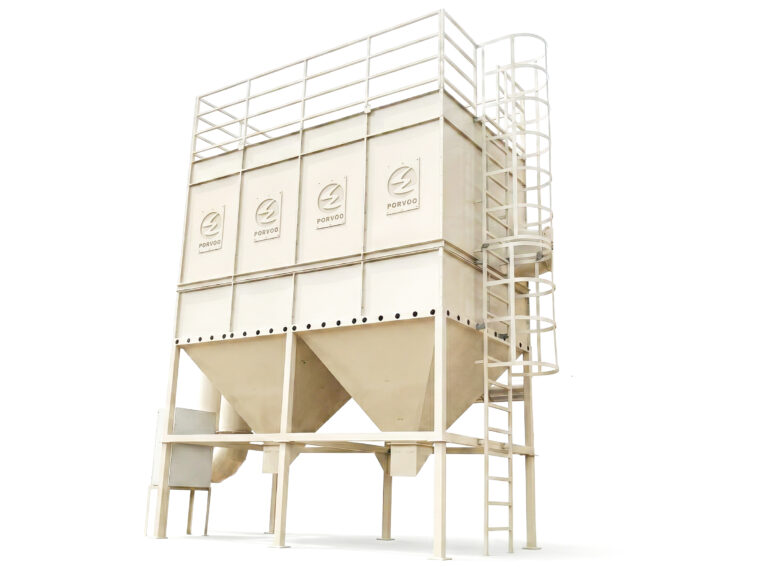
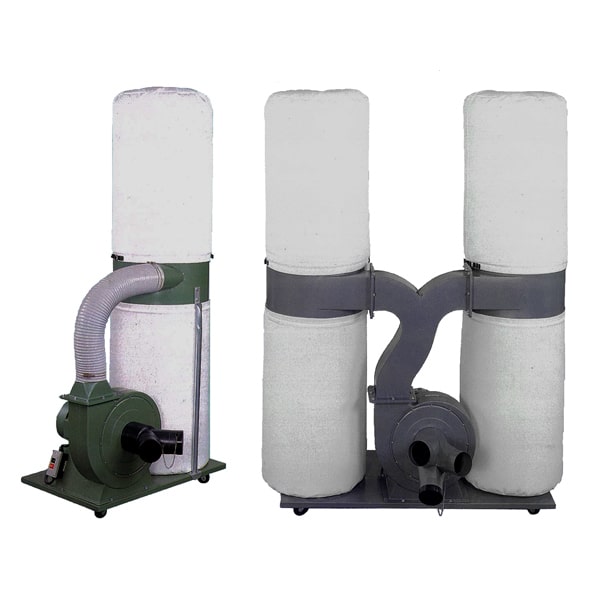
For situations where portable collection is the appropriate mode — smaller operations, intermittent stone work, or stations that shift between process types — a well-specified Industrial Portable Dust Collector matched to HEPA-rated media provides the filter performance requirement without a fixed ducted installation. The operability question is addressed separately below.
Keep mixed wet dry areas from confusing maintenance scope
The sharpest maintenance problem in stone shops is not wet areas or dry areas — it is the boundary between them. In facilities that run wet cutting and dry finishing in shared or adjacent spaces, the two waste streams interact in a way that neither control system was designed to handle independently.
Dried slurry migrating from wet cutting zones into dry finishing areas loads the dry collection system with a dust type and particle mass it may not have been sized for. More practically, it erases the maintenance boundary: when filter loading increases in the dry section, the diagnostic question becomes whether the cause is the dry process, contamination from the wet zone, or a housekeeping failure at the boundary. Without explicit scope separation — defined in both the physical layout and the maintenance procedure — that question often goes unanswered while the system continues to degrade.
The second failure pattern in mixed-mode facilities involves portable HEPA setups at individual tools. Operators working between wet and dry tasks face a setup requirement at each transition: connect the vacuum, position the capture point, confirm the seal. Under production pressure, that setup step is frequently abbreviated or skipped, particularly when the operator has just finished a wet task and the need for capture seems less urgent. This is not a compliance or training failure in the narrow sense — it is a layout and procedure design failure. Any facility layout that requires operators to rebuild their dust capture configuration at each task transition is creating a reliable pathway to uncontrolled exposures. The maintenance scope question and the operability question are the same problem viewed from different angles: both require that the boundary between wet and dry zones be managed as an active control decision, not left as an ambiguous transition.
For a detailed comparison of filter types and efficiency characteristics relevant to dry finishing work in stone environments, the Dry Downdraft Table Filtration Systems: HEPA vs Cartridge Filter Efficiency Comparison for Non-Combustible Materials covers the performance distinctions that matter most when filter selection is made for a specific stone process step.
Include disposal and housekeeping in the control choice
The disposal burden for each control method is real and asymmetric, and it belongs in the initial control selection decision — not in the operational procedures written after equipment is purchased.
| Aspect | Dry Collection | Wet Collection |
|---|---|---|
| Waste form and handling | Dry dust; easier to handle but creates re‑entrainment risk if mishandled | Slurry/liquid mixture; must be contained, dewatered, or treated; sludge disposal required |
| Re‑entrainment risk | Settled dust can become airborne through sweeping, foot traffic, or air currents; dry cleanup must use HEPA vacuum | Slurry drying on floors creates a fine dust reservoir that resuspends into the breathing zone; wet‑dry policy prevents drying |
| Regulatory disposal requirements | Typically managed as solid waste; dust‑tight containers may be needed to prevent fugitive emissions | Liquid disposal subject to water discharge regulations; dewatering or treatment often required before discharge |
| Critical housekeeping practices | HEPA vacuuming; no dry sweeping; prompt collection of settled dust | Wet mopping or squeegee collection at least once per shift; dedicated wet vacuum with HEPA for dried deposits; never allow stone fines to dry on surfaces |
Dry collection produces dry waste, which is easier to handle logistically but carries a re-entrainment risk at the point of collection and disposal. If collected stone dust is emptied from filter hoppers without dust-tight transfer — into open containers, by shaking bags, or in areas with air movement — the most hazardous fine fraction can be released back into the workspace. The housekeeping requirement for dry processing is not just vacuuming; it is defining how collected dust is removed from the system without creating a secondary exposure event.
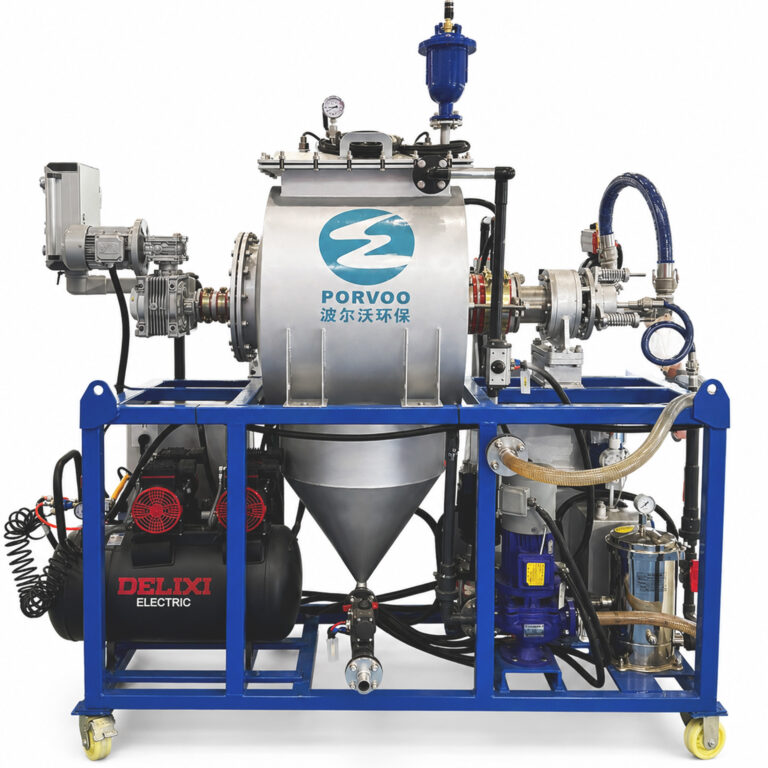
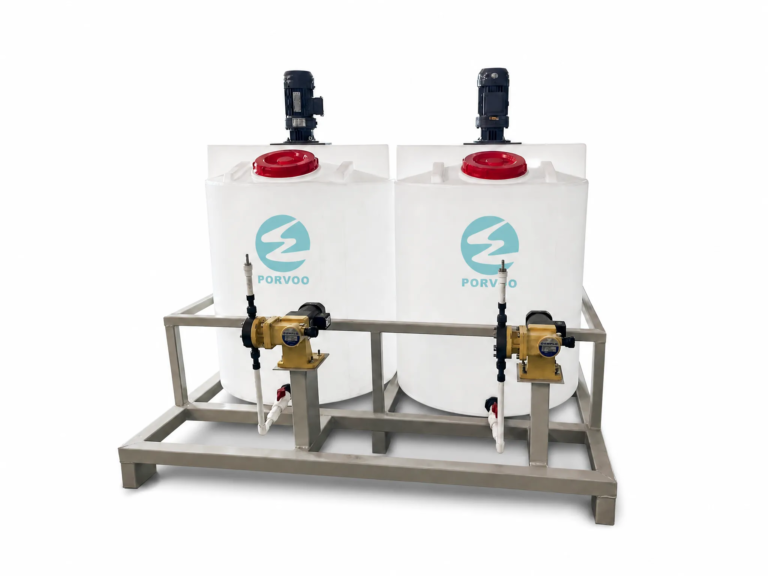
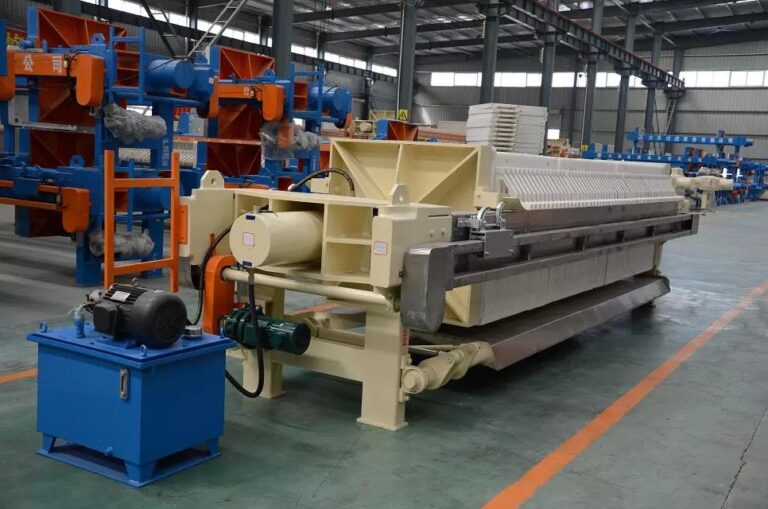
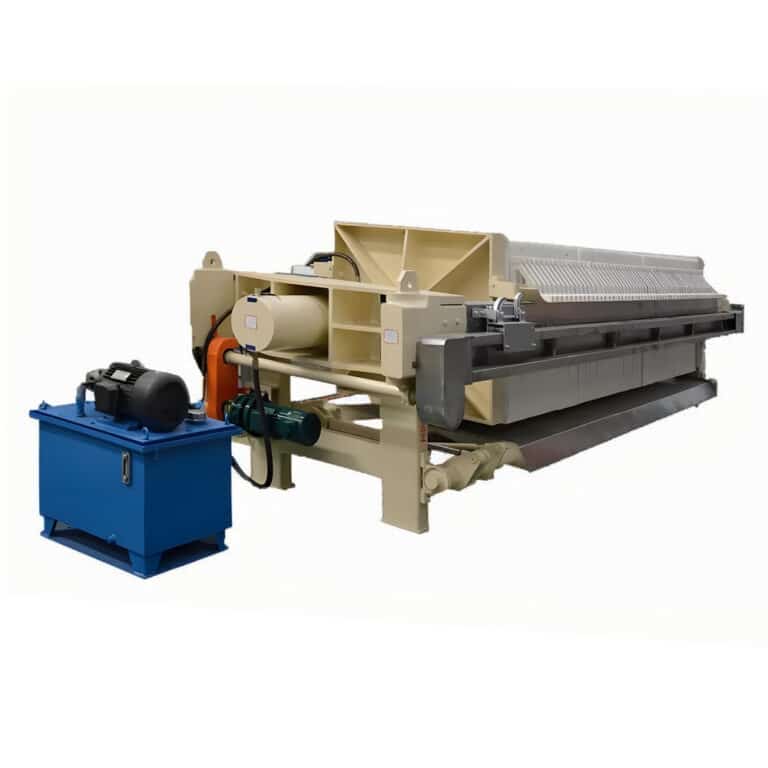
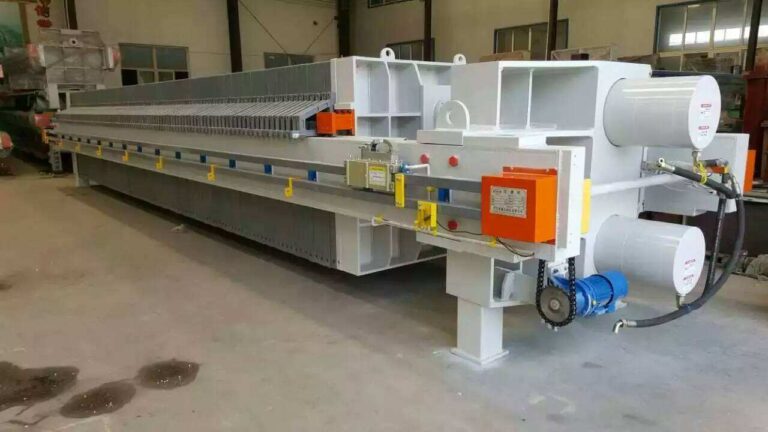
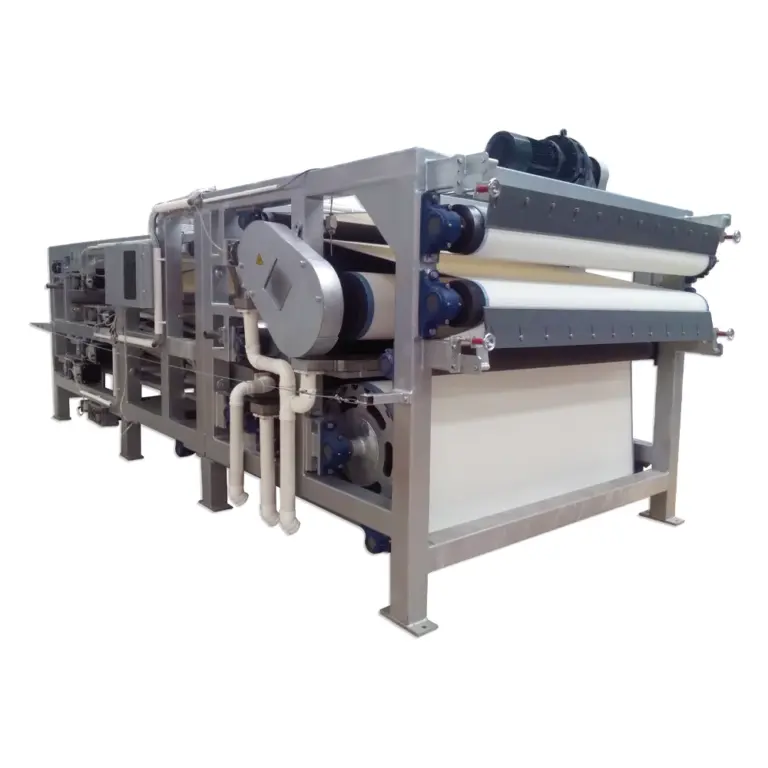
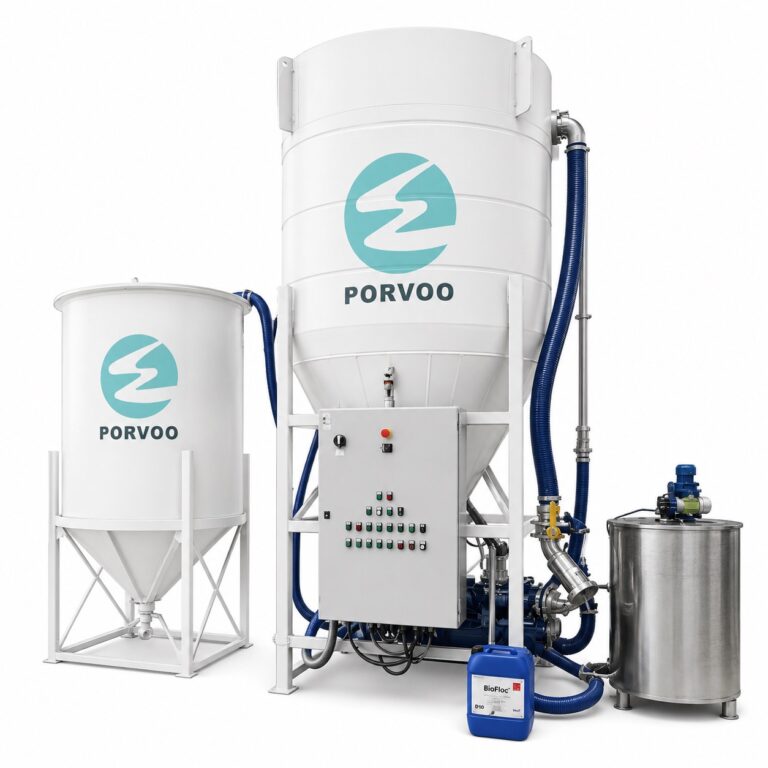
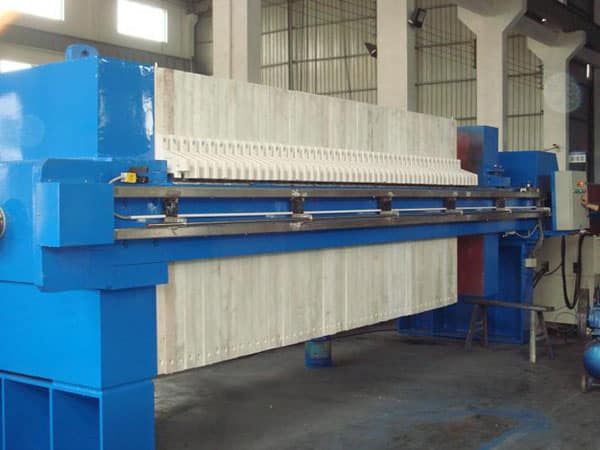
Wet collection and wet suppression produce slurry and liquid waste that must follow a treatment or disposal path consistent with local discharge regulations. That path typically requires dewatering — whether through a passive settling tank, a mechanical press, or a chemical-assisted process. For operations generating significant slurry volume, passive settling alone may not produce a cake dry enough for solid waste disposal without additional conditioning. The Large Particle Grit Removal stage is often the first treatment step needed upstream of any finer separation process, removing the coarse fraction that would otherwise overload settling capacity or blind downstream equipment. Where chemical conditioning is part of the treatment train, an PAM/PAC Intelligent Chemical Dosing System provides the controlled flocculation input that separates solids cleanly and keeps the treated water within discharge quality targets.
Housekeeping practices are not supplementary to the control choice — they are part of it. Wet mopping or squeegee collection at least once per shift, using a HEPA-equipped wet vacuum for any deposits that have dried, and maintaining a policy against allowing stone fines to dry on surfaces are implementation requirements that must be written into the control plan. A facility that installs the correct equipment but does not specify these practices has not closed the control loop — it has left the most predictable failure mode open.
Select the process mode that can be operated consistently
Theoretical system capacity is not what protects workers — consistent operation is. The clearest planning criterion for selecting a control mode is not which method performs best under ideal conditions, but which method can be operated reliably under normal production conditions in that specific facility.
| Control Mode | Key Factor for Consistent Operation | Shop Size Fit |
|---|---|---|
| Plumbed water delivery to each wet cutting tool | Eliminates reliance on operator to connect hoses; water delivery is automatic with tool activation | Any size shop; especially important in larger facilities to guarantee water application |
| Portable HEPA vacuum units per tool | Dependent on operator to connect, position, and maintain; often skipped under production pressure or when alternating wet/dry tasks | Fewer than five workstations where strict supervision can ensure consistent use |
| Centralized dry collection system | Runs continuously regardless of operator presence; reduces individual setup steps at each station | Larger shops (>5 workstations) to maintain capture velocity even when operators are not present |
For wet suppression, the single highest-leverage design decision is whether water is delivered through a plumbed supply line to each machine or through hoses that operators connect manually. Plumbed delivery removes the operator setup step entirely; water application occurs automatically when the tool activates. Hose-based delivery depends on an operator action at the start of every task — an action that is reliably skipped when the operator is behind schedule, working on a short cut, or transitioning from a different process. The infrastructure cost of permanent plumbing is real, but it should be weighed against the control reliability cost of depending on operator discipline for every cut made over the life of the facility.
For dry collection, the five-workstation threshold for portable HEPA units versus centralized collection is a practical judgment input, not a regulatory cutoff. Below that scale, dedicated supervision can reasonably ensure that portable units are connected and positioned correctly at each station. Above it, the number of individual setup actions required per shift makes consistent use difficult to sustain without a centralized system that runs continuously regardless of individual operator presence. A centralized system does not require operator action to be operational — it is on when the facility is running. That default-on characteristic is the operability advantage that matters most in larger facilities, not the aggregate CFM rating.
The threshold where operability fails is not always visible in the design phase. A layout that looks adequate on paper — portable vacuums available at each station, water hoses accessible near each saw — can deliver inconsistent protection in practice because it relies on a chain of individual actions that each carry a non-trivial skip rate under production pressure. Control method selection should explicitly account for that skip rate, which means choosing the method that requires the fewest operator-initiated steps at the moment the hazard is present.
The core planning implication that runs through every section here is that wet and dry control methods each carry their own downstream commitments that must be confirmed before the method is selected — not resolved reactively after installation. Wet suppression requires a confirmed disposal path for slurry and liquid waste, floor drain infrastructure that routes to a settling system, and an active housekeeping protocol that prevents dried fines from becoming a secondary dust source. Dry collection requires HEPA-rated filtration matched to the particle size of respirable silica, a system sized for the workstation furthest from the collector under load, and a temperature-managed airflow path that prevents filter blinding or blockage.
Before finalizing the control approach for any process step — cutting, grinding, or polishing — confirm three things: whether the chosen method can be operated consistently in the actual layout and under actual production conditions, whether the waste form produced by that method has a confirmed disposal route that meets local regulatory requirements, and whether the maintenance scope for wet and dry zones is explicitly separated so that contamination across the boundary does not silently degrade both systems at once. Those three confirmations separate a compliant installation from one that works as designed in the first month and fails quietly in the sixth.
Frequently Asked Questions
Q: Does the five-workstation threshold for choosing between portable HEPA units and centralized collection apply if workstations are spread across multiple rooms or floors?
A: No — physical separation between stations changes the threshold in favor of centralized collection even at lower station counts. The five-workstation figure assumes stations are close enough that a supervisor or lead operator can realistically verify that each portable unit is connected and positioned correctly before each task begins. Once stations are separated by walls, floors, or significant travel distance, that verification chain breaks down regardless of total station count, and a centralized system that runs continuously without requiring operator-initiated setup at each station becomes the more reliable choice.
Q: If a stone shop already has wet cutting installed without a slurry settling system, what is the first practical step before retrofitting floor drains?
A: Contain slurry at the machine level immediately — before any floor drain work begins. Install drip trays or containment lips on existing wet saw tables to intercept slurry before it reaches the floor, and introduce manual squeegee and wet vacuum collection at least once per shift to prevent accumulation and drying. This does not replace the settling system retrofit, but it interrupts the most immediate failure mode — dried slurry migrating into dry finishing zones and loading unprotected drain connections — while the more disruptive floor-level work is being scoped and scheduled.
Q: At what point does chemical dosing become necessary in slurry treatment, rather than relying on passive settling alone?
A: Passive settling becomes insufficient when the fine particle fraction in the slurry is too small to settle within the available detention time, or when the dewatered cake produced by gravity alone is too wet to meet solid waste disposal requirements. Stone type is the primary driver: harder siliceous stones like granite and quartzite generate a higher proportion of sub-10-micron fines than softer materials, and those fines can remain suspended indefinitely without a flocculation step to aggregate them. If the settled effluent remains visibly turbid after the designed detention period, or if the settled solids cannot be handled as a manageable cake, chemical conditioning — typically polyacrylamide or polyaluminum chloride — is the practical next step before any mechanical dewatering stage.
Q: Is there a process step in stone fabrication where neither wet suppression nor dry HEPA collection is clearly the better choice?
A: Edge polishing is the step where the trade-off is least resolved. Wet delivery is common and suppresses dust effectively at the tool, but the geometry of edge polishing — work positioned vertically or at varying angles — makes consistent water application harder to maintain than at a flat saw table, and the runoff pattern is less predictable, increasing the risk of slurry spread onto adjacent surfaces. Dry HEPA capture at an edge polishing station requires close hood positioning that can interfere with operator visibility and workpiece handling. In practice, the decision at this step often comes down to layout constraints and whether a downdraft or side-draft capture geometry can be positioned without impeding the process — rather than a clean performance advantage for either method.
Q: How should a facility assess whether its current dry collection filter media is actually adequate for respirable silica, rather than just meeting the original equipment specification?
A: Commission industrial hygiene air sampling at the breathing zone of operators on the workstation furthest from the collector, under representative production conditions — not during a brief demonstration run. Filter media specifications on equipment documentation describe rated performance under laboratory conditions; what matters operationally is whether respirable silica concentrations at the work surface remain below the OSHA PEL of 50 µg/m³ during actual cutting or grinding. If sampling shows concentrations above that threshold despite the system running as designed, the diagnostic sequence should confirm filter integrity first (tears, bypass leaks, improper seating), then filter media specification against the HEPA standard of 99.97% removal at 0.3 microns, and finally capture velocity at the tool — in that order, since each failure mode produces similar exposure results but requires a different corrective action.