Most treatment line failures during commissioning don’t come from bad equipment — they come from a design that was never asked to define what each stage must do on its own. When clarification, filtration, and sludge dewatering are compressed into a single skid to save space or simplify procurement, an upset in settling propagates directly into dewatering with nothing in between to absorb it. Operators end up chasing the problem across the whole line because there is no clean isolation point, and the cost shows up in extended commissioning, unstable effluent quality, and retrofit expenses that exceed the original savings. The decision that prevents this is straightforward in principle — assign each stage a specific duty, characterize the solids behavior that determines where that duty ends, and protect the transfer points with adequate buffering — but it must be made before equipment is specified, not during startup.
What each treatment stage should actually be responsible for
Each treatment stage needs a defined output condition it is held accountable for, not just a general function. When those accountabilities blur, operators cannot tell which stage is underperforming, and dosing adjustments made to compensate in one unit will often destabilize another.
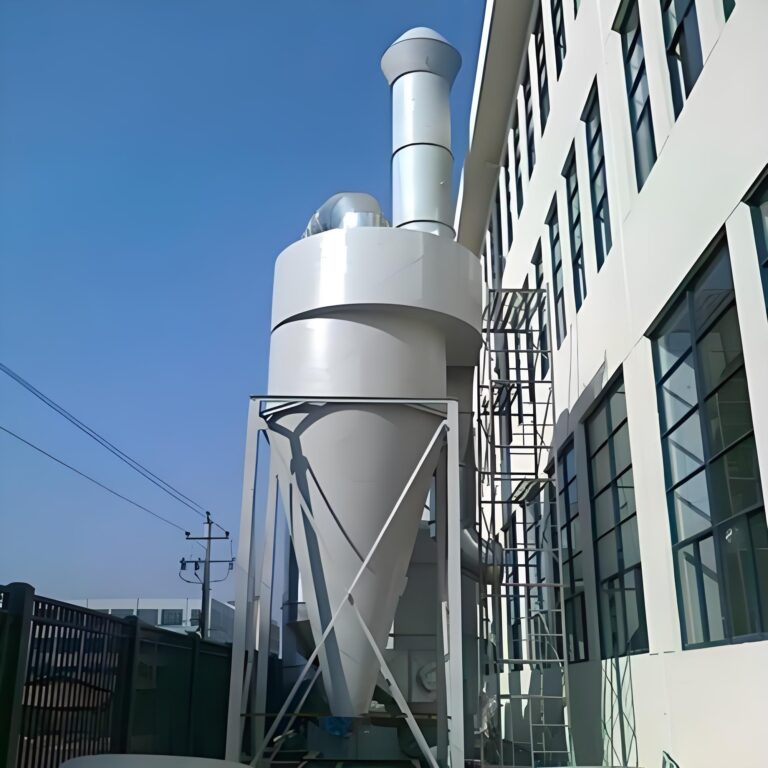
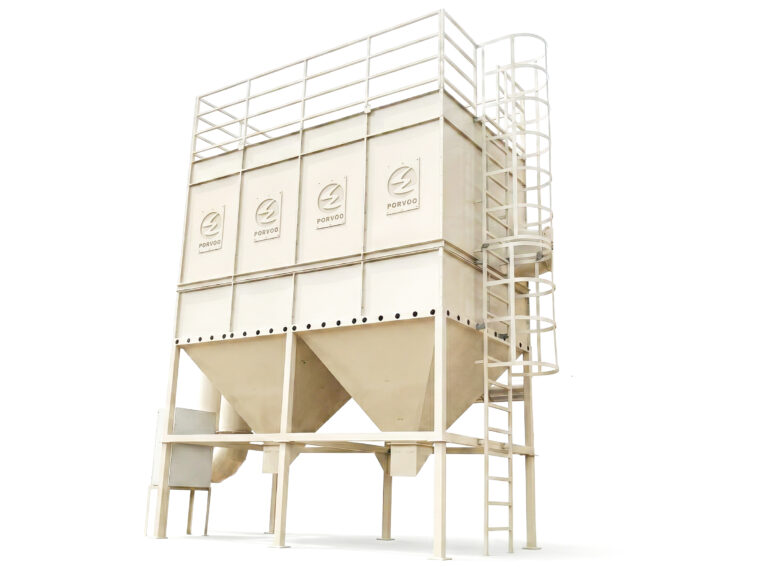
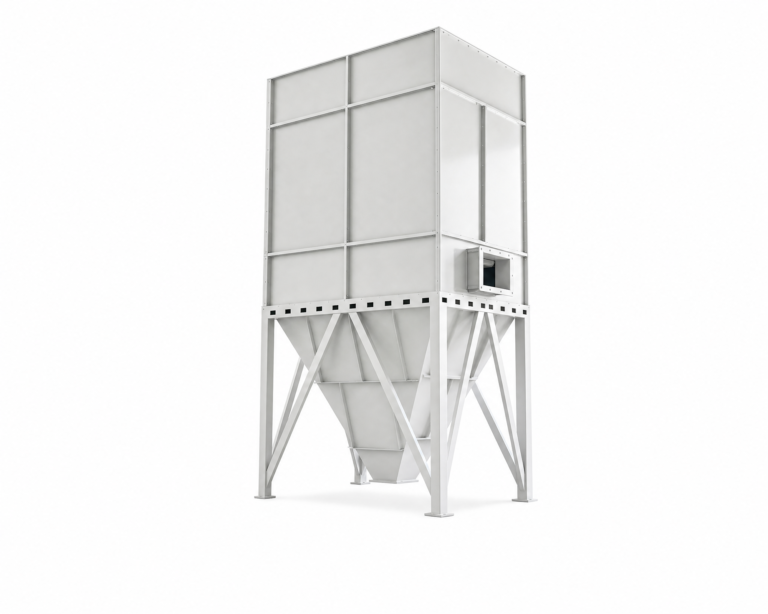
Primary clarification, whether through a conventional settling basin or a vertical sedimentation unit, is primarily responsible for bulk solids removal through gravity. As a design-range reference, gravity settling typically removes somewhere between 50 and 70 percent of suspended solids from the incoming stream. That range matters because it tells you whether a downstream polishing or filtration stage is warranted — if your discharge target requires near-complete solids removal and primary clarification reliably delivers only the lower end of that range, a downstream stage is not optional, it is structurally necessary. Treating that figure as a performance band, rather than a compliance benchmark, prevents the common mistake of designing a single-stage system that assumes best-case settling behavior in all conditions.
Filtration, the next responsibility layer, is accountable for residual fine solids and polishing the clarified effluent to a quality that meets either reuse thresholds or discharge limits. This stage operates over a narrower particle size range than settling and responds poorly to surge loads of raw or partially settled solids. When clarification is under-designed and passes excess solids downstream, filtration media loads up faster than expected, cycle times shorten, backwash frequency increases, and the stage loses the stable operating window it needs to deliver consistent quality. That failure is often misread as a filtration problem when the root cause sits upstream.
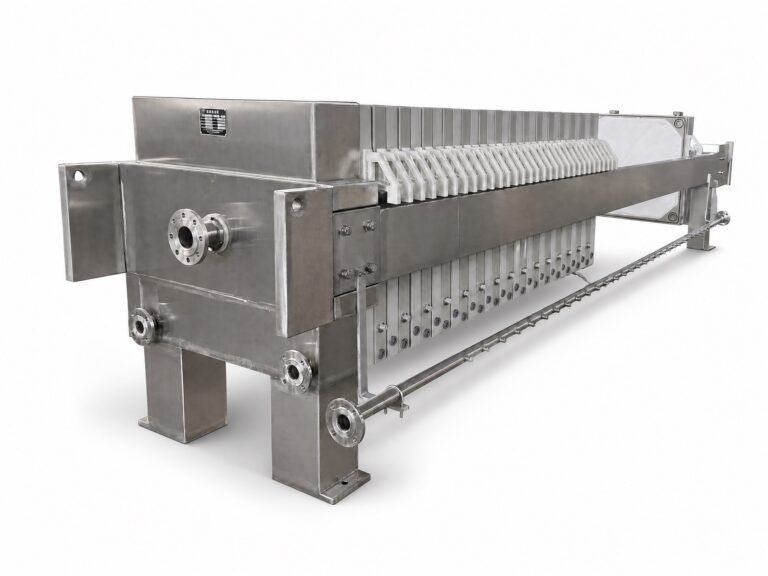
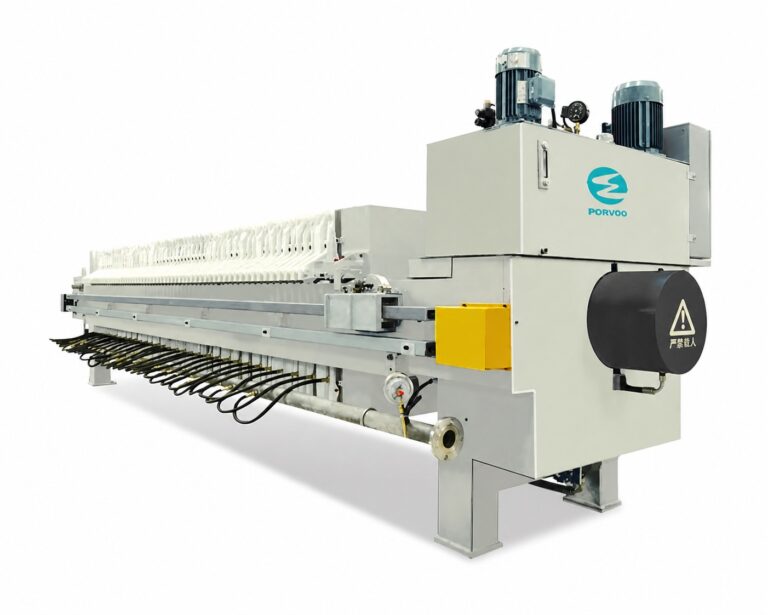
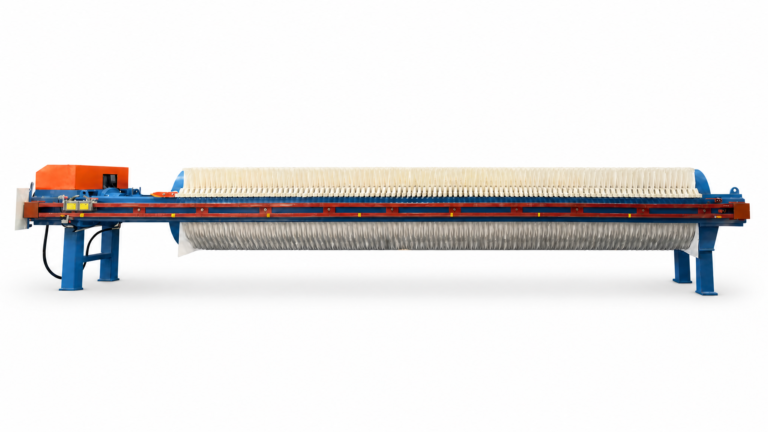
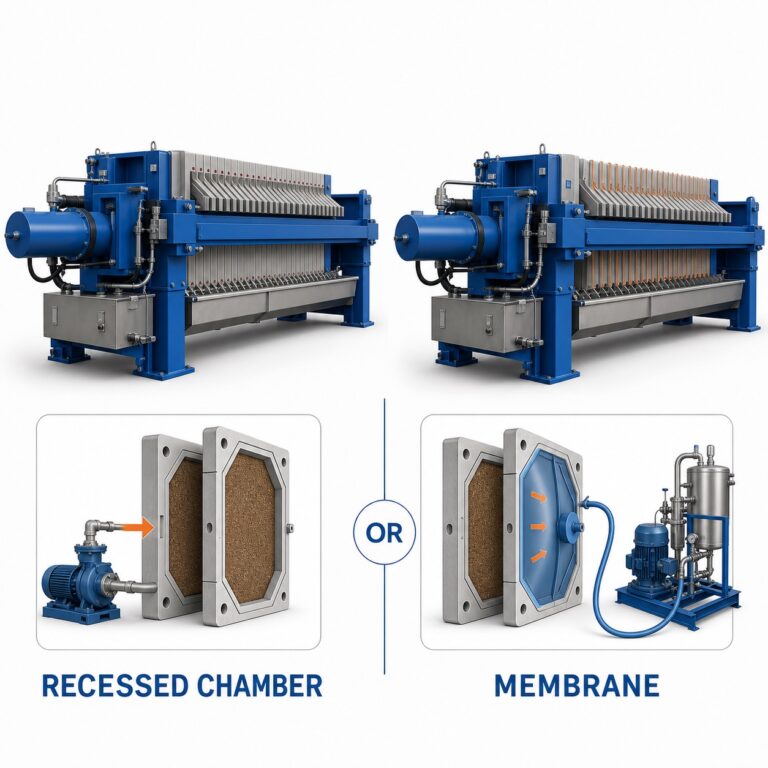
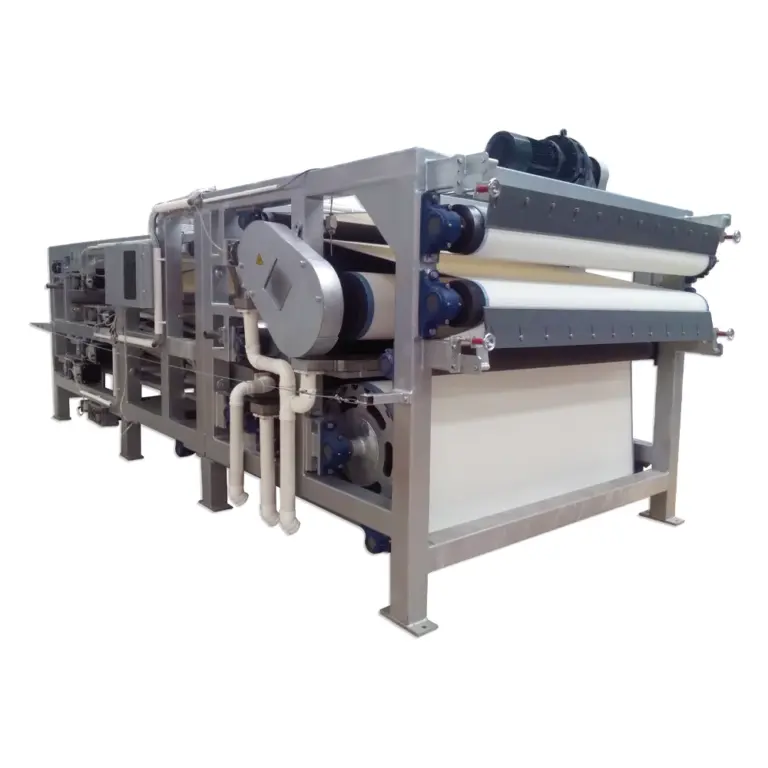
Sludge thickening and dewatering — handled by equipment such as a belt filter press — carries a different accountability entirely: producing a sludge cake with sufficient dryness for handling, transport, or disposal. This stage is sensitive to sludge feed consistency, polymer conditioning, and pressure profile. If thickening is co-located with active clarification without a dedicated feed buffer, the dewatering unit receives variable solids concentrations that make it impossible to maintain a stable belt tension, nip pressure, or polymer dose. The practical consequence is a wet cake that exceeds disposal weight limits and increases transport cost — a downstream outcome that rarely gets traced back to the absence of intermediate storage.
How solids behavior tells you where to split the process
The staging decision should not start with a process flow diagram; it should start with the wastewater. Solids behavior — how quickly particles settle, whether they flocculate readily, whether they carry surfactants or oils that interfere with settling, and how that behavior shifts under variable production loads — is the primary variable that determines where one treatment duty ends and the next must begin.
Two investigative steps reduce the risk of staging in the wrong place.
| Assessment Step | Key Focus | Why It Matters |
|---|---|---|
| Bench-scale treatability study | Actual wastewater solids settling behavior | Reveals potential pitfalls and guides staging decisions before full-scale design. |
| Wastewater characterization | Composition variability, including load and contaminant fluctuations | Without characterizing variability, the system may upset under peak loads. |
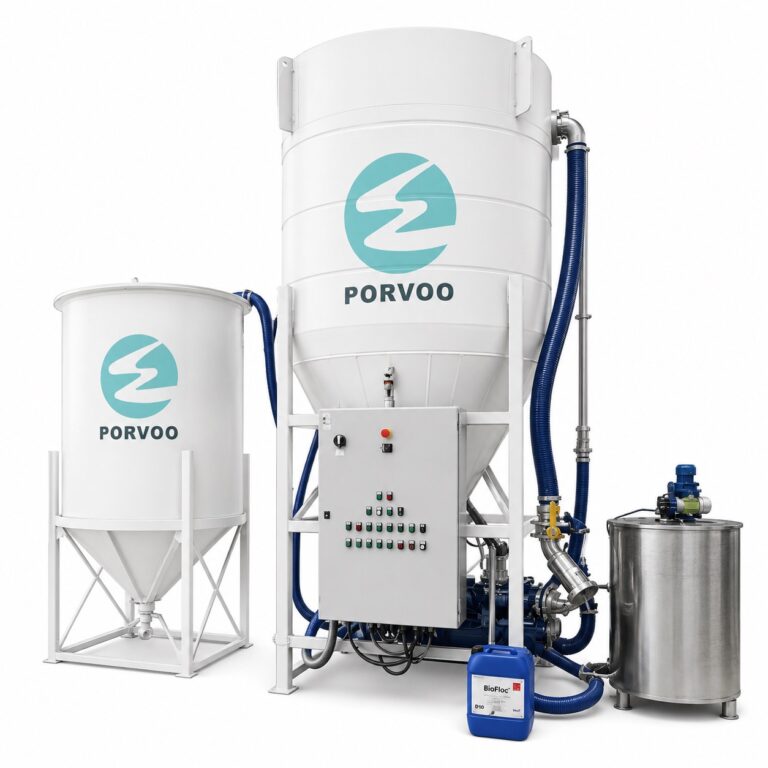
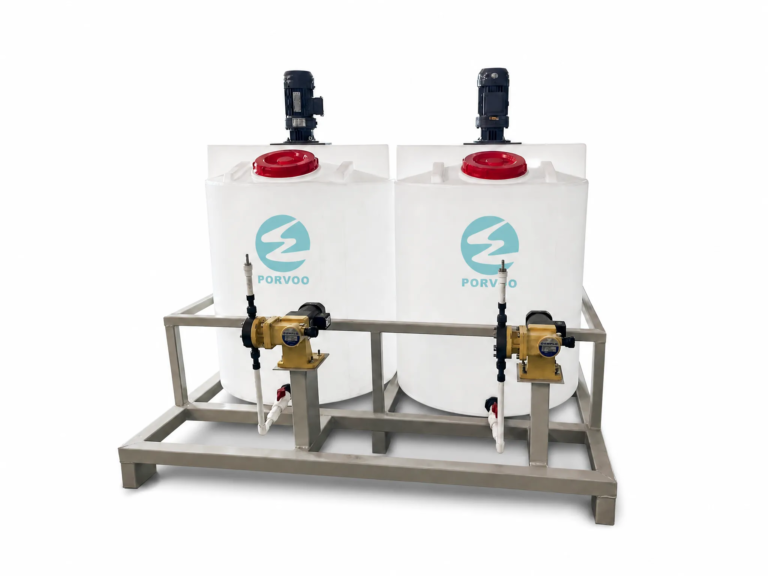
Skipping a bench-scale treatability study is the most common pre-design shortcut, and it carries a specific cost: the system gets sized and staged around assumed settling characteristics that the actual wastewater does not exhibit. A stream that contains fine emulsified solids or colloidal particles may require chemical-assisted clarification — including the right coagulant and flocculant selection — before gravity settling produces any meaningful separation at all. If that isn’t confirmed at bench scale, the primary stage is designed for a settling curve that doesn’t exist, and the integrated package produces effluent that the filtration stage cannot handle. For plants where chemical-assisted clarification is likely to be needed, the PAC/PAM conditioning step also needs its own dosing control point — something that is difficult to retrofit cleanly into a compact single-stage skid after the fact.
Wastewater characterization adds the variability dimension that a single bench test cannot capture. A stream that settles well during steady production may behave entirely differently during a shift change, a process washdown, or a raw material changeover. If those load fluctuations aren’t mapped before design, the system may perform acceptably at average conditions and fail badly at peak. That asymmetry — working on Monday, failing on Thursday — is exactly the pattern that leads to operator confidence in the line being undermined over time. The staging decision should therefore be made against the full operating envelope, not the median sample.
When compact integrated systems create more control problems
A compact integrated system is not inherently the wrong answer. For processes with a consistent influent, modest solids burden, and stable discharge targets, combining settling, filtration, and sludge handling in a compact footprint reduces coordination overhead and can simplify operation. The risk begins when that logic is applied to waste streams it wasn’t designed for.
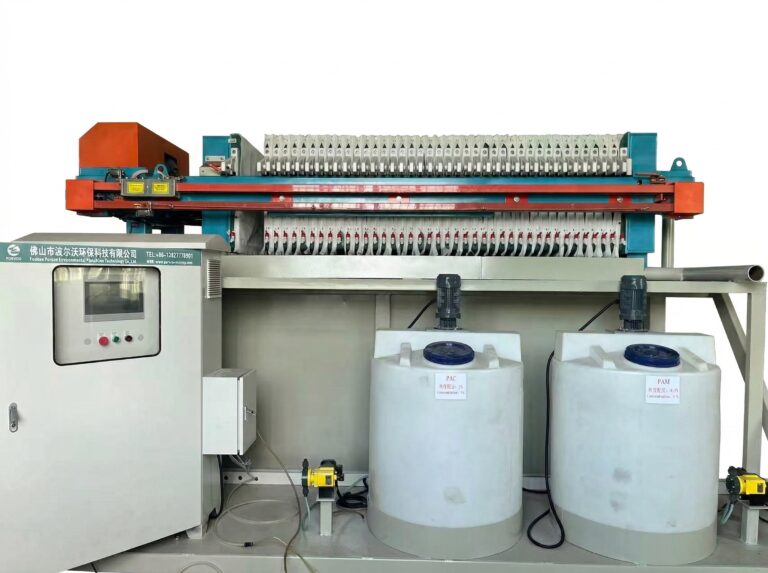
The core engineering trade-off is that integration works by sharing an operating window across multiple duties. That window needs to be wide enough to accommodate all three stages simultaneously. When the wastewater varies by solids concentration, particle type, or flow rate across a production day, the operating window for settling may not overlap with the window needed for stable filtration or reliable dewatering — and no single set of control parameters can satisfy all three at once. The result is a system that is nominally capable but practically unstable: operators adjust one stage to chase an upset and inadvertently push another stage out of its preferred range.
There is also a control access problem. In an integrated skid, adjusting the clarification polymer dose, the filtration backwash cycle, and the dewatering belt speed requires understanding how each change propagates through the others, because the stages share flow pathways and often share a single control interface. In a staged layout with intermediate tanks, each unit can be adjusted independently and the consequences of a change are contained to that stage. This distinction becomes operationally significant when a new team takes over, when process conditions shift seasonally, or when a compliance audit requires demonstrating that each treatment function is being independently controlled and documented. An integrated system can make that demonstration difficult not because the equipment fails, but because the control architecture was never designed to isolate one stage from another.
IFC Performance Standard 1 — which addresses assessment and management of environmental and social risks — frames risk management as a process of identifying the specific conditions under which a system might fail to perform as intended. That framing applies here: the question for any integrated design isn’t whether it works under ideal conditions, but whether the design has identified the specific load or quality conditions under which it stops working, and whether there is a recovery path that doesn’t require taking the whole line offline.
Why transition storage and transfer timing decide stability
Between every pair of stages in a treatment line, there is a transfer point. What happens at that transfer point — whether material moves on a controlled schedule or on a demand-driven flow — has more influence on system stability than the performance rating of either unit it connects. This is where integrated systems lose the independence that staged treatment is supposed to provide.
| Stability Concern | Risk Without Equalization | How Transition Storage Helps |
|---|---|---|
| Flow and contaminant fluctuations | Downstream processes receive shock loads, leading to upset | Equalization tanks balance flow and concentrations, delivering a steady stream to treatment stages. |
| Peak production discharge | System overwhelmed, risk of failure | Provides buffer capacity to prevent hydraulic and mass overload, justifying transition storage. |
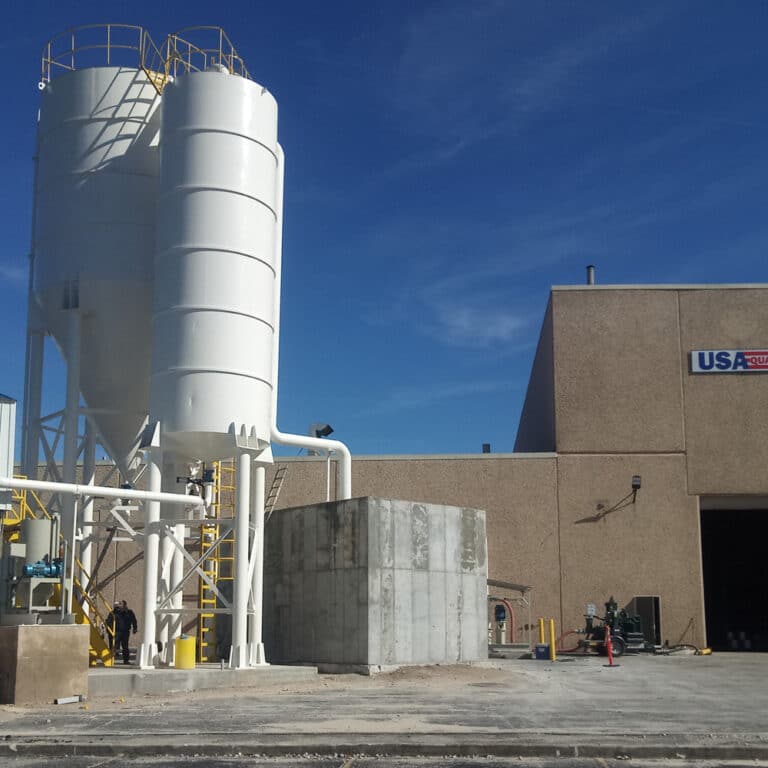
Equalization tanks function by absorbing the difference between the rate at which wastewater is generated and the rate at which treatment stages can process it. A factory that discharges heavily during one shift and lightly during another creates a hydraulic and solids load pattern that, without equalization, hits each downstream unit as a wave. Settling residence time decreases during peak flow, carryover increases, and the filtration stage receives a higher-than-designed solids load precisely when it has the least capacity to handle it. That sequence doesn’t require any equipment to malfunction — it is a timing problem, and it is solved by buffer volume and controlled transfer, not by upgrading equipment ratings.
The mistake in layout design is treating intermediate tanks as a cost rather than as a tuning tool. When value engineering removes the equalization or buffer volume between stages, the system loses the independent control that makes staged treatment operationally superior to integration. A primary clarifier and a belt press that share no intermediate storage are functionally integrated regardless of whether they sit on separate skids — a surge from the clarifier lands directly on the press, and the press has no ability to hold material while polymer conditioning is adjusted. That hidden coupling is one of the most common reasons a staged layout underperforms its design intent: the stages were separated physically but not hydraulically or operationally. For streams with predictable peak discharge patterns, correctly sizing and positioning large particle grit removal upstream of the equalization tank also prevents abrasive solids from accumulating in storage volume and interfering with pump or transfer equipment downstream.
How staged layouts improve tuning and troubleshooting
The practical advantage of staging isn’t just process isolation — it’s that each stage becomes a discrete surface on which operators can observe, test, and tune independently. That isn’t possible when three duties share a single control loop or a single vessel.
| Monitoring Method | What It Enables | Tuning / Troubleshooting Benefit |
|---|---|---|
| SCADA systems with per-stage parameter monitoring | Automated adjustments to dosing and aeration based on real-time data | Facilitates fine-tuning per stage, improving control and efficiency. |
| Daily flow and effluent quality monitoring with trend analysis | Early detection of performance deviations | Enables proactive troubleshooting before issues escalate. |
SCADA systems that monitor parameters per stage — turbidity, flow rate, sludge blanket depth, polymer dose, filter differential pressure — allow adjustments to be made in response to what is actually happening at that stage, not as an inference from the final effluent quality. In an integrated system, a deterioration in final effluent may reflect a problem in settling, a problem in filtration, or a problem in sludge return, and without per-stage instrumentation there is no clean way to determine which. In a staged system, the location of the deviation is visible, and the response can be targeted. That distinction shortens troubleshooting time significantly, particularly during the early weeks of operation when baseline control parameters are still being established.
Daily trend analysis of flow and effluent quality at each stage boundary provides a second layer of diagnostic capability that integrated layouts structurally cannot match. If polished effluent quality declines over several days, trend data from an intermediate sampling point will show whether the deterioration began at the clarification outlet or at the filtration outlet — information that determines whether the corrective action is a coagulant dose adjustment or a backwash sequence change. Without that intermediate data point, operators are left diagnosing a multi-stage system from its inlet and its outlet, which is analytically equivalent to trying to locate a fault in a circuit with no internal measurement points. The broader implication is that staged layouts don’t just make treatment more controllable — they make the system more auditable, since compliance documentation can assign performance responsibility to each stage rather than treating the treatment line as a single black box.
Which staged combination best fits heavy-solids factories
For factories generating wastewater with high suspended solids concentrations, the question isn’t whether staging is needed — it’s which combination of stages, in which order, addresses the specific solids profile. No single stage handles all constituent types with equal efficiency, and the combination must be designed around what the wastewater actually contains.
| Wastewater Characteristic | Recommended Stage / Technology | Why It Fits |
|---|---|---|
| High oil, fat, or fine solids content | Dissolved Air Flotation (DAF) system | DAF is specifically effective for removing these constituents from industrial streams. |
| Heavy organic loads | Secondary biological treatment (e.g., activated sludge) after primary clarification | Ensures compliance with discharge standards by reducing organics that primary clarification alone cannot address. |
For streams carrying significant oil, fat, or fine colloidal solids — common in food processing, metal finishing, and petrochemical wash streams — gravity settling alone will not produce reliable separation. These constituents have densities close to water, surface-active properties that stabilize them in suspension, or particle sizes too small to settle within practical hydraulic retention times. Dissolved air flotation addresses this by generating fine bubbles that attach to particles and carry them to the surface as a float layer, rather than relying on gravitational settling. The recommendation to apply DAF for these streams is conditional on wastewater characterization confirming that these constituents are actually present in meaningful concentrations — not every high-solids stream requires flotation, and selecting DAF for a stream dominated by dense, fast-settling inorganic solids adds cost and complexity without a corresponding benefit.
Where the organic fraction is the controlling parameter — measured as BOD or COD exceeding what primary clarification alone can reduce to compliance thresholds — a secondary biological treatment stage after primary clarification addresses what settling cannot. Activated sludge and its variants convert soluble and colloidal organics into biomass that can then be separated, rather than simply concentrating existing solids. This combination — primary clarification followed by biological secondary treatment — is not a universal prescription, but it reflects the practical reality that heavy organic loads require a conversion step, not just a separation step. For an overview of how these combinations are structured in practice, industrial effluent treatment at larger scales illustrates how multiple treatment duties are sequenced into coherent process lines for high-volume industrial operations.
The combination that fits heavy-solids factories is the one that sequences treatment duties in the order the solids and contaminants actually appear — coarse removal first to protect downstream equipment, chemical conditioning where particle characteristics require it, primary separation by settling or flotation, biological treatment where organics demand it, and dewatering at the end on a feed stream whose variability has been controlled by the stages before it. That sequencing logic is what staged design provides, and what a single integrated skid cannot replicate when the influent is complex.
The central pre-procurement judgment is whether the incoming waste stream is consistent enough in flow, solids load, and contaminant type that a compact integrated system will maintain a stable shared operating window — or whether the variability is wide enough that compressing multiple duties into one configuration creates a system that can only be tuned for average conditions and will lose control at the extremes. That assessment should be made using actual wastewater data, including variability across a representative production period, not using a single composite sample collected on the day the system was first proposed.
Before specifying equipment, confirm the assignment of each treatment duty and identify what the output condition of that stage must be before transfer to the next. If those output conditions require different operating parameters, different chemical regimes, or different operator attention cycles, that is the structural argument for splitting into stages. The transition storage question — how much buffer volume is needed at each handoff point — should be answered at the same time, because removing that volume later to save cost removes the independence that makes staged treatment function as designed.
Frequently Asked Questions
Q: What if our wastewater composition changes significantly between production campaigns — does that change the staging decision each time?
A: Yes, and this is precisely the condition that locks in the case for staged treatment rather than an integrated system. When composition shifts between campaigns — different raw materials, different wash chemicals, different solids profiles — each shift potentially moves the optimal operating window for settling, filtration, and dewatering independently. An integrated system has no mechanism to accommodate those diverging windows simultaneously. A staged layout with intermediate buffer tanks allows each unit to be retuned for the new conditions without that adjustment propagating immediately into the adjacent stage. The practical step is to map the full range of influent conditions across all campaign types before specifying any equipment, and to use that envelope — not any single campaign’s median sample — as the design basis.
Q: Once the decision to split into stages is made, what should be specified first — the treatment units or the intermediate tank volumes?
A: The intermediate tank volumes should be defined before equipment is finalized, not after. Buffer and equalization sizing determines the hydraulic independence between stages, and that independence is what makes staged treatment operationally superior to an integrated skid. If tank volumes are left to the end and then reduced during value engineering, the stages lose the decoupling they were designed to provide — a primary clarifier and a belt press with no buffer between them are functionally integrated regardless of how far apart they sit. Correctly sizing each transfer point requires knowing the peak discharge rate, the variability across a full production cycle, and the minimum retention time each downstream stage needs to operate within its stable window. Those parameters must be established from actual wastewater data before the equipment selection is locked.
Q: At what point does adding biological secondary treatment stop being justified in a heavy-solids staged line?
A: Secondary biological treatment is justified when soluble or colloidal organics — measured as BOD or COD — remain above discharge thresholds after primary clarification, and stops being justified when the controlling parameter is suspended solids rather than dissolved organics. If the wastewater’s compliance gap can be closed by improving solids removal and dewatering alone, adding an activated sludge stage introduces biomass management, aeration energy, and sludge return complexity without a corresponding compliance benefit. The threshold test is whether the BOD or COD load at the primary clarifier outlet still exceeds the permitted discharge limit — if it does, a conversion step is structurally necessary; if it doesn’t, the line does not need biological treatment and the complexity cost cannot be justified.
Q: How does a staged layout compare to an integrated system on total operating cost once the line is running, not just during commissioning?
A: Staged layouts typically carry higher operating costs in footprint, energy, and staffing when the influent is simple and stable, because the additional tanks, transfer pumps, and per-stage instrumentation add overhead without delivering proportional control benefit under those conditions. The operating cost advantage of staging appears specifically when the influent is variable or the solids burden is high — in those conditions, the ability to tune and troubleshoot each stage independently reduces chemical overconsumption, shortens upset recovery time, and avoids the dewatering inefficiencies that raise disposal and transport costs. The comparison is therefore not a fixed answer: an integrated system costs less to run when it fits the waste stream, and a staged system costs less to run when it doesn’t — which is why wastewater characterization across the full operating envelope is the prerequisite for making that judgment accurately.
Q: Can a plant that already has an integrated system retrofit intermediate storage without rebuilding the treatment line?
A: In most cases, yes, but the retrofit value depends on where the instability is occurring. If the primary failure mode is a surge from peak discharge overwhelming downstream stages, adding an equalization tank upstream of the integrated skid captures most of the stabilization benefit without requiring the skid itself to be reconfigured. If the failure mode is internal — settling upsets propagating directly into dewatering within the same vessel or shared flow path — external buffer volume cannot resolve it, and the skid’s internal sequencing needs to be addressed. The diagnostic step before committing to a retrofit is to identify whether the instability originates at a transfer point between stages or within a stage, because that determines whether intermediate storage solves the problem or whether the integrated architecture itself needs to be redesigned.