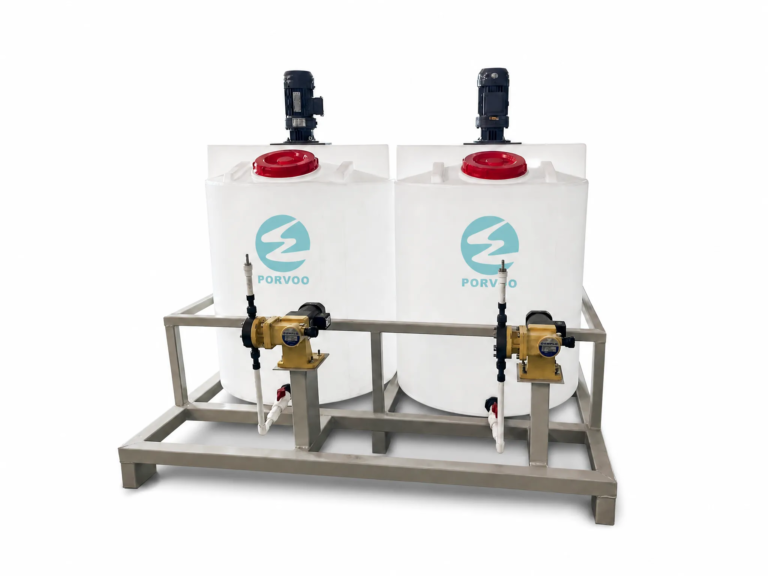
Chemical-assisted clarification techniques play a crucial role in modern wastewater recycling processes. As our global water resources face increasing pressure from population growth, industrialization, and climate change, the need for efficient and effective wastewater treatment has never been more critical. This article delves into the intricacies of chemical-assisted clarification, exploring its applications, benefits, and impact on the future of water management.
Chemical-assisted clarification is a vital component of wastewater treatment, employing various chemical additives to enhance the removal of suspended solids, colloids, and other contaminants from water. This process not only improves the quality of treated water but also increases the efficiency of subsequent treatment stages. From coagulation and flocculation to advanced oxidation processes, we'll examine the diverse range of techniques used in chemical-assisted clarification and their specific roles in wastewater recycling.
As we navigate through the complexities of chemical-assisted clarification, we'll explore its importance in addressing global water challenges, its environmental impact, and the latest technological advancements in the field. By understanding these processes, we can better appreciate the critical role that chemical-assisted clarification plays in ensuring sustainable water management for future generations.
Chemical-assisted clarification techniques are essential for effective wastewater treatment, enabling the removal of up to 90% of suspended solids and significantly reducing turbidity in treated water.
What are the fundamental principles of chemical-assisted clarification?
Chemical-assisted clarification is rooted in the principles of physical chemistry and colloidal science. At its core, this process aims to destabilize and aggregate suspended particles in wastewater, facilitating their removal through sedimentation or filtration. The primary mechanisms involved include coagulation, flocculation, and precipitation.
In coagulation, chemical additives neutralize the electrical charges on suspended particles, allowing them to come together. Flocculation follows, where gentle mixing encourages these destabilized particles to form larger, more easily removable flocs. Precipitation involves the conversion of dissolved contaminants into insoluble forms that can be separated from the water.
These fundamental principles form the backbone of chemical-assisted clarification techniques. By manipulating the chemical properties of wastewater, treatment plants can significantly enhance the efficiency of solid-liquid separation processes. This not only improves water quality but also reduces the burden on subsequent treatment stages.
Studies have shown that chemical-assisted clarification can reduce turbidity by up to 99% and remove over 80% of organic matter in wastewater, demonstrating its effectiveness in water treatment processes.
| Chemical Additive | Primary Function | Typical Dosage Range |
|---|---|---|
| Aluminum Sulfate | Coagulant | 10-50 mg/L |
| Ferric Chloride | Coagulant | 5-40 mg/L |
| Polyacrylamide | Flocculant | 0.1-1 mg/L |
How does coagulation contribute to wastewater clarification?
Coagulation is often the first step in chemical-assisted clarification, playing a crucial role in destabilizing suspended particles. This process involves adding chemicals, known as coagulants, to neutralize the negative charges on colloidal particles that keep them suspended in water. By reducing these repulsive forces, particles can come closer together, setting the stage for floc formation.
Common coagulants include aluminum sulfate (alum), ferric chloride, and polyaluminum chloride. These chemicals work by releasing positively charged ions that interact with the negatively charged particles in the wastewater. The effectiveness of coagulation depends on various factors, including pH, temperature, and the specific characteristics of the wastewater being treated.
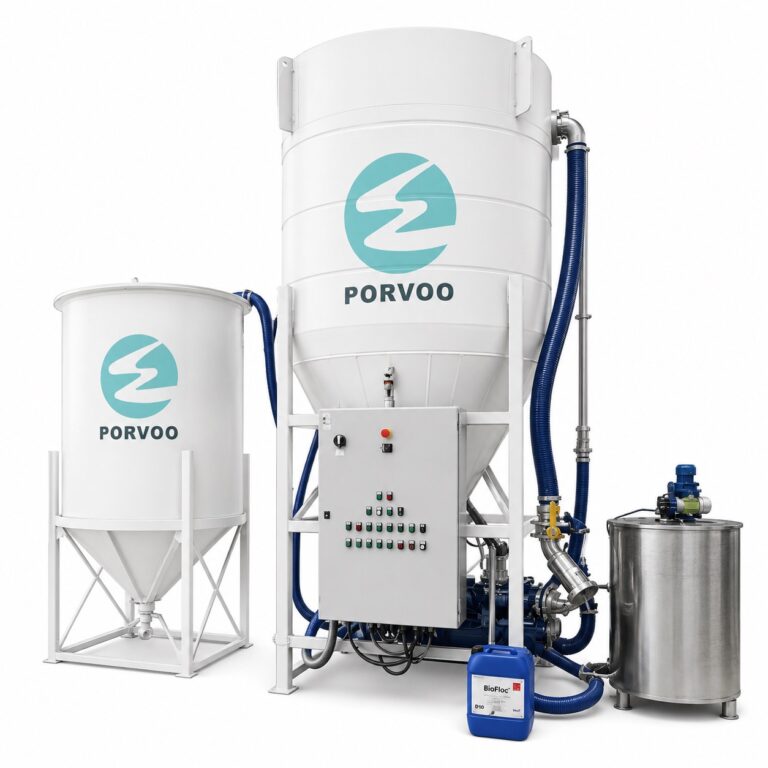
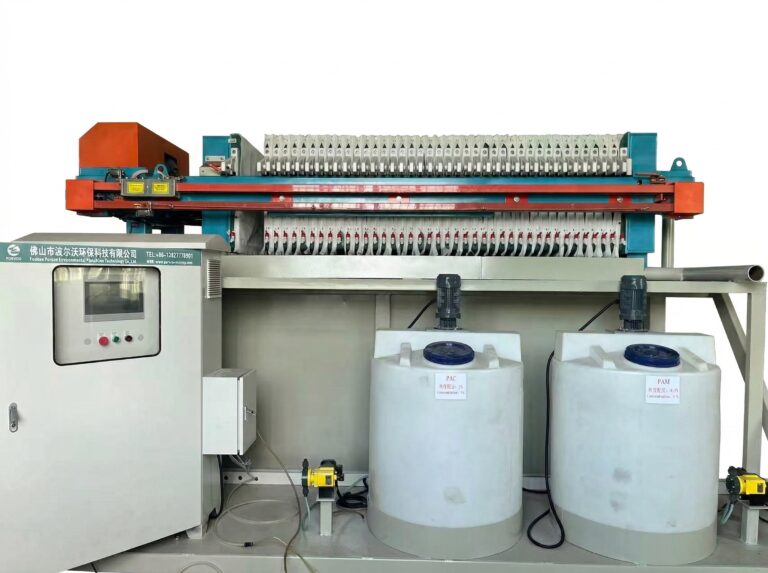
Proper coagulation is essential for the success of subsequent treatment steps. It not only improves the removal of suspended solids but also enhances the elimination of dissolved organic matter, phosphorus, and even some heavy metals. The PORVOO wastewater treatment systems incorporate advanced coagulation technologies to ensure optimal particle destabilization and contaminant removal.
Research indicates that optimized coagulation can remove up to 70% of dissolved organic carbon and 90% of turbidity in wastewater, significantly improving overall water quality.
| Coagulant Type | pH Range | Turbidity Removal Efficiency |
|---|---|---|
| Alum | 5.5-7.5 | 85-95% |
| Ferric Chloride | 4.0-11.0 | 90-98% |
| PAC | 6.0-8.0 | 88-96% |
What role does flocculation play in enhancing clarification efficiency?
Flocculation follows coagulation in the chemical-assisted clarification process, playing a crucial role in aggregating destabilized particles into larger, more easily removable flocs. This stage involves gentle mixing of the water to encourage particle collisions and adhesion, resulting in the formation of larger particle clusters.
The effectiveness of flocculation depends on several factors, including mixing intensity, duration, and the type of flocculant used. Polymeric flocculants, such as polyacrylamides, are often employed to bridge between particles and create stronger, more robust flocs. These high-molecular-weight polymers can significantly enhance the size and strength of flocs, improving their settling characteristics.
Proper flocculation not only improves the efficiency of subsequent sedimentation or filtration processes but also reduces the overall chemical demand in the treatment system. By creating larger, more stable flocs, flocculation enables faster settling rates and clearer supernatant, ultimately leading to higher quality treated water.
Advanced flocculation techniques can increase solid removal efficiency by up to 30% compared to conventional methods, resulting in clearer effluent and reduced chemical consumption in downstream processes.
| Flocculant Type | Molecular Weight | Charge Density | Typical Application |
|---|---|---|---|
| Anionic PAM | 10-15 million | 30-40% | Industrial wastewater |
| Cationic PAM | 8-12 million | 20-30% | Municipal sewage |
| Non-ionic PAM | 5-8 million | 0% | Mining wastewater |
How do advanced oxidation processes enhance chemical-assisted clarification?
Advanced oxidation processes (AOPs) represent a cutting-edge approach to chemical-assisted clarification, offering powerful solutions for treating recalcitrant contaminants in wastewater. These processes generate highly reactive oxygen species, such as hydroxyl radicals, which can break down complex organic compounds and oxidize various pollutants.
AOPs can be employed at different stages of the wastewater treatment process, often as a pre-treatment step to enhance biodegradability or as a polishing stage for removing trace contaminants. Common AOP techniques include UV/hydrogen peroxide, ozonation, and Fenton's reagent. Each method has its advantages and is selected based on the specific characteristics of the wastewater and treatment goals.
The integration of AOPs with traditional chemical-assisted clarification techniques can significantly improve overall treatment efficiency. By targeting difficult-to-remove contaminants, AOPs can enhance the performance of subsequent biological treatment processes and ensure higher quality effluent. The Chemical-assisted clarification techniques offered by PORVOO often incorporate AOP technologies to address challenging wastewater treatment scenarios.
Studies have demonstrated that AOPs can achieve up to 99% removal of persistent organic pollutants in wastewater, significantly outperforming conventional treatment methods in dealing with refractory contaminants.
| AOP Technique | Target Contaminants | Removal Efficiency | Energy Consumption |
|---|---|---|---|
| UV/H2O2 | Pharmaceuticals | 90-99% | Medium |
| Ozonation | Pesticides | 85-95% | High |
| Fenton Process | Industrial dyes | 95-99% | Low |
What are the environmental implications of chemical-assisted clarification?
Chemical-assisted clarification, while highly effective in treating wastewater, comes with its own set of environmental considerations. The use of chemicals in water treatment processes raises questions about their impact on aquatic ecosystems and the potential for chemical residues in treated water. Understanding and mitigating these environmental implications is crucial for sustainable wastewater management.
One primary concern is the potential for chemical sludge generation. Coagulants and flocculants can significantly increase the volume of sludge produced during treatment, which requires proper handling and disposal. However, advancements in chemical formulations and dosing strategies have led to the development of more environmentally friendly options that minimize sludge production while maintaining treatment efficiency.
Another consideration is the impact of residual chemicals in treated effluent. While most treatment chemicals are designed to be removed or neutralized during the process, trace amounts may still be present in the final discharge. Regulatory standards and advanced treatment technologies help ensure that these residuals are kept well below harmful levels, protecting receiving water bodies and aquatic life.
Recent innovations in green chemistry have led to the development of bio-based coagulants and flocculants that can reduce the environmental footprint of chemical-assisted clarification by up to 40% compared to traditional synthetic chemicals.
| Chemical Type | Biodegradability | Sludge Production | Eco-toxicity |
|---|---|---|---|
| Alum | Low | High | Moderate |
| Biopolymers | High | Low | Low |
| Synthetic PAM | Low | Medium | Variable |
How do pH adjustment and alkalinity control factor into chemical clarification?
pH adjustment and alkalinity control are critical aspects of chemical-assisted clarification, playing a significant role in optimizing treatment efficiency and ensuring the stability of the process. The effectiveness of many coagulants and flocculants is highly dependent on the pH of the wastewater, making precise control essential for achieving optimal results.
Alkalinity, which represents the water's capacity to neutralize acids, is equally important in chemical clarification. Sufficient alkalinity is necessary to support the coagulation process and prevent rapid pH fluctuations that could destabilize the treatment system. In cases where natural alkalinity is low, chemical additives such as lime or sodium bicarbonate may be used to adjust and maintain optimal conditions.
Proper pH and alkalinity management not only enhances the performance of chemical additives but also contributes to the overall stability and reliability of the treatment process. It can improve floc formation, increase settling rates, and reduce the amount of chemicals required for effective treatment. Advanced control systems and real-time monitoring are often employed to maintain optimal pH and alkalinity levels throughout the clarification process.
Research has shown that maintaining optimal pH and alkalinity can improve coagulant efficiency by up to 30% and reduce chemical consumption by 15-25%, leading to more cost-effective and environmentally friendly wastewater treatment.
| pH Range | Optimal Coagulant | Alkalinity Requirement | Treatment Efficiency |
|---|---|---|---|
| 5.5-6.5 | Alum | 30-50 mg/L as CaCO3 | 85-90% |
| 6.5-7.5 | Ferric Chloride | 50-100 mg/L as CaCO3 | 90-95% |
| 7.5-8.5 | PAC | 100-150 mg/L as CaCO3 | 92-98% |
What emerging technologies are shaping the future of chemical-assisted clarification?
The field of chemical-assisted clarification is continually evolving, with emerging technologies promising to enhance efficiency, reduce environmental impact, and address new challenges in wastewater treatment. These innovations are shaping the future of water management, offering solutions that are more sustainable, cost-effective, and adaptable to diverse treatment needs.
One significant area of development is in smart dosing systems and real-time monitoring technologies. These systems use advanced sensors and artificial intelligence to optimize chemical dosing based on real-time water quality parameters, ensuring maximum efficiency and minimizing chemical waste. Additionally, nanotechnology is making inroads in water treatment, with nanomaterials showing promise as highly effective coagulants and adsorbents capable of removing even trace contaminants.
Another exciting development is the integration of membrane technologies with chemical clarification processes. Hybrid systems that combine chemical treatment with membrane filtration can achieve superior water quality while reducing the overall chemical footprint. These advanced systems are particularly valuable in applications requiring high-purity water or in water reuse scenarios.
Pilot studies of smart dosing systems have demonstrated potential chemical savings of up to 30% and energy reductions of 20% in wastewater treatment plants, highlighting the significant efficiency gains offered by these emerging technologies.
| Technology | Key Benefits | Implementation Challenges | Potential Impact |
|---|---|---|---|
| Smart Dosing | Reduced chemical use, improved efficiency | High initial cost, integration with existing systems | 20-30% operational cost reduction |
| Nanotechnology | Enhanced contaminant removal, lower chemical demand | Regulatory approval, potential environmental concerns | 40-50% improvement in water quality |
| Membrane Hybrids | Superior water quality, compact footprint | Higher energy consumption, membrane fouling | 60-70% increase in water reuse potential |
Conclusion
Chemical-assisted clarification stands as a cornerstone of modern wastewater treatment, offering powerful solutions to the complex challenges of water purification and recycling. From the fundamental principles of coagulation and flocculation to advanced oxidation processes and emerging technologies, the field continues to evolve, driven by the need for more efficient, sustainable, and environmentally friendly water management practices.
As we've explored throughout this article, the effectiveness of chemical-assisted clarification lies in its ability to remove a wide range of contaminants, from suspended solids to dissolved organic compounds and even emerging pollutants. The integration of advanced technologies, such as smart dosing systems and nanotechnology, promises to further enhance the efficiency and sustainability of these processes.
However, it's crucial to recognize that the future of wastewater treatment will require a holistic approach. Chemical-assisted clarification, while powerful, is just one part of a comprehensive water management strategy. Combining these techniques with biological treatment, membrane technologies, and water reuse initiatives will be essential in addressing the global challenges of water scarcity and environmental protection.
As we look to the future, continued research and innovation in chemical-assisted clarification will play a vital role in ensuring clean, safe water for communities worldwide. By embracing new technologies, optimizing existing processes, and prioritizing environmental sustainability, we can work towards a future where effective wastewater treatment and water recycling are accessible to all, safeguarding our most precious resource for generations to come.
External Resources
- Mechanical vs. Chemical Wastewater Clarification: The Pros and Cons – This article compares mechanical and chemical wastewater clarification methods, focusing on how chemical clarification works through coagulation and flocculation using chemicals like caustic soda, lime, and polymers.
- A Review of the Literature With Application to Placer Mining – This document reviews the historical and current use of chemical clarification techniques, including the use of polymers and inorganic clarifiers to reduce turbidity in water and wastewater treatment.
- Clarification for Water & Wastewater Treatment – Veolia's expertise in water clarification is detailed here, explaining the conventional clarification process involving coagulation, flocculation, and sedimentation to remove suspended solids and particulate matter.
- Clarification – This resource outlines various clarification methods, including settling, and discusses the characteristics of the fluid medium and the speed of the operation, providing a comprehensive view of clarification processes.