Stone fabrication and quarrying processes produce wastewater that behaves nothing like the settling-friendly suspensions that conventional pretreatment logic was built around. Sawing, cutting, and wire-saw slurrying release a continuous stream of dense mineral particles—ranging from coarse chips down through fine polishing dust—that arrive at the collection sump mixed with process water and in proportions that shift with cutting speed, tool wear, and stone type. When that load reaches pumps, clarifiers, or a filter press without adequate pretreatment, the damage is rarely catastrophic and immediate; it is gradual, cumulative, and routinely misread. Impeller wear gets attributed to cavitation. Filter cloth failures get attributed to dosing chemistry. Valve leakage gets attributed to pressure cycling. The decision that determines whether any of that happens is made at the pretreatment stage, before a pump is selected or a press is sized—and this article gives you the basis to make that judgment with the actual solids data in hand rather than default assumptions that may not fit your process.
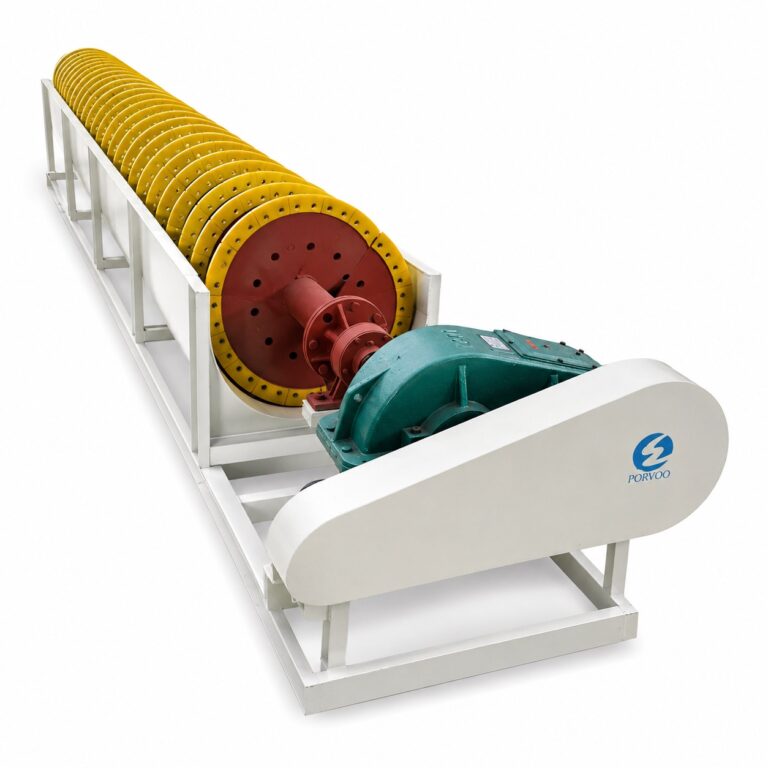
Identify abrasive grit from sawing cutting and polishing
Stone fabrication wastewater is not a simple mineral suspension. The solids it carries reflect the full cutting sequence: coarse chips and aggregate fragments from primary sawing, mid-range particles from profiling and trimming, and fine abrasive dust from surface grinding and polishing. Each stage contributes a different particle size range and a different density profile, and they all arrive at the same collection point mixed together.
The distinction that matters practically is that municipal wastewater grit removal was designed around a narrow assumption—particles above roughly 212 microns, with a specific gravity of approximately 2.65. Granite, marble, quartz, and engineered stone particles routinely span a much wider range, including significant fractions below 100 microns, and many natural stone materials carry densities well above that assumed baseline. Applying municipal design logic to a quarry or fabrication shop drainage system is not a conservative choice; it is a mismatch that understates the actual abrasive load from the start.
The practical implication for characterization is that the influent solids profile should be measured across the full particle size distribution, not just reported as a bulk total suspended solids figure. ISO 11923:1997 provides the framework for suspended solids determination by filtration, which establishes a baseline measurement methodology, but a total TSS result alone does not distinguish between a 500-micron chip that settles in seconds and a 60-micron abrasive particle that stays entrained through the entire process train. Both contribute to downstream wear, but they respond differently to pretreatment unit operations, and sizing correctly depends on knowing how much of each is present.
Remove large particles before pumps clarifiers and presses
Skipping or undersizing grit removal does not produce an obvious immediate failure. What it produces is a distributed wear condition that begins accumulating from the first week of operation. Abrasive particles in the 100–500 micron range are too heavy to stay fully suspended at normal pipe velocities yet too fine to settle quickly in sump collection zones, which means they travel through the system, repeatedly contacting impellers, valve seats, rake mechanisms, and filtration media.
Each piece of downstream equipment carries a different vulnerability, and the consequences arrive on different timelines.
| Equipment | Risk from Grit Carryover | Consequence |
|---|---|---|
| Pumps | Abrasive wear on impellers and casings | Unplanned repair downtime |
| Clarifiers | Wear on internal mechanisms and rakes | Reduced reliability, performance degradation |
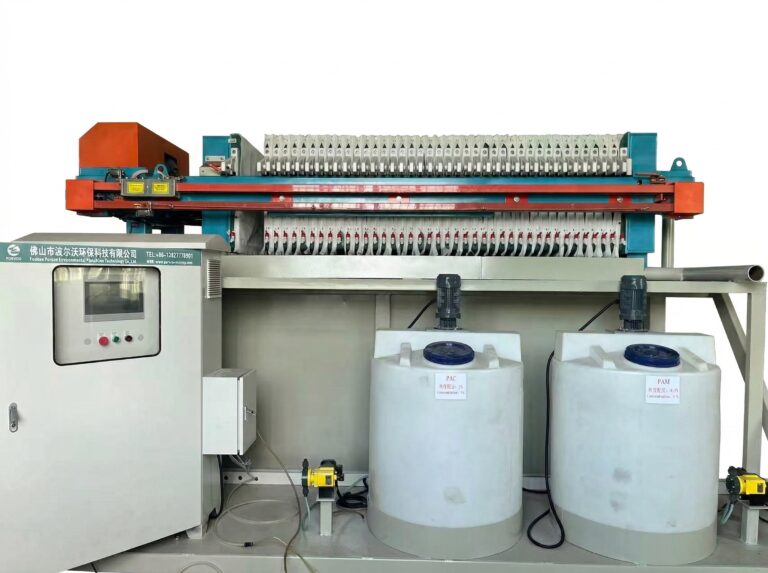
| Filter Presses | Abrasion of filter cloth and seals | Cloth replacement, production interruptions |
The operational pattern that makes this hard to catch is that each equipment category tends to produce symptoms that look like independent problems. Pump repairs get tracked as a maintenance line item. Cloth replacement gets absorbed into press operating costs. It often takes a systematic review—comparing component lifespans against the pretreatment specification—before the common cause becomes visible. Establishing grit removal as the first unit operation, before any pump or clarifier is in the flow path, is the design decision that prevents the distributed wear pattern from developing in the first place.
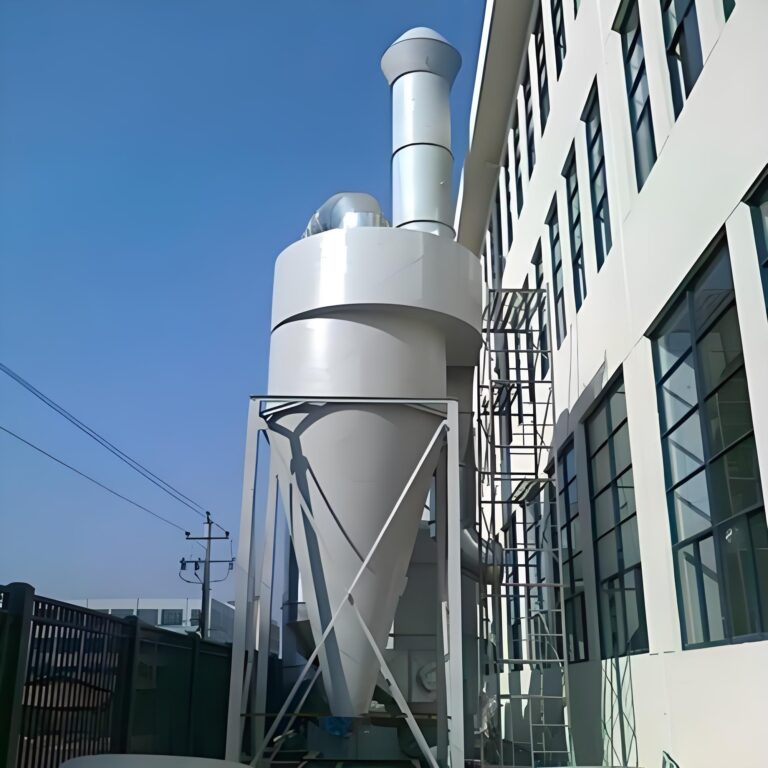
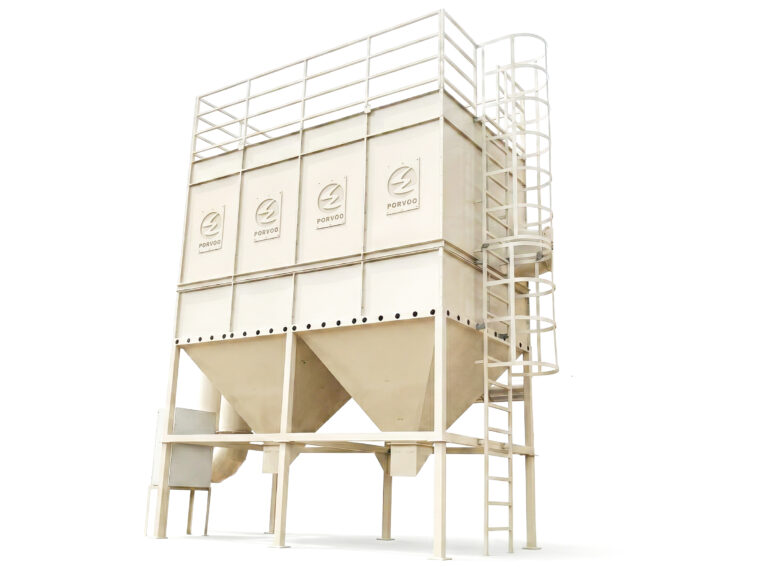
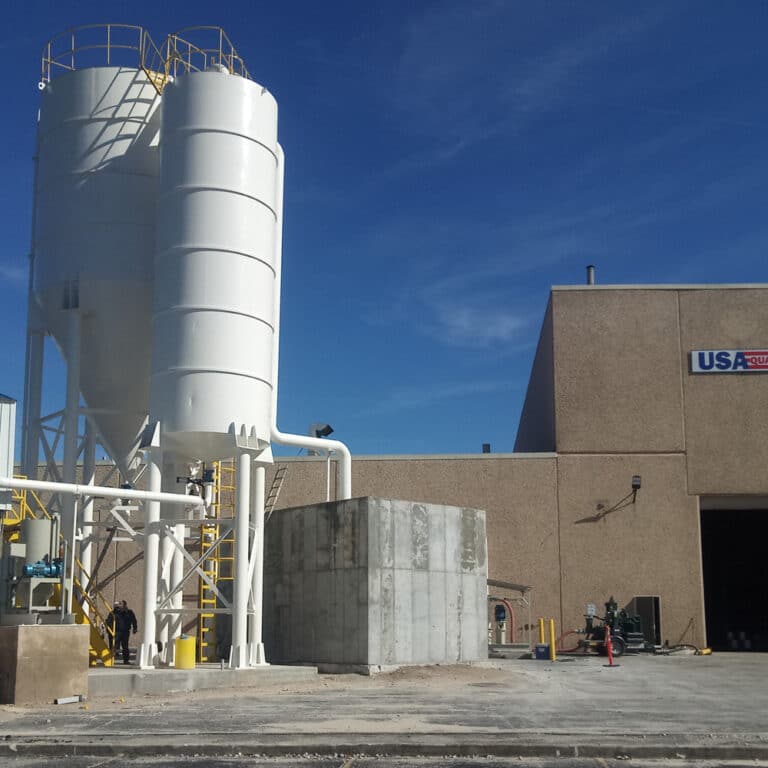
For applications where the Large Particle Grit Removal step is defined as a system boundary, that boundary also becomes the accountability line: equipment warranties and performance expectations for downstream units are based on the assumption that the influent entering them has already been cleared of abrasive coarse solids.
Compare grit options by flow particle size and footprint
The performance gap between conventional and advanced grit removal designs is not a marginal engineering refinement. Conventional designs, sized against the 212-micron standard particle assumption, may capture only 30 to 50 percent of the actual grit load present in stone slurry applications. That figure is a planning-level contrast, not a tested result for any specific product, but it illustrates the scale of underperformance that is possible when a conventional design meets a non-standard influent.
Advanced systems may achieve 85 to 95 percent total grit capture, and some designs can reliably remove particles as fine as 75 microns. Neither figure should be treated as a universal performance guarantee—actual capture depends on flow rate, influent concentration, particle density, and hydraulic residence time—but they provide a useful benchmark when evaluating whether a proposed design is matched to the actual particle size distribution in the wastewater stream.
| Performance Factor | Conventional Design (Rule-of-Thumb) | Advanced Grit Removal System |
|---|---|---|
| Total grit capture | 30–50% of incoming grit load | 85–95% of incoming grit load |
| Minimum particle size captured | 212 µm (assumed) | As low as 75 µm |
| Downstream protection | Allows fine abrasive carryover into process | Reduces abrasive load on clarifiers, presses, and valves |
The footprint trade-off is real and project-specific. Designs that achieve finer particle capture typically require either longer hydraulic retention, higher centrifugal forces, or more controlled flow conditions, which translates into larger equipment, higher capital cost, or more complex civil works. For a compact fabrication shop with limited sump space, the selection decision becomes a direct negotiation between capture performance and physical footprint. The right question is not which system is best in the abstract, but which system captures enough of the site-specific grit distribution to protect downstream equipment within the available space and budget constraints. That answer requires knowing the actual particle size distribution—not assuming it.
For a structured walkthrough of how to match grit removal capacity to a specific flow rate, How to Calculate Required Grit Removal Capacity for Your Wastewater Flow Rate provides a practical starting framework.
Protect filter cloth and valves from abrasive carryover
Filter cloth and valve components are the two failure points most likely to be damaged by grit carryover that a grit removal system failed to intercept—and both tend to fail in ways that obscure the root cause.
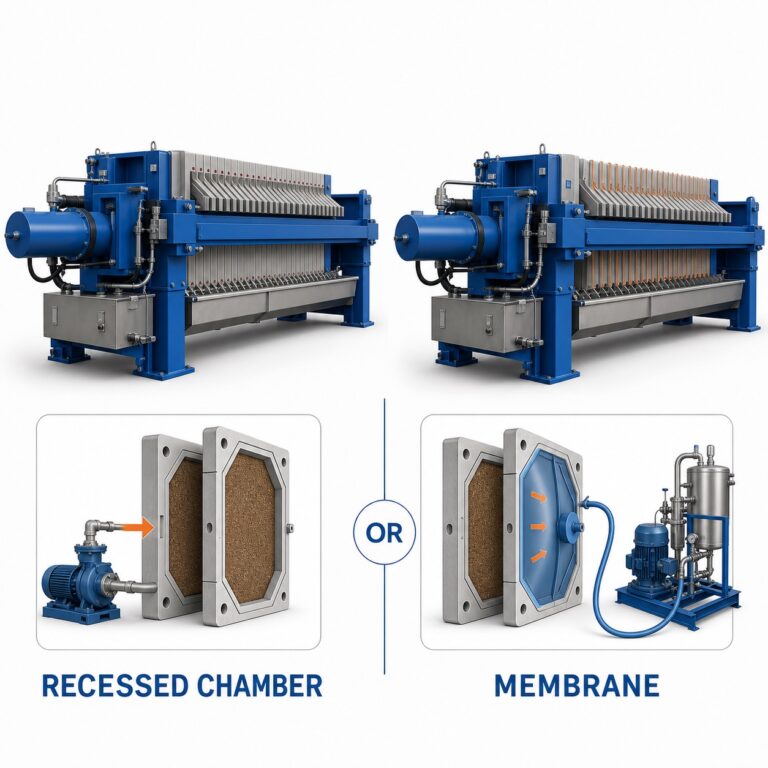
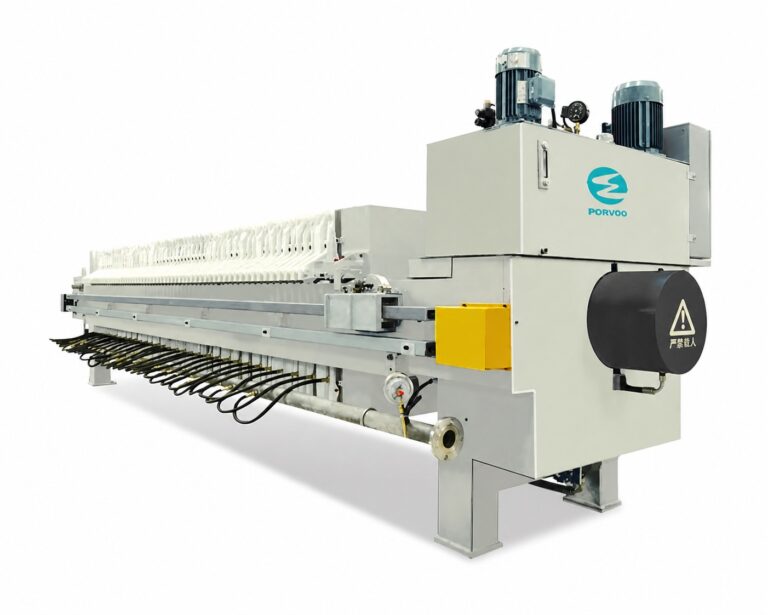
Filter cloth in a recessed plate press operates under repeated compression and hydraulic pressure cycles. When abrasive particles are present in the slurry feed, those particles do not just accumulate in the filter cake; they are also driven against the cloth surface during press closure and against cloth seams and blinding edges during cake discharge. The result is localized abrasion that shortens cloth life progressively, with failures that appear as leakage or throughput loss rather than a visible tear. Because cloth replacement is a normal maintenance event, premature replacement cycles are frequently absorbed into operating cost without being traced back to influent particle quality.
Valve components face a different damage mechanism. Grit that works past pump seals and into process piping can migrate through valve packing and score the seating surfaces. Once a seat is scored, the leak path does not close when the valve closes, and the damage is compounding—each subsequent cycle carries more abrasive material through the gap. This failure mode is particularly relevant in chemical dosing circuits, where valve integrity is critical for accurate dose control, and in filter press feed valves, where leakage around the valve body creates both a maintenance problem and a process control issue.
GB/T 26114-2024, which covers general technical specifications for liquid filtration equipment, establishes a framework for filter performance and component integrity, but it does not define grit tolerance limits for filter cloth or valve assemblies. The practical protection standard is operational: ensure that the abrasive particle load reaching filtration equipment has been reduced to a level that the selected cloth and valve materials can sustain across their expected service life. That determination belongs in the pretreatment specification, not in the filter press procurement document.
Keep grit disposal separate from sludge cake handling
When grit removal is treated as optional or sized too small, coarse abrasive solids do not stay in pretreatment—they migrate downstream and eventually accumulate in sludge cake. Once they do, the grit and the fine mineral cake are intermixed, and separating them after the fact is not a realistic option.
The handling requirements for grit and for sludge cake are fundamentally different. Grit is dense, coarse, and abrasive. It is typically collected as a settled or screened solid with relatively low moisture content and can often be dewatered passively or with minimal processing. Fine mineral cake from clarifier underflow or filter press discharge is a different material: finer particle size, higher bound moisture, and in some stone types, potential value as a processed aggregate, filler, or ceramic raw material. Commingling the two streams creates a mixed solid that is more difficult to handle, harder to characterize for disposal or reuse purposes, and more abrasive on any dewatering equipment it passes through.
The operational recommendation is to size grit removal to intercept the coarse fraction before it reaches the clarification or thickening stage, and to manage the grit collection point as a separate waste stream with its own handling, storage, and disposal path. This is not a regulatory citation—it is a practical planning criterion based on the difference in material properties and downstream handling requirements. Projects that treat grit removal and sludge dewatering as a single combined process often discover the handling problem at commissioning, when the mixed solid does not behave as either stream would have behaved independently.
Use solids data to size pretreatment
The 212-micron, SG 2.65 conventional grit assumption is a municipal wastewater planning convention, not a characterization of stone fabrication slurry. Using it as the basis for pretreatment sizing in a quarry, cutting shop, or stone surface finishing facility is a specification error that produces a system that appears correctly designed on paper but underperforms from the first day of operation.
The planning implication is that pretreatment sizing should start with measured influent data from the actual process stream. At minimum, that means a particle size distribution test across the full suspended solids fraction, not just a bulk TSS measurement. ISO 11923:1997 provides the methodological basis for suspended solids characterization by filtration, which can establish the total solids loading that pretreatment must handle. A particle size analysis layered on top of that result identifies what fraction of the total load falls within the capture range of the proposed grit removal design and what fraction will pass through.
The practical check for procurement and system design is to confirm that the grit removal specification includes an explicit minimum capture particle size—not just a flow rate—and that the specified capture size is benchmarked against the measured or reasonably estimated particle size distribution in the influent. A system specified only by hydraulic throughput, without a capture particle size guarantee, may be sized correctly for flow but may still allow the majority of fine abrasive grit to pass through as though the pretreatment unit did not exist. That gap is difficult to close once the system is installed and operating, because retrofitting finer grit removal into an existing process layout typically requires significant civil and piping changes that were not accommodated in the original design.
Include grit removal as a defined system boundary
Grit removal is most commonly described as the first stage of treatment, but its function as a system boundary is more important than its position in a flow diagram. A system boundary is a contractual and operational definition: it establishes what condition the flow stream is in when it leaves one unit operation and enters the next, and it sets the basis on which downstream equipment is selected, specified, and warranted.
When grit removal is included in a treatment system but not defined as a formal boundary—with a specified effluent particle size and a confirmed capture performance—it becomes ambiguous who is responsible for what. If a filter press experiences accelerated cloth wear, and grit removal was assumed rather than specified, the root cause cannot be established clearly. The press supplier’s performance warranty is written against a defined feed condition. If that condition was never confirmed, the warranty claim is difficult to support, and the resolution typically falls on the plant operator rather than on the equipment supplier.
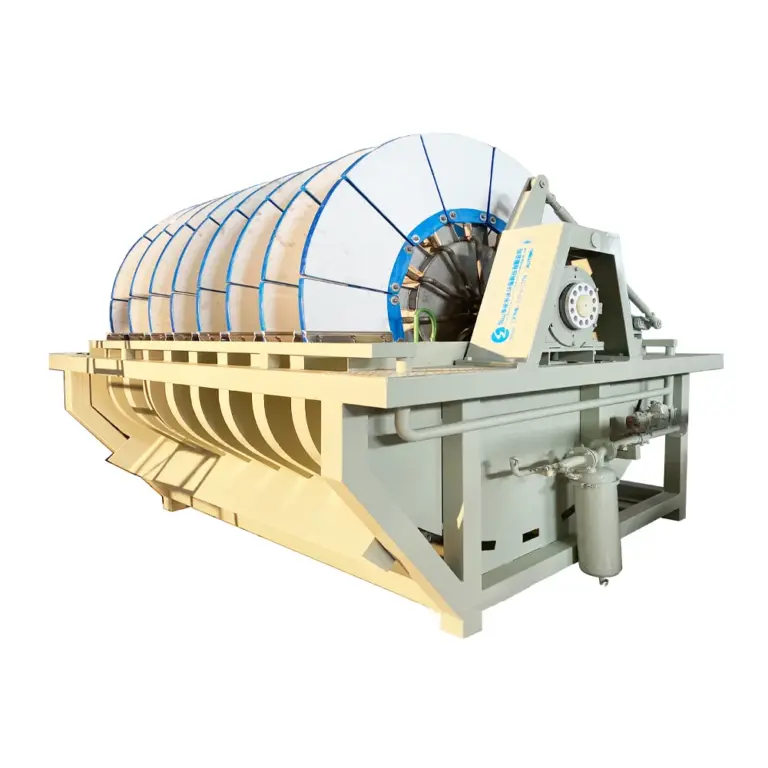
For project integrators and procurement teams, the practical requirement is to include grit removal in the scope of work as a defined pretreatment stage, with a specified design flow, a specified minimum capture particle size, and a confirmed effluent condition that downstream equipment was selected to handle. That scope definition should appear in the system boundary documentation before downstream equipment is specified, not as a retrofit addition after pumps and presses have already been purchased. A Recessed Plate and Frame Filter Press specified for stone slurry dewatering is designed for a feed stream that has already been cleared of abrasive coarse solids; the pretreatment boundary is part of the basis for that selection, not a detail to confirm later.
For a broader reference on technology options and design considerations within this equipment category, The Complete Large Particle Grit Removal Guide for Industrial Facilities covers selection criteria, application context, and performance framing in more depth.
The most actionable judgment this article supports is a straightforward one: do not accept a grit removal specification that is defined only by hydraulic capacity without a confirmed minimum capture particle size matched to your actual influent characterization. Stone slurry wastewater contains a particle size distribution that conventional municipal grit removal assumptions were not designed around, and a system that is correctly sized for flow but incorrectly sized for particle size will allow the abrasive fine fraction to pass through at full concentration. That fraction is responsible for the wear patterns that appear later as premature pump repairs, short cloth life, and valve leakage—problems that are expensive to fix and difficult to trace back to their cause once downstream equipment is already installed.
Before finalizing a pretreatment scope or issuing an RFQ, confirm that measured or representative particle size data from the process stream has been used to select the grit removal design, that the grit collection point is specified as a separate waste handling stream from clarifier and press sludge, and that the effluent condition leaving grit removal is documented as the basis of specification for every downstream unit operation. Those three confirmations are the minimum needed to make the rest of the system design defensible.
Frequently Asked Questions
Q: Our stone fabrication shop has highly variable flow—peak loads during shifts and near-zero flow overnight. Does that variability affect how grit removal should be sized?
A: Yes, and it is one of the conditions where a hydraulic-capacity-only specification is most likely to fail. Grit removal performance depends on hydraulic residence time and controlled flow conditions, not just average daily volume. A system sized for average flow will be hydraulically overloaded during peak cutting periods, which is precisely when grit concentration is also highest. Sizing should be based on peak instantaneous flow rate, not average flow, and the specification should confirm that capture performance at the stated minimum particle size holds at that peak condition—not only at design midpoint.
Q: Once grit removal is installed and commissioned, what is the most useful early indicator that it is performing as specified?
A: The clearest early signal is pump maintenance frequency on the downstream side. If impeller wear rates and seal replacement intervals align with the manufacturer’s baseline for clean-water or low-abrasive service, grit removal is functioning as intended. If wear rates are elevated within the first few months, it indicates that abrasive carryover is reaching the pump—either because the grit removal system is underperforming or because the capture particle size was not matched to the actual influent distribution. Tracking pump component lifespans from commissioning, rather than waiting for a visible failure event, gives you a quantifiable performance signal that connects directly back to pretreatment effectiveness.
Q: Is there a point at which the fine abrasive fraction—particles below 75 microns—is simply not worth targeting in pretreatment, and is better handled by downstream chemistry or filtration?
A: For most stone slurry applications, attempting to capture the sub-75-micron fraction in a grit removal stage is neither technically straightforward nor cost-effective—that range belongs to clarification and chemical conditioning, not mechanical grit removal. The practical boundary condition is that grit removal earns its cost by protecting equipment from the mid-range abrasive fraction, roughly 75 to 500 microns, where particles are dense enough to cause accelerated wear but too coarse to be reliably managed by dosing chemistry alone. Below 75 microns, the particles behave more like colloidal or fine suspended solids and respond to flocculation and sedimentation. The risk of trying to extend grit removal into that range is over-engineering the pretreatment stage at the expense of footprint and capital cost without a proportionate reduction in downstream wear.
Q: If the site already has a settling pond or holding lagoon before the treatment building, does that substitute for a dedicated grit removal unit?
A: A settling pond will remove the coarsest fraction—particles large enough to drop out under simple gravity at low velocity—but it does not reliably control the particle size of the effluent leaving it. What exits the pond depends on pond geometry, inlet turbulence, wind mixing, and how frequently accumulated solids are removed. None of those variables are managed to a defined capture particle size. A dedicated grit removal unit provides a confirmed effluent condition: a specified minimum capture size under defined hydraulic conditions. That confirmation is what downstream equipment warranties and pretreatment boundaries require. A settling pond upstream of the treatment train may reduce the load on a grit removal unit, which can affect sizing, but it does not replace the defined system boundary that a grit removal unit establishes.
Q: For a small fabrication operation with limited capital budget, is it reasonable to defer grit removal and add it later if wear problems develop?
A: Deferring grit removal is technically possible but carries a specific cost risk that is worth quantifying before deciding. Retrofitting grit removal into an existing process layout typically requires civil modifications—sump reconfiguration, piping changes, and additional footprint—that were not accommodated in the original design. Those retrofit costs are almost always higher than the incremental cost of including the unit at initial build. More concretely, the wear damage that accumulates before retrofit is not recoverable: impellers, valve seats, and filter cloth that have already been degraded do not return to original condition when grit removal is added. The practical question is not whether to defer, but whether the capital saving at commissioning is larger than the expected repair and retrofit cost within the first two to three years of operation—and for abrasive stone slurry applications, that comparison rarely favors deferral.