Ceramic tile and sanitaryware plants generate wastewater sludge that looks deceptively manageable on paper — a moderate solids load, relatively fine particle distribution — until a press is sized on rule-of-thumb chamber counts and the first production shift reveals cycle times that cannot clear the incoming volume within the operating window. The practical consequence is not a process alarm; it is a quietly accumulating sludge inventory that forces extended cycles, compresses maintenance windows, and eventually pushes operators to reduce feed pressure to salvage throughput, which undermines cake dryness. The decision that prevents this is a structured sizing calculation completed before any press type is placed on a shortlist — because the choice between a recessed chamber and a membrane press cannot be made usefully without knowing the dry solids load, target moisture, available shift hours, and realistic feed concentration entering the press.
List the sludge data needed before comparing press types
Most press undersizing problems in ceramic wastewater applications are not equipment failures — they are calculation omissions. The sizing sequence that reliably avoids this starts with absolute dry solids: total wastewater volume multiplied by solids content gives the dry mass the press must handle per day. From that figure, working backward through target moisture content gives the wet sludge volume the press needs to discharge. Dividing by available operating hours and assumed cycle time gives the per-batch volume requirement, which is then converted to required filter area using an assumed chamber volume per square metre of cloth.
To make this concrete: a plant processing 1,000 tonnes of wastewater per day at 1% solids, running eight hours per day with a four-hour cycle and approximately 15 litres of chamber volume per square metre, produces a required filter area figure that is quite different from what most first-pass RFQ estimates assume. These specific figures are illustrative design inputs, not standard specifications — actual feed concentration, cycle time, and chamber geometry will shift the area requirement significantly — but the structure of the calculation is what matters. Skipping it and jumping directly to plate count comparisons is where undersizing originates.
The downstream consequence of skipping this step is characteristically late-stage: the gap between quoted cycle performance and real-world cycle performance only becomes visible at commissioning, when actual feed concentration diverges from the vendor’s assumed figure. By that point, the press is installed, the footprint is fixed, and the options are limited to extended cycle times, feed dilution, or a supplementary press — none of which were in the original project budget.
Compare plate-and-frame recessed and membrane cake formation
The three press configurations in common use for ceramic sludge — plate-and-frame, recessed chamber, and membrane — differ primarily in how the cake forms and how moisture is removed. Understanding the geometric and mechanical basis of those differences is more useful than comparing headline moisture figures, because the conditions under which each type performs well are quite specific.
Plate-and-frame presses feed slurry through corner ports, which supports effective cake washing by creating a defined flow path through the cake mass. The trade-off is that narrow feed channels in the frame assembly create a meaningful clogging risk when the sludge contains coarse or poorly classified particles — a condition common in plants where glaze grinding or raw material processing runs upstream of the wastewater circuit. This is not a guaranteed failure in all cases, but it is a predictable operational risk driven by feed channel geometry, and it warrants a particle size check before specifying plate-and-frame for ceramic sludge that has not been screened.
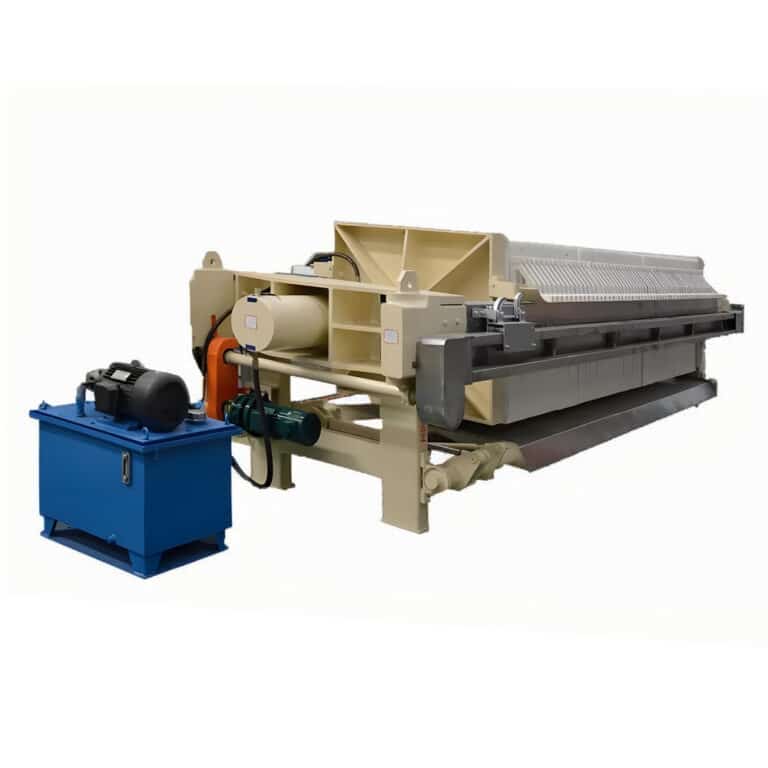
Recessed chamber presses use only recessed plates, forming chambers between adjacent plate faces. The center feed port accepts larger particles without the same blockage tendency, making this configuration more tolerant of variable or coarser ceramic slurries. Membrane presses add a diaphragm element to alternate or all plates; after the filtration fill stage, pressurized media inflates the diaphragm and mechanically squeezes the cake, removing moisture beyond what hydraulic feed pressure alone can achieve. The squeeze step is where membrane presses earn their cost premium — but only when the moisture reduction it delivers is actually required.
| Feature | Plate & Frame | Recessed Chamber | Membrane |
|---|---|---|---|
| Cake Washing Efficiency | High (corner feed design) | Moderate (center feed) | Moderate (center feed, squeeze aids dewatering) |
| Clogging Risk – Coarse Particles | Higher (narrow feed channels) | Low (large center port) | Low (center port, membrane plates) |
| Moisture Reduction | Limited to filtration pressure | Limited to filtration pressure | Significant (diaphragm squeeze compresses cake) |
| Equipment Cost | Higher (extra frames/plates) | Moderate | Highest (membrane plates + controls) |
| Cycle Time | Standard | Standard | Shorter (squeeze shortens filtration time) |
The implication that the table does not carry is the failure mode that sits between moderate clogging risk and complete blockage: partial channel restriction in a plate-and-frame press on coarser ceramic sludge does not stop filtration — it creates uneven cake formation across the plate pack, which shows up as inconsistent cake thickness and variable discharge. That unevenness is difficult to diagnose after the fact and is often attributed to cloth condition rather than feed particle distribution.
Match pressure cycle and cloth handling to plant staffing
Cloth management is the operational constraint that most directly connects press configuration to plant staffing, and it is consistently underweighted at the procurement stage. A press that requires manual cloth cleaning after every cycle places a fixed labor demand on each shift that compounds across operating hours per year. Reported benchmarks from automatic high-pressure water-washing systems indicate roughly 90% reduction in manual cleaning labor and approximately 60% extension in cloth service life compared to manual handling — figures that should be treated as design indicators for staffing planning rather than guaranteed performance specifications, since actual outcomes depend on cloth selection, feed characteristics, and wash pressure settings.
The staffing implication is whether the plant can realistically sustain consistent cloth condition with the crew hours available per shift. A press running two or three cycles per shift with manual cloth cleaning requires a dedicated operator presence that many ceramic plants cannot sustain without either overtime or reduced throughput on night shifts. Automatic washing shifts the labor profile: the press can terminate a cycle and initiate a cloth wash based on preset triggers — elapsed time, chamber pressure ceiling, or filtrate flow rate dropping below a defined threshold — without requiring an operator to be present at the moment of cycle end.
| Factor | Manual Cleaning | Automatic Water-Washing | Why It Matters for Staffing |
|---|---|---|---|
| Labor for Cloth Cleaning | High (manual scraping/washing) | ~90% reduction | Drastically reduces hands-on operator time per cycle |
| Filter Cloth Service Life | Shorter (mechanical wear from manual handling) | ~60% longer | Lowers consumable replacement frequency and procurement burden |
| Consumable Costs | Higher (more frequent cloth changes) | Lower | Predictable OPEX and fewer maintenance interventions |
| Cycle Termination Control | Operator-dependent (manual checks) | Automated triggers (time, pressure, or flow) | Enables unattended operation and consistent cycle quality |
The procurement-stage mistake is specifying manual cloth handling to reduce upfront cost and then discovering, after twelve to eighteen months of operation, that cloth replacement frequency is significantly higher than expected. Automatic cloth washing is more cost-effective to specify upfront than to retrofit after installation, both because the hydraulic and structural provisions differ and because the cloth life savings compound from the first operating month.
Decide when membrane squeeze is worth added complexity
Membrane squeeze genuinely delivers what it promises — lower cake moisture and shorter filtration cycles — but those benefits only justify the added system complexity when the moisture target is tight enough that standard filtration pressure alone cannot reach it, and when the plant has the maintenance bandwidth to service diaphragm hardware on a predictable schedule.
The case for membrane squeeze in ceramic wastewater applications is strongest when the downstream handling of filter cake depends on a specific dryness threshold: direct transfer to a kiln or dryer, co-processing with raw materials, or off-site disposal with weight-based handling costs. In those situations, the delta between what a recessed chamber press delivers and what a membrane press delivers after squeeze may be the margin between a workable cake and one that creates handling or cost problems at the next step. The case weakens when the plant’s moisture target is achievable through standard filtration pressure and adequate feed concentration — running membrane plates without activating the squeeze stage is not uncommon at plants where the initial dryness specification was set conservatively, and in those situations the added diaphragm hardware, higher control system complexity, and membrane maintenance schedule represent cost with no operational return.
The maintenance complexity is not trivial. Membrane plates require periodic inspection of diaphragm integrity, and a failed or partially delaminated diaphragm does not immediately stop filtration — it creates uneven squeeze pressure across the cake, which produces inconsistent dryness and may cause cake adhesion problems during discharge. Plants without a dedicated maintenance engineer who understands the squeeze system often defer diaphragm checks until a visible failure occurs, at which point unplanned downtime and parts lead time become the cost, rather than the planned service interval the system was designed around.
For a membrane filter press to pay back its premium over a recessed chamber press, the dryness requirement, cycle time budget, and maintenance capacity all need to align — not just the moisture target in isolation.
Check filtrate clarity and cake discharge expectations
Under correct press sizing and appropriate cloth selection, the filtrate from a ceramic sludge press application should be sufficiently clear for plant reuse — typically return to the process water circuit or wash-down systems. The cake should be firm enough to discharge cleanly from the plate pack without significant residue on the cloth face. These are reasonable operational expectations, but they are conditional on the press being sized for the actual feed concentration and the cloth grade being matched to the particle size distribution of the sludge.
The condition that most commonly disrupts filtrate clarity in ceramic applications is a cloth that is too open for the feed particle size, which allows fine ceramic particles to pass through during the initial fill stage before a filter cake has formed. Early-run turbidity is a normal characteristic of press filtration — filtrate clarity typically improves as the cake layer builds and begins acting as a secondary filter medium — but if the cloth is consistently too coarse for the sludge, the filtrate throughout the cycle may carry fine solids that make direct reuse problematic without a polishing step.
Cake discharge problems are more often a cloth maintenance issue than a press configuration issue. Blinded or partially clogged cloth that has not been adequately washed between cycles creates adhesion that prevents clean cake release, which extends the discharge phase, increases the risk of incomplete discharge, and compounds cloth degradation with each subsequent cycle. This is the operational loop that automatic cloth washing is designed to interrupt — and the reason cloth-wash specification and cloth grade selection should be treated as part of the press selection decision, not as accessories to be finalized later.
Compare capital cost against cycle time and moisture target
Capital cost comparisons between press configurations only carry decision weight when they are expressed relative to cost per tonne of cake processed, not as absolute equipment prices. A membrane press with automatic cloth washing carries the highest upfront cost, but if it reliably shortens dewatering cycles by approximately 35% and achieves up to 85% solids dryness under appropriate feed and wash conditions, the throughput increase per operating shift may justify the premium when evaluated against actual sludge volume and disposal cost. These figures should be treated as design benchmarks achievable under the right operating conditions — specifically, adequate feed concentration and functional automatic washing — not as universal performance specifications.
Feed concentration is the variable that most directly governs whether the quoted dryness figures are achievable in practice. A plate-and-frame press fed at 30–40% solids concentration can produce cake at around 80% dryness (20% moisture), which is a useful benchmark for that configuration under realistic feed conditions. Feeding a press significantly below that concentration range shifts the pressure required to achieve the same dryness upward, extending cycle time and reducing throughput — a dynamic that affects the cost-per-tonne calculation more than the initial capital difference between configurations.
| Configuration | Capital Cost | Cycle Time Impact | Achievable Cake Dryness |
|---|---|---|---|
| Plate & Frame (standard operation) | Higher (extra frames and plates) | Standard (no squeeze reduction) | ~80% solids (20% moisture) with 30–40% feed |
| Membrane Press + Automatic Water‑Washing | Highest (membrane plates, squeeze system, auto‑wash) | ~35% shorter dewatering cycles | Up to 85% solids (15% moisture) |
The procurement error that this comparison is designed to prevent is evaluating press cost in isolation from feed conditioning. A membrane press purchased to achieve 15% moisture but fed at 10–15% solids concentration will be running extended cycles that consume the cycle time advantage the squeeze step was specified to deliver. The cost differential between a recessed chamber and a membrane press becomes very difficult to recover if the operating conditions that justify the membrane squeeze are not actually present in the plant.
Choose the press type that fits the actual sludge duty
The selection decision for ceramic wastewater sludge is not primarily about which press type is more advanced — it is about matching the press to the actual feed characteristics and operational constraints the plant can sustain. Two conditions consistently drive the selection in different directions.
When the ceramic sludge contains coarse particles — from raw material grinding, unscreened process water, or mixed tile cutting and polishing effluent — a recessed chamber press with center feed is the more operationally stable choice. The large center port tolerates particle variation without the channel restriction risk that narrow feed frame geometry creates, and the simpler plate assembly reduces the maintenance surface area relative to a membrane configuration. For plants where throughput reliability matters more than achieving the lowest possible cake moisture, this is usually the right starting point.
When cake dryness is the primary constraint — because cake is transferred to a downstream process with a moisture specification, because disposal cost is calculated on wet weight, or because storage handling requires a firm, non-sticky cake — a membrane press with squeeze gives the most direct path to lower moisture. The decision should also account, however, for the realistic maintenance bandwidth the plant can commit to the diaphragm system, and whether the plant’s current feed conditioning can consistently deliver sludge at the concentration range where the squeeze step yields its advertised benefit.
| Sludge Characteristic / Priority | Recommended Press Type | Key Benefit |
|---|---|---|
| Coarse Particles | Recessed Chamber (center feed) | Prevents clogging, handles large particles without blockages |
| Ultimate Dryness Target | Membrane Press with Squeeze | Drier cake and faster cycle times through diaphragm compression |
Sludge characterization should drive this selection, not the configuration preference. Representative feed sampling — in terms of solids concentration, particle size distribution, and variability across operating shifts — is the foundation of a defensible press selection. ISO 5667-13:2011 provides a process reference for how representative sludge sampling should be approached; the relevance here is not as a governing selection standard but as a reminder that a single grab sample taken during a low-production period is not sufficient to characterize feed conditions for a press that will operate across variable production loads. Plants that skip characterization and select on moisture-target alone frequently discover at commissioning that their actual feed conditions do not match the design basis, and the press performs outside its optimized operating range from the first day of production.
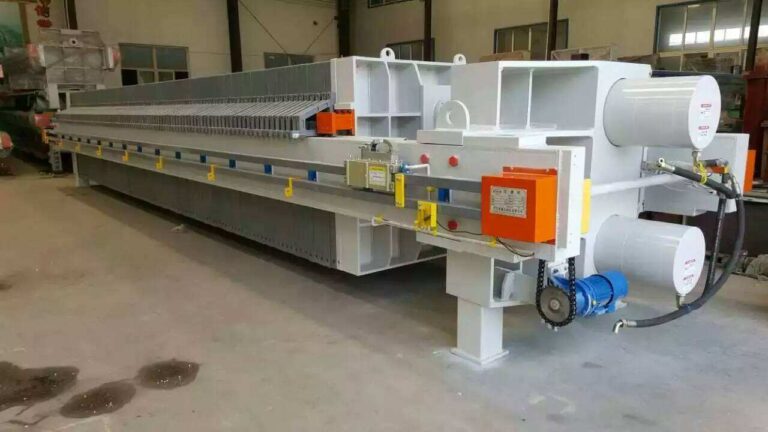
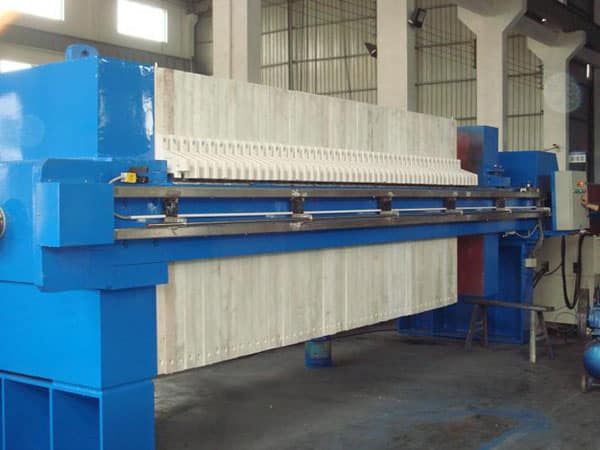
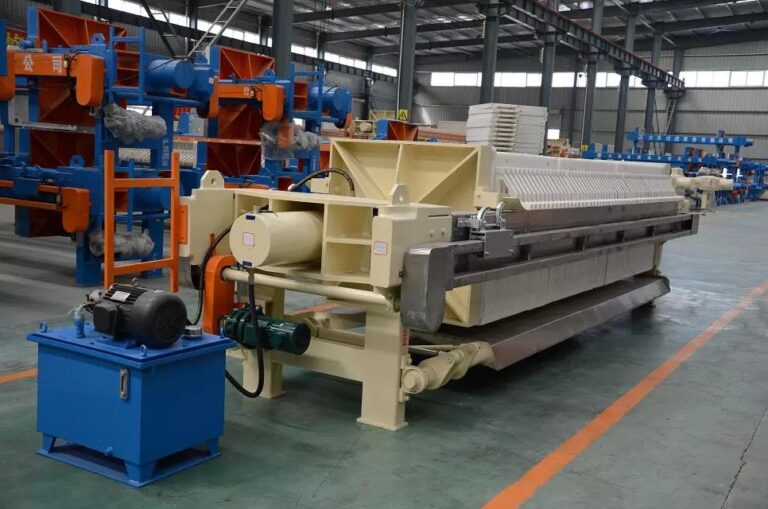
For plants evaluating recessed chamber configurations specifically, the recessed plate and frame filter press product page provides configuration detail relevant to ceramic sludge duties. Comparing that against the membrane option and a conventional plate and frame filter press side by side is a useful starting point before finalizing the RFQ scope. For a deeper look at how recessed and traditional frame designs compare on cake moisture outcomes, the analysis in Which Filter Press Configuration Delivers Lower Cake Moisture: Recessed Chamber vs Traditional Frame Design Data Analysis provides relevant supporting context.
The most consequential judgment in this selection process is completing the dry-solids sizing calculation before committing to a configuration. Press type — recessed chamber versus membrane — is a secondary decision that only resolves cleanly once the required filter area, operating cycle count, and feed concentration are known. A press selected on moisture targets alone, without that foundation, will either underperform on throughput or carry a cost premium that the plant’s actual sludge duty cannot justify.
Before finalizing the RFQ scope, confirm: what is the actual feed solids concentration across production shifts, not just the design value; what is the available operating window per day; what is the downstream moisture threshold that is genuinely required versus conservatively specified; and what maintenance capacity the plant can realistically sustain for diaphragm hardware if a membrane press is selected. Those four inputs will resolve most of the configuration ambiguity before a single vendor quote is issued.
Frequently Asked Questions
Q: What happens if representative sludge sampling wasn’t completed before the press was installed and it’s now underperforming?
A: The practical options are limited, but feed conditioning is usually the fastest lever to pull. If actual feed solids concentration is lower than the design basis, increasing feed concentration through upstream thickening or settling can partially recover cycle performance without modifying the press itself. If particle size distribution is the issue — causing uneven cake formation or cloth blinding — a screening step upstream and a cloth grade change can improve both filtrate clarity and cake discharge. Neither option fully substitutes for a correctly sized press, but both can narrow the gap between design and actual performance while a longer-term remedy is planned.
Q: If the downstream moisture requirement turns out to be less strict than originally specified, is it worth switching from a membrane press to a recessed chamber configuration mid-project?
A: Only if the switch happens before fabrication is committed. Once membrane plates are manufactured or the frame is built to membrane-press hydraulic specifications, the cost of substituting recessed plates rarely recovers the capital already spent, and the control system will have been scoped for squeeze logic that is then redundant. The more productive step is to verify the actual downstream moisture threshold — kiln intake specification, disposal contract terms, or handling requirement — against what a recessed chamber press can reliably deliver at the plant’s realistic feed concentration, and make that comparison explicit in the RFQ before any fabrication order is placed.
Q: Does automatic cloth washing make sense on a smaller press running only one cycle per shift?
A: At one cycle per shift, the labor saving from automatic cloth washing is real but smaller in absolute terms than at multi-cycle operation, so the payback period extends. The stronger justification at low cycle frequency is cloth service life: the 60% extension in cloth life reported under automatic washing conditions compounds regardless of cycle count, and cloth replacement in ceramic sludge applications carries both material cost and production downtime for restringing. If the plant is staffed lightly on night or weekend shifts, automatic washing also removes the dependency on an operator being present at cycle end to initiate manual cleaning — which matters for schedule reliability even when total cycle count is low.
Q: How does feed particle size variability across different ceramic production lines affect which press type to specify for a plant running both tile and sanitaryware wastewater?
A: Combined ceramic effluent streams introduce a wider particle size range than either stream alone, and that variability is the deciding condition against plate-and-frame in most mixed-production plants. Glaze grinding fines from tile lines combine with coarser particles from raw sanitaryware clay processing in ways that are difficult to characterize from a single grab sample. A recessed chamber press with center feed tolerates this variability more reliably than a plate-and-frame arrangement, where narrow feed frame channels that clear one production shift’s feed may partially restrict on the next. If the plant cannot segregate streams or maintain consistent screening, the recessed chamber configuration is the lower-risk baseline, with membrane squeeze added only if the combined stream can be shown to meet the feed concentration range where squeeze delivers consistent dryness.
Q: At what point does adding a second smaller press become more cost-effective than upsizing to a single larger membrane press?
A: A second press becomes worth evaluating when the required filter area calculation exceeds what a single frame footprint can accommodate within the available plant floor space, or when operational redundancy is a genuine production requirement — meaning a single press failure would halt the entire sludge handling circuit. Two recessed chamber presses running in parallel typically carry lower combined capital cost than a single large membrane press sized for the same total throughput, and they allow one unit to go offline for cloth replacement or maintenance without stopping sludge processing. The case for a single membrane press remains stronger when the moisture target is tight enough to require squeeze across the full sludge volume and floor space is the binding constraint, since membrane presses achieve higher throughput per square metre of filter area than recessed chamber presses operating at equivalent feed conditions.