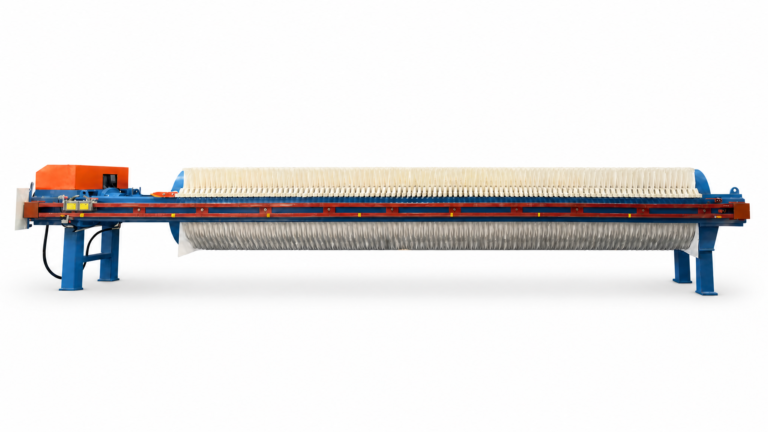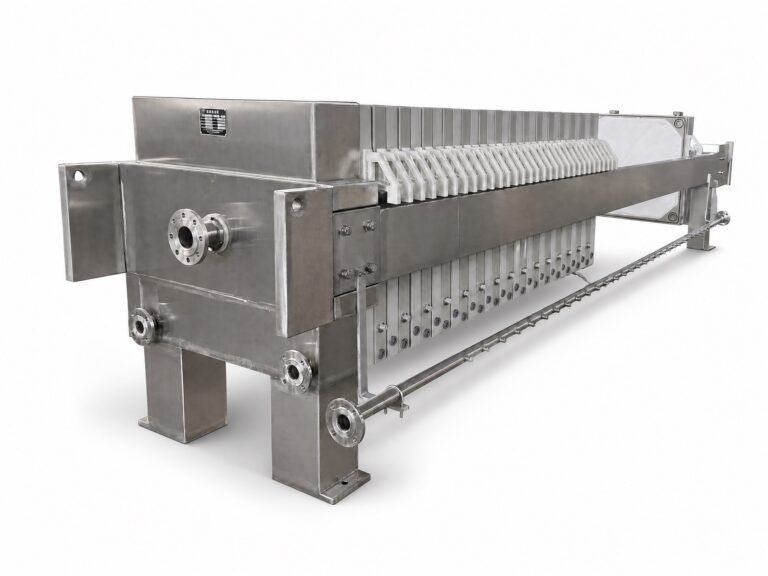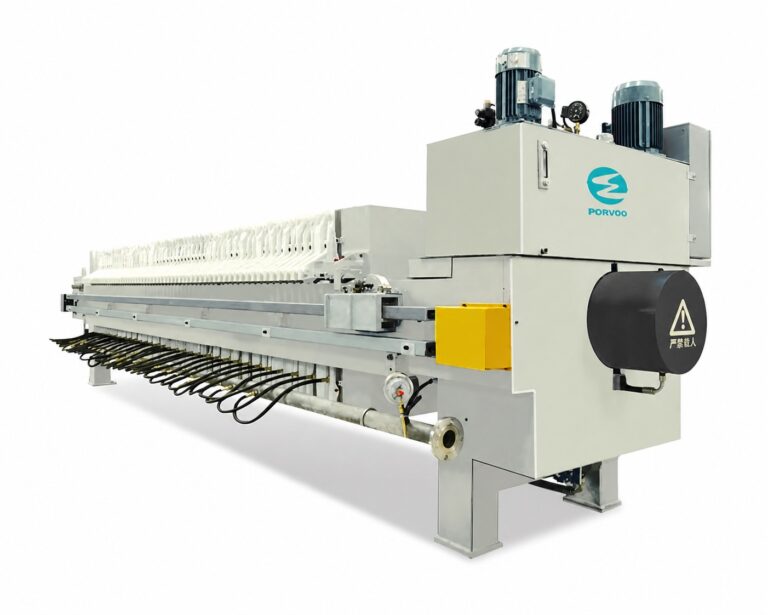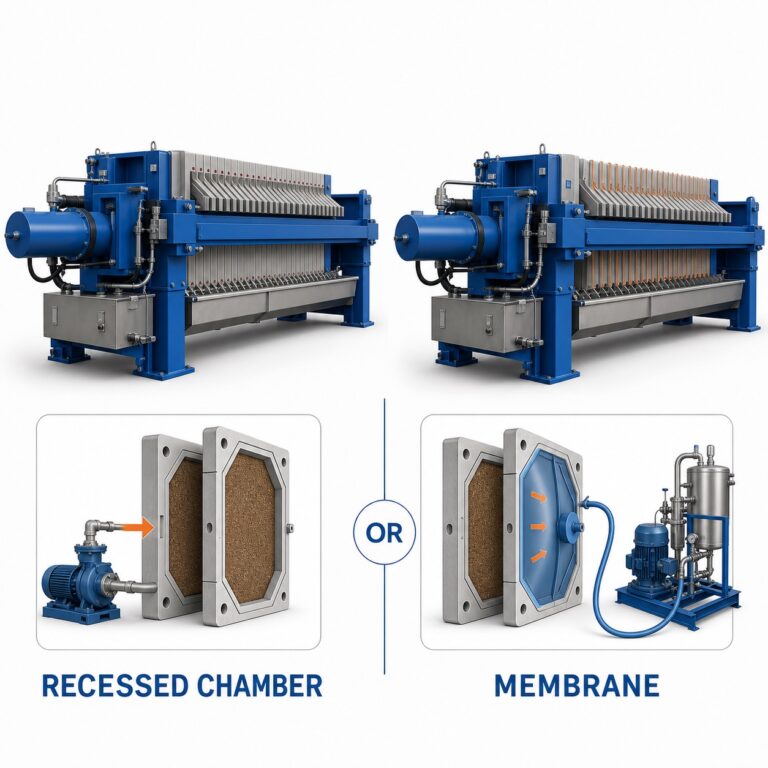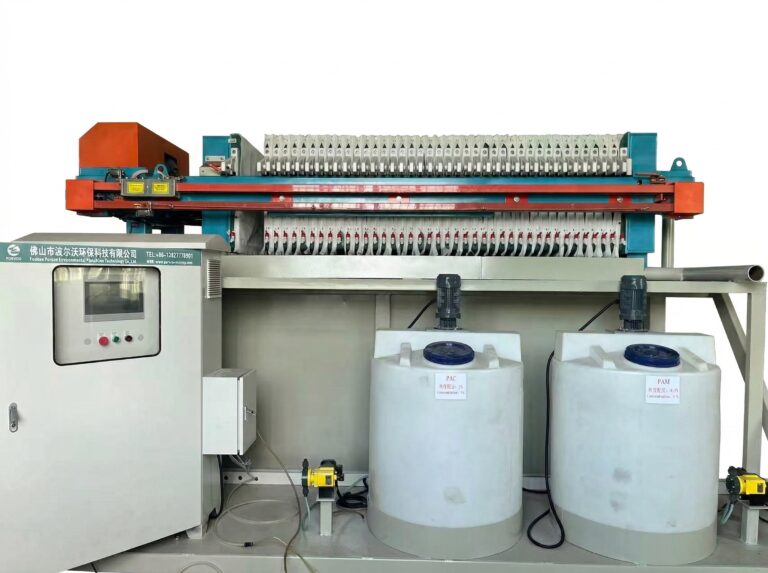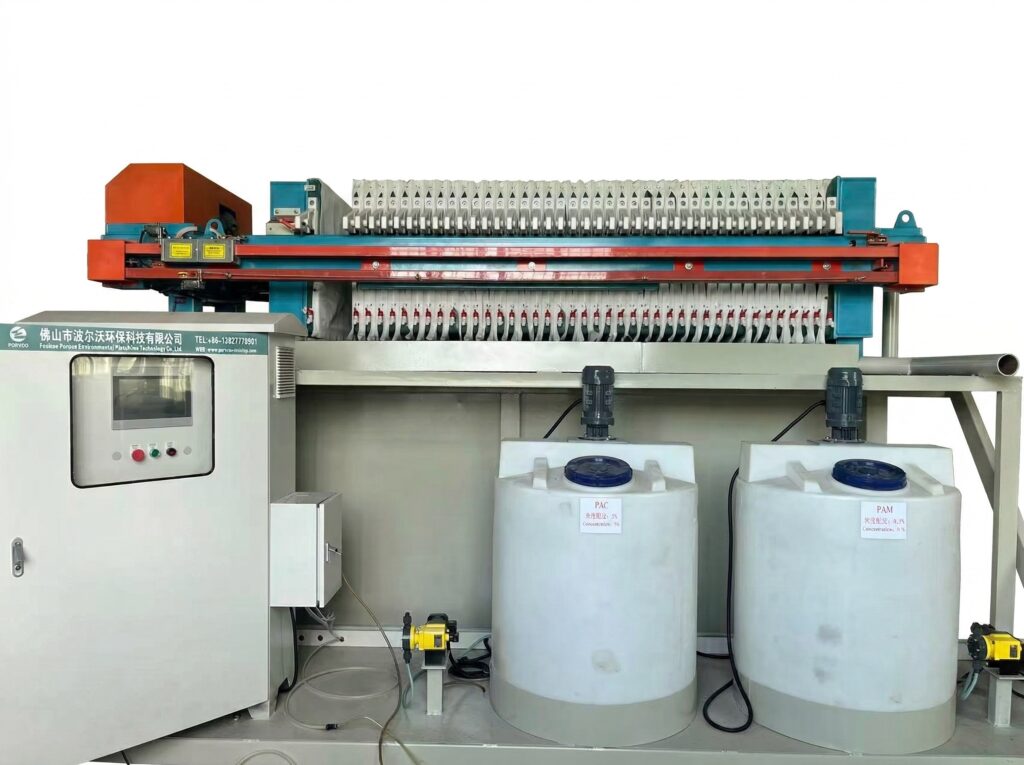
Фильтр-пресс с углубленными камерами разделяет перекачиваемую суспензию на фильтрат и фильтрационный осадок путем подачи её под давлением в камеры фиксированного объёма. Каждая камера образуется за счёт соприкосновения углублённых поверхностей пластин; фильтрующая ткань удерживает твёрдые частицы, а жидкость проходит через ткань к выпускным отверстиям для фильтрата.
Данная конфигурация фильтр-пресса относительно проста и позволяет оценить, может ли фильтрация под давлением сама по себе обеспечить требуемое состояние осадка и продолжительность цикла обработки партии. Окончательный выбор по-прежнему зависит от характеристик суспензии, цели фильтрации, графика работы, имеющегося пространства и требуемого уровня автоматизации технологического процесса.
Проверьте шлам для камерного фильтр-пресса или ознакомьтесь с Руководство по выбору промышленных фильтр-прессов.
Что такое фильтр-пресс с утопленной камерой?
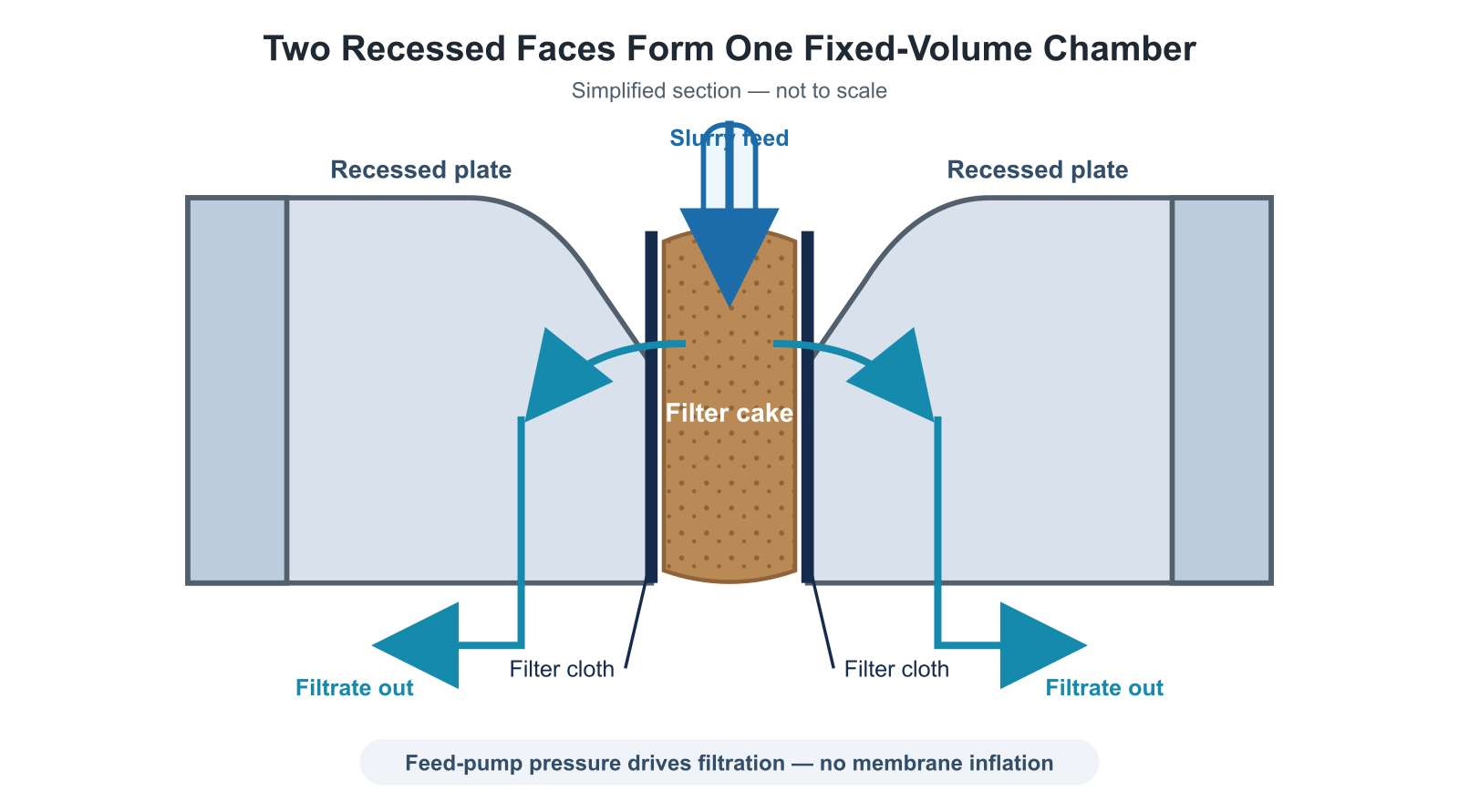
Каждая фильтрующая пластина имеет углубленную фильтрующую поверхность. Когда пакет пластин закрыт, два соседних углубления образуют камеру фиксированного объема. Дренажная поверхность каждой пластины покрыта фильтрующей тканью. Суспензия поступает в закрытые камеры, твердые частицы оседают на ткани, а фильтрат проходит через ткань и дренажные каналы пластин в систему слива.
Данная конструкция отличается от традиционного пластинчато-рамного пресса, в котором между плоскими пластинами устанавливаются отдельные полые рамы. В прессе с углубленной камерой такие отдельные рамы не используются. Кроме того, в процессе стандартного обезвоживания в нем не применяется надув мембраны: давление создается подающим насосом для шлама, а гидравлическая система закрытия обеспечивает герметичность пакета пластин.
Когда камерный фильтр-пресс — это оптимальный выбор
Камерный пресс является оптимальным выбором в тех случаях, когда в технологическом процессе требуется периодическая фильтрация под давлением без использования системы вторичного отжима. Он может быть подходящим решением, если суспензия образует проницаемый, легко отделяемый осадок, а требуемое качество фильтрата, условия выгрузки осадка и график производства могут быть обеспечены на этапе подачи и фильтрации.
Условия, обеспечивающие проведение оценки с использованием камерного пресса
- Сырье можно подготовить и непрерывно подавать в закрытый пластинчатый теплообменник.
- Стандартная фильтрация под давлением позволяет обеспечить соблюдение необходимых условий по обращению с фильтрационным осадком или его утилизации.
- Цикл партии может быть адаптирован с учетом доступного рабочего времени и схемы хранения на предшествующих этапах.
- Предпочтительным является использование камеры с фиксированным объемом и относительно простой пластинчатой конструкции.
- Для достижения технологического показателя данному объекту не требуется отдельный этап прессования коржей.
Когда следует сравнить другую конфигурацию
Если достичь заданного показателя с помощью одной только фильтрации под давлением невозможно, либо если состояние фильтрационного осадка и ограничения технологического цикла обусловливают необходимость дополнительного этапа обезвоживания, сравните данный процесс с мембранный фильтр-пресс. Это решение должно основываться на результатах испытаний репрезентативных проб шлама и на общих требованиях к системе, а не только на названии продукта.
Последовательность работы камерного фильтр-пресса с утопленной камерой
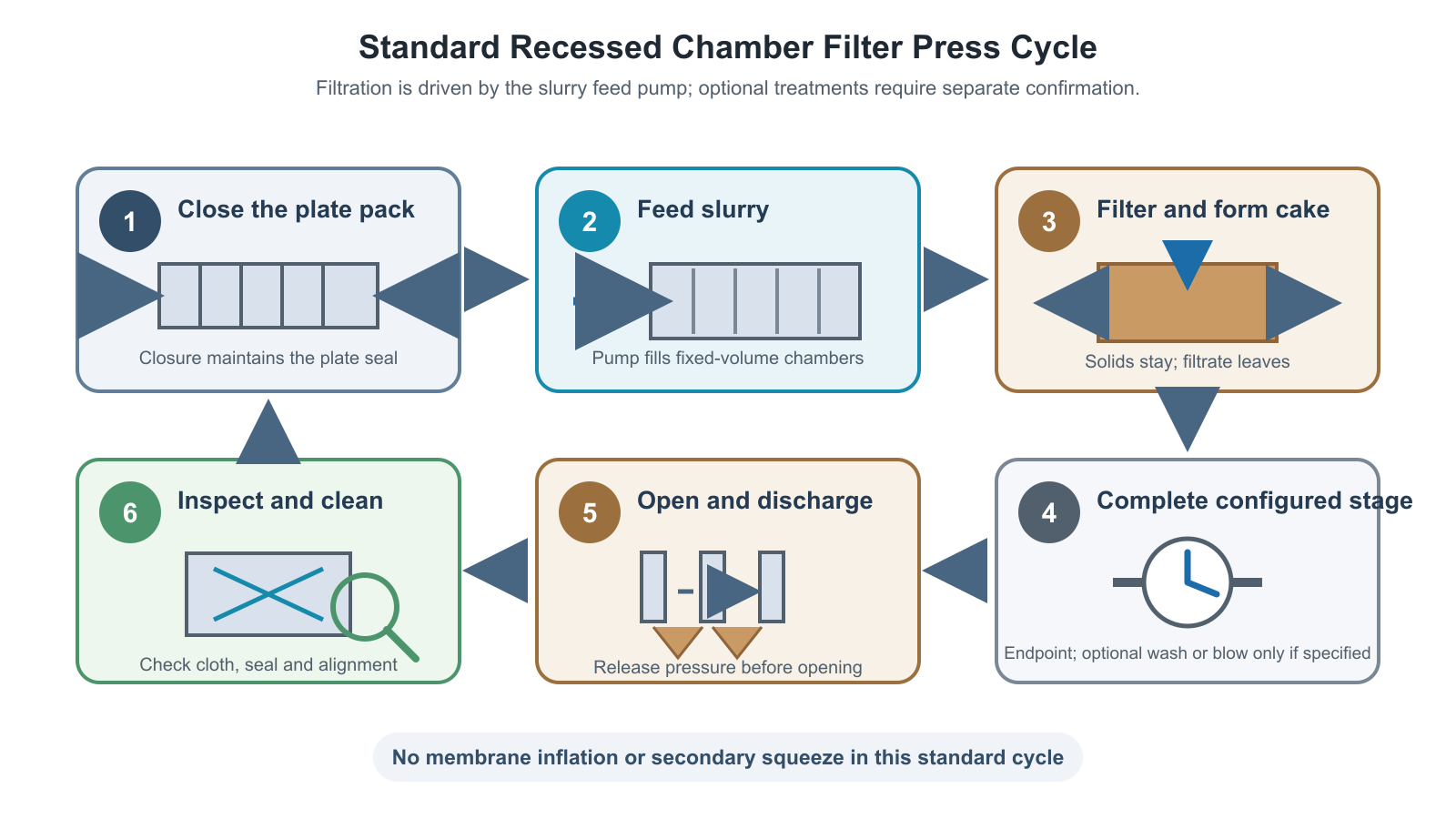
- Закройте и зафиксируйте пакет пластин. Система зажима сближает пластины и обеспечивает усилие прижима, предусмотренное конструкцией пресса.
- Подайте суспензию. Подающий насос заполняет камеры фиксированного объема через настроенный канал подачи.
- Процедите и сформируйте осадок. Жидкость проходит через фильтрующую ткань и дренажную поверхность, при этом твердые частицы отлагаются с обеих сторон каждой камеры. Поток фильтрата, как правило, уменьшается по мере увеличения сопротивления фильтрационного осадка.
- Завершите настроенный этап фильтрации. Контроль за окончанием процесса может осуществляться на основе проверенных значений давления, времени, расхода фильтрата или других технологических параметров. Дополнительные операции — промывка осадка, продувка сердечника или продувка воздухом — включаются в этот этап только в том случае, если это предусмотрено для конкретного применения.
- Откройте пресс и извлеките осадок. После безопасного сброса давления в камере подачи пластины разъединяются, и осадки извлекаются или свободно падают в систему сбора.
- Проверить и очистить. Перед началом следующего цикла операторы проверяют состояние ткани, уплотняющие поверхности, выравнивание пластин и поведение фильтрата. Промывка ткани может осуществляться вручную или в автоматическом режиме в зависимости от поставляемой конфигурации.
Встраиваемые пластины, фильтрующие полотна и слив фильтрата
Углубление в пластине и глубина камеры
Углубление пластины определяет доступный объем камеры и номинальную толщину фильтрационного слоя. Более глубокая камера не всегда является лучшим вариантом: необходимо комплексно оценивать проницаемость фильтрационного слоя, равномерность заполнения, особенности разгрузки и требуемую продолжительность цикла. Размеры пластин, глубину камеры и количество пластин следует выбирать на основе технологических данных и, при необходимости, результатов фильтрационных испытаний.
Расположение кормовых линий
Шлам может поступать через центральный или угловой канал подачи в зависимости от выбранной пластины и схемы технологического процесса. Маршрут подачи должен обеспечивать распределение шлама по закрытому набору пластин, не смешивая контур шлама с отдельными каналами для фильтрата.
Отвод фильтрата в открытом или закрытом режиме
При открытом сбросе фильтрат из отдельных пластин можно наблюдать на внешних выпускных отверстиях, что помогает операторам выявить проблемы с удержанием ткани. При закрытом сбросе фильтрат собирается через внутренние отверстия и направляется в коллектор. Выбор правильной схемы зависит от требований к герметичности, визуальному контролю, трубопроводам и условиям на объекте.
Выбор уплотнений и фильтрующих тканей
В утопленных пластинах могут использоваться уплотнительные поверхности без прокладок или конструкция с герметизацией и прокладками, в зависимости от конструкции пластин, предлагаемой для данного проекта. Материал ткани, тип плетения, воздухопроницаемость, поверхностная обработка и способ крепления должны соответствовать поведению частиц, задачам фильтрации, температуре и химической среде. Эти параметры влияют на прозрачность, отрыв фильтрационного слоя, частоту очистки и срок службы.
Конфигурация оборудования и варианты автоматизации
Конструкция с углубленной камерой определяет технологию изготовления пластин, но не определяет уровень автоматизации. Камерный пресс может быть оснащен функциями ручной, полуавтоматической или автоматической обработки. Компания PORVOO должна подтвердить, какие функции и их комбинации доступны для выбранного станка.
| Системная область | Базовая функция | Решения по настройке |
|---|---|---|
| Рамка и застежка | Обеспечивает фиксацию и герметизацию пакета пластин для фильтрации | Конструкция, гидравлическая система, защитные устройства и блокировки безопасности |
| Пакет пластин | Создает углубленные камеры фиксированного объема | Размер пластины, количество, глубина углубления, положение подачи, материал и тип уплотнения |
| Фильтрующая ткань | Задерживает твердые частицы и пропускает фильтрат | Материал, плетение, воздухопроницаемость, отделка и крепление |
| Контуры подачи и фильтрата | Подача шлама и сбор отделенной жидкости | Тип насоса, трубопроводы, арматура, контрольно-измерительные приборы, открытый или закрытый контур отвода фильтрата |
| Работа с пластинками | Открывает упаковку для извлечения торта | Ручное или автоматическое перемещение пластин и функция помощи при извлечении коржа |
| Очистка и сбор | Обеспечивает поддержание состояния тканей и организацию материально-технического обслуживания | Стирка тканей, поддоны для сбора капель, сбор готовых изделий или соединительный узел с конвейером |
| Контролирует | Координирует предусмотренные эксплуатационные функции | Местные органы управления, приборы и сфера применения ПЛК/ЧМИ |
Производительность зависит от состава суспензии и полного цикла
Невозможно выбрать подходящий камерный фильтр, ориентируясь исключительно на расход. Влажность осадка, прозрачность фильтрата, время заполнения, время фильтрации и особенности разгрузки зависят от взаимодействия различных технологических параметров.
- Источник шлама, концентрация твердых веществ и суточная нагрузка по твердым веществам
- Распределение частиц по размеру, форма, сжимаемость и проницаемость
- Химический состав кондиционирующей смеси и история смешивания
- Характеристика подающего насоса, линейный рост давления и управление конечной точкой
- Размер пластины, глубина камеры, количество пластин и распределение наполнителя
- Фильтрующий материал, его состояние и порядок очистки
- Температура, pH, содержание растворителя и совместимость материалов
- Доступные часы работы, время хранения партии и время выгрузки осадка
Рекомендуется проводить репрезентативные испытания фильтрации в тех случаях, когда имеющиеся данные не позволяют определить характер образования осадка, качество фильтрата и особенности его отделения. Любые указанные показатели производительности или результаты по осадку должны быть привязаны к испытуемой суспензии и заданным условиям эксплуатации.
Подбор применения определяется поведением шлама
Прессы с утопленной камерой рекомендуются для промышленных и водоочистных суспензий, способных образовывать стабильный осадок при фильтрации под давлением насоса. Одно лишь отраслевое обозначение не является доказательством пригодности оборудования. Для определения целесообразности применения необходимо проанализировать следующие параметры: содержание твердых частиц, жидкую фазу, поведение частиц, метод подготовки, требуемое качество фильтрата, дальнейшую судьбу осадка и график производства партий.
Типичные условия испытаний включают осадок промышленных сточных вод, шлам, образующийся при обработке камня или керамики, твердые частицы из промывных вод при добыче полезных ископаемых, а также осадок, содержащий металлы. Шлам должен демонстрировать надлежащее образование осадка, качество фильтрата и характеристики высвобождения. Для более широкого сравнения технологий см. промышленное фильтрационное оборудование.
Монтаж, эксплуатация и техническое обслуживание
Спланировать интерфейсы
- Обеспечьте источник подачи с регулируемым расходом и насос, подобранный с учетом изменяющихся требований к расходу и давлению в ходе цикла.
- Направьте фильтрат таким образом, чтобы операторы могли отбирать пробы, наблюдать за ним или локализовать его в соответствии с требованиями выбранной схемы сброса.
- Обеспечить доступ для перемещения пластин, замены ткани, обслуживания коллектора и проведения проверки с соблюдением мер безопасности.
- Обеспечьте достаточное свободное пространство под прессом или сбоку от него для выгрузки, сбора и удаления прессованного осадка.
- Следует согласовать систему водоотвода, организацию утилизации промывочной воды, ограждения, платформы и точки блокировки с планом объекта.
Обеспечить исправное состояние пластинчатого блока
Перед закрытием следует очистить уплотняющие поверхности от остатков осадка и убедиться в правильном расположении пластин и фильтрующих полотен. Во время работы необходимо выяснять причины ненормальной утечки, неравномерности фильтрата, помутнения фильтрата или неполного заполнения, а не компенсировать их с помощью несанкционированного изменения давления. После разгрузки следует проверить крепление фильтрующих полотен, наличие забиваний, повреждений и состояние уплотняющих зон пластин с периодичностью, установленной для данной суспензии и режима работы.
Обеспечить исправную работу всей системы подачи и фильтрации
Объем технического обслуживания не ограничивается только рамой пресса. На стабильность работы влияют также подающий насос, клапаны, контрольно-измерительные приборы, трубопроводы для фильтрата, гидравлический затвор, механизм перемещения пластин и устройства безопасности. Перечень расходных материалов и критически важных запасных частей следует определять исходя из окончательной конфигурации пластин, ткани, насоса и системы автоматизации.
Камера или мембрана?
| Решающий фактор | Пресс с утопленной камерой | Мембранный пресс |
|---|---|---|
| Первичная стадия обезвоживания | Фильтрация под давлением с помощью подающего насоса | Первичная фильтрация под давлением с помощью подающего насоса |
| Дополнительный выжим торта | Не входит в состав стандартного механизма камеры | Включено в качестве последующего этапа, управляемого отдельно |
| Типичная причина для проведения оценки | Необходимые параметры плотности осадка и цикла можно обеспечить с помощью обычной фильтрации под давлением | Дополнительная стадия обезвоживания может повысить ценность технологического процесса |
| Утилиты и компоненты | Система без сжатия среды для пластинчатого теплообменника | Требуются дополнительные сжимающие элементы и органы управления |
| Доказательства отбора | Типичные характеристики суспензии, требуемое состояние осадка, целевые показатели фильтрата, целевые показатели цикла и общие эксплуатационные затраты | |
Используйте Полное руководство по выбору фильтр-прессов для принятия более общего решения по настройке или ознакомиться с тем, как Мембранный пресс обеспечивает дополнительную стадию отжима.
Технические параметры, которые необходимо определить для вашего камерного пресса
В окончательном предложении должны быть указаны следующие значения, при этом следует чётко разграничить стандартное оборудование, дополнительное оборудование и эксплуатационные характеристики, зависящие от области применения.
| Поле | Что должно быть указано в окончательном предложении |
|---|---|
| Обозначение пресса и плиты | Модель, формат пластины и конструкция углубленной камеры |
| Площадь фильтрации и объем камеры | Настроенные значения для выбранного количества пластин и глубины камеры |
| Условия максимально допустимой подачи | Предельные значения давления, температуры, химического состава и материалов |
| Устройство подачи и фильтрации | Положение подачи, размеры портов, коллектор и конструкция выпускного отверстия (открытая/закрытая) |
| Конструкционные материалы | Материалы защиты каркаса, пластины, ткани, окантовки и деталей, контактирующих с жидкостью |
| Установленные функции | Закрытие, сдвиг пластин, очистка, управление стеканием, обработка осадка и системы управления |
| Результат подачи заявки | Результаты по производительности, количеству циклов и содержанию осадка/фильтрата приведены с учетом указанных условий подачи сырья и проведения испытаний |
| Габаритные размеры и рабочие зазоры | Общая схема расположения, рабочая зона, доступ для технического обслуживания и зазор для сброса осадка |
Часто задаваемые вопросы
Является ли фильтр-пресс с углубленной камерой тем же самым, что и традиционный пластинчато-рамный пресс?
Нет. В прессе с углублёнными камерами каждая камера формируется между двумя соприкасающимися углублёнными поверхностями пластин. В традиционном прессе с пластинчато-рамной конструкцией камеры формируются с помощью отдельных полых рам, расположенных между пластинами. В общепринятой рыночной терминологии эти термины иногда используются как синонимы, однако их не следует рассматривать как одну и ту же техническую конструкцию.
Используется ли в прессе с утопленной камерой гидравлический закрывающий цилиндр для сжатия прессованного блока?
Нет. Гидравлическая система закрытия обеспечивает закрытое и герметичное состояние пакета пластин. Обезвоживание внутри стандартного пресса с углубленной камерой осуществляется за счет работы насоса подачи шлама, когда фильтрат проходит через ткань.
Все ли камерные фильтр-прессы с углубленными камерами работают в полностью автоматическом режиме?
Нет. Термин «утопленная камера» относится к конструкции пластин. Автоматическое перемещение пластин, промывка ткани, клапаны, насосы, система транспортировки осадка и управление с помощью ПЛК/HMI представляют собой отдельные варианты конфигурации.
От чего зависят влажность выпечки и продолжительность цикла?
К важным факторам относятся: содержание твердых частиц в сырье, проницаемость и сжимаемость частиц, подготовка сырья, работа подающего насоса, выбор фильтрующей ткани, глубина камеры, распределение заполнения, конечная точка фильтрации и время слива. Результаты должны быть привязаны к конкретному составу суспензии и условиям эксплуатации.
Какая информация необходима для выбора камерного пресса?
Укажите источник шлама, концентрацию твердых частиц, суточную нагрузку по шламу и твердым частицам, поведение частиц, pH, температуру, химический состав, количество рабочих часов, требуемое состояние осадка, требуемые характеристики фильтрата, доступные инженерные сети, ограничения на объекте и необходимую автоматизацию технологического процесса. Для проведения испытаний может потребоваться репрезентативный образец.
Запросить подборку публикаций Палаты
Пришлите нам данные о условиях вашего технологического процесса, чтобы мы могли комплексно оценить пакет пластин, систему подачи, фильтрующий материал, схему отвода фильтрата и рабочие параметры. Укажите любые имеющиеся результаты обезвоживания и объясните, что необходимо улучшить.
- Источник и состав суспензии
- Расход, суточный объем, концентрация твердых частиц и время работы
- Поведение частиц, pH, температура и химическая совместимость
- Требуемое качество фильтрата и условия обращения с осадком
- Доступные инженерные коммуникации, занимаемая площадь и зазор для разгрузки
- Требуемые функции ручного или автоматического управления
Пришлите данные о шламе и условиях технологического процесса