Two quotes for the same stone processing plant can arrive with the same headline number and completely different scopes underneath it. One buyer sees a low total and moves forward; another compares five line items and finds the low bid excludes the tank, the dosing skid, or the sludge line entirely. Before purchase price can mean anything, the reader needs to know what basis each supplier used to build that number.
Why Quoted Totals Differ Before Equipment Quality Is Compared
A quoted total is the output of assumptions the supplier made about the project, not a fixed measure of equipment quality. Two suppliers looking at the same stone processing plant can reach different totals because they assumed different feed flow, different solids loading, different operating hours, or a different split between what the equipment does and what the site must provide. Where one supplier prices a system sized for continuous operation and another prices the same footprint for intermittent operation, the totals will diverge even if the equipment itself is comparable.
This matters because a lower total does not necessarily mean a smaller, less capable, or less carefully engineered system. It may mean the supplier assumed a lighter feed condition, a shorter operating window, or a narrower scope of included work. Conversely, a higher total does not necessarily mean better equipment; it may reflect a wider scope, additional civil work, or a different reuse-water target that requires more processing steps to reach.
The practical implication is that the reader cannot compare totals meaningfully until the totals are placed on the same footing. Where two quotes are built on different assumptions about how much water and solids the system will see, how many hours per day or per year it will run, or what water quality the recycled stream must reach, the numbers describe different projects even though they reference the same plant. The same logic applies to what happens to the separated solids: a quote that assumes the sludge stream is dewatered and hauled off-site as a dry cake will differ from one that assumes disposal happens outside the equipment boundary entirely.
None of this means one quote is wrong and another is right. It means the comparison is not yet valid. The reader’s task at this stage is not to judge which number is better but to identify which assumptions produced each number, so that the real differences in equipment quality, scope, and service can be examined once the basis is aligned. Establishing that common basis is the necessary first step before any of the later comparisons around scope, lifecycle cost, or acceptance testing can be trusted.
Feed Basis, Operating Schedule, and Reuse Target to Normalize
| Normalization item | Common comparison basis | Decision use |
|---|---|---|
| Feed flow and solids basis | Put every quote on the same feed-flow and solids basis. | Prevent different feed assumptions from being mistaken for price or equipment differences. |
| Operating schedule | Use the same operating schedule across quotes. | Make project and lifecycle inputs comparable on the same operating basis. |
| Reuse-water target | Use one project-specific reuse-water target. | Keep different water-quality targets from distorting the comparison. |
| Sludge-disposal boundary | Use the same included sludge-disposal boundary. | Show whether sludge handling sits inside or outside the quoted total. |
Feed flow and solids content set the sizing basis for every downstream component in a water recycling system, from the initial separation stage through any dosing or dewatering step. Where a supplier is given a higher solids loading than the plant actually produces, the quoted equipment may be oversized and priced accordingly; where the solids loading is understated, the equipment may be undersized relative to what the site needs, even if the quoted price looks attractive. The reader should treat feed flow and solids content as a single basis that every competing quote must share before totals are compared, rather than assuming the supplier’s stated design basis matches actual plant conditions.
Operating schedule changes the picture in a related but distinct way. A system quoted for a shorter daily run time will generally require less throughput capacity than one quoted for continuous operation on the same feed, even if the total volume processed per day is similar. This affects not only the equipment size but also how consumables, spares, and maintenance access are planned, since those lifecycle inputs are tied to hours of operation, not just to nameplate capacity. Two quotes built on different operating schedules are not directly comparable on price alone, because the schedule assumption shapes how much equipment work is actually being purchased.
Reuse-water target is the third variable that changes what a quote actually represents. A system designed to return water to a coarse rinsing step has a different processing burden than one designed to return water suitable for a more sensitive stage of stone processing. Where the reuse target is left unstated or assumed rather than specified by the project, suppliers may quote to different implicit targets, producing totals that cannot be reconciled without first agreeing on what water quality the recycled stream must achieve.
The sludge-disposal boundary closes this normalization step. Some quotes end at the point where solids leave the separation equipment as a concentrated stream; others include dewatering to a handled filter cake. Because these represent materially different scopes of work, the reader should confirm exactly where each quote’s boundary sits before treating any two totals as answers to the same question. Establishing this shared basis is described further in the discussion of reuse quality and sludge balance for stone processing water recycling systems.
Included Equipment and Plant Interfaces to Reconcile
| Scope area | Items to reconcile | Why the separation matters |
|---|---|---|
| Equipment supply | Quoted equipment supply | Establish the equipment-only portion before adding plant interfaces and services. |
| Tanks and civil work | Tanks; civil work | Surface site works that may sit outside the equipment total. |
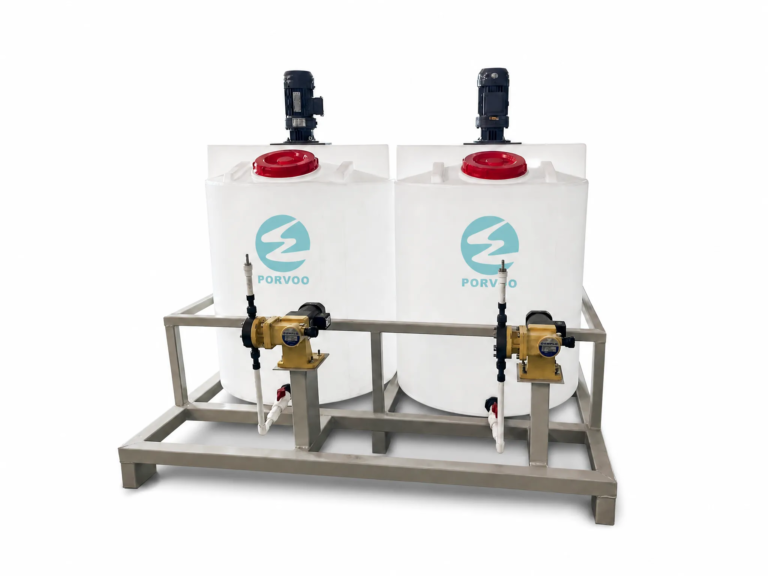
| Hydraulic and process interfaces | Piping; pumps; dosing; controls | Reveal interface items that can be included, excluded, or priced separately. |
| Delivery support | Installation; commissioning support; operator training | Separate supply price from site and startup support. |
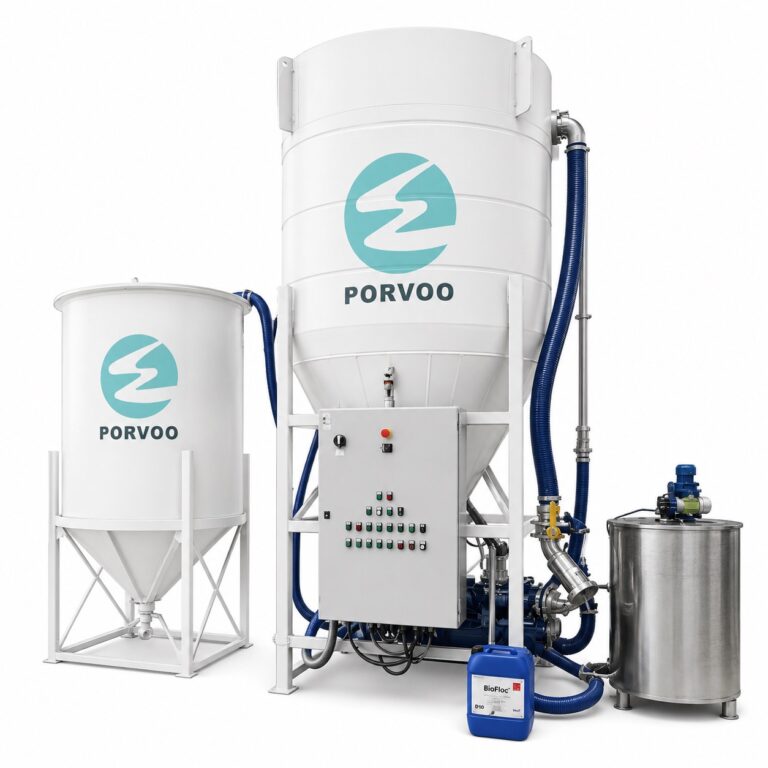
Once the basis is aligned, the next comparison is scope: what is actually inside the quoted equipment supply, and what sits at the boundary between that equipment and the rest of the plant. A quoted price for the core treatment equipment is not automatically a quoted price for a working system. Tanks, civil work, piping, pumps, dosing equipment, and controls are commonly priced separately from the core equipment, and a quote that appears lower may simply have moved more of this work outside its stated scope.
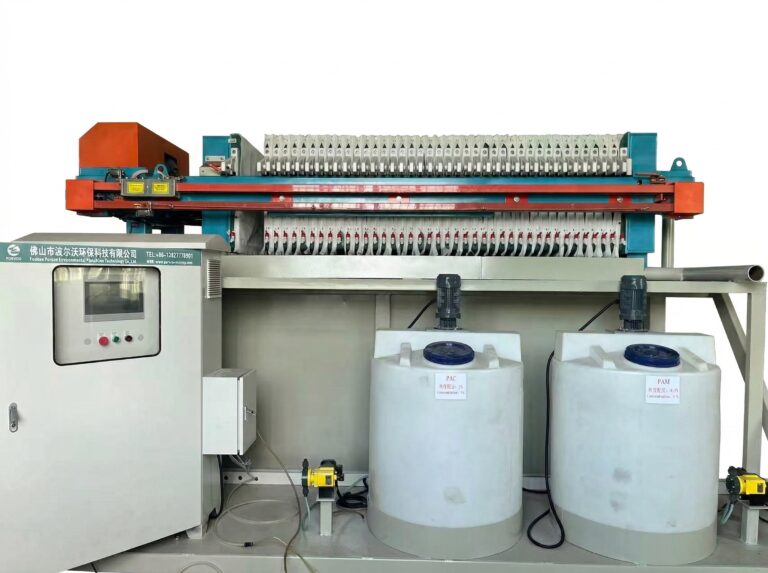
This distinction matters because these interface items are not optional extras in most installations; they are the connections that make the equipment function on-site. Piping and pumps move water and slurry between stages. Dosing systems introduce the chemistry that supports separation and dewatering, where the process requires it. Controls tie the individual pieces of equipment into a system that can be operated and monitored as a whole. Where a quote excludes one or more of these, the buyer either must source them separately, coordinate them through another contractor, or discover partway through the project that they were assumed to already exist.
Civil work and tanks raise a related question about site readiness. Where existing tanks or foundations can be reused, the scope and cost of a project changes considerably compared to a site where new tankage and structural work are required. Because this depends entirely on site conditions rather than on the equipment itself, it cannot be assumed from the equipment specification alone; it has to be confirmed against the actual site.
Installation, commissioning support, and operator training represent a further layer, separate from both the equipment and the interface items. A quote might supply the equipment and interfaces but exclude the labor and support needed to get the system running and to bring plant staff up to speed on operating it. Where this support is excluded, the buyer needs to plan for it separately, whether through internal resources or a separate contractor, and should confirm what handover documentation and training are or are not included.
Reconciling these categories item by item, rather than comparing bottom-line totals, is what reveals whether two quotes are actually offering comparable delivered systems. This reconciliation connects directly to how project information supplied by the buyer, including site layout, existing infrastructure, and available utilities, enters a supplier’s configuration and quotation review, since the scope a supplier proposes depends on what the buyer has told them about the site.
Utilities, Consumables, Labor, and Spares Across the Lifecycle
| Lifecycle input | Basis to normalize | Comparison boundary |
|---|---|---|
| Коммунальные услуги | Quote-specific utilities on the same operating schedule | Treat utilities as a lifecycle input; do not convert them into assumed fixed savings. |
| Расходные материалы | Quote-specific consumables on the same operating schedule | Compare the stated input without assuming a fixed saving. |
| Труд | Project-specific labor input on the same operating schedule | The supplied planning basis provides no fixed labor saving. |
| Spare parts and replacements | Included spare parts and expected replacement items | Keep initially supplied spares separate from expected replacements. |
| Maintenance access | Access assumptions that affect maintenance | Evaluate access as a lifecycle condition without assuming fixed savings. |
Purchase price and installed scope describe the system at the point of commissioning. What the system costs to operate afterward depends on a separate set of inputs that unfold over the operating life of the equipment, and these inputs should be compared on the same basis used for the rest of the quote rather than assumed to be roughly equal across suppliers.
Utilities, principally power and water use associated with running pumps, dosing systems, and any dewatering equipment, scale with the operating schedule established earlier in the comparison. A system quoted for continuous operation will draw utilities differently than one quoted for intermittent operation, and comparing utility estimates from two quotes built on different schedules will produce a misleading picture unless the schedule is normalized first. The reader should treat each supplier’s utility estimate as specific to that quote’s stated operating basis rather than as a general figure that transfers to a different schedule.
Consumables, such as dosing chemicals and filter media where applicable, are similarly tied to the operating schedule and to the feed characteristics established in the basis normalization. Where a supplier’s consumable estimate assumes a particular feed solids content or a particular reuse-water target, changing either of those assumptions changes the consumable estimate, so this figure should be read alongside the basis it was built on rather than compared as a standalone number.
Labor is a lifecycle input that depends on how the system is configured and on the plant’s own staffing and operating practices. A project-specific labor input reflects the planning basis supplied for that project; it does not by itself establish a saving relative to another system or a previous method of operation.
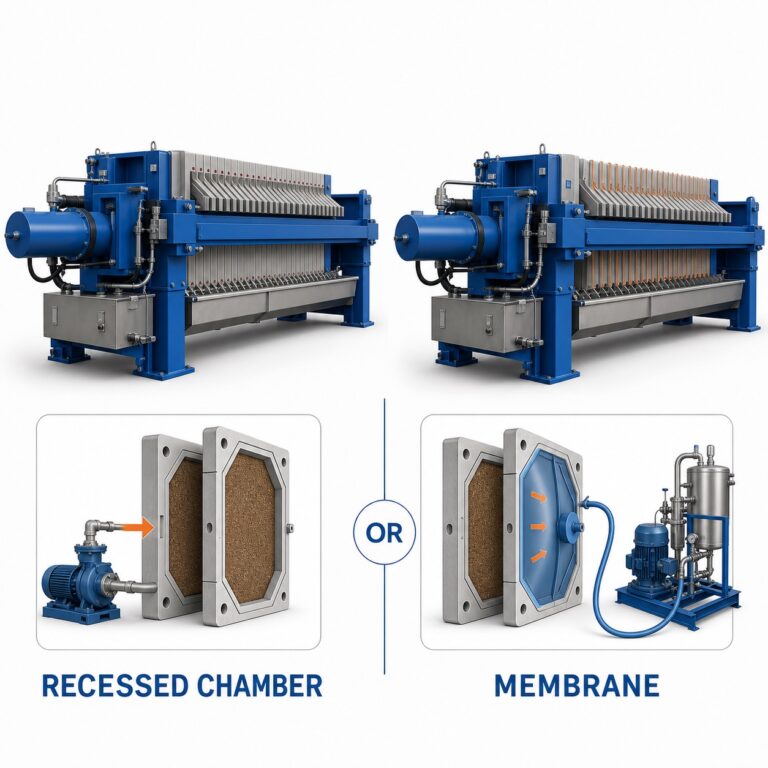
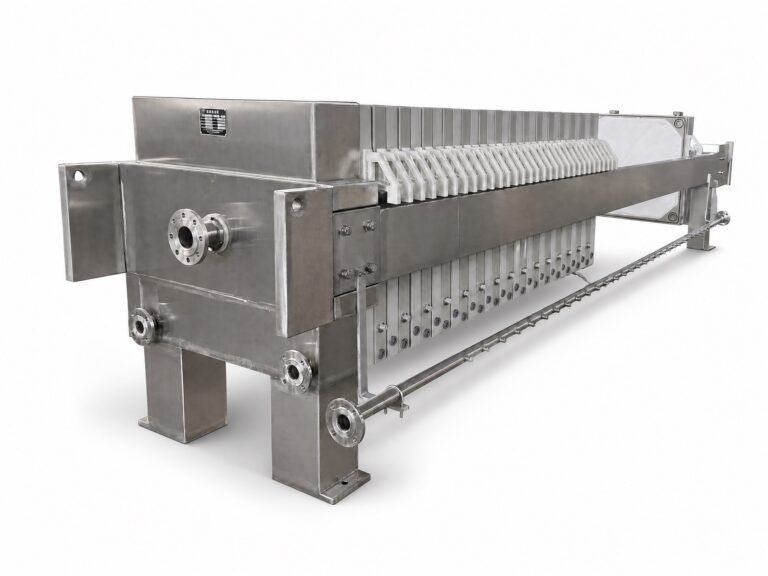
Spare parts and maintenance access complete this lifecycle comparison. Some quotes include an initial set of spare parts with the delivered equipment; others price spares separately as future purchases. Keeping these two categories distinct, initially supplied spares versus items the plant will need to source and replace later, prevents a quote from appearing to include more ongoing support than it actually does. Maintenance access, meaning how easily operators and technicians can reach the equipment for routine servicing, is a site and layout condition rather than a fixed attribute of the equipment; where access is constrained, this affects how maintenance is planned and scheduled without necessarily changing the equipment specification itself. Filter presses used for dewatering, for instance, have consumable and maintenance-access characteristics tied to how the filter cake is handled, which connects to how filter-cake dryness affects downstream disposal economics.
Sampling, Performance Testing, and Acceptance Responsibilities
| Acceptance item | Evidence basis to state | Representative-condition requirement | What the evidence does not establish |
|---|---|---|---|
| Взвешенные твердые вещества | ISO 11923:1997 glass-fibre filtration method | Sample under representative feed conditions and set a project-specific acceptance value. | The method has interferences and does not set a treatment guarantee or legal limit. |
| Мутность | ISO 7027-1:2016 optical measurement method | Sample under representative feed conditions and set a project-specific acceptance value. | Turbidity is not suspended solids or a universal reuse criterion. |
| pH | ISO 10523:2008 pH determination method | Sample under representative feed conditions and set a project-specific acceptance value. | The method sets no discharge or reuse limit. |
| Sludge output | Project-specific measurement basis | Measure under representative feed conditions and set a project-specific acceptance value. | No measurement method or acceptance value is supplied. |
| Water balance | Project-specific water-balance boundary | Establish the balance under representative feed conditions and set a project-specific acceptance value. | No calculation boundary or acceptance value is supplied. |
A quote describes intended performance; it does not by itself demonstrate what the installed system will achieve under the plant’s actual operating conditions. The gap between these two is closed through sampling and acceptance testing, and the terms under which that testing happens should be part of the commercial comparison, not an afterthought once equipment is installed.
Suspended solids, turbidity, and pH are the measurable quantities most directly tied to reuse-water quality and discharge questions in a stone processing water recycling project. Suspended solids can be determined using the method described in ISO 11923:1997, which relies on glass-fibre filtration; this method has known interferences and, on its own, does not establish a treatment guarantee or a legal limit, so a project-specific acceptance value still needs to be agreed for the actual feed and reuse conditions at the site. Turbidity, measured using the optical technique described in ISO 7027-1:2016, is a related but distinct quantity from suspended solids; it is not a substitute for a suspended-solids result and is not a universal reuse criterion on its own. pH, determined using the method in ISO 10523:2008, is a further distinct parameter with its own measurement method; this standard sets no discharge or reuse limit by itself.
Because each of these standards describes a measurement method rather than a pass/fail criterion, the acceptance value that matters to the project has to be set separately, specific to that plant’s feed and reuse requirements, and confirmed under representative feed conditions rather than under laboratory or idealized samples. A system tested against feed conditions that do not represent the plant’s actual variability may perform differently once it is operating on the real feed stream.
Sludge output and water balance extend this same logic to quantities that do not have a standardized measurement method referenced here. Sludge output, meaning how much solid material the system separates out and in what condition, needs a project-specific measurement basis and acceptance value agreed between buyer and supplier. Water balance, the accounting of how much water enters the system, how much is recovered for reuse, and how much leaves with the sludge or as other losses, similarly needs its own project-specific boundary and acceptance value; no calculation boundary is given by the measurement standards themselves.
The commercial point for the buyer is to require a sampling and acceptance plan covering these items before accepting a quote, specifying how and when samples will be taken, under what feed conditions, and what values will be considered acceptable, rather than relying on general statements about expected performance.
Commercial Terms and Exclusions That Change Delivered Value
Once the technical basis, scope, lifecycle inputs, and acceptance plan are aligned, the remaining differences between quotes sit in commercial terms that affect how much of the delivered value the buyer actually receives and when. Payment terms determine how funds are committed relative to project milestones, which affects the buyer’s exposure if a delivery or performance issue arises partway through the project. Delivery terms determine what lead time the buyer should plan for and what happens if equipment arrives later than scheduled.
Documentation is easy to overlook when comparing headline prices but affects the plant’s ability to operate, maintain, and eventually modify the system. Drawings, equipment manuals, and control system documentation that are included in one quote and excluded from another represent a real difference in delivered value, even where the equipment itself is otherwise comparable.
Warranty terms define what happens if a component underperforms or fails within a stated period, and the scope of that warranty, whether it covers parts alone or also includes labor to replace them, changes what the buyer is actually protected against. Service terms describe what support is available after commissioning, including how service requests are handled and what response is committed to, where the supplier states such commitments.
Performance responsibility is the term that ties back most directly to the acceptance plan: it defines who is responsible if the installed system does not meet the agreed acceptance values under representative feed conditions, and what recourse the buyer has in that circumstance. Where this responsibility is not stated, the buyer effectively assumes it, since there is no supplier commitment to fall back on.
None of these terms show up in a purchase-price comparison, yet each one changes what the buyer is actually purchasing at that price. A lower total combined with weaker warranty, service, or performance-responsibility terms may deliver less protected value than a higher total that includes stronger commitments in each of these areas. The buyer’s task at this stage is to record each of these terms alongside the technical scope and lifecycle inputs already normalized, so that the final comparison reflects the complete commercial and technical package rather than the purchase price in isolation. Configuration decisions made earlier in the process, including which interfaces and equipment such as a modular recycling system or a sedimentation stage are included, carry directly into these commercial terms, since supply, installation, and warranty responsibilities are usually defined around the same equipment boundary the buyer confirmed during scope reconciliation.
Часто задаваемые вопросы
Q: Can I compare stone water recycling system cost per unit of treated water?
A: Yes, but only after every quote uses the same feed flow and solids basis, operating schedule, reuse-water target, and sludge-disposal boundary. Otherwise, the calculated unit cost will reflect different project assumptions as well as different prices.
Q: How should I handle a low quote that excludes plant interfaces or startup support?
A: Rebuild each quote around the same delivered-project scope. Record who supplies the tanks, civil work, piping, pumps, dosing, controls, installation, commissioning support, and operator training, then price or assign every excluded item before comparing totals.
Q: How can lifecycle costs be compared when fixed savings are not supported?
A: Compare quote-specific utilities, consumables, labor, spare parts, expected replacement items, and maintenance-access assumptions on the same operating schedule. Keep each assumption visible and compare the resulting inputs rather than treating an estimated saving as guaranteed.
Q: Do ISO test methods make performance guarantees directly comparable?
A: No. The cited ISO methods define how suspended solids, turbidity, or pH can be measured; they do not set a treatment guarantee, legal limit, or universal reuse criterion. Set project-specific acceptance values, sampling conditions, and testing responsibilities, and do not use turbidity as a substitute for suspended solids.
Q: What commercial details should be resolved before selecting the preferred quote?
A: Compare payment and delivery terms, required documentation, warranty and service scope, and responsibility for performance and acceptance testing. List each exclusion and responsible party so the selected price can be evaluated against the obligations it actually includes.