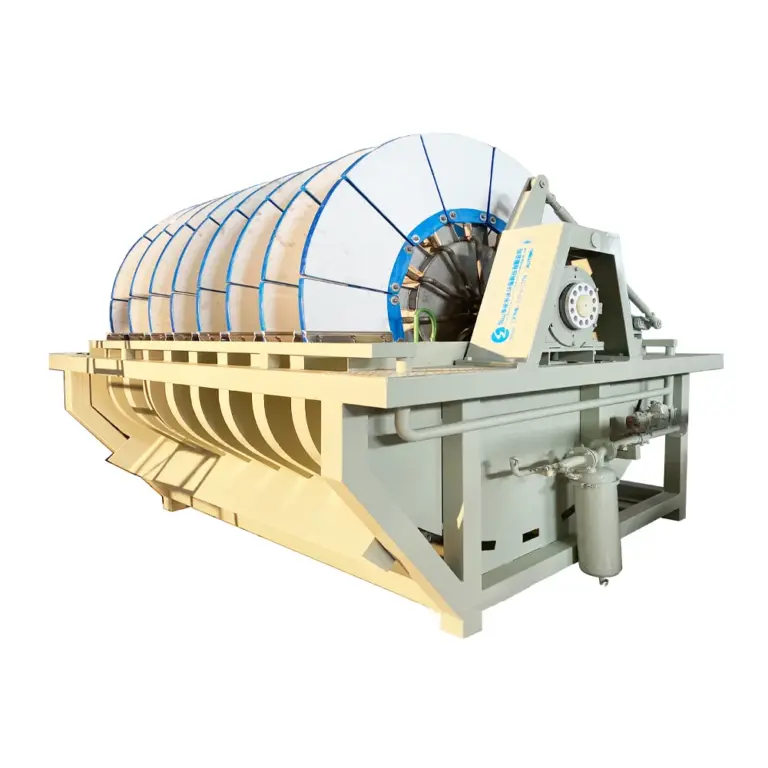
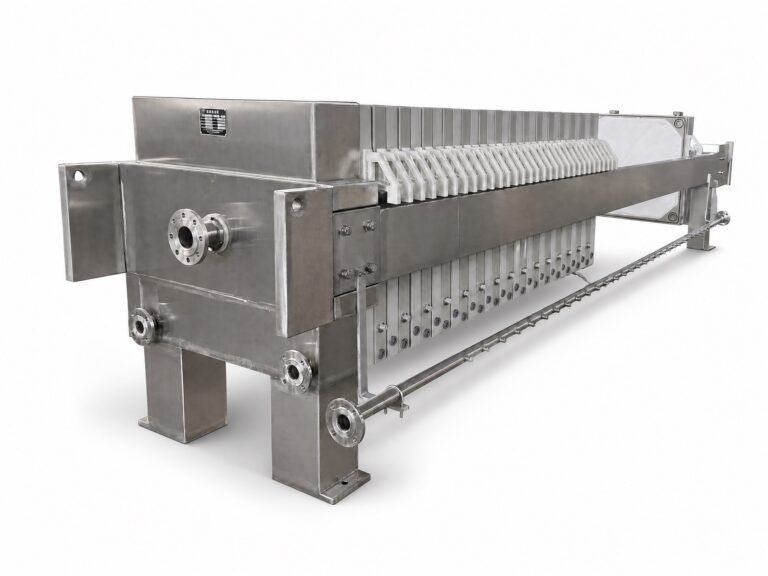
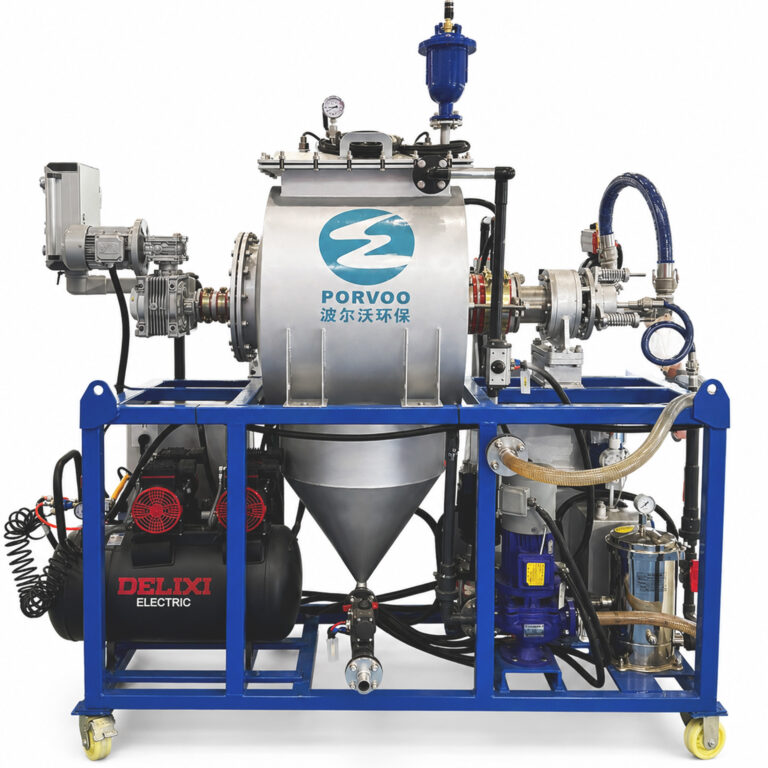
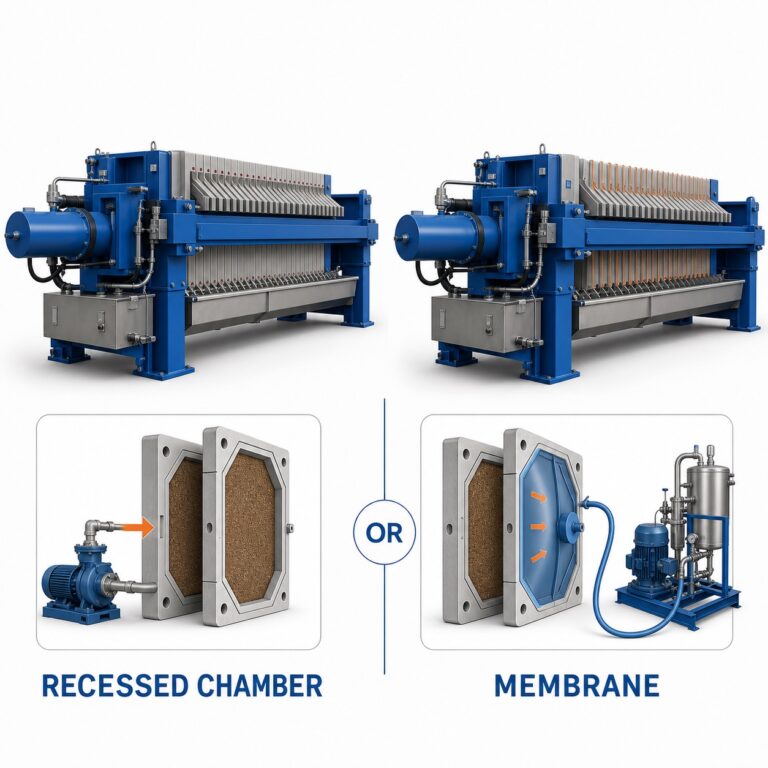
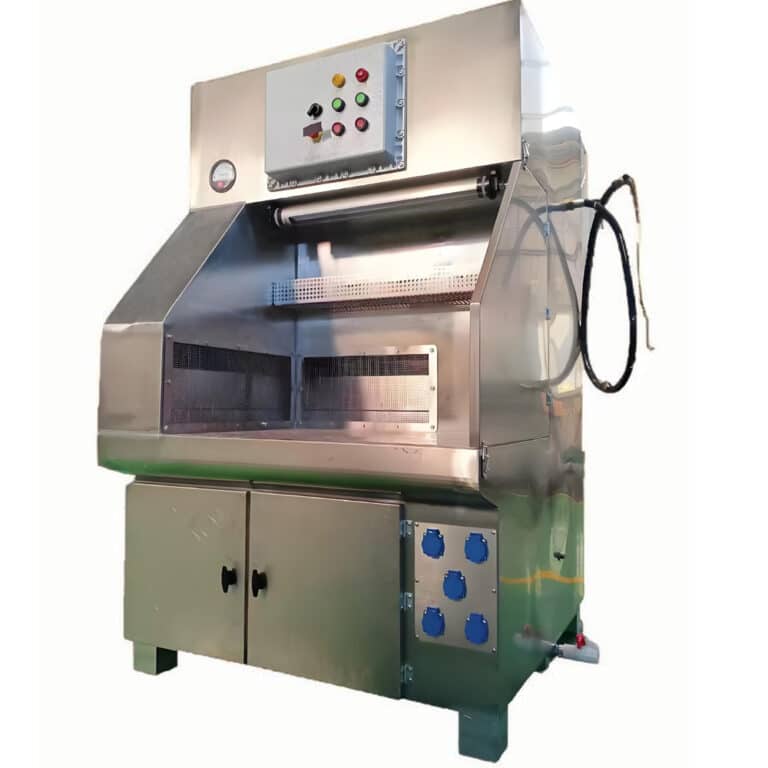
A purchase order for a filtre à disque céramique sous vide usually states a duty: a feed material, a target cake condition, a capacity, and a required availability. The commercial test that follows that order is supposed to confirm the duty was met. Whether it actually does depends on decisions made before the filter ever runs — what gets measured, where, by whom, and under what feed condition — and those decisions are what separate a usable acceptance record from a dataset that cannot settle the question it was built to answer.
Translate the Purchase Duty into Measurable Test Objectives
A purchase duty is written as a commercial commitment — a cake moisture target, a throughput figure, an availability percentage. None of those statements is directly testable until it is converted into a measurable objective: a defined sample point, a defined instrument, a defined calculation, and a defined party accountable for producing each number. Where this translation is skipped, the test team is left improvising definitions mid-run, and disagreement about what was actually measured becomes likely to surface only after the data is already collected and harder to repair.
The translation step matters because a single duty statement can be met by several different measurement choices, and those choices are not interchangeable. A cake moisture figure can be taken at the discharge point immediately after cleaning, or after a holding interval; it can be based on a single grab sample or a composite. A capacity figure can be based on dry-solids feed rate over a short window or averaged across a longer steady period that includes minor interruptions. Each of these is a legitimate way to produce a number, but they are not the same number, and a supplier and buyer who have not agreed on the method in advance may each assume the other’s default. The agreed objective has to specify which method applies, not just which parameter is being tested.
This is also where the purchase duty’s operating envelope has to be stated explicitly rather than left implicit. A vacuum ceramic disk filter’s performance is a function of the feed material’s solids concentration, particle characteristics, and conditioning state as much as it is a function of the machine. If the duty was quoted against a feed description that differs from what will actually be fed during the test, the test objective needs to say so before the run starts, because a result produced outside the agreed feed condition is not evidence about the agreed duty — it is evidence about a different duty that happens to use the same equipment.
Setting objectives at this stage is also the point where project-specific information supplied by the buyer — the feed material’s characteristics, the required cake and filtrate conditions, the capacity and availability figures in the purchase order — enters the configuration and quotation review that a supplier such as PORVOO uses to match equipment to the stated duty. Where that information was incomplete or has changed since quotation, the test objectives need to be reconciled against the current duty, not the original one, before any instrument is set up.
Finally, assigning a responsible party to each objective is not an administrative formality. Sampling, instrument reading, and calculation are three different tasks that can be performed by three different parties — buyer, supplier, or an independent witness — and a record that does not state who performed which task leaves acceptance review unable to determine whether a discrepancy is a measurement error, a calculation error, or a genuine performance gap.
Fix Feed Conditions, Instruments, and Sampling Points
| Contrôle | What must be fixed before the run | Record and decision boundary |
|---|---|---|
| Permitted feed window | The agreed range of feed conditions for the purchase duty | Place the measured feed condition on the synchronized timeline; identify a run outside the window as outside the agreed duty rather than averaging it into the result |
| Conditioning state | The agreed feed conditioning state | Record the state and any change; apply the pre-agreed deviation or retest rule when it differs from the agreed state |
| Sampling points | A named point for every acceptance measure that relies on a sample | Link each sample to its named point and time; the sample supports only the stated point and operating condition |
| Instruments | A named instrument for every acceptance measure | Link each recorded value to the named instrument; apply the pre-agreed invalid-data rule if the required measurement record is unavailable |
| Calculation basis | The basis used to turn each recorded measure into a reported result | Use the same agreed basis for the run, repeats, and retests so their results remain interpretable together |
| Responsible party | The party responsible for each measurement, sample, calculation, and record | Use the named responsibility when checking whether the agreed test record is complete before acceptance review |
Once the test objectives exist, each one has to be anchored to a physical point in the system and a specific instrument before the filter starts running. This is a separate task from defining the objective itself: an objective can be clearly stated and still be unmeasurable in practice if no one has fixed where the sample is drawn, what instrument records the reading, or what feed state is required for the reading to count.
The permitted feed window is the first of these anchors, and it functions as a boundary rather than a target. A vacuum ceramic disk filter’s cake formation depends on the solids concentration and particle-size distribution presented to the disks; conditioning chemicals, if used, change the floc or particle structure that the membrane sees. If the feed drifts outside the range the duty was based on — becoming more dilute, more concentrated, or differently conditioned — the resulting cake and filtrate data describe that altered feed, not the agreed duty. Fixing the window in advance means a run that falls outside it can be identified and set aside rather than folded into an average that quietly blends two different conditions.
Sampling points carry a similar logic. Cake sampled immediately at the disk discharge reflects a different moisture state than cake sampled after it has been conveyed or held, because ceramic cake can continue to release or reabsorb moisture depending on ambient exposure and time. Filtrate sampled before or after a particular point in the piping may or may not include bypass or wash-water contributions. Naming the point fixes what the sample means; without it, two samples labeled with the same parameter name may not be measuring the same thing.
Instruments introduce a further constraint: every acceptance measure needs a named instrument of known type, because vacuum gauges, flow meters, and solids analyzers vary in response time and in what exactly they record. Where a measurement instrument is unavailable or fails during the run, the record needs a pre-agreed rule for how that gap is handled, rather than a judgment call made after the fact about whether the missing data mattered.
The calculation basis is the last anchor, and it is what allows a run, its repeats, and any retest to be read as the same experiment conducted more than once. If the basis changes between runs — a different averaging window, a different solids reference — comparing the results becomes comparing different calculations, not confirming the same one. Background on how these parameters are typically reported, independent of a specific test event, is covered in discussions of Caractéristiques techniques et indicateurs de performance des filtres céramiques sous vide, but the test plan itself has to fix the exact basis this project will use.
Run and Record the Agreed Operating Sequence
| Test stage or event | Synchronized record | How the record is used |
|---|---|---|
| Feed-condition check | Feed condition and conditioning state | Determine whether the measured run begins within the permitted duty window |
| Stabilization | Vacuum condition, operating settings, dry-solids feed basis, and filtrate output over time | Identify when the pre-agreed stabilization rule has been met before treating data as steady-operation evidence |
| Agreed steady-operation period | Vacuum condition, operating settings, dry-solids feed basis, and filtrate output | Define the common operating interval used for the agreed calculations |
| Cake sampling | Sample time, named sampling point, and cake sample record | Tie each cake sample to the operating conditions present at that time |
| Cleaning, downtime, or deviation | Event time, duration when applicable, and the related operating-state change | Apply the agreed availability and deviation treatment without losing the event’s context |
| Repeat, corrective work, or retest | Reason for the new run stage, the work performed, and its separate operating timeline | Keep the original and later evidence distinguishable and apply the pre-agreed repeat and retest rules |
Executing the test well depends less on any single reading than on keeping every reading tied to the operating state that produced it, on one shared timeline. A vacuum condition recorded at one moment, a cake sample taken at another, and a downtime event logged separately are each incomplete on their own; the acceptance question is whether they describe the same operating period.
Stabilization is the first judgment this timeline supports. A vacuum ceramic disk filter reaches a steady cake-formation and filtrate-release behavior only after feed, vacuum, and rotation settings have been running together for some interval; data taken before that point reflects a transient state, not the duty being tested. Because the time required to stabilize depends on feed characteristics and the specific configuration, the test plan needs a stated rule for recognizing when stabilization has occurred, rather than relying on an assumed elapsed time that may not apply to this feed.
Within the agreed steady-operation period, dry-solids feed basis, vacuum condition, operating settings, and filtrate output all need to be logged against the same clock so that a capacity or filtrate figure calculated from them describes one coherent operating state rather than an average across conditions that were not actually simultaneous. Cake sampling then has to be tied to that same timeline: a sample’s value is only interpretable in light of what the vacuum condition and feed state were at the moment it was taken, which is why the sample time and sampling point travel with the sample rather than being treated as separate records.
Cleaning cycles, downtime, and deviations are not noise to be subtracted from the record afterward — they are events that belong on the timeline with their duration and the operating-state change they caused, because availability and deviation treatment both depend on knowing when these events happened relative to the steady-operation period, not just that they happened. Where corrective work is performed mid-test, or a repeat run becomes necessary, the original record has to remain intact and distinguishable from the new one; collapsing the two into a single dataset removes the ability to tell whether a later result reflects the same equipment condition as the first attempt.
Calculate Cake, Filtrate, Capacity, and Availability Results Consistently
| Reported result | Synchronized inputs | Basis to fix before the run | Limite d'interprétation |
|---|---|---|---|
| Cake result | Cake sample, named sampling point, sample time, and the corresponding operating state | The agreed cake calculation and reporting basis | The result applies to the named sample point and recorded operating condition |
| Filtrate output | Measured filtrate output, measurement time, named instrument, and the corresponding operating state | The agreed output and time basis | The result establishes only the defined filtrate-output measure for the recorded interval and conditions |
| Capacité | Dry-solids feed basis and the synchronized steady-operation record | The project-specific capacity calculation and time basis | The result applies only to the agreed calculation basis and recorded duty |
| Disponibilité | Operating timeline, downtime, cleaning state, and deviations | The agreed time basis and treatment of recorded interruptions | The result applies to the recorded test period under the pre-agreed inclusion and exclusion rules |
Four results are typically reported from an acceptance test on a vacuum ceramic disk filter, and each one is only as sound as the inputs and basis fixed before the run — not a property of the equipment that exists independent of how it was measured.
A cake result is inseparable from the sample point and the operating state recorded at sampling time. Where the duty requires a specific cake condition, the result that gets compared against that duty has to come from the sample point the plan named, taken during the recorded operating state — not from whichever sample happened to be convenient, and not averaged with samples taken under a different feed condition. The reported figure applies to that point and that condition; it does not generalize to a different feed or a different sampling location without new evidence.
Filtrate output follows the same logic with the added complexity that it is a flow measured over time rather than a single sample. The reported value establishes the defined filtrate-output measure for the recorded interval and conditions only — if the feed characteristics or vacuum condition shift during the test, a single filtrate figure calculated across the whole run blends behaviors from more than one state, which is why the steady-operation window matters as much for this calculation as for capacity.
Capacity is where the dry-solids feed basis becomes central: capacity is a rate, and rates require both a quantity and a time basis that match the agreed project-specific calculation, not a generic convention. Two different time-basis choices applied to the same raw data can produce different capacity figures from identical underlying operation, which is why the calculation basis has to be fixed before the run rather than selected afterward to match an expected outcome.
Availability differs from the other three in that it depends on how the recorded interruptions are classified rather than on a physical sample or flow reading. Cleaning cycles may be treated as scheduled operation or as downtime depending on the project’s agreed definition; a deviation event may or may not be excluded from the availability calculation depending on its cause. The same raw downtime log can therefore produce different availability figures under different inclusion rules, and the result is only meaningful when the reader knows which rule was applied. Questions about how reuse quality and sludge output are verified in a related treatment context — addressed separately in acceptance testing for ceramic wastewater recycling systems — illustrate the same general principle: a result is only as trustworthy as the rule used to calculate it, stated before the data existed.
Apply Deviation, Retest, and Acceptance Rules to the Test Record
| Record condition | Rule to apply | Treatment in the test decision |
|---|---|---|
| Feed is outside the permitted window or conditioning state | Agreed deviation rule | Identify the run as outside the agreed duty rather than averaging it into the accepted result |
| Stabilization rule has not been met | Agreed stabilization and invalid-data rules | Apply those rules before using the period as steady-operation evidence |
| A required measurement or sample is invalid | Agreed invalid-data rule | Record the affected evidence and its pre-agreed disposition before the acceptance decision |
| Cleaning, downtime, or another deviation occurs | Agreed deviation and calculation rules | Keep the event on the synchronized timeline and treat it in the result and availability calculations as agreed |
| Corrective work is performed | Agreed corrective-work rule | Preserve the original record and distinguish the post-correction operating period |
| A repeat run or retest is required | Agreed repeat and retest rules | Interpret the new run together with the earlier record only on the pre-agreed basis |
| The record reaches acceptance review | Named sampling points, instruments, calculation bases, responsible parties, and the complete synchronized timeline | Decide acceptance only against the rules agreed before the run |
The acceptance decision is made against the completed record, but what that record is allowed to mean was decided earlier, at the point the deviation and retest rules were agreed. Applying those rules consistently — rather than reinterpreting them once results are known — is what keeps the acceptance decision defensible.
Where the feed falls outside the permitted window or arrives in a different conditioning state than agreed, the rule is to identify that run as outside the agreed duty, not to fold its data into the accepted result through averaging. This distinction matters commercially: a buyer evaluating whether the purchased equipment meets its duty needs to know whether a shortfall reflects the equipment’s performance under the agreed feed or a feed condition the equipment was never agreed to handle. GB/T 30177.2-2024, the national standard covering performance testing methods for vacuum filters, establishes the broad framework within which such test procedures and dewatering verification are organized, though the specific values and acceptance thresholds for a given project still depend on the agreed test plan rather than the standard’s general scope alone.
Where stabilization has not been met, or a required measurement is invalid, the pre-agreed rules determine disposition before the acceptance review proceeds — the alternative, deciding case-by-case after seeing the numbers, invites a result-driven interpretation rather than a method-driven one. Similarly, where corrective work is performed mid-test, preserving the original record alongside the post-correction period lets the acceptance review judge whether the correction addressed a configuration issue or a feed issue, which carries different implications for how the equipment is deployed afterward.
Repeat runs and retests are read together with earlier records only on the basis agreed beforehand — whether a retest replaces the original, supplements it, or is evaluated independently depends on project agreement, not on which result is more favorable. The structure that ISO 10005’s guidelines for quality plans describes — naming responsibilities, verification points, and records as part of a quality plan — reflects the same underlying principle applied here: an acceptance decision is only as sound as the plan that was fixed before the evidence existed.
Where the project information is a feed material with stable, well-characterized properties and a duty matched closely to prior configuration experience, the acceptance path can rely on a shorter steady-operation record because stabilization and variability are less likely to be in question; where the feed is new, variable, or imperfectly characterized, the same rules call for a longer or repeated record before the test result can be read as representative. In either case, the final acceptance decision is made against the named sampling points, instruments, calculation bases, and responsible parties fixed at the start — and against nothing else.
Questions fréquemment posées
Q : Does naming a vacuum-filter test standard define the acceptance criteria for the project?
A : No. A standard can establish the broad testing context, but the project still needs agreed instruments, sampling points, calculation bases, operating conditions, responsibilities, and acceptance rules before the run begins.
Q : What should the buyer prepare before scheduling the performance test?
A : Prepare the purchase duty, permitted feed window, conditioning state, required acceptance measures, and the parties responsible for each sample, measurement, calculation, and record. Also agree how stabilization, deviations, invalid data, repeat runs, and retesting will be handled.
Q : Can results from a run outside the agreed feed window still demonstrate the purchased duty?
A : No. Identify that run as outside the agreed duty instead of averaging it into the accepted result, then apply the pre-agreed deviation rule to determine whether corrective work, a repeat run, or a retest is required.
Q : When should operating data count as steady-operation evidence?
A : Only after the pre-agreed stabilization rule has been met. Use the synchronized record of vacuum condition, operating settings, dry-solids feed basis, and filtrate output to identify the qualifying interval before calculating results from it.
Q : How should cleaning, downtime, or corrective work during the test be treated?
A : Record each event on the same timeline as the operating data and apply the agreed inclusion, exclusion, deviation, and availability rules. Preserve the original evidence and keep any post-correction or retest period clearly distinguishable.