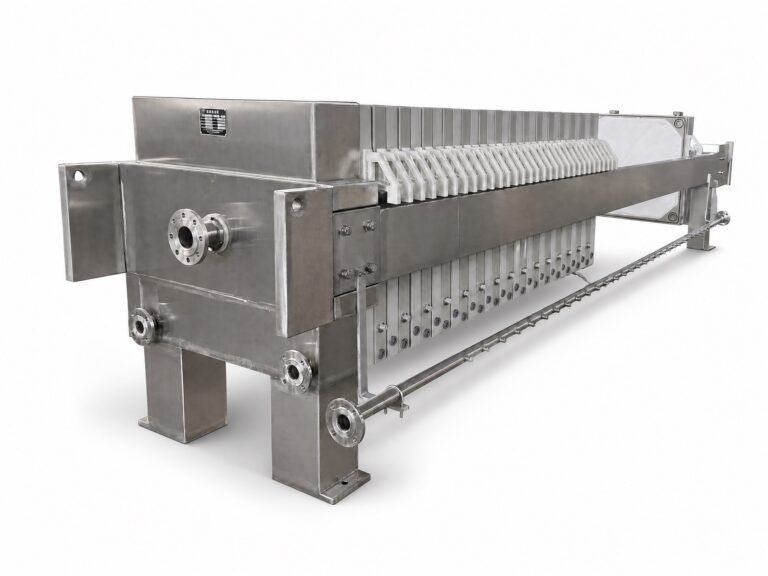
Before a tailings dewatering route is selected, the comparison has to answer a more specific question than “which machine costs less to buy”: what will it cost to run, maintain, and support once feed conditions, media wear, labor patterns, and water recovery are all accounted for? Plant managers and process engineers evaluating filter presses, vacuum disk filters, or automated alternatives need a cost structure that holds those variables separately, because a route that looks favorable on capital cost can shift once energy duty, media replacement, and labor tasks are added in. The decision also depends on what happens to the water and the cake after separation, not only on the separation step itself.
Cost Boundary From Feed Preparation to Cake Destination
A tailings dewatering cost comparison only produces a usable answer when every alternative is measured across the same boundary. If one route’s estimate starts at the feed pump and ends at the cake outlet, while another route’s estimate includes upstream conditioning or downstream cake transport, the resulting numbers describe different scopes rather than different technologies. The boundary question matters because tailings dewatering is rarely a single machine decision; it is a sequence that begins with how the feed is prepared and conditioned, continues through the separation equipment itself, and ends wherever the dewatered cake and the recovered water are actually sent.
Where feed preparation requires chemical conditioning, screening, or thickening ahead of the dewatering equipment, those steps carry their own power, consumable, and labor costs that belong inside the comparison if they differ between the routes being evaluated. Where two routes share an identical feed-preparation stage, that stage can reasonably be left out of a differential comparison, because it will not change the ranking between alternatives. The same logic applies at the back end: if one route produces a cake that requires additional handling, stacking, or transport before reaching its destination, and another route produces a cake suited to direct disposal or reuse, that difference belongs inside the cost boundary rather than being treated as an unrelated downstream matter.
This boundary-setting step also determines how recovered water and filter media are treated later in the comparison. A cost model that excludes cake transport for one alternative while including it for another will misstate the actual cost difference between them, even if every other input is accurate. The practical implication for a project team is that the boundary has to be fixed first, before energy, media, or labor figures are built, because those figures only mean something relative to a defined scope. Where the project’s dewatered cake is destined for a specific disposal or reuse pathway, that destination should be named early, since it determines which downstream costs belong inside the comparison and which do not.
Energy Duties Across Pumps, Vacuum, Hydraulics, and Auxiliaries
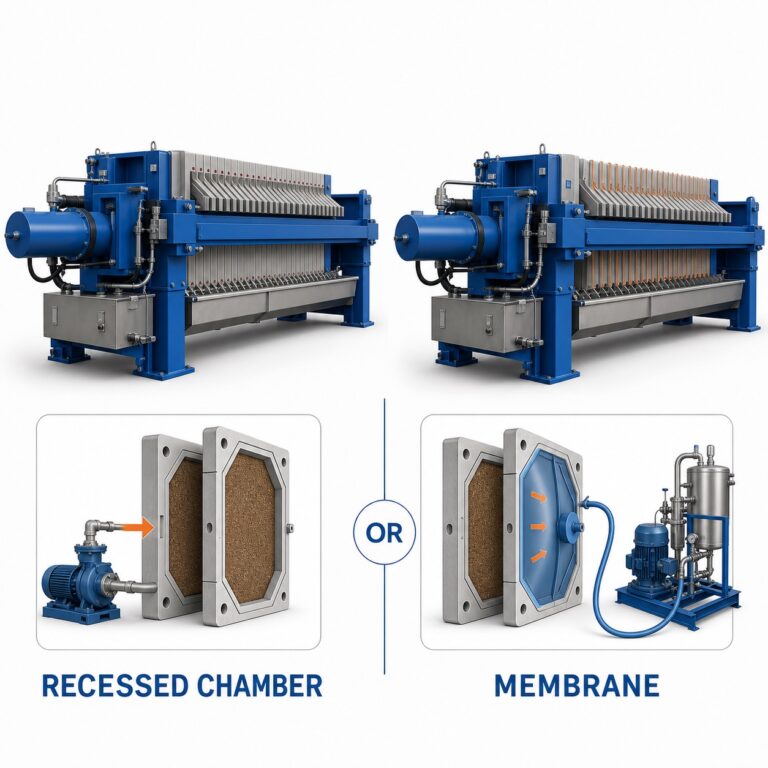
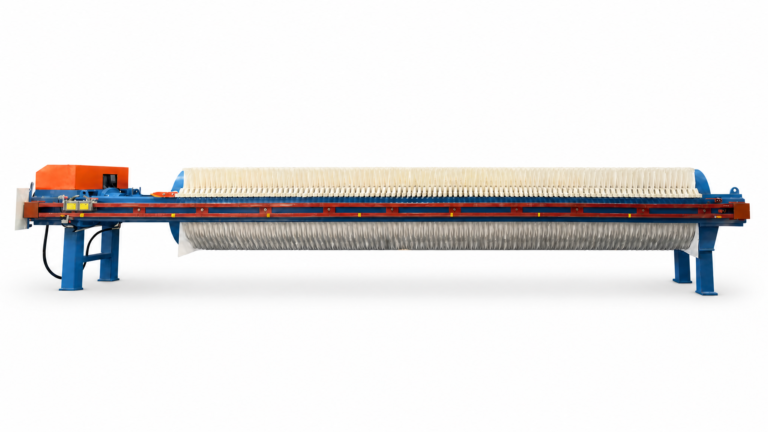
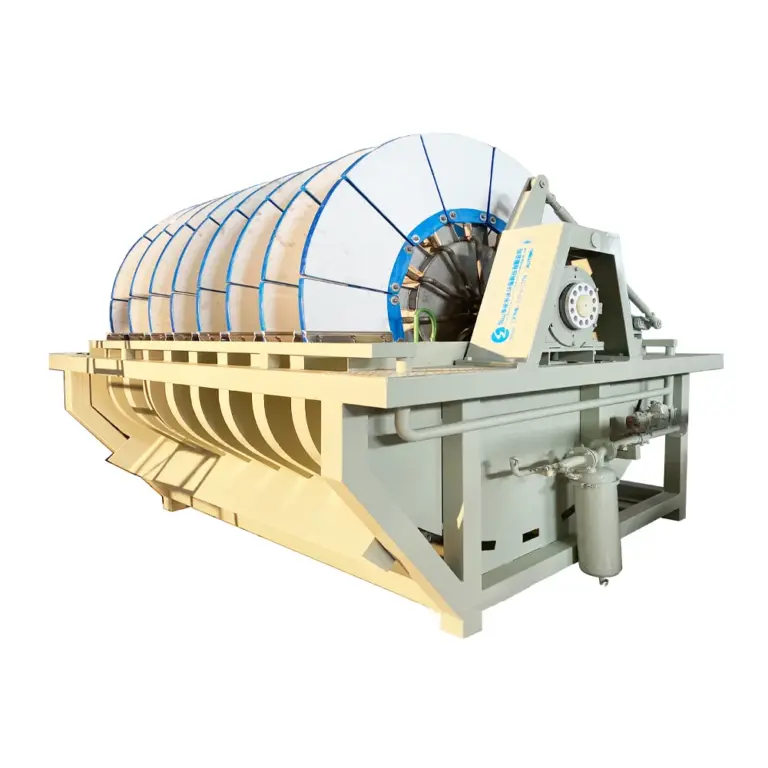
Tailings dewatering energy cost does not come from one duty; it comes from however many duties the selected route actually requires, and those duties differ by equipment type. A filter press cycle draws power through feed pumps and, where fitted, hydraulic closing and plate-shifting systems. A filtre à disque sous vide draws power through the vacuum system that pulls filtrate through the ceramic media, along with drive motors and auxiliary systems supporting cake removal. Treating these as a single generic energy factor per ton of tailings processed obscures the fact that the duty cycle, not just the throughput, governs the power draw.
This distinction matters because the same nominal capacity can carry different energy profiles depending on how the route achieves separation. A route relying on vacuum generation sustains that vacuum duty for as long as the filtration cycle runs, while a route relying on mechanical pressure through hydraulics draws power in a different pattern tied to press, hold, and release phases. Where auxiliary equipment such as cloth-washing systems, air blow-down, or cake-discharge mechanisms is added to either route, each addition introduces its own duty and its own operating schedule, and the cumulative energy cost reflects all of them together rather than the separation step alone.
The practical consequence for a cost comparison is that energy must be modeled against the specific duty list for each route under evaluation, not assumed proportional to throughput or capital cost. Where a project’s feed characteristics or required cake dryness push one route toward longer cycle times or higher vacuum or pressure demand, the energy cost for that route increases independently of any change in the equipment’s rated capacity. A buyer preparing a comparison should ask what duties the quoted configuration actually includes, what operating schedule each duty runs on, and whether any auxiliary systems are counted inside or outside the quoted energy estimate, since omissions at this stage distort the energy line long before labor or media costs are added.
Media Life, Cleaning, and Replacement Work
| Media cost input | Project-specific basis | Cost-model use |
|---|---|---|
| Choix du support | Trialed cloth or ceramic-media choice | Set the media basis used in the estimate. |
| Méthode de nettoyage | Cleaning method used with the trialed media | Include the cleaning work tied to that method. |
| Replacement logic | Project replacement logic | Apply that logic when estimating media replacement cost. |
| Accès pour la maintenance | Plant access for cleaning and replacement work | Check that the planned work reflects the available access. |
Tissu filtrant and ceramic media represent a recurring cost that depends on selections made during trialing, not on a generic consumable allowance. The media choice tested against the actual tailings material determines how the media performs under that specific combination of particle size, chemistry, and solids loading, and a media selection validated on a different material or a different project does not transfer its cost basis to this one. This is why the trialed media choice has to anchor the cost model rather than a published or assumed media life figure.
Cleaning method is tied to the media and the equipment configuration together. A cleaning approach suited to one filter cloth or ceramic-disk configuration may not suit another, and the labor, downtime, and consumable implications of cleaning differ accordingly. Where cleaning is integrated into the operating cycle, its cost shows up as part of routine operation; where cleaning requires a separate intervention outside the normal cycle, that work adds a distinct cost line that must be estimated on its own terms rather than folded into general maintenance.
Replacement logic is project-specific because it depends on how the plant defines end-of-life for the media in use, which in turn depends on the trial results and the operating conditions the media will actually see. A replacement interval assumed from a different application does not hold once the feed material, cycle frequency, or cleaning regime changes. Maintenance access at the plant also shapes what replacement actually costs: a configuration that allows straightforward access for cloth changes or ceramic-disk servicing carries different labor and downtime implications than one where access is constrained by layout or safety isolation requirements. A buyer building this part of the cost model should confirm the media choice validated during trials, the cleaning method paired with it, the replacement logic the plant intends to apply, and whether the physical access at the installation matches what that replacement logic assumes.
Labor Tasks Before and After Automation
Labor cost in tailings dewatering comes from a defined set of tasks, and the cost comparison only becomes meaningful once those tasks are named rather than estimated as a single labor allowance. The relevant tasks include monitoring the operating cycle, managing cake discharge, carrying out cleaning work, handling the resulting material, and responding to faults as they arise. Each of these tasks carries its own frequency, skill requirement, and exposure to downtime if left unaddressed, and a route that shifts the mix of these tasks changes the labor cost even if total throughput stays the same.
The test that matters for a comparison is what automation removes or shifts within this task list, not whether a route is described generally as automated. Automation applied to cake discharge, for example, changes the operator’s role in that task without necessarily changing the monitoring or fault-response tasks, which may still require the same attention regardless of how the discharge step is executed. Where automation is applied to the cleaning method as well, the labor reduction compounds, but where a project’s media or cleaning choice does not support that level of automation, the labor task remains manual regardless of what the rest of the equipment configuration allows.
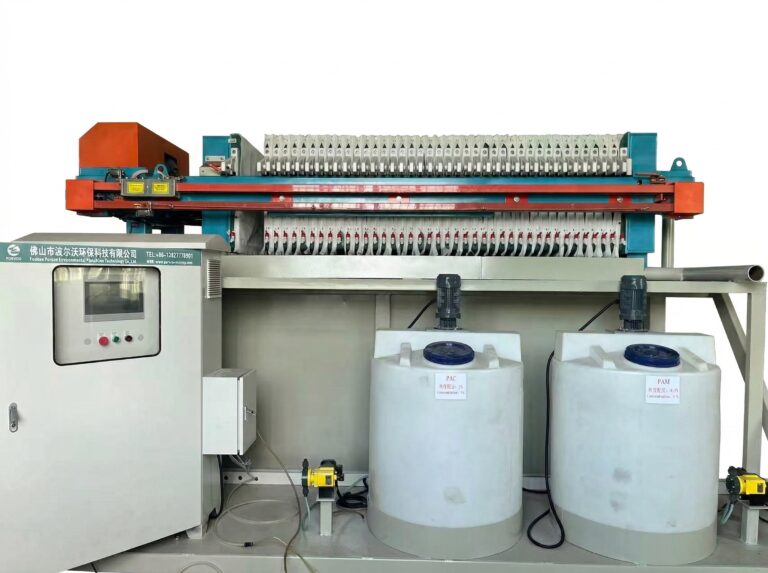
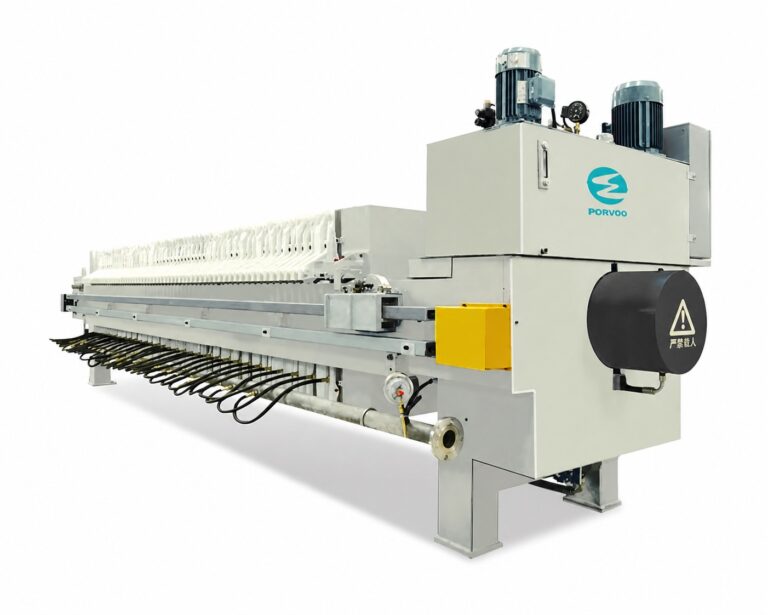
This means two routes described as “automated” are not automatically comparable on labor cost unless the comparison specifies which tasks from the full list are actually automated on each. A route that automates discharge but leaves monitoring and fault response fully manual carries a different labor profile than one that automates discharge and incorporates automated fault detection. The Filtre-presse entièrement automatique category illustrates the kind of configuration where automation is applied across multiple tasks in the cycle, but the specific tasks it automates for a given project still depend on the configuration selected, not on the category name. A buyer should ask which tasks from the full operating list are removed, reduced, or shifted by the automation included in a given quotation, and which tasks remain the plant’s responsibility regardless of the equipment selected.
Recovered Water Value and Its Reuse Conditions
| Reuse condition | Evidence to establish | Cost-model decision |
|---|---|---|
| Measured water quality | Measured quality of the recovered water | Do not credit reuse unless the quality supports the intended destination. |
| Intended destination or end use | Named destination or end use for the recovered water | Credit only water with a practical reuse destination. |
| Chaîne de traitement | Project treatment train used for fit-for-purpose reuse | Keep the credit conditional on this project-specific basis. |
| Exigences applicables | Site-specific process, quality, and regulatory criteria | Do not treat reuse value as established until the applicable criteria are addressed. |
Recovered water only has cost-model value where its quality and destination make reuse practical, and that condition has to be established with project-specific evidence rather than assumed from the fact that water separation occurred. A dewatering step that removes water from tailings produces a water stream with particular characteristics determined by the feed material, the separation technology, and the operating conditions; those characteristics determine what the water is fit for, and they are not interchangeable with the characteristics of a different site’s recovered water even where the equipment category is the same.
The destination for recovered water matters as much as its quality. Water suited to return to the process from which the tailings originated may require a different quality than water intended for a different use elsewhere on site, and the same water stream may be creditable against one destination but not another. Establishing a fit-for-purpose match between recovered water and its intended use, consistent with the framing the EPA’s Water Reuse for Industrial Applications Resources sets out, requires naming the source water’s characteristics, the intended end use, and the treatment train that connects them, since reuse value is not established by the recovery step alone.
Applicable site-specific requirements add a further condition: even where quality and destination appear to align, the project’s own process, quality, and regulatory criteria govern whether that reuse is actually viable, and those criteria vary by site and jurisdiction. A cost model that credits recovered water without confirming these conditions overstates the water-side benefit of a dewatering route. Where a project has measured water quality data and a named destination with a defined treatment train, that water can be credited against the cost model with reasonable confidence; where any of those three elements is missing, the credit should be treated as unconfirmed rather than assumed, and the project team should identify what measurement or destination decision is still needed before the credit is applied.
Comparison Model for Capital, Operating, and Handling Costs
| Cost block | Include in each alternative | Common comparison basis |
|---|---|---|
| Capital | Capital cost for the selected alternative | Use the same feed and duty basis. |
| L'énergie | Power for the selected route’s pumps, vacuum system, hydraulics, auxiliaries, and operating duty | Build route-specific energy cost rather than applying one generic factor. |
| Filter cloth or ceramic media | Trialed media choice, cleaning method, replacement logic, and maintenance access | Use the same operating duty and project conditions. |
| Travail | Monitoring, cake discharge, cleaning, material handling, and fault response, including tasks removed or shifted by automation | Compare the actual task set for each alternative. |
| Recovered water | A credit only where measured quality and destination make reuse practical | Apply the same reuse boundary and site-specific criteria. |
| Maintenance | Maintenance work associated with the chosen route and media plan | Keep it inside the operating-cost boundary. |
| Cake transport or storage | Transport or storage cost for the dewatered cake | Keep the same cake destination within the comparison boundary. |
A usable tailings dewatering cost comparison holds every cost block inside one boundary and applies the same basis to each alternative under review. Capital cost for each route needs to be compared against the same feed and duty assumptions, since a capital figure built on a lighter duty cycle understates the cost of a route that will actually run under heavier operating conditions. Energy cost follows the route-specific duty list for pumps, vacuum systems, hydraulics, and auxiliaries rather than a shared assumption across alternatives, because different separation mechanisms carry different duty profiles even at similar throughput.
Media cost enters the comparison through the trialed media choice, its paired cleaning method, the project’s replacement logic, and the plant’s maintenance access, applied consistently across whichever alternatives are being evaluated. Labor cost is built from the actual task set — monitoring, cake discharge, cleaning, material handling, and fault response — with each alternative’s automation profile tested against that same task list rather than compared by category label alone. Recovered water enters only as a credit, and only where measured quality and a named destination support that credit under the same reuse boundary and site-specific criteria used elsewhere in the comparison.
Maintenance work tied to the chosen route and its media plan belongs inside the operating-cost boundary rather than treated as a separate allowance, since the media and cleaning decisions already shape much of what that maintenance involves. Cake transport or storage cost closes the comparison, carried forward from whatever cake destination was fixed when the boundary was first set, so that a route producing a cake requiring additional handling is not compared on equal terms with one that does not.
When a project’s operating conditions favor minimal auxiliary equipment and lower energy duty, a route built around simpler mechanical separation may compare favorably once energy and labor are added, even if its capital cost is higher. When a project’s conditions instead favor high automation to offset labor-intensive tasks across multiple shifts, a route with greater upfront capital but a reduced labor task set may compare favorably once labor is priced across the full task list. Where a project team has gathered feed characteristics, trialed media results, and site utility data, that information is what supports a configuration and quotation review against the specific duty, media, and water-reuse conditions described above; where any of those inputs remain undefined, the comparison should be treated as provisional until they are confirmed.
Questions fréquemment posées
Q : Can cost estimates from different tailings dewatering alternatives be compared as quoted?
A : Only after they use the same feed, operating duty, and cost boundary. Normalize capital, energy, media, labor, maintenance, recovered-water credits, and cake transport or storage, and confirm that every option assumes the same cake destination.
Q : How should energy cost be estimated for a dewatering route?
A : Build it from the route’s actual pumps, vacuum system, hydraulics, auxiliaries, and operating duty. Record which loads apply to each alternative instead of assigning one generic energy factor to all options.
Q : Does a fully automatic filter press remove the need to budget for operating labor?
A : Automation should be assessed task by task rather than treated as zero labor. Compare who will monitor the process, discharge cake, clean equipment, handle material, and respond to faults before and after automation, including work that is shifted rather than removed.
Q : When can recovered water be counted as a cost saving?
A : Count it only when measured water quality supports a named destination or end use. The estimate should also identify the treatment train and the site-specific process, quality, and regulatory criteria that must be met before reuse is practical.
Q : What evidence is needed for a credible filter-cloth or ceramic-media budget?
A : Base the budget on the trialed media choice, its cleaning method, the project’s replacement logic, and the plant access available for maintenance. These inputs define the cleaning and replacement work that belongs in the operating-cost estimate.