A dust collector’s differential pressure reading only means something if the reader can say, with confidence, what else was true at the moment it was taken. Two readings that look identical on a trend chart can represent very different filter and system conditions, and a maintenance decision built on the number alone can miss the condition that actually caused it. Before a pressure-drop value becomes a baseline worth comparing against, the plant needs to define what surrounded that value.
Baseline Conditions Needed Before Pressure Drop Is Meaningful
| Context group | Record with the pressure-drop value | Front de décision |
|---|---|---|
| Filter and load condition | Filter identity and state, dust condition, and process load | Comparisons remain tied to the filter and loading condition represented by the reading. |
| System flow condition | Airflow, fan state, and damper positions | A low pressure-drop reading with low system flow does not by itself show that the filters are healthy. |
| Cleaning and startup condition | Cleaning mode and time relative to startup | Loading and cleaning transients can be kept separate from stabilized values used for routine trending. |
A pressure-drop reading is a single measurement of resistance across the filter media at one point in time. On its own it says nothing about why that resistance exists. It could reflect a filter that is well loaded and functioning as intended, a filter nearing the end of its service interval, a system running below its design airflow, or a cleaning cycle that has just completed or is about to begin. The number is identical in each case; the conditions that produced it are not.
This is why a differential pressure baseline needs to travel with a defined set of supporting facts rather than stand alone as a figure in a logbook. The filters in place and their condition, the dust being generated and the process load producing it, the airflow moving through the system, the state of the fan, the position of any dampers, the cleaning mode in effect, and the time elapsed since startup all shape what a given pressure-drop value means. Where any one of these conditions changes between readings, a comparison between the two readings stops being a like-for-like comparison and becomes a comparison of two different operating states.
The practical consequence is that a baseline is not a number — it is a number plus its context. If a plant records only the pressure-drop value and later asks why it rose or fell, the record cannot answer the question unless the filter state, dust and load conditions, airflow, fan state, damper position, and cleaning mode at the time of each reading were also captured. Where the dust load or process rate varies across shifts or product runs, the same filters at the same service life can show different pressure-drop values depending on when the reading was taken relative to that variation. A baseline built without that context risks treating a load-driven change as a filter-condition change, or the reverse.
Establishing this baseline is also the point where project-specific information becomes useful to a supplier. When a plant brings its defined operating conditions — the filters installed, the airflow and dust characteristics, and the cleaning configuration in use — into a configuration or quotation discussion, that information lets the supplier relate the plant’s pressure-drop history to the equipment’s intended operating range rather than to a general assumption. Without that context, neither the plant nor the supplier can distinguish a meaningful trend from normal variation in load or airflow.
Filter State, Airflow, and Dust Load at Each Reading
These three conditions interact, and reading pressure drop without understanding the interaction can lead to a wrong conclusion in either direction. Differential pressure rises as resistance across the filter media increases, which can happen because dust has accumulated on the media, because the dust itself has characteristics that increase resistance at a given loading, or because the media has deteriorated. But differential pressure can also be influenced by airflow: a system moving less air across the same filter will tend to produce a lower reading, independent of the filter’s actual condition.
This means a low differential pressure reading does not, by itself, confirm that filters are clean or performing well. If system airflow has dropped — because a fan is operating differently, a damper has moved, or ductwork resistance has changed elsewhere in the system — the pressure-drop reading can fall even while the filter media itself has not improved or may have degraded in another way. Conversely, a rising reading does not automatically mean the filter is failing; it can reflect a process change that has increased dust load, or a point in the loading cycle before scheduled cleaning. The reading has to be interpreted against what the airflow and dust load were doing at the same time, not in isolation.
Where a plant’s dust load varies by process step, product, or production rate, the pressure-drop value appropriate for comparison will vary accordingly. A reading taken during a high-load period is not directly comparable to one taken during a low-load period, even if the filters and airflow are otherwise unchanged. This is why the conditions recorded alongside each reading need to include not just whether the fan was running, but what the system was actually doing — airflow level, damper position, and the dust and process load generating the particulate reaching the filter. Comparing values without that context treats correlated changes as independent, which undermines the reason for keeping a trend at all.
Pulse Supply Settings and Cleaning Sequence
| Pulse-cleaning aspect | Baseline entry | What the entry distinguishes |
|---|---|---|
| Compressed-air supply | Supply condition at the time of the check | The supply context under which pulse operation was observed. |
| Contrôleur | Controller logic in use | How pulse commands were being initiated. |
| Mode nettoyage | Interval or demand mode | Whether cleaning followed a timed interval or a demand signal. |
| Vannes d'impulsion | Observed valve behavior | Observed valve action, kept separate from controller settings or assumptions. |
Nettoyage par impulsion restores filter performance by dislodging accumulated dust from the media, and the condition of the pulse system at the time of a pressure-drop reading shapes how that reading should be interpreted. A system cleaning effectively under adequate compressed-air supply and correctly timed valve actuation will show a different stabilized pressure-drop pattern than the same filters under a pulse system that is under-supplied or misfiring, even where the filters themselves are unchanged.
Recording a pulse-cleaning baseline means capturing the condition of the compressed-air supply at the time of the check, the controller logic directing when and how pulses fire, whether cleaning is operating on a timed interval or responding to a demand signal based on measured differential pressure, and the behavior actually observed at the pulse valves. These are distinct pieces of information. Supply condition describes what pressure and air quality were available to the system. Controller logic describes how cleaning commands are being generated. Cleaning mode describes whether that logic is time-based or demand-based. Valve behavior describes what the hardware actually did, which can differ from what the controller intended if a valve is sticking, leaking, or firing out of sequence.
Separating these is necessary because a given pressure-drop pattern can result from a mismatch at any one of these points, and resolving it requires knowing which one changed. If differential pressure has drifted upward and the cleaning mode is demand-based, the record of the controller’s demand signal becomes relevant to understanding whether cleaning commands were issued appropriately. If the mode is interval-based, the question becomes whether the interval remains appropriate for the dust and load conditions. In either case, importing settings from a different manufacturer’s system or a different installation does not substitute for establishing what the plant’s own controller logic, supply condition, and observed valve behavior actually are. Pulse cleaning configurations are set for the specific equipment and conditions in place, and a baseline record needs to reflect that specific configuration rather than a generic assumption about how pulse-jet cleaning behaves.
Transient Readings Versus Stabilized Operating Values
| Reading class | Operating context | Use in the baseline |
|---|---|---|
| Loading transient | Captured during loading | Keep separate from the stabilized operating value. |
| Cleaning transient | Captured during cleaning | Keep separate from the stabilized operating value. |
| Stabilized operating value | Captured when operation is stabilized | Use the selected value for routine trending. |
Differential pressure does not hold still during normal operation. It rises as dust accumulates on filter media between cleaning cycles and falls, at least partially, immediately after a cleaning pulse restores some of the media’s permeability. Both of these movements are transient: they reflect a point within a cycle rather than a stable operating condition. Using either one as if it were a steady-state baseline value introduces a timing-dependent error into any later comparison.
A reading captured during loading — the period between cleaning events, while dust continues to build on the media — will tend to be higher than the same system’s reading immediately after cleaning, and the discrepancy is a function of where in the cycle the reading was taken, not of a change in filter or system condition. A reading captured during the cleaning event itself, while compressed air is actively acting on the media, can behave differently again. Treating either a loading-cycle reading or a cleaning-moment reading as equivalent to a stabilized operating value produces a baseline that cannot be reliably compared against a later reading taken at a different point in the cycle.
The practical distinction a plant needs to draw is between these transient readings and a stabilized operating value — one captured when the system has settled into its normal running condition, away from the immediate effects of an active cleaning pulse or an unusually early or late point in the loading cycle. Routine trending depends on comparing stabilized values to other stabilized values taken under comparable conditions. Where loading and cleaning transients are mixed into the same trend line as stabilized readings, the resulting pattern can show apparent variation that has nothing to do with a real change in filter or system condition, and a plant acting on that apparent variation risks responding to a timing artifact rather than an actual trend.
Maintenance Triggers Built From Project Data
| Decision input | Utilisation assistée | Limite |
|---|---|---|
| Applicable equipment manual | Establish equipment-applicable alarm and maintenance trigger guidance. | Do not transfer another manufacturer’s settings or numeric limits to the equipment. |
| Accepted site behavior | Establish the site’s accepted operating reference for future trend decisions. | Treat it as project-specific behavior rather than a generic range or unconditional promise. |
Once a plant has a baseline built from consistent, context-rich readings and a clear separation between transient and stabilized values, the remaining question is where the thresholds for action come from. A differential pressure value that should trigger an alarm or a maintenance response is not a fixed number that applies across installations; it depends on the specific filters, airflow, dust characteristics, and cleaning configuration in place at that site.
Le applicable equipment manual is the source for alarm and maintenance guidance that applies to the specific equipment installed, and using it keeps the trigger tied to the actual configuration rather than to a number drawn from an unrelated installation or a general internet reference. Donaldson’s documentation for pulse-jet cleaning collectors, for example, describes building maintenance practice around pressure-drop trending considered together with airflow context, dust loading, cleaning-mechanism checks, and compressed-air condition — reinforcing that a trigger drawn from equipment-specific guidance is meant to be read alongside the operating conditions, not as an isolated number. That logic of connecting the reading to its surrounding conditions holds generally, even though numeric limits from one piece of equipment are not transferable to another.
Alongside the manual, a site accumulates its own accepted operating behavior over time — the stabilized values and cleaning responses that reflect how that particular installation runs under its particular dust, airflow, and process conditions. This accepted behavior becomes a second input into setting triggers, distinct from the manual’s general guidance, because it reflects what has proven to be the normal operating range for that specific combination of filters, ductwork, and process load. Treating this site-specific pattern as a generic range that should apply elsewhere, or as an unconditional guarantee of future behavior, misapplies it; its value lies in being tied to the project’s own confirmed conditions.
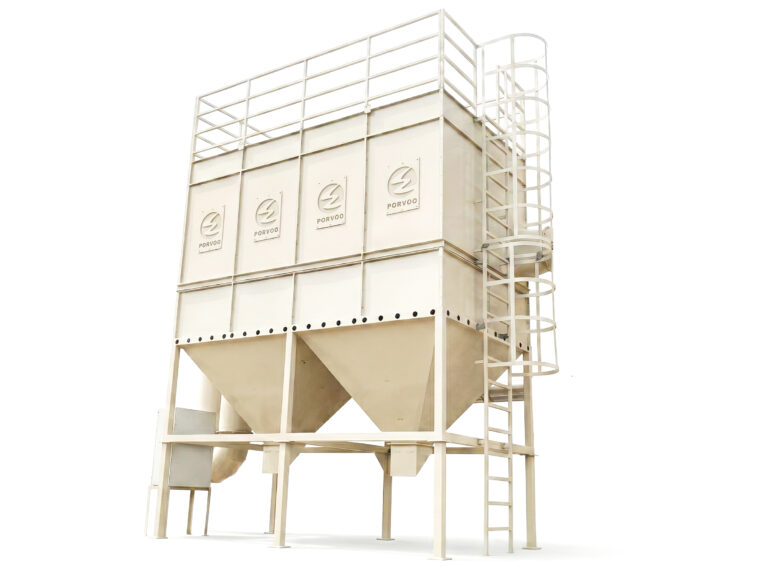
Where a plant is selecting or reconfiguring equipment such as a pulse jet ou dépoussiéreur à cartouche, carrying this same discipline forward — connecting any proposed differential-pressure or cleaning-interval setting to the manual’s guidance and the site’s established behavior rather than to a general figure — keeps the resulting maintenance plan tied to conditions the plant can verify, and gives the supplier reviewing the configuration a basis for confirming that the proposed triggers match the installed equipment and the site’s operating pattern rather than an assumption carried over from elsewhere.
Questions fréquemment posées
Q : Does a low differential-pressure reading always mean the filters are in good condition?
A : No. Check the airflow, fan state, and damper positions recorded with the reading, because low system flow can also produce a low pressure drop. Compare readings only when the relevant operating conditions are clear.
Q : Which differential-pressure value should be used as the routine baseline?
A : Use a value captured after operation has stabilized. Keep readings taken during loading or pulse cleaning as separate transient records, with their timing and operating state identified, so they do not distort routine trends.
Q : What should be checked when pulse-cleaning behavior appears different from the baseline?
A : Compare the compressed-air supply condition, controller logic, cleaning mode, and observed valve behavior with the recorded baseline. This separates a supply or valve observation from a change in controller settings or operating mode.
Q : Can the same baseline be used after the filter or process condition changes?
A : Only if the new reading still represents the same relevant filter, dust, process-load, airflow, fan, damper, and cleaning conditions. If those conditions have materially changed, record the new context and establish a suitable comparison point rather than treating the old value as directly equivalent.
Q : How should alarm and maintenance trigger values be selected?
A : Build them from the applicable equipment manual and the site’s accepted operating behavior. Do not transfer another manufacturer’s settings or a generic online range; document the project conditions that make each trigger meaningful.