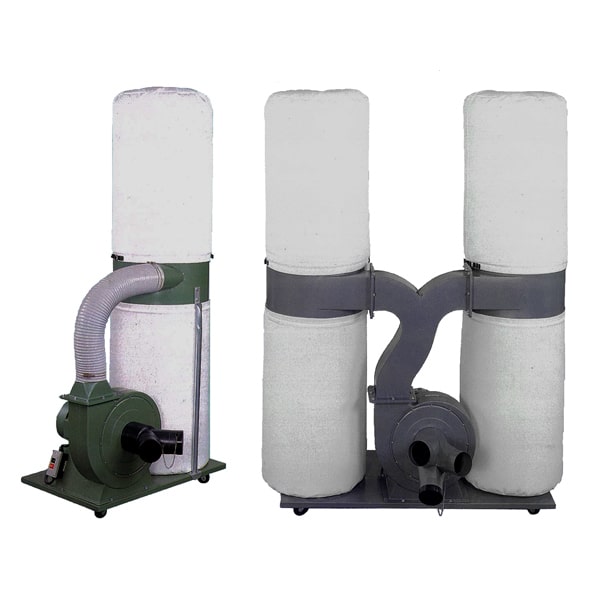
Les opérateurs qui constatent que leur système à jet pulsé fonctionne à une pression différentielle élevée et constante supposent souvent que les filtres doivent être remplacés — ce qui est parfois le cas. Mais tout aussi souvent, le véritable problème est apparu dès la mise en service, lorsque le rapport air/tissu a été calculé en fonction du débit d’air nominal plutôt que de la charge de poussière réelle générée par le processus. À partir de ce moment-là, chaque lecture de pression sur le tableau de commande correspond à un système qui était déjà surchargé avant même le début de la première équipe. Le coût se fait sentir progressivement : des impulsions de nettoyage qui cessent de déloger correctement le gâteau de filtration, des médias filtrants qui s’obstruent des mois avant la date prévue, et des points de captage qui perdent leur vitesse de captage avant même que l’on ne fasse le lien avec un choix de rapport effectué sur le papier. Comprendre ce que la pression différentielle permet réellement de distinguer — encrassement par charge par opposition à encrassement par colmatage, échec du nettoyage par opposition à défaillance du média filtrant, récupération normale après impulsion par opposition à dérive due à une surcharge — constitue la couche d’interprétation qui rend les données exploitables.
Régler le rapport air/tissu en fonction de la charge de poussière réelle
Le rapport entre le débit d'air volumétrique et la surface filtrante totale détermine la vitesse à laquelle la poussière atteint chaque mètre carré de média filtrant. Lorsque ce rapport est comparé aux valeurs de débit nominales sans tenir compte de la charge réelle en particules, des pics de concentration ou de la distribution granulométrique du processus, le système est mis en service dans des conditions pour lesquelles la surface filtrante n'a jamais été dimensionnée.
La conséquence la plus importante sur le plan opérationnel est ce qu’il advient des particules fines à une vitesse frontale élevée. Au lieu de s’accumuler à la surface du média sous forme d’un gâteau détachable, elles sont enfoncées dans le tissu lui-même. Cette distinction a un effet direct sur le nettoyage : l’énergie des impulsions peut déloger un gâteau de surface, mais elle ne peut pas extraire les particules déjà incrustées dans la matrice fibreuse. Il en résulte que la pression différentielle se rétablit moins bien après chaque cycle de nettoyage et commence à augmenter à partir d’un niveau de référence plus élevé — une tendance qui est interprétée sur le panneau comme un problème de nettoyage alors que la cause profonde est en réalité un problème de rapport.
La deuxième conséquence est liée à la vitesse : la même masse de poussière entrante est désormais répartie sur une surface de filtration effectivement plus petite, ce qui signifie que la différence de pression (dP) augmente plus rapidement après chaque intervalle d'impulsion. Ces deux effets se renforcent mutuellement, et aucun d'entre eux ne peut être résolu en ajustant la durée des impulsions ou la pression.
| Problème constaté | Impact immédiat | Pourquoi c'est important |
|---|---|---|
| Particules fines incrustées dans le tissu | Baisse de l'efficacité de la collecte, augmentation potentielle des émissions | Risque lié à la conformité et baisse des performances de filtration |
| La pression différentielle augmente rapidement après le nettoyage | Même charge de poussière appliquée à une surface filtrante fonctionnellement plus petite | Indique une surcharge du système ; signale un risque de détérioration prématurée du filtre |
Lorsque les conditions de traitement impliquent des poussières collantes, hygroscopiques ou très fines, le seuil de surcharge est plus bas que pour des matériaux grossiers, secs et s’écoulant librement. C’est le choix du rapport adapté à ces conditions réelles — plutôt qu’une valeur de conception standard appliquée de manière générique — qui détermine si l’ensemble du système en aval fonctionnera comme prévu ou commencera à se détériorer dès le premier jour.
Surveiller la pression différentielle au cours des différentes équipes de travail
La pression différentielle à travers un collecteur à jet pulsé ne reste pas stable pendant une garde ; elle évolue par cycles. La manière dont elle augmente et le degré de rétablissement après le nettoyage fournissent davantage d’informations que n’importe quelle lecture isolée. Un système fonctionnant dans sa plage de conception présentera un rythme de hausse et de baisse qui reste dans une fourchette constante. Ce qui change lorsque le système est soumis à une contrainte, c’est le seuil minimal : la pression différentielle minimale après le nettoyage tend à augmenter avec le temps, ce qui réduit cette fourchette vers sa limite supérieure.
Pour détecter cette dérive, il faut disposer de relevés effectués à intervalles réguliers tout au long des équipes de travail, et non pas se contenter d’un simple coup d’œil lors du relais d’équipe. L’installation de manomètres différentiels dotés de seuils d’alerte configurables — ou de systèmes de surveillance numériques enregistrant les données de tendance — rend cette comparaison d’une équipe à l’autre tout à fait réalisable. Ce n’est pas la mesure individuelle qui importe, mais l’évolution de la courbe de référence au fil des jours et des semaines. Un seuil d’alerte défini pour signaler tout écart par rapport à la plage de fonctionnement normale transforme les données du tableau de bord en alerte précoce plutôt qu’en indicateur retardé.
La conclusion pratique qui en découle est simple : si la valeur dP au début d’un poste est systématiquement supérieure à celle enregistrée au début du poste précédent, cela signifie qu’un changement est en cours, soit au niveau de la charge de poussière, soit au niveau du système de nettoyage, soit au niveau de l’état du filtre. Identifier lequel de ces trois facteurs est à l’origine de cette tendance nécessite des vérifications supplémentaires, mais c’est précisément le registre de surveillance qui rend cette analyse possible. Sans suivi par poste, la dégradation tend à se normaliser progressivement jusqu’à ce que la perte de captation devienne impossible à ignorer. Pour mieux comprendre comment le comportement de la pression différentielle (dP) reflète l'état du système de filtration, Qu'est-ce que la pression différentielle (dP) dans les systèmes à jet pulsé et pourquoi est-elle importante pour la durée de vie du filtre ? explique plus en détail les mécanismes sous-jacents.
Considérer l'augmentation de la différence de pression (dP) comme un signal indiquant l'encrassement et le nettoyage du filtre
Une pression différentielle constamment élevée indique l'une des deux situations suivantes : soit le filtre retient plus de poussière que le nettoyage ne permet d'éliminer par cycle, soit le média filtrant a absorbé la poussière si profondément dans la structure de ses fibres qu'il ne peut plus être nettoyé du tout. Il ne s'agit pas de la même situation, et les considérer comme équivalentes conduit, dans le premier cas, à un remplacement prématuré des poches et, dans le second, à la poursuite du fonctionnement avec un média filtrant inefficace.
Une augmentation de la pression différentielle (dP) après le nettoyage suggère que le gâteau de filtration ne se détache pas complètement — ce qui peut être dû autant à un problème du système de nettoyage qu’à un problème lié au média filtrant. Une différence de pression élevée et persistante, qui ne réagit plus de manière significative aux cycles de nettoyage, constitue un signe plus grave : elle indique que le média filtrant a atteint un état de colmatage irréversible, dans lequel les impuretés ont pénétré suffisamment profondément dans la fibre pour que l’énergie des impulsions ne puisse plus les déloger. À ce stade, le filtre est mécaniquement intact mais fonctionnellement hors d’usage. Cette distinction est importante, car l’un de ces états peut être corrigé par un ajustement opérationnel, contrairement à l’autre.
La difficulté d’interprétation réside dans le fait que ces deux situations produisent des lectures similaires sur le tableau de bord à court terme. La différence apparaît dans la tendance : un problème de nettoyage se traduit par une augmentation de la pression différentielle (dP) suivie d’une récupération partielle, mais à un niveau de base plus élevé ; un filtre bouché présente une pression différentielle élevée et pratiquement statique, quelle que soit l’activité des impulsions. Aucun de ces deux éléments ne constitue à lui seul un diagnostic définitif — ils orientent l’analyse, mais ne la remplacent pas. Mais c’est en reconnaissant la différence entre un signal de colmatage et un signal d’encrassement que l’on évite que le service de maintenance ne remplace des poches qui nécessitent une vérification de la vanne, ou n’utilise des poches encrassées sous prétexte que la dP semble “ suffisamment normale ”.”
Vérifier les réglages de l'air comprimé et du nettoyage par impulsions
Lorsque la pression différentielle est élevée mais que l’état du filtre semble acceptable à l’inspection, il convient alors d’examiner le système de nettoyage lui-même. Plusieurs défaillances au niveau de l’alimentation en air comprimé ou du circuit d’injection d’impulsions entraînent des augmentations de la pression différentielle qui, sur le tableau de commande, sont impossibles à distinguer d’un colmatage du filtre — c’est pourquoi les équipes de maintenance remplacent parfois des poches encore en état de marche alors que le véritable problème n’est pas résolu.
Les défauts les plus courants liés à l'air comprimé sont une pression de refoulement insuffisante, une contamination par l'humidité qui altère la netteté des impulsions, et des tuyaux de soufflage mal alignés qui dirigent le jet de nettoyage de manière décentrée par rapport à l'ouverture du sac ou de la cartouche. Un venturi manquant ou endommagé limite le flux d'air secondaire induit qui contribue à la flexion du sac et au détachement du dépôt. Chacun de ces facteurs affaiblit l'efficacité du nettoyage sans qu'aucun signe visible n'apparaisse au niveau de la vanne à impulsion elle-même.
Les paramètres de synchronisation des impulsions présentent un angle mort similaire. Les recommandations destinées aux professionnels situent la largeur d’impulsion efficace dans une fourchette de 0,05 à 0,15 seconde ; en dessous de cette fourchette, l’impulsion ne parcourt pas toute la longueur du sac et la partie inférieure du filtre reste non nettoyée ; au-delà, le pic de pression initial s’étale sur une durée plus longue, ce qui réduit la flexion brusque qui libère le gâteau. Aucun de ces écarts n’entraîne d’erreur manifeste : ils se traduisent simplement par une pression différentielle résiduelle (dP) plus élevée et une dérive plus rapide de la ligne de base. La séquence de déclenchement influe également sur la remise en suspension : si des rangées adjacentes sont nettoyées à la suite, la poussière délogée d’une rangée peut se déposer sur une rangée fraîchement nettoyée avant d’atteindre la trémie. Une séquence décalée — consistant à espacer l’ordre de déclenchement de manière à ce que les rangées adjacentes ne soient pas nettoyées consécutivement — atténue cet effet.
| Paramètre / Point de contrôle | Réglage ou condition correcte | Conséquence en cas d'erreur |
|---|---|---|
| État de l'air comprimé et de la lance de soufflage | Pression adéquate, air propre et sec, tuyaux de soufflage bien alignés, venturi en place | Nettoyage insuffisant, pression différentielle plus élevée |
| Largeur d'impulsion | 0,05 à 0,15 seconde | Si elle est trop longue, elle affaiblit la puissance de tir ; si elle est trop courte, elle ne permet pas de vider entièrement le sac. |
| Séquence de tir par impulsions | Séquence décalée (par exemple : 1, 4, 2, 5, 3, 6) | Ré-entraînement de poussière sur les rangées adjacentes, efficacité de nettoyage réduite |
L'intérêt pratique de vérifier ces paramètres avant de procéder au remplacement des filtres ne se limite pas à une simple réduction des coûts. Il s'agit avant tout de déterminer clairement si un problème de dP est dû à une défaillance du système de nettoyage, qui peut être corrigée en l'espace d'une équipe, ou à l'état du média filtrant, qui nécessite un arrêt planifié et un remplacement. Il s'agit là de décisions différentes, avec des délais différents, et ce sont les vérifications de l'air comprimé et du timing qui permettent de les distinguer.
Évitez d'utiliser des filtres surchargés en fonctionnement normal
Le phénomène qui cause le plus de dommages évitables dans les systèmes à jet pulsé est la normalisation progressive d’une dP élevée, considérée comme une condition de fonctionnement acceptable. Ce phénomène se développe progressivement : la dP est légèrement élevée, le nettoyage l’empêche d’atteindre les niveaux entraînant un arrêt, la production se poursuit, et cette valeur de base élevée devient le point de référence auquel les opérateurs se comparent. La référence réelle — ce que devrait être la dP pour ce rapport air/tissu avec ces filtres en bon état — n’est plus présente dans l’esprit de personne.
D’un point de vue mécanique, lors d’une surcharge prolongée, les impulsions de nettoyage s’opposent à une vitesse frontale trop élevée pour permettre au gâteau de tomber librement. Au lieu que l’impulsion ne fasse fléchir le sac vers l’extérieur et ne libère le gâteau vers la trémie, le flux d’air continu repousse le gâteau dans le média pendant et après l’impulsion. La fréquence de nettoyage peut augmenter en conséquence, mais chaque cycle supplémentaire ajoute une contrainte mécanique — la fatigue par flexion — sans rétablir l’état du filtre. Il en résulte que la durée de vie du filtre, qui, avec un dimensionnement correct, peut s’étendre sur plusieurs années, peut être réduite à quelques mois dans des conditions de surcharge prolongée. Il ne s’agit pas d’une spécification précise, mais d’une illustration de la gravité du phénomène ; le résultat réel dépend du type de poussière, de sa concentration et de la température de fonctionnement. Mais la tendance est constante : la surcharge réduit considérablement la durée de vie du filtre.
| Conséquence | Mécanisme | Impact à long terme |
|---|---|---|
| Durée de vie du filtre réduite à quelques mois | Fatigue des flexibles, fuites par piqûres, déchirures dues à une charge de poussière excessive | Remplacement prématuré, augmentation des coûts d'exploitation |
| Le gâteau de poussière ne se détache pas lors du nettoyage | C'est l'air qui pousse le gâteau dans le milieu filtrant au lieu de le laisser tomber | Obscurcissement accéléré, augmentation rapide de la pression différentielle, surcharge supplémentaire |
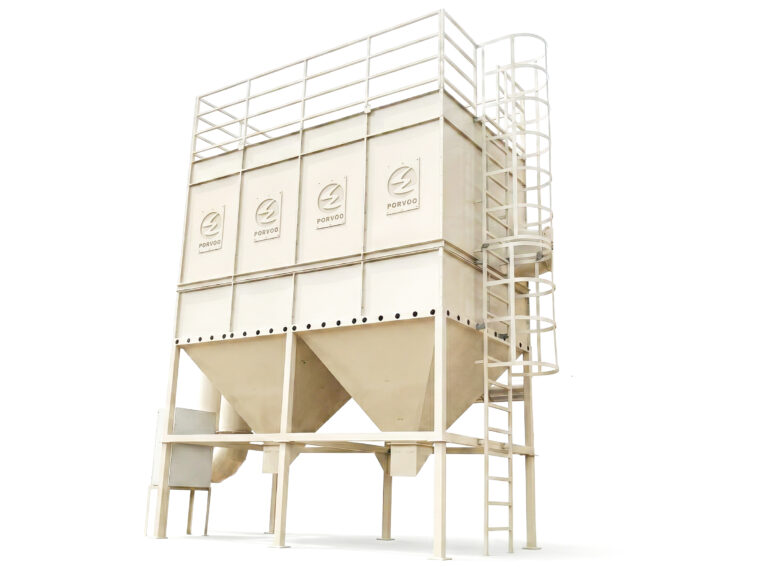
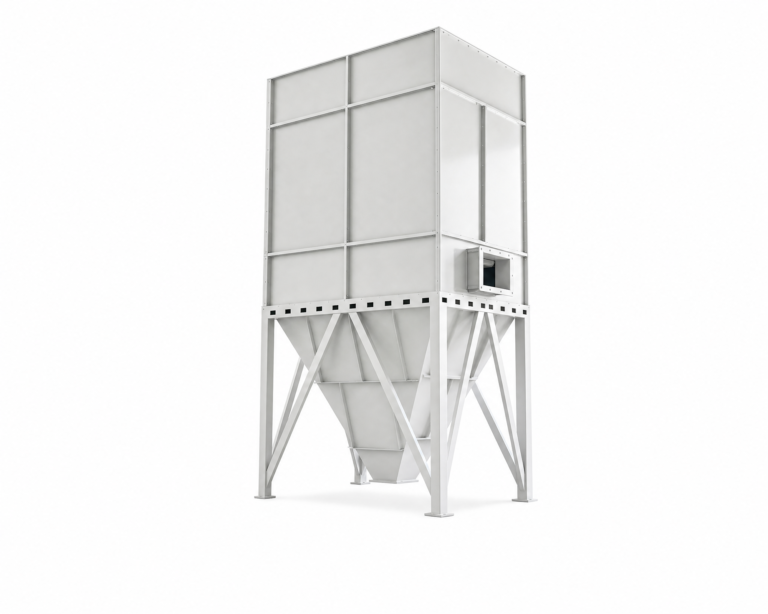
Les répercussions sur les achats sont bien réelles. Une durée de vie réduite des filtres implique des remplacements plus fréquents, une augmentation des dépenses en consommables et davantage de fenêtres de maintenance programmée. Mais le risque le plus immédiat est qu’un système surchargé fonctionnant à une pression différentielle (dP) élevée puisse perdre la vitesse frontale nécessaire aux points de prélèvement pour maintenir la capture — et cette perte de performance peut survenir avant même que le filtre ne tombe complètement en panne. Le fait d’exploiter un système surchargé en mode normal ne retarde pas la panne ; cela garantit au contraire qu’elle survienne plus tôt et avec moins de préavis. Notre Dépoussiéreur à jet pulsé Les configurations sont dimensionnées en fonction des charges réelles de poussière du procédé, précisément pour éviter cette situation lors de la mise en service.
Relier les tendances de la pression différentielle aux intervalles de maintenance
Le remplacement des filtres selon un intervalle calendaire prédéfini constitue un point de départ raisonnable en l'absence de données plus précises. Il devient toutefois un inconvénient dès lors que le système dispose d'un historique d'exploitation, car l'intervalle déduit des données de tendance diffère presque toujours de l'intervalle générique — tantôt plus court, tantôt plus long — et l'écart entre les deux se traduit soit par un remplacement prématuré et inutile, soit par une dégradation évitable des performances.
Le mécanisme qui explique l’importance d’un suivi basé sur les tendances est l’encrassement irréversible en profondeur des fibres. La poussière qui pénètre au-delà de la surface du média filtrant et s’incruste dans la structure des fibres ne se détache pas lors du nettoyage. Elle s’accumule progressivement, augmentant la différence de pression de base (dP) au fil des semaines ou des mois. À un certain stade, la pénétration est suffisamment profonde pour qu’aucun nettoyage ne permette de rétablir des performances acceptables, et le remplacement devient inévitable. La question est de savoir si ce point de basculement survient sous la forme d’un remplacement planifié, programmé à partir des données de tendance, ou d’un événement imprévu déclenché par une perte de captation.
| Stratégie de maintenance | Déclencheur / Indicateur | Résultats |
|---|---|---|
| Remplacement proactif basé sur les tendances | Augmentation progressive de la pression différentielle de référence | Remplacement programmé, évite une perte soudaine de performances |
| Remplacement réactif lorsque les niveaux atteignent des seuils critiques | dP élevé et constant, remplacement forcé | Arrêts imprévus, risque de perte de production et perturbation des processus |
La décision pratique en matière de maintenance que cela permet de prendre n’est pas compliquée : enregistrer la valeur de référence dP à des moments réguliers au cours du cycle de travail, comparer les données d’une semaine à l’autre, et considérer une dérive ascendante soutenue — et non une simple valeur élevée ponctuelle — comme le critère déclencheur d’une intervention. Les données de tendance d’une équipe à l’autre permettent de définir une fenêtre de remplacement qui s’adapte aux arrêts planifiés, plutôt qu’une fenêtre imposée par une perturbation du processus. Les données nécessaires à cette évaluation sont les mêmes que celles déjà collectées par le système de surveillance ; la différence réside dans le fait de les examiner sous l’angle d’une tendance ou de les vérifier uniquement par rapport à un seuil.
Utiliser les données de pression pour éviter les pertes lors de la capture
Une pression différentielle supérieure à sa plage de fonctionnement effective n'indique pas seulement une sollicitation excessive du filtre : elle modifie l'équilibre hydraulique de l'ensemble du système de collecte. Une résistance accrue au niveau du boîtier du filtre réduit la dépression disponible au niveau des hottes d'aspiration et des points d'extraction. Lorsque ce tirage chute en dessous du niveau nécessaire pour capter la poussière à la source, les émissions augmentent au niveau du processus plutôt qu'au niveau de la cheminée du collecteur. Ce mode de défaillance est visible au poste de travail avant même d'apparaître sur un quelconque système de surveillance.
C'est cette conséquence en aval qui confère aux données de dP une importance opérationnelle, au-delà d'un simple indicateur de maintenance. Un filtre suffisamment encrassé ou obstrué pour restreindre le débit d'air ne pose pas seulement un problème de remplacement du filtre ; il s'agit d'un problème de performance de captage qui affecte le processus qu'il dessert. La norme ISO 10780:1994 fournit une méthodologie de référence pour mesurer la vitesse et le débit volumique dans les flux gazeux provenant de sources fixes — un contexte pertinent pour comprendre comment les conditions d’écoulement au niveau de la face du collecteur sont liées au comportement des conduits en amont — mais les limites de dP et les seuils de captage pour les systèmes à jet pulsé n’y sont pas définis. Le lien entre une dP élevée et une perte de captage est une conséquence pratique de la résistance à l’écoulement, et non un seuil établi par cette norme ou par l’une des autres normes mentionnées ici.
En termes de maintenance, cela signifie que la surveillance de la différence de pression (dP) doit être considérée comme un moyen de protéger à la fois le système de filtration et le processus qu’il dessert. Un système qui atteint le seuil de perte de captation a déjà franchi les étapes où les données de tendance auraient dû signaler la nécessité d’intervenir : ajustement du nettoyage, révision des paramètres ou remplacement programmé du filtre. La perte de captation est la conséquence de l’ignorance des signaux précurseurs, et non le signal lui-même. Pour les applications impliquant des poussières fines ou dangereuses où les performances de captation sont cruciales, dépoussiéreurs à cartouche proposent une configuration de média différente qui peut s'avérer plus adaptée en fonction de la taille des particules et des exigences de captage. Pour plus de détails sur la manière dont les choix relatifs aux rapports se traduisent par le dimensionnement du collecteur et le choix du média, Influence du rapport air/tissu sur les performances d'un dépoussiéreur à jet pulsé traite directement cette logique de calcul.
La question la plus utile à retenir de cet article pour une analyse d’équipement ou une discussion sur la maintenance est de savoir si le rapport air/tissu actuel a été dimensionné en fonction de la charge réelle de poussière du processus ou en fonction d’un débit théorique. Cette seule décision détermine la base de référence à partir de laquelle chaque mesure de dP est interprétée — et permet de déterminer si un système fonctionnant à une pression “ élevée mais stable ” offre des performances acceptables ou s’il se détériore lentement vers une défaillance qui paraîtra soudaine lorsqu’elle se produira.
Avant la prochaine intervention de maintenance, vérifiez si la différence de pression (dP) de référence au début de chaque poste a affiché une tendance à la hausse au cours du dernier mois, si la synchronisation des impulsions et l'alimentation en air comprimé ont été comparées aux réglages d'origine de mise en service, et si la durée de vie des filtres à ce jour correspond à ce que laverie et la charge de poussière laissaient prévoir. Ces trois vérifications, effectuées conjointement, permettent de distinguer un système fonctionnant normalement d'un système soumis à des conditions de fonctionnement qu'il n'est pas en mesure de supporter.
Questions fréquemment posées
Q : Que faut-il faire en premier lieu si l'on soupçonne que le rapport air/tissu n'a pas été correctement dimensionné lors de la mise en service ?
R : Commencez par mesurer le débit volumétrique réel et comparez-le à la surface totale du filtre, puis vérifiez si les calculs de conception ont pris en compte la charge maximale en grains, la distribution granulométrique et toutes les conditions de processus telles que l’humidité ou l’adhésivité. Si le rapport calculé dépasse ce que le type et la concentration de poussière peuvent supporter, la solution consiste soit à réduire le débit d’air vers le collecteur, soit à augmenter la surface filtrante, soit les deux — le simple ajustement de la durée ou de la pression des impulsions ne résoudra pas un problème de rapport et pourrait accélérer l’usure du média filtrant tout en donnant l’impression de stabiliser la différence de pression (dP).
Q : À partir de quel moment une augmentation de la valeur de référence de la pression différentielle (dP) indique-t-elle que le remplacement du filtre est véritablement urgent, plutôt que simplement une opération à programmer ?
R : Le remplacement devient urgent lorsque la différence de pression (dP) reste élevée et pratiquement stable, quelle que soit l’activité des impulsions — ce qui signifie que le filtre ne réagit plus du tout aux cycles de nettoyage. Un filtre qui présente encore une certaine récupération après l’impulsion, même réduite, se trouve dans un état différent de celui où le nettoyage n’entraîne aucune baisse mesurable. Ce schéma statique et sans réaction indique un colmatage irréversible en profondeur des fibres ; poursuivre l’exploitation à ce stade risque d’entraîner des pertes de captage aux points de prélèvement avant que le filtre ne tombe physiquement en panne, ce qui peut obliger à un arrêt imprévu plutôt qu’à un remplacement planifié.
Q : Comment ces conseils s'appliquent-ils lorsque le processus est soumis à des charges variables — par exemple, une production par lots présentant des pics de poussière importants suivis de périodes d'inactivité ?
R : Les conditions de charge variables réduisent la marge d’erreur concernant le rapport air/tissu, car ce rapport doit être dimensionné en fonction de la charge maximale de céréales, et non du débit moyen. Pendant les périodes d’inactivité, la différence de pression (dP) peut se rétablir suffisamment pour paraître acceptable au début du poste, masquant ainsi la contrainte cumulative que le média a absorbée pendant les cycles de pointe. Le suivi de la référence par équipe reste valable, mais le point de comparaison doit être la dP à la même phase du cycle de production — de pic à pic plutôt qu’au début de l’équipe entre différents états du processus —, sinon la dérive causée par la variation de charge est masquée par la variation normale du cycle.
Q : Un collecteur à cartouches est-il susceptible de mieux traiter les poussières fines ou dangereuses qu'un système de filtres à poches à jet pulsé dans le cadre d'une même application ?
R : Les collecteurs à cartouches utilisent des médias plissés qui offrent une surface filtrante nettement plus importante pour un encombrement réduit, ce qui diminue la vitesse frontale effective pour un débit d’air donné et peut limiter la pénétration en profondeur des particules fines dans les fibres. Pour les poussières très fines ou dangereuses, où l’efficacité de captage et les limites d’émission sont cruciales, cette configuration de média peut offrir un avantage pratique par rapport aux poches tissées ou en feutre standard utilisées dans un système à jet pulsé. Cependant, les médias à cartouche supportent généralement moins bien une humidité élevée, des températures élevées et les poussières collantes ; le choix dépend donc de la question de savoir si la taille des particules et les exigences de captage de l’application l’emportent sur ces contraintes liées au matériau.
Q : Si la surveillance de la pression différentielle (dP) et l'état du filtre semblent tous deux satisfaisants, qu'est-ce qui pourrait expliquer la baisse progressive des performances de captage au niveau des hottes d'aspiration ?
R : Une perte de capture sans signal de pression différentielle (dP) clair indique généralement des modifications du réseau de conduits plutôt que l’état du filtre : des fuites d’air apparues lors de l’entretien, des registres déplacés de leur position d’origine ou des raccordements de dérivation ajoutés qui redirigent le flux loin des points de captage concernés. Cela peut également résulter de l’usure du ventilateur réduisant la pression totale du système, ce qui affecte la vitesse de capture avant même qu’elle n’apparaisse de manière significative sur le manomètre de pression différentielle du filtre. Dans ces cas-là, c’est en mesurant directement la vitesse réelle du flux d’air au niveau des hottes de prélèvement, plutôt qu’en déduisant les performances de captage à partir des données côté collecteur, que l’on peut distinguer un problème lié au système de filtration d’un problème lié au réseau de conduits ou au système de ventilation.