How much water should a filter press return to the plant, and how dry does the cake need to be before it can go to the stack? Both answers depend on decisions the mine makes before any dewatering equipment is selected, not on a filter manufacturer’s data sheet. A project that starts from feed variability, recycle targets, and the handling route for dewatered tailings gives testwork and equipment selection something real to respond to.
Start With the Mine’s Material Balance, Water Balance, and Handling Route
| Planning basis | Project-specific content | Decision supported |
|---|---|---|
| Material balance | Feed variability and solids throughput | Representative feed envelope and conditional equipment duty |
| Water balance | Filtrate return needs and recycle destinations | Filtrate-quality basis and plant return connection |
| Cake-handling route | Required downstream route for the dewatered cake | Cake-discharge interface and cake acceptance basis |
Tailings dewatering decisions begin upstream of any filtration equipment, in the material balance and water balance that describe what the plant actually produces and what the site needs back. The material balance sets out how much solids mass moves through the circuit and how that mass varies with ore type, grind, and reagent regime. Where a single ore type feeds the plant consistently, a dewatering duty can be defined around a narrow operating band. Where blended or variable ore feeds the circuit, the same duty must be defined around a wider feed envelope, and the equipment selected has to accommodate that range rather than a single point.
The water balance asks a related but separate question: where does the filtrate go, and what does that destination require of it. A recycle stream returning to grinding or flotation carries different quality expectations than one discharged or sent to a tailings pond, and the required filtrate quality shapes both the filtration method and the acceptance measures applied later. A site with tight water balance constraints, where recycled water quality affects downstream reagent performance or process chemistry, treats filtrate quality as a primary design input rather than a secondary result.
The handling route for the dewatered solids is the third input, and it governs what “acceptable cake” means. A cake destined for truck haul and dry stacking has different handling requirements than one discharged into a thickened-tailings line or further processed. The structural and moisture characteristics that make a cake stackable, transportable, or stable for its intended route are project-specific, and they depend on downstream geotechnical and material-handling decisions that sit outside the filtration equipment itself.
These three inputs do not operate independently. A change in feed variability changes the required equipment duty; a change in the recycle destination changes the filtrate-quality basis; a change in the cake-handling route changes what the cake measure needs to demonstrate. Defining all three before testwork begins means the representative samples and test conditions used later actually correspond to the duty the plant will run, rather than a generic filtration trial that has to be reinterpreted after the fact.
Build a Representative Feed Envelope Before Filtration Testwork
A feed envelope is the range of slurry conditions that testwork must represent, not a single sample pulled on a convenient day. Where tailings slurry composition shifts with ore blend, grind fineness, or reagent carryover, a single-point sample describes one condition inside a wider operating range, and equipment sized to that point may be mismatched when the plant runs outside it. Building the envelope means identifying the conditions that drive solids concentration, particle size distribution, and chemistry across the expected operating life, then sampling across that range rather than at its midpoint.
Particle size distribution and slurry rheology matter because they govern how the solids resist dewatering under pressure or vacuum. A finer, more plastic tailings stream behaves differently under the same applied pressure than a coarser, more granular one, and a feed envelope that spans both conditions requires testwork to capture the dewatering response at each extreme, not just an average. Where the mine blends ore sources or expects the tailings mineralogy to change over the life of the operation, this becomes a planning question: does the equipment duty need to cover the full envelope, or does the operation accept a narrower duty with the understanding that out-of-envelope conditions require separate handling.
Chemistry carried in the slurry, including residual reagents or dissolved species from the process, can also affect filter media performance and filtrate quality independent of the solids content itself. A feed envelope that only characterizes solids concentration and particle size without accounting for this chemistry risks testwork that performs well on the bench but encounters cloth blinding, filtrate quality excursions, or corrosion-related wear once represented in continuous operation.
The sampling protocol that builds this envelope should document how samples relate to time, location, and process state in the plant, so that the resulting feed envelope is traceable back to real operating conditions rather than a theoretical blend. This traceability also supports later review, because any equipment duty defined from testwork can be checked against the feed conditions that actually produced the test results, and any disagreement between operation and expectation can be traced back to a feed condition rather than treated as an equipment failure.
Compare Pressure and Vacuum Filtration Under the Same Test Conditions
| Décision relative au projet | Evidence to compare under the same test conditions | How the comparison is used |
|---|---|---|
| Required solids throughput | Solids-throughput result for each route | Establish a conditional throughput duty |
| Filtrate return | Filtrate-quality result for each route | Check fit with the named recycle destination |
| Installed capacity | Cycle-behavior result for each route | Establish the conditional capacity basis |
| Utility duty | Utility result for each route | Establish conditional utility duties |
| Evacuation du gâteau | Cake result relevant to the required handling route | Check fit with downstream handling |
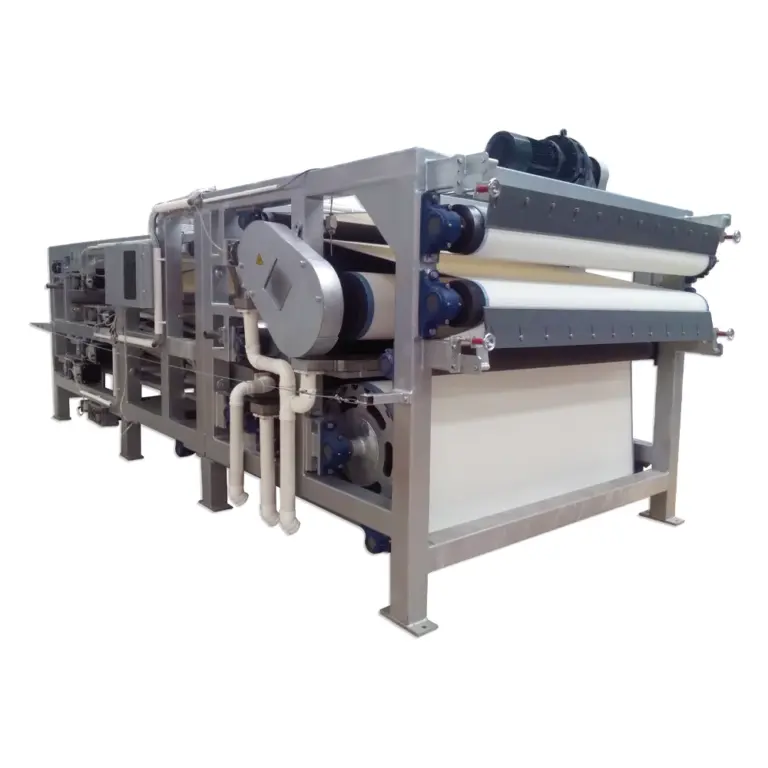
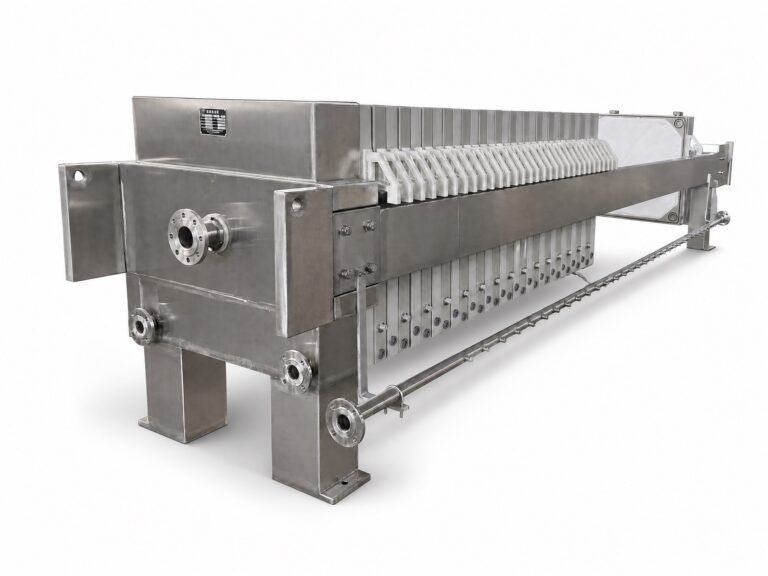
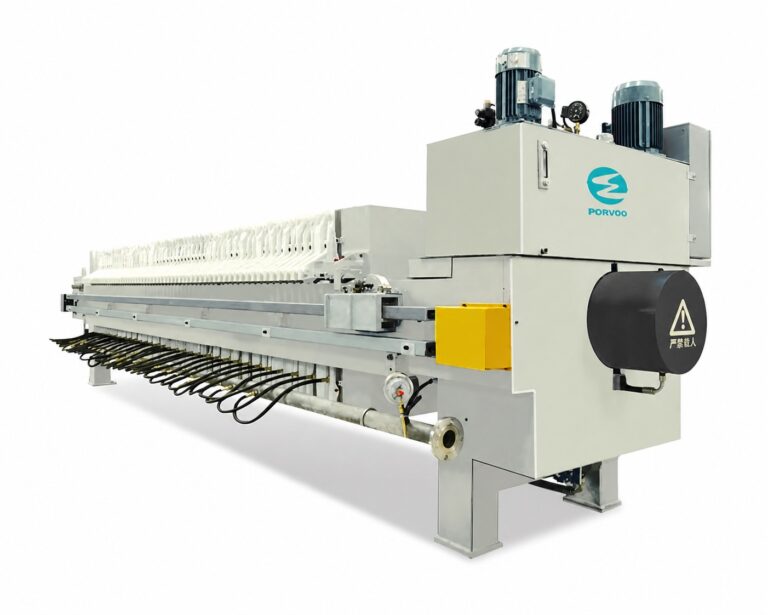
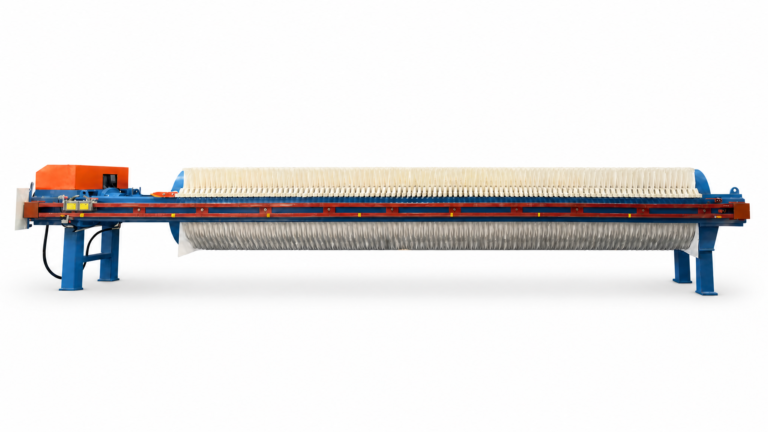
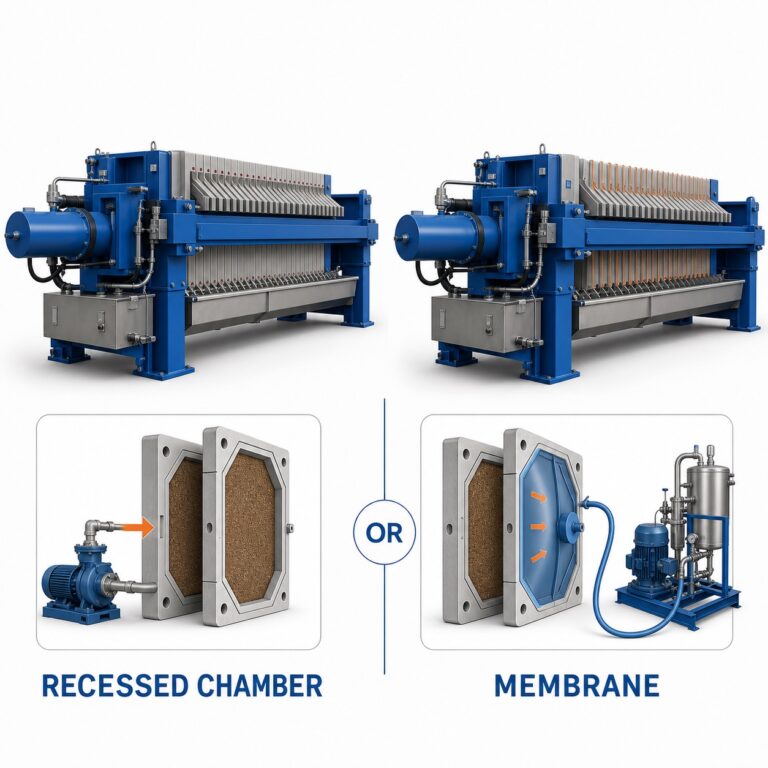
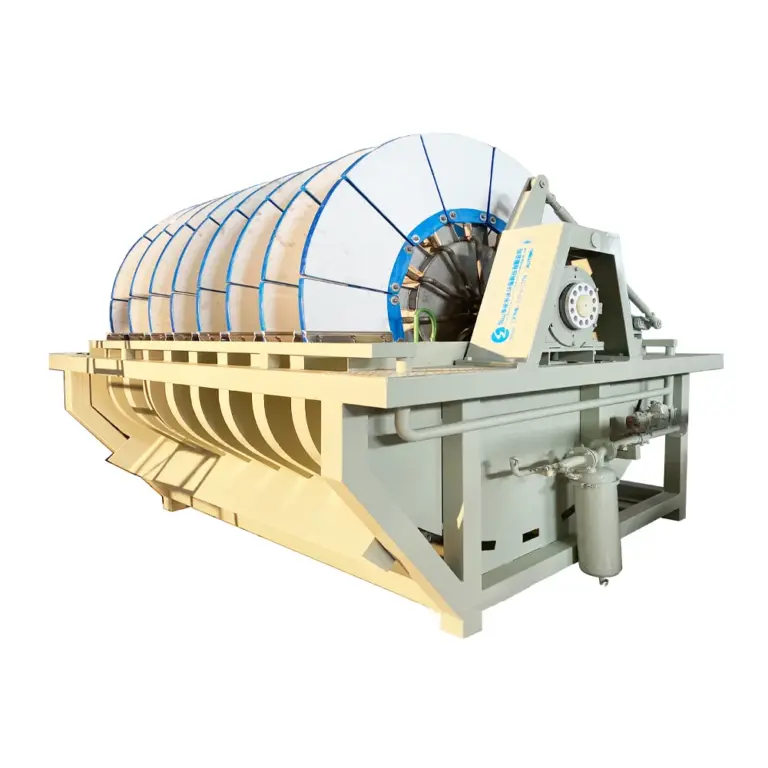
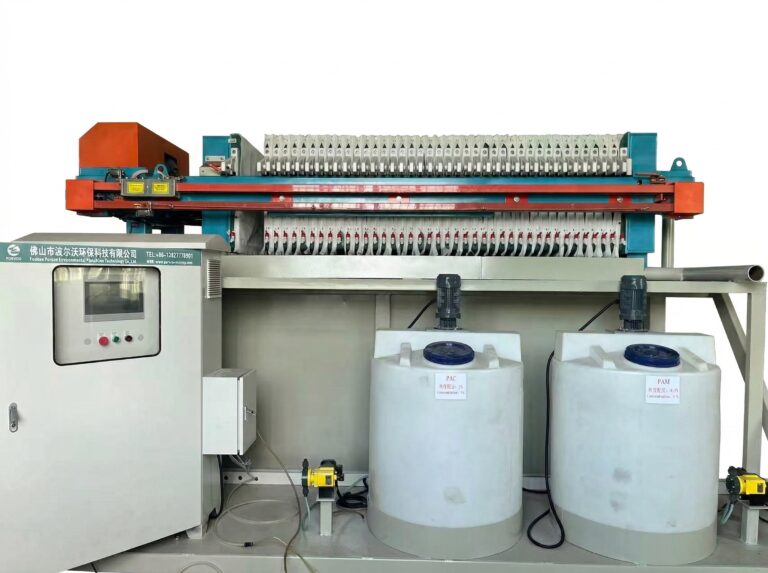
Pressure filtration and vacuum filtration address the same dewatering task through different driving forces, and comparing them only makes sense when both routes are tested against the same representative feed envelope and the same project decisions. Pressure filtration, typified by the filtre-presse, applies mechanical pressure across a plate-and-cloth chamber to force liquid through the cake and media; it tends to be evaluated where lower cake moisture or higher cake structural integrity matters to the downstream handling route. Vacuum filtration, typified by a filtre à disque céramique sous vide, draws filtrate through a porous medium using a pressure differential on the discharge side; it tends to suit continuous operation and can offer different throughput and utility characteristics depending on the slurry’s filterability.
Neither route is categorically superior; each responds differently to the same feed conditions. A slurry with fine, slow-draining particles may show marked differences in cycle time and cake moisture between the two methods, while a coarser, more free-draining slurry may narrow that gap. This is why the comparison has to run on matched samples under matched conditions: differences in sampling, slurry age, or test setup can produce apparent performance differences that have nothing to do with the filtration mechanism itself.
The comparison needs to be structured around the project decisions established earlier. Required solids throughput should be measured for both routes under the same feed, since this is what sets the equipment duty. Filtrate quality needs to be checked against the named recycle destination for both routes, since a route that achieves acceptable throughput but fails to meet the water balance’s quality requirement is not a viable candidate regardless of its other characteristics. Cycle behavior differs structurally between the two methods, since pressure filtration operates in batch cycles with chamber fill, pressing, and discharge phases, while vacuum filtration operates continuously with chamber conditions transitioning around a drum or disk, and this difference affects installed capacity calculations. Utility demands, such as compressed air, vacuum, or pumping, also differ between routes and should be compared on the same basis. Finally, cake characteristics need to be checked against the required handling route, since a route producing a lower-moisture cake may be unnecessary if the handling route does not require it, or essential if it does.
Supplier reference examples, including manufacturer process descriptions such as those for dry tailings plants, describe general process configurations and should not be read as performance guarantees for a specific site’s feed envelope; representative testwork on the project’s own samples is what establishes the comparison.
Translate Test Results Into Equipment Duties and Installed Capacity
Test results only become useful once they are converted into conditional equipment duties, meaning statements of what the equipment must achieve under the feed conditions the testwork actually represented. A throughput result from bench or pilot testing does not transfer directly to installed capacity; it has to be scaled against cycle time, chamber or disk area, and the operating availability the plant expects, and that scaling is where many of the practical judgments in equipment selection occur.
Cycle behavior is central to this translation. For pressure filtration, the cycle includes fill, pressing, cake formation, and discharge phases, and the duration of each phase under the tested feed conditions determines how many cycles the equipment can complete in a given period, which in turn determines how much installed filtration area is needed to meet the required throughput. For vacuum filtration, the equivalent calculation relates disk or drum submergence, rotation speed, and vacuum level to the achievable throughput per unit area. Where the feed envelope includes a range of conditions rather than a single point, the duty should be set to cover the range the operation expects to run, which may mean sizing for a less favorable condition within that envelope rather than an average.
Utility duties follow the same logic. Compressed air, vacuum capacity, hydraulic power, and any required utilities for cloth washing or cake discharge assistance need to be sized against the conditions that produced the highest demand in testwork, not the typical case, because the equipment has to perform across the full range of conditions it will see in operation.
This translation step is also where the project information a buyer supplies becomes directly usable. A feed envelope, water balance target, and cake-handling requirement, carried through representative testwork, give a supplier’s configuration or quotation review something concrete to size against, rather than a general equipment description applied to an undefined duty. Where the testwork is incomplete, or where the feed envelope only partially represents the operating range, that gap should be named explicitly so that the installed capacity carries an appropriate margin or is revisited once fuller data exists, rather than being treated as a precise number backed by thin evidence.
Connect Filtrate Return and Cake Discharge to the Plant Flowsheet
Equipment duties established from testwork still need to connect physically and procedurally to the rest of the plant. Filtrate leaving the dewatering equipment has to be piped, pumped, or gravity-fed to its recycle destination, and the interface design, including surge capacity, quality monitoring points, and any intermediate treatment, depends on how that filtrate stream behaves under the range of conditions the feed envelope covers. A filtrate stream with variable quality, driven by feed variability upstream, may need a buffering or blending point before it reaches a sensitive recycle destination such as flotation reagent makeup water, while a stream with more consistent quality may connect more directly.
Cake discharge presents a parallel interface question on the solids side. The cake leaving a filter press or vacuum disk filter needs a discharge mechanism, conveyance, and handling interface matched to the required downstream route, whether that is conveyor transport to a stacking area, truck loading, or further processing. The structural condition of the cake at discharge, including whether it holds together as a stackable mass or behaves as discrete friable pieces, affects what conveyance equipment can handle it without excessive degradation or spillage, and this condition traces back to the filtration method and the feed conditions tested earlier.
Both interfaces also carry a timing and layout dimension. Filtrate return lines and cake discharge conveyance need to be designed into the plant’s physical layout and control philosophy from the start, since retrofitting these interfaces after equipment selection can constrain options that were otherwise available. Coordinating filtrate return and cake discharge connections at the same stage as equipment selection, rather than afterward, keeps the interface design responsive to the same feed envelope and acceptance measures that governed the equipment duty itself, instead of becoming a separate afterthought disconnected from the tested basis.
Define Project-Specific Acceptance Measures for Throughput, Cake, and Filtrate
| Zone de réception | Project basis for the measure | Limite de la preuve |
|---|---|---|
| Débit | Required solids throughput and the representative feed envelope | Apply the agreed measure under the accepted test conditions; a supplier example is not a site guarantee |
| Cake | Required cake-handling route and representative cake result | Define the cake measure for the named route; do not treat it as a universal moisture guarantee |
| Filtrat | Named recycle destination and representative filtrate-quality result | Define the quality measure for that return route; do not treat it as a universal filtrate result |
| Cycle behavior | Installed-capacity basis and representative cycle result | Use the agreed cycle measure to check the conditional capacity basis |
Acceptance measures translate the project’s planning basis into criteria that can be checked once equipment is installed and commissioned. Each measure needs its own basis rather than a single blanket figure applied across throughput, cake, and filtrate, because each responds to a different part of the material and water balance established earlier.
A throughput acceptance measure should be tied to the required solids throughput and the representative feed envelope that testwork characterized. Checking throughput against conditions outside that envelope, such as a feed blend never represented in testwork, does not test the equipment fairly and does not give either party a meaningful acceptance result. The measure needs to specify which feed condition, or range of conditions, the throughput figure applies to.
A cake acceptance measure should be tied to the required cake-handling route rather than treated as a generic moisture target. A cake measure appropriate for a stacking route may differ from one appropriate for a route where the cake is reprocessed or blended elsewhere, and defining the measure around the actual downstream requirement avoids setting an acceptance criterion that is either unnecessarily strict or insufficiently protective for that route.
A filtrate acceptance measure should be tied to the named recycle destination and the representative filtrate-quality result from testwork on that destination’s relevant parameters. A filtrate quality result generated under one set of feed conditions should not be presented as a universal result applicable regardless of feed variability; where the feed envelope is wide, the filtrate measure may need to specify an acceptable range rather than a single value.
A cycle-behavior measure checks the installed-capacity basis itself, confirming that the equipment achieves the cycle times assumed when installed capacity was calculated. This measure is diagnostic: where actual cycle times diverge from the tested basis, the cause may lie in feed conditions, utility supply, or equipment condition, and distinguishing among these requires comparing the operating cycle against the documented test conditions it was derived from. Guidance from sources such as the EPA’s fact sheet on recessed-plate filter presses, which describes representative testing and the feed-pump, plate-chamber, cloth, filtrate, and cake-discharge interfaces relevant to this equipment category, applies to filter-press mechanics generally rather than to tailings-specific numeric results, which remain project-specific.
Separate Filter-Plant Scope From Tailings-Facility Engineering and Approval
| Decision area | Supported project basis | Limite |
|---|---|---|
| Filter-plant duties | Representative test results for throughput, filtrate quality, cycle behavior, utilities, and downstream handling | Establishes conditional equipment duties for the named project basis |
| Tailings storage and facility safety | Mine-specific governance and engineering | Requires a separate site-specific process; filtration selection does not establish a facility safety or approval conclusion |
The equipment duties, interface connections, and acceptance measures developed through this process establish what the filter plant does: its throughput, filtrate quality, cycle behavior, utility requirements, and discharge characteristics under the tested feed conditions. These conclusions do not extend to whether the resulting filtered tailings, once placed in a storage or stacking facility, remain stable, safe, or compliant with the facility’s engineering and regulatory requirements over its operating life.
Tailings-facility design, including stacking geometry, drainage, seismic performance, and long-term stability, is governed by geotechnical and civil engineering processes that sit outside the scope of filtration equipment selection. A filter plant can produce a cake that meets an agreed moisture or structural measure at the point of discharge, and that result still needs separate facility-level engineering to determine how the material performs once placed, compacted, and subjected to site-specific loading and climate conditions over time. Sampling methodologies referenced for sludge and dewatered-material monitoring, such as those described in ISO 5667-13, support sampling practice at the process-monitoring level; they do not themselves establish facility safety or regulatory approval, which depend on the mine’s own engineering and governance process.
This separation matters practically because a buyer evaluating filtration equipment should not expect, and a supplier should not represent, that selecting a particular filtration route or achieving a particular cake measure resolves tailings-storage-facility approval. The filter-plant scope, covering equipment such as filter presses, presses à filtre à membrane, or vacuum ceramic disk filters and their associated interfaces, connects to the facility only at the point of cake discharge and the agreed handling route; everything that happens to the material afterward, in terms of placement, long-term stability, and facility governance, belongs to a separate project workstream with its own engineering review, regulatory process, and approval authority. Where a project scope document blurs this boundary, clarifying it early avoids a situation where equipment acceptance is mistaken for facility sign-off, or where facility engineering requirements are assumed to be satisfied by filtration performance data alone.
Questions fréquemment posées
Q : What should a mine prepare before requesting a tailings filtration proposal?
A : Prepare a linked material balance, water balance, and cake-handling basis. State the expected feed variability, required solids throughput, filtrate recycle destination, and downstream cake interface so the proposal and testwork address the same project conditions.
Q : How can filtration testwork remain useful when the tailings feed changes?
A : Define and test a representative feed envelope that covers the expected variability, and record the conditions used for each result. Apply the findings only within that accepted envelope and verify any materially different feed before using the same equipment duties.
Q : Is the driest test cake automatically the best basis for equipment selection?
A : No. Judge the cake result against the required handling route and consider it alongside solids throughput, filtrate quality, cycle behavior, and utility results under the same test conditions. The preferred route is the one that supports the full project basis rather than a single isolated result.
Q : How should bench or pilot results become procurement acceptance measures?
A : Convert each result into a project-specific measure tied to the accepted feed and test conditions. Link throughput to the required solids rate, cake performance to the named handling route, filtrate quality to the recycle destination, and cycle behavior to the installed-capacity basis.
Q : Does choosing a tailings filter establish that the storage facility is safe or approved?
A : No. Filtration selection establishes conditional filter-plant duties for the defined project basis. Tailings storage, facility safety, and approval decisions require a separate site-specific mine governance and engineering process.