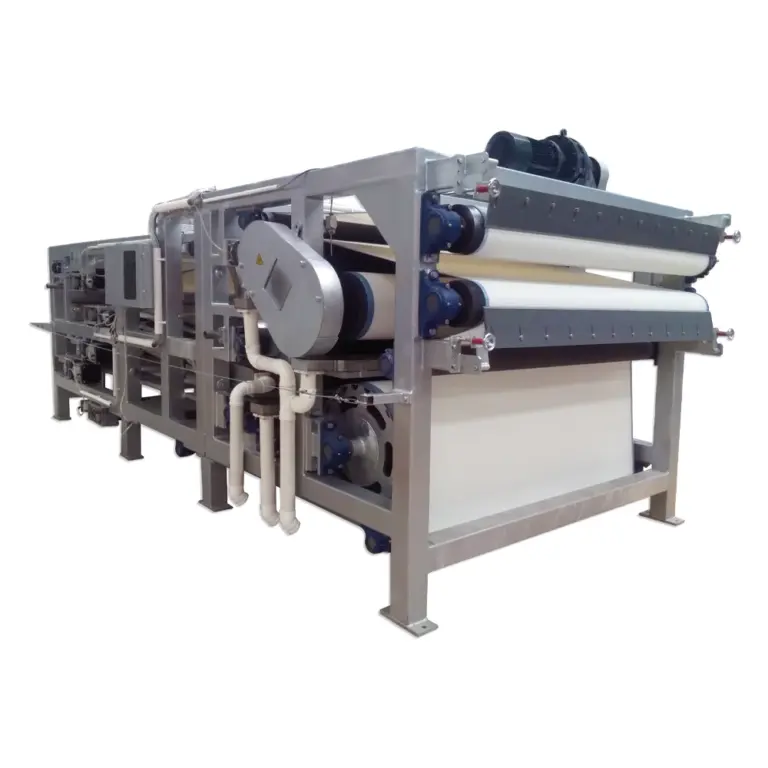
A mineral-concentrate filtration testwork program is only as useful as the feed it represents. Before a plant manager or process engineer commits to a pressure or vacuum filtration route, the real question is whether the samples tested actually reflect the material the plant will process over time, or whether they capture a narrow slice of it. That distinction determines whether test results can support an equipment request or whether they only describe one favorable moment in the ore body.
Define the Feed Population Before Drawing Samples
| Feed population dimension | What the sample program should preserve | Valeur de décision |
|---|---|---|
| Ore domains | The ore domain represented by each feed case and any domains left outside the program | Shows where test evidence applies and where a domain remains untested |
| Concentration en matières solides | The concentration represented by each feed case | Keeps results tied to the slurry condition actually tested |
| Répartition granulométrique | The distribution associated with each feed case | Prevents results from being detached from particle-size variation |
| Mineralogy | The mineralogy associated with each feed case | Keeps filtration observations connected to material differences |
| Historique du conditionnement | The conditioning history represented by each feed case | Shows whether differently conditioned feeds were actually covered |
Mineral concentrates vary by ore domain, and that variation does not stay constant through the life of a project. A deposit mined over multiple zones, benches, or campaigns can present different solids concentrations, particle-size distributions, and mineralogy from one period to the next, even when the nominal product specification looks unchanged on paper. If a testwork program draws samples from a single domain or a single production period, the filtration behavior observed belongs to that domain alone, not to the full range the plant will eventually feed through the equipment.
This matters because pressure and vacuum filtration both respond to feed characteristics in ways that are sensitive to small shifts in particle size and mineralogy. A finer distribution changes the resistance the cake presents to flow; a different mineral assemblage changes how particles pack and how the cake releases from the filter medium. Where the feed population spans several ore domains, each domain capable of producing a measurably different particle-size distribution or mineralogy, a single representative sample cannot stand in for the whole population. The sample program has to be built around the domains that will actually reach the plant, not around whichever domain is easiest to access during sampling.
Conditioning history belongs in this same definition step. Concentrate that has been thickened, stored, or chemically treated before sampling will not filter the same way as concentrate taken fresh from an upstream process. If conditioning varies across the feed population, that variation needs to be part of the sample plan rather than something discovered afterward when trial results do not reconcile.
The practical consequence is that defining the feed population is a scoping decision, not a sampling logistics decision. It sets the boundary of what the testwork can later support. Any domain, concentration range, particle-size condition, or conditioning history left outside this definition becomes a gap that the final equipment request will need to acknowledge rather than quietly extrapolate past.
Preserve Sample Identity, Water Chemistry, and Conditioning History
| Traceability record | What to retain with each feed case | Why it matters in comparison |
|---|---|---|
| Sample identity | One feed-case identity carried through sampling, preparation, trial, and result recording | Connects each result to the material that produced it |
| Process-water chemistry | The water chemistry associated with the prepared feed case | Keeps water conditions visible when filtration results differ |
| Preparation steps | The steps applied before the filtration trial | Shows whether preparation changed between otherwise comparable cases |
| Historique du conditionnement | The prior conditioning history and the conditioning represented in the trial | Preserves a factor that could change filterability |
Once the feed population is defined, each sample has to carry its identity through every step between collection and the filtration trial. A sample that loses its link to the ore domain, collection time, or preparation method it came from stops being useful as comparative evidence, even if the filtration trial itself is run carefully. Comparisons across feed cases depend on knowing, with certainty, which result belongs to which material.
Process-water chemistry deserves the same discipline. The water used to prepare or wash a concentrate sample is rarely neutral with respect to filterability. Dissolved species in process water can interact with mineral surfaces, influence how fine particles flocculate or disperse, and change how a filter cake forms and releases. The Scaling and Regeneration of the Ceramic Filter Medium Used in the Dewatering of a Magnetite Concentrate illustrates this point directly in its own context: feed particles, process-water chemistry, and the identity of deposits on the filter medium behave as separate variables, not as a single undifferentiated “slurry condition.” A testwork program that records the filtration result without recording the water chemistry used to produce that feed condition cannot later explain why two otherwise similar samples filtered differently.
Preparation steps sit alongside water chemistry as a source of invisible variation. Where a sample is conditioned with reagents, blended, or aged before testing, each of those steps can shift filterability independently of the ore domain. If two feed cases are compared without recording whether their preparation was identical, any difference in filtration behavior cannot be attributed to the feed material alone.
The practical implication for a reader building a testwork program is that documentation discipline is not separate from the technical work; it determines whether results remain interpretable. Where conditioning history, water chemistry, and preparation steps are logged against each feed case, later comparisons can isolate what changed. Where they are not, differences in trial results become unexplained and cannot be carried forward into an equipment decision with confidence.
Run Comparable Pressure and Vacuum Filtration Trials
Comparing pressure and vacuum filtration performance requires that the trials themselves be structured for comparison, not simply run in parallel. If one route is tested on a feed case prepared one way and the other route is tested on the same nominal feed case prepared differently, any difference in outcome conflates the route with the preparation. The value of a comparative testwork program depends on holding the feed case, water chemistry, and preparation constant across both routes so that the filtration mechanism itself is what varies.
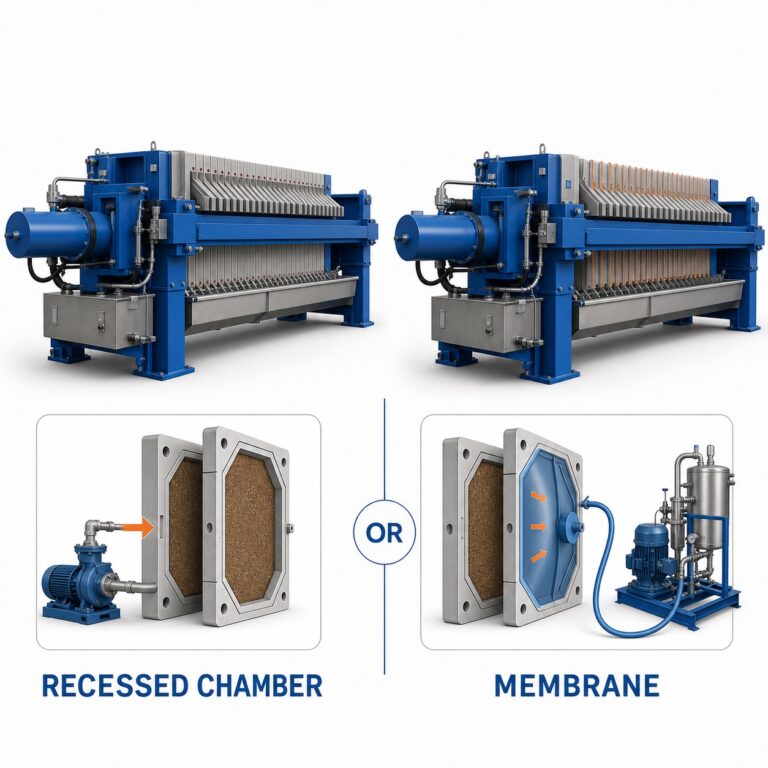
Pressure and vacuum filtration separate solids from liquid through different driving forces, and that difference in mechanism is precisely what a comparable trial needs to isolate. Pressure filtration forces liquid through the filter medium under applied pressure, which can support cake formation under conditions where a vacuum-driven pressure differential would be insufficient to achieve the same rate. Vacuum filtration draws liquid through the medium using a pressure differential below atmospheric, which constrains the achievable driving force but can suit feed materials and cycle arrangements where continuous or semi-continuous operation is preferred. Where a feed case produces a cake that resists liquid passage, the available driving force becomes a meaningful difference between the two routes; where the feed filters readily, that difference may matter less to the outcome.
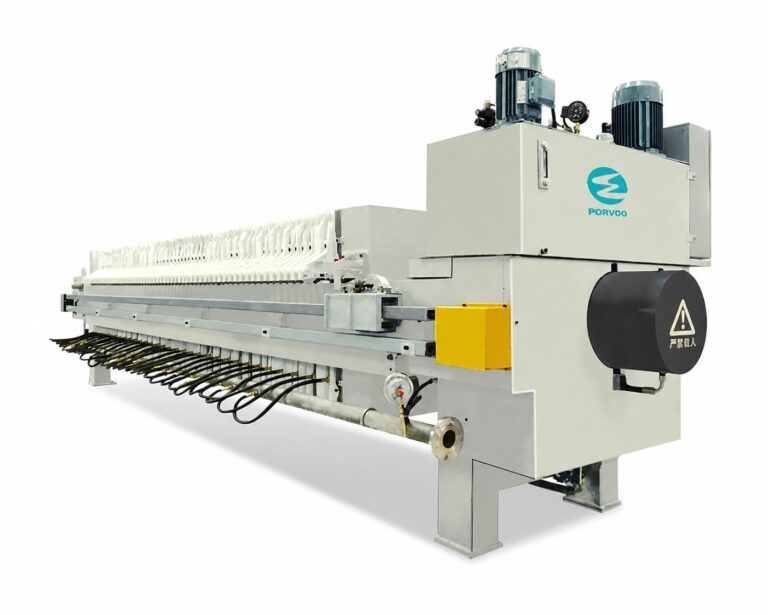
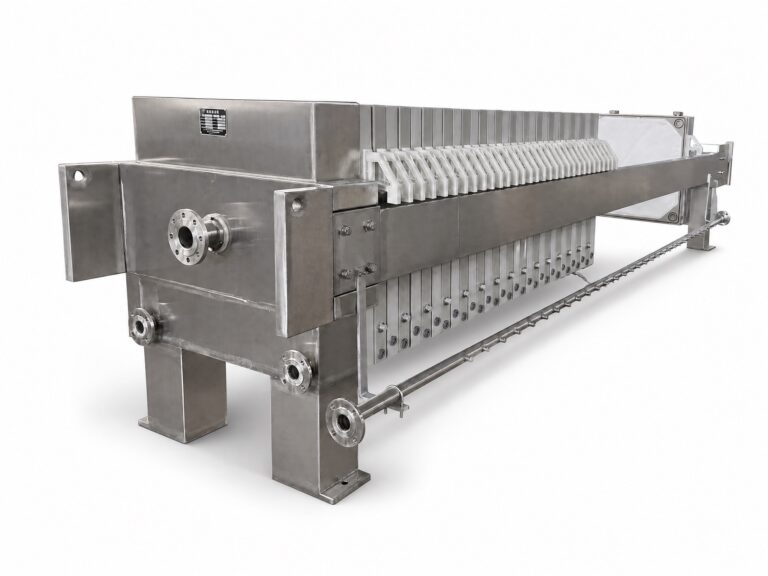
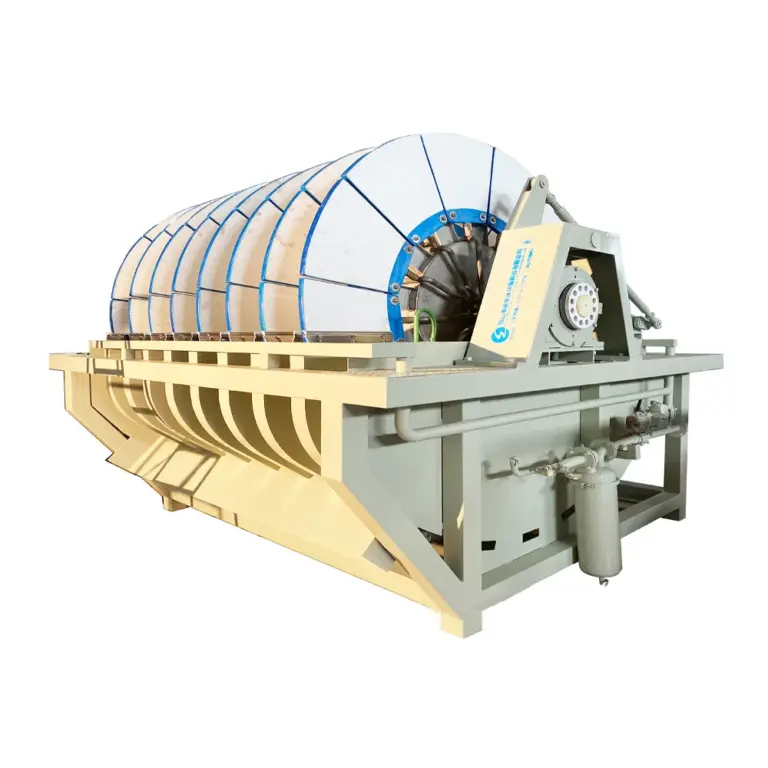
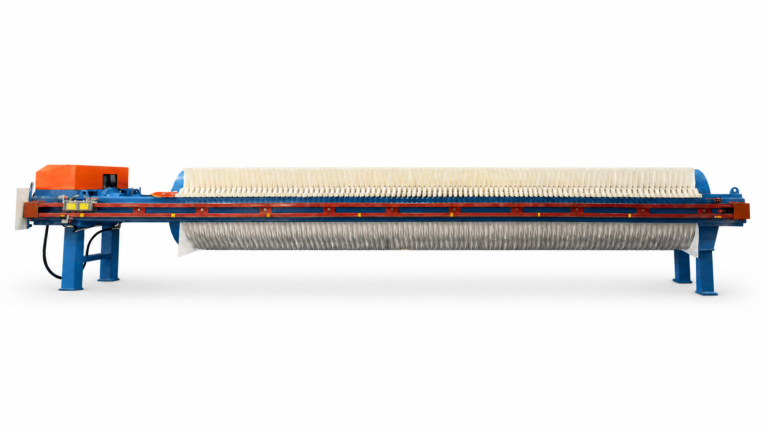
Running trials on the relevant route, rather than on whichever equipment happens to be on hand, means matching the filtration technology to the feed cases defined earlier. A filtre à disque céramique sous vide and a filter press represent different mechanical approaches to applying a driving force across a filter medium, and testwork intended to inform a choice between them needs to expose both to the same representative feed cases under the same recorded conditions. A trial that tests only one route cannot support a comparative claim about which route fits the project better; it can only describe how that one route behaved on the tested material.
The coordination task for the reader is ensuring that trial conditions are documented well enough that a later reviewer can confirm the comparison was fair. Where trial reports describe outcomes without describing the operating conditions that produced them, the comparison cannot be verified or extended to a feed case outside the test set.
Record Cake, Filtrate, Rate, Cycle, and Cleaning Results by Feed Case
Filtration trial results are only informative when cake, filtrate, rate, cycle, and cleaning observations are recorded together against the same feed case, rather than reported as separate averages detached from the material that produced them. A single rate figure, read on its own, says little about whether that rate is sustainable; the cycle time and cleaning behavior that accompanied it determine whether the rate represents a realistic operating condition or a short-lived peak.
Cake condition and filtrate quality describe two sides of the same separation event. A cake that forms with low moisture content and good structural integrity suggests the feed case is filtering efficiently under the tested conditions, but that assessment is incomplete without also checking filtrate clarity. A feed case that produces an acceptable cake while passing fine solids into the filtrate points to a different concern than a feed case that produces poor cake structure with clean filtrate. Recording both, for every feed case, keeps these distinct failure modes visible rather than collapsed into a single pass or fail judgment.
Cycle time and cleaning observations connect the trial result to what sustained operation would require. A filtration route that performs well in a short trial but shows a filter medium accumulating deposits or resisting cleaning raises a different concern than a route that holds performance steadily across repeated cycles. The Scaling and Regeneration of the Ceramic Filter Medium Used in the Dewatering of a Magnetite Concentrate again supports treating deposit identity on the filter medium as a variable distinct from the particles in the feed and the water chemistry used to prepare it. A testwork program that notes cleaning difficulty without identifying whether it stems from particle characteristics, water chemistry, or medium condition leaves the buyer unable to anticipate whether the issue recurs under different feed conditions.
Recording these results by feed case, rather than as pooled figures across a test campaign, is what allows the next comparison step to attribute a filtration outcome to a specific, identified material condition instead of an average that blurs over the differences the feed population was defined to preserve.
Compare Filter Route Fit Across the Representative Feed Set
| Comparison check | Evidence to compare across pressure and vacuum trials | Utilisation de la décision | Limite |
|---|---|---|---|
| Feed match | The same identified feed case, with ore domain, solids concentration, particle-size distribution, mineralogy, and conditioning history visible | Confirms that route results refer to the same represented feed condition | Does not cover feed extremes omitted from testing |
| Water and preparation | Process-water chemistry and preparation steps recorded for each trial | Keeps possible changes to filterability visible when reading route differences | Does not by itself identify or rank a cause |
| Cake and filtrate | Cake and filtrate observations for each matched feed case | Shows how the routes behaved on the feed cases actually tested | Does not guarantee plant results |
| Rate and cycle | Rate and cycle results read together for each feed case under recorded test conditions | Supports route-fit comparison without isolating one rate result from its cycle context | Applies only to the recorded test conditions |
| Nettoyage | Cleaning observations for each feed case and route | Keeps cleaning behavior in the route-selection evidence | Does not establish universal cleaning needs |
With trials run and results recorded by feed case, the comparison task becomes matching each pressure or vacuum result to its corresponding feed condition and asking whether the observed difference reflects the filtration route, the feed case, or an unrecorded change in water chemistry or preparation. This comparison only holds if the feed cases being compared are genuinely matched; comparing a pressure-filtration result from one ore domain against a vacuum-filtration result from a different domain answers a different question than the one the project needs answered.
Where the feed match is confirmed and water chemistry and preparation are recorded as consistent, a difference in cake and filtrate behavior between routes can be attributed to the filtration mechanism itself. This is the condition under which a route comparison becomes decision-relevant: the reader can say that, for this specific represented feed case, one route produced a different outcome than the other under comparable conditions. Where that match cannot be confirmed, the comparison describes two different experiments rather than one controlled contrast, and drawing a route preference from it would extend the evidence further than it supports.
Rate and cycle results need to be read together rather than separately when comparing routes, because a route that achieves a faster rate within a shorter cycle is not directly comparable to a route that achieves a slower rate sustained over a longer cycle without also considering cleaning frequency and downtime between cycles. Isolating the rate figure from its cycle context can make one route appear favorable when the full operating picture would not support that conclusion.
The boundary that applies throughout this comparison is that it describes the feed cases actually tested. Where a feed extreme was never introduced into either trial, the comparison offers no basis for choosing a route for that extreme. Where process-water chemistry shifts beyond what was tested, the same caution applies: a route’s advantage on the tested water condition does not establish the same advantage under a different one. The comparison supports a conditional statement about fit, not an unconditional ranking between the two filtration technologies as general categories. A separate comparison of the two equipment types, covering mineral, ceramic, and stone slurry applications more broadly, addresses how vacuum ceramic disk filtration and filter presses differ as categories; the representative feed set comparison here stays bounded to the specific feed cases the project actually tested.
Carry Untested Feed Extremes and Scale-Up Assumptions Into the Equipment Request
| Boundary to disclose | Include in the equipment request | Decision consequence |
|---|---|---|
| Represented feed set | The ore domains, solids concentrations, particle-size distributions, mineralogy, and conditioning histories included in the program | Defines the feed population directly supported by the trials |
| Untested feed extremes | The material or process extremes left outside the sample and trial set | Keeps equipment fit for those cases open rather than presenting a tested outcome |
| Water and preparation basis | The process-water chemistry and preparation steps associated with the results | Preserves the conditions that could change filterability |
| Route coverage | The relevant pressure or vacuum filtration trials that were completed | Limits route comparison to the routes actually tested |
| Hypothèses de transposition à plus grande échelle | Each assumption used to carry test results into the equipment request | Separates assumptions from observed evidence so the final configuration can be confirmed for the project |
A testwork program, however carefully built, defines a feed population and then tests a finite set of cases drawn from it. The gap between the defined population and the tested cases does not disappear when the report is written; it needs to travel forward into the equipment request as an explicit boundary rather than an implicit assumption. An equipment request that lists only the tested feed cases and their favorable results, without naming the extremes left untested, invites the supplier’s configuration process to size equipment against a feed condition narrower than what the plant will actually deliver.
Untested feed extremes deserve specific mention because filtration behavior does not necessarily interpolate predictably between tested points. A feed case at one end of the particle-size or solids-concentration range may behave consistently with trends observed in the tested range, or it may introduce a different cake-formation or cleaning behavior that the tested cases never revealed. Stating plainly that certain ore domains, concentration ranges, or conditioning histories were not part of the trial program keeps that uncertainty visible to whoever reviews the equipment request, rather than letting it surface later as an operating problem.
Scale-up assumptions carry a related but distinct risk. Moving from bench or pilot trial results to full-scale equipment sizing requires assumptions about how rate, cycle time, and cleaning behavior change with scale, and those assumptions are judgments layered on top of the observed data, not observations themselves. Separating the two in the equipment request, stating which figures came directly from trials and which came from a scale-up assumption, gives the reviewing engineer the information needed to judge where additional confirmation matters most.
This is the stage where the project information a buyer supplies enters PORVOO’s configuration and quotation review process: the represented feed set, the untested extremes, the water and preparation basis, and the scale-up assumptions together form the inputs that allow a configuration to be matched to the project rather than to a generic feed description. Where the buyer’s request specifies vacuum ceramic disk filtration or équipements de presse à filtre, naming the represented feed conditions and the boundaries around them directly, the resulting configuration review can address the actual represented population instead of treating one favorable trial result as a guaranteed plant outcome. The Fiche d'information de l'EPA sur les technologies relatives aux biosolides : les filtres-presses à plaques encastrées makes a parallel point in its own context: representative bench or pilot testing is the basis for pressure-filter design decisions, which is consistent with treating trial evidence as an input to be matched against project conditions rather than a standalone guarantee of performance.
Questions fréquemment posées
Q : Can one composite slurry sample represent the full feed population?
A : Only if the decision is limited to the conditions that composite actually represents. Before blending, map the ore domains, solids concentrations, particle-size distributions, mineralogy, and conditioning histories involved; keep separate feed-case identities where those differences need to remain visible in route selection.
Q : What should a buyer do when different feed cases favor different filtration routes?
A : Treat the variation as decision evidence instead of averaging it into one apparent winner. Identify which cases are routine, limiting, or still untested, then require the proposed route and configuration to state which cases it covers and which assumptions still need confirmation.
Q : What makes a pressure-versus-vacuum trial comparison usable for procurement?
A : The trials should share a traceable feed basis and record any differences in water chemistry, preparation, and conditioning. Compare cake, filtrate, rate, cycle, and cleaning observations together for each matched case, and flag any changed condition before using the result to support a route decision.
Q : When is further testwork preferable to extrapolating an existing result?
A : Add a feed case when the intended operation includes an ore domain or material extreme outside the tested set, or when water, preparation, or conditioning differs enough that filterability may change. Define that case explicitly and test the relevant route rather than treating the nearest existing result as plant evidence.
Q : How can a project team keep a successful trial from becoming an unintended performance guarantee?
A : Separate observations from assumptions in the equipment request. State the tested feed identity and conditions, list untested extremes, preserve the recorded route coverage, and label each scale-up assumption for project-specific confirmation before the final configuration is accepted.