De nombreux systèmes de traitement des eaux usées des usines de carrelage commencent à présenter des performances insuffisantes avant même que les équipements ne fonctionnent à pleine charge. Les symptômes ressemblent à un volume de décanteur insuffisant : eau de retour trouble, augmentation des matières en suspension dans la boucle de réutilisation, presse fonctionnant de manière irrégulière. La cause réelle réside souvent dans le fait que le retrait des boues n’a jamais été synchronisé avec la charge en matières solides ; ainsi, les sédiments accumulés ont progressivement réduit le volume de décantation effectif alors que le système semblait fonctionner normalement. Un diagnostic correct avant la validation de la mise en service permet de déterminer si la mise en œuvre des mesures correctives se traduira par quelques semaines de réglages opérationnels ou par un investissement pour augmenter le volume des bassins. Ce qui suit est un examen, section par section, des décisions, des seuils et des schémas de défaillance qui distinguent un système présentant un bilan des matières solides équilibré de celui qui ne l’est pas.
Former des flocs qui se déposent et se déshydratent proprement
L'efficacité de la décantation dans un clarificateur dépend de la qualité des flocs qui y sont introduits. Les eaux usées des usines de tuiles contiennent généralement un mélange de particules de différentes tailles : des grains grossiers et des résidus de broyage qui se déposent rapidement, des particules plus fines de l'ordre du limon qui nécessitent une aide au dépôt, ainsi que des fractions colloïdales d'argile et de liant qui sont pratiquement non décantables sans coagulation. Ce seuil pratique n’est pas arbitraire : les particules supérieures à 100 μm se déposent d’elles-mêmes ; celles comprises entre 10 et 100 μm nécessitent une coagulation pour s’agglomérer en une masse susceptible de se déposer ; tout ce qui est inférieur à 10 μm est colloïdal et suffisamment stable chimiquement pour que les moyens mécaniques seuls ne permettent pas de l’éliminer de manière rentable.
Les données relatives au temps de sédimentation montrent pourquoi la fraction colloïdale ne constitue pas un résidu mineur. Une particule de limon de 10 μm met environ deux heures à se déposer à un mètre de profondeur sous l’effet de la gravité ; une particule d’argile de 1 μm met environ huit jours ; un colloïde de 0,1 μm met de l’ordre de deux ans. Sans coagulation permettant de transformer ces particules en flocs dont la taille se rapproche de celle des particules de 100 μm, aucun temps de rétention pratique ne permet de les traiter.
| Taille et type des particules | Temps de décantation approximatif (à 1 m de profondeur) | Besoins en matière de coagulation |
|---|---|---|
| Particule de limon de 10 μm | ~2 heures | Obligatoire – se situe dans la plage de 10 à 100 μm et nécessite une coagulation |
| particule d'argile de 1 μm | environ 8 jours | Obligatoire – sous forme colloïdale ; ne peut se déposer spontanément |
| particule colloïdale de 0,1 μm | environ 2 ans | Obligatoire – une stabilité colloïdale extrême nécessite une coagulation |
Le potentiel zêta est l'indicateur mesurable permettant de déterminer si la coagulation remplit son rôle. Une suspension dont le potentiel zêta est compris entre 0 et ±5 mV se coagulera facilement ; une suspension dont le potentiel zêta est supérieur à ±10 mV est électrostatiquement stable et résistera à la sédimentation, quelle que soit la durée de rétention. Les opérateurs chargés d’ajuster le dosage de PAC ou d’alun doivent considérer le potentiel zêta comme un objectif opérationnel plutôt que comme un simple indicateur de conformité : il permet de déterminer si la charge a été suffisamment neutralisée pour permettre la formation de flocs, avant que le clarificateur ne révèle le résultat par un débordement trouble.
Deux risques de défaillance viennent nuancer ces chiffres de conception dans la pratique. Premièrement, le fonctionnement à l’eau froide dégrade la qualité des flocs : les températures plus basses augmentent la viscosité de l’eau et réduisent l’énergie disponible pour les collisions entre particules, ce qui produit des flocs plus petits, moins denses et plus fragiles que ceux obtenus avec la même dose en été. Un système réglé lors de sa mise en service par temps chaud peut présenter des performances nettement inférieures en hiver si la dose ou le temps de rétention ne sont pas ajustés. Deuxièmement, un surdosage de coagulant ne produit pas de meilleurs flocs : au-delà d’une dose optimale, les coagulants à base de sels métalliques peuvent restabiliser les particules par inversion de charge, ce qui augmente la production de boues sans améliorer la décantation. Cette erreur entraîne simultanément une augmentation des coûts de produits chimiques, une modification du pH et peut déstabiliser la couche de boues en aval.
Le choix du coagulant détermine également le comportement de déshydratation en aval, un aspect que les services d’approvisionnement réexaminent rarement. L’alun génère des volumes de boues résiduelles plus importants qui ont tendance à s’épaissir de manière prévisible, mais l’augmentation de la charge en matières solides vers la presse doit être prise en compte dans la planification des temps de cycle et de l’élimination des gâteaux. Le chlorure ferrique produit moins de volume de boues, ce qui peut sembler intéressant sur le papier, mais il est plus corrosif pour les équipements et offre des caractéristiques d’alimentation de la presse moins régulières. Si les eaux usées d’une usine de carrelage contiennent des colorants ou des liants organiques — ce qui est courant lorsque des gammes de produits décoratifs ou émaillés transitent par le même système d’évacuation —, les colloïdes hydrophiles nécessiteront des doses de coagulant plus élevées, car ils réagissent chimiquement avec le coagulant au lieu d’être simplement neutralisés par leur charge électrique, ce qui augmente les doses requises et rend indispensables les données de référence issues des essais en cuve avant de finaliser la conception du système.
| Coagulant | Production de boues | Corrosivité | Coût relatif |
|---|---|---|---|
| Ancien élève | Élevé – génère une quantité importante de boues résiduelles | Faible | Plus bas |
| Chlorure de fer | Plus faible – génère moins de boues | Élevé – plus corrosif pour les équipements | Plus élevé |
Adapter le temps de décantation au débit de prélèvement des boues
Le dimensionnement d’un bassin de décantation en fonction du temps de rétention hydraulique constitue un point de départ nécessaire, mais non suffisant. Si le débit d’évacuation des boues ne correspond pas au rythme d’accumulation des matières solides, les boues décantées s’accumulent dans le bassin et réduisent progressivement le volume disponible pour la clarification. Le système se comporte alors comme si le bassin était sous-dimensionné — ce qu’il est désormais effectivement —, même si la conception initiale était adéquate. Cette réduction du volume effectif constitue le mode de défaillance le plus courant au stade précoce des systèmes de réutilisation des stations d’épuration, et elle se manifeste généralement avant que la station ne fonctionne à pleine charge de production.
La température est la principale variable qui oblige à réévaluer cette coordination plutôt que de la définir une fois pour toutes. L'eau froide augmente la viscosité, ce qui ralentit les collisions entre les particules et leur vitesse de sédimentation, et rend les flocs plus fragiles. Concrètement, cela signifie qu'un programme de prélèvement calibré en été peut ne pas permettre d'évacuer les boues assez rapidement en hiver, car les solides se déposent plus lentement et s'accumulent en une couche moins compacte qui occupe un volume plus important dans le bassin par unité de masse.
| Conditions de température | Impact sur la formation des flocs et la sédimentation | Prise en compte du taux de retrait |
|---|---|---|
| Eau froide (viscosité accrue) | Des flocs plus petits, moins denses, plus fragiles ; une sédimentation plus lente | Il peut être nécessaire d'allonger le temps de rétention ou d'augmenter la dose de coagulant ; la fréquence de vidange devra peut-être être ajustée pour éviter le report de la couche de boues. |
| Eau chaude (formation rapide de flocs) | Risque de capture incomplète des particules si le temps de mélange/de séjour n'est pas correctement réglé | Il pourrait être nécessaire de réajuster le débit de retrait afin de l'adapter à un tassement plus rapide, tout en garantissant une incorporation adéquate des flocs. |
L'eau chaude entraîne un mode de défaillance inverse. Une formation plus rapide des flocs peut dépasser la capacité de mélange, laissant des particules fines incomplètement capturées qui contournent la couche de flocs et sont entraînées vers le trop-plein. Aucune de ces deux conditions ne correspond à un facteur de correction fixe : elles nécessitent toutes deux un ajustement spécifique au site, en fonction de la charge réelle des eaux entrantes et du comportement de décantation observé. Concrètement, cela signifie que la fréquence de retrait doit être considérée comme une variable ajustée en fonction de la mesure de la profondeur de la couche de flocs, et non comme une minuterie fixe réglée lors de la mise en service et laissée inchangée.
Le critère de contrôle pratique consiste à surveiller la profondeur de la couche de boues par rapport au déversoir du clarificateur. Si la couche remonte vers la zone de débordement, le débit de prélèvement est insuffisant compte tenu de la charge en matières solides et des conditions de température actuelles. Si la concentration dans le flux inférieur chute brusquement, le prélèvement risque d’aspirer des matières diluées qui ne donneront pas de bons résultats dans la presse. Aucun des deux indicateurs ne prend la décision automatiquement : ils fournissent simplement à l’opérateur les informations nécessaires pour la prendre.
Empêcher la perte de la couche de boues dans l'eau de retour
La couche de boues dans un clarificateur n’est pas une couche passive. Elle agit comme un filtre de finition pour l’eau qui s’écoule vers le haut : à mesure que le liquide clarifié remonte vers le trop-plein, il traverse la zone des solides décantés, qui retient les particules fines résiduelles. Lorsqu’elle est saine et stable, cette couche contribue de manière significative à la qualité de l’effluent. Lorsqu’elle est perturbée — soit par une accumulation de solides qui la fait monter trop haut, soit par des erreurs de dosage qui modifient sa composition —, les solides fins s’échappent dans le circuit de retour d’eau, ce qui dégrade directement la qualité de la réutilisation.
Un surdosage comme un sous-dosage de coagulant déstabilisent la couche, selon des mécanismes différents.
| Erreur de dosage du coagulant | Conséquence immédiate | Impact sur la couche de boues |
|---|---|---|
| Surdosage | Modifie le pH de l'eau ; peut restabiliser les particules ou générer un excès de boues | Cela perturbe la composition de la couche de sédiments, augmentant ainsi le risque de transfert de matières solides vers les eaux de retour |
| Sous-dosage | Formation insuffisante de flocs ; turbidité plus élevée dans le surnageant | Affaiblit la structure de la nappe, ce qui permet aux matières solides de s'échapper et de contaminer l'eau recyclée |
Aucune de ces deux erreurs de dosage ne doit être considérée comme un cas marginal. Dans les usines de fabrication de carrelage, la concentration en matières solides de l'effluent varie en fonction de la ligne de production, du type de glaçure et de la fréquence des nettoyages. Un dosage qui était correct lors d’un cycle de production de corps polis peut s’avérer insuffisant lors du rinçage d’une ligne à forte teneur en émail, tandis que ce même dosage appliqué à un effluent à faible teneur en matières solides peut entraîner un surdosage. Sans retour d’information issu de la surveillance du potentiel zêta ou de la turbidité, l’opérateur ne dispose d’aucun signal précoce indiquant que la couche protectrice est compromise avant l’apparition d’eau trouble dans le réservoir de retour — moment auquel les matières solides se trouvent déjà dans le circuit de réutilisation.
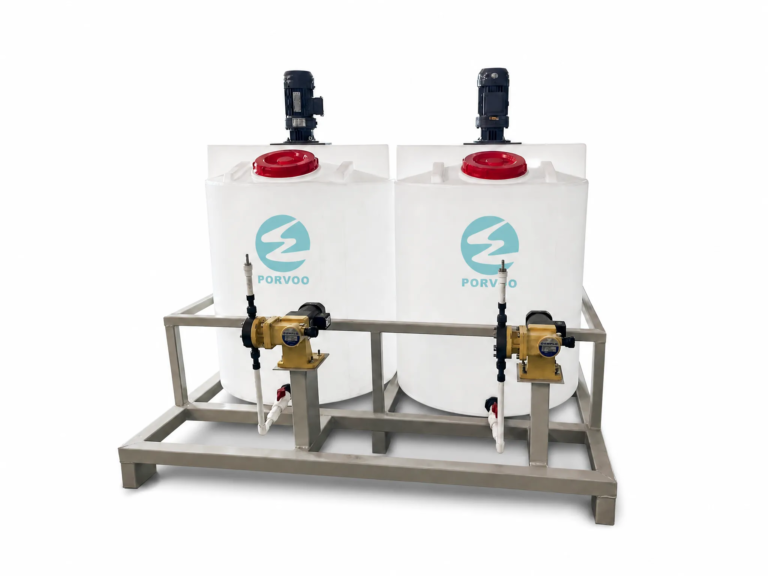
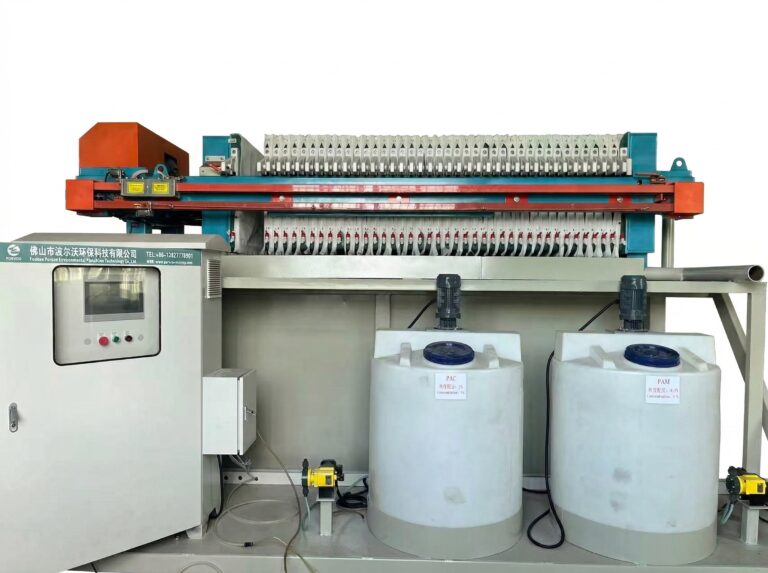
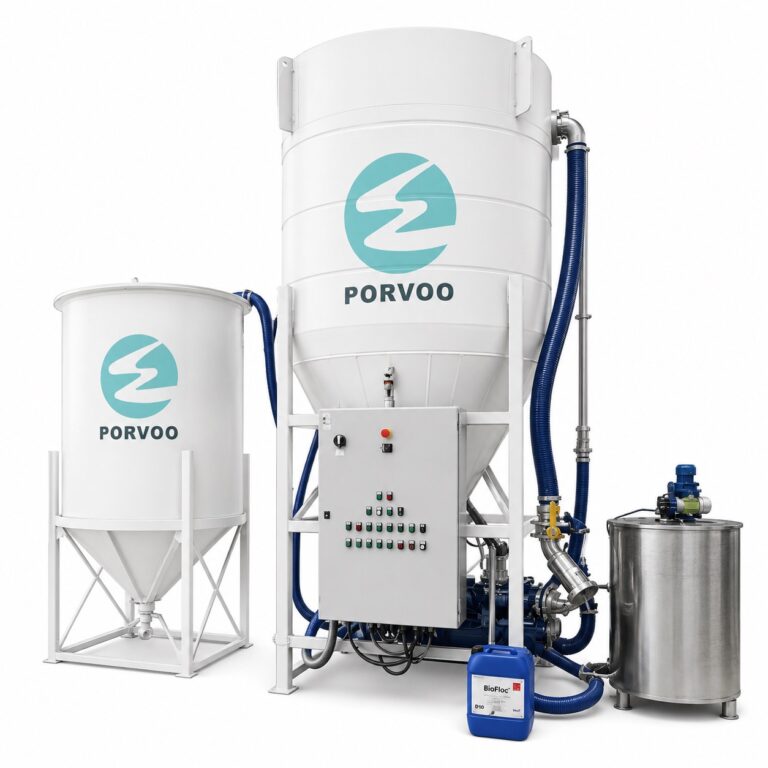
Cela implique donc que le contrôle du dosage doit s'adapter en temps réel aux conditions de l'eau d'alimentation, plutôt que de fonctionner selon un point de consigne fixe. A Système intelligent de dosage de produits chimiques PAM/PAC Le fait d’ajuster le débit en fonction de la turbidité mesurée ou du potentiel zêta permet de réduire la marge d’erreur de dosage et de limiter le risque de perturbation de la qualité de l’eau lors des changements de production. Il s’agit là d’un choix de conception différent de celui consistant à opter pour une pompe doseuse de produits chimiques à débit fixe — et cela a des conséquences directes sur la régularité de la qualité de l’eau réutilisée.
Veillez à alimenter la presse en boues épaissies de manière constante
Un filtre-presse fonctionne dans une plage de tolérance définie pour la consistance des boues d'alimentation. Une boue d'alimentation trop peu concentrée allonge le temps de remplissage, augmente le volume de filtrat et produit un gâteau plus humide qui peut ne pas répondre aux objectifs de manutention ou d'élimination. Une concentration très variable de la boue d'alimentation rend la durée du cycle imprévisible et complique la planification dans les usines où la disponibilité du filtre-presse est partagée avec d'autres flux de déchets. C'est lors de l'étape d'épaississement, entre le fond de décantation du clarificateur et le filtre-presse, que cette consistance est soit obtenue, soit perdue.
Le choix du coagulant effectué en amont détermine directement la nature des matières qui parviennent à la presse. L'alun génère des volumes de boues plus importants qui ont tendance à s'épaissir pour former une charge d'alimentation plus prévisible, mais la charge totale en matières solides est plus élevée. Le chlorure ferrique produit des volumes de boues plus faibles, mais les caractéristiques de la charge d'alimentation de la presse sont moins régulières — un compromis qui a été défini lors de l'achat et qui est rarement réexaminé une fois le système en service. Si une usine constate une forte variabilité des temps de cycle ou une sécheresse irrégulière du gâteau, il convient de commencer par réexaminer l'étape d'épaississement plutôt que les paramètres de la presse.
L’ajout de polymères après la coagulation constitue un levier contrôlable permettant de gérer la structure des flocs et leur comportement lors de l’épaississement. Les polymères favorisent la formation de ponts entre les particules des flocs, ce qui augmente la taille et la densité des agrégats et améliore le compactage des boues décantées dans le flux inférieur. La structure des flocs ainsi obtenue influe non seulement sur la vitesse d’épaississement des boues, mais aussi sur la régularité de leur alimentation dans la presse tout au long d’un poste de travail. Cette étape n’est pas obligatoire dans toutes les configurations — les stations traitant des effluents contenant des solides plus grossiers et une fraction colloïdale plus faible peuvent ne pas avoir besoin de polymère pour obtenir un épaississement adéquat — mais lorsque la régularité de l’alimentation pose un problème récurrent, le dosage du polymère et son poids moléculaire constituent des ajustements pratiques à envisager avant d’envisager des changements d’équipement.
Contrôle pratique à effectuer avant la mise en service d'une presse : vérifier la concentration des effluents provenant du clarificateur ou de l'épaississeur en conditions de production stables, et non pas uniquement pendant la phase de démarrage initial, lorsque la teneur en matières solides des effluents est inférieure à la normale. Les essais de réception réalisés sur des boues diluées ne refléteront pas la consistance réelle des boues que la presse devra traiter.
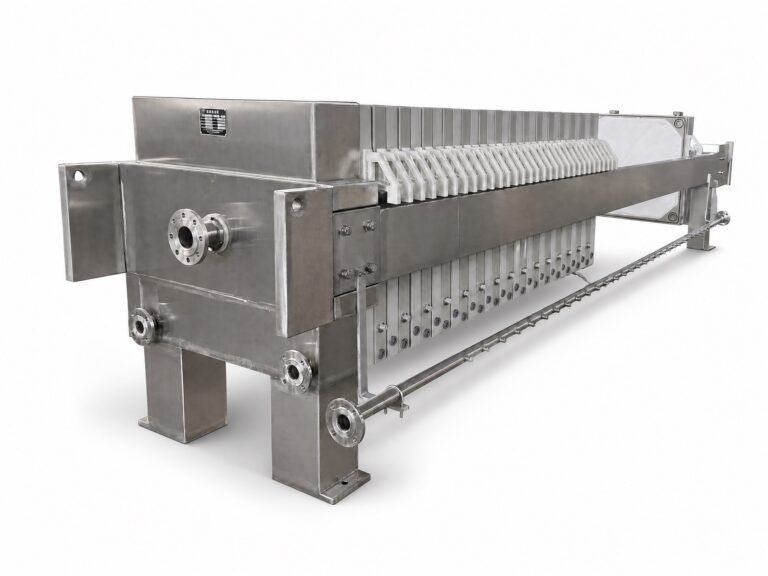
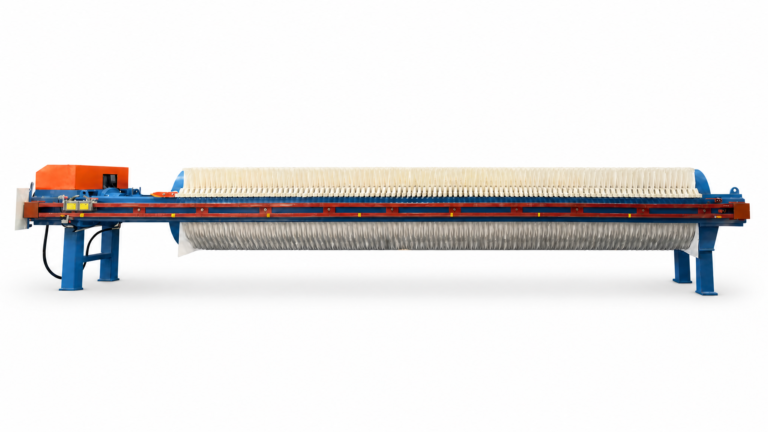
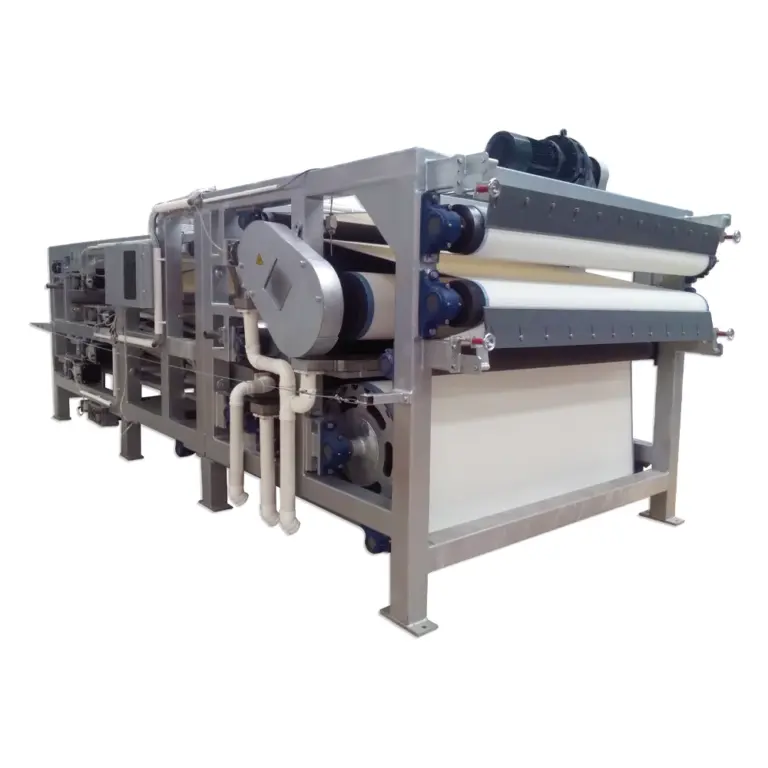
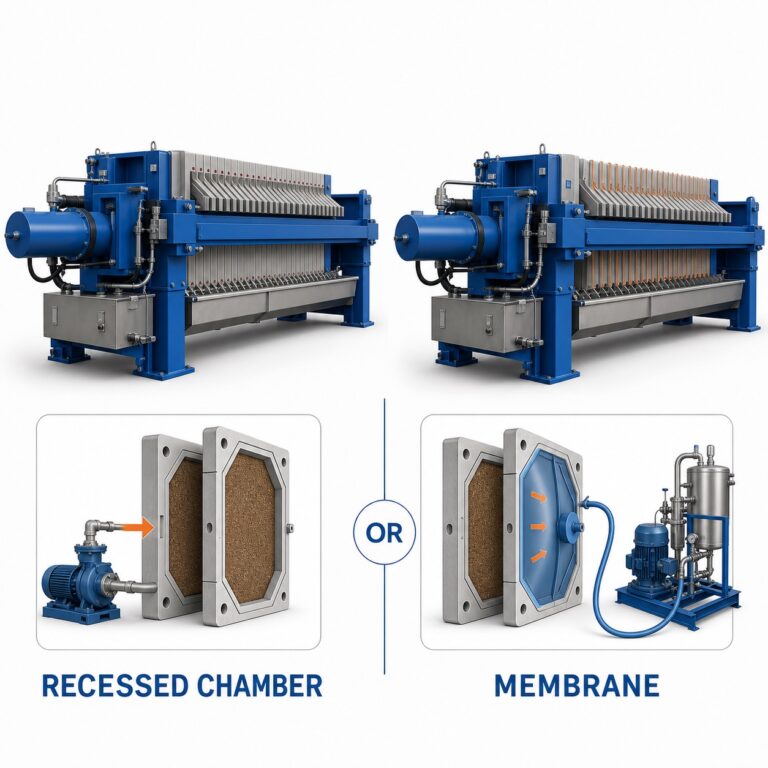
Pour un Filtre-presse à plaques et cadres encastrés Pour garantir un fonctionnement constant, l'étape d'épaississement en amont doit être considérée comme faisant partie intégrante du système de pressage, et non comme une fonction de clarification distincte. La détermination de la concentration de la charge et le conditionnement au polymère doivent figurer dans le cahier des charges d'exploitation de la presse, et non être reportés à la phase de mise en service.
Suivre l'utilisation des produits chimiques ainsi que la qualité du filtrat et de l'eau réutilisée
Le coût des produits chimiques et la qualité de l'eau réutilisée ne sont pas des variables indépendantes dans un système de coagulation-décantation. Il s'agit de résultats liés à une même décision de dosage. Les suivre séparément — la consommation de produits chimiques étant enregistrée par le service des achats, et la qualité du filtrat contrôlée par le service environnement — crée un décalage : les modifications de dosage qui nuisent à la qualité de l'eau réutilisée passent inaperçues jusqu'à ce qu'un problème en aval mette en évidence ce lien.
Les essais en jar sont la méthode de référence pour établir la relation dose-qualité avant que la surveillance opérationnelle ne prenne le relais. Ils permettent aux exploitants d’identifier la dose optimale de coagulant et le pH optimal pour une composition d’eau brute donnée, fournissant ainsi un point de référence quant aux apports chimiques nécessaires pour atteindre un objectif de qualité de l’eau donné. Sa limite réside dans le fait que l’essai en bocal est périodique et utilise un échantillon ponctuel ; il ne reflète donc pas la variabilité en temps réel de l’eau entrante. Il est particulièrement utile pour établir des fourchettes de dosage lors de la mise en service initiale et après des changements significatifs dans la production.
| Méthode de contrôle | Ce qu'il suit | Vitesse de rétroaction | Avantage en termes de qualité du filtrat et de réutilisation |
|---|---|---|---|
| Essai en bocal | Dose optimale de coagulant et pH | Par lots (périodique) | Établit un lien entre les intrants chimiques et la qualité de l'eau traitée |
| Surveillance en temps réel de la taille des particules et du potentiel zêta | Efficacité actuelle de la coagulation | Immédiate | Permet d'ajuster rapidement les doses afin de maintenir l'eau de recyclage dans les limites spécifiées |
| Suivi de la dose avec compensation de température | Corrélation entre la température et les besoins en coagulant | Basé sur les tendances | Évite tout surdosage ou sous-dosage lors des changements de saison, ce qui permet de préserver la qualité du filtrat |
La surveillance en temps réel de la taille des particules et du potentiel zêta comble le fossé entre l’étalonnage par essai en bocal et la variabilité opérationnelle. Lorsque le potentiel zêta s’écarte de plus de ±10 mV, la suspension est en cours de stabilisation et la dose doit être ajustée ; lorsqu’il chute vers 0, la coagulation est efficace et le floculant décanté devrait produire un débordement à faible turbidité. Cette boucle de rétroaction relie directement l’apport de produits chimiques à l’admissibilité de l’eau réutilisée de manière continue, plutôt qu’a posteriori.
La température ajoute une dimension de suivi qu’il est facile de négliger. Des températures plus basses nécessitent généralement des doses de coagulant plus élevées ou des temps de contact plus longs pour obtenir une élimination équivalente des matières solides. Les stations qui n’adaptent pas le suivi des doses aux variations saisonnières de température peuvent surdoser en été — ce qui augmente le coût des produits chimiques et perturbe le pH — et sous-doser en hiver, ce qui entraîne une turbidité plus élevée dans le circuit de réutilisation. Un registre des doses compensé en fonction de la température constitue un moyen pratique de gérer les variations saisonnières ; il fournit également la documentation nécessaire lorsque la qualité de l’eau réutilisée est remise en question lors d’un audit ou d’une inspection par le client.
Régler le traitement des boues avant d'ajouter le volume de clarification
Lorsque la qualité des eaux réutilisées d'une usine de tuiles se détériore et que le clarificateur semble ne pas fonctionner correctement, la réponse habituelle consiste à proposer d'augmenter le volume de décantation : un réservoir supplémentaire, un bassin plus grand, un deuxième étage de clarification. Cette décision est souvent erronée et représente un investissement coûteux qui va dans la mauvaise direction.
Les boues qui s’accumulent plus vite qu’elles ne sont évacuées ne restent pas inactives. Elles occupent du volume dans le bassin, augmentent l’épaisseur effective de la couche de boues, réduisent le temps de séjour hydraulique disponible pour la clarification et finissent par rejeter des solides partiellement décantés dans l’eau de retour. Vu de l’extérieur, ce phénomène est impossible à distinguer d’un clarificateur sous-dimensionné sur le plan hydraulique. La défaillance fonctionnelle réside toutefois dans le débit d’évacuation des boues et la consistance de l’épaississement — deux éléments qui peuvent être corrigés au niveau de l’exploitation sans ajouter un seul mètre cube de volume de décantation.
L'ordre des étapes de diagnostic est important. Avant de rédiger tout cahier des charges pour des précisions supplémentaires, il convient de vérifier les éléments suivants en conditions réelles de charge de production : l’épaisseur mesurée de la couche de boues sur une journée complète d’exploitation, la concentration du sous-écoulement au débit de prélèvement actuel, ainsi que la corrélation entre la fréquence de prélèvement et la turbidité de l’eau de retour. Si l’épaisseur de la couche de boues augmente au cours de la période de travail et ne se stabilise que lorsque le prélèvement est augmenté, le problème réside dans le programme de prélèvement ou dans la capacité d’épaississement alimentant la presse — et non dans le décanteur lui-même.
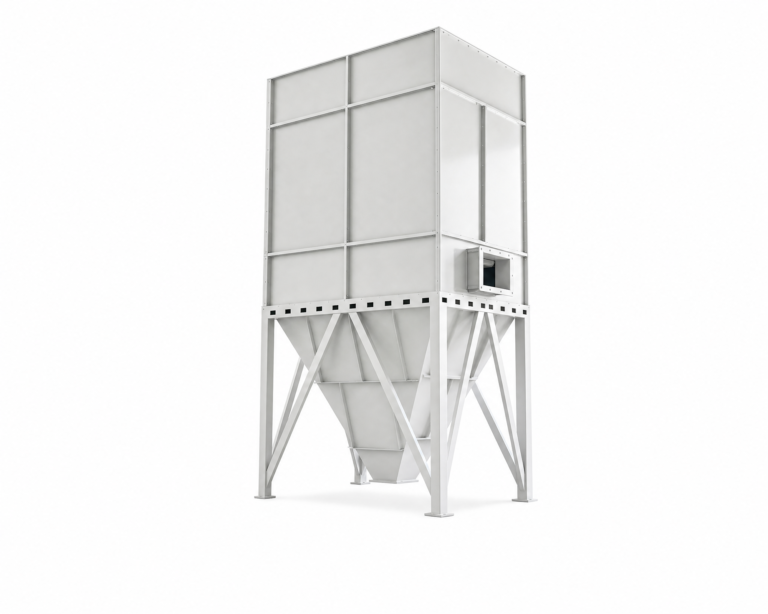
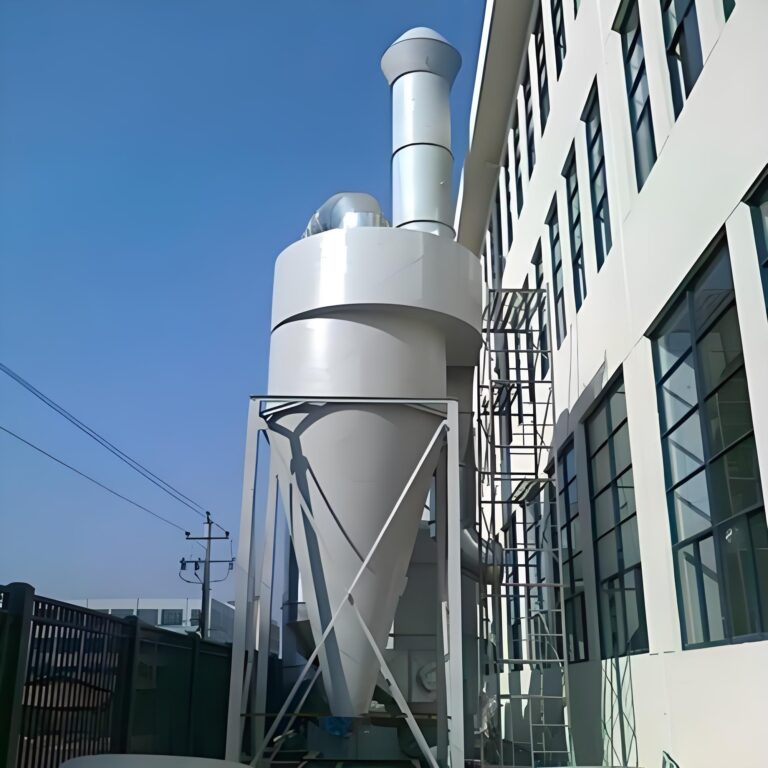
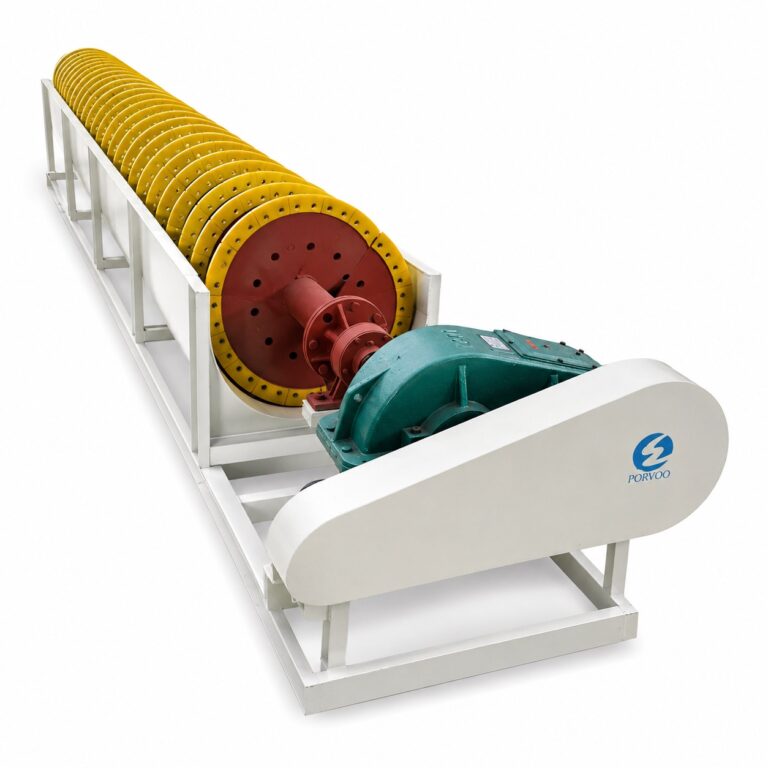
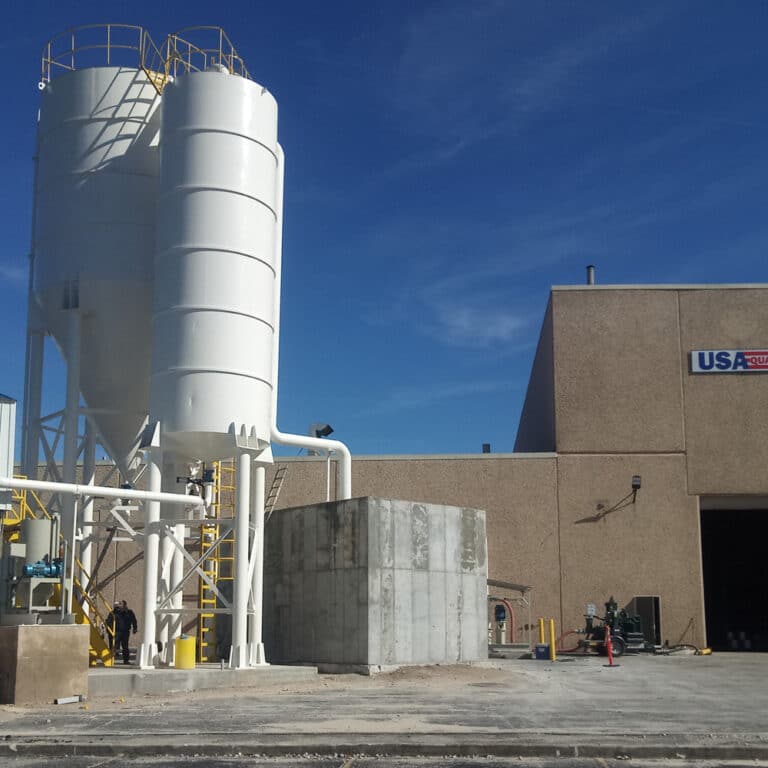
A Tour de sédimentation verticale pour le recyclage des eaux usées Un système d'extraction par fond correctement conçu peut permettre d'équilibrer le bilan des matières solides lorsque le débit de prélèvement est adapté à la charge, mais l'ajout d'une surface de décantation supplémentaire avant que cet équilibre ne soit atteint ne résout pas le problème : cela retarde le diagnostic tout en augmentant les coûts d'investissement et l'empreinte au sol. La capacité de traitement des boues doit être démontrée à la charge de conception avant que le volume de clarification ne soit considéré comme la contrainte.
Vérifier le bilan des matières solides avant la réception
Un bilan des matières solides n’est pas simplement un récapitulatif des débits massiques : c’est la confirmation que chaque fraction de la charge solide entrante suit une voie d’élimination bien définie. Dans le cas des eaux usées issues d’une usine de tuiles, la fraction qui reste le plus souvent non comptabilisée est constituée des matières colloïdales inférieures à 10 μm. La filtration mécanique permet de retenir les particules les plus grossières de manière économique, mais la fraction colloïdale nécessite une coagulation pour s’agglomérer en un ensemble pouvant être éliminé. Si le bilan des matières solides présenté lors de la réception ne tient pas explicitement compte de cette fraction et ne vérifie pas que les performances de coagulation permettent de la traiter, l’objectif de qualité de l’eau réutilisée s’éloignera progressivement de la valeur visée sans cause apparente.
La mesure du potentiel zêta constitue le moyen le plus direct de vérifier si cette fraction est effectivement capturée. Un potentiel zêta proche de zéro signifie que les particules colloïdales ont été déstabilisées et qu’elles vont se déposer avec les flocs. Un potentiel zêta supérieur à ±10 mV signifie que des particules stabilisées restent dans le circuit d’eau et que le bilan des matières solides — quelles que soient les valeurs indiquées par les débitmètres massiques — n’est pas équilibré. Il s’agit là d’un critère d’acceptation mesurable, et non d’une affirmation abstraite concernant les performances. La mesure des matières en suspension selon la norme ISO 11923:1997 confirme la charge brute en matières solides dans l’effluent, mais elle ne fait pas la distinction entre les particules susceptibles de se déposer lors des passages suivants et celles qui sont suffisamment stables sur le plan électrostatique pour recirculer indéfiniment. Les deux mesures sont nécessaires pour vérifier l’équilibre.
Le contrôle de réception doit également permettre de vérifier que les performances observées reflètent bien les conditions réelles de production. Les systèmes qui semblent atteindre les objectifs de réutilisation pendant les phases de démarrage à faible charge peuvent voir leurs performances se dégrader une fois que les lignes de glaçage et de découpe tournent à plein régime. La vérification du bilan des matières solides doit être effectuée au débit nominal ou à un débit proche de celui-ci, avec la dose de coagulant qui sera utilisée en exploitation courante — et non avec une dose de mise en service ajustée pour un effluent plus propre que la normale. Si le bilan ne peut être équilibré dans ces conditions, les mesures correctives appropriées doivent être identifiées avant le transfert de propriété, et non après le premier cycle de production.
La clarification et le traitement des boues dans un système de réutilisation des eaux usées d'une usine de carrelage fonctionnent comme un processus couplé, et les décisions prises à une étape ont des répercussions directes sur l'étape suivante. Le choix du coagulant détermine le volume des boues et la consistance du flux alimentant la presse. Le débit de prélèvement détermine si le volume de décantation effectif est préservé ou s'il diminue progressivement. La précision du dosage détermine si la couche de boues reste un atout pour la finition ou si elle devient une source de transfert de matières solides. Aucun de ces éléments ne peut être optimisé indépendamment sans créer un problème ailleurs dans la boucle.
Avant la réception, la question à se poser n'est pas de savoir si les débordements du clarificateur sont visuellement clairs, mais si le bilan des matières solides est vérifiablement équilibré pour toutes les fractions granulométriques, à la charge nominale, avec les paramètres de fonctionnement qui seront utilisés une fois que l'usine fonctionnera normalement. Si la fraction colloïdale n'est pas prise en compte, si le potentiel zêta n'a pas été mesuré en charge, ou si la consistance de l'alimentation de la presse n'a été observée que lors du démarrage à faible production, les critères de réception sont incomplets. Ce sont là les lacunes spécifiques à combler avant de valider les performances du système.
Questions fréquemment posées
Q : Ces recommandations s'appliquent-elles également si notre usine de fabrication de carrelage utilise un clarificateur à lamelles plutôt qu'un décanteur classique ?
R : Oui, mais la coordination du prélèvement des boues devient alors plus critique, et non l’inverse. Les décanteurs à lamelles permettent d’atteindre des vitesses de sédimentation en surface plus élevées en raccourcissant le trajet de sédimentation vertical, ce qui signifie que les solides s’accumulent plus rapidement dans la zone de sous-écoulement que dans un bassin conventionnel de même superficie. Si le débit de prélèvement n’est pas adapté à ce taux d’accumulation plus rapide, les lamelles elles-mêmes peuvent se colmater avec les boues sédimentées, annulant ainsi complètement l’avantage en termes de performances. Les mêmes seuils — surveillance de l’épaisseur de la couche de boues, contrôles de la concentration dans le flux de fond et vérification du potentiel zêta — s’appliquent quelle que soit la géométrie du clarificateur.
Q : Une fois que le débit d'évacuation des boues et le dosage de coagulant sont correctement ajustés, quelle est la première mesure à prendre pour vérifier que le système fonctionne effectivement de manière stable avant de passer à la pleine charge de production ?
R : Effectuez un enregistrement continu de la profondeur de la couche pendant au moins un quart de travail complet, à la charge de production maximale disponible, avant de valider la mise en service. Une simple mesure ponctuelle effectuée lors du démarrage ne permet pas de déterminer si la couche s’épaissit au fil de la journée — ce qui constitue le premier indicateur d’un retard du taux de retrait par rapport à l’accumulation de matières solides. Si la profondeur de la couche reste stable tout au long du poste et que la concentration du flux de fond reste dans la fourchette cible pour l’alimentation de la presse, le système fonctionne en régime permanent. En cas de dérive, le programme de retrait doit être ajusté avant que la charge n’augmente davantage.
Q : À partir de quel moment l'ajout de polymère pour améliorer la structure des flocs cesse-t-il d'être bénéfique et commence-t-il à poser un autre problème ?
R : Le surdosage en polymère constitue un véritable seuil : un excès de polymère peut restabiliser les particules fines en saturant les sites de liaison à la surface des flocs, ce qui produit une structure dispersée qui se dépose mal et passe plus facilement dans le trop-plein. L'indicateur pratique est que la turbidité du filtrat augmente au lieu de diminuer à mesure que la dose augmente — un signe identique à celui d'un surdosage de coagulant, mais dû à un mécanisme différent. Étant donné que les besoins en polymère dépendent de la structure des flocs issue de la coagulation, l'approche correcte consiste à déterminer la dose de polymère par un essai en bocal sur l'échantillon coagulé réel, et non sur l'eau brute en entrée, et à considérer toute dose supérieure à la valeur optimale obtenue lors de cet essai comme une zone à risque plutôt que comme une marge de sécurité.
Q : L'alun reste-t-il un meilleur choix que le chlorure ferrique dans une usine de fabrication de carrelage équipée de canalisations en acier inoxydable ou en acier doux dans le circuit de traitement des boues ?
R : Le chlorure ferrique présente le risque de corrosion le plus élevé dans cette configuration. Il libère des ions chlorure en solution qui accélèrent la corrosion par piqûres dans l’acier doux et, à une concentration suffisante, peuvent finir par endommager même les nuances d’acier inoxydable passivées au fil du temps. Si le circuit de traitement des boues utilise des canalisations, des pompes ou des châssis de presse en acier doux sans revêtement protecteur, l’alun constitue le coagulant présentant le moins de risques, ne serait-ce que pour des raisons de longévité de l’équipement, indépendamment du compromis lié au volume de boues. Lorsque le chlorure ferrique est privilégié en raison de sa production réduite de boues, les canalisations et les composants de presse en contact direct avec le flux de sous-écoulement doivent être spécifiés dans des matériaux compatibles avec les chlorures avant que l’achat ne soit finalisé.
Q : Si aucun équipement de mesure du potentiel zêta n'est disponible sur place, existe-t-il une solution de remplacement pratique permettant de vérifier si la fraction colloïdale est correctement capturée avant la réception ?
R : La mesure de la turbidité au niveau du trop-plein du clarificateur, associée à une colonne de décantation de type « jar-test », constitue un indicateur valable, mais il s’agit d’un indicateur indirect présentant une limitation spécifique. La turbidité dépend du nombre de particules et de la diffusion de la lumière, ce qui est en corrélation avec le transport colloïdal, mais elle ne permet pas de distinguer les colloïdes stabilisés électrostatiquement, qui vont recirculer indéfiniment, des fragments de flocs fins qui vont se déposer lors des passages suivants. La mesure des matières en suspension selon la norme ISO 11923:1997 apporte une confirmation par bilan massique, mais comporte la même ambiguïté. Lorsque la mesure du potentiel zêta n’est pas disponible, le critère d’acceptation prudent consiste à exiger que la turbidité au niveau du trop-plein et les matières en suspension restent dans les limites cibles pendant au moins deux équipes de production consécutives à la charge nominale — et non pas seulement à un seul point de mesure — afin de réduire la probabilité que des résultats conformes reflètent un état transitoire plutôt qu’une condition de fonctionnement stable.