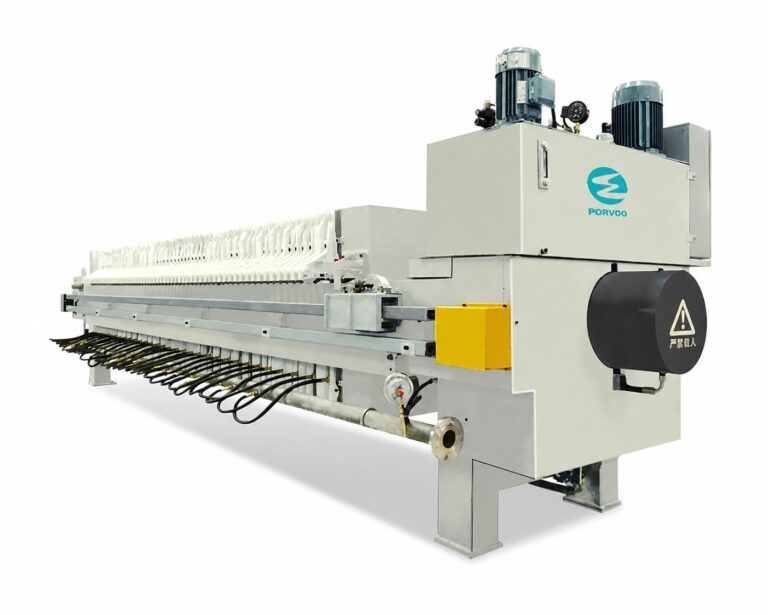
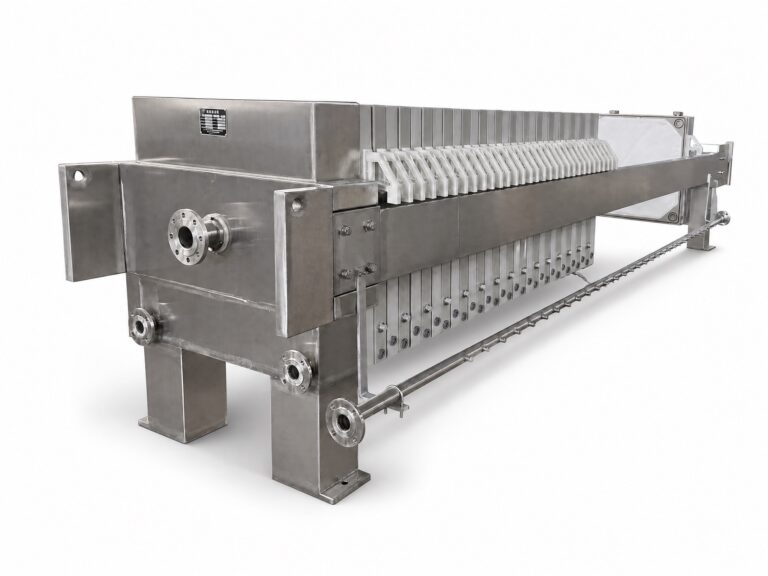
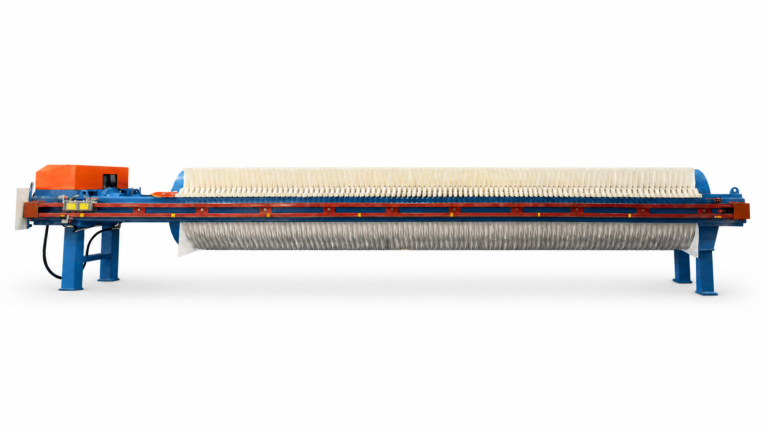
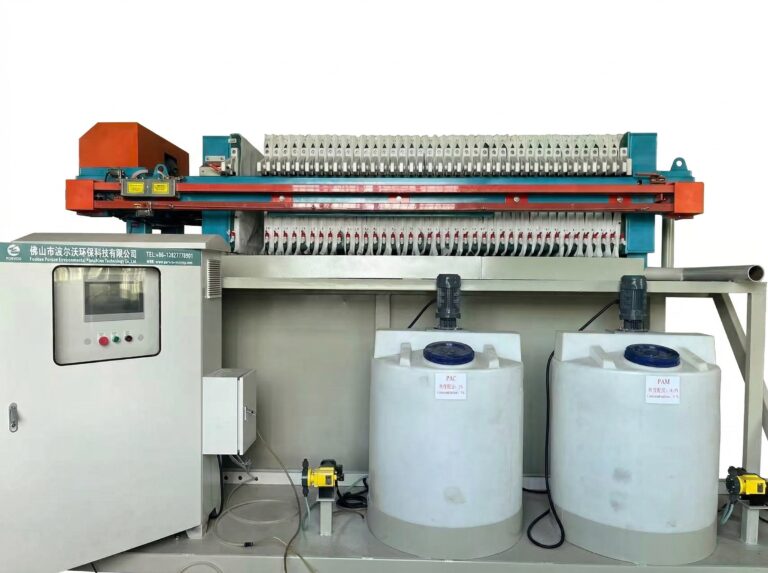
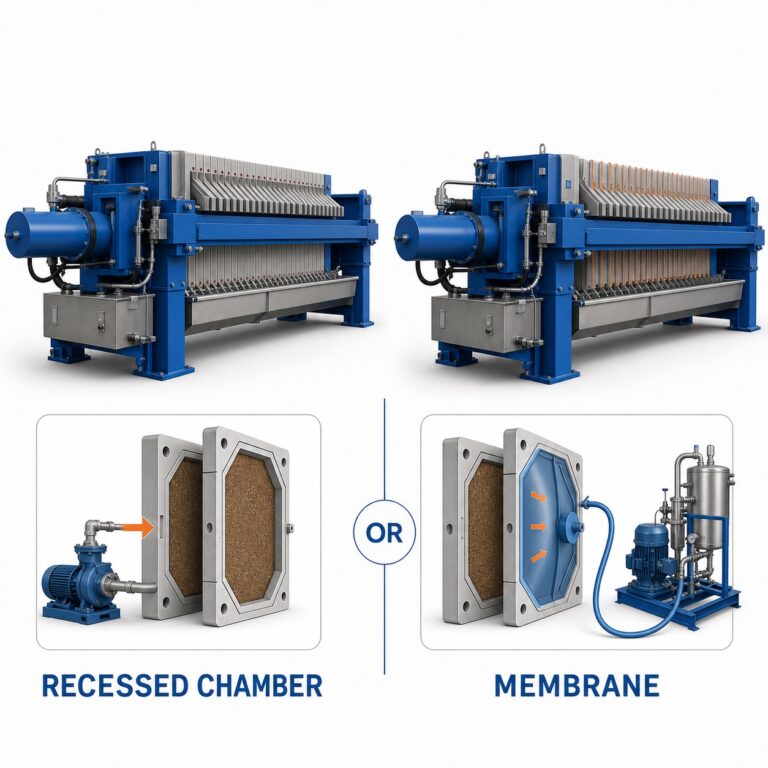
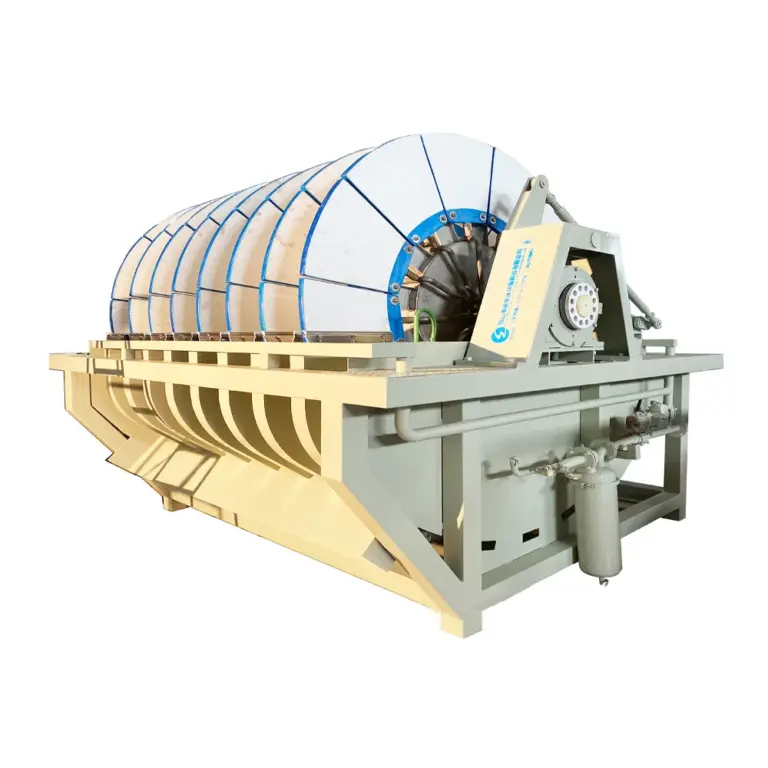
A belt press and a plate-and-frame press both dewater sludge, with different feed patterns and handling requirements. Compare them using the same representative sludge and the same accounting period.
1. Process mode and 2. effective throughput
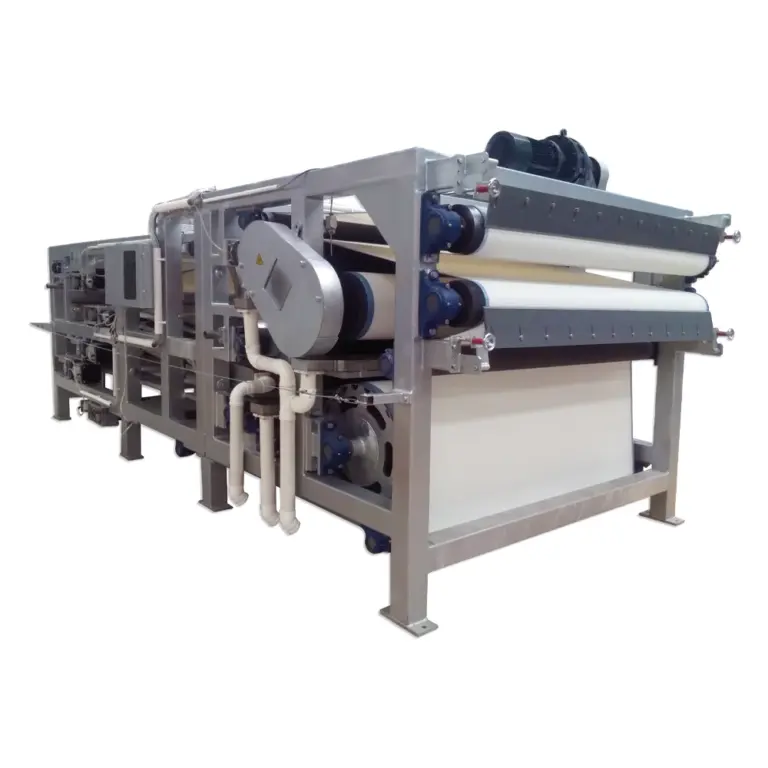
A belt press can run continuously while feed and conditioned cake discharge remain stable. A plate-and-frame press works in cycles. Include filling, pressing, opening, discharge and cleaning when converting batch capacity to average dry-solids throughput.
3. Cake dryness and 4. filtrate quality
Test split or comparable feed and measure wet cake mass and dry solids with the same sampling method. Compare filtrate at the proper sampling point and identify the consequence for any return stream. A result measured on a different sludge is specific to that test.
5. Operator effort and 6. site layout
Compare work by shift, belt or cloth service, cleanup, consumable access and downtime. Allow for cake collection and washwater. A smaller machine base may still need a larger usable service area or an additional buffer tank.
7. Cost of the solids sent away
Use the tested cake dry-solids fraction to estimate wet haulage mass: dry solids divided by cake dry-solids fraction. Include local hauling and gate fees, bin limits and any return loads. Compare purchase, energy, chemicals and service at the same dry-solids throughput.