Dosing drift, a blocked sludge withdrawal line, or filtrate being returned at the wrong point can each degrade effluent quality without triggering a visible alarm — because the monitoring setup was never designed to catch gradual change. In ceramic process water systems, the practical cost shows up as reuse water quality that slowly degrades across a shift, unexpected scaling on equipment, or a sedimentation tank that appears to be working until a routine sample reveals suspended solids well above the target. The underlying issue is nearly always a monitoring architecture that conflates a clean grab sample with process control: the two are not the same, and treating them as equivalent tends to mask the real failure modes until they become expensive to reverse. Working through the sections below, you will be better positioned to decide where to place instruments, which measurement type serves which purpose, and how to connect readings to actions before drift compounds into a process exceedance.
Choose sampling points that reveal process drift
Sampling point placement is a configuration input, not an afterthought. For ceramic process water, the functional question is whether each measurement location can reveal a specific failure mode — dosing underperformance, sedimentation short-circuiting, or filter overloading — rather than simply confirming that the output looks acceptable under normal conditions.
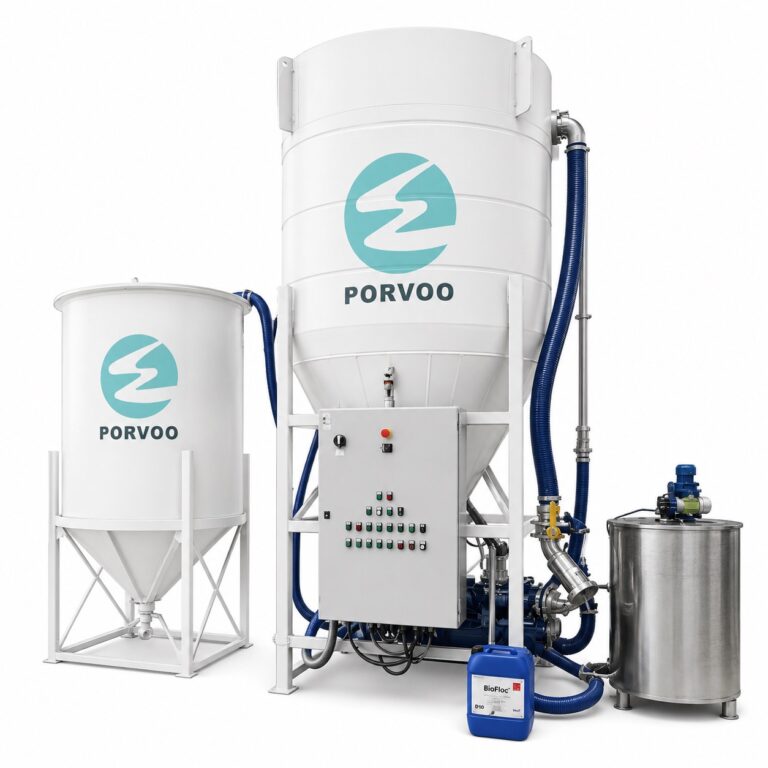
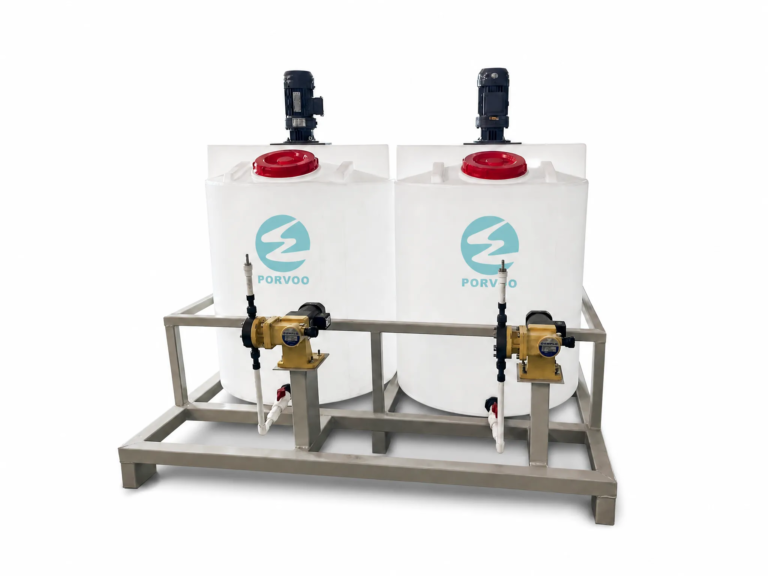
The practical planning criterion here is to avoid placing sensors where rapidly settling particles will either settle out before measurement or artificially depress readings. Coarse ceramic grinding residues can fall out of suspension quickly, which means a sensor positioned at the wrong depth or at a point of low flow velocity may record a turbidity value that does not represent the actual solids loading passing through the system. The consequence is not just an inaccurate reading; it is a dosing decision made on a false baseline. If your Sistema inteligente de dosificación de productos químicos PAM/PAC is drawing feedback from a point where heavy particles have already settled, the dosing response will be calibrated to the residual fine fraction — which means the system may underdose for actual influent conditions during peak load periods.
A second placement principle is range alignment. Each sampling point will experience a different turbidity window depending on where it sits in the process — raw influent, post-dosing, clarifier overflow, or filter effluent. The instrument assigned to each point needs to cover the expected range at that location. Readings that approach 80% of full-scale capability should be treated as a design figure triggering instrument review, not a safe operating zone. A sensor selected during low-load commissioning can silently degrade in diagnostic usefulness as production volume increases or raw material properties shift, without the operator recognizing that the reading is no longer reliable.
Use turbidity for fast operating feedback
Turbidity is the right tool for fast feedback because it responds in near real-time and requires no sample preparation. Its value in ceramic process water monitoring is precisely that speed — it can flag a dosing problem, a clarifier disturbance, or a filter bypass within the same operating window in which the problem occurs, rather than hours later when a lab result returns.
The method and instrument choice should follow the expected turbidity range at the sampling point. For industrial process water with noticeable turbidity, ASTM D7315 applies above 1 NTU. For ceramic process lines that include a membrane polishing stage, monitoring down to 0.15 NTU requires instruments rated for that range — general-purpose turbidimeters are not accurate at those levels.
| Condición del proceso | Turbidity Range | Recommended Method / Instrument |
|---|---|---|
| Industrial process water (noticeable turbidity) | >1 NTU | ASTM D7315 |
| Low-level membrane effluent | ≤0.15 NTU | Lovibond PTV 2000/6000, Hach TU5400 sc/TU5300 sc, SWAN AMI Turbiwell |
A range mismatch has direct operating consequences. If a sensor calibrated for high-turbidity influent monitoring is reassigned to membrane effluent quality checks without reconfiguration, its readings in the low-turbidity zone will lack resolution. Operators relying on that output for dosing decisions are effectively working from noise rather than signal. ISO 7027-1:2016 provides the testing framework principles underlying turbidity measurement, and while it does not govern ceramic process water specifically, its scattering geometry requirements inform why instrument selection and range alignment matter before the first readings are taken.
Use suspended solids to confirm real solids removal
Turbidity provides speed; it does not provide certainty about what is actually in suspension. Several interference sources can skew turbidity readings in directions that do not correspond to actual solids concentration — and in ceramic process water, more than one of these interferences can be present simultaneously.
| Interference Source | Effect on Turbidity |
|---|---|
| Gas bubbles | Can skew turbidity readings |
| Sample color | Can skew turbidity readings |
| Particle size variability | Can skew turbidity readings |
| Sample cell contamination | Can skew turbidity readings |
Air entrainment from pump cavitation or aeration steps scatters light in ways that elevate turbidity without representing real solids. Dissolved colorants or process additives can either suppress or amplify optical readings depending on wavelength. Particle size variability — which in ceramic grinding operations can shift between fine slurry and coarser abrasive fractions depending on which product is being processed — changes the scattering behavior without a corresponding change in mass concentration. Cell contamination on an inline probe can produce a gradual upward drift in readings that looks like a process change but is actually an instrument maintenance issue.
The operational consequence is false confidence: a shift can run to completion with turbidity readings inside the expected band while actual suspended solids have risen significantly. ISO 11923:1997 provides the gravimetric determination framework for suspended solids as a process-reference method. The practical implication is that suspended-solids measurement should function as a confirmation check — not a replacement for turbidity, but a scheduled verification that the turbidity signal is tracking real solids behavior. Teams that rely on turbidity alone for dosing decisions can carry a monitoring gap through an entire shift, particularly when sludge withdrawal timing is off and accumulating settled solids begin resuspending into the return stream.
Check pH before judging dosing performance
A coagulant or flocculant that appears to be underperforming may not be underperforming at all — it may be operating outside its effective pH window. Before interpreting a rising turbidity trend or elevated suspended-solids result as evidence of insufficient chemical dose, pH should be reviewed as a verification step.
PAC and PAM both have pH ranges in which their performance is predictable. Outside those ranges, adding more chemical is unlikely to correct the problem and may introduce secondary effects — excess coagulant carry-over, pH depression in reuse water, or scaling in downstream equipment. In ceramic process water, pH can shift as a result of raw material changes, acid or alkali drag-in from surface treatment stages upstream, or dilution from unexpected water sources. None of these shifts will be visible in turbidity data alone.
ISO 10523:2008 provides the framework for pH determination in water quality applications. The relevant decision implication here is sequencing: if your next action in response to rising turbidity is to increase dosing, a pH check should precede that decision rather than follow it. If pH is outside the effective range for the chemistry in use, correcting pH first is the prerequisite — not an optional refinement. Systems using automated dosing that pull turbidity feedback but not pH feedback risk this failure mode systematically, not occasionally.
Trend data across shifts not only one clean sample
The diagnostic value of monitoring is in the trend, not the snapshot. A single clean sample taken after a steady-state operating period confirms that the process was under control at that moment. It says nothing about what happened during startup, during a raw material changeover, or in the final hour of a shift when sludge withdrawal frequency may have decreased.
Dosing drift, sedimentation short-circuiting, and filter overloading all reveal themselves gradually. In each case, the turbidity or suspended-solids signal rises incrementally — often within a range that would not trigger a single-sample alarm — while the underlying process condition worsens. The >1 NTU turbidity threshold, as a design figure from the ASTM D7315 context, is a useful trigger for initiating trend monitoring, not a pass/fail gate for individual readings. What matters operationally is whether the reading at the same sampling point is rising across consecutive measurements within a shift, not whether any single value crosses a round number.
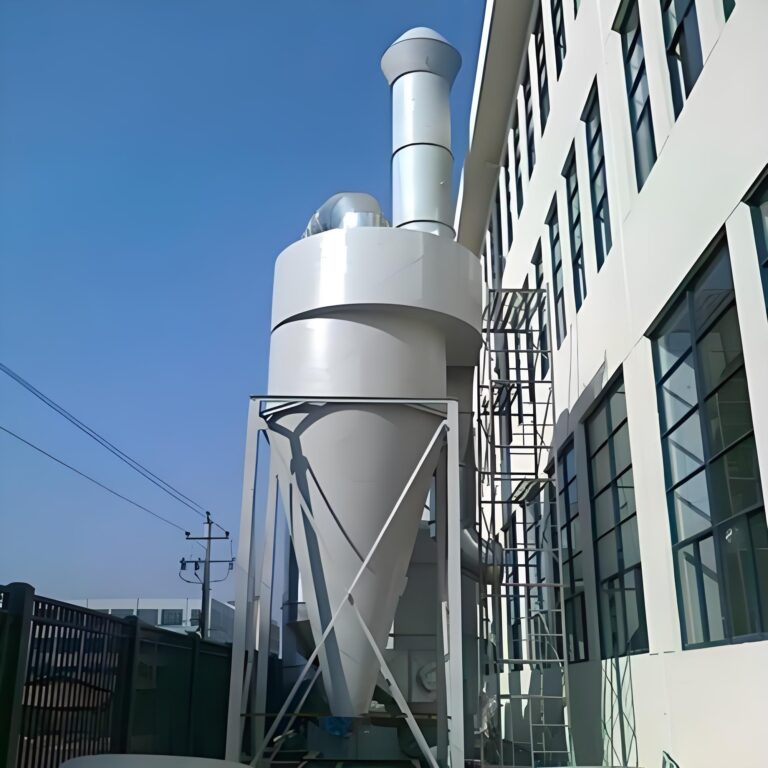
Para las plantas que utilizan un Torre de sedimentación vertical para reciclar aguas residuales, multi-shift trending at the clarifier overflow is particularly relevant. Short-circuiting in vertical-flow sedimentation does not necessarily produce dramatically elevated turbidity in any single sample; it tends to produce a gradual increase that becomes identifiable only when readings from the same shift position are compared across days. A single good sample from the first hour of production on a Monday provides no useful information about Friday afternoon performance when sludge accumulation is highest.
For more detail on how real-time sensor integration supports this kind of trend-based feedback, see Integración de sensores en tiempo real en la dosificación de PAM/PAC: Control de la turbidez, el pH y la conductividad.
Tie alarms to operator actions and sludge withdrawal
An alarm that does not have a defined response is a notification, not a control mechanism. The planning criterion for alarm configuration is to connect each threshold to a specific action: not “notify operator” in the abstract, but “withdraw sludge,” “check dosing pump stroke frequency,” “inspect cell for contamination,” or “reduce filtrate return rate.”
The failure pattern in plants that lack this linkage is predictable. Turbidity rises, the alarm activates, the operator acknowledges it, and the next action depends on whoever is on shift — which means the response is inconsistent. Over time, alarms become background noise rather than diagnostic signals. The monitoring system is still running; it has simply been decoupled from operations.
For ceramic process water systems, sludge withdrawal timing is one of the most common variables that monitoring can directly govern. When settled solids accumulate beyond the design retention capacity, the blanket level rises, short-circuiting increases, and clarifier overflow turbidity climbs — predictably, measurably, and correctable if the alarm threshold for clarifier overflow is linked to a sludge withdrawal trigger rather than a general notification queue. The alarm-to-action mapping is a configuration decision made during commissioning; if it was not completed at that stage, or if raw material properties have shifted since startup, the current alarm thresholds should be reviewed against actual operating data before assuming they remain valid.
Recalibrate monitoring after equipment or material changes
Instrument range and calibration reflect the process conditions that existed when they were set. When those conditions change — new raw material supplier, adjusted grinding parameters, modified flocculant chemistry, equipment replacement — the previous calibration may no longer represent what the sensor is actually measuring.
The 80% of full-scale threshold is a practical design figure for triggering instrument review: when readings consistently approach that level, the sensor is operating in a zone where its dependability degrades, and range adjustment or instrument substitution should be considered. This is not a manufacturer-universal rule or a regulatory requirement; it is a monitoring management input that prevents a sensor from silently losing diagnostic value while still producing numbers. The risk is not that the instrument fails obviously — it is that it continues to function while the readings become progressively less reliable, which means the process control decisions built on those readings are degrading at the same rate without any visible signal of the problem.
Material changes in ceramic production carry a specific recalibration implication. A switch to a different clay body, abrasive grade, or surface treatment chemistry can shift both the particle size distribution and the optical properties of the process water. Turbidity calibration that was valid for the previous material may read differently for the new one even at the same mass concentration of suspended solids. For suspended-solids determination, the filter membrane specification in the gravimetric method matters when particle size distribution changes significantly. Treating recalibration as a commissioning-only task rather than a scheduled review after any material or equipment substitution is a common gap that compounds quietly until a monitoring discrepancy or effluent quality deviation makes the mismatch visible.
Effective ceramic process water monitoring depends less on the sophistication of any individual instrument than on whether the monitoring architecture was designed to reveal the failure modes that actually occur on your line. Instrument placement, range selection, the relationship between turbidity readings and suspended-solids confirmation, and the linkage between alarm thresholds and operator actions are all configuration decisions — and each one has a downstream consequence if it was set during commissioning and never revisited as process conditions evolved.
Before extending or modifying an existing monitoring setup, the most useful pre-decision checks are: whether current sampling points can detect the drift modes relevant to your process stage, whether instrument ranges remain appropriate for current operating loads, whether pH is being reviewed before dosing adjustments are made, and whether alarm thresholds are connected to defined actions rather than general notifications. Those four questions resolve the majority of monitoring gaps that cause false confidence or delayed response in ceramic process water systems.
Preguntas frecuentes
Q: Our ceramic line runs multiple clay body formulations across a single shift — do we need separate calibrations for each material, or is one calibration sufficient?
A: Separate calibration references are the safer approach. A switch in clay body or abrasive grade can shift particle size distribution and optical scattering behavior enough that a turbidity calibration valid for one material will read differently at the same mass concentration of suspended solids for another. Rather than maintaining fully separate instrument setups, the practical step is to verify calibration against a gravimetric suspended-solids reference whenever a new formulation is introduced, and to log those verification results as a baseline for that material — so drift from that specific starting point becomes detectable across subsequent shifts.
Q: At what point does relying on turbidity alone become a meaningful risk to reuse water decisions?
A: Turbidity alone becomes unreliable for reuse decisions when any of the following are present simultaneously: pump cavitation introducing air entrainment, process additives with optical absorption properties, or significant particle size variability between production runs. Each of these can hold turbidity readings within an acceptable band while actual suspended solids rise. The threshold condition to watch is not a fixed NTU value but the combination of a steady turbidity reading alongside a process change — raw material switch, modified dosing chemistry, or equipment maintenance — that could shift scattering behavior independently of solids mass. At that point, a scheduled gravimetric suspended-solids check should precede any reuse routing decision.
Q: If pH correction and dosing adjustment are both needed, which should be completed first before interpreting turbidity trend data as meaningful?
A: pH correction should come first. Coagulant and flocculant performance is pH-dependent, so turbidity trend data collected while pH is outside the effective operating window for the chemistry in use reflects a chemical underperformance condition rather than a true process drift signal. Acting on that trend by increasing dose before correcting pH risks coagulant carry-over into reuse water and may suppress or distort subsequent turbidity readings further. The correct sequence is: confirm pH is within the effective range for the flocculant or coagulant in use, allow the system to stabilize, then evaluate whether the turbidity trend has corrected — and only then assess whether a dosing adjustment is still warranted.
Q: How does continuous inline turbidity monitoring compare to scheduled grab sampling for detecting sedimentation short-circuiting specifically?
A: Inline continuous monitoring is substantially more effective for detecting short-circuiting than scheduled grab sampling. Short-circuiting in sedimentation tends to produce a gradual incremental rise in clarifier overflow turbidity rather than a sharp exceedance — one that accumulates across a shift and is most pronounced when sludge levels are highest, typically toward the end of a production run. A scheduled grab sample taken during stable early-shift conditions will consistently miss this pattern. Inline monitoring at the clarifier overflow, with trend logging across consecutive shift positions, is the configuration that makes the failure mode visible; grab sampling alone will confirm the system was performing when sampled, not whether it degraded afterward.
Q: Is this monitoring approach practical for smaller ceramic operations that run only one or two shifts per day and have limited instrument budgets?
A: The core principles apply regardless of facility scale, but the minimum viable implementation can be simplified. A single inline turbidimeter positioned at the clarifier overflow — rather than at multiple points — with shift-end readings logged manually will capture the drift pattern that matters most for smaller operations. pH measurement before each dosing adjustment requires only a basic inline or handheld meter. Gravimetric suspended-solids checks via ISO 11923:1997 can be performed at a reference laboratory on a weekly or bi-weekly schedule rather than continuously, serving as a calibration anchor for the inline turbidity signal. The priority is consistent trend logging at one well-chosen point over sporadic readings at multiple locations — that configuration delivers more diagnostic value per instrument than a more complex setup used inconsistently.