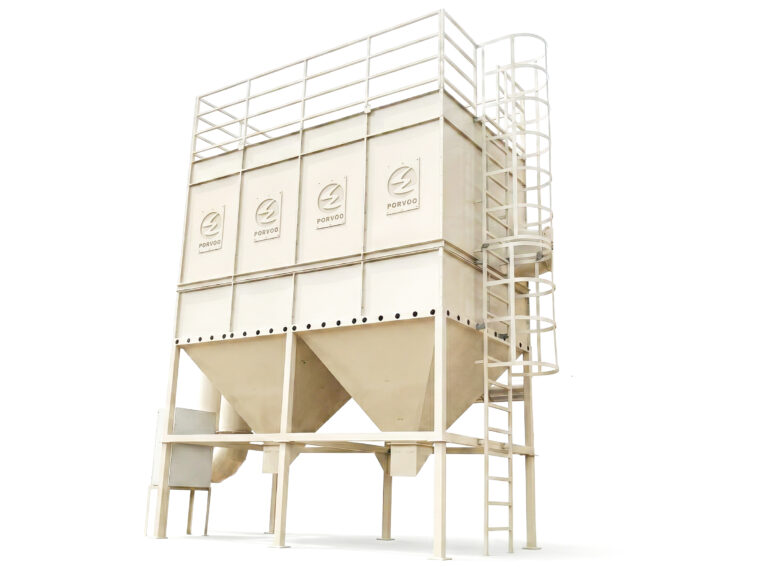
Ceramic tile plants that add a sedimentation tower late in the design process — or size one from a rule-of-thumb volume figure — often discover the gap only at commissioning, when turbidity targets are consistently missed during production shifts and the only options are chemical overdosing, forced flow reduction, or a costly internal retrofit. The root cause is almost never the vessel itself. It is the sequence of decisions that preceded it: flow profile not fully mapped, solids loading estimated from a single grab sample, sludge withdrawal left as an operational afterthought. Correcting those decisions after the tower is installed requires either taking the unit offline or accepting degraded clarification while a fix is engineered. The sections below give process engineers and procurement teams a structured basis for making these judgments before equipment is specified, so that inlet design, withdrawal scheduling, and peak-flow buffer can be negotiated into scope rather than added as change orders.
Start sizing from flow profile and solids loading
Tower volume is a result of the sizing process, not the starting point. Starting from a target volume and working backward to confirm it against hydraulic load is the most common shortcut that produces a design that looks adequate on paper but underperforms during production peaks.
The correct starting point is the full flow profile of the ceramic tile facility: average daily flow, shift-based peaks, cleaning cycle surges, and the lowest-flow periods when settled sludge may be disturbed by sudden pump restarts. Each of these conditions places a different demand on the tower. A unit sized only for average flow will be undersurfaced during peak events, and the clarification failure during those peaks — elevated TSS in the overflow, visible turbidity in the recycle stream — may damage downstream equipment or trigger process quality complaints that are traced back to water quality rather than tower performance.
Solids loading adds the second dimension. Ceramic tile wastewater typically carries a mixture of fine clay particles, glaze residues, and grinding fines. The settling velocity of this mixture varies with particle size distribution, density, and whether coagulant has been applied upstream. A single composite sample taken during steady production is rarely sufficient to characterize the solids range — wash-down events and glaze-line changeovers can produce short-duration spikes in suspended solids that stress the tower well beyond its design condition. If the available data is limited to a handful of grab samples, treat the solids loading figure as a conservative lower bound, and build in a surface loading margin that accommodates the probable peak. The specific margin depends on the variability of your process data, so this is an engineering judgment call grounded in site conditions rather than a fixed multiplier.
Anchoring the sizing calculation to both the hydraulic profile and the solids loading range gives you a defensible design basis. It also makes it possible to have a meaningful conversation with equipment suppliers about where their proposed unit sits relative to the peak condition — a conversation that is much harder to have once the tower is already ordered.
Check inlet distribution and short-circuiting risk
A tower with adequate surface area and detention time can still underperform if the influent enters the settling zone unevenly. Short-circuiting — where flow preferentially follows a direct path from inlet to outlet without fully utilizing the tower’s settling volume — reduces effective detention time without triggering any obvious alarm until effluent quality is already compromised.
The risk is highest when influent enters through a single pipe without any distribution control, particularly in rectangular or tall cylindrical towers where the inlet jet can create a current that bypasses a significant fraction of the settling zone. Valves, gates, and weirs used as inlet distribution controls are not supplementary refinements; they are the mechanism by which the hydraulic design translates into actual settling performance. Without them, the theoretical detention time calculated during design may bear little relationship to the retention time experienced by the majority of the flow.
The downstream consequence of poor inlet distribution is difficult to diagnose without hydraulic testing or tracer studies, because elevated effluent turbidity under surge conditions can also be attributed to overloading, inadequate coagulation, or sludge disturbance. This ambiguity means that short-circuiting problems often persist through multiple attempted fixes — chemical dosing adjustments, flow restrictions — before the inlet configuration is identified as the cause. Specifying inlet distribution provisions at the engineering stage, and confirming their implementation during fabrication review, is significantly cheaper than investigating the problem after commissioning.
When reviewing supplier drawings, look specifically for how the influent pipe terminates inside the tower, whether a distribution baffle or submerged inlet is included, and how the design addresses sudden flow changes. A drawing that shows a bare pipe entry into the settling zone without distribution provisions should prompt a clarification request before the design is approved.
Match detention time to settling behavior
Detention time is not a fixed design parameter — it is a function of the particle characteristics entering the tower on any given shift. Fine clay fines from grinding lines settle more slowly than coarser tile body particles, and glaze residues with low density may require significantly longer residence time or coagulant assistance to settle reliably. Sizing detention time from a generic figure without reference to the actual settling velocity distribution of the influent solids creates a tower that may perform acceptably under one process condition and fail under another.
Tube settlers and parallel plate modules address this by reducing the effective vertical settling distance that a particle must travel before reaching a collection surface. Within the same tower footprint, these internal elements can substantially increase the hydraulic loading rate that the unit can handle while still achieving target clarification. The practical implication for equipment selection is that a smaller-footprint tower with internal settling enhancement can often be a viable alternative to a larger bare-volume tank — but only if the settling enhancement is matched to the floc characteristics of the specific ceramic wastewater and if the maintenance commitment that comes with those internal elements is built into the operating plan.
Vertical Sedimentation Tower Hydraulic Design Principles: Settling Velocity, Plate Settler Configuration & Flow Distribution Systems Explained covers the hydraulic basis for these calculations in more detail if your team is working through the settling velocity and plate configuration trade-offs.
The hidden trade-off is that tube settlers and parallel plates trap sludge in their channels. If withdrawal schedules are not set proactively, the accumulated sludge within those elements begins to occupy settling volume, increases the risk of solids sloughing during flow surges, and progressively degrades the clarification performance that the enhancement was intended to provide. The settling enhancement and the sludge management plan must be designed together, not independently.
Plan sludge withdrawal before tower volume is lost
Sludge accumulation is the failure mode that appears latest and costs the most to recover from. By the time reduced settling volume becomes visible as deteriorating effluent quality, available tower volume may already be meaningfully compromised — and restoring it typically requires taking the unit offline, which interrupts the recycle water supply to the production line.
The mechanism is straightforward: sludge that settles to the tower floor and is not withdrawn occupies physical volume that was accounted for in the original detention time calculation. As that volume shrinks, effective detention time decreases, hydraulic loading per unit of true settling area increases, and the conditions that produce short-circuiting and solids carryover become more likely. In towers with internal plate or tube settlers, the problem compounds because sludge also accumulates in the channel spaces, reducing settling efficiency while simultaneously increasing the risk of a sloughing event that sends a slug of accumulated solids into the clarified overflow.
Withdrawal frequency is not a fixed schedule. It depends on solids loading, the volume of sludge generated per unit of flow, and the density of the settled cake. A ceramic tile plant with high-throughput grinding lines will generate more sludge per shift than a finishing-only facility, and the appropriate withdrawal interval reflects that difference. The practical starting point is to measure sludge depth regularly during the first months of operation — at a minimum, at the same time each shift — and use that data to establish a site-specific withdrawal schedule before volume loss becomes significant.
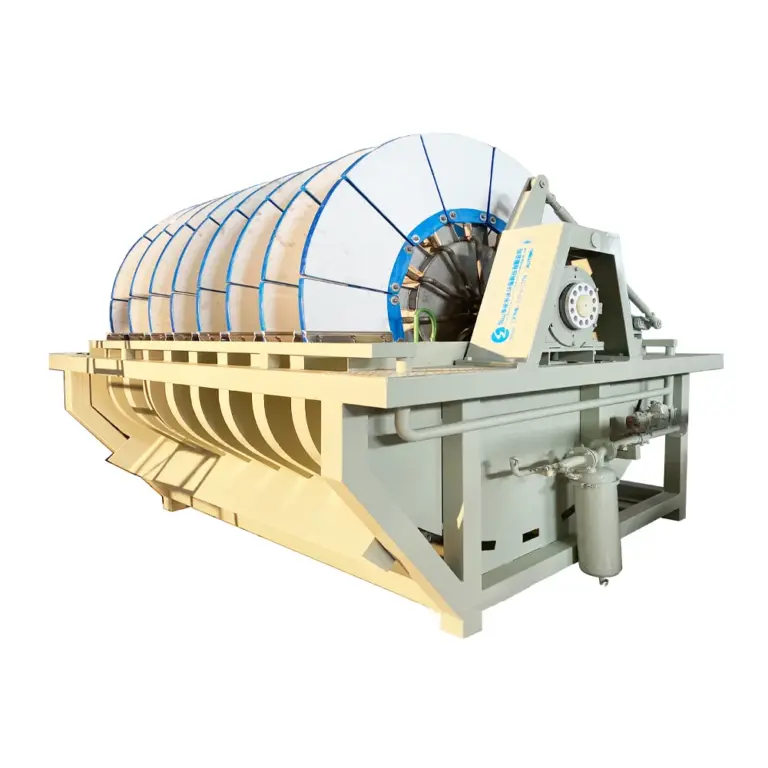
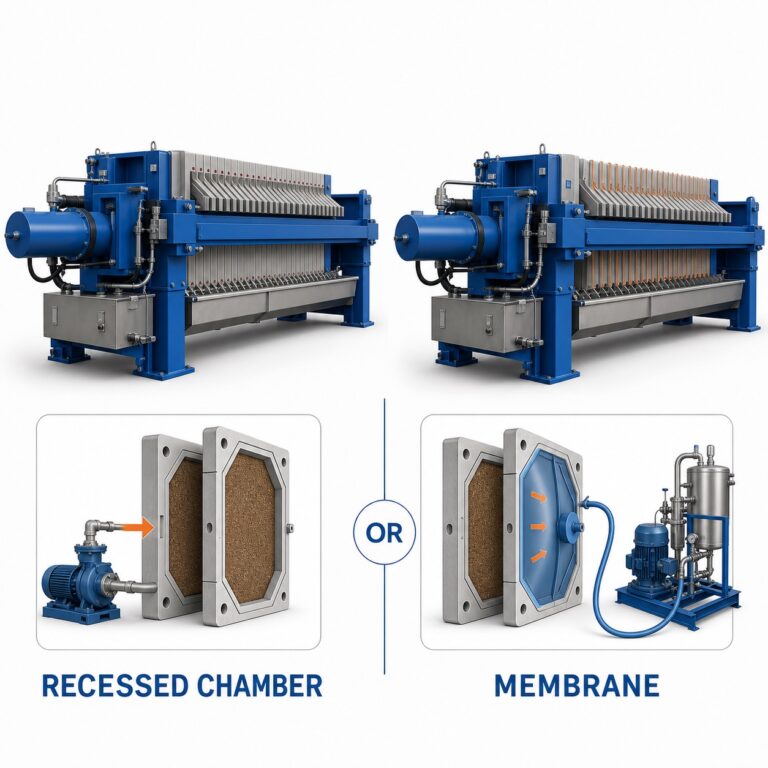
For facilities that route tower underflow to a filter press or vacuum ceramic disk filter for dewatering, the withdrawal schedule also needs to be coordinated with the downstream dewatering unit’s cycle capacity. Withdrawing more frequently than the dewatering unit can process creates a sludge buffer problem; withdrawing too infrequently reduces tower volume. That coordination is a commissioning task that should be explicitly planned, not left to operators to resolve informally.
Use TSS and turbidity to judge performance
Effluent TSS and turbidity are the two primary indicators used to assess whether the tower is clarifying to the level required for water reuse or discharge. They measure different things: TSS (typically determined by gravimetric filtration per ISO 11923:1997) captures the total mass of suspended material per unit volume, while turbidity (measured by nephelometric or turbidimetric method per ISO 7027-1:2016) responds to the optical scattering properties of the water, which can detect very fine colloidal particles that may not contribute significantly to TSS by mass but still affect reuse suitability.
For ceramic tile wastewater recycling, turbidity is often the more operationally sensitive indicator. Fine clay fines and glaze particles scatter light strongly, and a clarified overflow that passes a TSS threshold may still carry enough colloidal material to cause problems in tile glaze lines or washing equipment if turbidity is high. Monitoring both metrics, rather than relying on one alone, gives a more complete picture of clarification performance and is more useful for diagnosing which aspect of the process — settling, coagulation, or withdrawal — is underperforming.
Neither ISO standard defines discharge limits or performance thresholds for sedimentation towers; they define measurement methods. The performance targets against which you interpret these results should be set by the project specification, the downstream reuse requirements, or any applicable local discharge standard — not by the measurement standard itself.
Trend monitoring is more useful than single-point spot checks. If turbidity in the clarified overflow is consistently stable at a given flow rate but rises predictably during production peaks, the sizing or inlet distribution is the likely constraint. If turbidity drifts upward over weeks at steady flow, sludge volume accumulation or coagulant dosing drift is the more probable cause. These two failure signatures require different corrective actions, and distinguishing them requires a monitoring record, not a single measurement.
Compare footprint with access and maintenance needs
A tower’s footprint drives both the space it occupies and the access geometry available for maintenance tasks that must be performed regularly: sludge depth measurement, withdrawal line inspection, inlet baffle checks, and periodic internal inspection when internal settling elements are installed. Optimizing footprint without simultaneously planning for these access requirements creates maintenance difficulty that accumulates over the operating life of the unit.
Tall, narrow towers minimize floor area but complicate internal inspection and any mechanical work on inlet distribution components. Wide, shallow configurations allow easier top access but may require more floor space than a production hall can practically allocate. Neither geometry is inherently superior; the right balance depends on the available layout, the frequency of required maintenance tasks, and whether the tower is designed for in-place maintenance or periodic offline service. These decisions are best resolved during the layout phase when the surrounding process equipment configuration can still be adjusted, not during installation when the surrounding structure is fixed.
For towers with tube settlers or parallel plate modules, physical access for inspection and periodic cleaning is a non-negotiable maintenance requirement. If the tower design does not provide sufficient internal access — through manholes, removable covers, or cleanable section geometry — the long-term accumulation of sludge in the settling channels becomes difficult to manage and the performance benefit of the internal elements gradually erodes. Confirm access provisions in the fabrication drawing before approval.
Specify tower acceptance around stable clarification
Acceptance testing for a sedimentation tower should be structured around stable clarification performance across the operating range specified in the project scope, not around a single steady-state test at average flow. A unit that meets turbidity and TSS targets at design-average flow but has not been tested at peak flow or during a sludge withdrawal cycle has not demonstrated the performance that the facility actually needs.
The Ceramic Manufacturing Industry BREF provides process-context reference for clarification expectations in ceramic production wastewater treatment. It is useful as a design-reference source when scoping acceptance criteria, but it does not function as a binding specification standard. The operative performance targets for acceptance should be defined in the project specification and agreed with the supplier before fabrication, so that the acceptance test protocol is unambiguous and cannot be renegotiated at commissioning based on conditions the supplier controls.
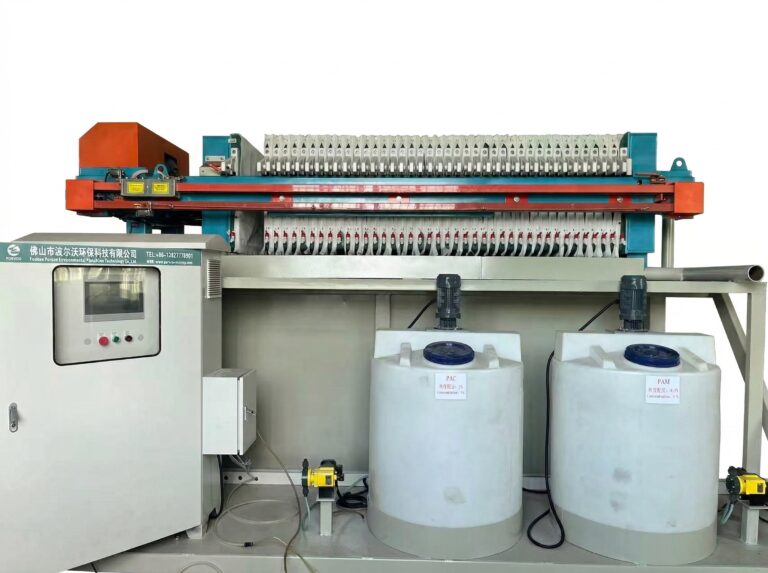
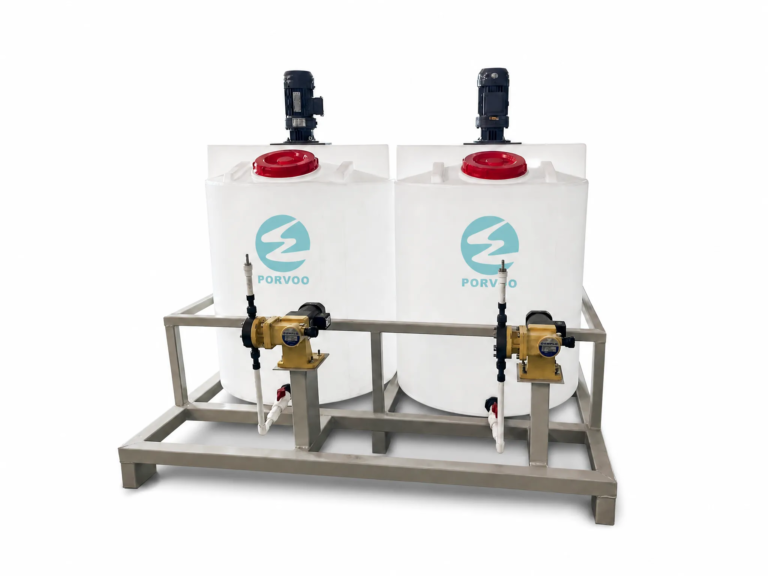
At a minimum, an acceptance check for a sedimentation tower serving ceramic tile wastewater should confirm: clarified effluent TSS and turbidity within target at both average and peak flow conditions; stable sludge withdrawal without overflow disturbance; inlet distribution function under the range of flow rates the unit will experience; and a baseline sludge accumulation rate measurement that supports scheduling the withdrawal interval. If the tower is paired with a PAM/PAC intelligent chemical dosing system, the acceptance test should also confirm that dosing response under flow variation maintains clarification targets rather than being tuned only for steady-state conditions.
Any acceptance criteria that cannot be tested at commissioning — because production has not reached design throughput, or because a seasonal flow variation has not yet occurred — should be documented as deferred hold points with agreed verification dates, rather than waived.
Sizing a sedimentation tower for ceramic tile wastewater is ultimately a question of how accurately the design captures real site conditions — flow variability, solids range, and the downstream sludge management capacity — rather than how closely the vessel volume matches a rule-of-thumb calculation. The failure modes that appear at commissioning and in the first year of operation almost always trace back to one of four decisions made before installation: flow profile not fully characterized, inlet distribution not specified, sludge withdrawal left unscheduled, or acceptance criteria set too loosely to detect marginal performance.
Before finalizing a tower specification, confirm that the design basis documents peak flow and peak solids loading alongside average conditions, that inlet distribution provisions are drawn in the fabrication package, that a withdrawal schedule can be derived from the solids loading estimate, and that acceptance test conditions are agreed in writing. Those four confirmations are the leverage points where investment in clarity has the highest return relative to the cost of getting it wrong after the tower is in the ground.
Frequently Asked Questions
Q: Our facility only has grab sample TSS data from steady production — is that enough to finalize the solids loading figure for sizing?
A: No, grab samples taken only during steady production are insufficient as a sole basis for sizing. Wash-down events and glaze-line changeovers can produce short-duration solids spikes well above the steady-state figure, and a tower sized to the average will be undersurfaced precisely when it matters most. Treat the available grab sample data as a conservative lower bound and apply a surface loading margin that accounts for probable peak conditions — the appropriate margin is an engineering judgment based on how variable and incomplete your process data actually is.
Q: If tube settlers or parallel plates are installed to increase hydraulic capacity, does that change how often sludge needs to be withdrawn?
A: Yes, internal settling elements increase withdrawal urgency rather than reduce it. Sludge accumulates inside the plate or tube channels as well as on the tower floor, and if it is not cleared on a tighter schedule, it both reduces the settling volume the enhancement was intended to provide and raises the risk of a sloughing event that sends a slug of settled solids into the clarified overflow. The withdrawal frequency for a tower with internal elements should be established from actual sludge depth measurements during early operation, not assumed to match the schedule appropriate for a bare-volume tank.
Q: At what point does a smaller footprint tower with internal settling elements stop being a viable alternative to a larger open-volume tank?
A: The trade-off reverses when the maintenance commitment for the internal elements cannot realistically be met on site. Tube settlers and parallel plates require periodic physical inspection and cleaning through adequate access provisions — manholes, removable covers, or cleanable section geometry. If the tower design does not provide that access, or if the facility’s maintenance capacity cannot support the required withdrawal and inspection frequency, sludge accumulation in the channels will progressively erode the hydraulic performance gain. The footprint advantage only holds if the internal elements can be maintained as designed over the operating life of the unit.
Q: Our production has not yet reached design throughput — can acceptance criteria tied to peak flow conditions simply be waived at commissioning?
A: They should not be waived; they should be documented as deferred hold points with agreed verification dates. A sedimentation tower that has only been tested at sub-design flow has not demonstrated the clarification performance the facility will depend on at full throughput. Waiving peak-flow acceptance criteria removes the supplier’s accountability for the condition that most often exposes sizing or inlet distribution deficiencies, and renegotiating after commissioning is both harder and more expensive. Agree the deferred verification dates in writing before the unit is signed off.
Q: Is a sedimentation tower the right primary treatment step if the ceramic wastewater contains a significant fraction of colloidal glaze particles that resist gravity settling?
A: Gravity settling alone may be insufficient where colloidal glaze content is high, because colloidal particles by definition settle too slowly to be removed within practical detention times. In that case, coagulant addition upstream of the tower — typically PAC or PAM — is necessary to aggregate the colloidal fraction into settleable floc before the water enters the settling zone. The sedimentation tower remains appropriate as the clarification vessel, but its performance becomes directly dependent on coagulant dosing being correctly matched to the colloidal load and maintained stably under flow variation. Sizing and acceptance testing must then treat the coagulation step and the tower as a coupled system rather than independent units.