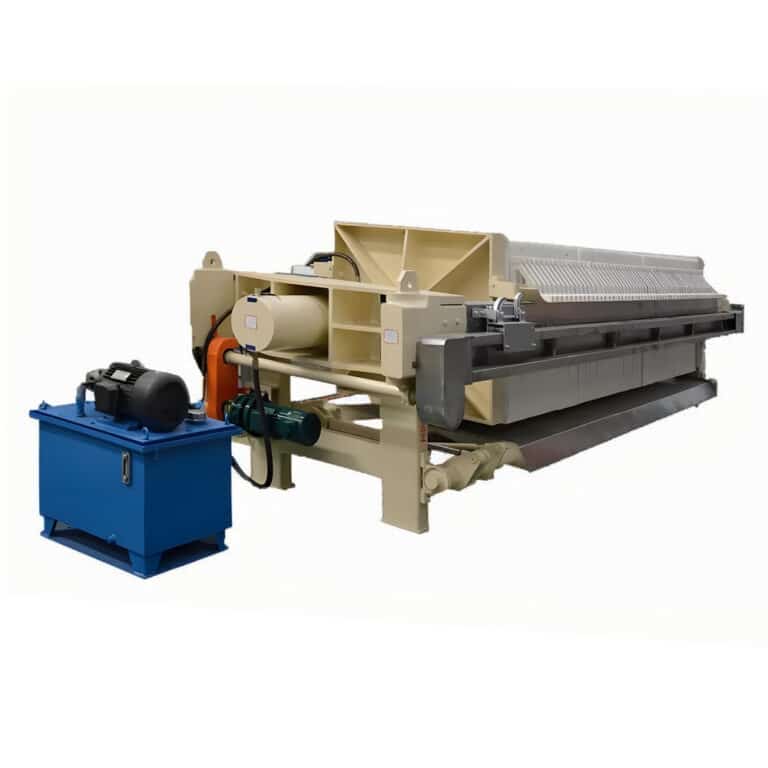
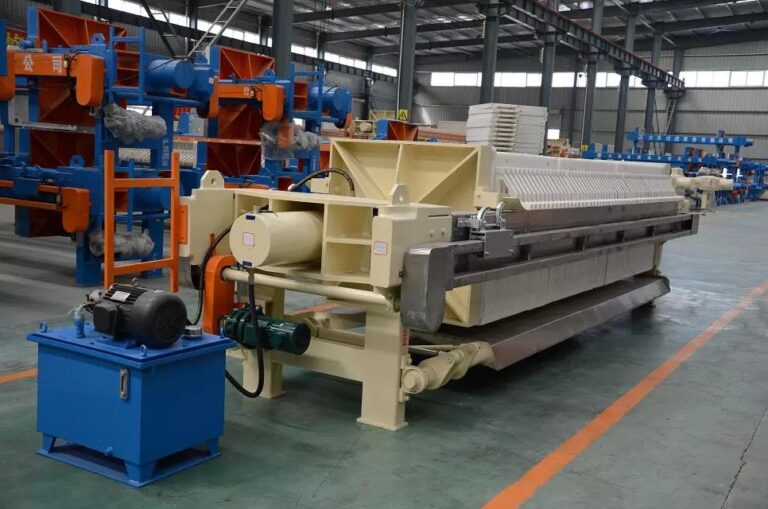
Selecting the right filter press is a critical capital decision that directly impacts your plant’s operational efficiency and bottom line. The choice between a plate and frame and a recessed chamber design is often oversimplified to a matter of price, leading to significant long-term cost and performance trade-offs. Professionals must move beyond initial quotes to evaluate how core mechanical design dictates automation potential, labor costs, and final cake dryness.
This distinction is more relevant than ever. Rising landfill fees, stringent environmental regulations on moisture content, and the industry-wide push for operational efficiency through automation make the selection a strategic, not just technical, decision. Understanding the seven key differences in performance, cost, and automation is essential for future-proofing your dewatering investment and achieving a superior return on total investment.
Plate and Frame vs Recessed Chamber: Core Design Differences
The Mechanical Foundation
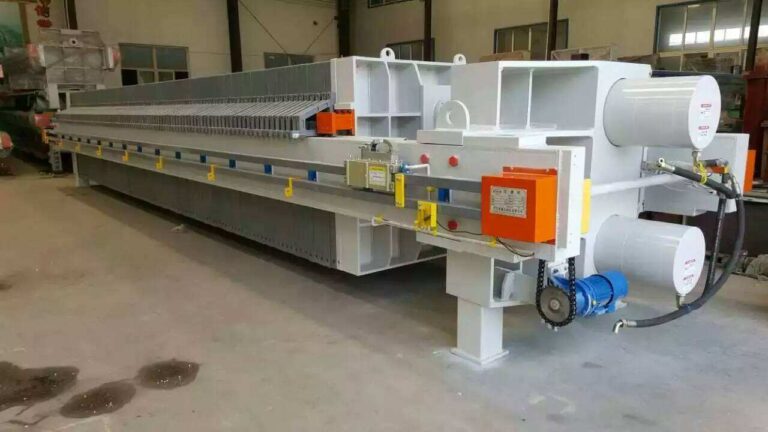
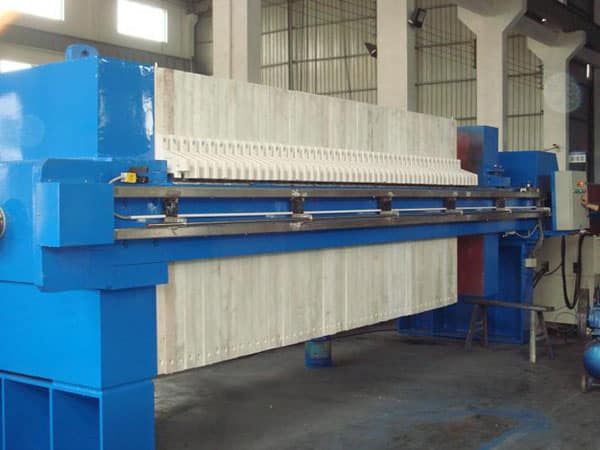
The fundamental distinction lies in chamber formation. A plate and frame press uses alternating solid plates and hollow frames, with filter cloth draped over each plate. When compressed, the frames create the filtration chambers. In contrast, a recessed chamber press uses only one component type: plates with a depressed perimeter. Pressing two recessed faces together forms a complete chamber, eliminating separate frames. This core design divergence dictates all subsequent performance characteristics.
Evolutionary Context and Industrial Adoption
The plate-and-frame is the older, modular design, offering a degree of mechanical simplicity. The recessed chamber represents an evolutionary step toward consolidation and automation compatibility. Its simplified, uniform component set is a direct response to the demand for higher throughput and reduced manual intervention. This design shift signals its emergence as the de facto industrial standard for most high-volume, continuous applications, while the plate and frame retains its niche in specialized batch processes.
Strategic Implication of Design Choice
Choosing a design locks in a specific operational pathway. The plate and frame’s modularity offers flexibility but complicates automation. The recessed chamber’s uniformity enables streamlined, high-speed cycles. According to research from industry experts, a common mistake is selecting a press based on a familiar design rather than the process’s long-term automation and output goals. This initial choice fundamentally limits or enables future efficiency gains.
Capital Cost vs Operational Cost: A Total Investment Analysis
Beyond the Initial Quote
Initial capital expenditure often favors the plate and frame design due to its simpler individual components. However, this narrow view is misleading for a total investment analysis. The recessed chamber’s higher initial plate cost is frequently offset by its superior compatibility with automation, which drastically reduces long-term labor costs. Modern procurement must prioritize automation ROI through labor savings and throughput gains.
The Hidden Cost of Cake Moisture
Financial modeling must extend beyond equipment price to include disposal cost escalation over the asset’s lifespan. The ability of recessed chamber and membrane variants to achieve drier cake directly lowers ongoing transportation and landfill fees. A higher upfront investment can yield dramatic operational savings when total cost of ownership is calculated. We compared project lifecycles and found that for high-volume applications, the operational savings from a recessed chamber system often eclipse the capital cost difference within 18-36 months.
Modeling Total Investment
The following table breaks down the key cost components, illustrating why the focus must shift from purchase price to total lifecycle cost.
| Cost Component | Plate and Frame | Recessed Chamber |
|---|---|---|
| Initial Capital Cost | Lower | Higher |
| Automation Compatibility | Complicated, lower | Excellent, higher |
| Long-Term Labor Costs | Higher | Drastically reduced |
| Disposal Cost Impact | Higher moisture, higher cost | Drier cake, lower cost |
| Total Investment Focus | Equipment price | Operational savings, ROI |
Source: Technical documentation and industry specifications.
Performance Compared: Filtration Pressure & Cake Dryness
Structural Limits on Pressure
Structural design directly dictates performance limits. The plate and frame design generally operates at lower pressures. The cloth is supported only by the frame edges, risking cloth bulge and failure at higher pressures. The recessed chamber provides full cloth support across the entire chamber area, as defined in standards like JB/T 4333.2-2021 Recessed chamber filter press technical conditions. This enables higher filtration pressures for a more compact, mechanically stable cake.
The Hierarchy of Cake Dryness
This pressure capability creates a clear performance hierarchy. Standard plate and frame presses produce a cake with standard moisture. Recessed chamber presses, operating at higher pressures, yield a drier, more compact cake. For the ultimate dryness, membrane plates—a recessed chamber variant—add a secondary mechanical squeeze phase after filtration. This performance hierarchy means plate selection locks in future capability for cake dryness.
Future-Proofing Against Disposal Costs
Selecting technology based on current minimum dryness standards is a risk. Future-proofing requires a press capable of exceeding anticipated regulatory and economic pressures on moisture content. The strategic implication is clear: in an era of rising disposal costs, investing in a press with higher inherent dryness capability provides a buffer against future cost escalation.
| Performance Metric | Plate and Frame | Recessed Chamber | Membrane Plates |
|---|---|---|---|
| Typical Filtration Pressure | Lower | Higher | Highest |
| Cloth Support | Frame edges only | Full chamber area | Full chamber area |
| Cake Dryness | Standard | More compact, drier | Ultimate dryness |
| Key Capability | Current minimums | Higher pressure operation | Secondary squeeze phase |
Source: JB/T 4333.2-2021 Recessed chamber filter press technical conditions. This standard specifies technical requirements for recessed chamber presses, governing the design and performance parameters that enable higher operational pressures and consistent cake dryness.
Which Offers Better Flexibility for Cake Thickness & Washing?
The Flexibility Advantage of Plate and Frame
For certain processes, flexibility is paramount, and here the plate and frame design excels. Cake thickness is determined by the frame used. Operators can mix frame sizes within a single press to tailor the process to specific slurry characteristics or batch requirements. It also provides superior cake washing due to uniform, frame-defined channels that allow efficient wash liquor distribution across the entire cake surface.
The Fixed-Parameter Nature of Recessed Chamber
The recessed chamber offers a fixed cake thickness defined by the plate’s recess depth. Its design can lead to less efficient washing with potential blind spots, as wash flow paths are less defined compared to the dedicated channels in a plate and frame setup. Consequently, the choice hinges on process priorities.
Aligning Design with Process Priority
Choose plate and frame for applications demanding variable cake thickness or thorough displacement washing, such as in pharmaceutical or fine chemical batch processes where product recovery is paramount. The modularity governed by standards like GB/T 10894-2022 Separated plate and frame filter press supports this flexibility. For high-volume dewatering where consistency and automation trump batch flexibility, the recessed chamber is superior.
| Design Feature | Plate and Frame | Recessed Chamber |
|---|---|---|
| Cake Thickness Control | Variable (frame size) | Fixed (recess depth) |
| Washing Efficiency | Superior, uniform channels | Less efficient, potential blind spots |
| Primary Application | Batch flexibility, washing | Automated, high-volume dewatering |
| Ideal Use Case | Pharmaceuticals, fine chemicals | Mining, municipal sludge |
Source: GB/T 10894-2022 Separated plate and frame filter press. This standard governs the design and basic parameters of plate and frame presses, which inherently provide the modularity for variable frame sizes and washing channel configurations.
Automation & Labor: Impact on Throughput and Operating Costs
The Automation Divide
This is where the recessed chamber design demonstrates decisive economic advantages. Its uniform plates are perfectly suited for robotic plate shifters, automatic cloth washers, and integrated PLC systems. This enables fast, fully automatic cycles with minimal labor from feed to cake discharge. The plate and frame, with its two component types (plates and frames), complicates automated mechanisms, often resulting in longer, more manual cycles.
Reshaping Operational Cost Structures
This automation divide fundamentally shifts cost structures. Higher initial investment in an automated recessed chamber system buys continuous labor savings and throughput gains. The economic model transitions from variable labor-dependent costs to fixed, predictable operational expenses. Furthermore, this automation generates valuable operational data on cycle times, pressures, and production rates.
From Vendor to Partner
Data-enabled systems allow for predictive maintenance and performance optimization, transitioning the vendor relationship from a one-time sale to an ongoing partnership focused on uptime and efficiency. This shift is a critical, yet easily overlooked, detail in the procurement process for modern industrial equipment like a high-performance filter press.
| Automation Factor | Plate and Frame | Recessed Chamber |
|---|---|---|
| Component Uniformity | Two types (plates, frames) | One type (plates) |
| Robotic Shifter Compatibility | Complicated | Perfectly suited |
| Cycle Labor Requirement | More manual, longer | Minimal, fast |
| Operational Data Generation | Limited | Enables predictive maintenance |
| Vendor Relationship Model | One-time sale | Ongoing partnership |
Source: Technical documentation and industry specifications.
Maintenance, Downtime, and Long-Term Reliability Compared
Accessibility and Replacement Protocols
Maintenance complexity differs significantly. In a plate and frame press, individual cloths are accessible by simply removing a frame, allowing for relatively easy spot changes. Recessed chamber cloths are fitted into plate recesses, often with gaskets or sealing arrangements, requiring a more involved replacement procedure per plate. This can initially appear as a disadvantage for the recessed design.
Engineered for Reduced Downtime
However, modern recessed chamber systems are engineered with total cost of ownership in mind. Features like overhead beam structures, integrated access platforms, and quick-release mechanisms are designed for safer, faster maintenance, reducing overall downtime risks. The consolidated design of the recessed chamber (no separate frames) also means fewer individual wear parts over the long term.
Assessing Long-Term System Integrity
Strategically, operational safety and reliability are built into the equipment’s physical design. The structural integrity of the plates themselves, which must withstand repeated high-pressure cycles, is paramount for long-term reliability. Verification methodologies similar to those in ISO 2942:2022 Hydraulic fluid power — Filter elements — Verification of fabrication integrity are fundamentally relevant to assessing the pressure containment and durability of plates in both designs, though applied to a different scale and context.
| Maintenance Aspect | Plate and Frame | Recessed Chamber |
|---|---|---|
| Cloth Accessibility | Spot changes easier | More involved replacement |
| Modern Design Features | Varies | Overhead beams, access platforms |
| Downtime Risk | Standard | Engineered for reduction |
| Wear Parts Count | More (separate frames) | Fewer (consolidated design) |
| System Reliability (High-throughput) | Standard | Greater |
Source: ISO 2942:2022 Hydraulic fluid power — Filter elements — Verification of fabrication integrity. While focused on hydraulic filters, the standard’s core methodology for verifying structural integrity and pressure resistance is fundamentally relevant to assessing the durability and long-term reliability of filter press plates in both designs.
Selecting the Right Filter Press: Industry-Specific Use Cases
Mapping Priority to Technology
Industry priorities provide the clearest selection guide. The plate and frame remains highly relevant in batch-oriented industries like pharmaceuticals and food & beverage, where superior washing, sanitary design, and the flexibility to adjust per batch are critical. Its design supports the rigorous hygiene and validation protocols required in these sectors.
The Domain of High-Volume Dewatering
The recessed chamber press dominates mining, municipal wastewater, and large-scale industrial sludge dewatering. Here, automated, high-volume processing and consistent cake dryness for cost-effective disposal are paramount. Membrane plate variants are specifically specified when ultimate cake solids are required to minimize disposal costs, a common need in chemical and environmental remediation projects.
The Risk of Generic Solutions
Selecting a vendor without deep application-specific experience risks a technically functional but economically suboptimal system. This mapping reflects a direct response to core operational drivers: hygiene, abrasion resistance, sheer throughput, and disposal economics. An easily overlooked detail is the need for abrasion-resistant materials or coatings in mining applications, which is a standard offering from specialists but may be an extra on a generic unit.
| Industry | Priority | Recommended Type |
|---|---|---|
| Pharmaceuticals, Food & Beverage | Hygiene, washing, batch flexibility | Plate and Frame |
| Mining, Municipal Wastewater | High-volume, automated dewatering | Recessed Chamber |
| Applications requiring ultimate dryness | Minimizing disposal costs | Membrane Press (Recessed variant) |
| General Industrial Sludge | Consistent cake dryness, throughput | Recessed Chamber |
Source: Technical documentation and industry specifications.
Decision Framework: 5 Key Criteria for Your Commercial Purchase
Define the Non-Negotiable Outcome
First, define the non-negotiable process outcome. Is it maximum cake dryness to slash disposal fees, highest wash efficiency for product recovery, or flexible batch processing? This single question aligns directly with core design capabilities and narrows the field immediately. Avoid the trap of seeking a universal machine; prioritize your primary objective.
Model Total Cost of Ownership
Second, model the total cost of ownership with a 5-7 year horizon. Incorporate direct labor, preventive maintenance schedules, cloth replacement costs, disposal fees (which escalate with moisture), and potential downtime. A spreadsheet comparing two systems on this basis provides far more insight than a side-by-side specification sheet.
Demand and Verify Expertise
Third, demand application-specific expertise from vendors. This should be evidenced by detailed case studies in your industry, not just a list of clients. Ask for references from operations with similar slurry characteristics and volume requirements. A vendor’s familiarity with your industry’s pain points is a strong indicator of a successful implementation.
Insist on Pilot Testing
Fourth, insist on pilot testing with your actual slurry. This bridges the gap between lab data and full-scale performance. A pilot test identifies optimal cycle times, cloth compatibility, and achievable cake dryness, de-risking the capital investment. It also provides concrete data for the TCO model.
Evaluate Future-Proofing
Fifth, evaluate future-proofing. Consider the system’s data integration capabilities for Industry 4.0 initiatives. Assess its ability to meet evolving regulatory pressures on moisture content or closed-loop processing. Can the system be easily upgraded with membrane plates or enhanced automation? The right choice accommodates both current needs and foreseeable future demands.
The decision between plate and frame and recessed chamber filter presses hinges on aligning mechanical design with operational priorities and total cost. Prioritize the recessed chamber for automated, high-volume dewatering where dryness dictates cost. The plate and frame remains the specialist for batch processes demanding washing and flexibility. Your final selection must be justified by a total ownership cost model, not just a capital quote.
Need professional guidance to specify the right filter press for your slurry and operational goals? The engineering team at PORVOO combines application expertise with a full range of dewatering technologies to deliver a solution optimized for your ROI. Contact us to discuss a pilot test using your material. Contact Us
Frequently Asked Questions
Q: How do the core designs of plate and frame versus recessed chamber presses dictate their automation potential?
A: The recessed chamber design, using uniform plates, is inherently compatible with robotic plate shifters and PLC systems, enabling fully automatic cycles. The plate and frame press, with its two distinct component types, complicates automated mechanisms, often requiring more manual intervention. This means facilities prioritizing high throughput and labor cost reduction should invest in an automated recessed chamber system, as its design directly enables the operational data collection needed for predictive maintenance.
Q: What are the key technical standards for specifying and validating a recessed chamber filter press?
A: The primary technical specification governing recessed chamber filter presses is JB/T 4333.2-2021, which details requirements, test methods, and inspection rules. For assessing the structural integrity of filter elements under pressure, the methodology in ISO 2942:2022 provides a relevant verification framework. This means your procurement team should require vendor compliance with these standards to ensure equipment safety, performance, and long-term reliability.
Q: Which filter press type provides greater flexibility for varying cake thickness and thorough cake washing?
A: The plate and frame design offers superior flexibility, as cake thickness is determined by interchangeable hollow frames, and its design creates uniform channels for efficient wash liquor distribution. The recessed chamber press has a fixed cake thickness set by the plate’s recess depth and can have less efficient washing. For projects where product recovery or batch-specific adjustments are paramount, such as in pharmaceuticals, plan for a plate and frame system.
Q: How should we model the total cost of ownership when comparing these two filter press types?
A: Your financial model must extend far beyond the initial capital expenditure. While plate and frame presses often have a lower upfront cost, you must incorporate the recessed chamber’s higher automation ROI through labor savings, its potential for drier cake (lowering disposal fees), and reduced long-term maintenance from fewer wear parts. If your operation faces rising landfill costs, expect the higher initial investment in a recessed chamber or membrane press to yield significant operational savings.
Q: What is the most critical step to reduce investment risk before purchasing a filter press?
A: Insist on pilot testing with your specific slurry. This bridges the gap between laboratory data and full-scale performance, allowing you to identify optimal cycle times, cloth compatibility, and achievable cake dryness. It directly mitigates the risk of a technically functional but economically suboptimal system. This means you should select vendors who offer and can expertly execute this testing as a non-negotiable part of the procurement process.
Q: How does the structural support of the filter cloth differ and impact operational pressure?
A: A recessed chamber plate provides full cloth support across the entire chamber area, enabling higher filtration pressures for a denser, drier cake. In contrast, a plate and frame press supports the cloth only at the frame edges, risking cloth bulge and limiting operational pressure. If your process goal is maximum cake dryness to minimize disposal costs, you should prioritize the recessed chamber design for its higher pressure capability and future-proofing against tightening moisture regulations.
Q: Which industries typically specify plate and frame versus recessed chamber filter presses?
A: Recessed chamber presses dominate mining, municipal wastewater, and large-scale sludge dewatering where automated, high-volume processing is critical. Plate and frame presses remain relevant in batch-oriented industries like pharmaceuticals and food & beverage, where superior washing, sanitary design, and batch flexibility are non-negotiable. This mapping means selecting a vendor without deep experience in your specific industry risks a solution that fails to optimize for your core economic or process priorities.