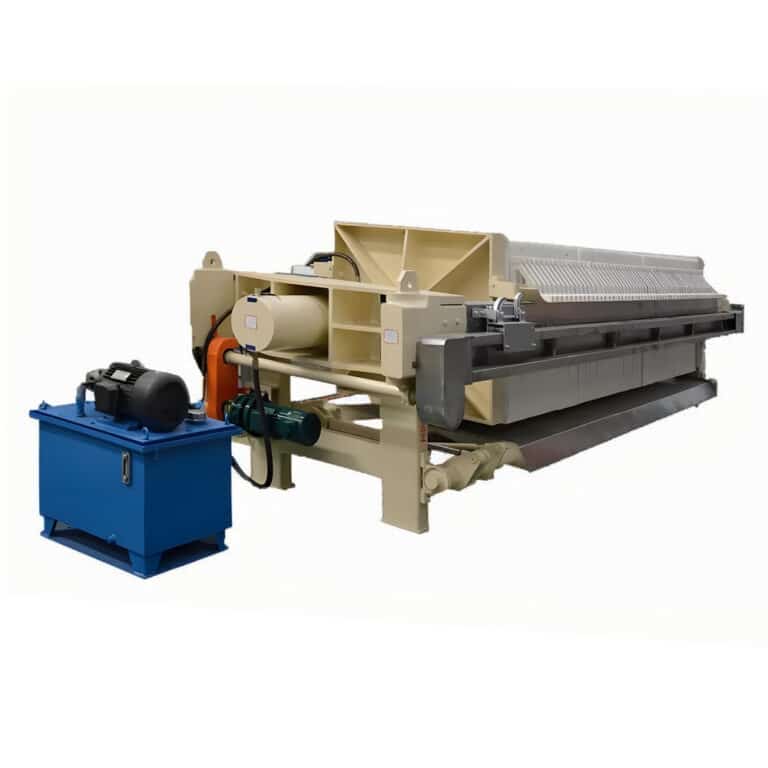
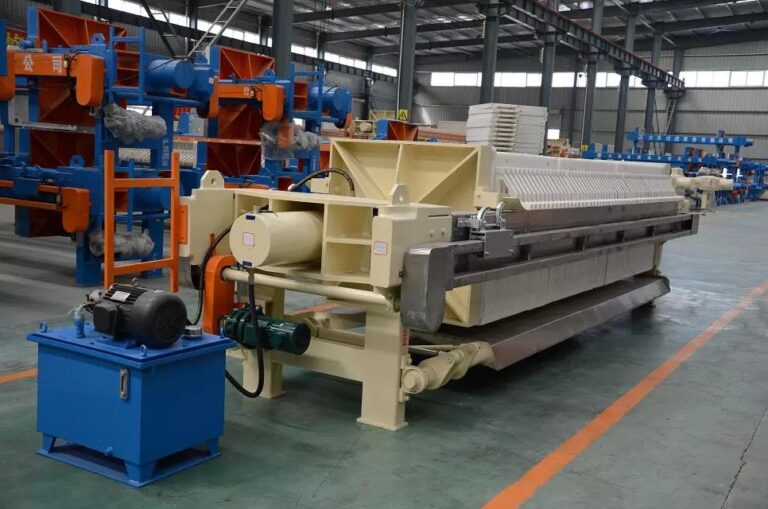
For plant managers and process engineers, the choice between a membrane filter press and a chamber filter press is a critical capital decision with decades-long operational consequences. The common misconception is that the decision is purely about achieving a drier cake. In reality, it’s a strategic trade-off between upfront capital expenditure and long-term total cost of ownership, where throughput, labor, and disposal costs are the true financial drivers.
This evaluation is essential now as industries face tightening regulations on waste disposal and escalating costs for landfill and transportation. Selecting the wrong technology can lock a plant into higher operating expenses, reduced capacity, or an inability to process variable sludge streams, directly impacting profitability and compliance.
Membrane vs Chamber Filter Press: Core Functional Difference
The Architectural Divide
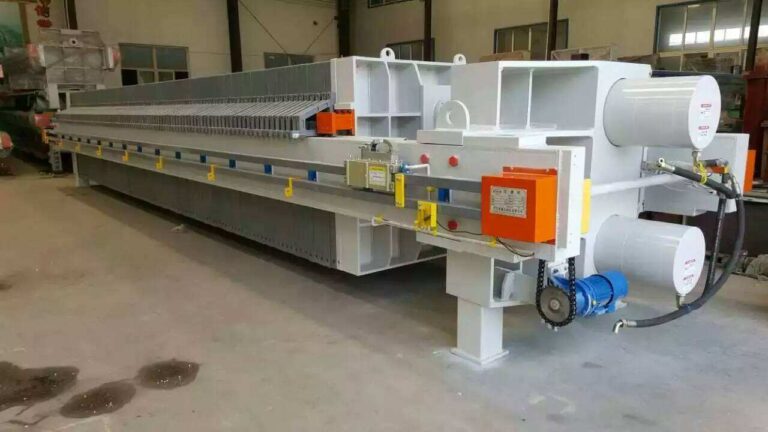
The fundamental divergence lies in plate design. A chamber filter press uses solid, recessed plates that form fixed-volume cavities. Filtration and dewatering rely entirely on the pressure generated by the feed pump, typically operating between 7-15 bar. The process is passive once the chambers are filled.
Active vs. Passive Compression
A membrane filter press incorporates an elastomeric diaphragm on each plate. After the initial pump-fed filtration cycle, this membrane is inflated with high-pressure water or air (15-30 bar), applying a secondary, uniform mechanical squeeze across the entire cake surface. This active compression phase is the defining capability absent in a standard chamber press.
The Spectrum of Configurable Solutions
This core difference creates a range of solutions. Beyond the binary choice, variations exist, such as corner versus center feed systems and specialized membrane materials, allowing the technology to be tailored to specific industrial applications, from mining to chemical processing.
Capital & Operating Costs Compared: A TCO Breakdown
Upfront Investment Analysis
Capital cost structures differ sharply. Chamber presses offer a lower initial investment due to their simpler, robust construction with no moving parts within the plates. Membrane presses command a premium for the complex plate assemblies, high-pressure hydraulic or pneumatic systems, and advanced control logic required for the multi-stage cycle.
The Strategic Mixed-Pack Compromise
A critical, often overlooked option is the “mixed pack” configuration. By alternating membrane plates with standard recessed plates, plants can achieve a significant portion of the performance benefits—particularly in cycle time reduction—at 30-40% lower cost than a full membrane plate stack. This hybrid approach is a key value-engineering consideration.
Long-Term Maintenance Realities
Operating costs also diverge. Chamber presses generally have lower long-term maintenance demands due to their simplicity. For membrane presses, maintenance complexity and cost are dictated by the membrane design. The choice between welded plates (requiring expensive full plate replacement) and systems with removable diaphragms (allowing for cheaper bladder-only replacement) directly shapes operational budgets and downtime risk.
The following table breaks down the key cost components:
Total Cost of Ownership Breakdown
| Cost Component | Chamber Filter Press | Membrane Filter Press |
|---|---|---|
| Initial Capital Cost | Lower | Higher |
| Plate Stack Cost | Simple, robust design | Complex plate & system |
| Mixed Pack Option | Not applicable | 30-40% lower cost |
| Long-term Maintenance | Lower demands | Higher; diaphragm integrity critical |
| Membrane Replacement | Not applicable | Welded vs. removable options |
Source: Technical documentation and industry specifications.
Which Achieves Drier Cake? Moisture Content Compared
The Mechanical Advantage
The membrane’s secondary compression directly displaces more interstitial liquid, producing a drier filter cake. However, the performance gain is not a universal guarantee; it is highly dependent on the compressibility and chemical conditioning of the sludge. Industry experts recommend pilot testing to validate expected dryness improvements for your specific material.
Sludge-Specific Performance Gains
For rigid, mineral-based sludges like lime-conditioned tailings, the high-pressure squeeze is highly effective, commonly improving dry solids content by 4-5 percentage points. For elastic, polymer-conditioned organic sludges, the gains are more modest, typically 2-3 points. In our comparisons, the justification for a membrane press with problematic organic sludges often shifts from dryness alone to the benefit of more consistent and reliable cake release.
The expected moisture reduction varies significantly by feed material:
Dry Cake Performance by Sludge Type
| Sludge Type | Chamber Press Moisture | Membrane Press Improvement |
|---|---|---|
| Mineral-based (e.g., lime) | Higher residual moisture | +4-5% dry solids |
| Polymer-conditioned organic | Higher residual moisture | +2-3% dry solids |
| Problematic organic sludges | Variable performance | Easier cake release |
Source: Technical documentation and industry specifications.
Throughput Showdown: Cycle Time & Capacity Compared
Time as a Financial Variable
Cycle time reduction is the primary economic driver for membrane technology. The high-pressure squeeze drastically shortens the time required to achieve target dryness, cutting total filtration cycles by approximately 50% on average, with reductions up to 75% possible for certain materials. A chamber press must often run its feed pump against increasing cake resistance for a longer duration to approach a similar solids content.
Maximizing Plant Capacity
This efficiency translates directly into increased plant throughput. A membrane press processes more batches per day, effectively increasing dewatering capacity without requiring a larger footprint or additional units. This turns filtration time into a measurable financial variable, justifying the higher capital expenditure in operations where maximizing throughput is critical to meeting production or processing deadlines.
The operational impact on cycle time is substantial:
Throughput and Cycle Time Comparison
| Performance Metric | Chamber Filter Press | Membrane Filter Press |
|---|---|---|
| Primary Compression | Feed pump only (7-15 bar) | Secondary squeeze (15-30 bar) |
| Average Cycle Time Reduction | Baseline | ~50% reduction |
| Maximum Cycle Time Reduction | Baseline | Up to 75% reduction |
| Operational Driver | Longer pump runtime | Time = financial variable |
Source: Technical documentation and industry specifications.
Operational Flexibility & Ease of Use Compared
Rigidity vs. Adaptive Processing
Operational requirements differ sharply. A chamber filter press demands chambers be completely filled with solids to form a proper cake; under-filling leads to poor performance and uneven cakes. This creates rigidity in batch sizing. Membrane presses offer superior flexibility, as the inflatable membrane can expand to contact and uniformly squeeze a partially filled chamber, accommodating variable feed solids concentration and volume.
Automation as a Trajectory
The even pressure from the membrane produces a more homogeneous, consistent cake that is typically easier to discharge automatically. Furthermore, the complex, multi-stage cycle of a membrane press (fill, squeeze, wash, blow) inherently drives integration toward automated, operator-light solutions. This design trajectory makes it a more suitable core component for modern, digitally controlled plant environments seeking to reduce labor dependency.
Maintenance, Lifespan, and Reliability Compared
Design Dictates Reliability Profile
Reliability is shaped by inherent design complexity. Chamber presses, with their solid plates and no internal moving parts, are robust workhorses with generally lower maintenance demands, contributing to a long operational lifespan. Membrane press reliability is closely tied to membrane integrity. The choice between welded plates and removable diaphragms dictates the mean time to repair and long-term maintenance budgeting.
Critical Operational Practices
Using water instead of compressed air for membrane inflation is a critical safety and reliability practice, mitigating explosion hazards from diaphragm ruptures. For both technologies, optimal reliability depends on precise feed pressure management. Automated controls are essential to prevent immediate cloth blinding and filtration failure, a common point of operational neglect that leads to premature wear and downtime.
The maintenance focus and lifespan drivers differ by technology:
Reliability and Maintenance Comparison
| Aspect | Chamber Filter Press | Membrane Filter Press |
|---|---|---|
| Plate Design | Solid, recessed plates | Flexible diaphragms |
| Moving Parts in Plates | None | Yes (membranes) |
| Key Maintenance Focus | General robustness | Membrane integrity |
| Critical Safety Practice | N/A | Water inflation (not air) |
| Lifespan Driver | Robust, simple design | Membrane replacement cycle |
Source: Technical documentation and industry specifications.
Which Filter Press Is Better for Your Specific Sludge Type?
Matching Technology to Material Characteristics
Sludge characteristics dictate optimal technology selection. Membrane presses show their greatest advantage with incompressible, mineral-based or inorganic sludges, where high-pressure squeezing delivers significant dryness and throughput improvements. For these applications, the technology verification principles outlined in standards like ISO 14034:2016 for environmental technology performance can provide a framework for validating supplier claims.
The Nuance of Organic Sludges
For standard organic municipal or industrial sludges, the economic return is more nuanced and must be validated by pilot testing. Chamber presses remain a cost-effective and reliable solution for stable, lower-volume applications where ultimate dryness is less critical. A common mistake is over-specifying a membrane press for an organic sludge without a pilot test, failing to achieve the projected ROI.
Enabling Advanced Process Functions
Critically, membrane technology is essential for processes requiring efficient cake washing or air blowing. The membrane creates a tight seal against the cloth, allowing wash liquor or air to pass uniformly through the cake for efficient impurity removal or further drying. This transforms the unit from a simple dewaterer into a core production asset for product recovery, a function where chamber presses are inherently limited.
The recommended technology varies by application:
Technology Selection by Sludge Type
| Sludge Type | Recommended Technology | Key Performance Driver |
|---|---|---|
| Mineral/Inorganic | Membrane Press | Significant dryness improvement |
| Standard Organic | Chamber or Membrane* | Pilot test for ROI |
| Cake Washing Required | Membrane Press | Tight seal for efficiency |
| Stable, Low-Volume | Chamber Press | Cost-effective solution |
Note: Economic return is nuanced for organic sludges.
Source: Technical documentation and industry specifications.
Decision Framework: Selecting the Right Technology for Your Plant
Quantifying the Key Variables
The final choice is a strategic capital allocation decision, best guided by a detailed total cost of ownership model. Begin by quantifying: target cake dryness, required plant throughput (both average and peak), sludge type and variability, and potential value from ancillary processes like cake washing. For high-volume operations where labor and disposal costs dominate, the throughput gains and drier cake from a membrane press often justify its premium.
Evaluating Configuration Alternatives
Always evaluate the “mixed pack” configuration as a value-optimized middle ground. Furthermore, select vendors with demonstrated, application-specific engineering expertise in your industry, as proper feed system design, cloth selection, and cycle programming are as critical as the press itself. The decision commits your plant to an operational pathway—either the simplicity and lower capex of a chamber press or the high-efficiency, automation-ready trajectory of membrane technology.
The decision hinges on aligning technology capability with operational priorities and financial constraints. Prioritize pilot testing with your actual sludge to gather definitive performance data. Model the total cost of ownership over a 10-year horizon, factoring in capital, energy, labor, maintenance, and disposal costs. This disciplined approach moves the selection beyond specification comparison to a validated business case.
Need a professional assessment for your specific dewatering application? The engineers at PORVOO specialize in designing and optimizing filtration systems, including advanced membrane and chamber filter press solutions, backed by application-specific testing and engineering support.
For a detailed proposal or to discuss pilot testing options, you can also Contact Us.
Frequently Asked Questions
Q: How does the core operating mechanism of a membrane filter press differ from a chamber press?
A: The key difference is the active compression stage. A chamber press relies solely on feed pump pressure (7-15 bar) within fixed-volume recessed plates. A membrane press adds a secondary step where flexible diaphragms inflate with water or air at 15-30 bar to squeeze the cake uniformly. This core functional difference enables a spectrum of configurable solutions for different applications. This means your choice fundamentally commits to either a simpler, pressure-only process or a higher-efficiency, two-stage dewatering cycle.
Q: When does the higher capital cost of a membrane filter press justify itself in a total cost of ownership model?
A: Justification hinges on throughput and disposal costs. The membrane’s high-pressure squeeze cuts cycle times by roughly 50%, allowing more batches per day and turning time into a financial variable. While upfront cost is higher, the throughput gains and drier cake often justify the investment for high-volume operations where labor and disposal expenses dominate. For projects where maximizing plant capacity is critical, plan to model the operational savings against the capital premium.
Q: What are the realistic dryness improvements we can expect from a membrane press for different sludge types?
A: Performance gains are sludge-dependent and not guaranteed. For mineral or inorganic sludges, dry solids content often improves by 4-5 percentage points. Gains are more modest for polymer-conditioned organic sludges, typically 2-3 points. For problematic organic sludges, the primary benefit may shift from dryness to more consistent cake release. This means facilities with mineral-based waste should prioritize membrane technology, while those with organic sludge must validate the economic return through pilot testing, as outlined in performance verification frameworks like ISO 14034:2016.
Q: How does the “mixed pack” configuration optimize the value proposition for a membrane filter press?
A: A mixed pack alternates membrane plates with standard recessed plates in the same stack. This hybrid design captures most of the performance benefits of a full membrane press—particularly reduced cycle time and drier cake—at a 30-40% lower capital cost. It represents a critical strategic compromise between performance and expenditure. If your operation seeks significant efficiency gains but faces budget constraints, you should evaluate the mixed pack as a value-optimized configuration during vendor discussions.
Q: What are the key maintenance and reliability trade-offs between chamber and membrane plate designs?
A: Chamber presses, with solid plates and no internal moving parts, offer robust reliability and lower long-term maintenance. Membrane press reliability depends on membrane integrity; welded plates require costly full replacement upon failure, while systems with removable diaphragms allow for cheaper bladder-only replacement, directly impacting your operational risk and maintenance budget. For operations prioritizing minimal downtime and predictable upkeep, a chamber press or a membrane system with removable diaphragms should be the focus.
Q: Which technology provides better operational flexibility for variable feed conditions?
A: Membrane presses offer superior flexibility. A chamber press requires chambers to be completely filled to form a proper cake, creating rigidity in batch sizing. The inflatable membrane can expand to contact and squeeze a partially filled chamber, accommodating variable feed solids content. This inherent flexibility, combined with the consistent cake it produces, drives integration toward automated solutions. This means plants with inconsistent sludge feed or a goal of operator-light processing should prioritize membrane technology.
Q: For which specific applications is a membrane filter press considered essential rather than just beneficial?
A: Membrane technology is essential for processes requiring integrated cake washing or air blowing. The membrane creates a tight seal against the plate, enabling efficient impurity removal with wash water or further drying with compressed air. This transforms the unit from a simple dewaterer into a core production asset for product recovery. If your process involves recovering a valuable solid product or requires a purified cake, you should plan for a membrane press as a non-negotiable component.