For plant engineers and process managers, the choice between a center feed recessed plate filter press and a traditional corner feed plate and frame system is more than a technical specification—it’s a long-term operational commitment. The wrong selection can lock in chronic downtime, high maintenance costs, and inconsistent dewatering performance. Many assume the decision hinges on capital expenditure alone, overlooking how core design dictates reliability, throughput, and total cost of ownership.
This distinction is critical now as industries push for higher efficiency and lower waste handling costs. The evolution from simple dewatering to strategic resource recovery demands equipment that delivers not just separation, but predictable, low-maintenance operation. Understanding the fundamental trade-offs between these two dominant filter press architectures is essential for specifying a system that aligns with both process requirements and business objectives.
Center Feed vs Corner Feed: Core Design Differences
The Mechanical Foundation
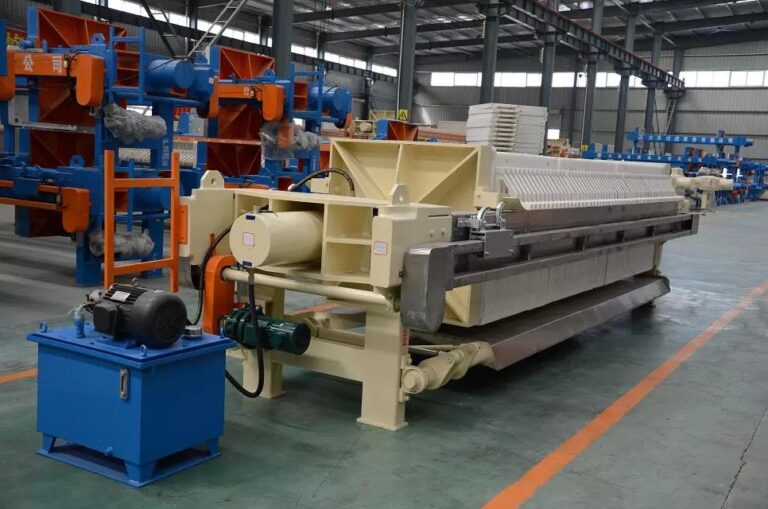
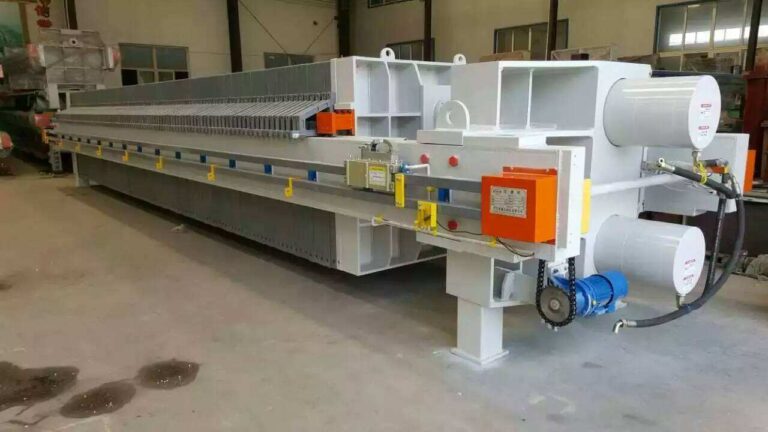
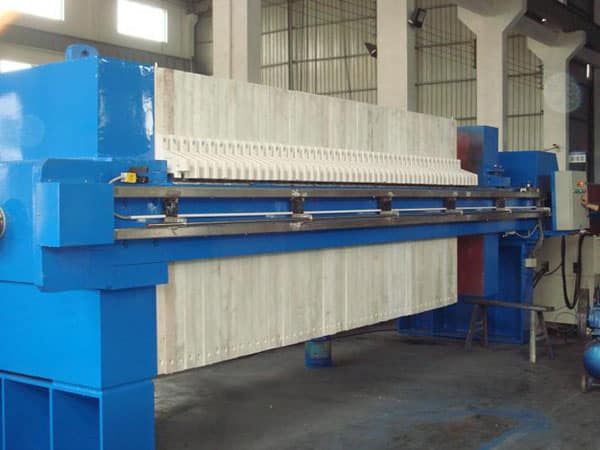
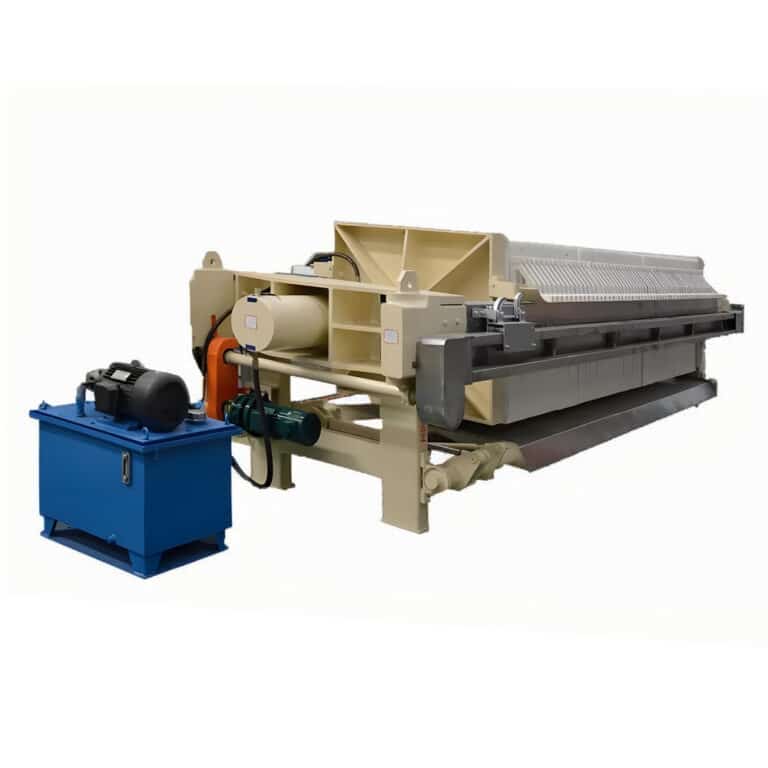
The divergence begins at the slurry introduction point. A traditional plate and frame press is constructed from alternating solid plates and hollow frames. Slurry enters through small ports in the corners of each plate, navigating a network of internal passages to reach each frame cavity. This creates a distributed but restricted feed path. In contrast, a recessed plate press uses single-piece plates with molded-in chambers. When clamped, these chambers form the solids cavities, and slurry is fed directly into each one via a large, centralized port on each plate.
Implications for System Architecture
This core difference dictates the entire system’s approach to pressure management and sealing. The plate and frame design relies on the alignment of multiple components and gasketed feed channels. The recessed plate design, particularly in its gasketed (CGR) form, creates a sealed chamber with the feed port as an integral part of the plate itself. This architectural shift from an assembled flow path to a direct, molded one fundamentally alters performance characteristics and failure modes.
A Strategic Starting Point
In my experience evaluating filtration systems, this initial design choice sets the ceiling for operational performance. You cannot overcome the inherent limitations of a labyrinthine feed channel with higher pump pressure; you only increase the risk of failure. Recognizing this mechanical foundation is the first step in a risk-based selection process.
Clogging Risk Compared: Which Design Is More Reliable?
Feed Path as the Primary Risk Factor
Clogging risk is not an incidental issue but a direct function of feed path geometry. Corner feed systems, with their small internal passages, are inherently susceptible to blockage. Fibrous materials or larger particulates can lodge in these channels, leading to incomplete or uneven chamber filling. This uneven filling creates dangerous differential pressures across the plate pack, a primary cause of plate blow-outs and catastrophic failure.
The Center Feed Advantage
The center feed design mitigates this risk through its large-bore port, which provides a direct, high-flow path into each chamber. This promotes rapid and even filling, minimizing the residence time of solids in the feed channel and drastically reducing blockage potential. Industry experts consistently note that moving to a center feed design is one of the most effective reliability upgrades for challenging slurries.
Quantifying the Reliability Gap
The data clearly illustrates the operational risk profile of each design. Selecting a feed system is a direct decision about managing unplanned downtime.
| Design Feature | Corner Feed | Center Feed |
|---|---|---|
| Feed Path Design | Small internal passages | Large-bore central port |
| Clogging Susceptibility | High (fibrous/large particulates) | Low |
| Filling Evenness | Uneven chamber filling | Rapid, even filling |
| Pressure Imbalance Risk | High (can blow out plates) | Minimal |
Source: Technical documentation and industry specifications.
Feed Rate Performance: Direct vs Restricted Flow Paths
The Physics of Flow Restriction
Feed rate efficiency is governed by flow path resistance. The labyrinthine channels of a corner feed system act as a series of restrictions, limiting volumetric flow. This often necessitates a slower, more controlled feed cycle with a gradual pressure ramp-up to prevent forcing solids into the filter cloths near the feed points—a phenomenon known as blinding. Center feed systems, with their unrestricted central port, support significantly higher initial flow rates, enabling faster chamber filling.
The Critical Role of Pressure Management
A common misconception is that a center feed system can simply be fed at maximum pressure immediately. According to operational best practices, a controlled pressure ramp—typically from 25 to 100 psig—is essential for both designs. This allows a permeable preliminary cake layer to form, protecting the cloth from blinding and ensuring efficient solids capture throughout the cycle. This practice turns feed pressure management from an operational step into a direct lever for controlling cloth replacement costs.
Performance Benchmark
The impact on cycle time is measurable. The table below contrasts the key performance factors, highlighting how design dictates flow capability.
| Performance Factor | Corner Feed | Center Feed |
|---|---|---|
| Flow Path Characteristic | Labyrinthine, restricted channels | Unrestricted, direct path |
| Volumetric Flow Rate | Limited | Higher |
| Initial Filling Cycle | Extended (gradual ramp-up) | Faster |
| Recommended Pressure Ramp | 25 to 100 psig | 25 to 100 psig |
Source: Technical documentation and industry specifications.
Note: Controlled pressure ramp is critical for both designs to form a preliminary cake layer and protect cloths.
Operational Flexibility: Cake Thickness and Adjustability
The Versatility Trade-Off
A clear operational trade-off exists between flexibility and simplicity. The plate and frame design excels in versatility because frames of different thicknesses can be interchanged within the same press. This allows a single unit to produce cakes of varying volume, which is invaluable for batch processes with changing feed stocks or product lines. The recessed plate design, with its fixed cavity depth, offers less flexibility but provides greater simplicity, reliability, and predictability for continuous operations.
The Special Case of Membrane Plates
This flexibility analysis has a critical exception for membrane squeeze plates. For these high-performance components, the corner feed design is often superior. The corner feed allows for uniform inflation and flex of the membrane across the entire plate surface during the squeeze cycle. A center feed port can create a rigid spot in the membrane center, leading to uneven squeezing, stress concentrations, and potential cloth tearing. For applications demanding the highest cake dryness, this can be a non-negotiable specification.
Matching Design to Process Goal
The choice often comes down to the primary process driver. Is it production versatility or streamlined efficiency?
| Flexibility Aspect | Plate & Frame (Corner Feed) | Recessed Plate (Center Feed) |
|---|---|---|
| Cake Thickness Control | High (interchangeable frames) | Fixed cavity depth |
| Operational Versatility | Excellent for variable batches | Streamlined, predictable cycles |
| Membrane Plate Compatibility | Superior (prevents cloth tearing) | Not recommended for membranes |
| Primary Application Fit | Specialty chemical processing | Continuous dewatering |
Source: Technical documentation and industry specifications.
Total Cost of Ownership: Capital, Maintenance, and Downtime
Looking Beyond the Purchase Order
A true financial analysis must model full lifecycle costs. While a basic plate and frame press may have a lower initial capital cost, it often carries higher hidden expenses. These include more frequent and labor-intensive cloth changes, ongoing leak management, and potential production losses from feed channel blockages. Recessed plate systems, especially gasketed versions, offer drier operation that reduces secondary containment and cleanup costs.
Justifying Advanced Technology
The cost justification becomes particularly clear with membrane plates. Their high capital cost must be evaluated against the value they generate: cycle times can be reduced by 50-75%, and the resulting drier cake significantly lowers disposal or downstream processing costs. This investment is often justified not by the filtration step alone, but by its impact on the total process economics.
A Comprehensive Cost Framework
Evaluating only the equipment invoice is a common strategic error. The following breakdown highlights where costs accumulate differently over the system’s life.
| Cost Category | Corner Feed (Plate & Frame) | Center Feed (Recessed Plate) |
|---|---|---|
| Initial Capital Cost | Often lower | Higher |
| Maintenance Labor | Higher (cloth changes, leaks) | Lower |
| Downtime Risk | Higher (from blockages) | Lower |
| Ancillary Costs | Higher cleanup/containment | Drier operation (CGR) |
| Membrane Plate Justification | N/A | Reduced cycle time (50-75%) |
Source: Technical documentation and industry specifications.
Which System Is Better for Your Specific Slurry Type?
Slurry Characteristics Dictate Design
The physical and chemical properties of your slurry are the ultimate selection criteria. For slurries containing fibrous materials, large particulates, or those with a high propensity for blinding, the center feed recessed plate is overwhelmingly preferable. Its direct feed path minimizes the handling of problematic solids before they reach the cloth. Conversely, for applications requiring thorough cake washing, the corner feed design prevents wash water from short-circuiting through an open center port, ensuring effective displacement washing.
Aligning with Process Evolution
The industry’s shift toward viewing filtration as a unit operation for resource recovery—such as in battery metals recycling or catalyst recovery—places a premium on reliability and cake purity. This trend favors advanced, automated recessed plate or specialized membrane systems that deliver consistent results with minimal intervention. The traditional plate and frame remains a valid choice for niche applications requiring extreme cake thickness variability or specific multi-stage polishing filtrations.
A Practical Selection Guide
Use this matrix to align your slurry properties with the most robust technical solution.
| Slurry Characteristic | Recommended Design | Key Reason |
|---|---|---|
| Fibrous materials/Large particulates | Center Feed Recessed Plate | Lower clogging risk |
| High blinding propensity | Center Feed Recessed Plate | Direct, high-flow path |
| Requires thorough cake washing | Corner Feed Plate & Frame | Prevents wash short-circuiting |
| Extreme thickness variability needed | Corner Feed Plate & Frame | Interchangeable frames |
| Strategic resource recovery | Advanced Recessed/Membrane | Reliability, cake purity |
Source: Technical documentation and industry specifications.
Key Selection Criteria for Engineers and Plant Managers
Technical and Operational Drivers
Selection requires balancing multiple, often competing, factors. Primary technical criteria include slurry characteristics (particle size distribution, fiber content, settling rate), required cake dryness (which may mandate membrane plates), and the need for cake washing. Operational priorities are equally critical: is the goal maximum automation with minimal operator attention, or is manual process adaptability more valuable? The industry’s clear convergence is on standardized, automated recessed plate systems for most high-volume, continuous dewatering applications, signaling a broad shift toward efficiency-driven operations.
The Vendor Evaluation Imperative
The equipment specification is only part of the equation. The supplier’s capability is the other. Engineers must evaluate potential vendors on their ability to provide integrated process support, from pilot testing and system engineering to lifecycle services and spare parts availability. The best technical design can be undermined by poor support. This due diligence is as important as the technical evaluation itself.
Making the Final Decision: A Practical Framework
A Structured Four-Step Process
A disciplined framework prevents oversight and ensures alignment with long-term goals. First, conduct pilot testing with your specific, representative slurry. This generates non-negotiable data on filtration rates, achievable cake dryness, cloth compatibility, and wash efficiency. Second, use this data to build a quantified total cost of ownership model, incorporating realistic estimates for labor, maintenance, consumables, and potential downtime.
Aligning Technology with Strategy
Third, align the technology choice with strategic business objectives. Is filtration merely a waste cost center to be minimized, or is it a critical component of product recovery or environmental compliance? This strategic lens determines the appropriate level of investment and automation. Finally, match the design to operational reality. For the majority of modern applications demanding reliability, low maintenance, and consistent output, the center feed recessed plate design is the robust default. The corner feed plate and frame design is reserved for specialized cases where its unique advantages in cake washing, thickness variability, or membrane compatibility are paramount to process success.
For most continuous dewatering applications, the operational reliability and lower lifecycle costs of a modern recessed plate filter press make it the definitive choice. Its design directly addresses the primary causes of downtime and high maintenance.
Need professional guidance to pilot test your slurry or model the total cost of ownership for your specific application? The engineering team at PORVOO can provide the data-driven analysis and system specifications required for a confident capital decision. Contact Us to discuss your project parameters and process goals.
Frequently Asked Questions
Q: How does feed path design directly impact the risk of filter press clogging and failure?
A: The risk is dictated by the slurry’s entry method. Corner feed systems use small internal passages prone to blockage by fibrous or large particles, leading to uneven filling and dangerous pressure imbalances. Center feed designs use a large-bore central port for direct, high-flow filling that minimizes blockage potential. This means facilities processing challenging slurries should prioritize center feed designs to protect equipment longevity and maximize operational uptime by controlling catastrophic failure risk.
Q: What is the correct way to manage feed pressure to protect filter cloths during the filling cycle?
A: A controlled pressure ramp is essential, regardless of feed design. Operators should initiate feeding at a lower pressure, such as 25 psig, to form a permeable preliminary cake layer before increasing to the full operating pressure, often around 100 psig. This practice prevents cloth blinding near the feed points. For projects where cloth replacement is a major cost driver, implementing this ramp protocol becomes a direct lever for controlling long-term maintenance expenses.
Q: When should we choose a plate and frame press over a recessed plate system for operational flexibility?
A: Choose a plate and frame design when your process requires significant variability in final cake thickness between batches. Its use of interchangeable hollow frames allows you to adjust cavity volume within the same press. Recessed plates have a fixed cavity depth. If your operation runs continuous dewatering with a consistent feed, the simplicity of recessed plates is preferable; reserve plate and frame systems for batch processes with changing feed stocks or cake volume requirements.
Q: Are membrane squeeze plates compatible with both center feed and corner feed designs?
A: No, corner feed designs are often superior for membrane plates. The corner feed configuration allows for uniform flexing of the membrane across the entire plate during the squeeze cycle. A center feed port can create a rigid point that leads to uneven pressure distribution and potential cloth tearing. For high-dryness applications requiring membrane technology, specifying a corner feed design is typically a non-negotiable technical requirement to ensure reliable performance.
Q: How do slurry characteristics dictate the choice between center feed and corner feed filter presses?
A: Slurries with fibrous materials, large particulates, or a high blinding propensity overwhelmingly favor the center feed recessed plate due to its lower clogging risk. Conversely, applications demanding thorough cake washing often require a corner feed design, as it prevents wash liquid from short-circuiting through an open center port. This implies that a detailed slurry analysis is the first critical step in selection, directly pointing toward the mechanically suitable technology.
Q: What hidden costs should we model in a total cost of ownership analysis for a filter press?
A: Look beyond capital cost to model labor for cloth changes, downtime from feed blockages, leak management, and ancillary infrastructure like secondary containment. Gasketed recessed plate (CGR) systems reduce cleanup costs through drier operation. For membrane plates, justify their high initial cost against value from 50-75% faster cycle times and lower disposal costs from drier cake. A proper evaluation plans for these full lifecycle costs from the outset.
Q: What is a practical framework for making the final selection between these two filter press types?
A: First, conduct pilot testing with your specific slurry to gather data on filtration rate and cake dryness. Second, quantify total cost of ownership, including hidden labor and infrastructure. Third, align the technology with strategic goals: is it a waste cost center or a resource recovery step? For most modern, continuous dewatering needing reliability and low maintenance, the center feed recessed plate is the robust default. Reserve corner feed designs for specialized washing or thickness variability needs.