Selecting the right dewatering technology is a high-stakes capital decision. The choice between a belt filter press and a chamber press directly impacts operational costs, regulatory compliance, and long-term project viability. A common misconception is that the primary differentiator is cost, when in fact, the fundamental trade-off is between continuous operation and maximum cake dryness.
This decision has gained urgency as disposal costs rise and sustainability metrics become integral to operations. Achieving higher solids content isn’t just an engineering goal; it’s a financial and environmental imperative that reduces transportation volume, lowers landfill fees, and can enable material reuse. Understanding the core performance and cost differences is essential for a defensible investment.
Belt Filter Press vs Chamber Press: Core Differences Explained
Defining the Operating Principle
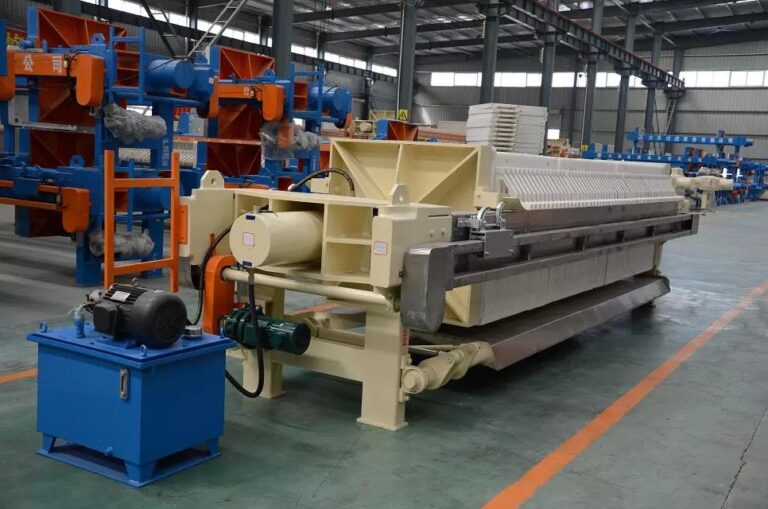
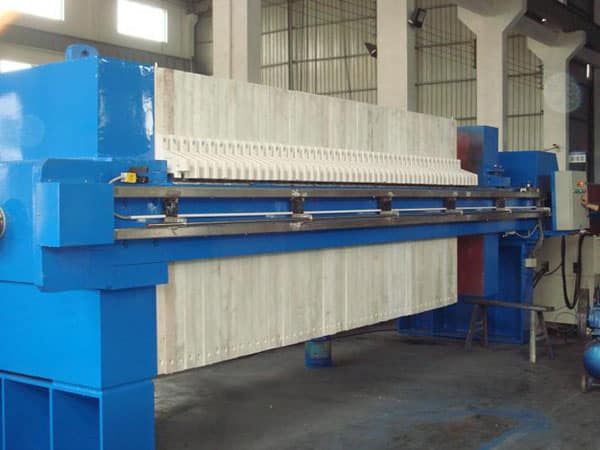
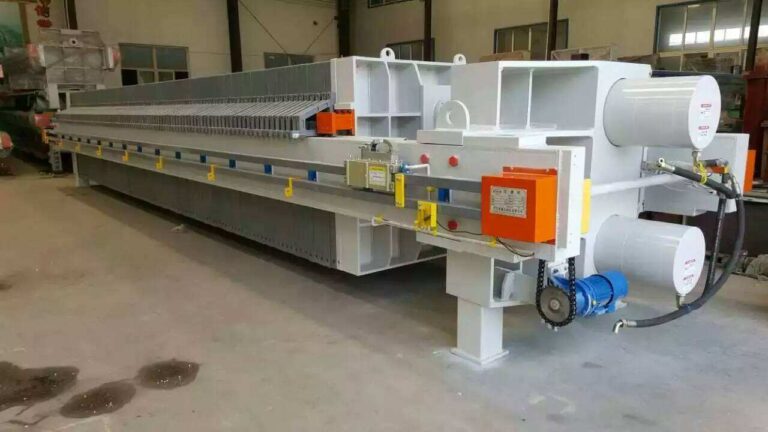
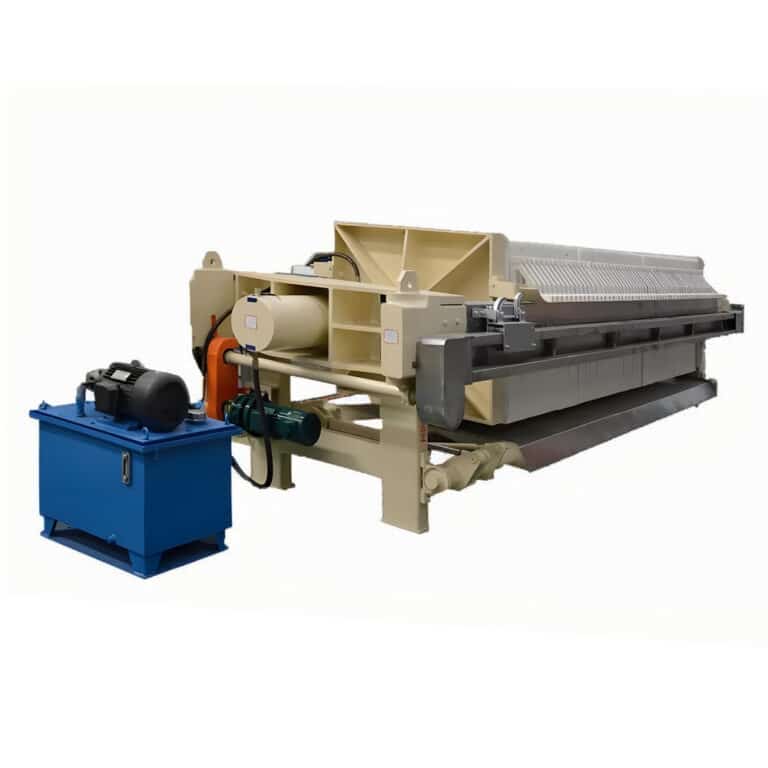
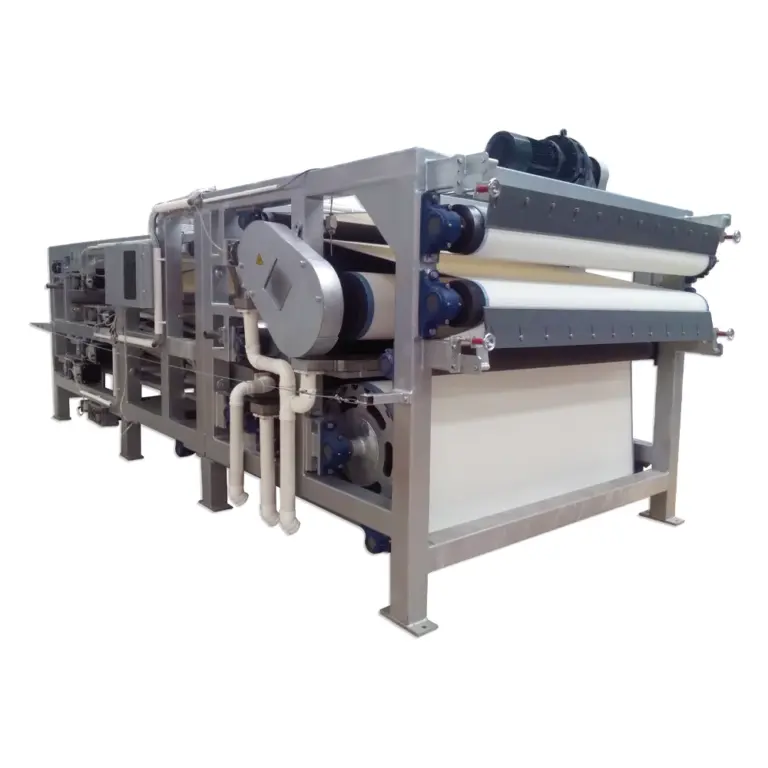
The divergence begins with first principles. A belt filter press is a continuous dewatering device. Conditioned sludge undergoes gravity drainage on a moving belt before being squeezed through a series of rollers. This process applies shear pressure, which is less effective at removing bound, capillary water. In contrast, a chamber filter press is a batch-operated, high-pressure system. Slurry is pumped into sealed chambers at pressures from 7 to over 30 bar, forcing liquid through filter cloths to form a solid cake.
Strategic Implications of Design
This design difference dictates the strategic application. The belt press offers a continuous process optimized for steady-state liquid throughput with moderate dewatering. The chamber press is engineered for maximum liquid extraction, operating in cycles to achieve significantly higher dryness. The choice, therefore, is not merely between two machines but between a throughput-oriented process and a dryness-focused one.
The Role of Pressure and Cycle
The chamber press’s batch nature is its key advantage for dryness. High pressure over a defined cycle time allows for progressive consolidation of the cake, displacing moisture that shear forces cannot. Industry experts recommend viewing cycle time not as a limitation but as a controllable variable for optimizing cake quality and throughput, especially when paired with automation.
Key Performance Comparison: Cake Dryness & Throughput
The Dryness Benchmark
Cake dryness is the critical performance metric. Belt presses consistently produce cakes in the 18-25% solids range for common municipal sludges. Chamber presses redefine the benchmark. Standard recessed plates achieve 25% to 55%+ solids, while membrane plates utilize an inflatable diaphragm for a secondary squeeze, often reaching 60% to 70%+ solids. This mechanical compression is a decisive advantage where disposal costs are high.
Throughput: Continuous vs. Batch
Throughput presents the classic trade-off. Belt presses provide a constant, predictable output of filtrate and cake. Chamber press capacity is inherently cycle-dependent. However, this perceived disadvantage is mitigated by automation. A fully automated chamber press with a plate shifter can run unattended, completing over 24 cycles daily, making high-volume solid processing feasible.
Data-Driven Performance Analysis
The following table quantifies the core performance differential between these technologies.
Key Performance Comparison: Cake Dryness & Throughput
| Technology | Typical Cake Dryness (% Solids) | Throughput Characteristic |
|---|---|---|
| Belt Filter Press | 18-25% | Continuous output |
| Chamber Press (Standard) | 25-55%+ | Batch, cycle-dependent |
| Chamber Press (Membrane) | 60-70%+ | Batch, automated cycles |
| Automated Chamber Press | 25-70%+ | 24+ cycles daily |
Source: Standard Test Method for Filter Cake Solids Content. While focused on scaling salts, this ASTM standard provides a formalized methodology for calculating and reporting solids content, which is the critical performance metric for dewatering equipment like filter presses.
In our pilot tests, we’ve observed that assuming a belt press can be “pushed” beyond its 25% solids design limit often leads to chronic belt wear and washdown issues, a costly oversight.
Operating Cost & Total Cost of Ownership (TCO) Compared
Moving Beyond Capital Expenditure
A simplistic analysis favors belt presses for lower initial capital cost. A true TCO model reveals a different picture. Belt systems often incur higher continuous polymer consumption and perpetually higher costs for transporting and disposing of wetter cake. The drier cake from a chamber press—despite higher capex—delivers a faster ROI where disposal fees are steep.
The Lifecycle Cost Model
Total cost of ownership must factor in chemical consumption, energy, maintenance, and disposal. Effective sludge conditioning dictates efficacy and chemical costs for both technologies. A comprehensive feed analysis and pilot test are non-negotiable for accurate forecasting. This shift to lifecycle cost modeling is a strategic imperative for procurement.
Comparative Cost Breakdown
The table below outlines the fundamental cost trade-offs between the two systems.
Operating Cost & Total Cost of Ownership (TCO) Compared
| Cost Factor | Belt Filter Press | Chamber Filter Press |
|---|---|---|
| Capital Expenditure (CAPEX) | Lower initial cost | Higher initial cost |
| Polymer Consumption | Higher, continuous | Lower, per batch |
| Disposal & Transport Cost | Higher (wetter cake) | Lower (drier cake) |
| Return on Investment (ROI) | Slower (high Opex) | Faster (high disposal fees) |
Source: Belt Filter Press for Sludge Dewatering. This case study analyzes the operational challenges and cost implications of belt press dewatering, providing real-world context for comparing ongoing chemical and disposal expenses against capital investment.
Which Technology Is Better for High-Volume Applications?
Defining “High-Volume”
The answer depends on the definition. If “volume” refers to continuous liquid throughput with acceptable 18-25% solids, a belt press is suitable. If the goal is processing high solid tonnage with maximum dryness, an automated chamber press is superior. The industry shift from impoundments drives chamber press adoption in mining, where producing a compactable, stackable cake enables regulatory compliance and pit backfilling.
The Automation Imperative
For true high-volume solid output, automation is not optional. A semi-automatic chamber press completing 1-4 cycles daily cannot compete with an automated system’s throughput. The automation investment is a fundamental part of the throughput calculation, transforming a batch process into a quasi-continuous, high-capacity operation.
Application-Specific Volume
High-volume biological sludge processing may still favor belt presses for their continuous flow, but for high-volume industrial sludges like mineral tailings, the dryness requirement makes the chamber press the only viable option. The inference is clear: volume must be measured in dry tons, not just gallons of slurry.
Space, Maintenance, and Operational Complexity Compared
Footprint and Layout
Belt filter presses generally require a larger, linear footprint for their length. Chamber presses offer a more compact, rectangular footprint for equivalent solid processing capacity. This spatial efficiency is critical in retrofit or space-constrained plant upgrades.
Maintenance Regimes Diverge
Maintenance complexity differs in nature. Belt presses have continuous moving parts—belts, rollers, bearings—subject to wear and misalignment, demanding consistent monitoring and washing. Chamber presses involve high-pressure hydraulic systems and plate packs. Their maintenance focuses on hydraulic cylinders, valves, and periodic filter cloth replacement.
Safety and Operational Oversight
Following serious incidents, safety and design standardization for high-pressure chamber press components is accelerating. This influences vendor selection toward robust, safety-engineered designs. For belt presses, operational oversight revolves around belt tracking and tension to prevent runoff and damage.
Space, Maintenance, and Operational Complexity Compared
| Operational Aspect | Belt Filter Press | Chamber Filter Press |
|---|---|---|
| Footprint Requirement | Larger, longer length | More compact |
| Key Wear Components | Belts, rollers, bearings | Hydraulic systems, filter cloths |
| Routine Maintenance | Belt tracking, washing | Cloth replacement, cylinder upkeep |
| Critical Performance Variable | Shear pressure application | Filter cloth selection |
| Safety & Design Trend | Standard monitoring | High-pressure safety standardization |
Source: Technical documentation and industry specifications.
Selecting the Right Press for Specific Sludge Types
Sludge Characteristics Dictate Suitability
The sludge type is the primary selector. Biological sludges like waste activated sludge (WAS) may reach 30-40% solids in a chamber press versus 18-25% in a belt press. Industrial sludges, such as metal hydroxides or mineral tailings, which can achieve 50%+ solids, are ideal for chamber presses, especially membrane variants.
Handling Challenging Feeds
Oily or greasy sludges often pose challenges for belt press cloths, causing blinding and poor release. Chamber presses can handle these feeds more effectively with proper cloth selection (e.g., non-stick coatings) and precise conditioning. This decision is not guesswork; it requires testing.
Performance by Sludge Type
The table below provides a guideline for technology selection based on common sludge categories.
Selecting the Right Press for Specific Sludge Types
| Sludge Type | Belt Press Performance | Chamber Press Performance |
|---|---|---|
| Biological (e.g., WAS) | 18-25% solids | 30-40% solids |
| Industrial (e.g., metal hydroxides) | Not ideal | 50%+ solids |
| Mineral Tailings | Limited dryness | 50%+ solids |
| Oily/Greasy Sludges | Challenging for cloths | Possible with proper cloths |
Source: Technical documentation and industry specifications.
We compared polymer programs for the same metal hydroxide sludge and found the optimal dosage for a chamber press was 30% lower than for a belt press to achieve a 50% drier cake, directly impacting operational chemistry costs.
Decision Framework: How to Choose Based on Your Goals
Establish Non-Negotiable Requirements
First, define the absolute requirement: final cake dryness. If the target exceeds 25-30% solids, a chamber press is necessary. Second, analyze total cost of ownership, factoring in capital, chemical consumption, disposal fees, and transportation over a 5-10 year horizon.
Assess Site and Strategic Constraints
Third, assess site constraints: available space, desired automation level, and in-house maintenance expertise. Fourth, consider strategic drivers like regulatory compliance or sustainability goals. Advanced dewatering is becoming a key ESG metric, reducing waste volume and enabling process water recovery.
A Structured Selection Matrix
Use a framework to align technical specs with operational and business goals. The following table outlines primary decision drivers.
Decision Framework: How to Choose Based on Your Goals
| Decision Criteria | Threshold / Driver | Primary Technology Choice |
|---|---|---|
| Target Cake Dryness | Exceeds 25-30% solids | Chamber Press |
| Process Requirement | Continuous liquid throughput | Belt Press |
| Process Requirement | High solid tonnage, maximum dryness | Automated Chamber Press |
| Strategic Driver | Regulatory compliance, backfilling | Chamber Press |
| Strategic Driver | Sustainability, water recovery | Chamber Press (higher dryness) |
Source: Technical documentation and industry specifications.
Finally, engage with vendors capable of providing integrated solutions. Market fragmentation creates opportunity for providers who can pilot, supply, and guarantee entire system performance—including the critical sludge dewatering and filtration equipment—reducing project risk and ensuring accountability for the final cake dryness and system uptime.
The decision hinges on a clear hierarchy: dryness requirement first, TCO second, and site-specific factors third. Prioritizing continuous throughput over final cake solids is a costly long-term error if disposal regulations tighten or fees increase. Implementing a pilot test with your actual sludge provides the only defensible data for capex justification.
Need professional guidance to pilot and specify the correct dewatering solution for your sludge profile and operational goals? The engineering team at PORVOO specializes in data-driven technology selection and integrated system design to meet both performance and financial targets. Contact Us to discuss your application specifics.
Frequently Asked Questions
Q: How do you determine if a belt filter press or a chamber press is the right technology for your sludge?
A: The decision hinges on your required final cake dryness. For targets exceeding 25-30% solids, a chamber press is necessary, as belt presses are capped at 18-25% solids for common sludges. You must conduct a comprehensive feed analysis and pilot test to confirm achievable dryness and conditioning chemical needs. This means facilities facing high disposal costs or aiming for solids reuse must prioritize chamber press technology in their evaluation.
Q: What is the real cost difference between a belt press and a chamber press when you factor in long-term operation?
A: While belt presses often have lower initial capital cost, a total cost of ownership analysis frequently favors chamber presses for dryness-critical applications. The drier cake from a chamber press reduces perpetual transportation and disposal fees, which can deliver a faster ROI despite higher capex. For projects where disposal fees are steep, expect to model the lifecycle costs of chemical consumption and wet cake hauling to see the true financial picture.
Q: Can an automated chamber filter press handle true high-volume applications effectively?
A: Yes, a fully automated chamber press with a plate shifter can run over 24 cycles daily, making high solid-tonnage processing feasible despite its batch nature. This automation investment is fundamental for throughput, as a semi-automatic system completing only 1-4 cycles cannot compete. If your operation requires processing high volumes to maximum dryness, plan for automation as a non-optional component of your chamber press specification.
Q: How do maintenance challenges differ between a continuous belt press and a high-pressure chamber press?
A: Belt presses require ongoing monitoring of continuous moving parts like belts, rollers, and bearings for wear and misalignment. Chamber presses shift complexity to high-pressure hydraulic systems, cylinders, and the strategic management of filter cloths as key consumables. This means facilities with limited mechanical expertise for precision alignment should weigh the different skill sets required for sustained uptime with each technology.
Q: What role do standardized test methods play in evaluating and reporting filter press performance?
A: Standardized practices, such as those for calculating solids content, provide a formalized, repeatable procedure for a key dewatering parameter. Using a method like ASTM D4993 establishes consistency in reporting cake dryness, which is critical for accurate performance comparison and TCO forecasting. This means for objective vendor evaluation and compliance reporting, you should insist on performance data derived from recognized test methods.
Q: Which press technology is better for difficult sludges like metal hydroxides or oily wastes?
A: A chamber press, particularly a membrane-enhanced variant, is typically superior for challenging sludges like metal hydroxides, which can achieve 50%+ solids, or oily wastes. Its sealed, high-pressure operation and the ability to specify specialized filter cloths overcome limitations belt presses face with cloth blinding. For projects where sludge characteristics are variable or problematic, plan for extensive pilot testing with a chamber press to validate cloth selection and conditioning.
Q: What are the key safety considerations when operating a high-pressure chamber filter press?
A: Following serious industry incidents, safety and design standardization for high-pressure components like hydraulic systems and plate packs is accelerating. This influences vendor selection toward robust, safety-engineered designs with appropriate guarding and pressure relief. If your operation is implementing a chamber press, you should prioritize vendor designs that adhere to the latest safety standards and factor safety training into your operational readiness plan.