
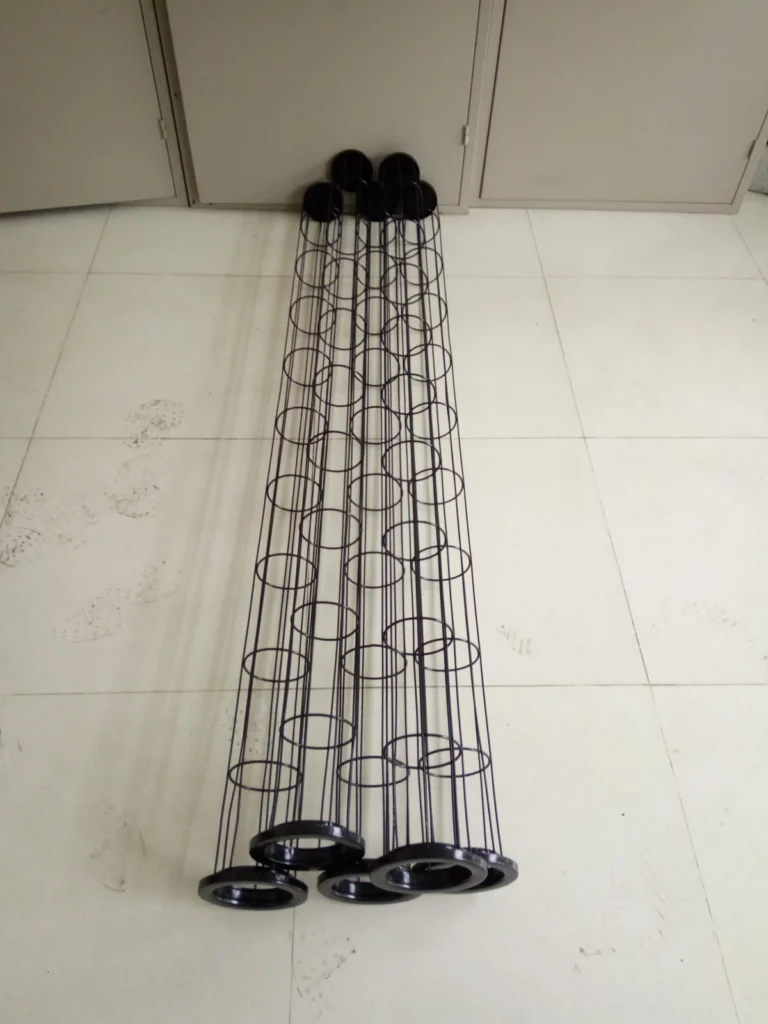
Request replacement filter bags, support cages, pulse valves, and pneumatic cylinders for a dust collector. Start with the installed part and operating conditions: a collector model name alone does not establish the dimensions, filter material, or electrical connection of its replacement parts. PORVOO reviews the old-part information and proposed replacement specification before supply.
For a complete collector, compare the 3–5 chamber pulse jet collectors и larger baghouse configurations. For an existing machine, use the checks below to prepare a parts inquiry.
Filter bags: match the connection and the process
Send the bag diameter and finished length, a photograph of the top fixing and bottom closure, and the tube-sheet hole dimensions. State the installed cage dimensions and whether the bags are removed from the clean-air side or another access point. Include the number of bags required and any original part number or drawing.
PORVOO’s catalog includes polyester needle felt and surface-treated options, including membrane-coated and water- and oil-repellent versions. The material proposal depends on the actual dust, continuous and peak gas temperatures, moisture and condensation, and chemical exposure. A coating name alone does not establish suitability. Ask the quotation to identify the fiber, surface treatment, dimensions, and conditions of use.
If bags have failed early, send photographs showing where they tore, abraded, blinded, or hardened, together with the operating pressure difference and cleaning arrangement. Keep a sample where practical. Match the failure location to the cage, fixing, and process conditions before repeating the old specification.
Support cages: measure beyond the outside diameter
The catalog lists cage diameters of 115, 125, 147, and 195 mm beside nominal filter-bag diameters of 120, 130, 152, and 200 mm. These are catalog pairings for discussion, not a compatibility list for every installed collector. Confirm the actual bag and tube-sheet connection before ordering.
Provide overall length, cage outside diameter, top collar dimensions, bottom construction, and any venturi dimensions. Show whether the cage is one piece or joined in sections, and include the available removal clearance. Specify the existing material or coating if known and the gas conditions so the replacement surface can be reviewed.
Pulse valves: identify the body and the coil separately
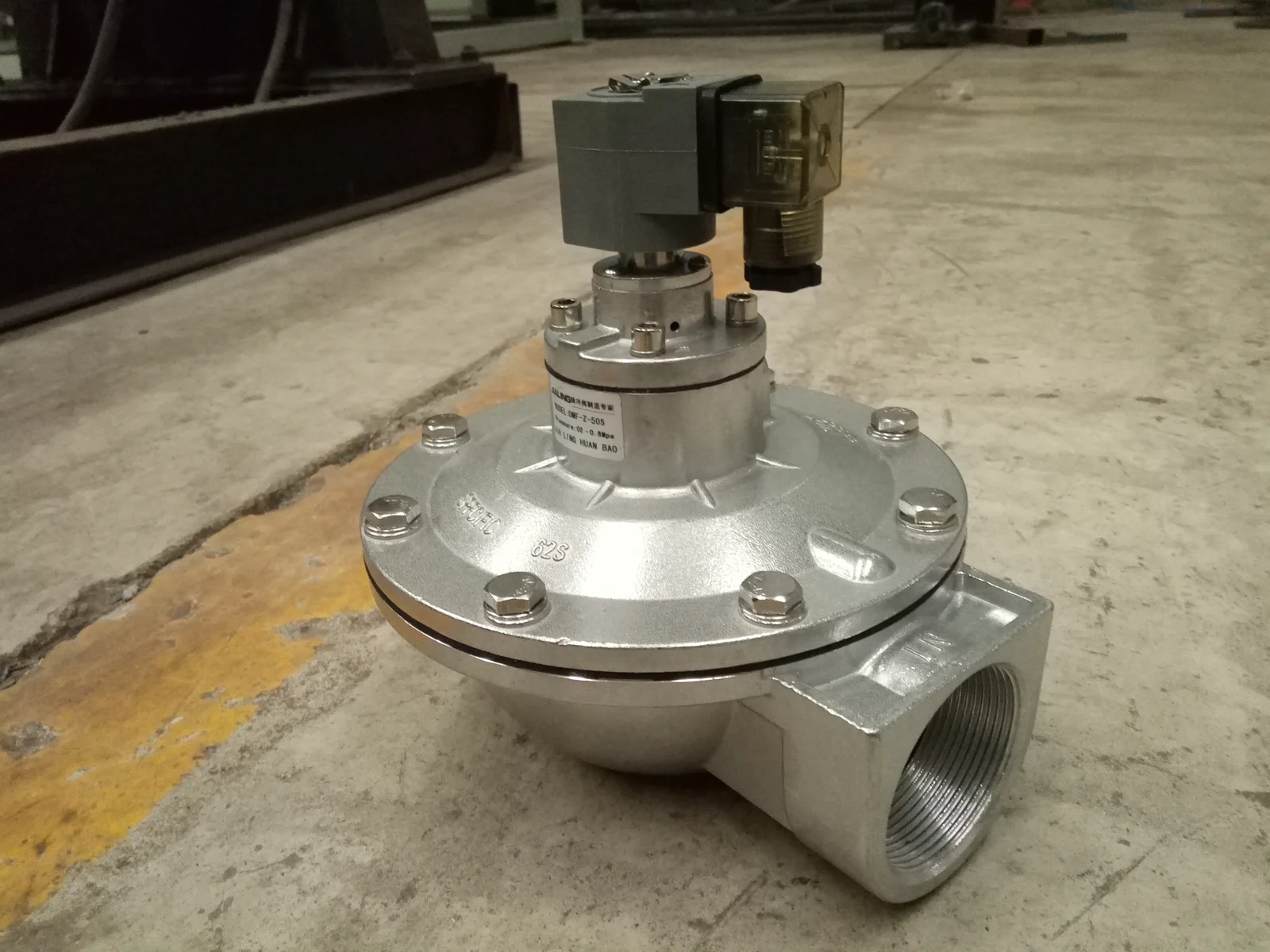
Send the valve manufacturer and complete model marking, port size and connection type, body arrangement, coil voltage and AC or DC supply, connector photograph, and operating compressed-air pressure. Include a photograph showing how the valve joins the air header and blow pipe. Similar-looking valve bodies can have different fittings or diaphragms.
State whether you need a complete valve, coil, or diaphragm service part. For service parts, provide the existing component’s marking and dimensions; do not select a diaphragm only from the collector model. Ask the quote to state the supplied component, connection details, voltage, and operating requirements.
Pneumatic cylinders for the installed mechanism
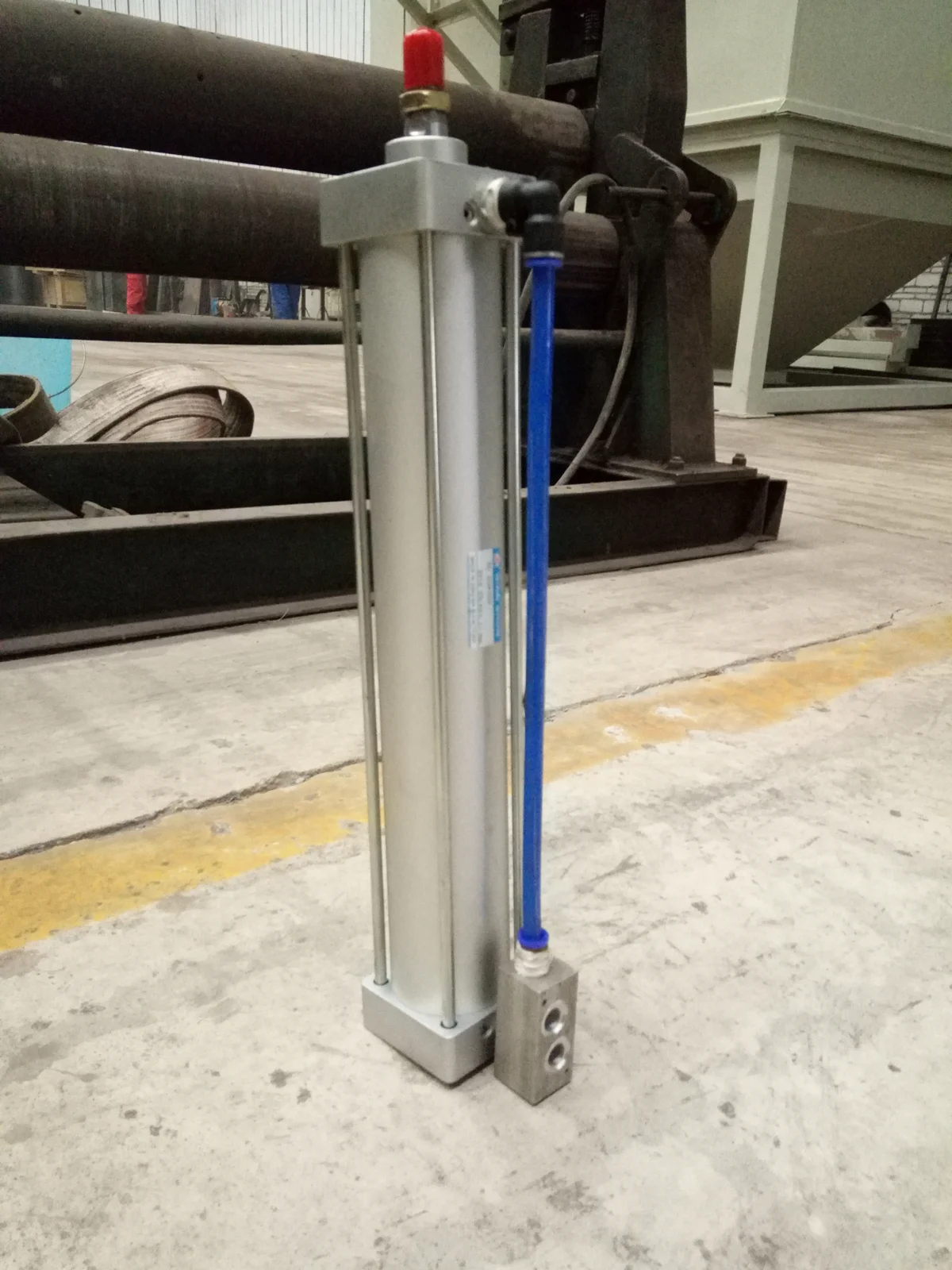
For a collector fitted with a pneumatic actuator, provide the cylinder model, bore, stroke, rod and mounting dimensions, air-port connections, and any position switches or attached valves. Show the mechanism in both end positions and identify the available clearance. The required replacement depends on the installed mechanism; a cylinder is not a standard part of every baghouse.
Prepare one complete parts inquiry
- Machine identity: collector manufacturer, model, serial number, installation photographs, and any original parts drawing.
- Old-part evidence: readable markings, overall and connection dimensions, photographs from several sides, required quantity, and whether a sample can be supplied.
- Process conditions: dust and additives, gas temperature and moisture, chemical exposure, shift pattern, and available operating or failure records.
- Services and delivery scope: electrical supply for coils, compressed-air conditions, required spares, delivery destination, and planned maintenance window.
Ask for a written replacement specification and drawing or dimensional confirmation before placing the order. Have your site team review any change in filter material or component construction against the actual process. Antistatic or explosion-protection requirements need a separate, documented project review; a material label or photograph does not establish a certified safety configuration.



















