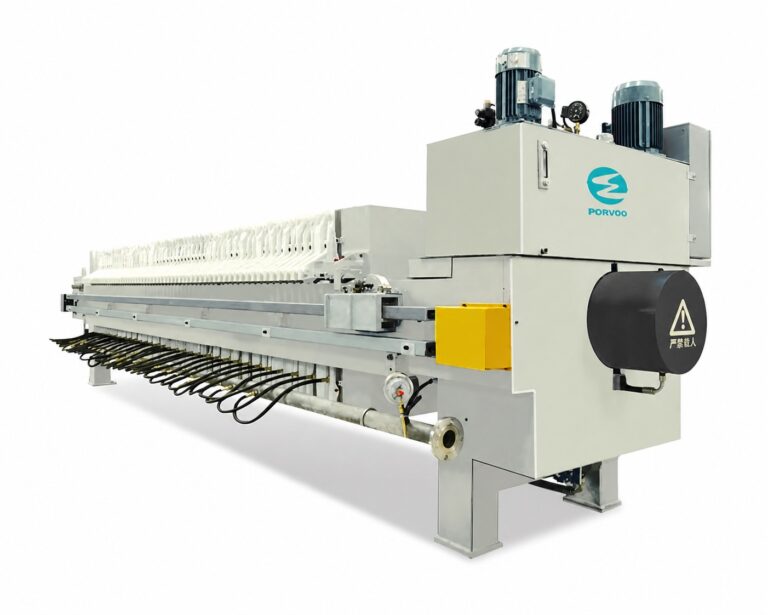
A moisture reading from a filter press tells the operator what the press achieved under its own cycle, not what the cake will do once it leaves the machine. Before tailings cake moves onto a conveyor and into a dry-stack, the question is whether the material holds together, releases cleanly, and survives transfer and short-term storage without changing the handling problem it was meant to solve.
Conveyable Cake Is More Than a Moisture Result
Moisture content is a single number produced under the filter’s own operating conditions: a given plate configuration, cycle time, and feed characteristic. It says nothing directly about whether the cake will shear, crumble, stick to a belt, or hold its shape under its own weight once it is away from the filter. Two cakes with the same moisture reading can behave differently in transfer and storage if their particle size distribution, mineralogy, or residual chemical conditioning differ, because moisture is distributed and held differently depending on those properties.
This matters because a handling route does not test moisture; it tests mechanical behavior. A cake that passes a moisture target in the press can still fail to discharge cleanly, can still segregate during a drop, or can still lose structural integrity if it is rehandled before it has had time to stabilize. Where the project treats moisture as the acceptance criterion and stops there, the downstream route is still unverified. Where moisture is treated as one input alongside discharge and transfer behavior, the acceptance decision has a basis that actually matches what the conveying and stacking system will encounter.
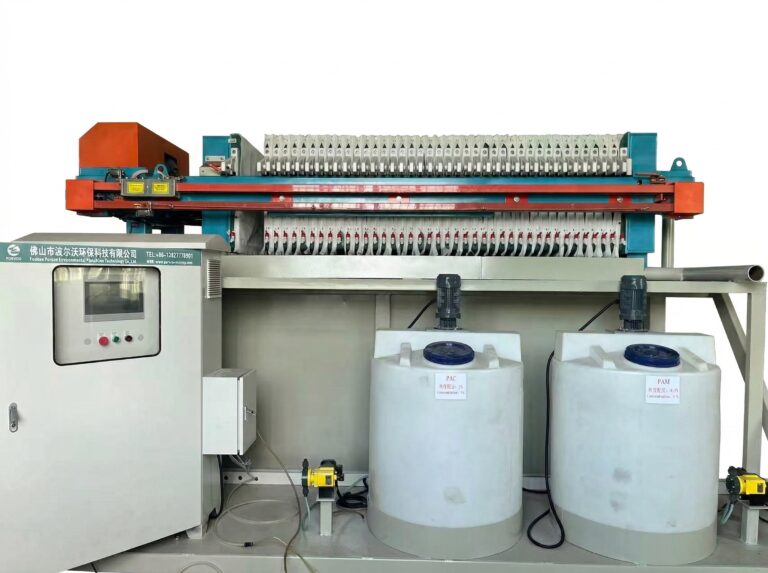
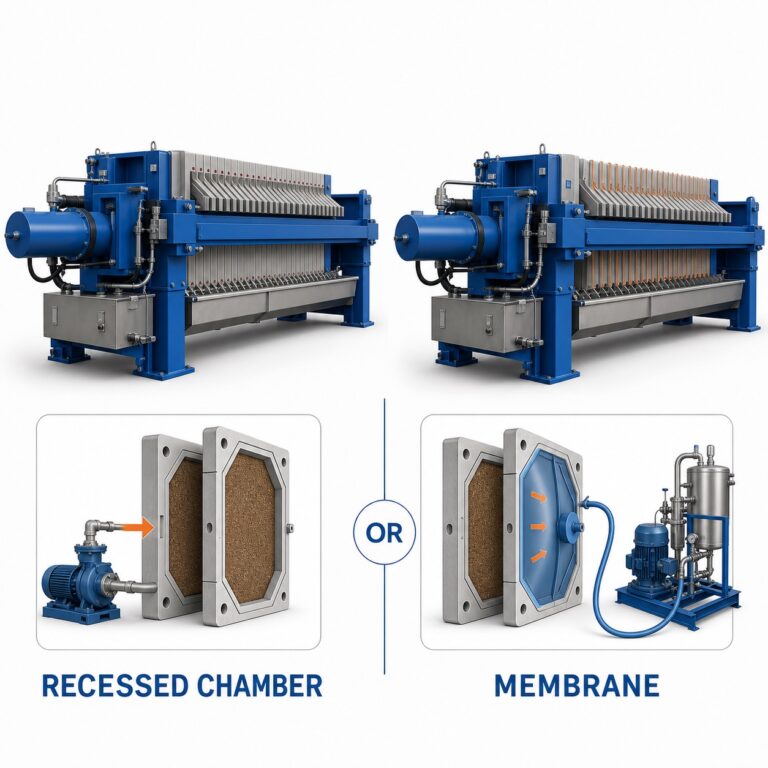
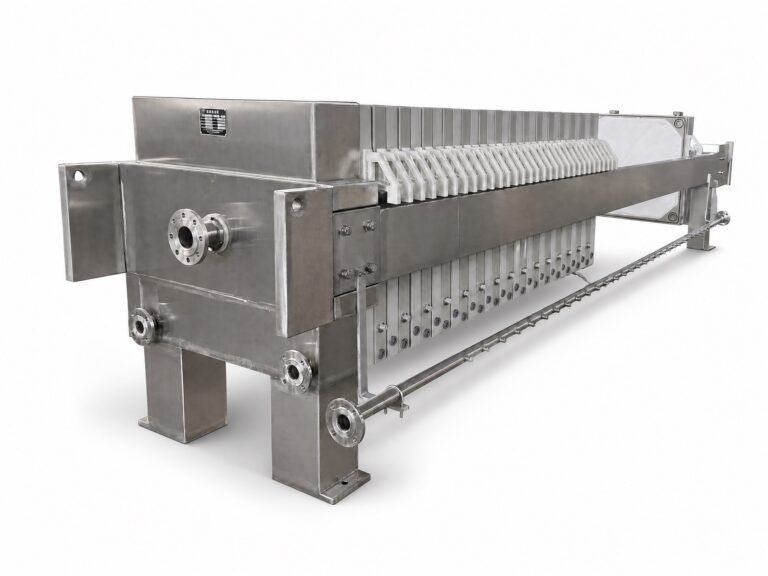
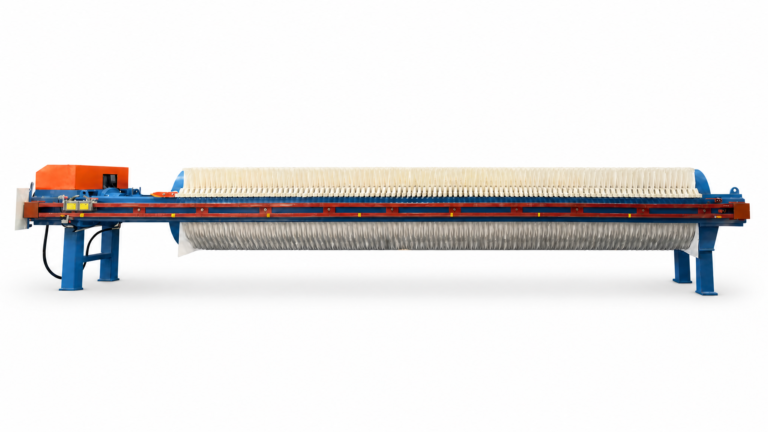
The practical consequence for equipment selection is that filter press configuration and cycle parameters should be discussed in terms of the cake they are expected to produce for the specific route, not as an isolated dewatering target. A мембранный фильтр-пресс, a полностью автоматический фильтр-пресс, and a камерный фильтр-пресс с углублением can each be configured to influence cake structure and release characteristics differently, and the choice among them should connect to how the cake needs to behave once it leaves the machine, not only to the moisture figure it can reach. A buyer evaluating filter press options for tailings should ask how a given configuration is expected to affect discharge and handling behavior for the specific tailings material, not only what moisture percentage the configuration can achieve under standard conditions.
Discharge and Transfer Behaviors to Observe in Trials
Discharge is the first point where a cake’s handling characteristics become visible, independent of its moisture value. As the cake leaves the filter, it can release cleanly, break into irregular fragments, shear along internal planes, or stick to plate surfaces and cloth. Each of these behaviors has a different implication for the equipment and process downstream: clean release supports predictable loading onto a conveyor, while sticking or fragmentation changes the loading pattern and can introduce material at a different consistency than what the trial moisture result suggested.
Representative testing means testing with tailings that match the composition and variability of what the facility will actually process, not a sample selected because it performs well. Where tailings mineralogy, particle size, or process chemistry varies across the ore body or over time, cake behavior at discharge can vary correspondingly even if the filter’s operating parameters stay constant. A trial run on one batch does not establish behavior for the full range of material the facility will route through the same equipment.
Transfer behavior is the second visible point. As cake moves from the discharge point onto a conveyor or into a chute, it can continue to break up, it can shed material that sticks to belt surfaces or structure, and it can segregate so that finer or wetter material separates from the coarser or drier fraction. Carryback — material that clings to a conveyor surface instead of discharging at the intended point — changes both housekeeping requirements and the moisture consistency of what actually reaches storage or stacking.
None of these behaviors can be inferred from a moisture specification. They need to be observed directly, with the specific tailings the facility will process, on the configuration intended for use. Where a project substitutes a moisture target for this observation, the acceptance decision is based on what the filter does, not on what the full route does with the cake the filter produces.
Conveyor Interfaces, Carryback, and Transfer-Point Constraints
The interface between a filter’s discharge point and the first conveyor is a mechanical boundary with its own constraints, independent of what the filter was configured to achieve. The geometry of that interface — how far the cake falls, how it is guided, what surfaces it contacts — affects how much of the discharge behavior observed in a trial survives into the actual transfer. A cake that discharges cleanly in a controlled trial can still generate carryback or breakage at a transfer point if the point’s geometry or speed differs from trial conditions.
Carryback at a transfer point changes two things simultaneously: it reduces the proportion of cake delivered to the intended destination at the trial-tested moisture and consistency, and it introduces material accumulation at the transfer point itself, which has its own handling and access implications. Where a facility’s conveyor route includes multiple transfer points, each one is a location where the cake’s behavior can diverge again from what was observed upstream, because belt speed, drop height, and loading angle differ by location.
This is why the filter supplier and the conveyor or stacking designer need to coordinate on the same representative material and the same intended route, rather than evaluating the filter’s output against a generic specification. The filter establishes what cake is produced; the conveyor and transfer-point design establishes what happens to that cake on its way to storage or stacking. Acceptable handling behavior has to be defined jointly between these two scopes, because neither one alone determines whether the complete route functions as intended. A buyer specifying a filter press for tailings cake should confirm, with the conveyor designer, what interface geometry and transfer conditions the cake will actually encounter before treating any single-point discharge trial as representative of the full route.
Storage Exposure and Changes Before Placement
Cake that has passed a discharge and transfer trial still faces a further condition: short-term storage before it reaches its placement point. Storage exposes cake to time, to potential drainage, to temperature and weather if storage is outdoors, and to handling disturbance if the cake is stacked, moved, or reclaimed before placement. Each of these conditions can change the cake’s moisture distribution, its structural strength, and its release behavior relative to what was measured immediately after discharge.
Where storage duration is short and conditions are controlled, the cake’s behavior at the point of placement may closely resemble what was observed at discharge and transfer. Where storage is extended, or where the cake is exposed to drainage or weather, moisture can redistribute within the stockpile, surface layers can dry or crust while interior material remains wetter, and the cake’s cohesion can change in ways that affect how it behaves when it is reclaimed and moved to the stacking point. A cake that handled predictably straight off the conveyor is not necessarily representative of the same cake after a storage interval.
This means a handling trial that stops at the transfer point has not tested the full route the project actually intends to use if storage is part of that route. Representative testing needs to include the storage condition and duration the project expects, with the same tailings used for the earlier trial stages, so that any change in handling behavior — including changes in moisture variability, strength, or release behavior — becomes visible before the facility commits to a storage and placement sequence. Where the project cannot yet define its intended storage condition, that definition is itself information the trial design needs before storage effects can be evaluated meaningfully.
Dry-Stacking Inputs Owned Outside the Filter Package
| Project-level input | Decision connection | Граница доказательств |
|---|---|---|
| Conveyor and stacking design | Defines acceptable handling behavior for the selected route | The filter cannot establish complete facility readiness by itself |
| Классификация материалов | Must be confirmed under the project’s applicable requirements before routing cake | A handling trial does not establish the required classification |
| Drainage requirements | Must be confirmed for the project before the cake route is accepted | Filter performance alone does not resolve project drainage obligations |
| Требования к хранению | Must account for storage exposure and behavior before placement | A discharge result does not establish storage suitability |
| Disposal or reuse obligations | Must be confirmed before selecting the final cake route | Cake moisture or handling behavior does not establish disposal or reuse acceptability |
| Tailings lifecycle governance, monitoring, and closure | Frames facility-level risk decisions beyond cake production | Filter sizing or testing does not establish complete facility conformance |
A filter press produces cake; it does not define a dry-stacking facility. The decisions that determine whether cake can be placed, how it must be classified, what drainage it requires, how it must be stored, and what disposal or reuse obligations apply all sit outside the filter package, even though the filter’s output quality interacts with each of them.
Material classification is one example: tailings cake can be subject to classification requirements that determine how it can be handled, stored, or disposed of, and those requirements are set by the project’s applicable regulatory or site framework, not by the filter’s performance. A handling trial that shows good discharge and transfer behavior does not establish that the material meets its required classification; that confirmation has to come from the project’s own compliance process.
Drainage, storage, and disposal or reuse obligations follow the same pattern. Each depends on project-level decisions — the stacking facility’s design, its regulatory context, its intended end use for the material — that a filter press supplier is not positioned to resolve. The UNEP Global Industry Standard on Tailings Management frames the broader governance, monitoring, and closure considerations that apply across a tailings facility’s lifecycle, which sit at a different scope than filter sizing or cake-handling trials and are not established by either.
What the filter package does contribute is defined, representative evidence about the cake it produces: discharge behavior, transfer behavior, and storage response under tested conditions. That evidence is an input the project’s engineering and compliance teams need when they confirm classification, drainage design, and storage and disposal requirements — it does not substitute for those confirmations. When a project supplies its tailings characteristics, intended route, and storage conditions to a filter press supplier such as Porvoo for configuration or quotation review, that information helps define a filter and cake-handling interface suited to the intended route, but the classification, drainage, and disposal decisions remain the project’s own to confirm under its applicable requirements.
Acceptance Trial for the Complete Cake-Handling Route
| Trial segment | Evidence to observe with representative tailings | Граница принятия решения |
|---|---|---|
| Filter discharge | Cake release behavior, sticking, and breakup as cake leaves the filter | Establishes discharge behavior for the tested material and configuration, not full-route readiness |
| Transfer on the intended route | Sticking, breakup, carryback, and segregation during transfer | Shows how the tested cake behaves on the selected transfer route; acceptance still depends on the conveyor and stacking design |
| Short-term storage before placement | Changes in moisture variability, strength, release behavior, and handling after storage exposure | Shows behavior under the tested exposure, not an unconditional storage or placement guarantee |
| Placement on the selected stacking route | Handling behavior at the point where cake enters the selected placement route | Supports a route-specific decision only when the stacking design’s requirements are defined |
| Complete route review | Results from discharge, transfer, short-term storage, and placement considered together | Accept only against project-specific criteria jointly defined for the complete route and applicable requirements |
The discharge, transfer, and storage behaviors described separately above only answer the title’s question when they are evaluated together, against the specific route the project intends to build. A trial that confirms good discharge behavior but does not test the intended transfer geometry, or that tests transfer but omits the storage interval the project actually plans to use, leaves gaps that a single moisture result cannot close.
A complete route trial uses representative tailings at every stage — the same material characteristics the facility will process, not a selected favorable sample — and carries that material through discharge, transfer on the intended route, short-term storage under the conditions the project expects, and placement at the selected stacking point. Observing each stage with the same material allows the project to see whether behavior that looked acceptable at discharge persists through transfer and storage, or whether it changes in ways that affect the placement decision.
Сайт EPA’s Biosolids Technology Fact Sheet on recessed-plate filter presses describes discharge interfaces, the support conditions a cake-handling interface needs, and the value of representative testing in a comparable mechanical context, though its basis is municipal biosolids and its findings do not transfer numerically to tailings cake. The relevant point it supports is the general principle that discharge interfaces and representative testing are integral to evaluating cake-handling performance, not an assumption about tailings-specific outcomes.
Where each stage of the trial is evaluated against the conveyor and stacking design’s own requirements, rather than against the filter’s moisture specification alone, the project has a basis for a route-specific acceptance decision. Where the stacking design’s requirements are not yet defined, the trial results describe how the tested cake behaves under tested conditions, but they cannot yet support an acceptance decision for the complete route, because that decision depends on criteria the stacking design has not yet set. The project team’s task is to define those criteria jointly with the trial evidence, considering discharge, transfer, storage, and placement together, against the applicable requirements that govern how the material can be classified, drained, stored, and ultimately disposed of or reused.
Часто задаваемые вопросы
Q: Can a single cake-moisture result be used to approve conveyor handling?
A: No. Treat moisture as one measurement within a handling trial, then judge it alongside moisture variability and observed release, sticking, breakup, carryback, and segregation on the intended route.
Q: What should be defined before the cake-handling trial begins?
A: Define the representative tailings, intended transfer route, expected short-term storage exposure, selected placement route, and project-specific acceptance criteria. This keeps the trial focused on the complete handling route rather than filter discharge alone.
Q: Does clean release from the filter mean the cake is ready for dry stacking?
A: No. Clean release supports only the discharge decision; the cake must also be observed during transfer, short-term storage, and placement, with the results checked against the selected conveyor and stacking design.
Q: Who should set the acceptance criteria for cake handling?
A: Set them jointly with the conveyor and stacking design requirements before the trial. The criteria should connect each route segment to the behavior that matters there and keep acceptance limited to the tested material, configuration, and exposure.
Q: What project checks remain after a successful handling trial?
A: Confirm material classification, drainage and storage requirements, disposal or reuse obligations, and the applicable lifecycle governance, monitoring, and closure requirements. A successful handling trial does not establish those project-level decisions or complete facility conformance.